
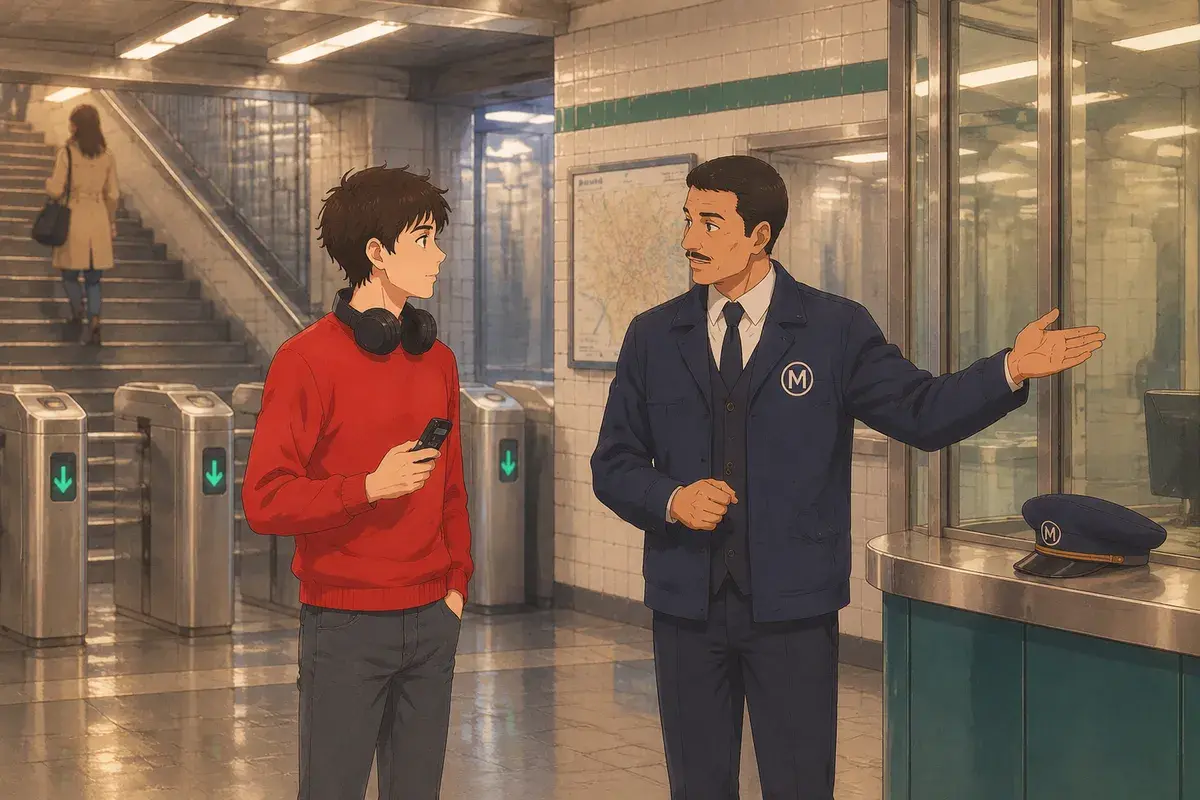
French dialogue with translation · A1 · 11 lines
C'est quelle direction ? Which direction is it?
Comic · 10 panels
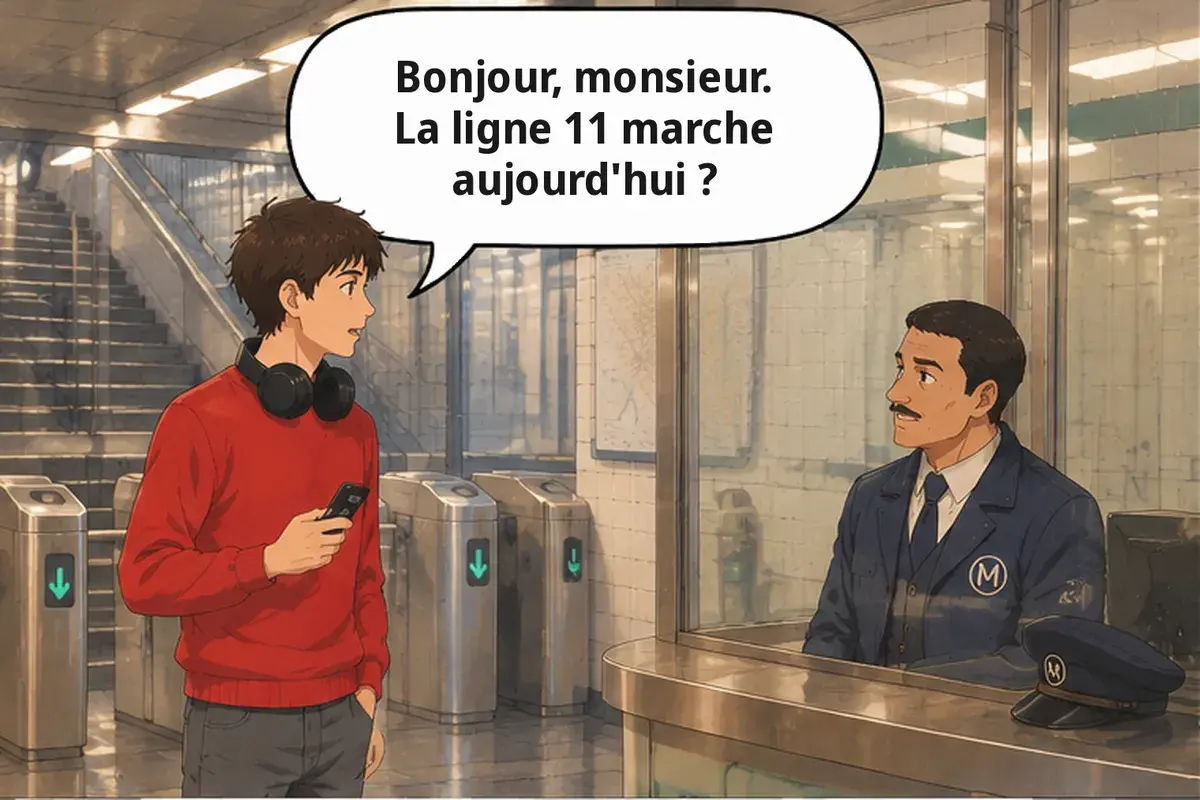
- Pacha
Bonjour, monsieur. La ligne 11 marche aujourd'hui ?
Hello, sir. Is line 11 working today?
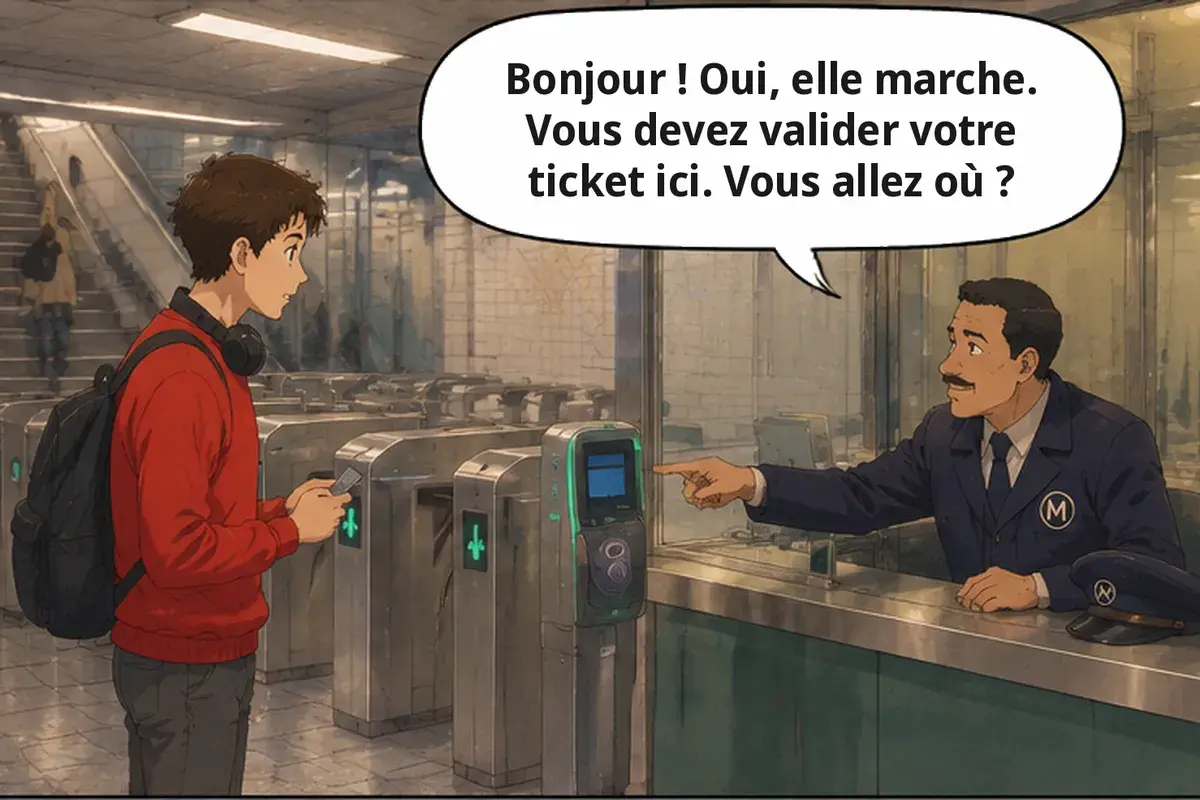
- Agent
Bonjour ! Oui, elle marche. Vous devez valider votre ticket ici. Vous allez où ?
Hello! Yes, it's working. You have to validate your ticket here. Where are you going? (formal)
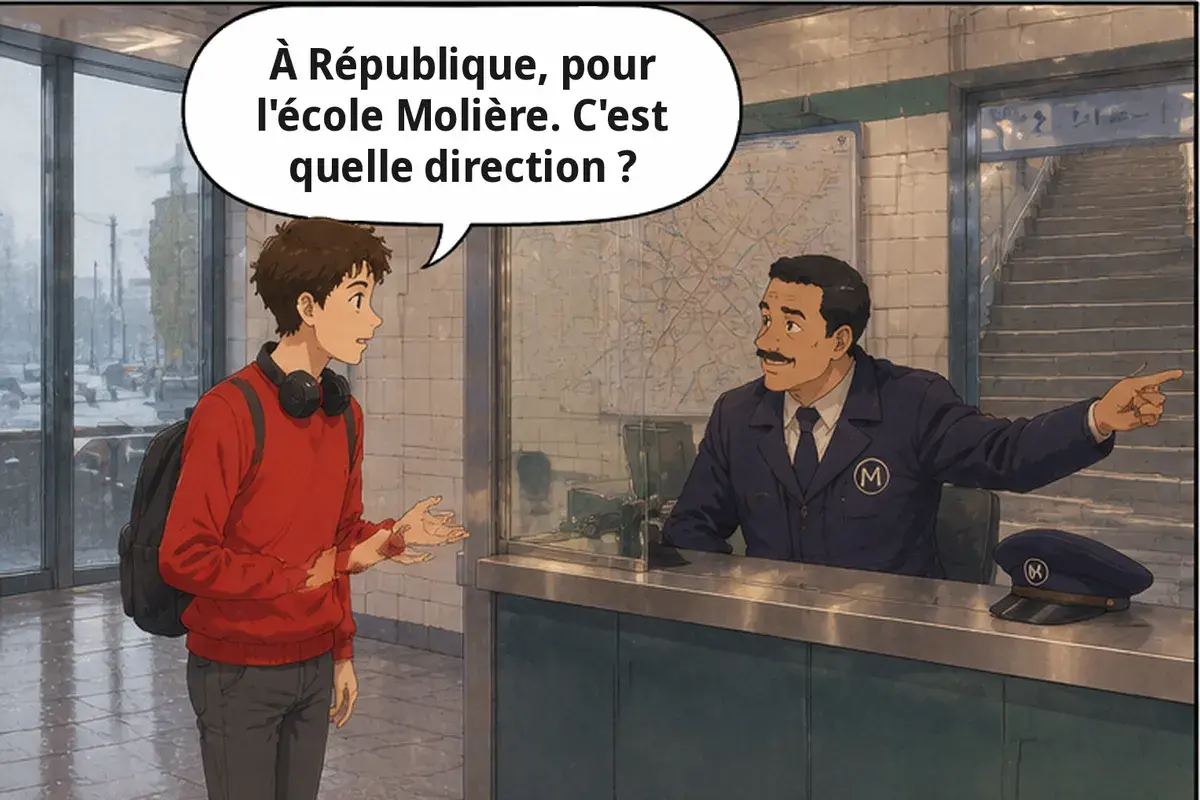
- Pacha
À République, pour l'école Molière. C'est quelle direction ?
To République, for the Molière school. Which direction is it?
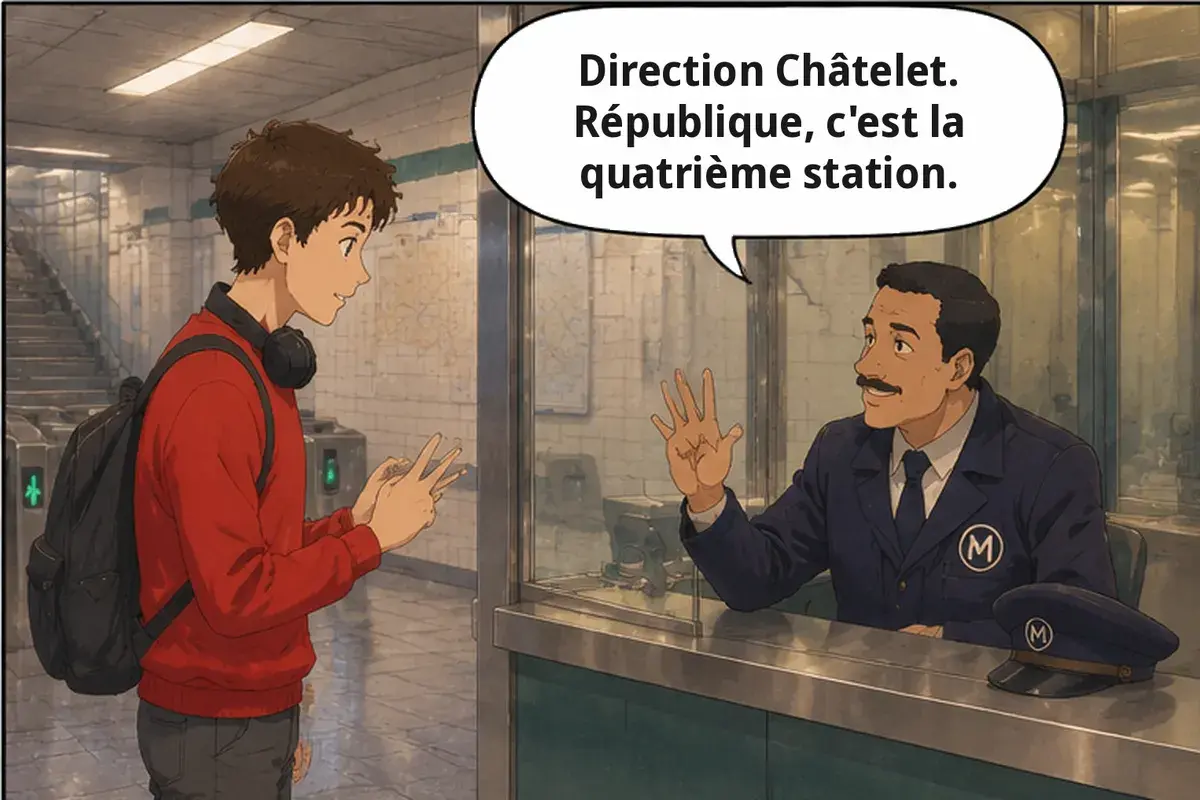
- Agent
Direction Châtelet. République, c'est la quatrième station.
Toward Châtelet. République is the fourth station.
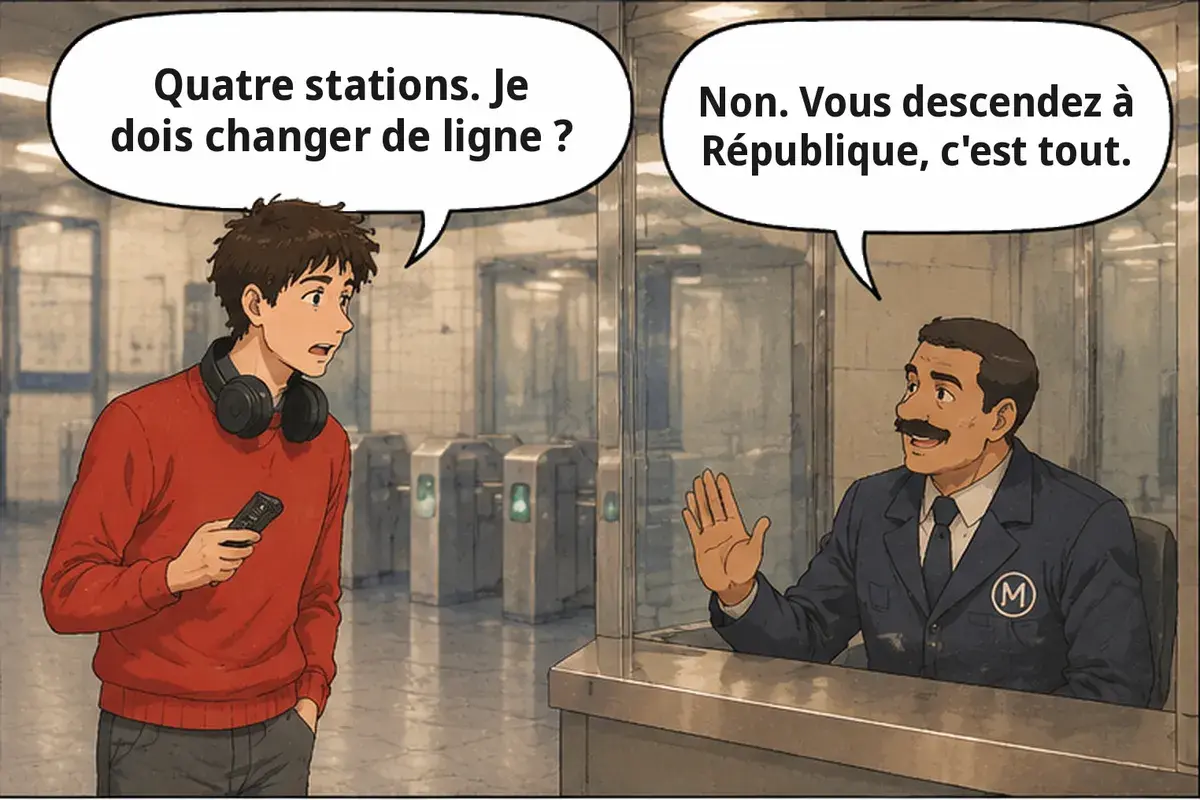
- Pacha
Quatre stations. Je dois changer de ligne ?
Four stations. Do I have to change lines?
- Agent
Non. Vous descendez à République, c'est tout.
No. You get off at République, that's all. (formal)
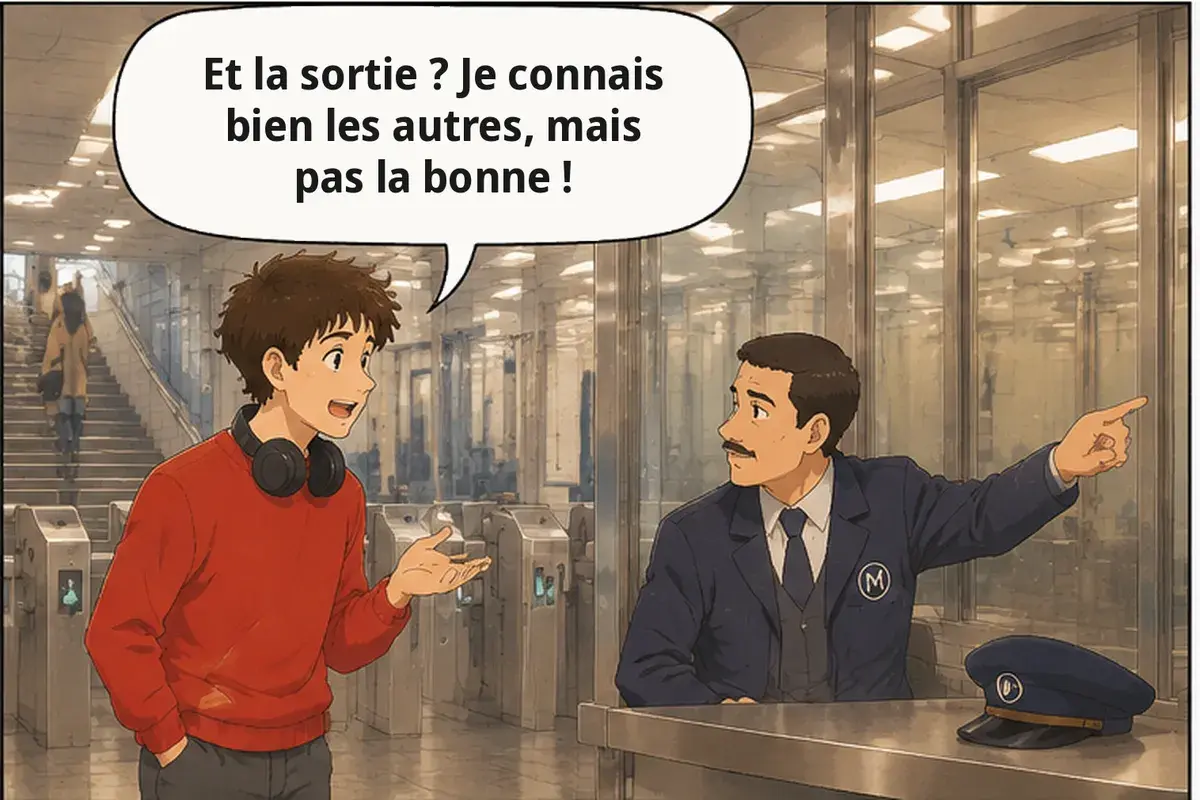
- Pacha
Et la sortie ? Je connais bien les autres, mais pas la bonne !
And the exit? I know the other ones well, but not the right one!
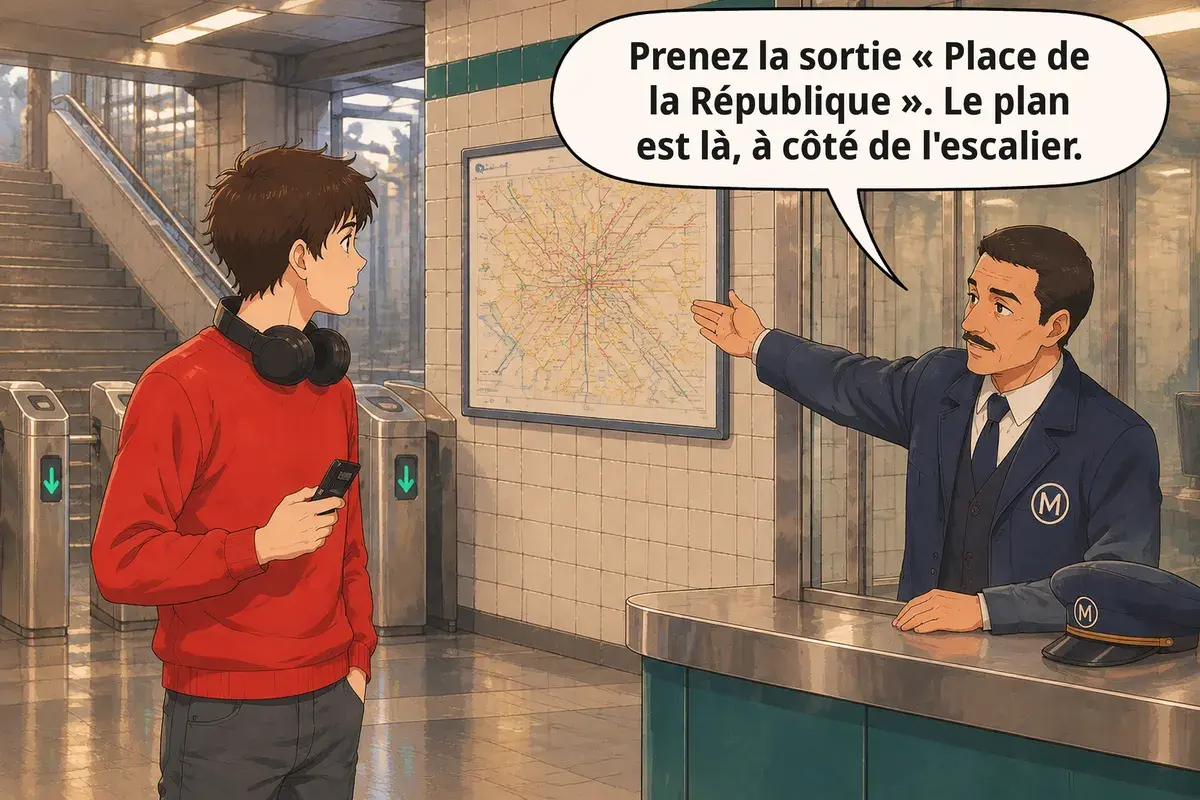
- Agent
Prenez la sortie « Place de la République ». Le plan est là, à côté de l'escalier.
Take the "Place de la République" exit. The map is there, next to the stairs. (formal)
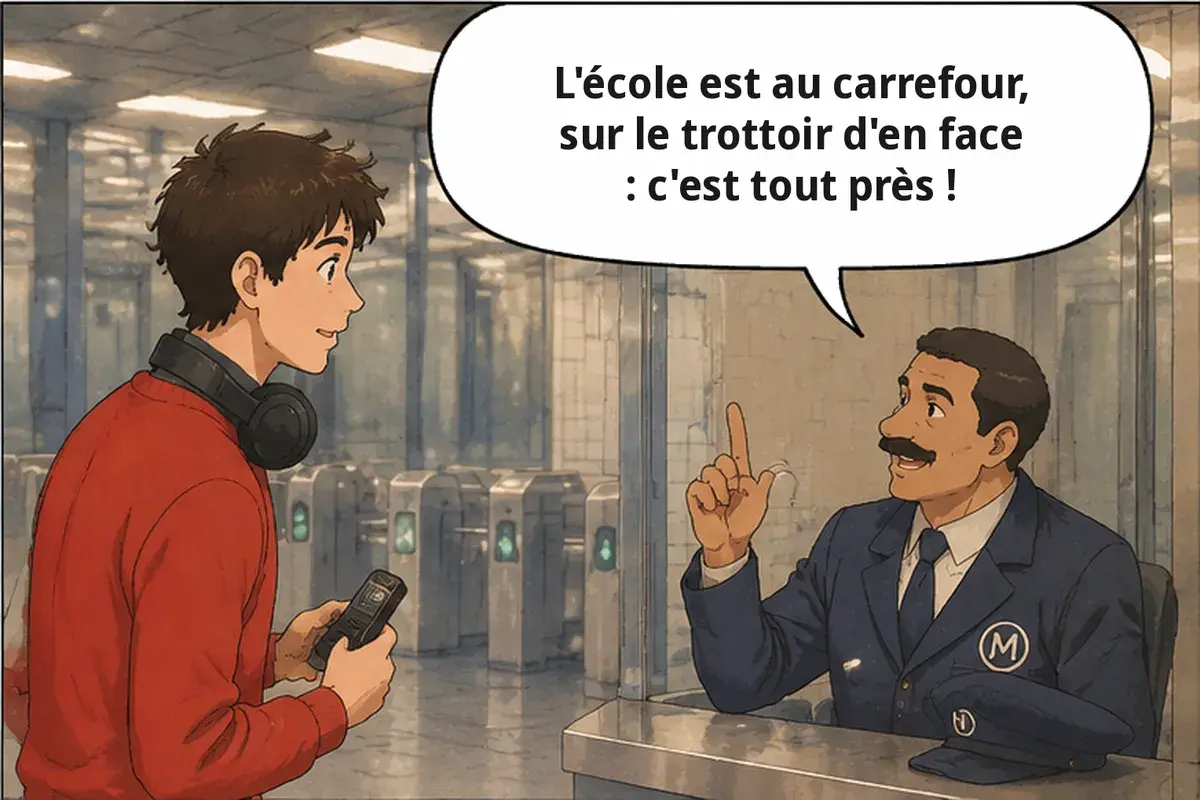
- Agent
L'école est au carrefour, sur le trottoir d'en face : c'est tout près !
The school is at the intersection, on the sidewalk across the street: it's very close!
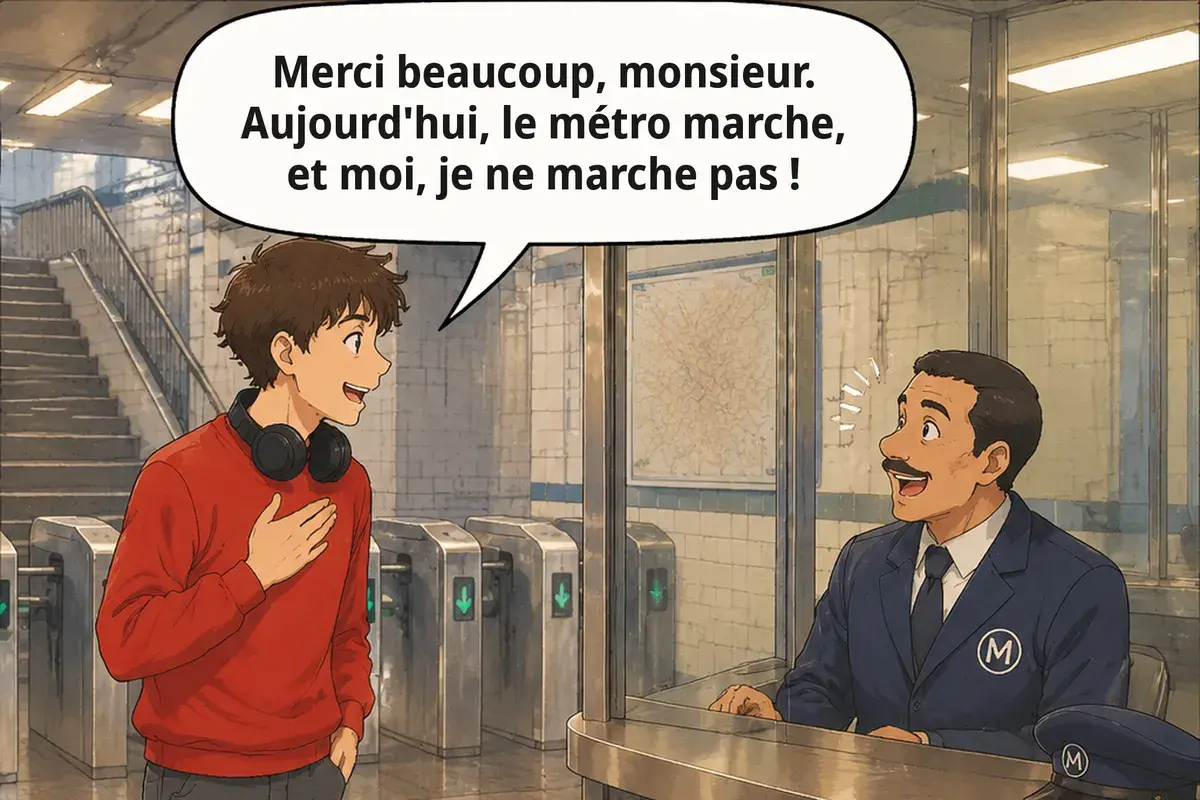
- Pacha
Merci beaucoup, monsieur. Aujourd'hui, le métro marche, et moi, je ne marche pas !
Thank you very much, sir. Today the metro is working, and I'm not walking!
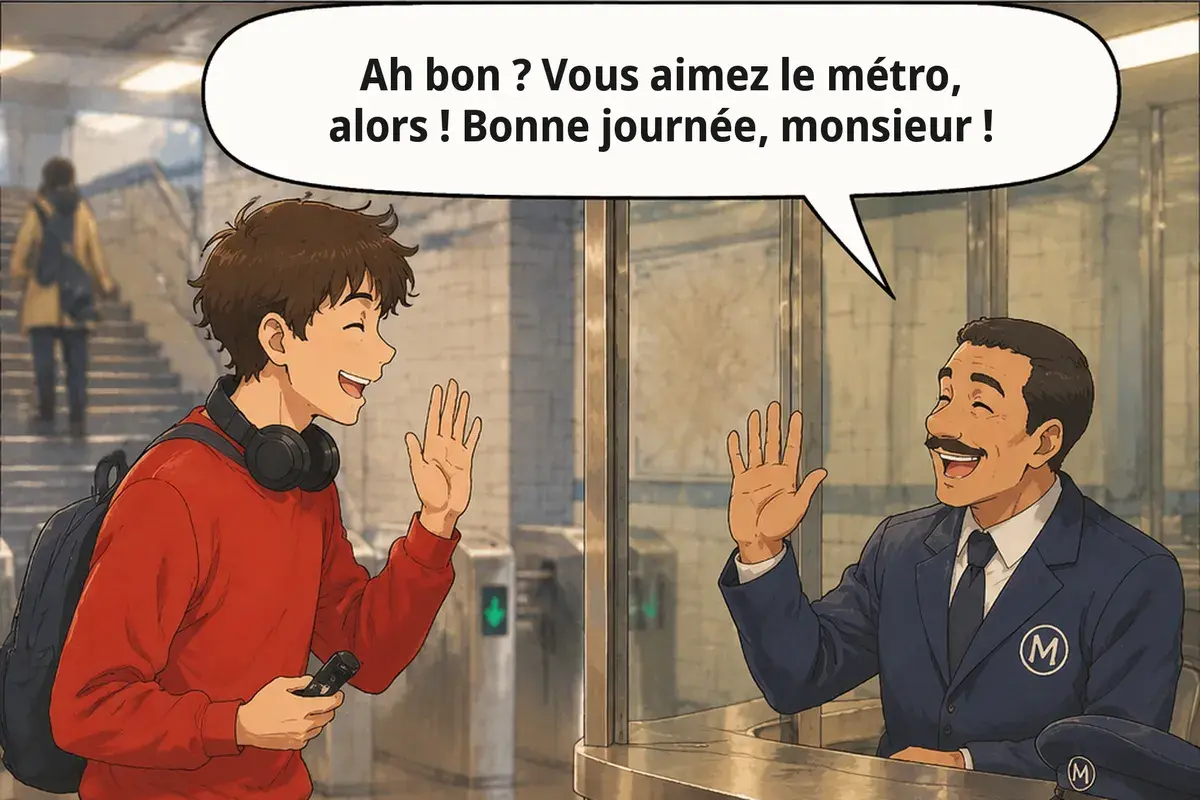
- Agent
Ah bon ? Vous aimez le métro, alors ! Bonne journée, monsieur !
Really? You like the metro, then! Have a nice day, sir! (formal)
Grammar for this text
- La ligne 11 marche aujourd'hui ? — marche is from marcher, here "to work" (about a machine). A question made with a rising voice.
- C'est quelle direction ? — quelle means "which": it's the feminine of quel, because direction is feminine. On the metro, a direction is named after the last station of the line: direction Châtelet — toward Châtelet.
- C'est la quatrième station. — "fourth": quatre + -ième (the final e drops).
- Je dois changer de ligne ? — dois is the je form of devoir (to have to). changer de ligne — to change lines; no article after de.
- Vous descendez à République, c'est tout. — descendez is the vous form of descendre (to get off, to go down). c'est tout — that's all. A station, like a city, takes no article.
- Prenez la sortie — prenez is a ready-made vous command from prendre (to take): "take" (the rule comes at A2). Je connais bien les autres, mais pas la bonne ! — la bonne here means "the right one".
- Le métro marche, et moi, je ne marche pas ! — the same pun as in the last text: marcher is "to work" and "to walk". The metro is working, so there's no need to walk.
- Ah bon ? — "really?": the metro employee didn't get the joke.
- Vous devez valider votre ticket ici — valider — to validate a ticket: you tap it on the gate or put it in the yellow machine.
- L'école est au carrefour, sur le trottoir d'en face — le carrefour — the intersection, le trottoir — the sidewalk, d'en face — across the street. The school is right by the exit: Pacha really hardly needs to walk.
Words and grammar of the unit: Ask for directions and take the metro.
Learn the words from the texts with flashcards
In the app, you can tap any word in a text to see its translation, forms and examples, and new words stick with flashcards. 15 minutes a day.
Start for freeEverything is open for free. No card needed to sign up.