

French dialogue with translation · A1 · 12 lines
Quelle heure est-il, s'il te plaît ? What time is it, please?
Comic · 12 panels
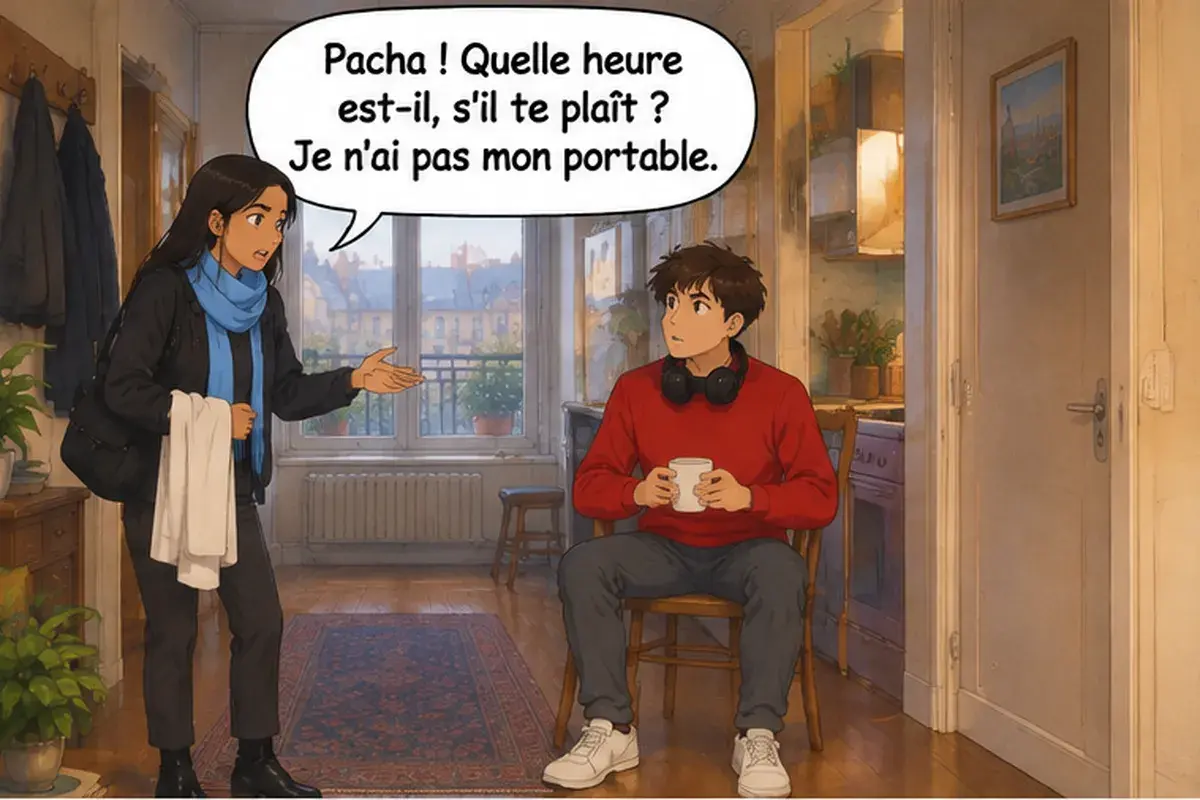
- Inès
Pacha ! Quelle heure est-il, s'il te plaît ? Je n'ai pas mon portable.
Pacha! What time is it, please? I don't have my phone.
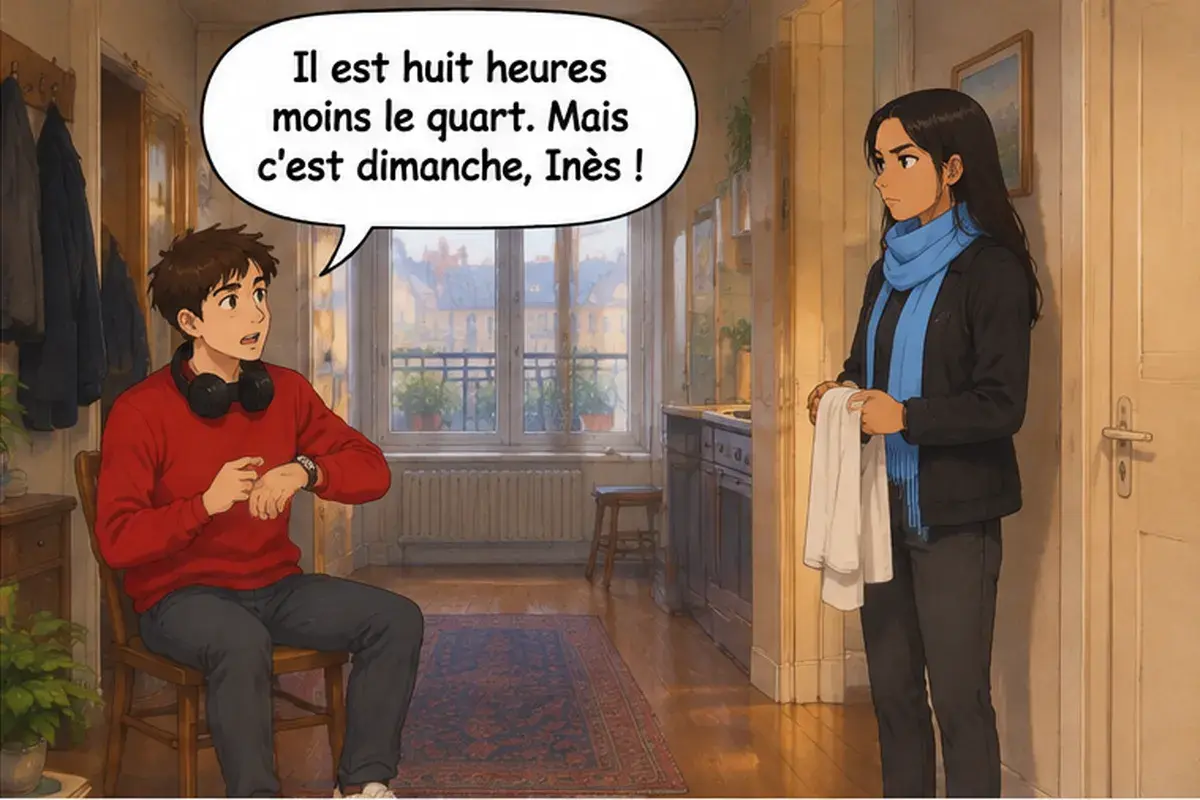
- Pacha
Il est huit heures moins le quart. Mais c'est dimanche, Inès !
It's a quarter to eight. But it's Sunday, Inès!
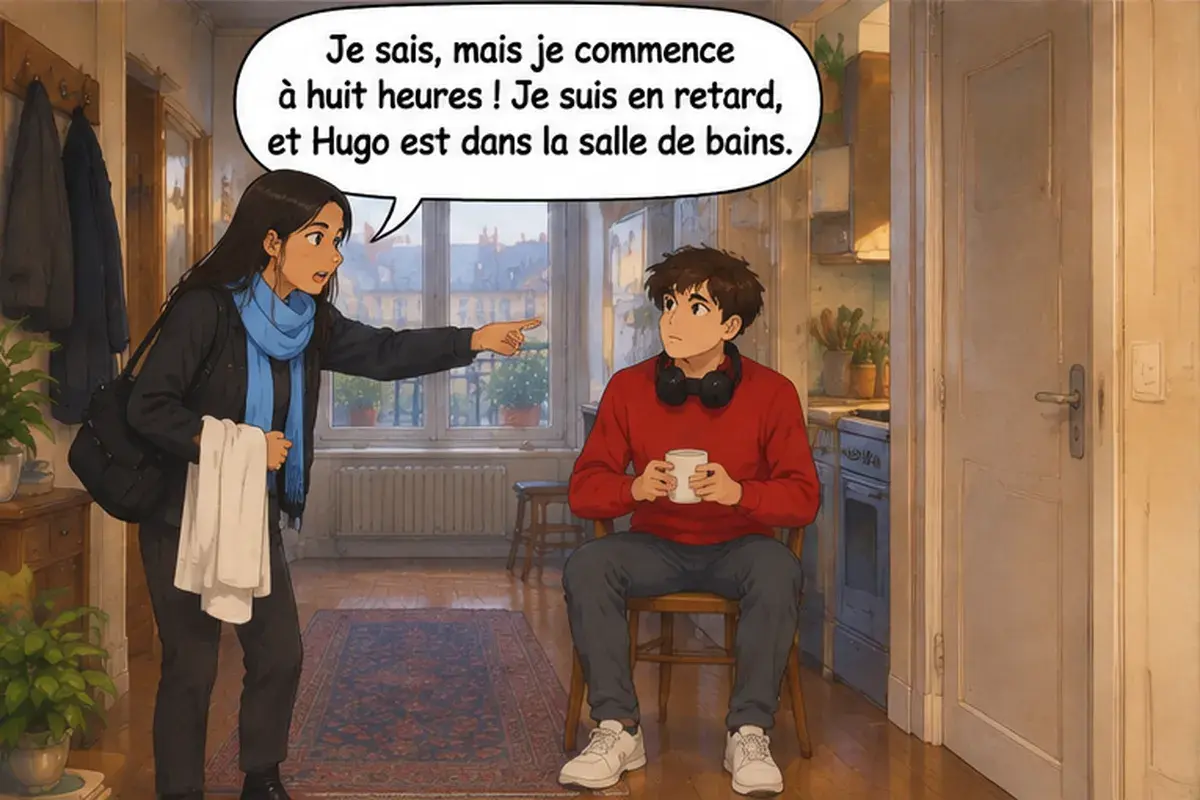
- Inès
Je sais, mais je commence à huit heures ! Je suis en retard, et Hugo est dans la salle de bains.
I know, but I start at eight! I'm late, and Hugo is in the bathroom.
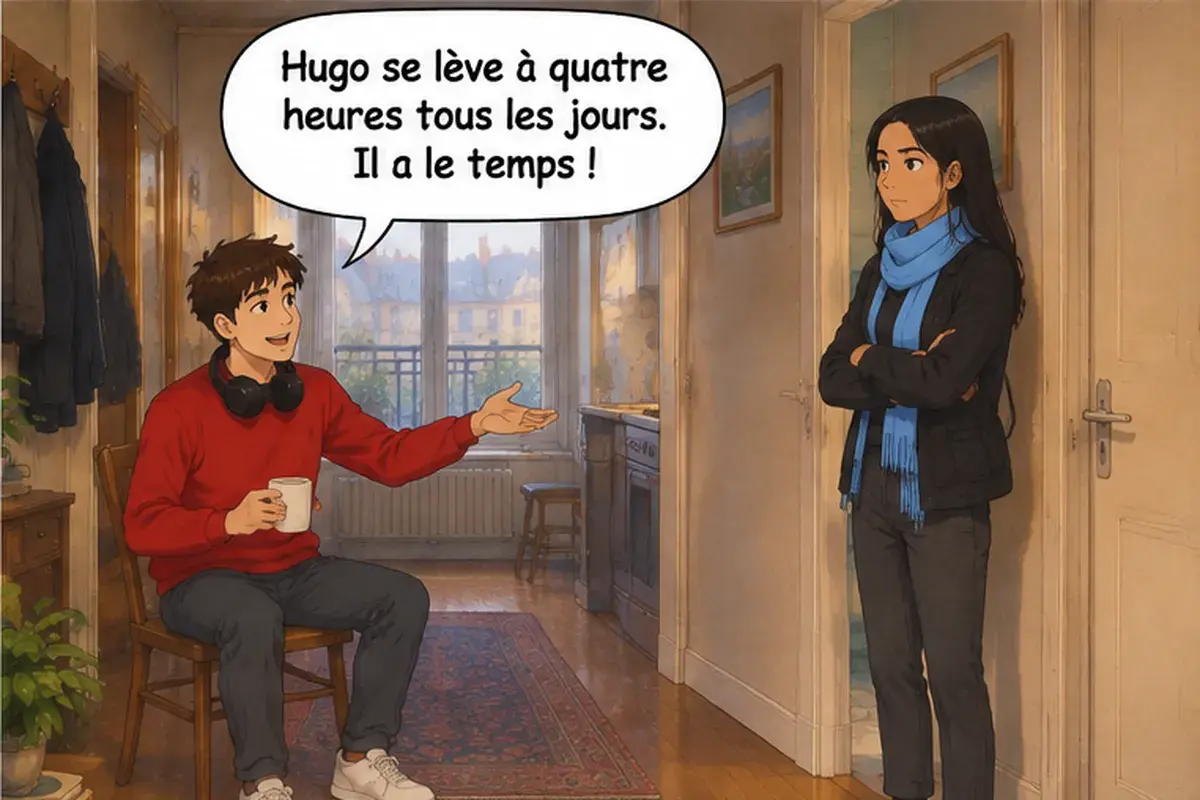
- Pacha
Hugo se lève à quatre heures tous les jours. Il a le temps !
Hugo gets up at four every day. He has time!
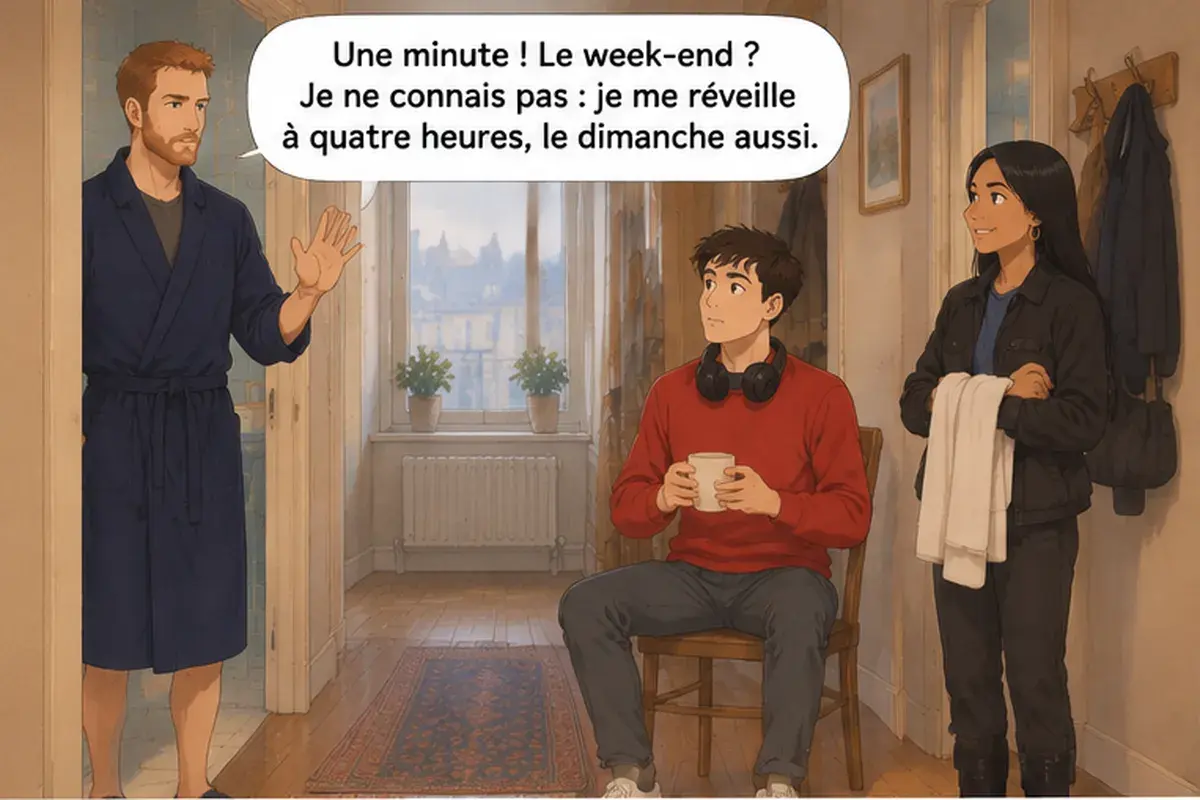
- Hugo
Une minute ! Le week-end ? Je ne connais pas : je me réveille à quatre heures, le dimanche aussi.
Just a minute! The weekend? Don't know it: I wake up at four, on Sundays too.
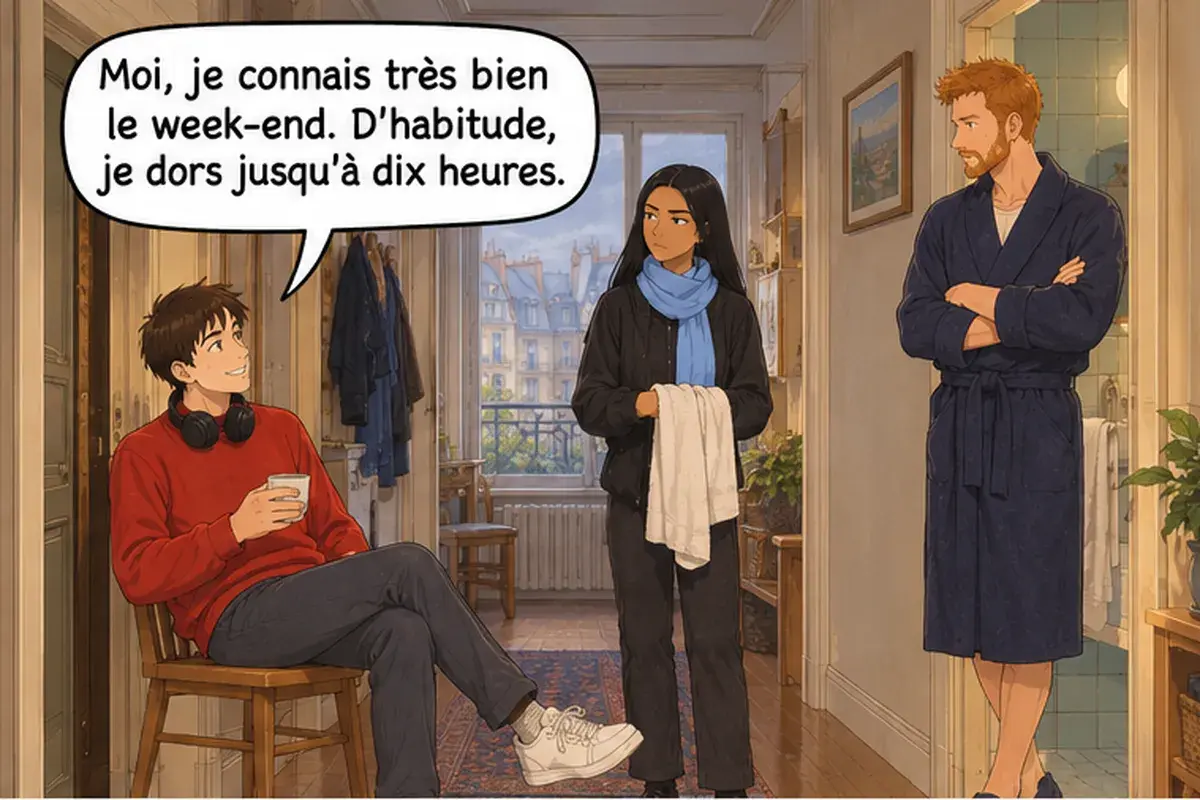
- Pacha
Moi, je connais très bien le week-end. D'habitude, je dors jusqu'à dix heures.
Me, I know the weekend very well. I usually sleep until ten.
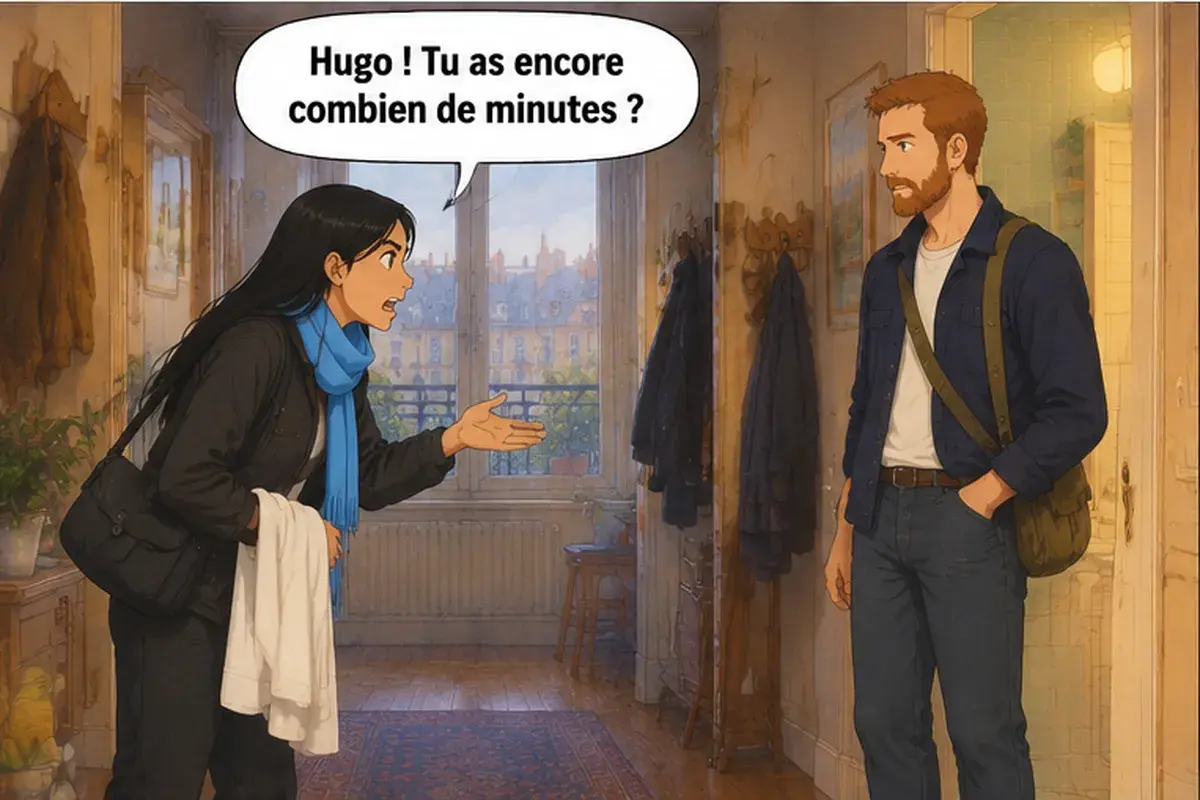
- Inès
Hugo ! Tu as encore combien de minutes ?
Hugo! How many more minutes do you have?
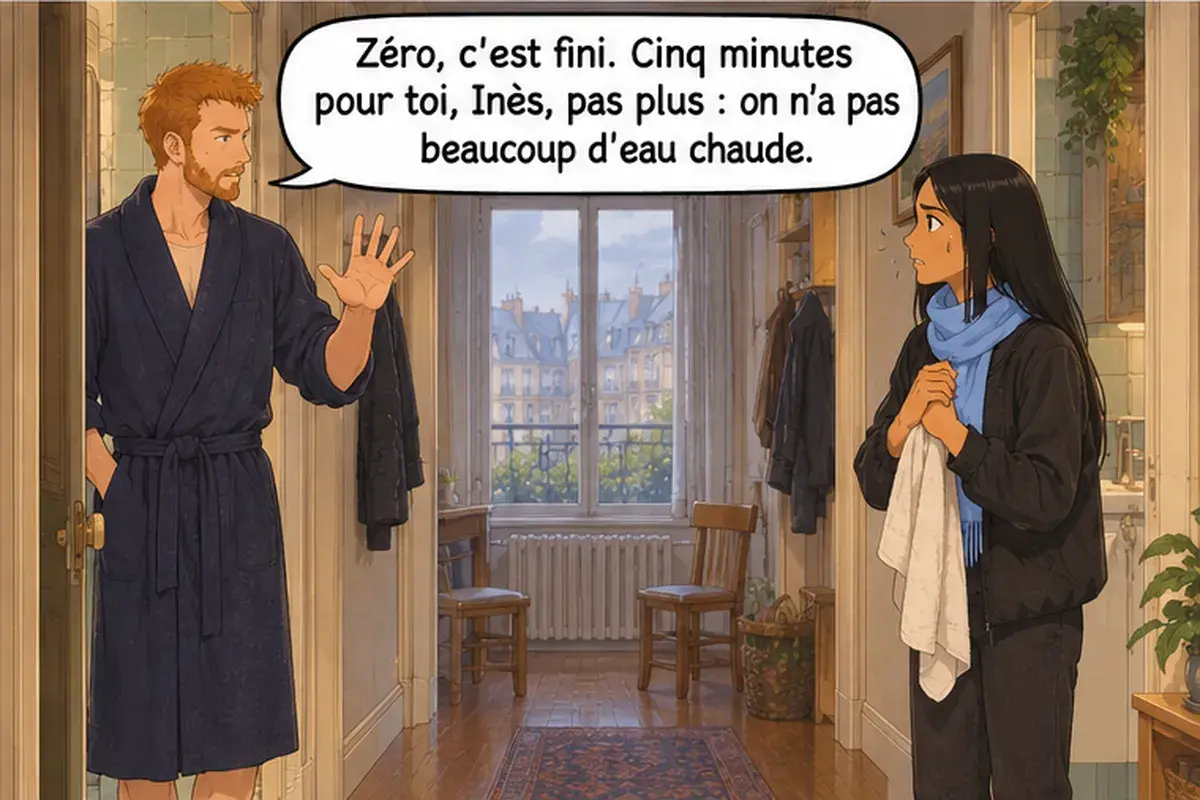
- Hugo
Zéro, c'est fini. Cinq minutes pour toi, Inès, pas plus : on n'a pas beaucoup d'eau chaude.
Zero, that's it. Five minutes for you, Inès, no more: we don't have much hot water.

- Inès
Je me douche vite, moi : deux minutes !
I shower fast: two minutes!

- Pacha
Et moi ? Quand est-ce que je me douche ?
What about me? When do I shower?
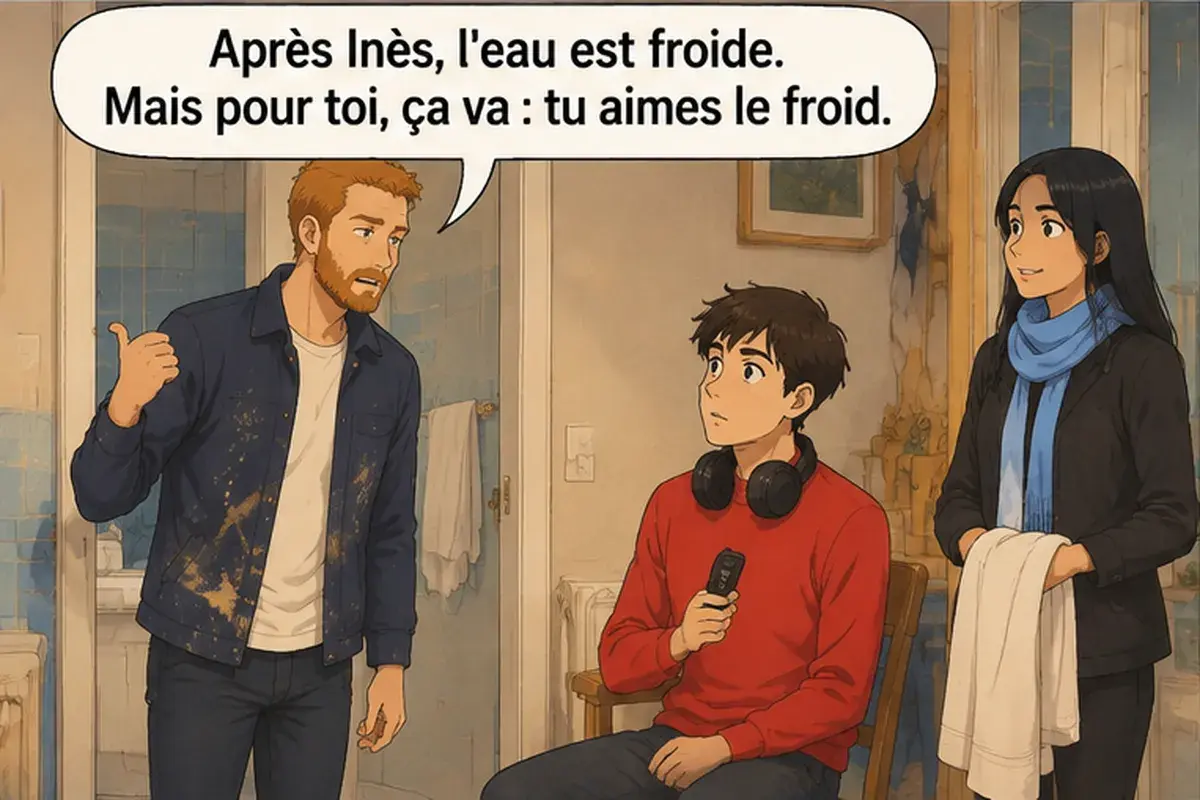
- Hugo
Après Inès, l'eau est froide. Mais pour toi, ça va : tu aimes le froid.
After Inès, the water is cold. But for you it's fine: you like the cold.

- Pacha
Très gentil, Hugo. Je me douche à midi.
Very nice, Hugo. I'm showering at noon.
Grammar for this text
- Quelle heure est-il, s'il te plaît ? — "What time is it, please?" The verb comes before the pronoun here (est-il): learn it as a set phrase; how this kind of question works comes at B1. In conversation people more often say Il est quelle heure ? s'il te plaît is the tu version of s'il vous plaît: "please" to a friend.
- Il est huit heures moins le quart — il est here just introduces the time, like English "it's". moins le quart — "quarter to": take the next hour (eight) and subtract a quarter.
- Je sais, mais je commence à huit heures — sais is the je form of the irregular verb savoir ("to know"; unit 7). je commence with nothing after it — "I start" (work, my day);
à huit heures— "at eight". en retard — "late". - Hugo se lève à quatre heures tous les jours — se lève — "gets up" (se lever); tous les jours — the set phrase "every day". Il a le temps — a is the il form of avoir; avoir le temps — "to have time".
- Je ne connais pas — connais is the je form of the irregular verb connaître ("to know, to be familiar with"; unit 7). Hugo is joking: he has never met this "weekend".
- je dors jusqu'à dix heures — dors is the je form of dormir ("to sleep"); the tu form is the same: tu dors. jusqu'à — "until".
- Quand est-ce que je me douche ? — quand — "when", then est-ce que and normal word order: je me douche.
Words and grammar of the unit: Tell the time and describe your day.
Learn the words from the texts with flashcards
In the app, you can tap any word in a text to see its translation, forms and examples, and new words stick with flashcards. 15 minutes a day.
Start for freeEverything is open for free. No card needed to sign up.