
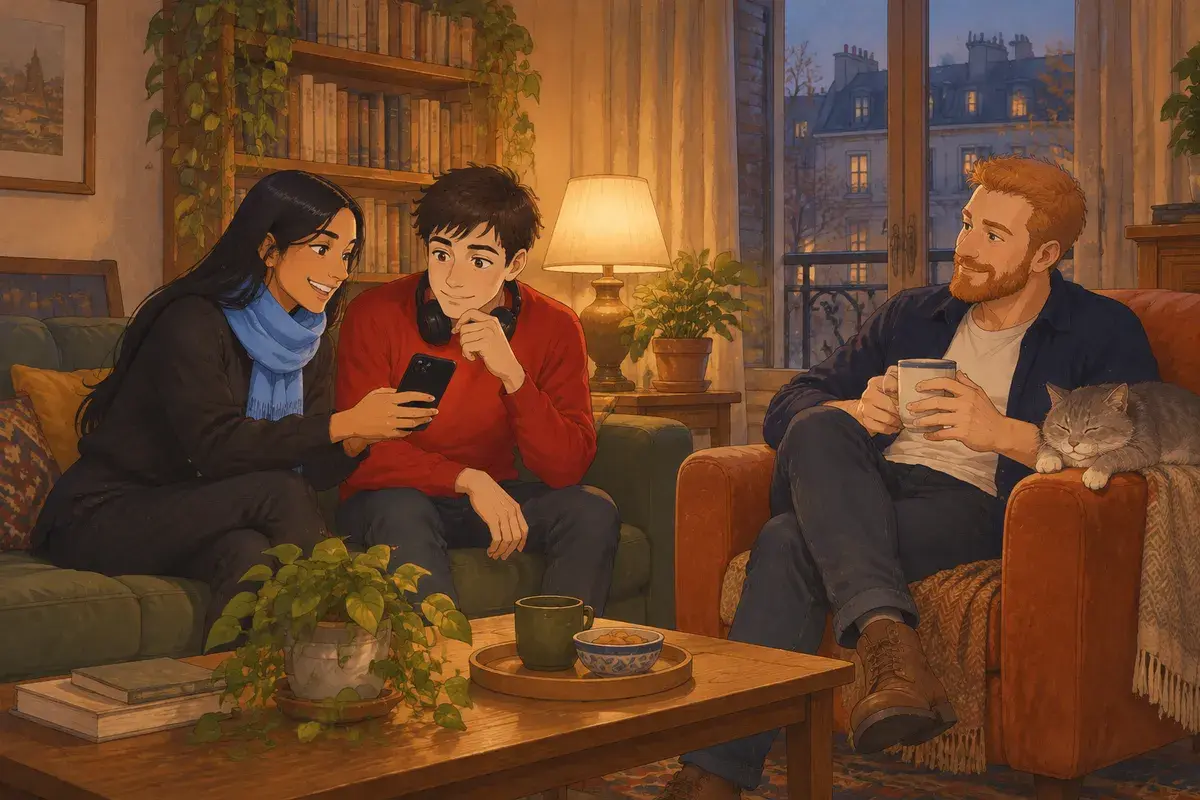
French dialogue with translation · A1 · 14 lines
Ça te dit ? How about it?
Comic · 14 panels
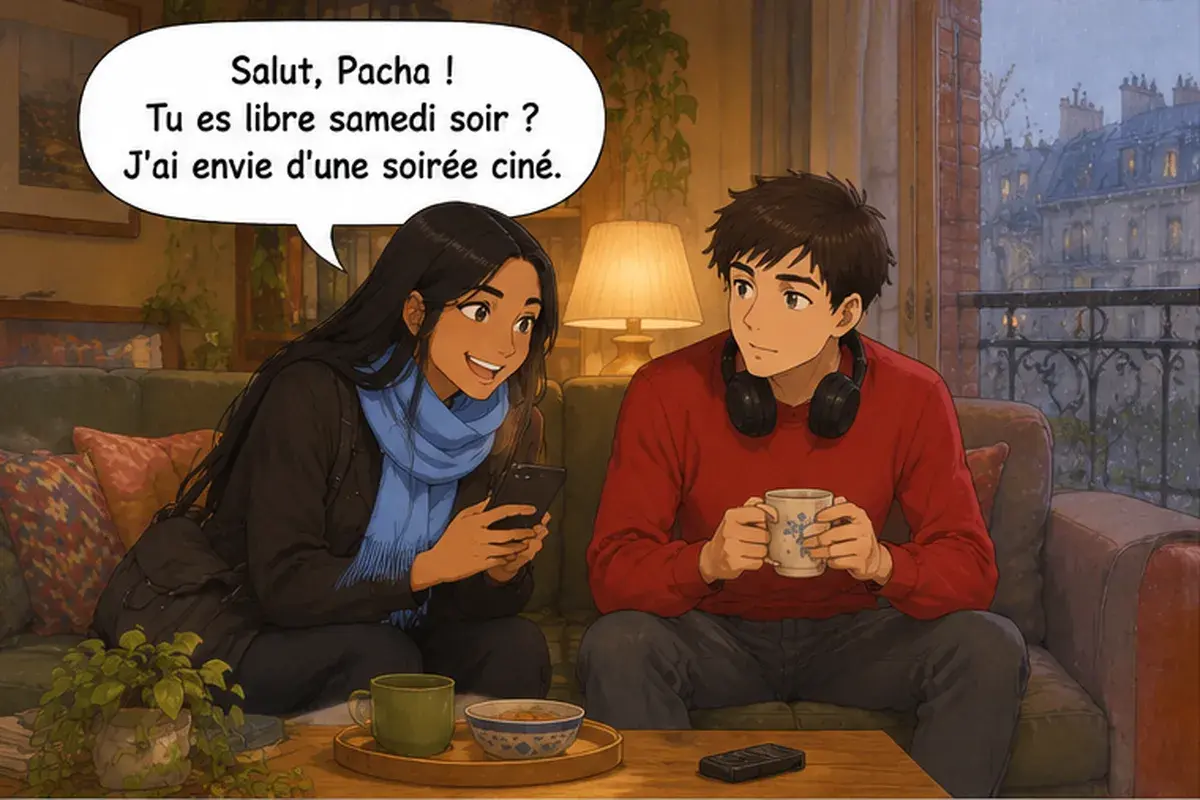
- Inès
Salut, Pacha ! Tu es libre samedi soir ? J'ai envie d'une soirée ciné.
Hi, Pacha! Are you free Saturday night? I feel like a movie night.
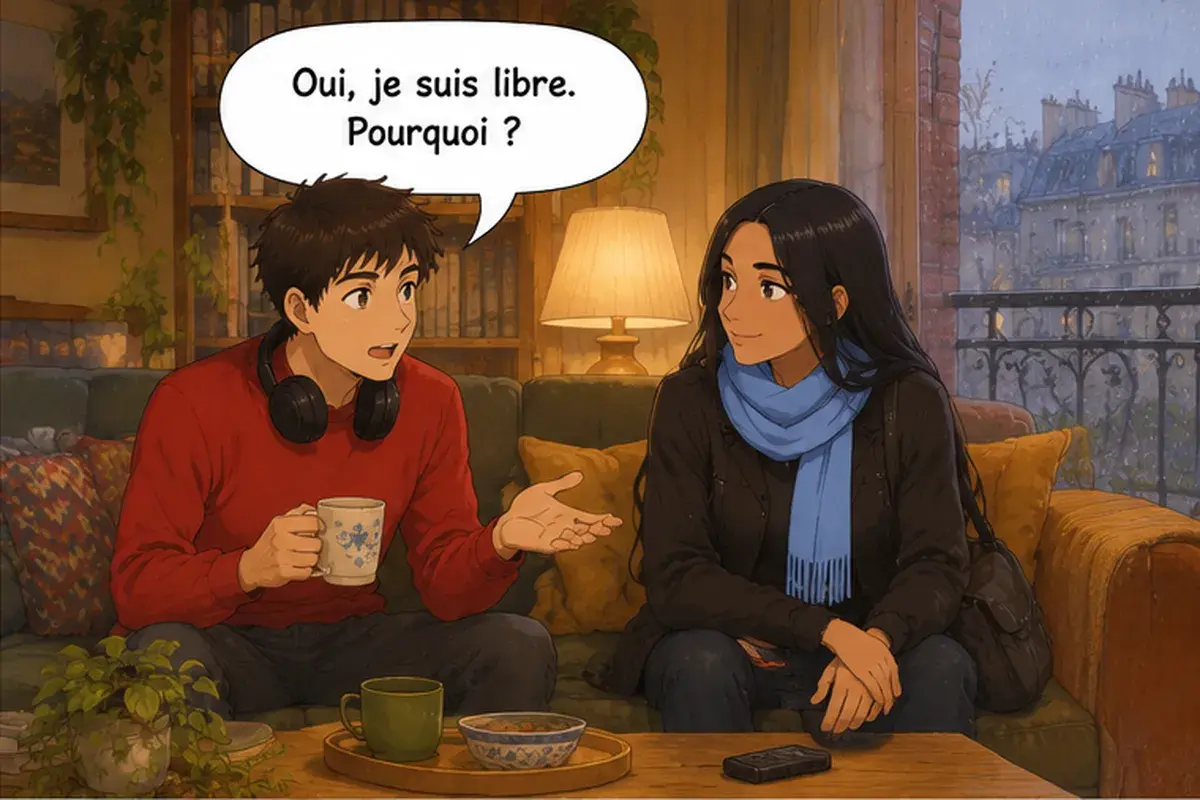
- Pacha
Oui, je suis libre. Pourquoi ?
Yes, I'm free. Why?
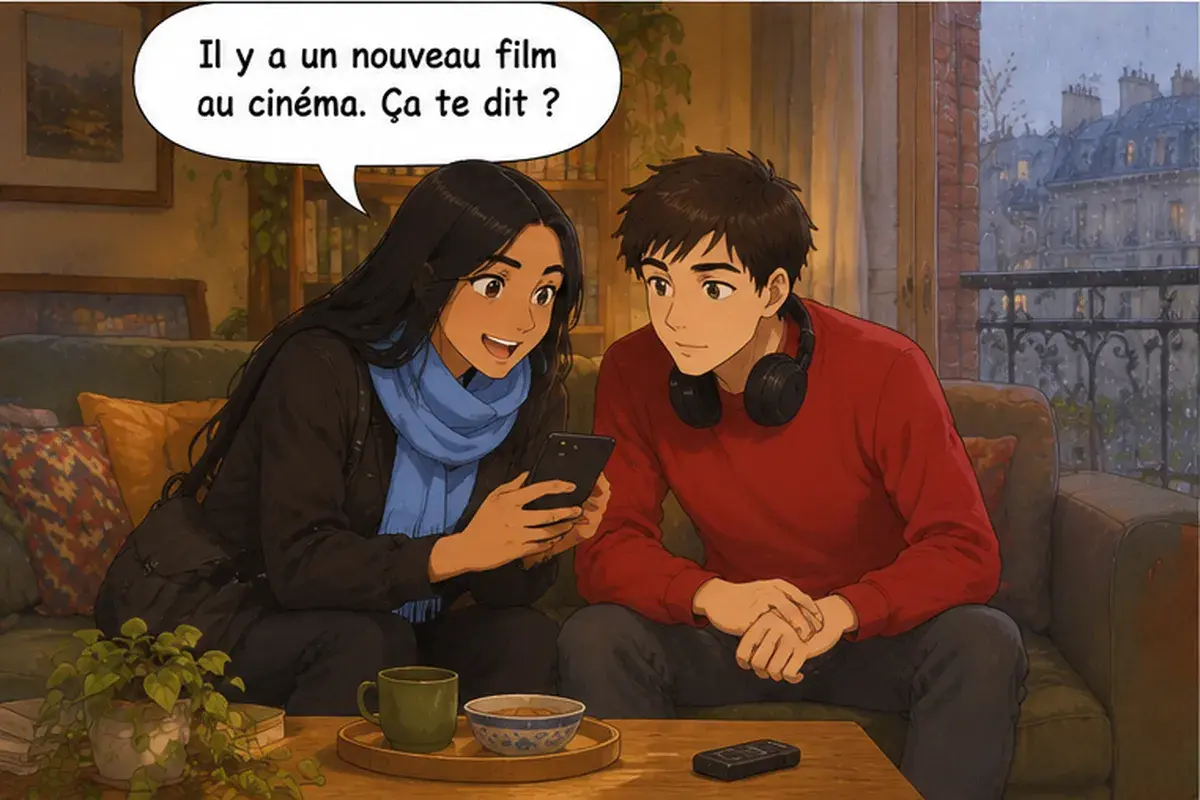
- Inès
Il y a un nouveau film au cinéma. Ça te dit ?
There's a new movie at the theater. How about it?
- Pacha
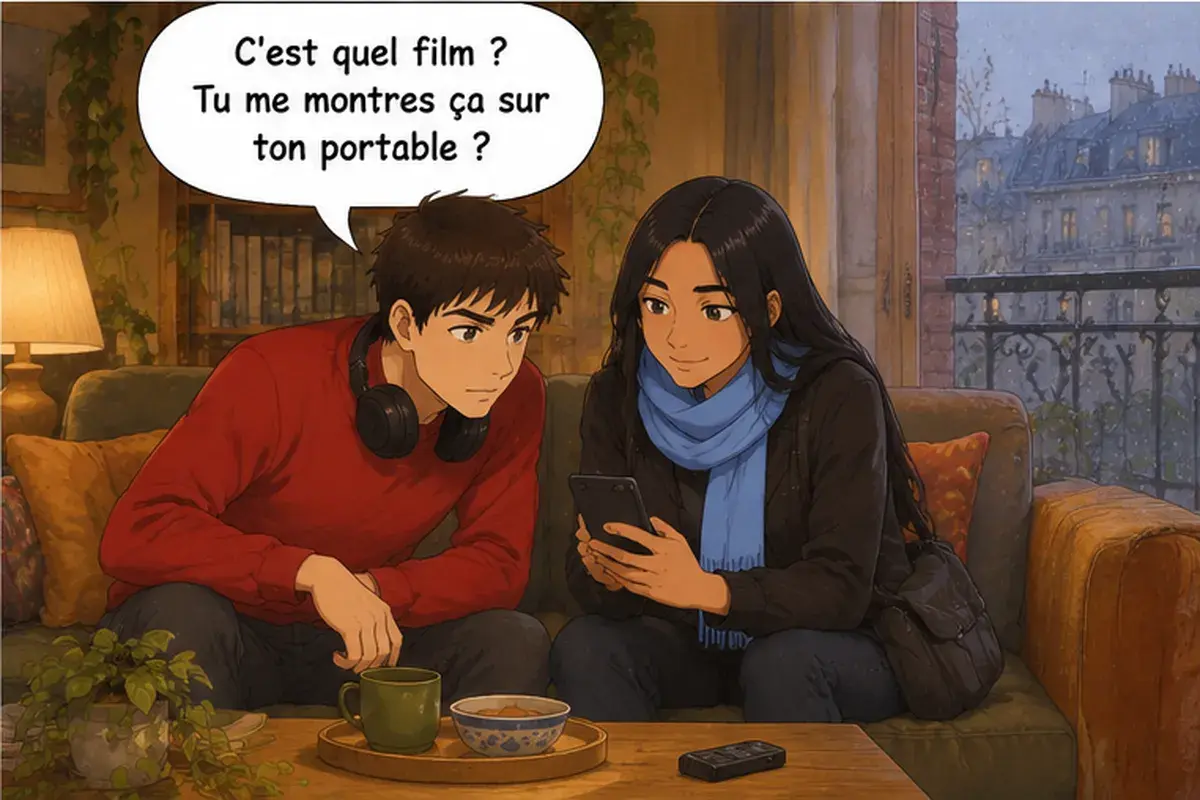
C'est quel film ? Tu me montres ça sur ton portable ?
What movie is it? Will you show me on your phone?
- Inès
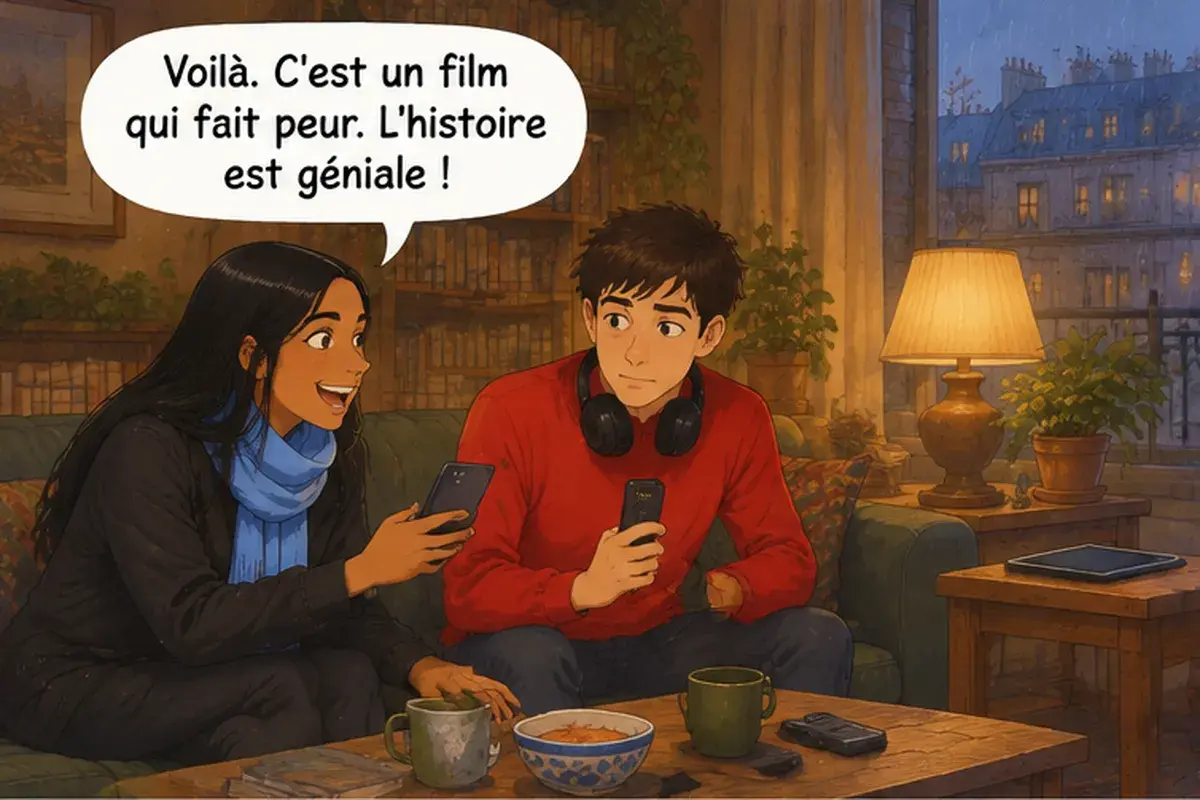
Voilà. C'est un film qui fait peur. L'histoire est géniale !
Here it is. It's a scary movie. The story is great!
- Pacha
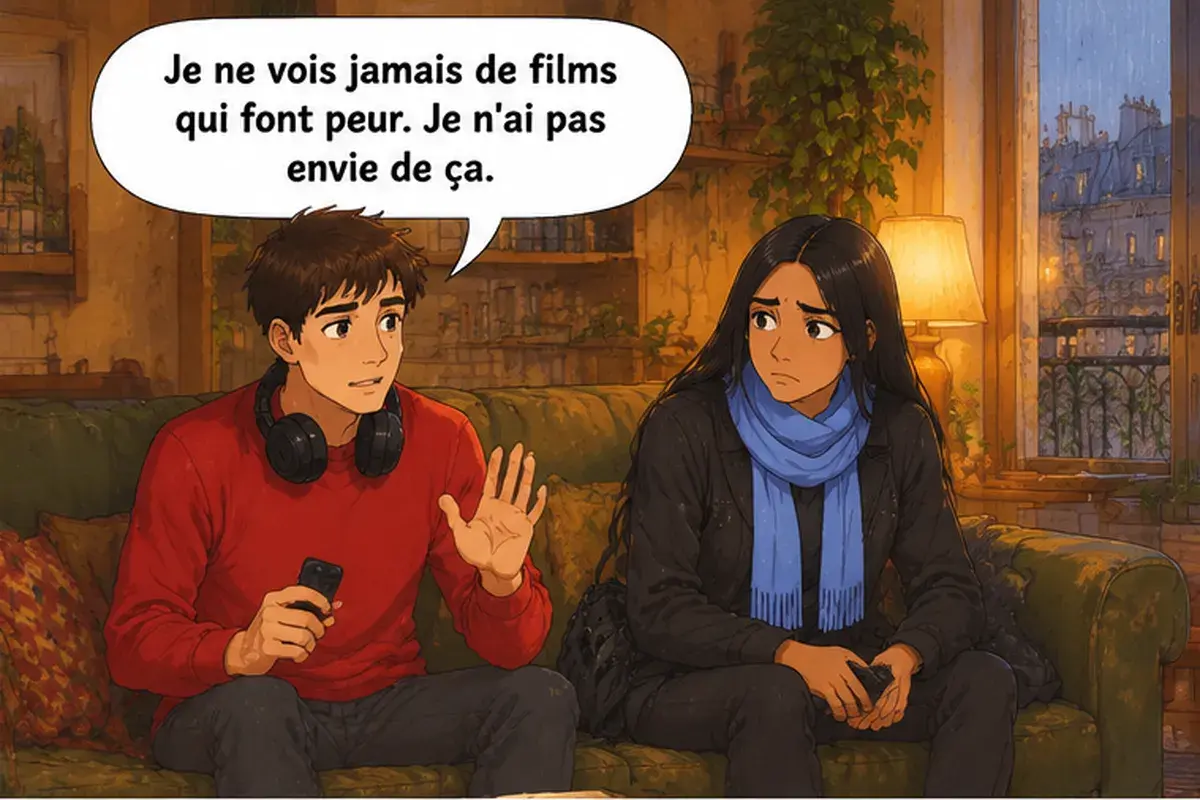
Je ne vois jamais de films qui font peur. Je n'ai pas envie de ça.
I never see scary movies. I don't feel like it.
- Hugo
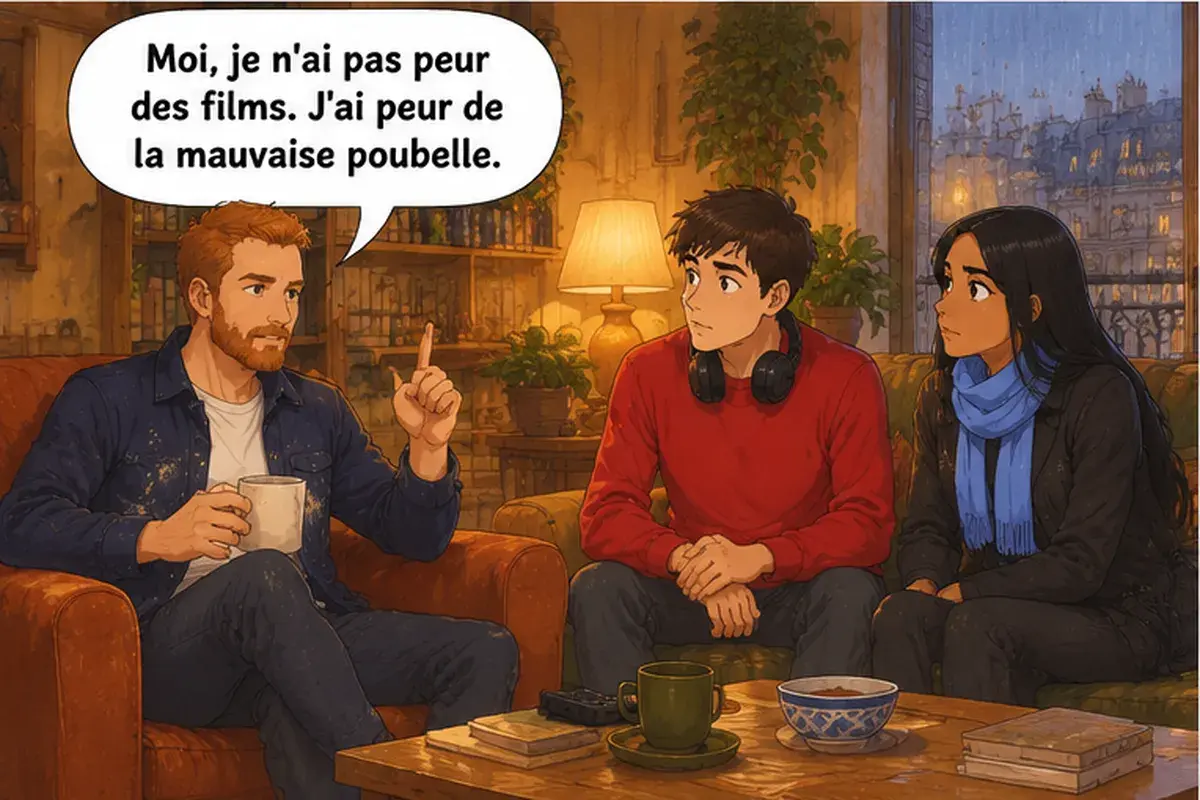
Moi, je n'ai pas peur des films. J'ai peur de la mauvaise poubelle.
Me, I'm not afraid of movies. I'm afraid of the wrong trash can.
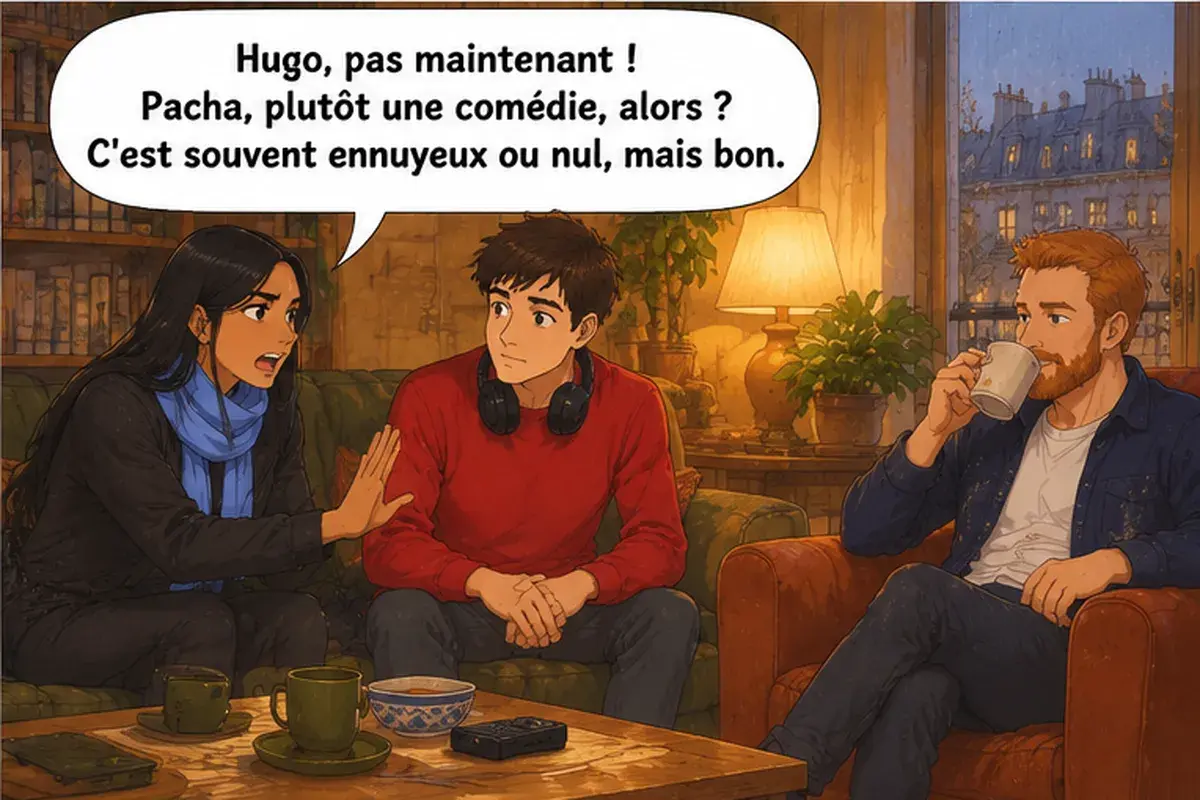
- Inès
Hugo, pas maintenant ! Pacha, plutôt une comédie, alors ? C'est souvent ennuyeux ou nul, mais bon.
Hugo, not now! Pacha, a comedy instead, then? It's often boring or lame, but oh well.
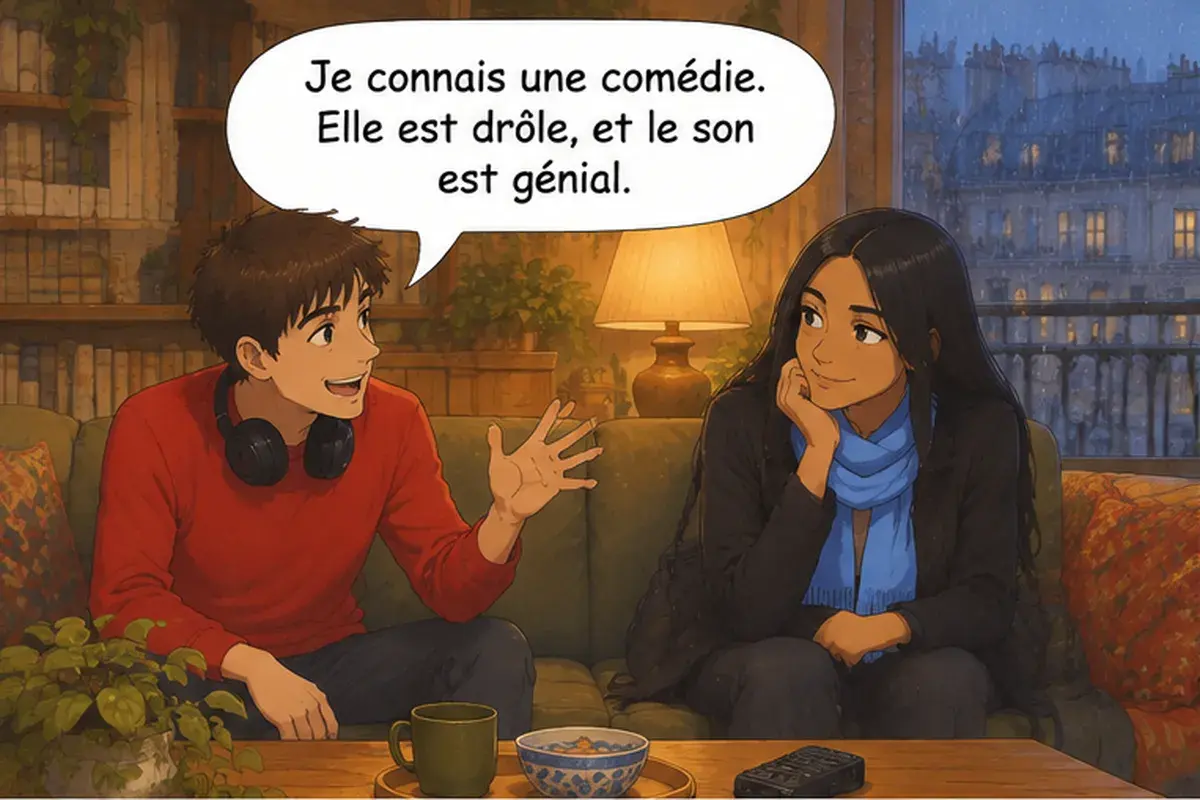
- Pacha
Je connais une comédie. Elle est drôle, et le son est génial.
I know a comedy. It's funny, and the sound is great.
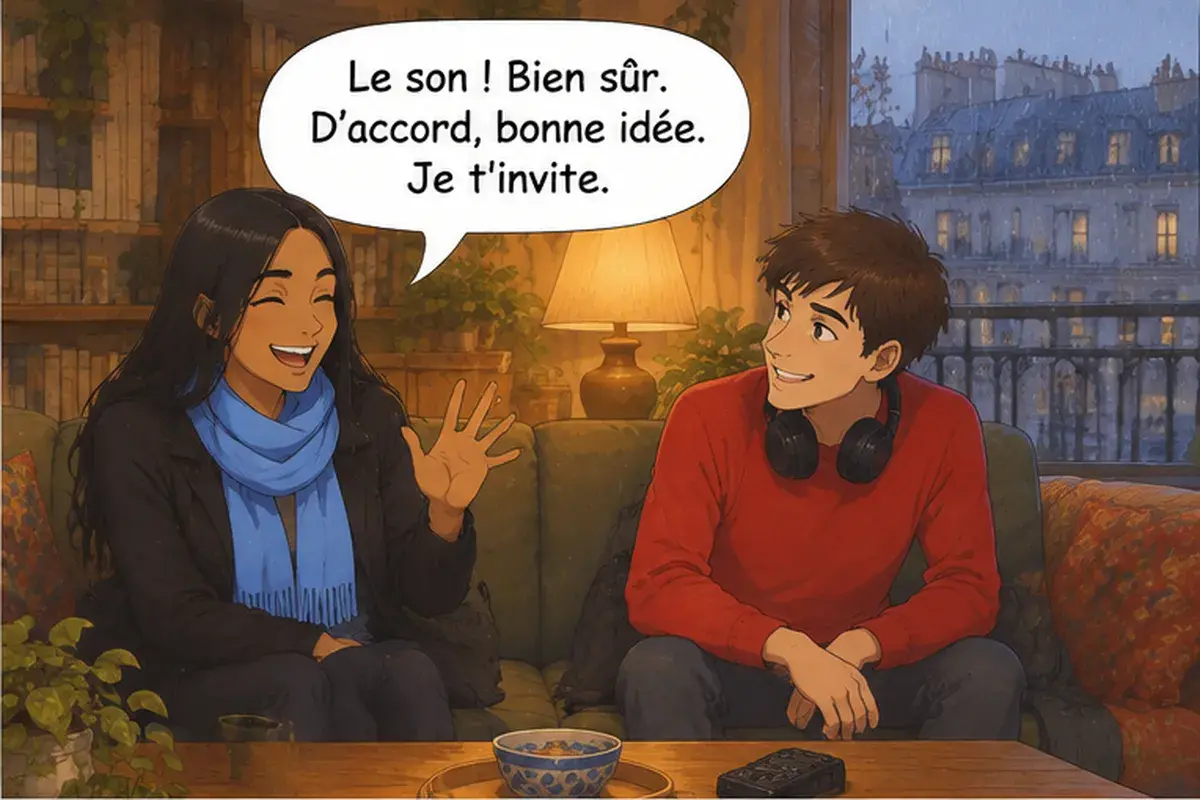
- Inès
Le son ! Bien sûr. D'accord, bonne idée. Je t'invite.
The sound! Of course. OK, good idea. It's on me.
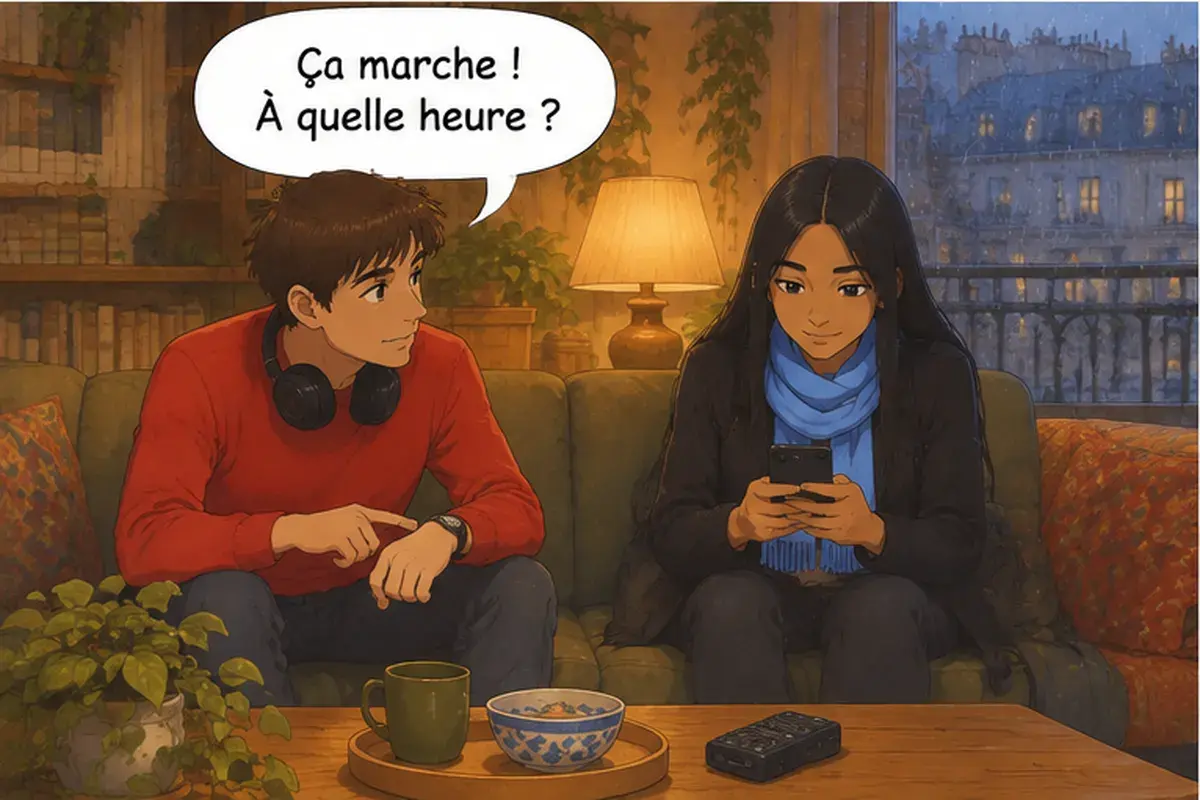
- Pacha
Ça marche ! À quelle heure ?
Sounds good! What time?
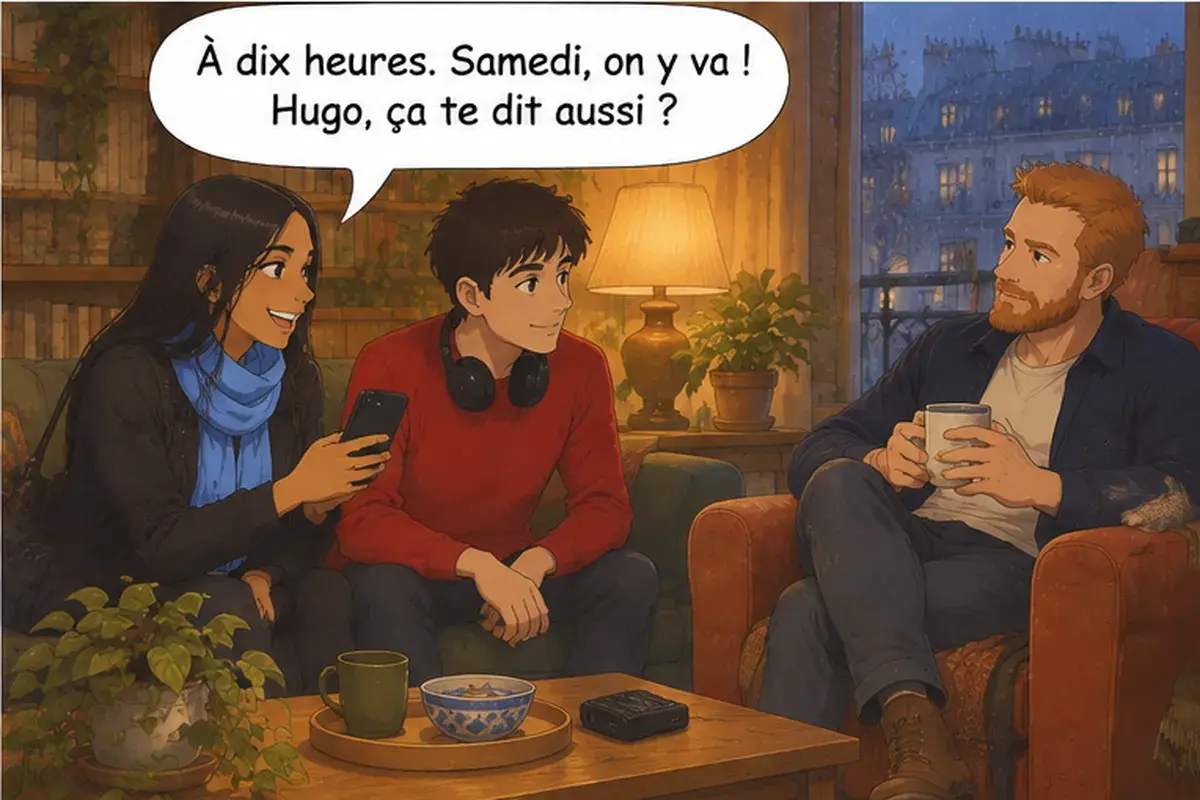
- Inès
À dix heures. Samedi, on y va ! Hugo, ça te dit aussi ?
At ten. Saturday, let's go! Hugo, do you feel like it too?
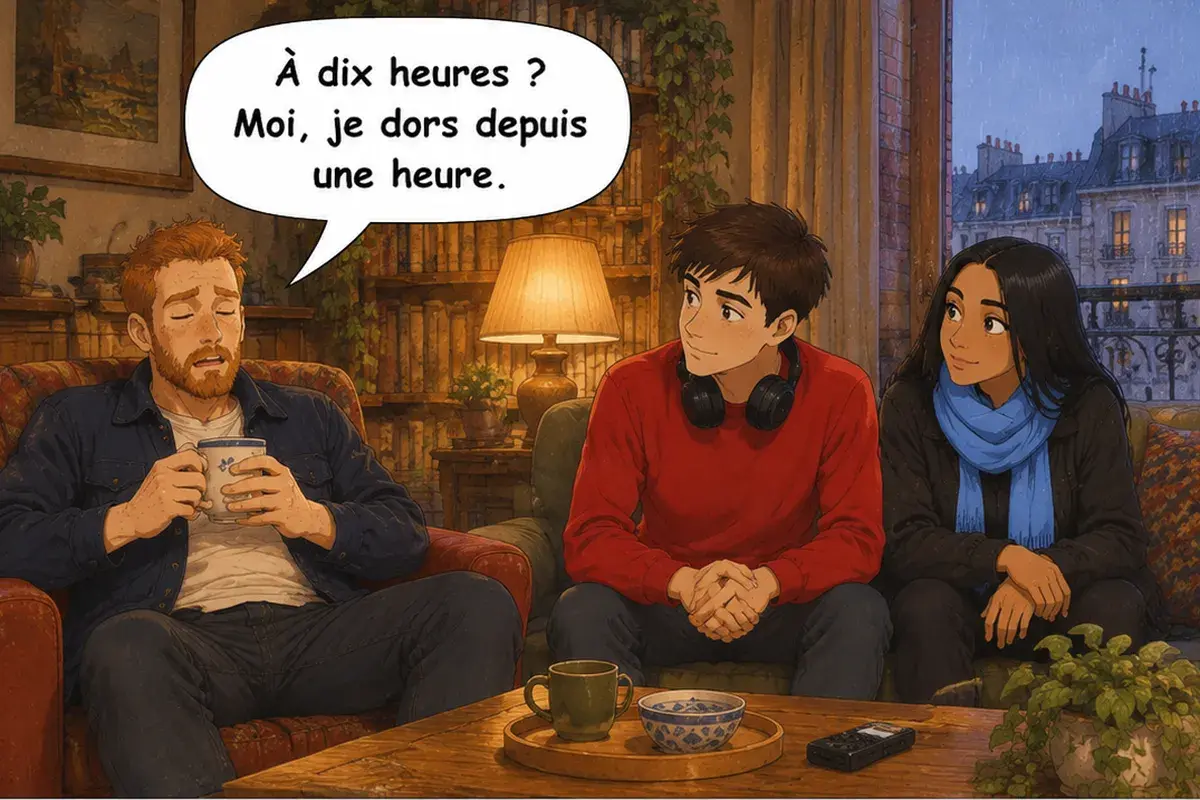
- Hugo
À dix heures ? Moi, je dors depuis une heure.
At ten? By then I've been asleep for an hour.
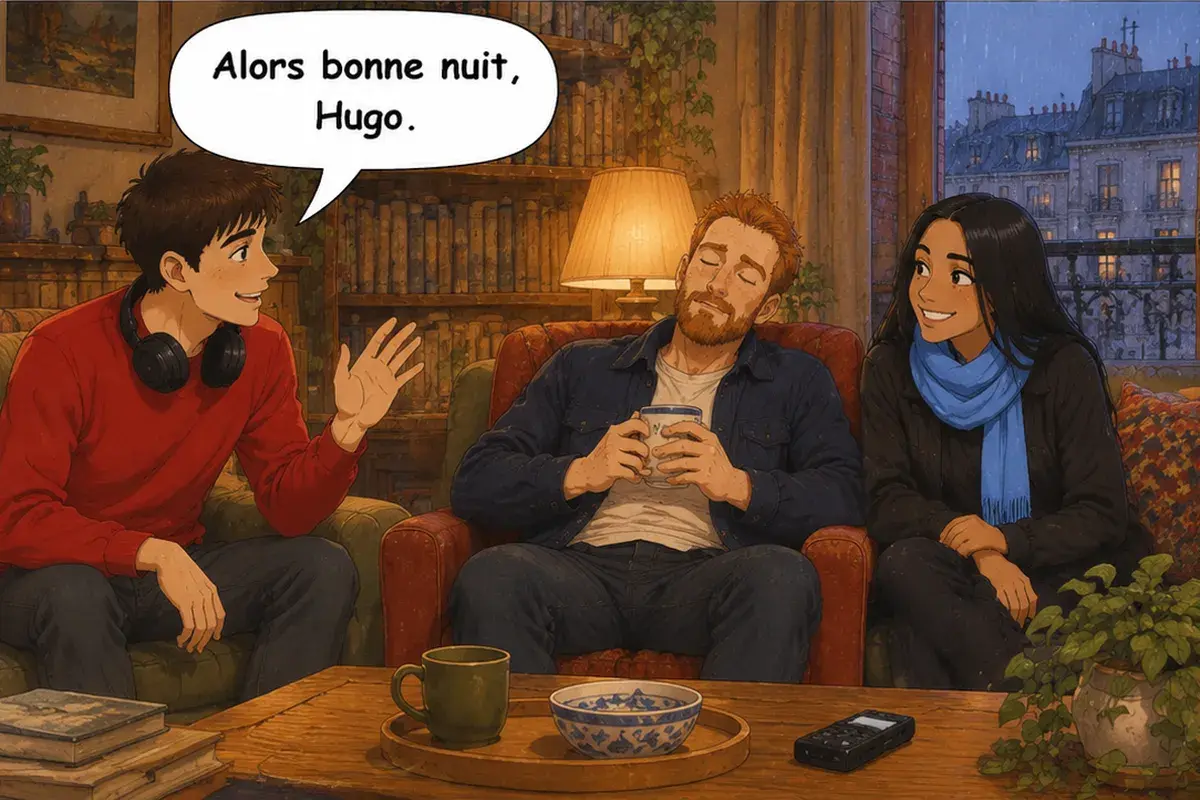
- Pacha
Alors bonne nuit, Hugo.
Good night then, Hugo.
Grammar for this text
- Ça te dit ? — a set phrase for suggesting a plan: "how about it? do you feel like it?", literally "does it say (something) to you?". dit is the il form of dire (to say), and te means "(to) you": a short word that goes before the verb. With vous: ça vous dit. The answer: Ça marche ! (sounds good).
- Tu me montres ça sur ton portable ?: me means "(to) me" and goes before the verb, like te: "will you show me?". tu me donnes… (will you give me…?) works the same way. It's a request made as a question, with your voice going up.
- Je t'invite: t' = te before a vowel: "I'm inviting you". In France people say it when they pay for a friend: "it's on me".
- un film qui fait peur: qui means "that": "a movie that scares (you)", a scary movie. It comes right after the noun, before the verb. faire peur — to scare; fait is the il form of faire, font is the ils form.
- Je ne vois jamais de films: vois is the je form of voir (to see; for movies, to watch). After ne… jamais, des becomes de. J'ai peur de la mauvaise poubelle: Hugo's joke: movies don't scare him, but putting trash in the wrong bin does.
avoir peur de— to be afraid of.- le son est génial: son with the article le means "sound", not "his". On y va ! — Let's go!, literally "we go there".
- Moi, je dors depuis une heure: depuis + a length of time means the action started then and is still going: Hugo goes to bed at nine, so at ten he's been asleep for an hour. French uses the present here; English uses "have been".
Words and grammar of the unit: Invite a friend to the movies.
Learn the words from the texts with flashcards
In the app, you can tap any word in a text to see its translation, forms and examples, and new words stick with flashcards. 15 minutes a day.
Start for freeEverything is open for free. No card needed to sign up.