

Spanish dialogue with translation · B2 · 14 lines
Hablar mal es mejor que no hablar Speaking badly is better than not speaking
Comic · 14 panels

- Ana
Mei, ¡qué bien verte por aquí! ¿Es tu primera vez en el local?
Mei, it's so good to see you here! Is this your first time at our space?
- Mei
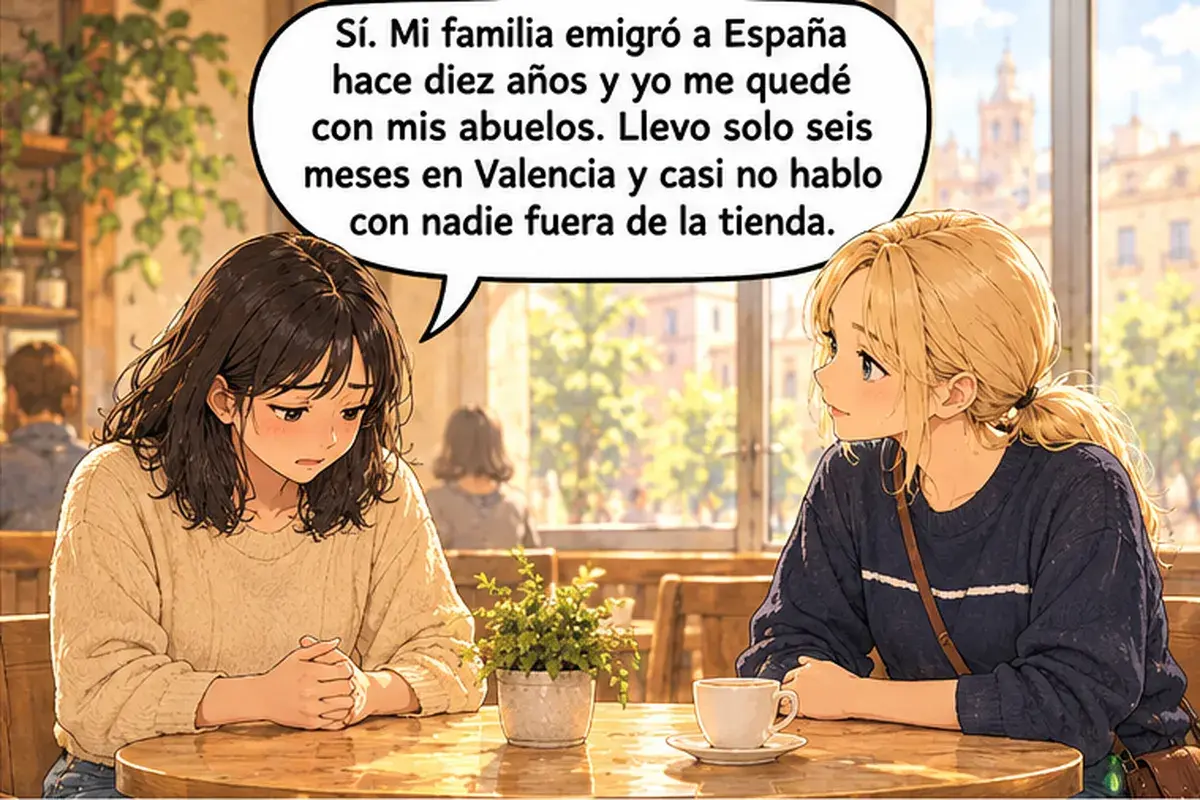
Sí. Mi familia emigró a España hace diez años y yo me quedé con mis abuelos. Llevo solo seis meses en Valencia y casi no hablo con nadie fuera de la tienda.
Yes. My family emigrated to Spain ten years ago and I stayed with my grandparents. I've only been in Valencia for six months, and I hardly talk to anyone outside the store.

- Ana
Pero entiendes mucho: hace un rato te oí con Teresa y lo entendiste todo.
But you understand a lot: a little while ago I heard you with Teresa, and you understood everything.

- Mei
Entender es fácil. Cuando tengo que hablar, me quedo en blanco: me da miedo equivocarme y que la gente se ría.
Understanding is easy. When I have to speak, my mind goes blank: I'm afraid of making mistakes and of people laughing.
- Ana
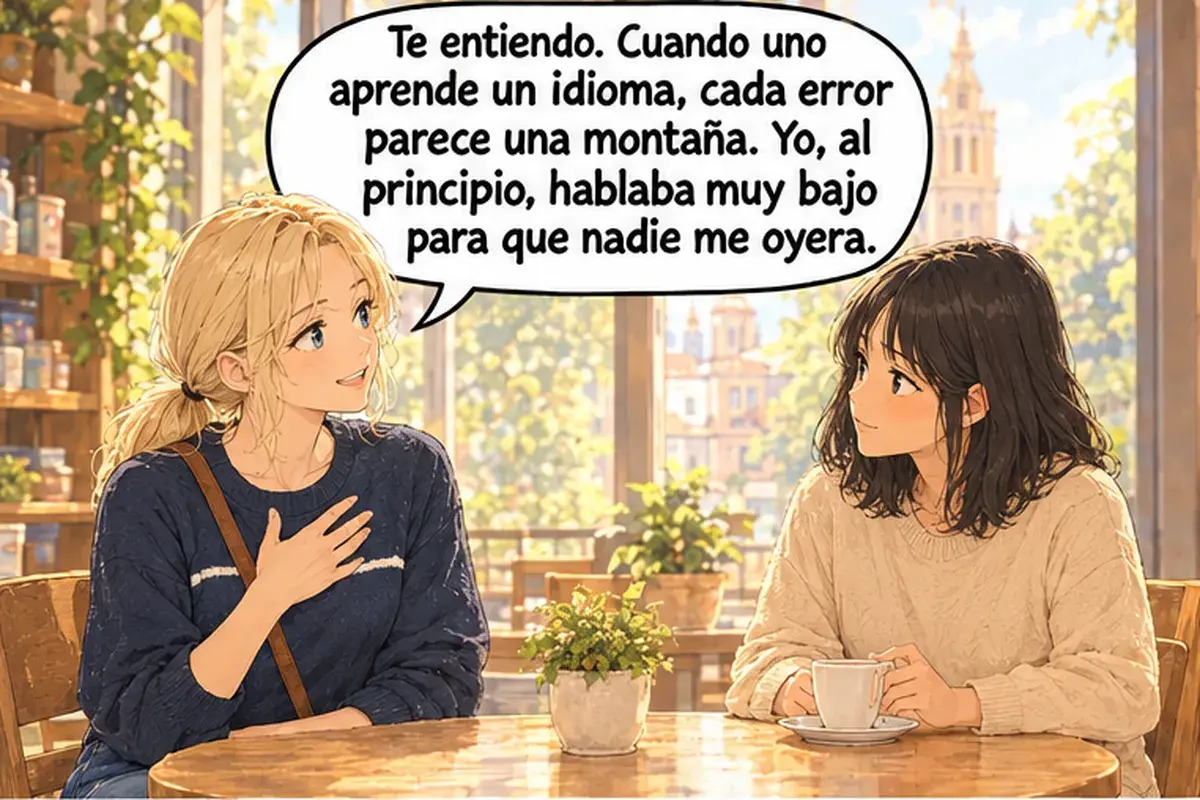
Te entiendo. Cuando uno aprende un idioma, cada error parece una montaña. Yo, al principio, hablaba muy bajo para que nadie me oyera.
I understand. When you're learning a language, every mistake seems like a mountain. At first, I used to speak very quietly so that nobody would hear me.

- Mei
Y hay otra cosa: mucha gente me habla muy alto y muy despacio, como si yo no entendiera nada.
And there's something else: a lot of people talk to me very loudly and very slowly, as if I didn't understand anything.
- Ana
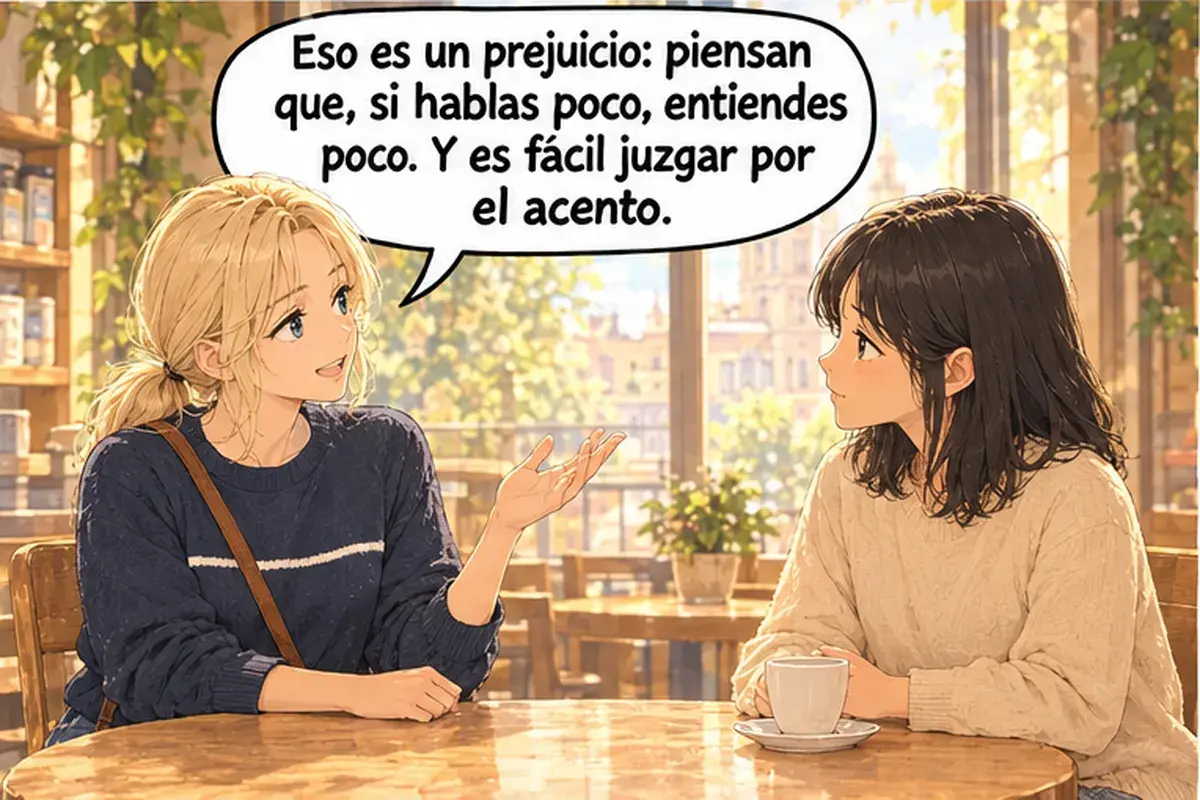
Eso es un prejuicio: piensan que, si hablas poco, entiendes poco. Y es fácil juzgar por el acento.
That's a prejudice: they think that if you don't speak much, you don't understand much. And it's easy to judge people by their accent.
- Mei
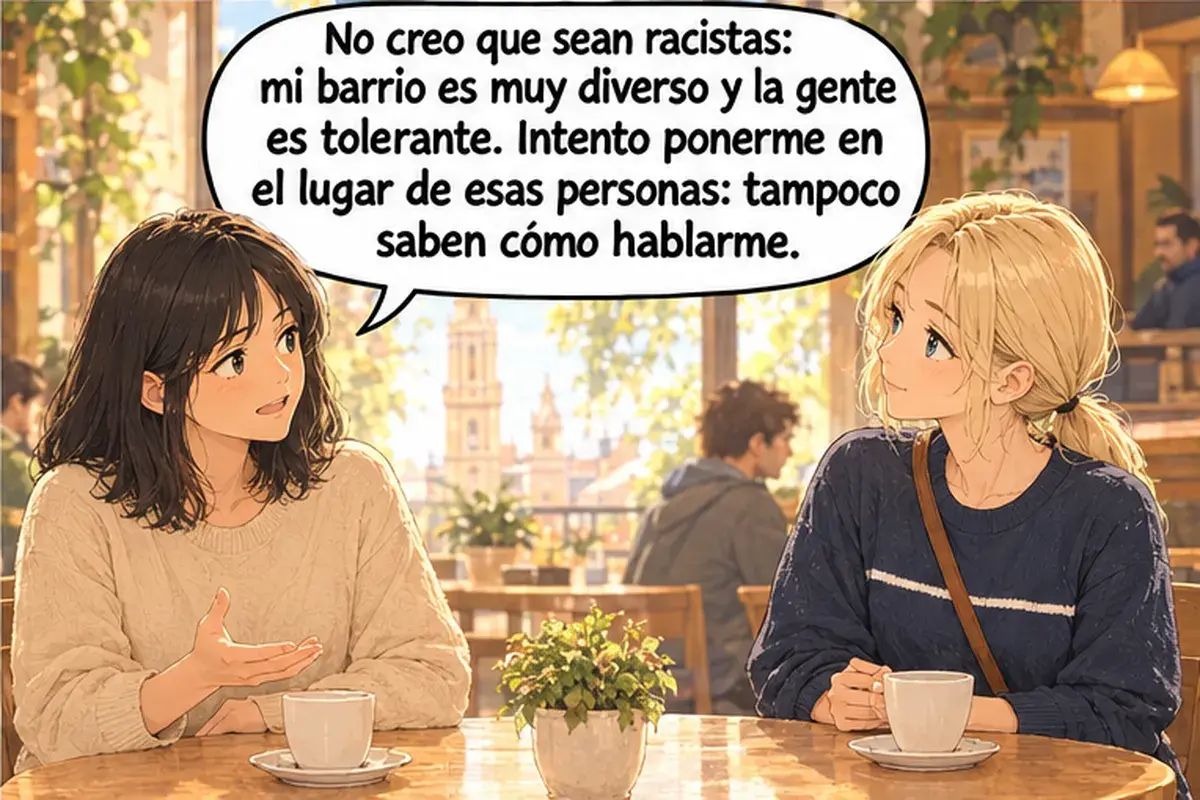
No creo que sean racistas: mi barrio es muy diverso y la gente es tolerante. Intento ponerme en el lugar de esas personas: tampoco saben cómo hablarme.
I don't think they're racist: my neighborhood is very diverse and people are tolerant. I try to put myself in those people's shoes: they don't know how to talk to me either.

- Ana
¿Y tu español? ¿Cómo estudias ahora?
And your Spanish? How are you studying now?
- Mei
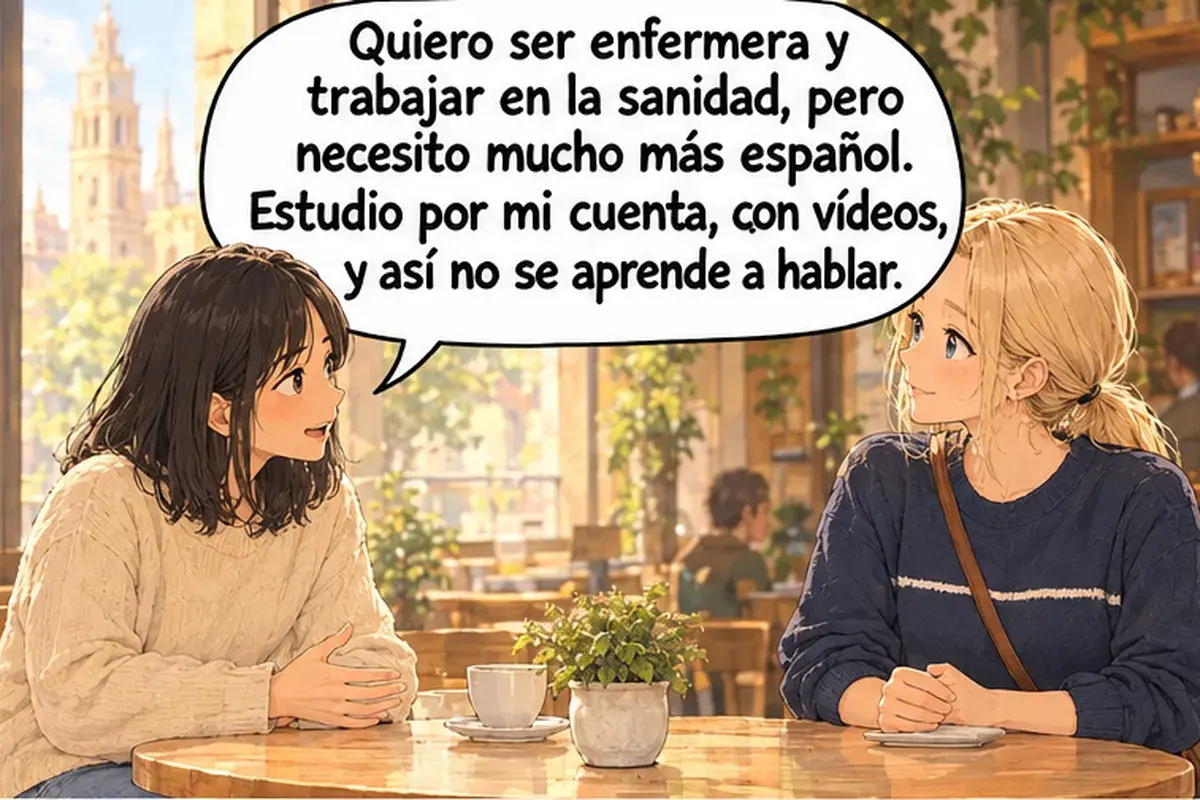
Quiero ser enfermera y trabajar en la sanidad, pero necesito mucho más español. Estudio por mi cuenta, con vídeos, y así no se aprende a hablar.
I want to be a nurse and work in health care, but I need a lot more Spanish. I study on my own, with videos, and that's not how you learn to speak (woman speaking).
- Ana
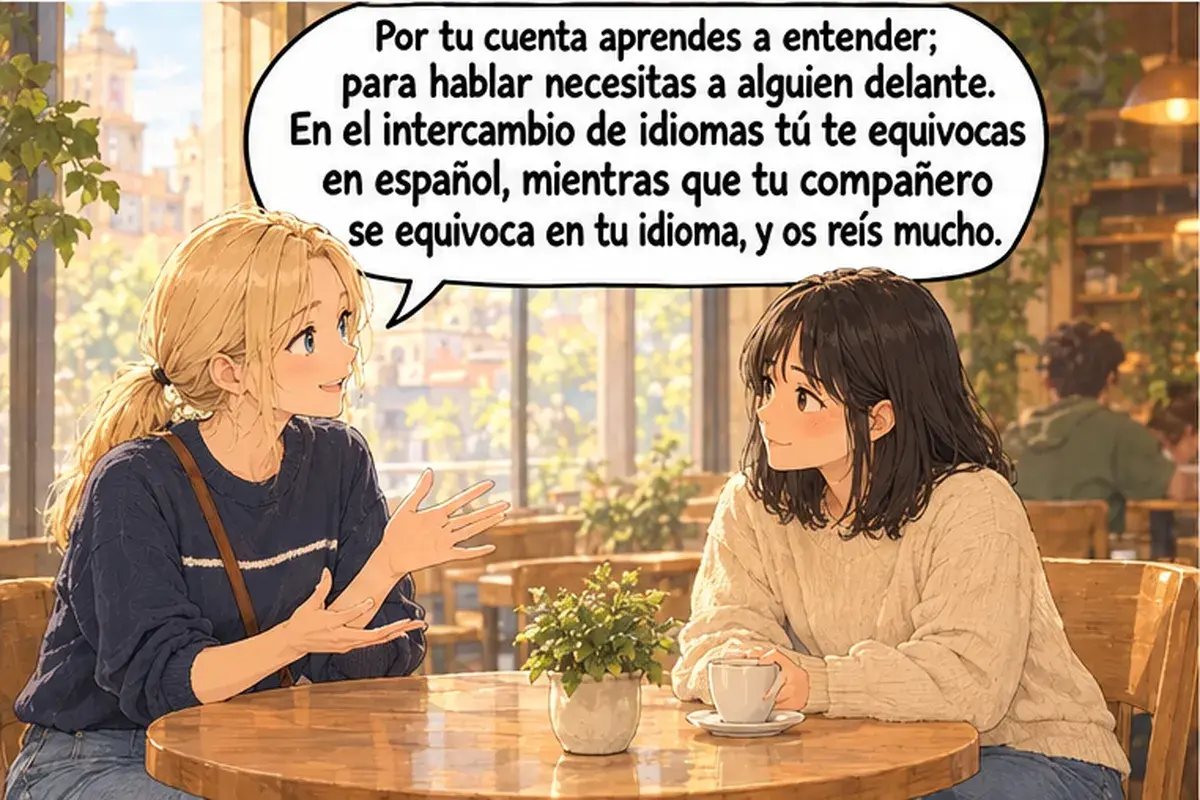
Por tu cuenta aprendes a entender; para hablar necesitas a alguien delante. En el intercambio de idiomas tú te equivocas en español, mientras que tu compañero se equivoca en tu idioma, y os reís mucho.
On your own you learn to understand; to speak, you need someone in front of you. At a language exchange you make mistakes in Spanish, whereas your partner makes mistakes in your language, and the two of you laugh a lot.

- Mei
¿Y si me equivoco delante de todos? Me da mucha vergüenza.
And what if I make a mistake in front of everyone? I get really embarrassed.

- Ana
Te equivocarás, como todos. La barrera no es el idioma, es el miedo, y hablar mal es mejor que no hablar.
You will, like everyone. The barrier isn't the language, it's fear, and speaking badly is better than not speaking.

- Mei
Vale, me animo. Pero me ayudas tú con la primera frase.
OK, I'm up for it. But you'll help me with the first sentence.
Grammar for this text
Si hablas poco, entiendes poco — generic tú: "if you (anyone) don't speak much…". It's the tú form without the word tú, just like English general "you". Cuando uno aprende un idioma, cada error parece una montaña — the same idea with uno: a little more formal and softer.
Como si yo no entendiera nada — como si ("as if") always takes the imperfect subjunctive: entendiera. The rule is in unit 18.
Me da miedo equivocarme y que la gente se ría — after me da miedo ("I'm afraid") use the infinitive when the fear is about your own action (equivocarme), and que + subjunctive when it's about what other people do (que la gente se ría). Me quedo en blanco — "my mind goes blank".
Hablar mal es mejor que no hablar — the infinitive works as the subject: "speaking badly is better than not speaking". English uses -ing here; Spanish uses the infinitive. Mientras que tu compañero se equivoca en tu idioma — two sides compared: you make mistakes in Spanish, your partner in your language.
Words and grammar of the unit: Help newcomers settle in.
Learn the words from the texts with flashcards
In the app, you can tap any word in a text to see its translation, forms and examples, and new words stick with flashcards. 15 minutes a day.
Start for freeEverything is open for free. No card needed to sign up.