

Spanish dialogue with translation · B2 · 12 lines
La llamo del ayuntamiento I'm calling you from city hall (to a woman, formal)
Comic · 12 panels
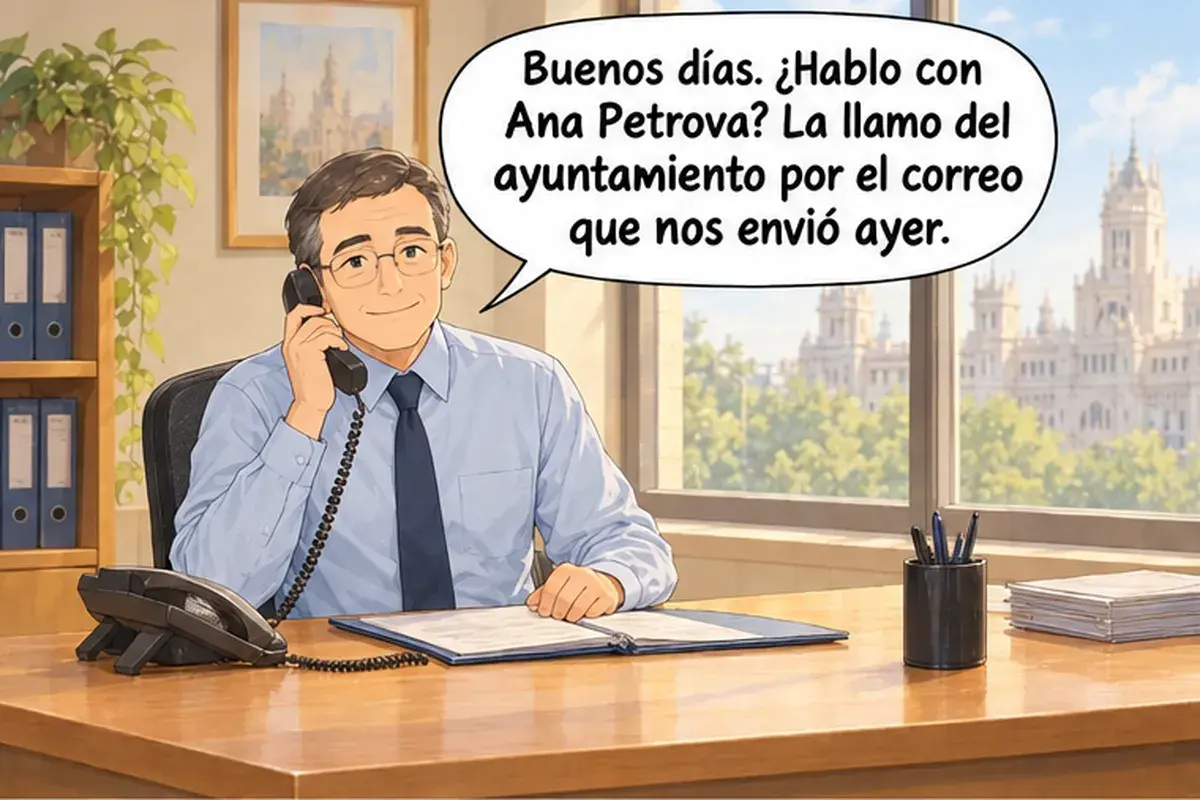
- Funcionario
Buenos días. ¿Hablo con Ana Lind? La llamo del ayuntamiento por el correo que nos envió ayer.
Good morning. Am I speaking with Ana Lind? I'm calling you from city hall about the email you sent us yesterday (to a woman, formal).
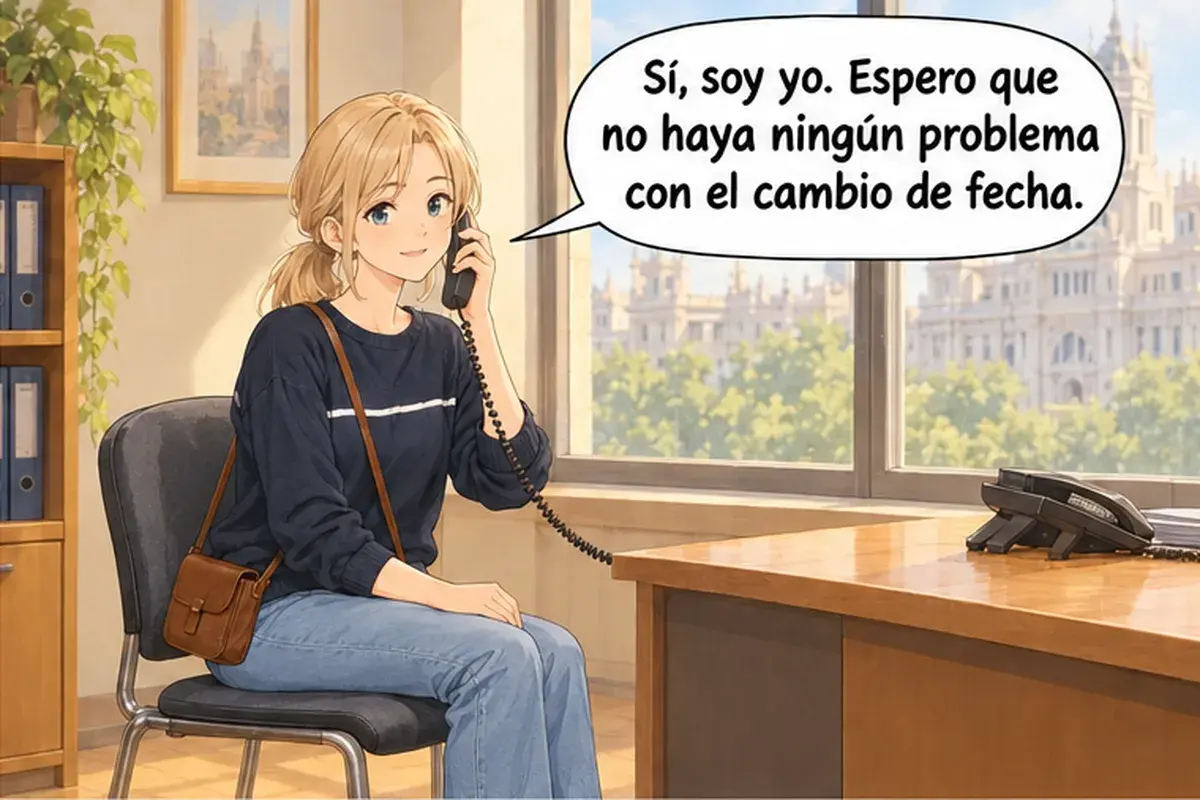
- Ana
Sí, soy yo. Espero que no haya ningún problema con el cambio de fecha.
Yes, that's me. I hope there's no problem with the change of date.
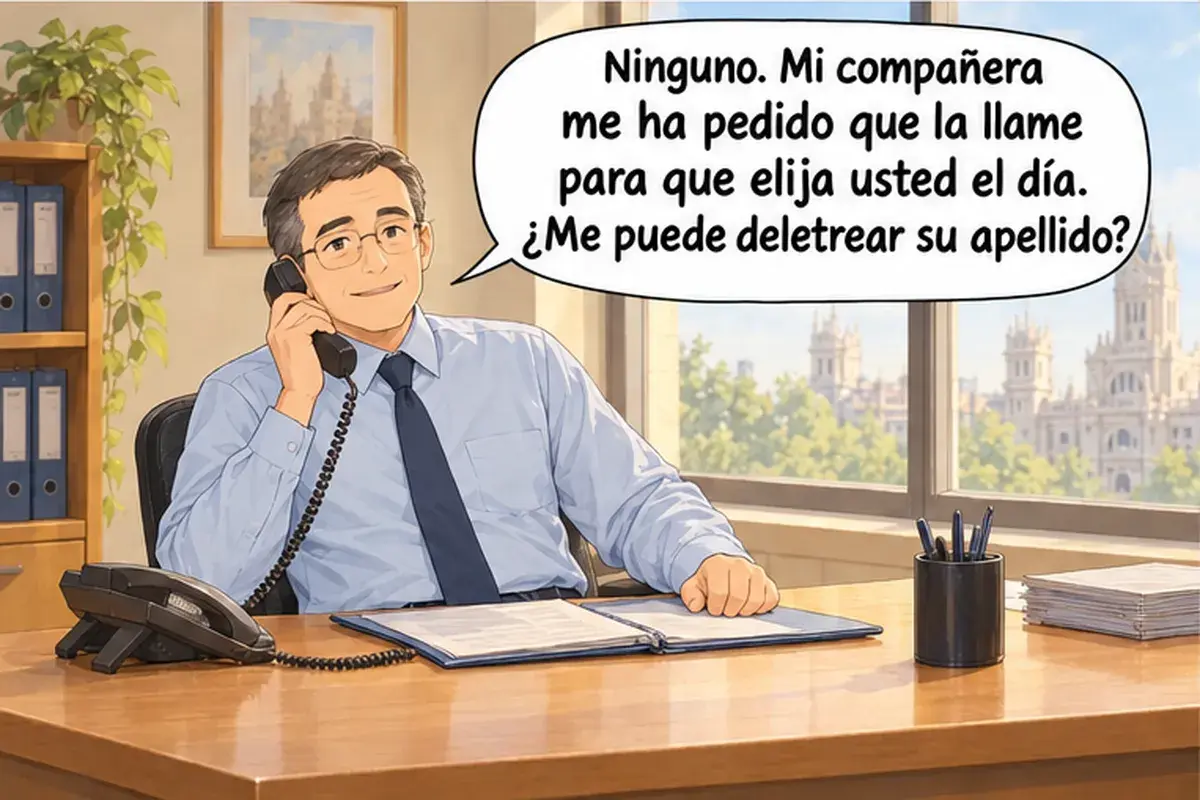
- Funcionario
Ninguno. Mi compañera me ha pedido que la llame para que elija usted el día. ¿Me puede deletrear su apellido?
None. My coworker has asked me to call you so that you can choose the day. Can you spell your last name for me? (to a woman, formal)
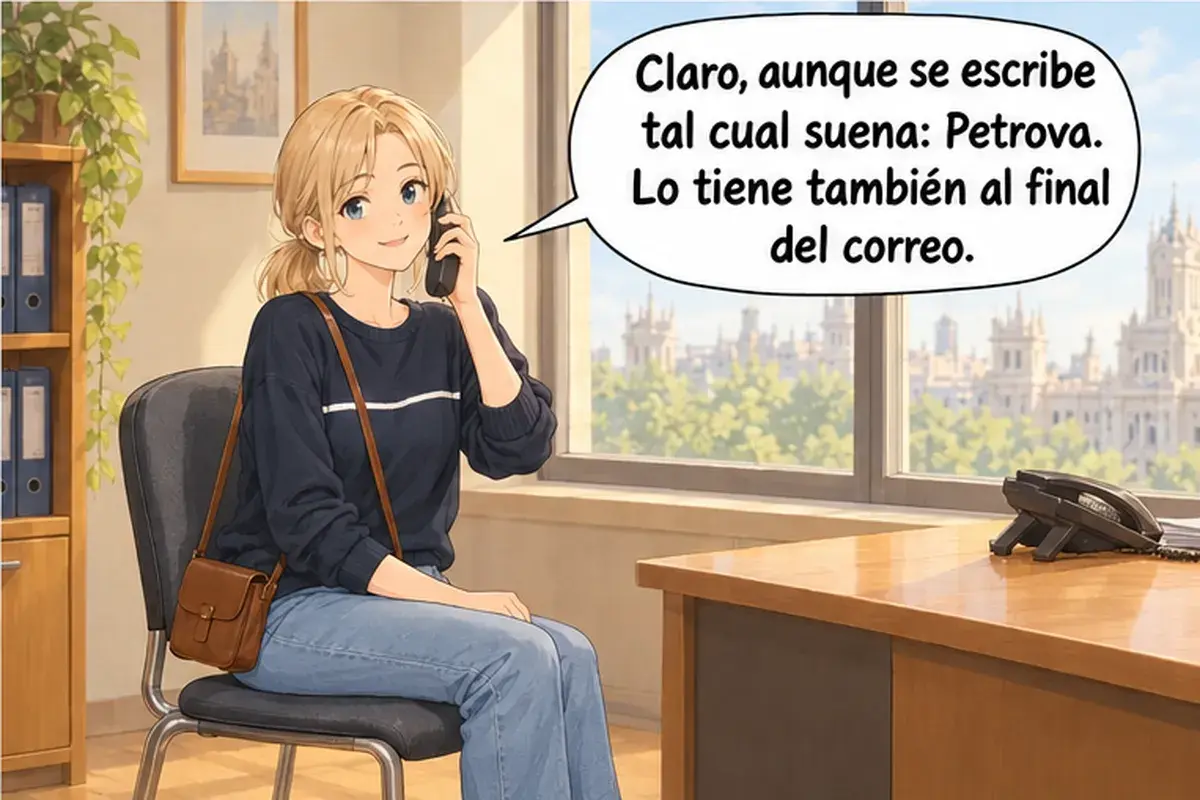
- Ana
Claro, aunque se escribe tal cual suena: Lind. Lo tiene también al final del correo.
Sure, although it's spelled just the way it sounds: Lind. You also have it at the end of the email (formal).
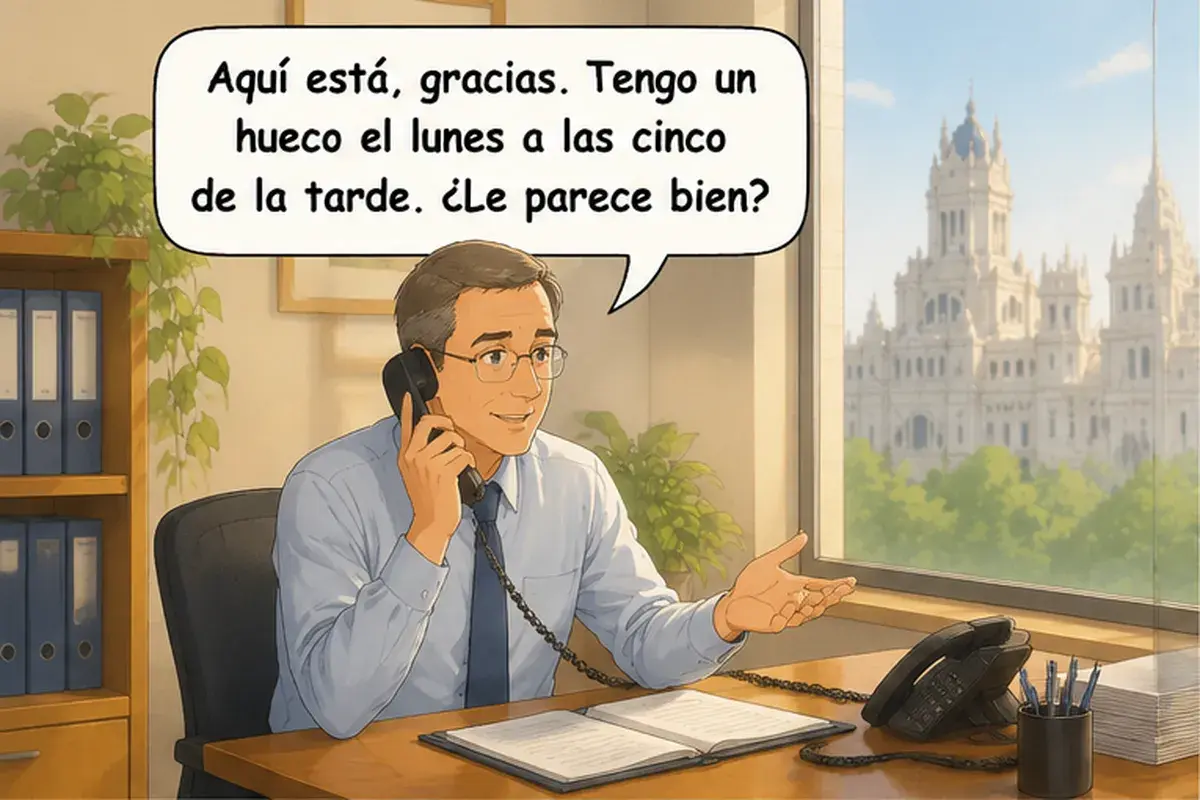
- Funcionario
Aquí está, gracias. Tengo un hueco el lunes a las cinco de la tarde. ¿Le parece bien?
Here it is, thanks. I have an opening on Monday at five in the afternoon. Does that work for you? (formal)
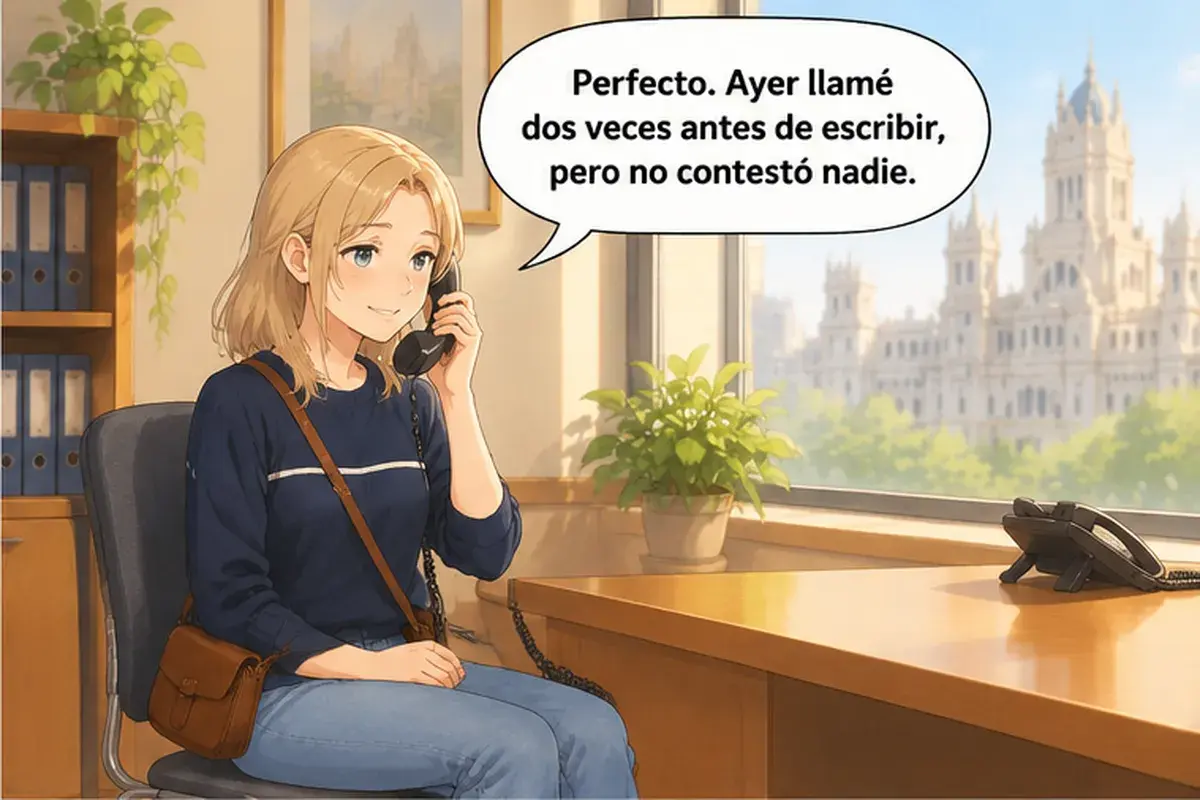
- Ana
Perfecto. Ayer llamé dos veces antes de escribir, pero no contestó nadie.
Perfect. Yesterday I called twice before writing, but nobody answered.
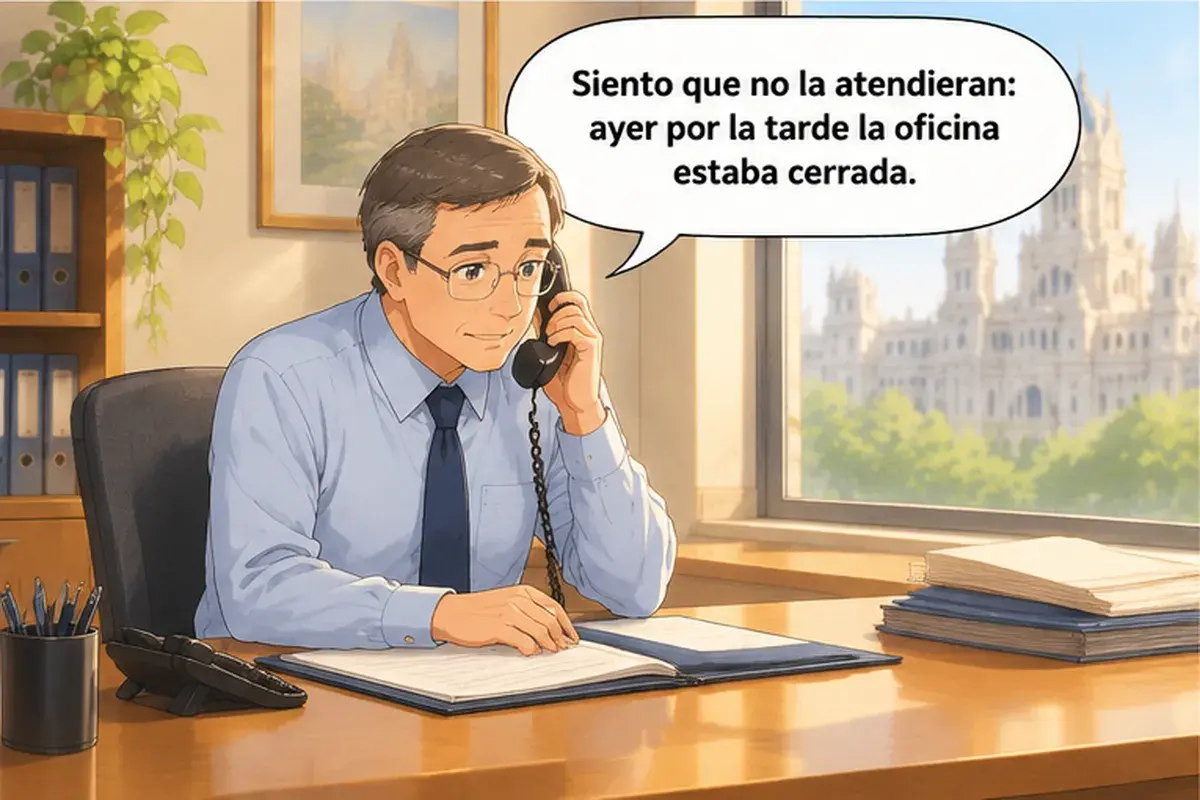
- Funcionario
Siento que no la atendieran: ayer por la tarde la oficina estaba cerrada.
I'm sorry nobody took your call: yesterday afternoon the office was closed (to a woman, formal).
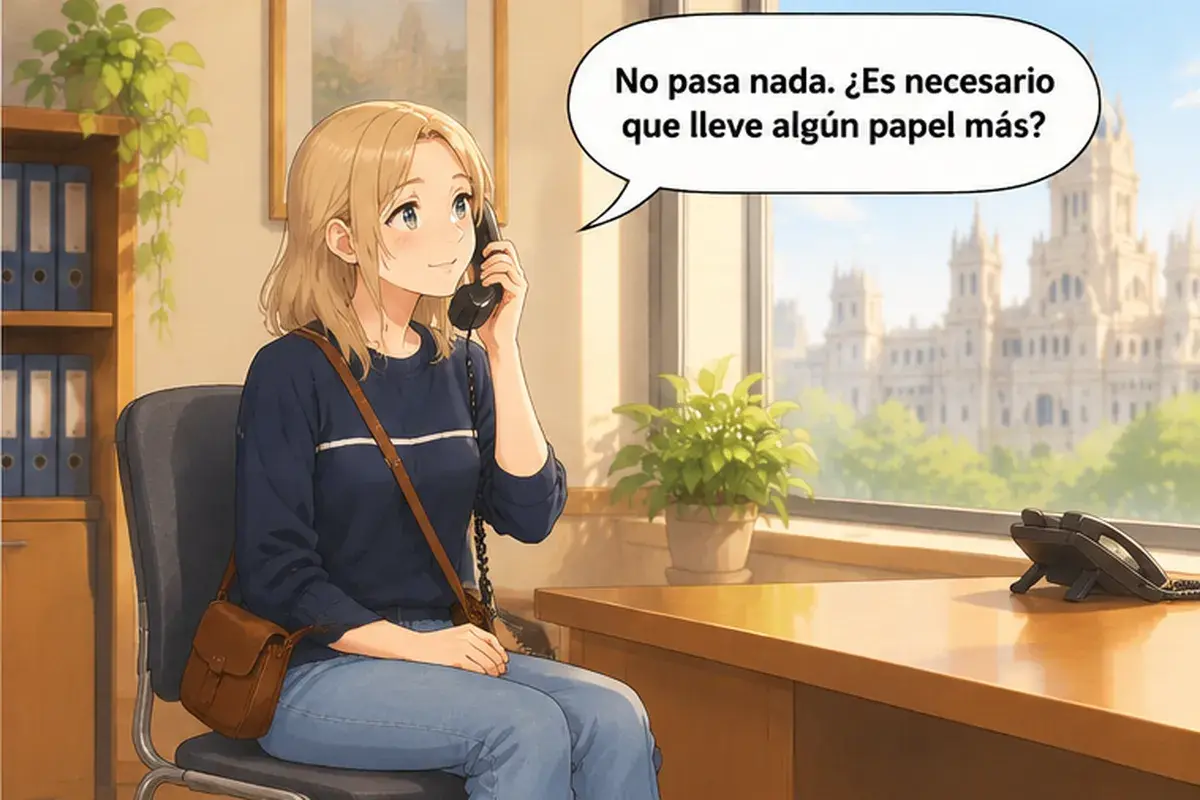
- Ana
No pasa nada. ¿Es necesario que lleve algún papel más?
No problem. Is it necessary for me to bring any other papers?
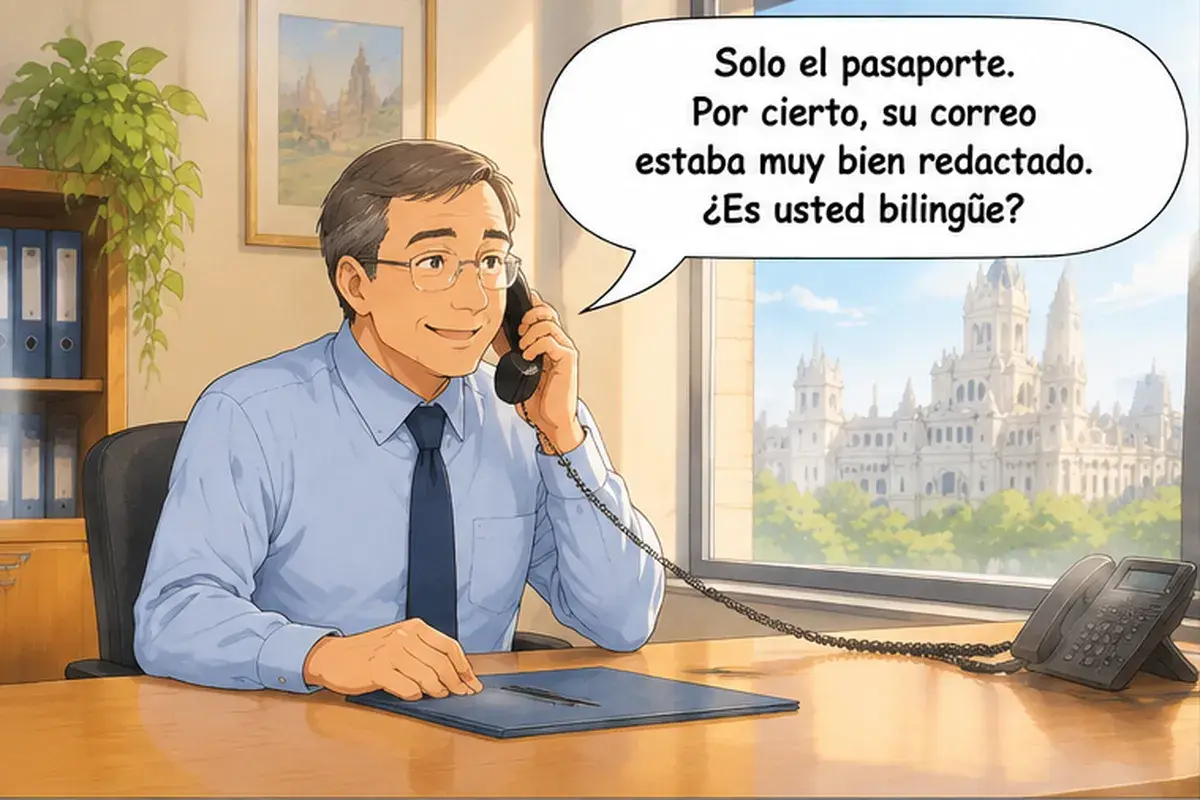
- Funcionario
Solo el pasaporte. Por cierto, su correo estaba muy bien redactado. ¿Es usted bilingüe?
Just your passport. By the way, your email was very well written. Are you bilingual? (formal)
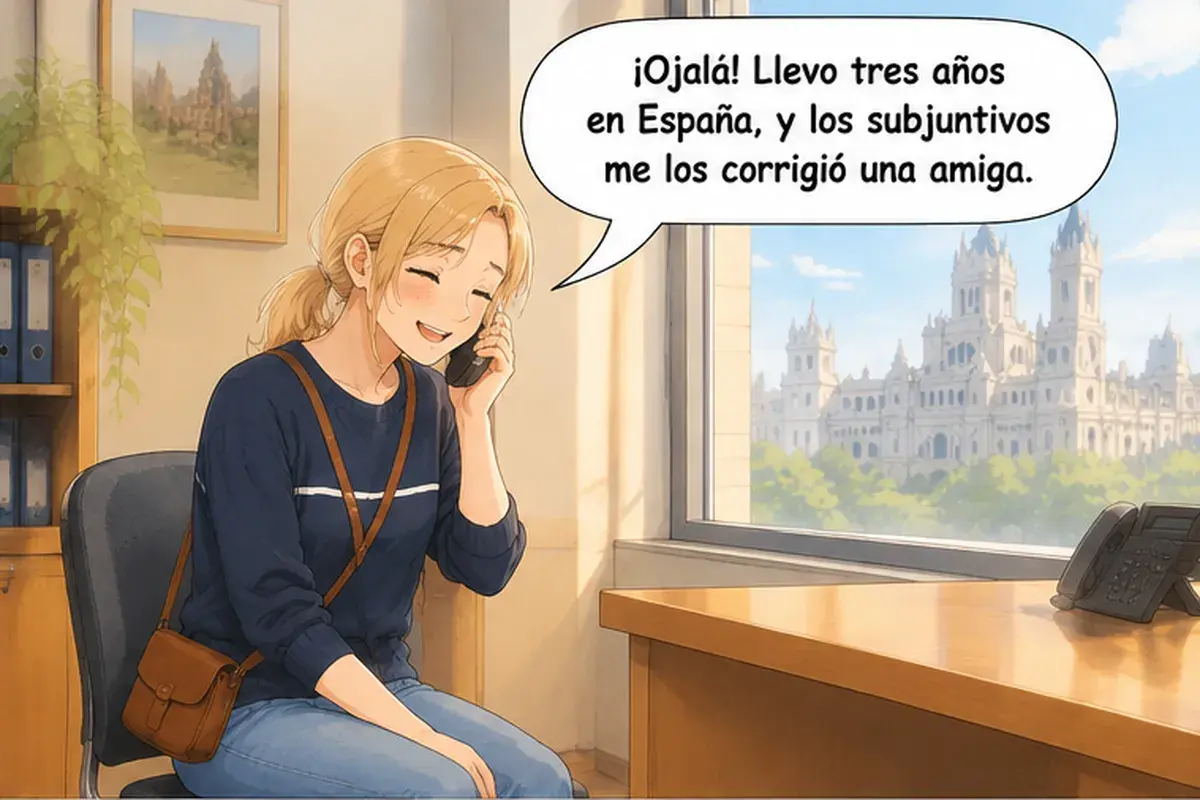
- Ana
¡Ojalá! Llevo tres años en España, y los subjuntivos me los corrigió una amiga.
I wish! I've been in Spain for three years, and a friend corrected the subjunctives for me.
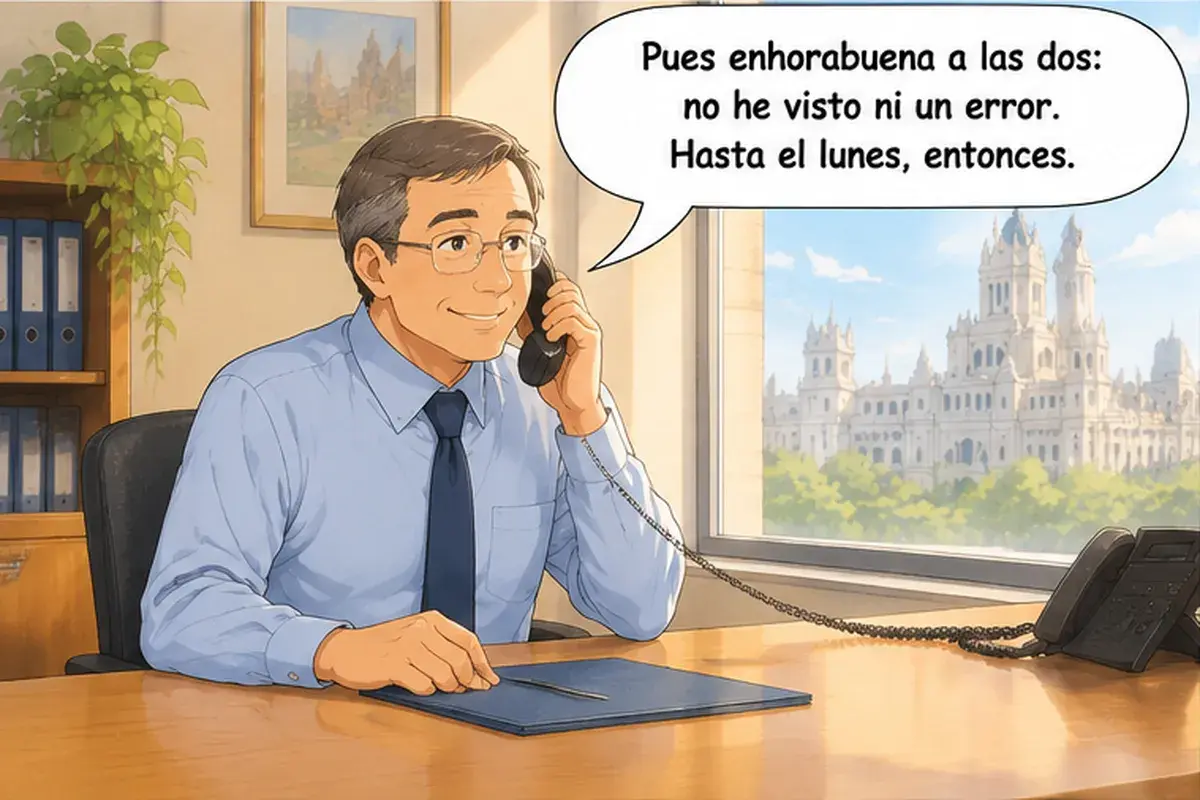
- Funcionario
Pues enhorabuena a las dos: no he visto ni un error. Hasta el lunes, entonces.
Well, congratulations to you both: I haven't seen a single mistake. See you on Monday, then.
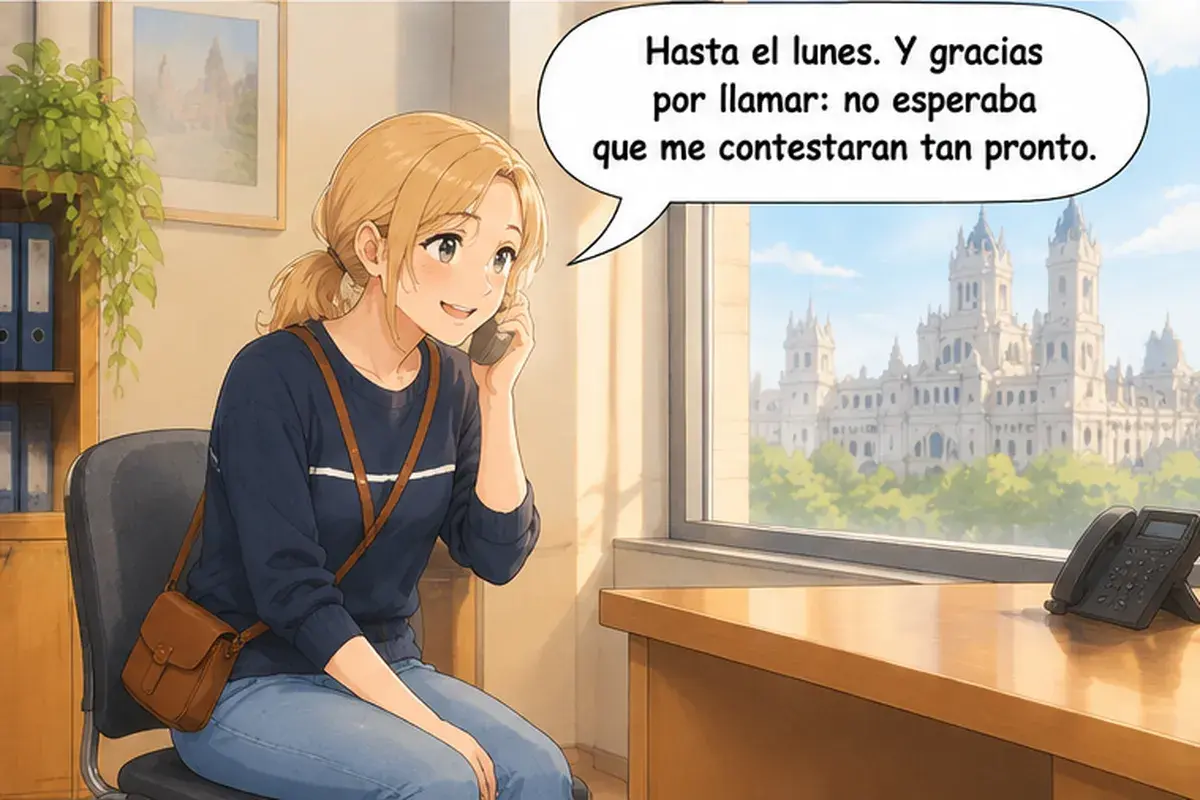
- Ana
Hasta el lunes. Y gracias por llamar: no esperaba que me contestaran tan pronto.
See you on Monday. And thanks for calling: I didn't expect them to answer me so soon.
Grammar for this text
A formal phone call using usted — and the same three forms.
- Espero que no haya ningún problema: here haya is the subjunctive of haber (the same verb as hay, "there is"); the action is now.
- Me ha pedido que la llame: ha pedido (today) works like the present, the request still stands, so it's llame. Para que elija usted: purpose, the action is still ahead.
- Siento que no la atendieran: the regret is now, but nobody answered yesterday, the action is over: atendieran.
- No esperaba que me contestaran tan pronto: the main clause is in the past (esperaba), so it's contestaran.
- ¿Es necesario que lleve…?: a judgment, the action is still ahead (unit 7).
- la in la llamo, la llame, la atendieran is the polite "you" for a woman.
Words and grammar of the unit: Check and correct your own letter.
Learn the words from the texts with flashcards
In the app, you can tap any word in a text to see its translation, forms and examples, and new words stick with flashcards. 15 minutes a day.
Start for freeEverything is open for free. No card needed to sign up.