

Spanish dialogue with translation · B2 · 18 lines
Lo que no te dije What I didn't tell you
Comic · 18 panels
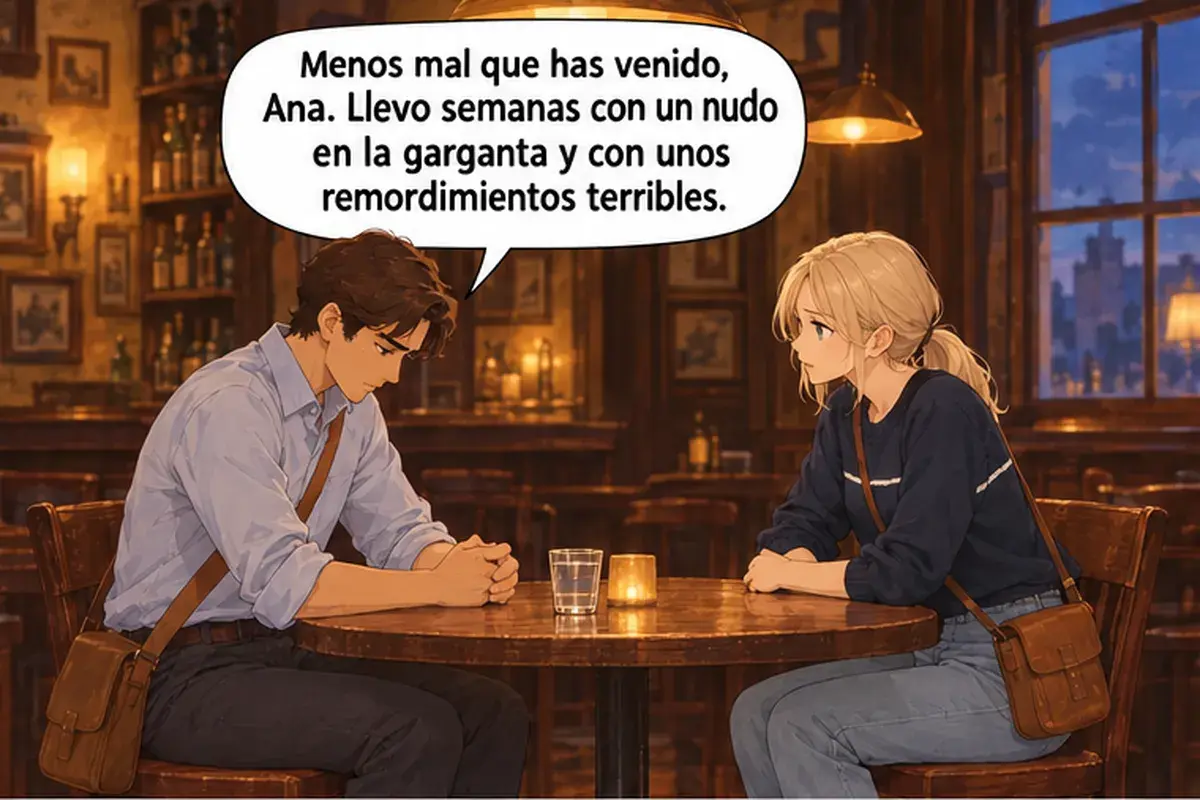
- Diego
Menos mal que has venido, Ana. Llevo semanas con un nudo en la garganta y con unos remordimientos terribles.
Thank goodness you came, Ana. For weeks I've had a lump in my throat and terrible remorse.
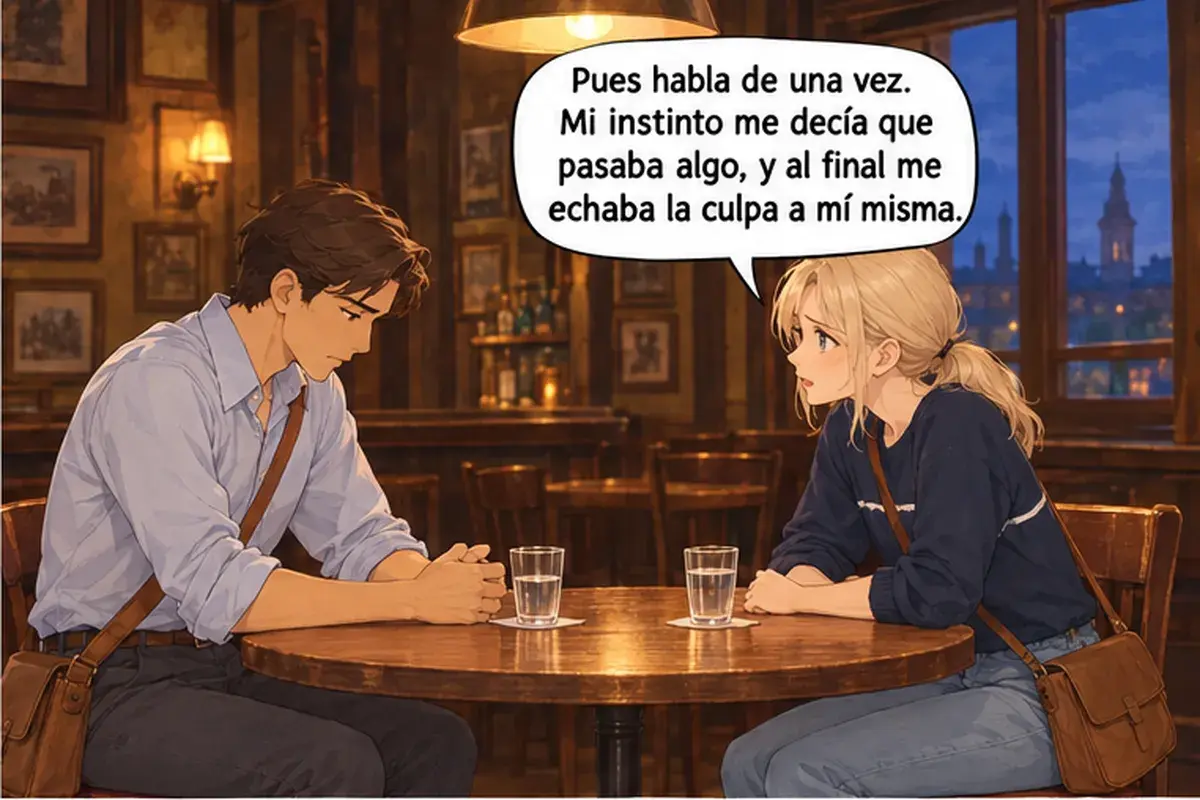
- Ana
Pues habla de una vez. Mi instinto me decía que pasaba algo, y al final me echaba la culpa a mí misma.
Then just say it already. My instinct told me something was going on, and in the end I kept blaming myself (woman speaking).
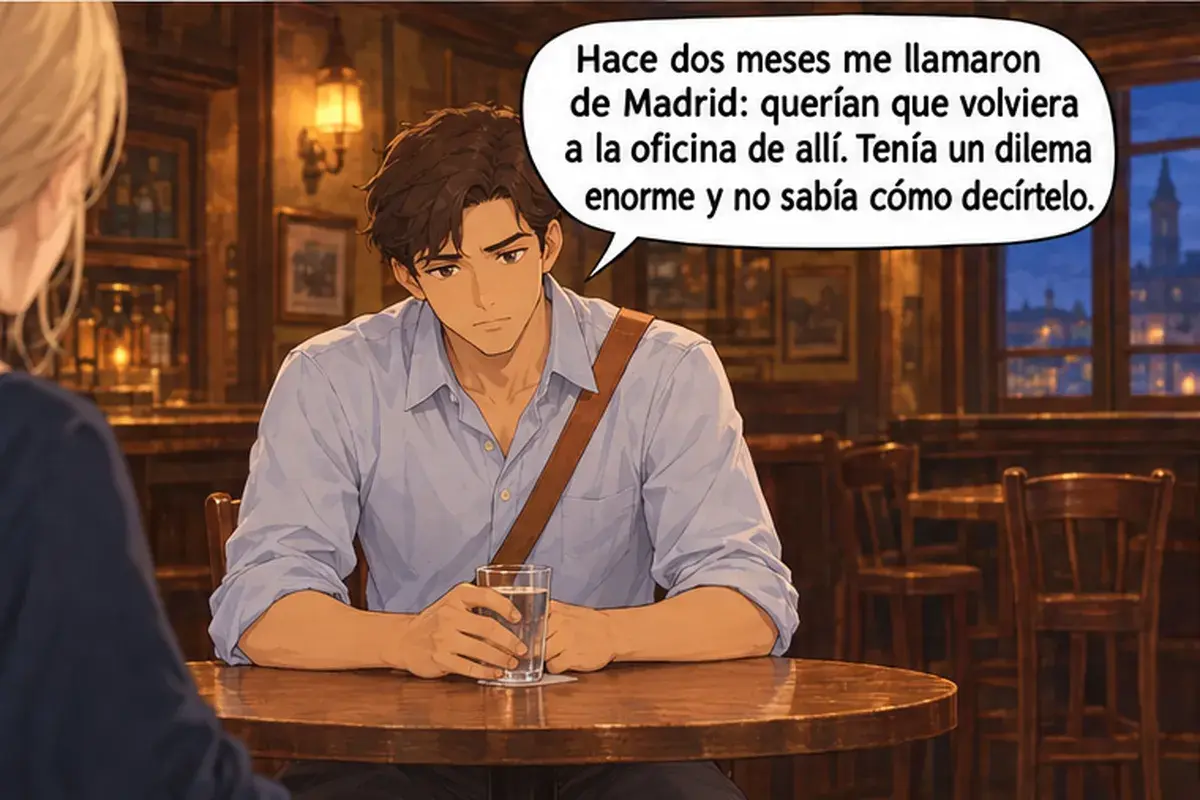
- Diego
Hace dos meses me llamaron de Madrid: querían que volviera a la oficina de allí. Tenía un dilema enorme y no sabía cómo decírtelo.
Two months ago, they called me from Madrid: they wanted me to go back to the office there. I had a huge dilemma, and I didn't know how to tell you.
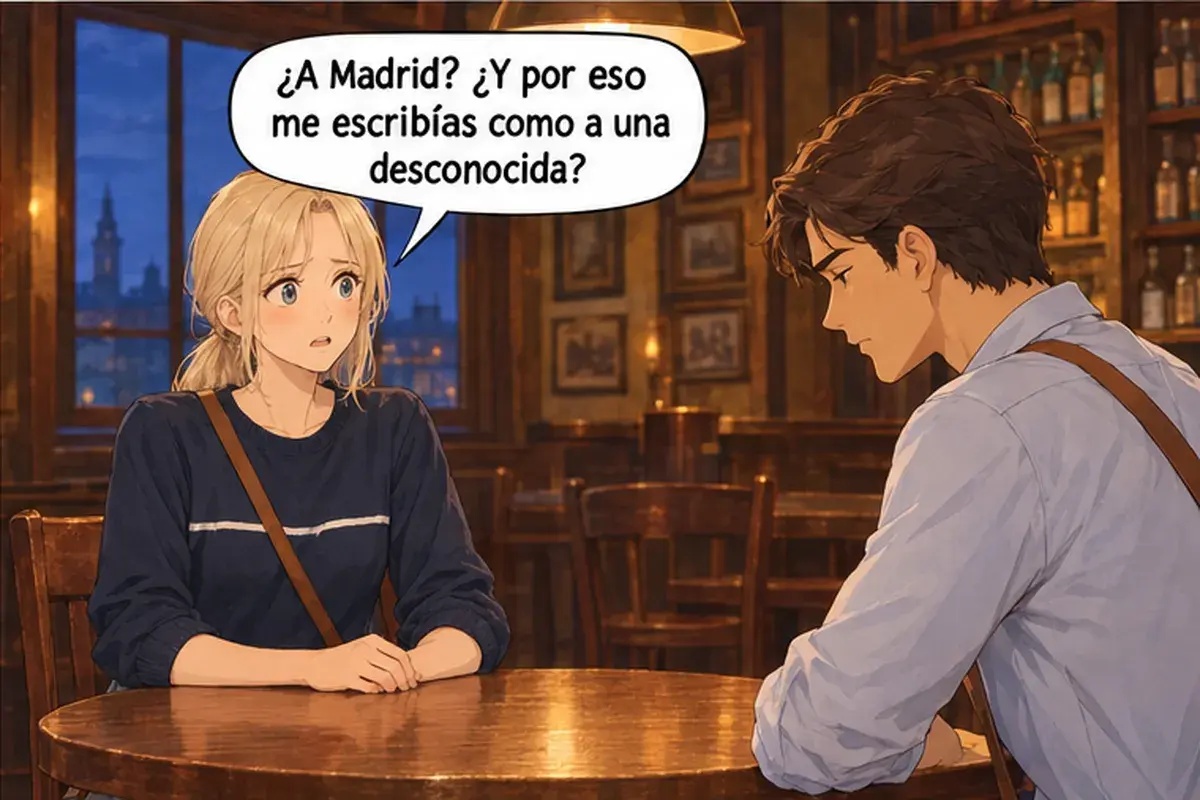
- Ana
¿A Madrid? ¿Y por eso me escribías como a una desconocida?
To Madrid? And that's why you were writing to me like I was a stranger? (woman speaking)
- Diego
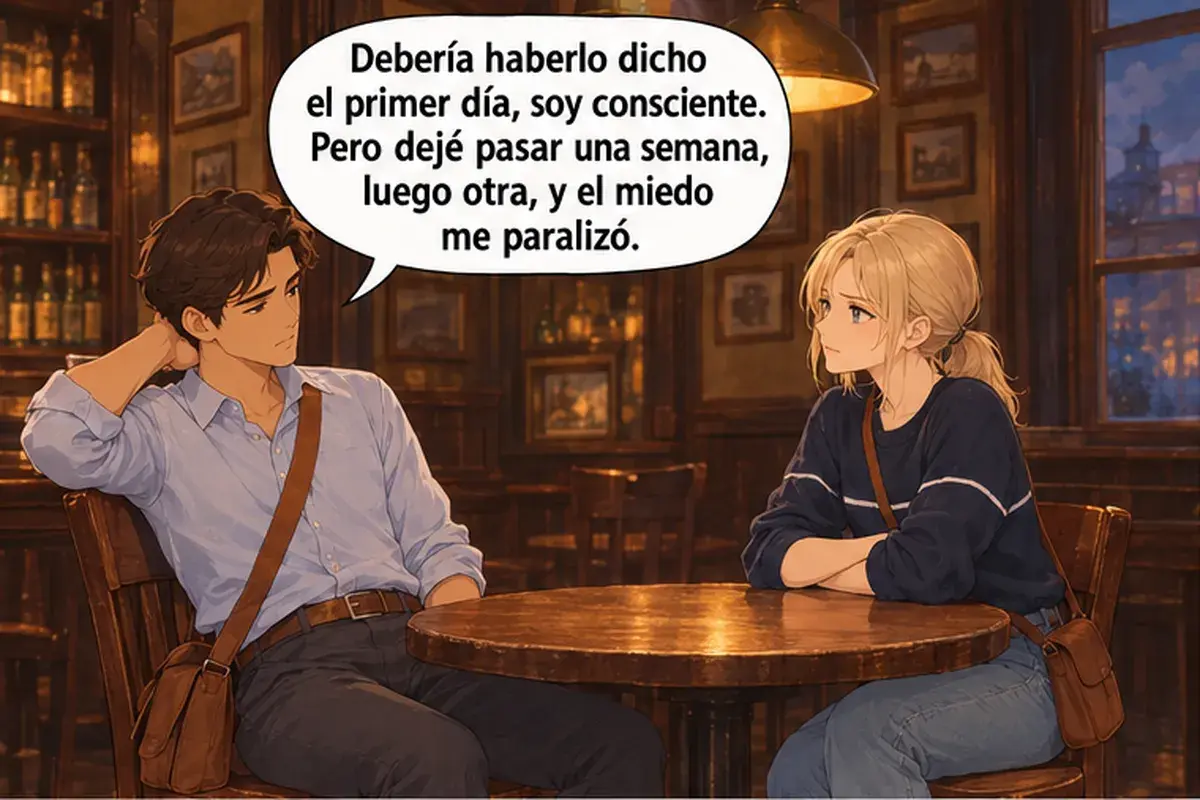
Debería haberlo dicho el primer día, soy consciente. Pero dejé pasar una semana, luego otra, y el miedo me paralizó.
I should have said it on the very first day, I'm aware of that. But I let one week go by, then another, and fear paralyzed me.
- Ana
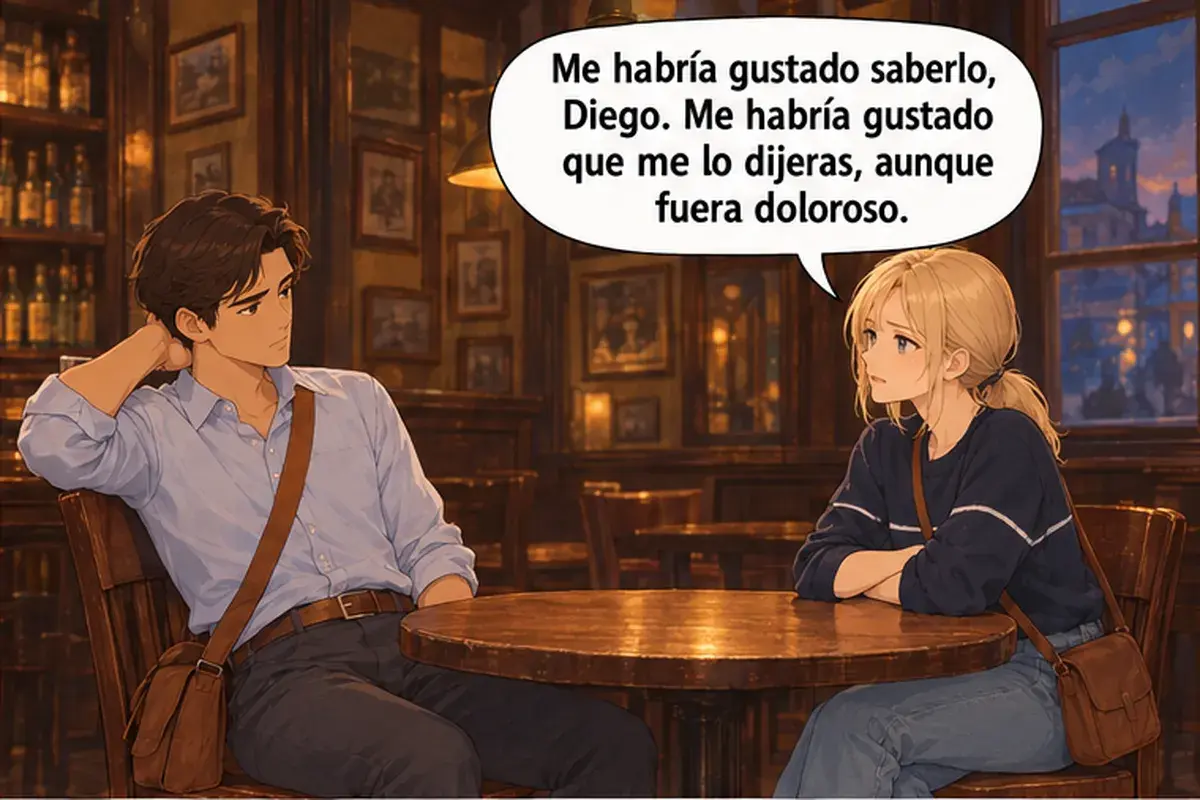
Me habría gustado saberlo, Diego. Me habría gustado que me lo dijeras, aunque fuera doloroso.
I would have liked to know, Diego. I would have liked you to tell me, even if it was painful.
- Diego
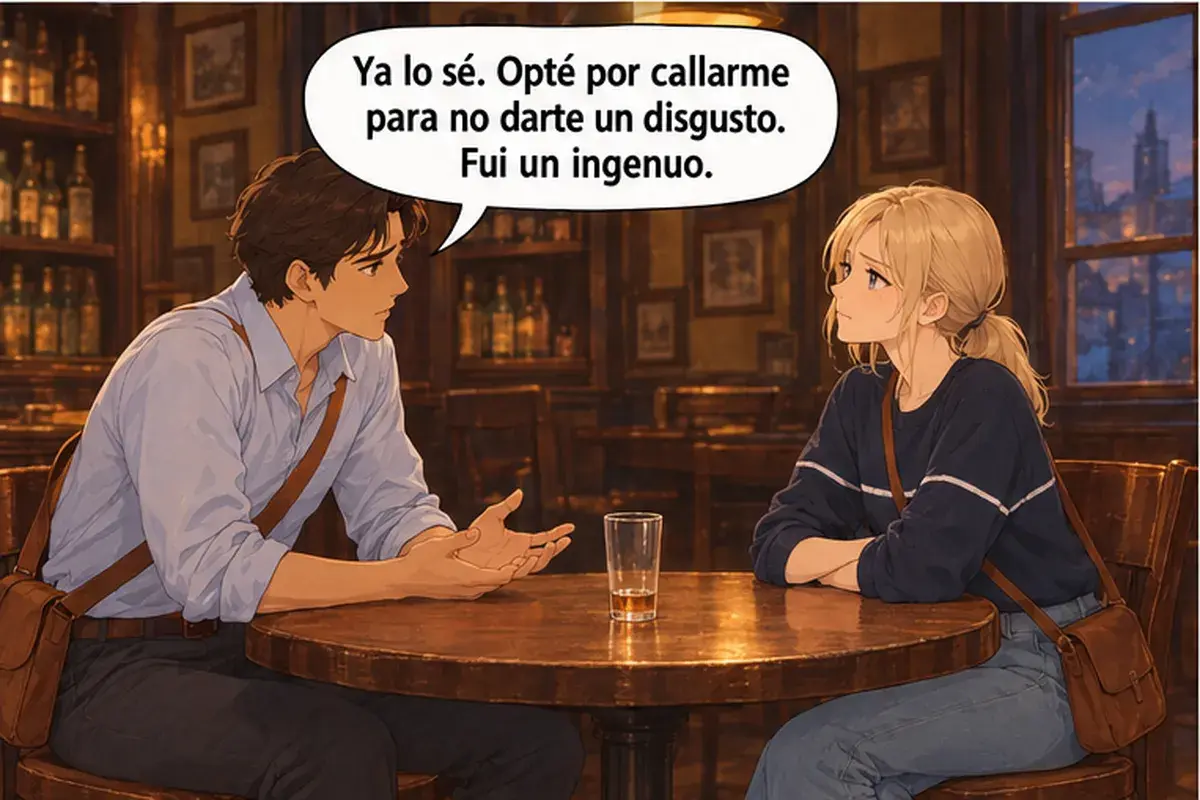
Ya lo sé. Opté por callarme para no darte un disgusto. Fui un ingenuo.
I know. I chose to keep quiet so I wouldn't upset you. I was naive (man speaking).
- Ana
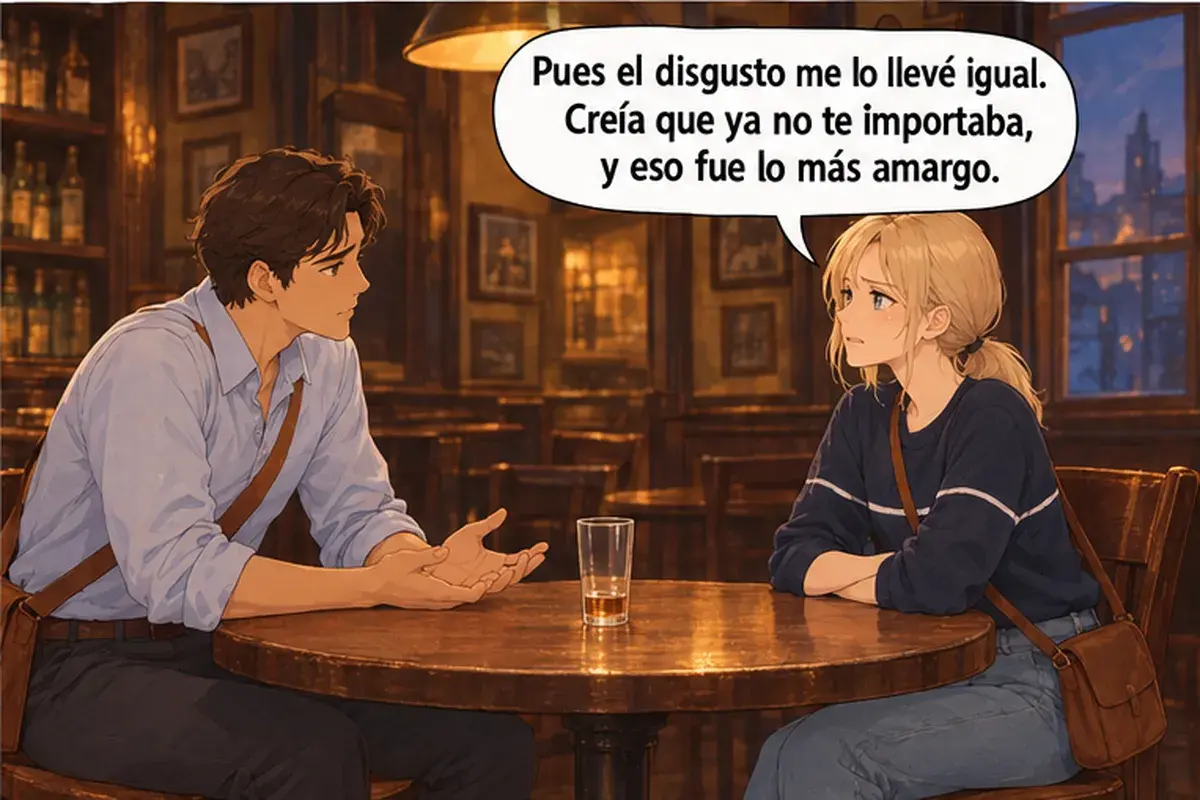
Pues el disgusto me lo llevé igual. Creía que ya no te importaba, y eso fue lo más amargo.
Well, I got upset anyway. I thought I didn't matter to you anymore, and that was the most bitter part.
- Diego
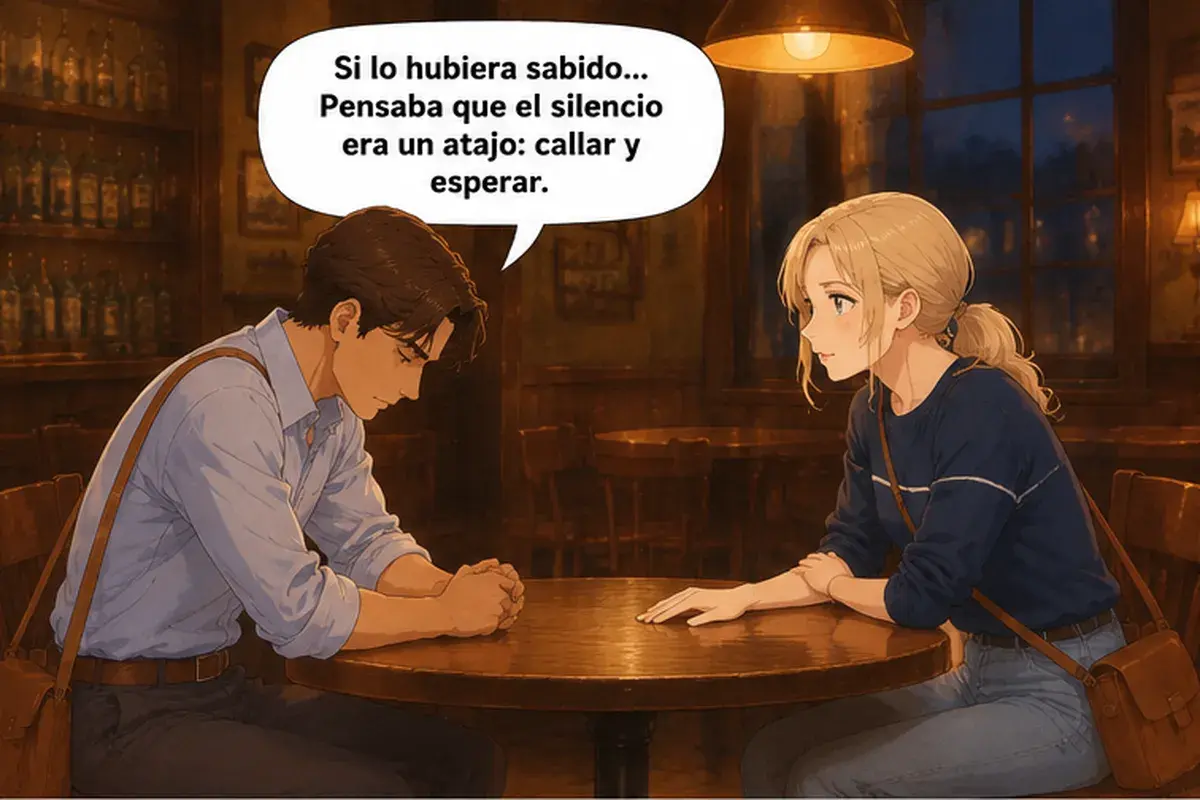
Si lo hubiera sabido… Pensaba que el silencio era un atajo: callar y esperar.
If I had known… I thought silence was a shortcut: keep quiet and wait.
- Ana
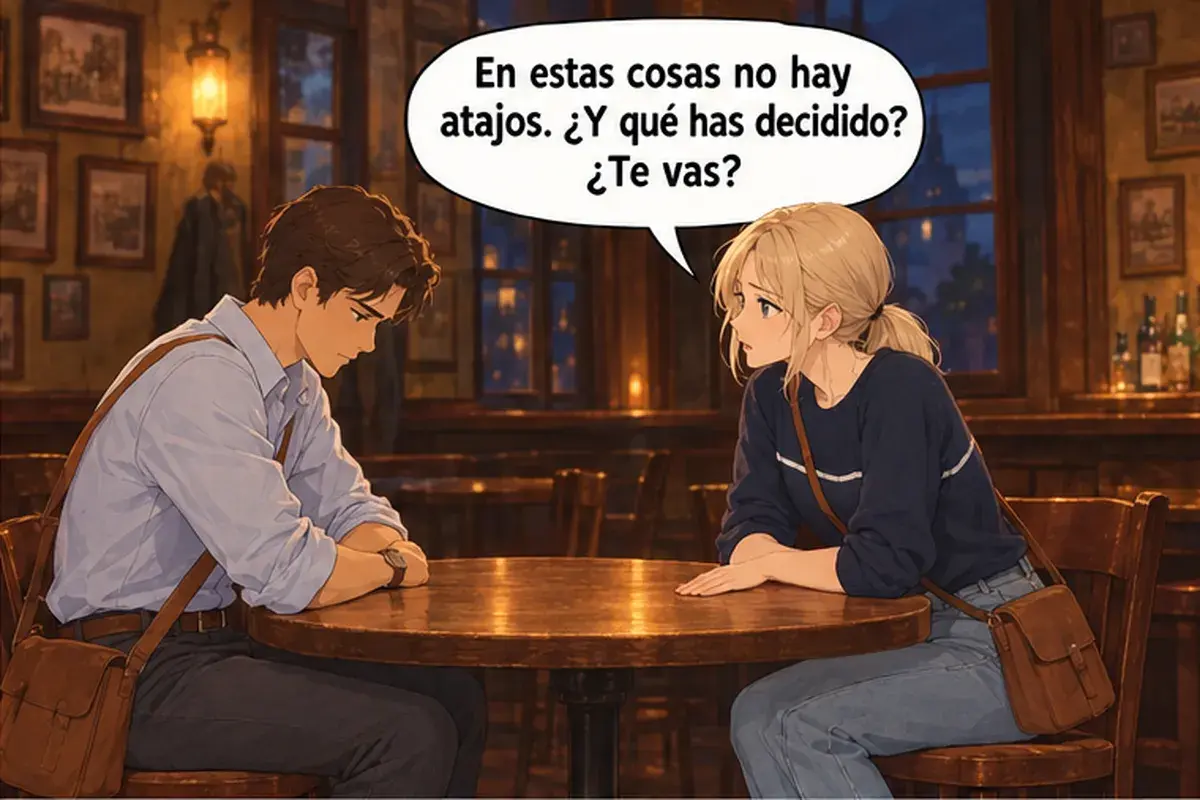
En estas cosas no hay atajos. ¿Y qué has decidido? ¿Te vas?
There are no shortcuts in these things. So what have you decided? Are you leaving?
- Diego
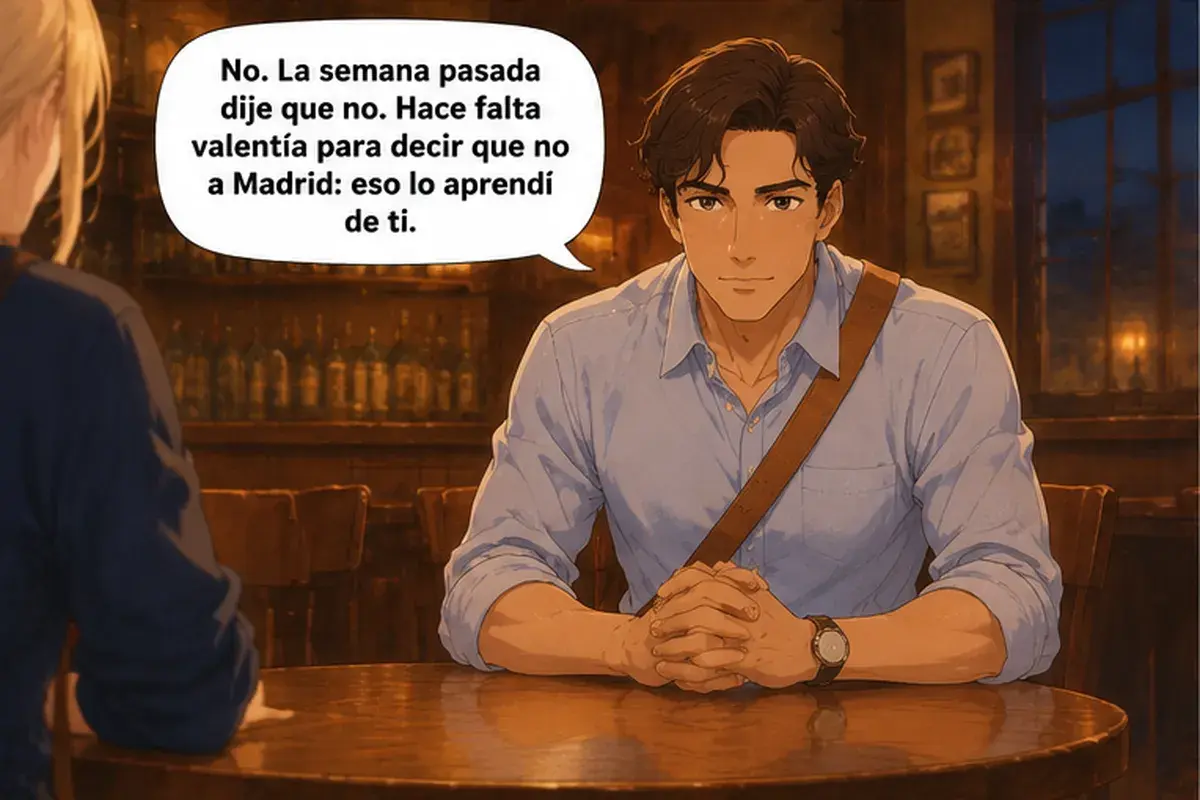
No. La semana pasada dije que no. Hace falta valentía para decir que no a Madrid: eso lo aprendí de ti.
No. Last week I said no. It takes courage to say no to Madrid: I learned that from you.
- Ana
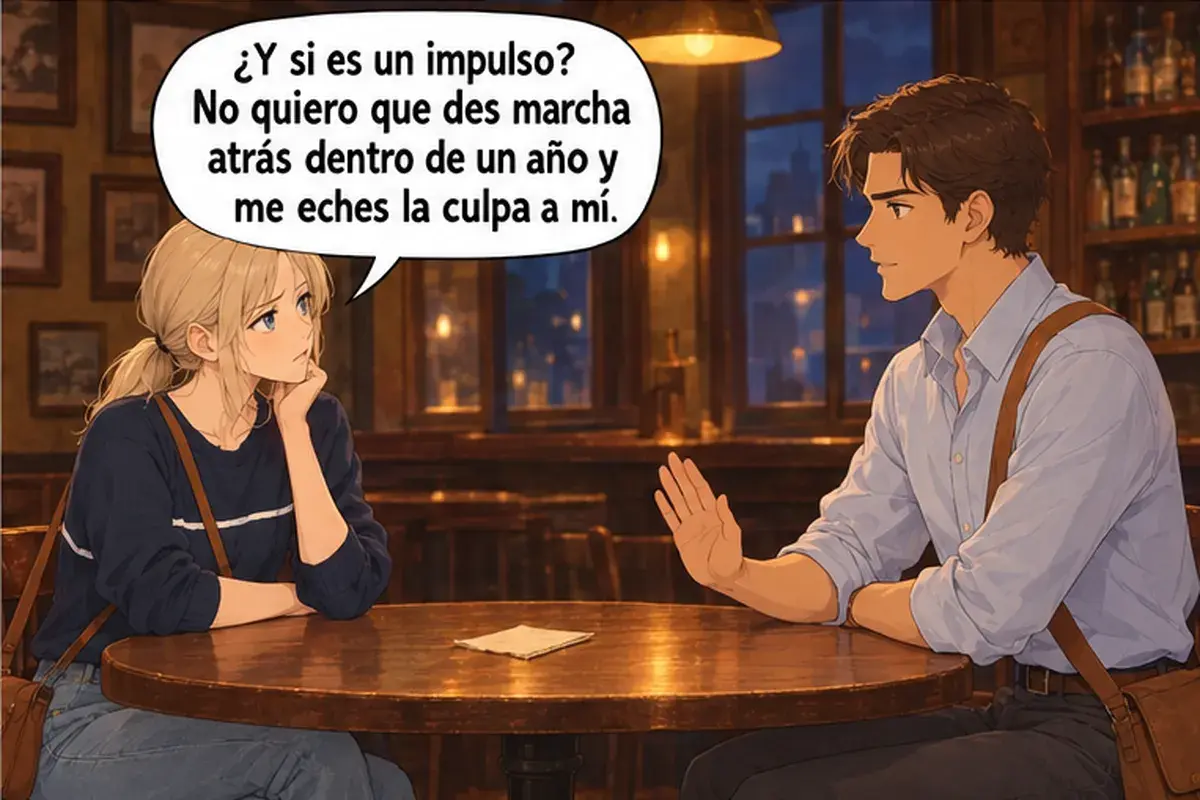
¿Y si es un impulso? No quiero que des marcha atrás dentro de un año y me eches la culpa a mí.
What if it's an impulse? I don't want you to back out a year from now and blame me.
- Diego
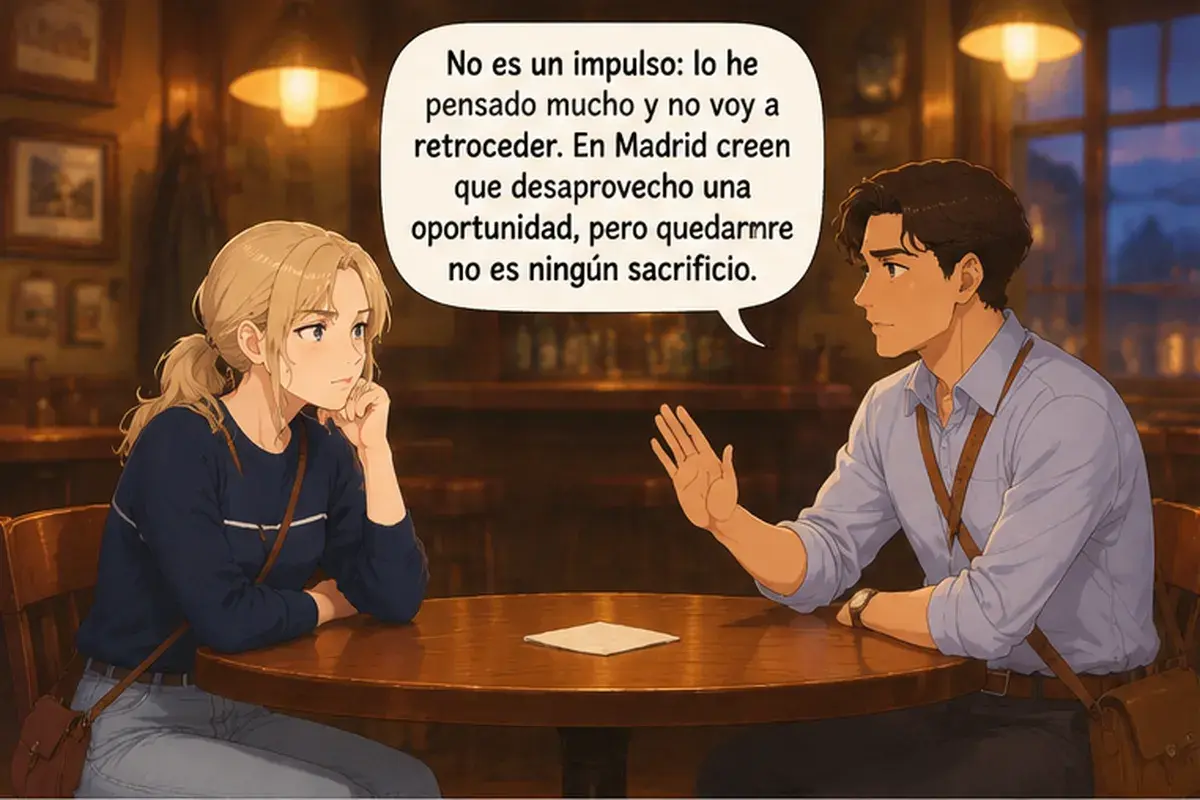
No es un impulso: lo he pensado mucho y no voy a retroceder. En Madrid creen que desaprovecho una oportunidad, pero quedarme no es ningún sacrificio.
It's not an impulse: I've thought about it a lot, and I'm not going to turn back. In Madrid they think I'm wasting an opportunity, but staying is no sacrifice at all.

- Ana
Me alegra oírlo. Aunque yo tampoco pregunté nada: me quedé con las ganas de llamarte mil veces.
I'm glad to hear it. Though I didn't ask anything either: I wanted to call you a thousand times and never did.
- Diego
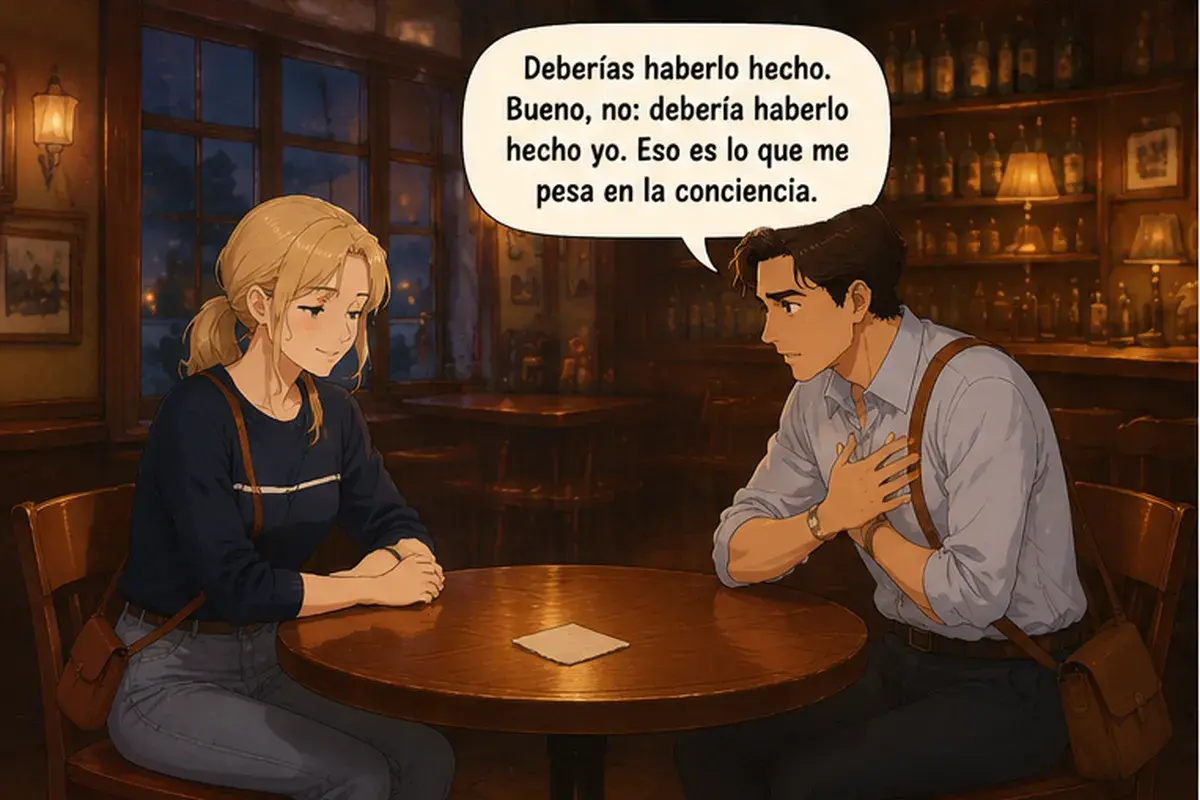
Deberías haberlo hecho. Bueno, no: debería haberlo hecho yo. Eso es lo que me pesa en la conciencia.
You should have done it. Well, no: I'm the one who should have done it. That's what weighs on my conscience.
- Ana
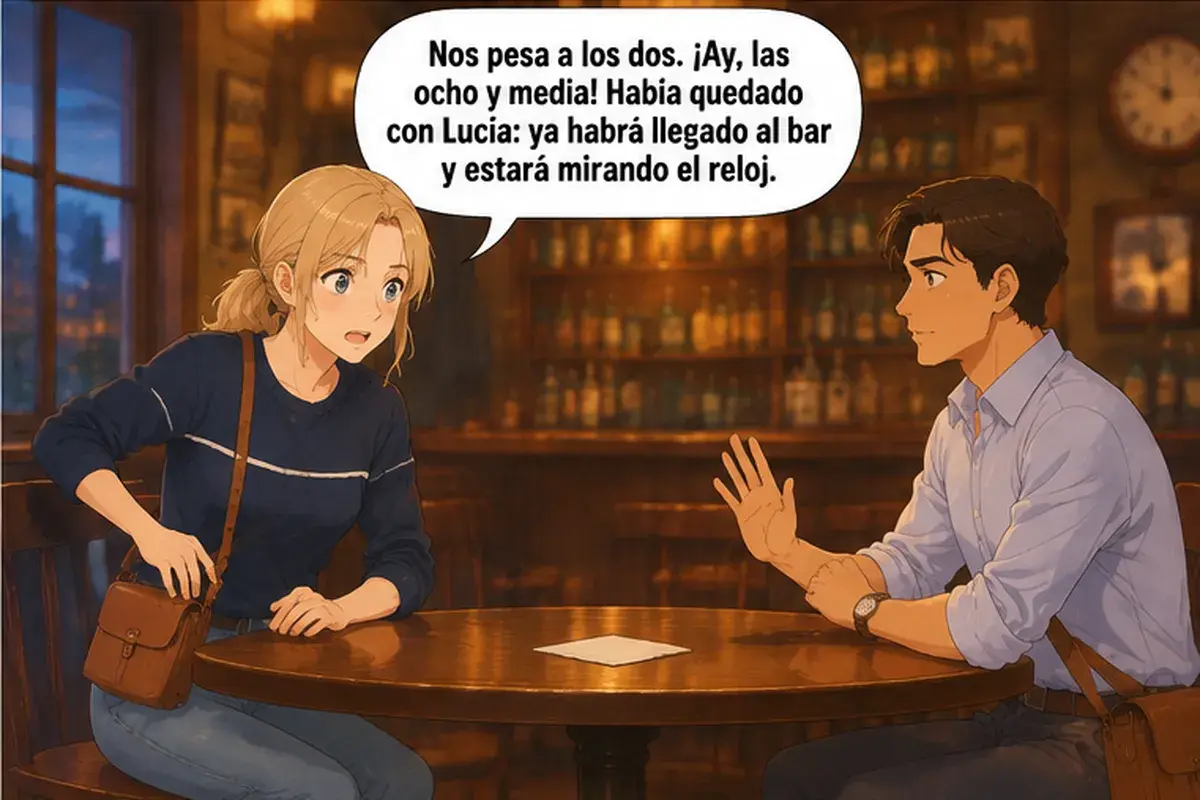
Nos pesa a los dos. ¡Ay, las ocho y media! Había quedado con Lucía: ya habrá llegado al bar y estará mirando el reloj.
It weighs on both of us. Oh, it's eight thirty! I'd arranged to meet Lucía: she's probably gotten to the bar by now and is looking at her watch.
- Diego
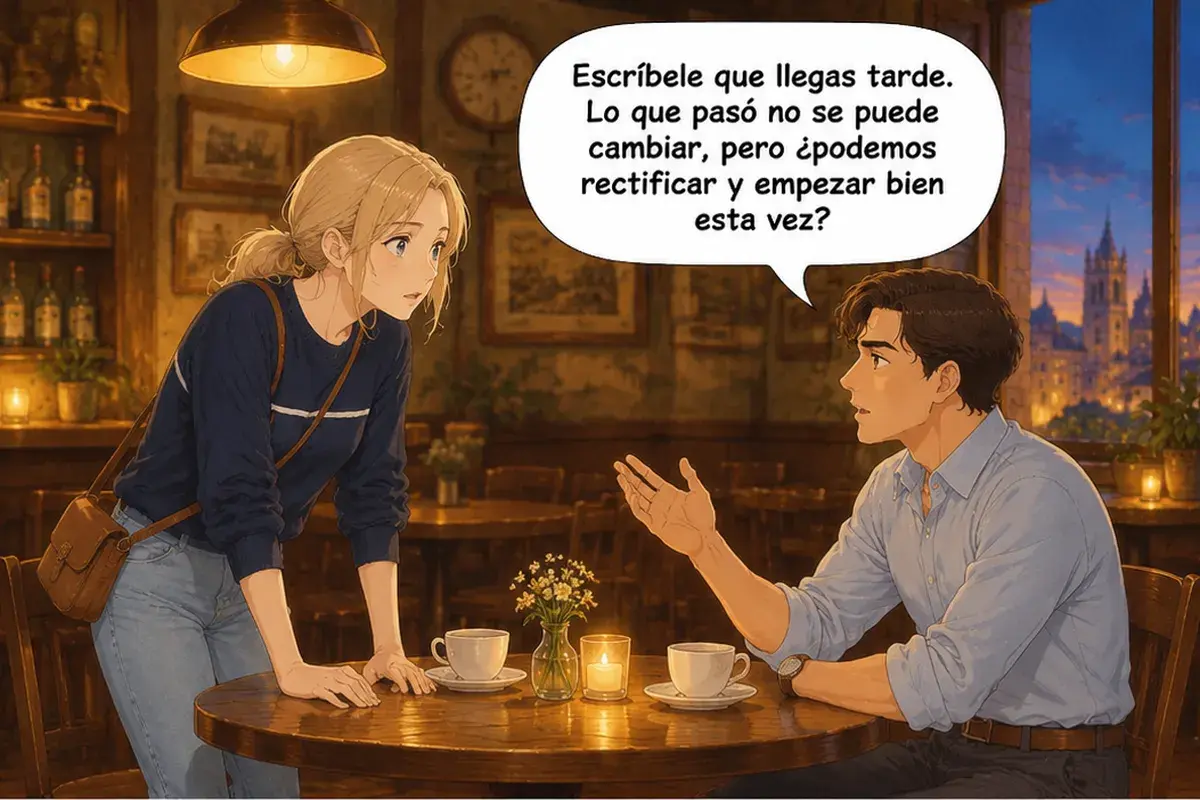
Escríbele que llegas tarde. Lo que pasó no se puede cambiar, pero ¿podemos rectificar y empezar bien esta vez?
Text her that you're running late. What happened can't be changed, but can we set things right and start off well this time?

- Ana
Despacio, Diego. Pero sí. Y la próxima vez dímelo todo, aunque no sepas cómo.
Slow down, Diego. But yes. And next time, tell me everything, even if you don't know how.
Grammar for this text
Set phrases of the unit — learn them as a whole; the rule comes later:
- Debería haberlo dicho el primer día — "I should have said it on the very first day"; Deberías haberlo hecho — "you should have done it".
- Me habría gustado saberlo — "I would have liked to know". Me habría gustado que me lo dijeras — you wanted someone else to do it, so que and the -ra form (unit 13).
- Si lo hubiera sabido… — "if I had known…": people often stop the sentence right there.
- Ya habrá llegado al bar — "she's probably gotten to the bar by now": a guess about something that has already happened. Next to it, a guess about now: estará mirando el reloj — "she's probably looking at her watch" (unit 2).
Aunque + subjunctive — "even if" (unit 11): aunque fuera doloroso — "even if it was painful" (fuera is from ser), aunque no sepas cómo — "even if you don't know how".
El disgusto me lo llevé igual — from llevarse un disgusto, "to get upset".
Words and grammar of the unit: Talk about your regrets.
Learn the words from the texts with flashcards
In the app, you can tap any word in a text to see its translation, forms and examples, and new words stick with flashcards. 15 minutes a day.
Start for freeEverything is open for free. No card needed to sign up.