

Spanish dialogue with translation · B2 · 18 lines
¿Tiene cita previa? Do you have an appointment? (formal)
Comic · 18 panels
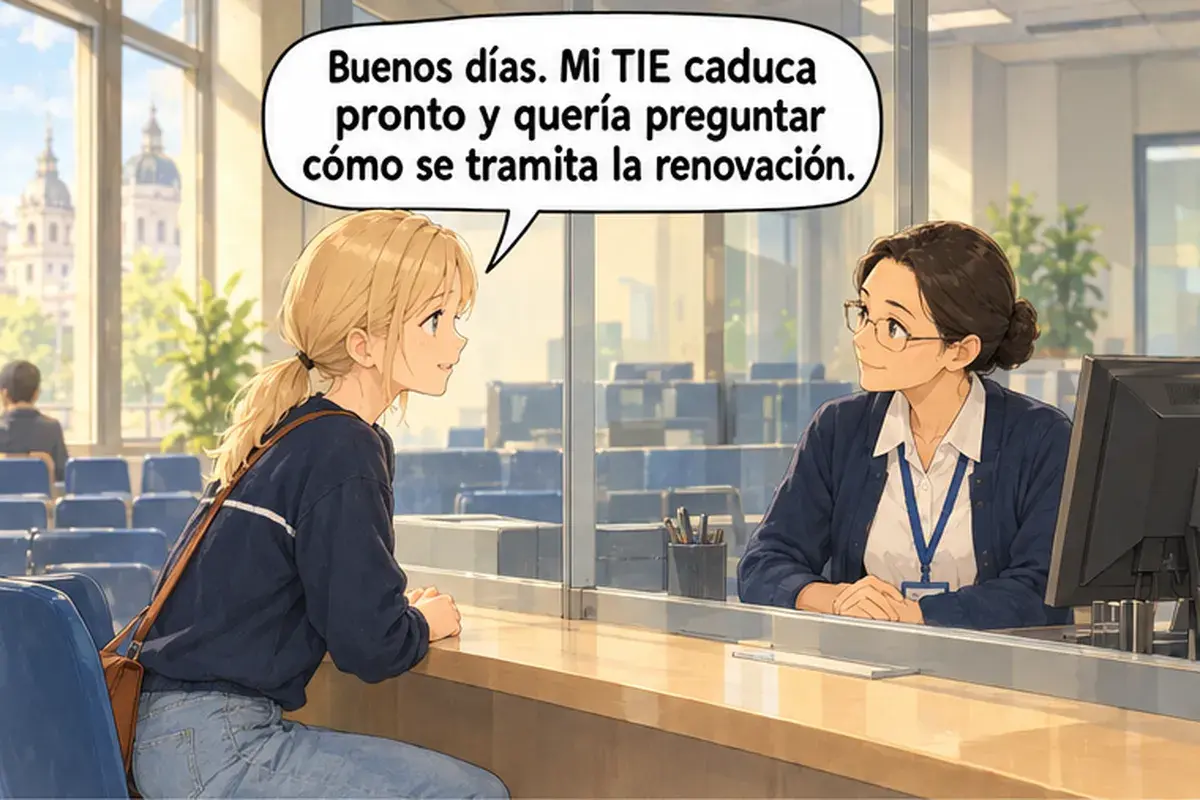
- Ana
Buenos días. Mi TIE caduca pronto y quería preguntar cómo se tramita la renovación.
Good morning. My TIE expires soon, and I wanted to ask how the renewal is processed.
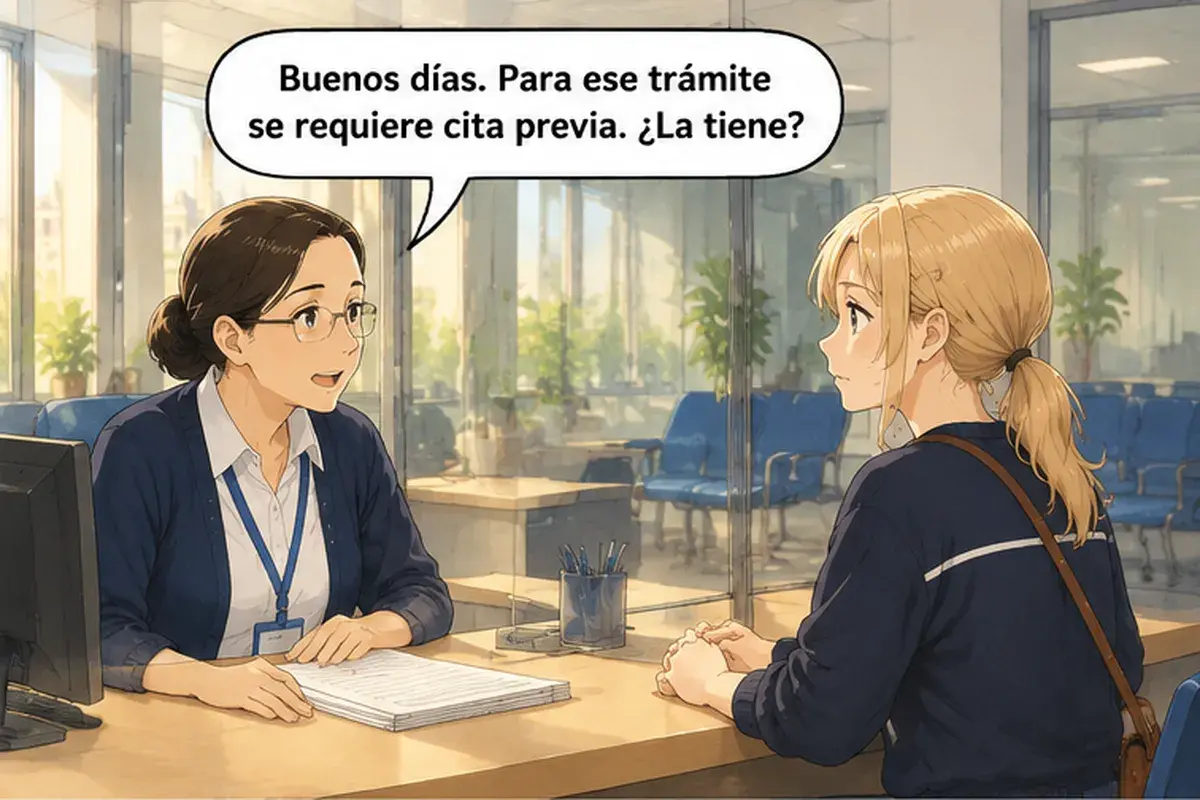
- Funcionaria
Buenos días. Para ese trámite se requiere cita previa. ¿La tiene?
Good morning. That procedure requires an appointment. Do you have one? (formal)
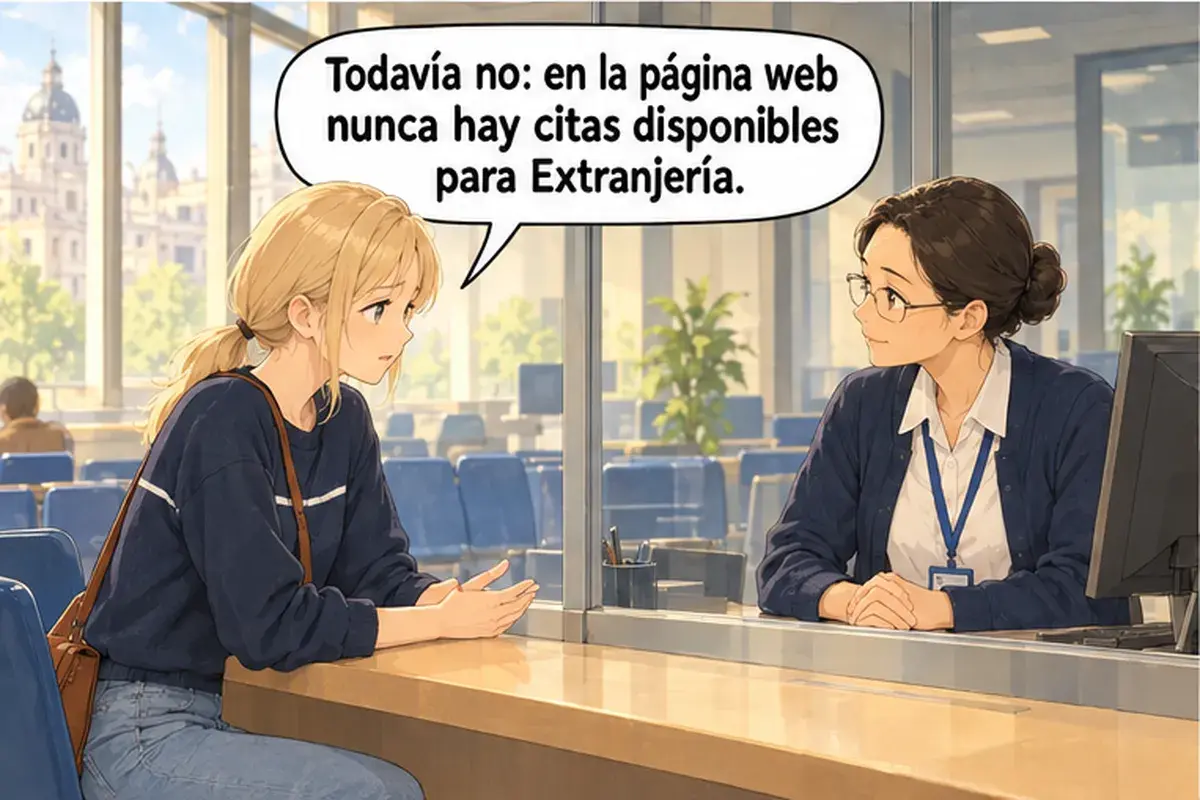
- Ana
Todavía no: en la página web nunca hay citas disponibles para Extranjería.
Not yet: there are never any appointments available for the immigration office on the website.
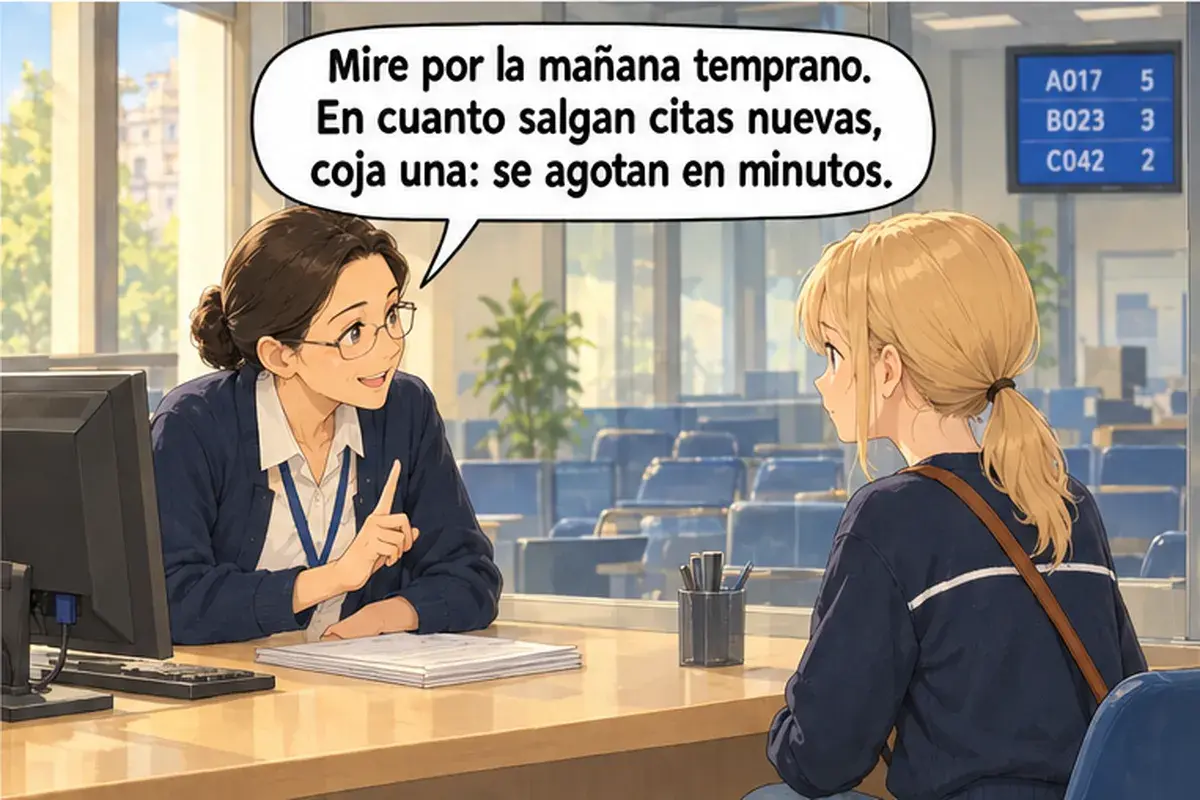
- Funcionaria
Mire por la mañana temprano. En cuanto salgan citas nuevas, coja una: se agotan en minutos.
Check early in the morning. As soon as new appointments come out, grab one: they're gone in minutes (formal).
- Ana
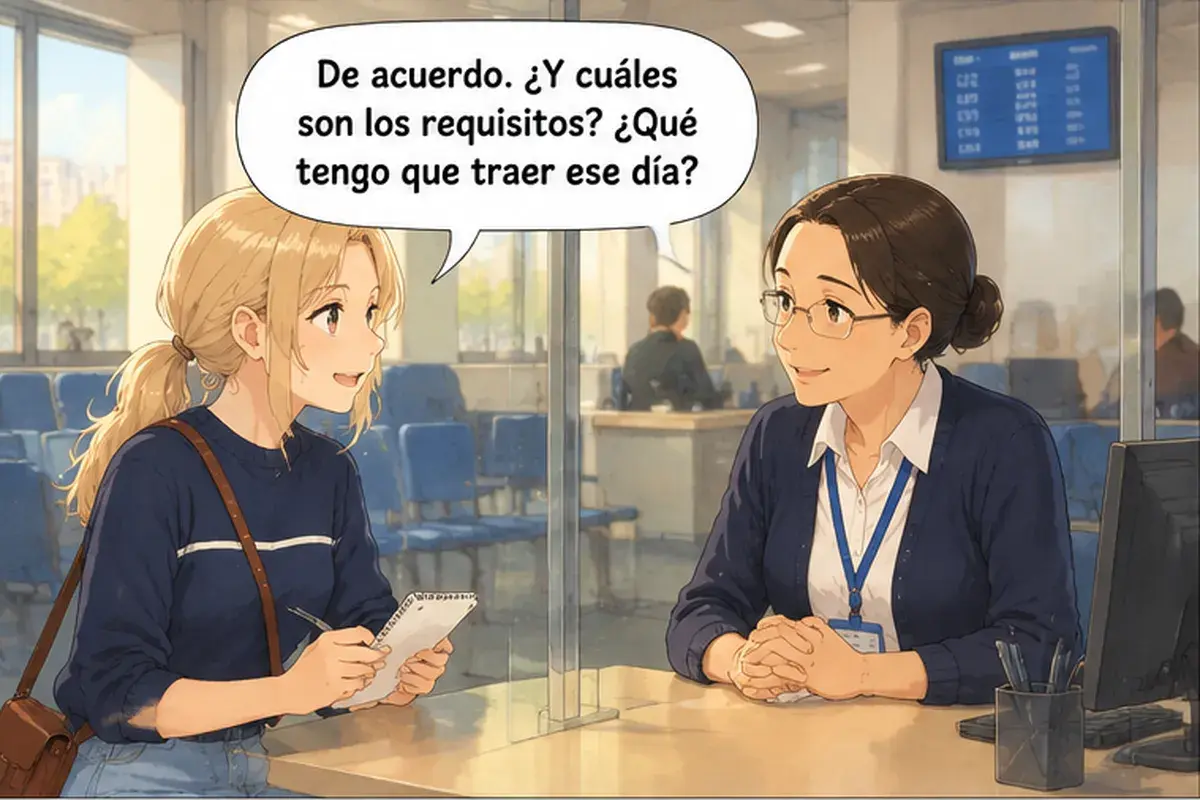
De acuerdo. ¿Y cuáles son los requisitos? ¿Qué tengo que traer ese día?
All right. And what are the requirements? What do I have to bring that day?
- Funcionaria
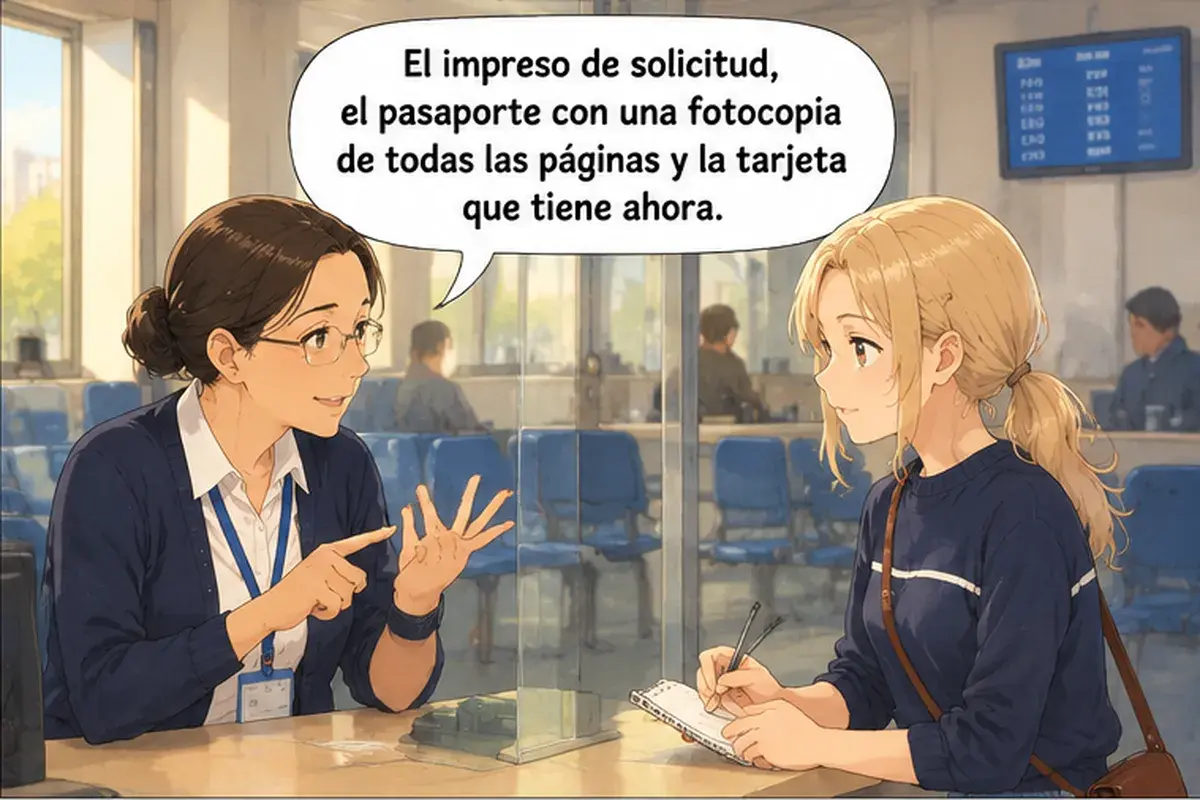
El impreso de solicitud, el pasaporte con una fotocopia de todas las páginas y la tarjeta que tiene ahora.
The application form, the passport with a photocopy of every page, and the card you have now (formal).
- Ana
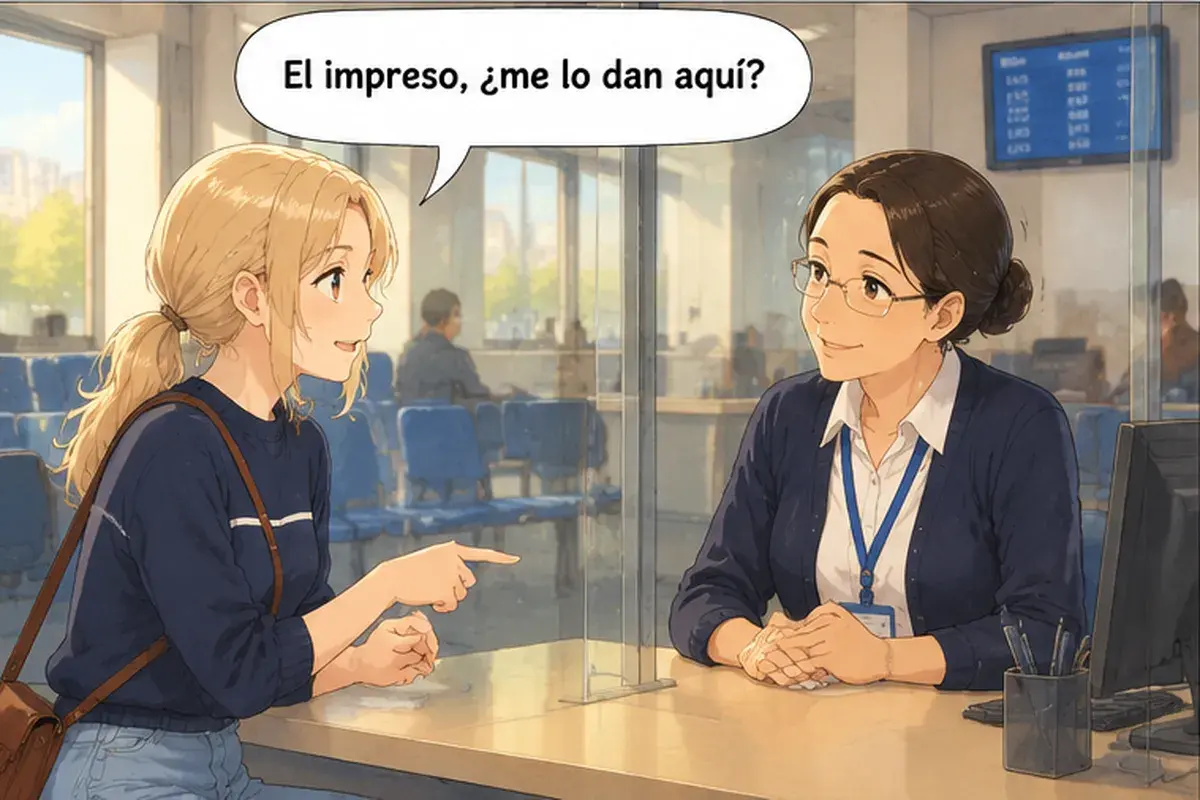
El impreso, ¿me lo dan aquí?
The form, do they give it to me here?
- Funcionaria
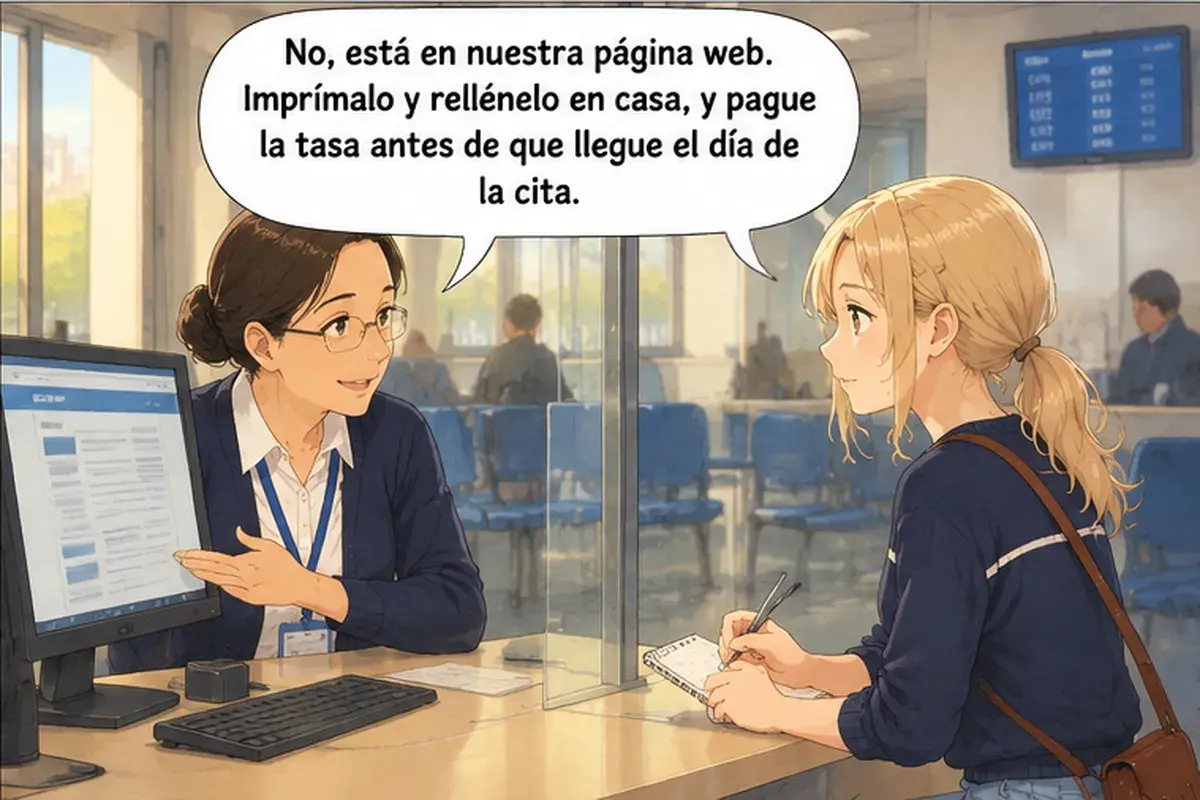
No, está en nuestra página web. Imprímalo y rellénelo en casa, y pague la tasa antes de que llegue el día de la cita.
No, it's on our website. Print it out and fill it out at home, and pay the fee before the day of the appointment comes (formal).
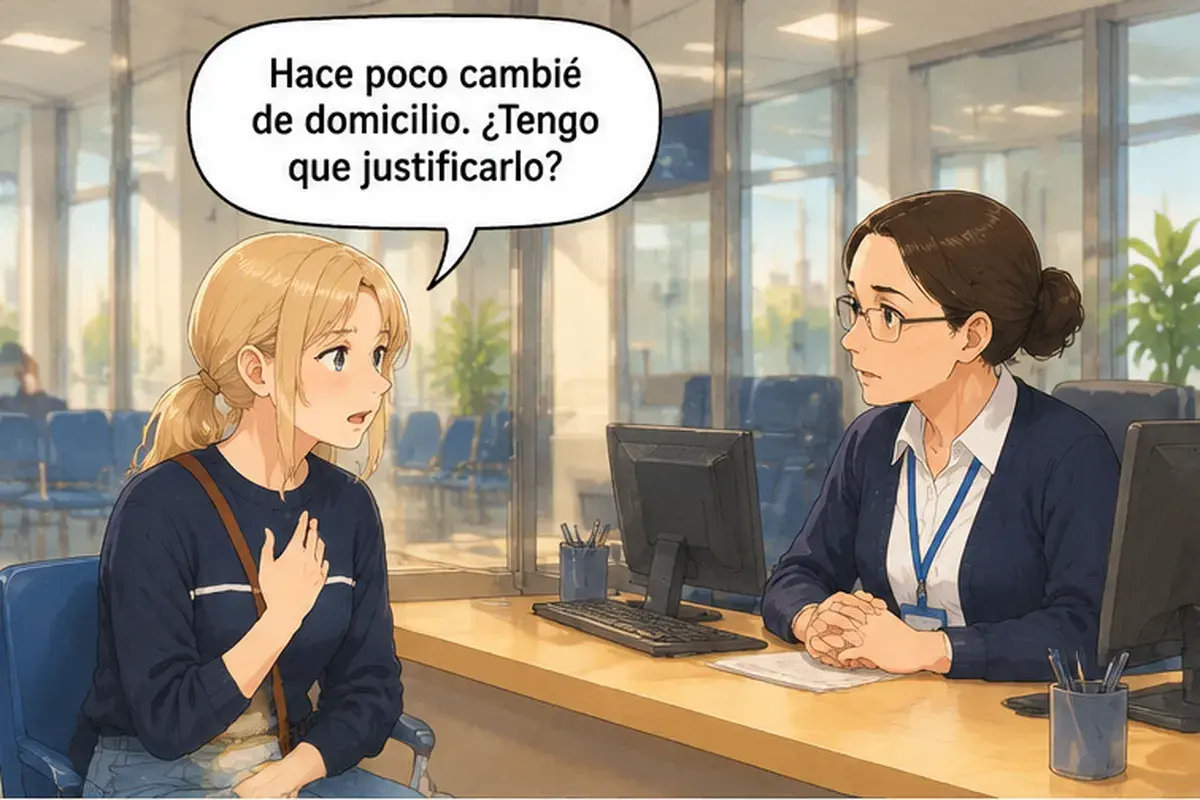
- Ana
Hace poco cambié de domicilio. ¿Tengo que justificarlo?
I changed my address recently. Do I have to prove it?
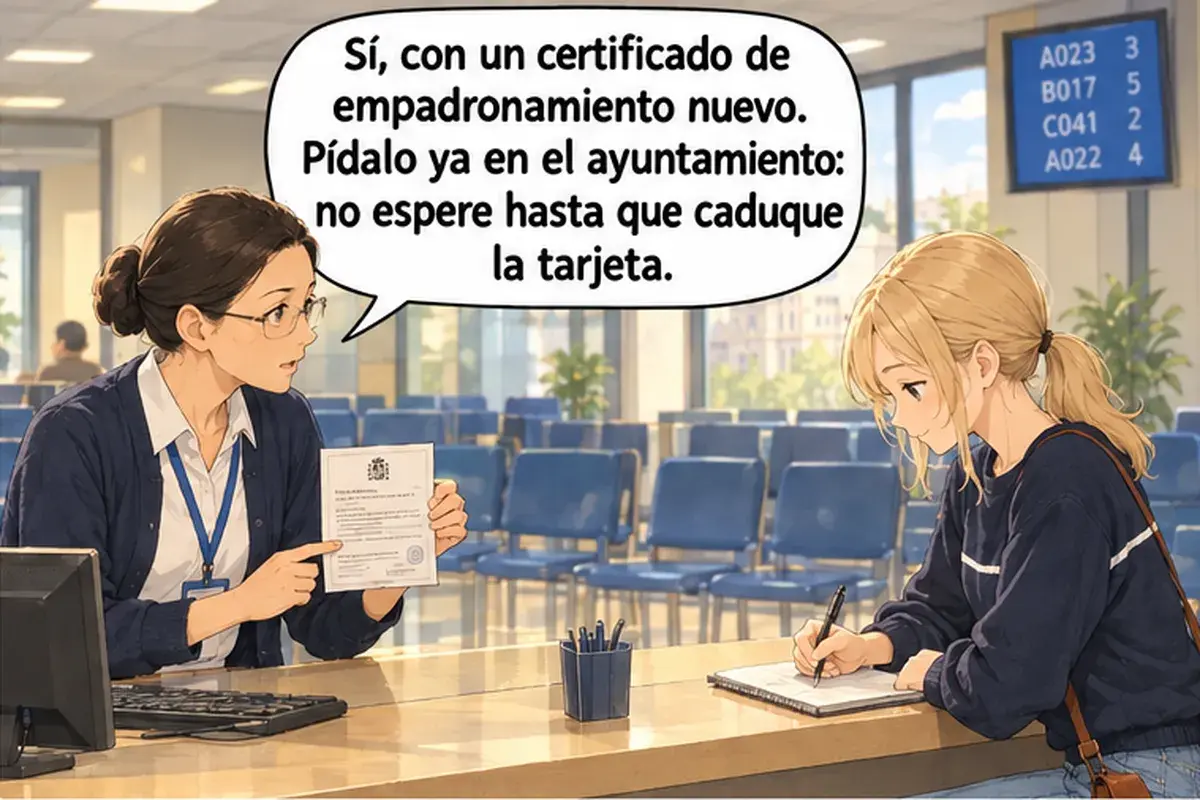
- Funcionaria
Sí, con un certificado de empadronamiento nuevo. Pídalo ya en el ayuntamiento: no espere hasta que caduque la tarjeta.
Yes, with a new certificate of address registration. Ask for it at city hall now: don't wait until the card expires (formal).
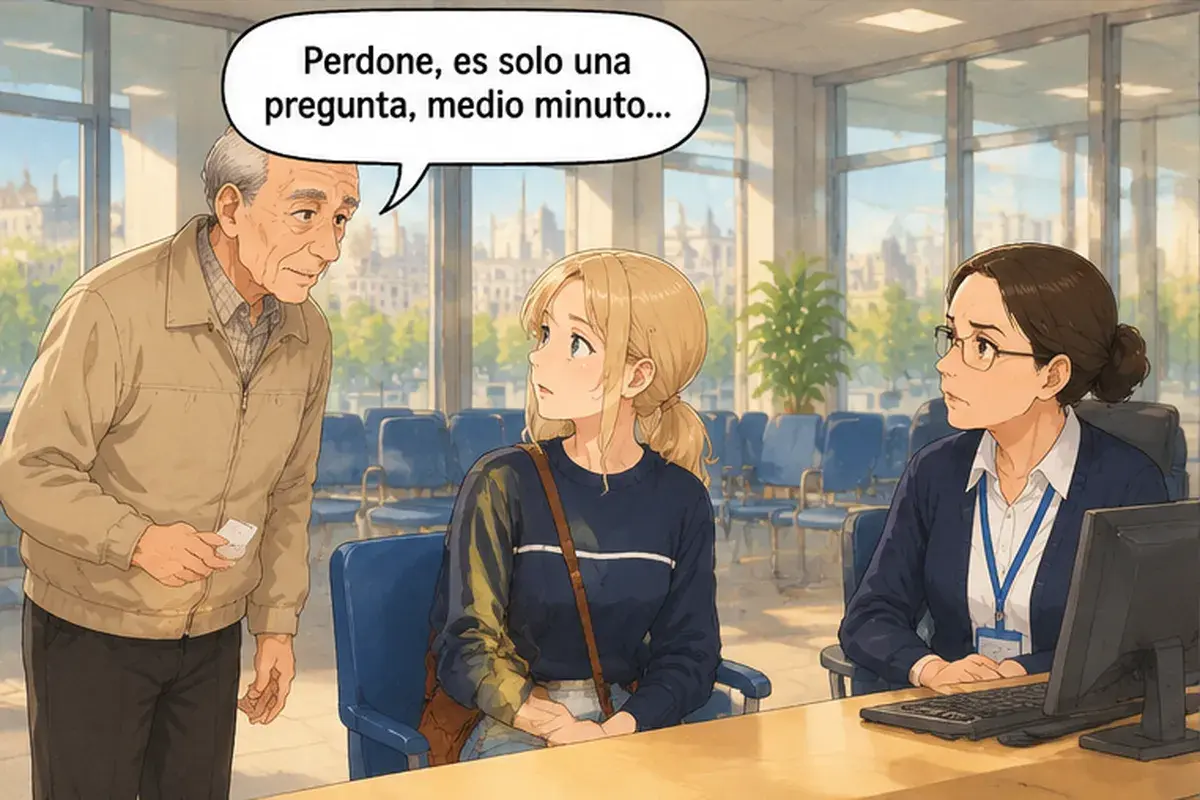
- Señor
Perdone, es solo una pregunta, medio minuto…
Excuse me, it's just one question, half a minute… (formal)
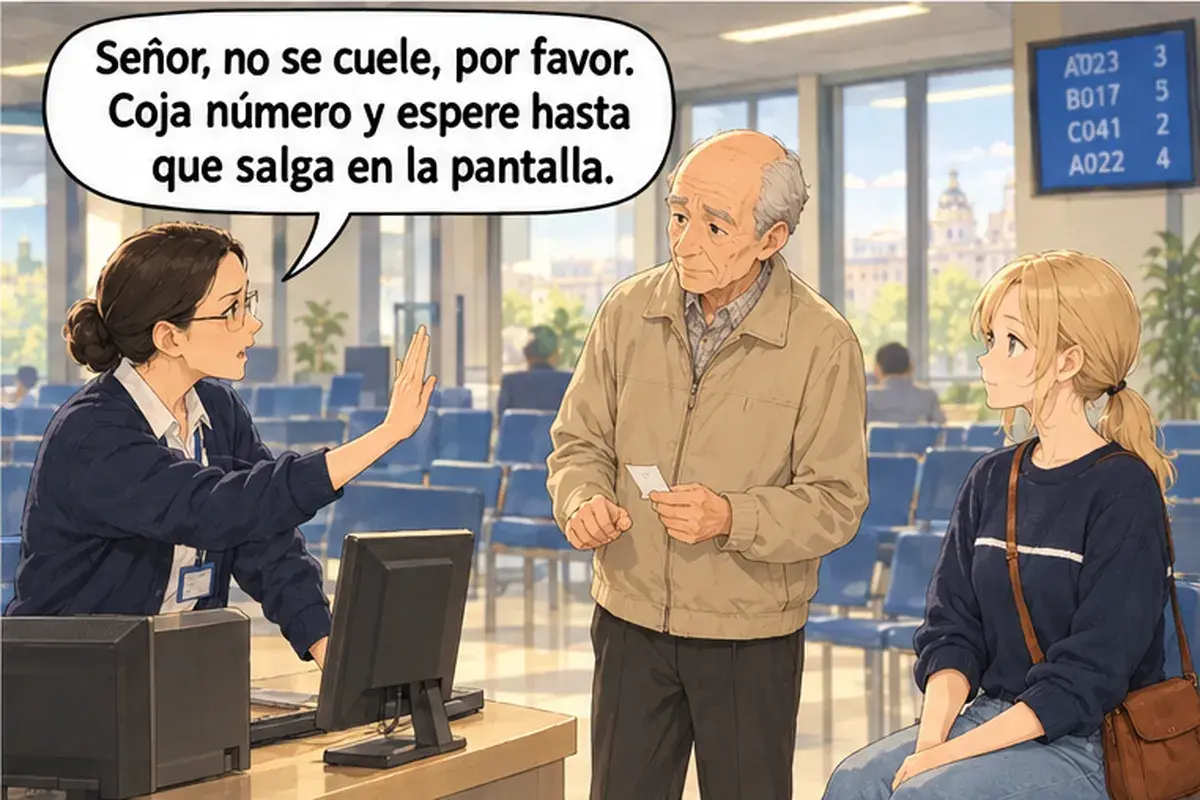
- Funcionaria
Señor, no se cuele, por favor. Coja número y espere hasta que salga en la pantalla.
Sir, please don't cut in line. Take a number and wait until it comes up on the screen (formal).
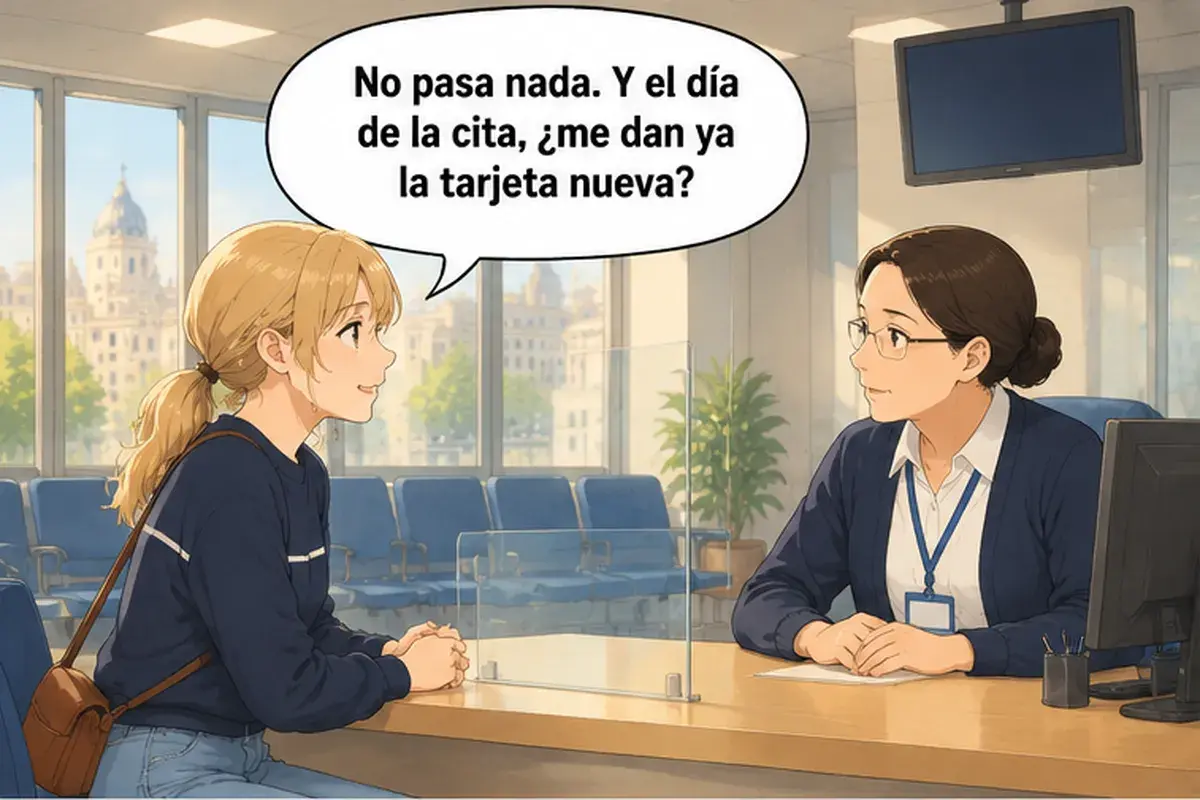
- Ana
No pasa nada. Y el día de la cita, ¿me dan ya la tarjeta nueva?
No problem. And on the day of the appointment, do they give me the new card right away?
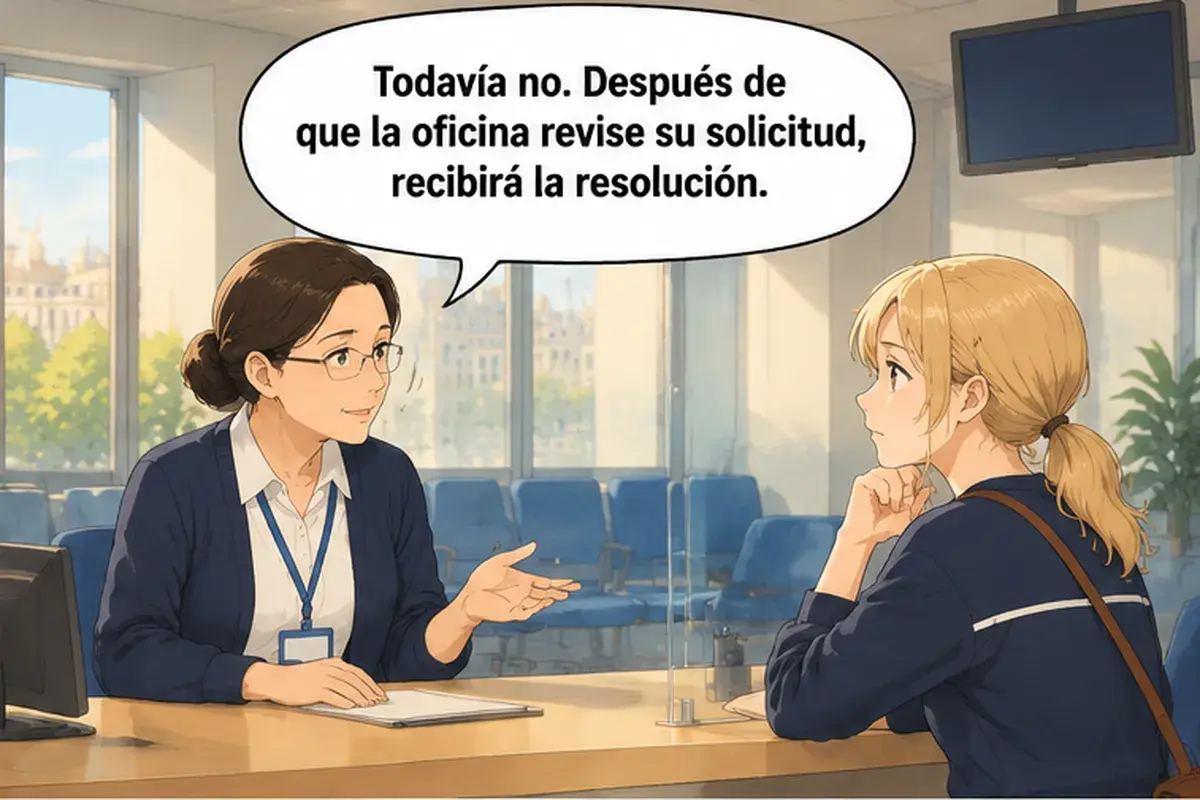
- Funcionaria
Todavía no. Después de que la oficina revise su solicitud, recibirá la resolución.
Not yet. After the office reviews your application, you'll receive the decision (formal).
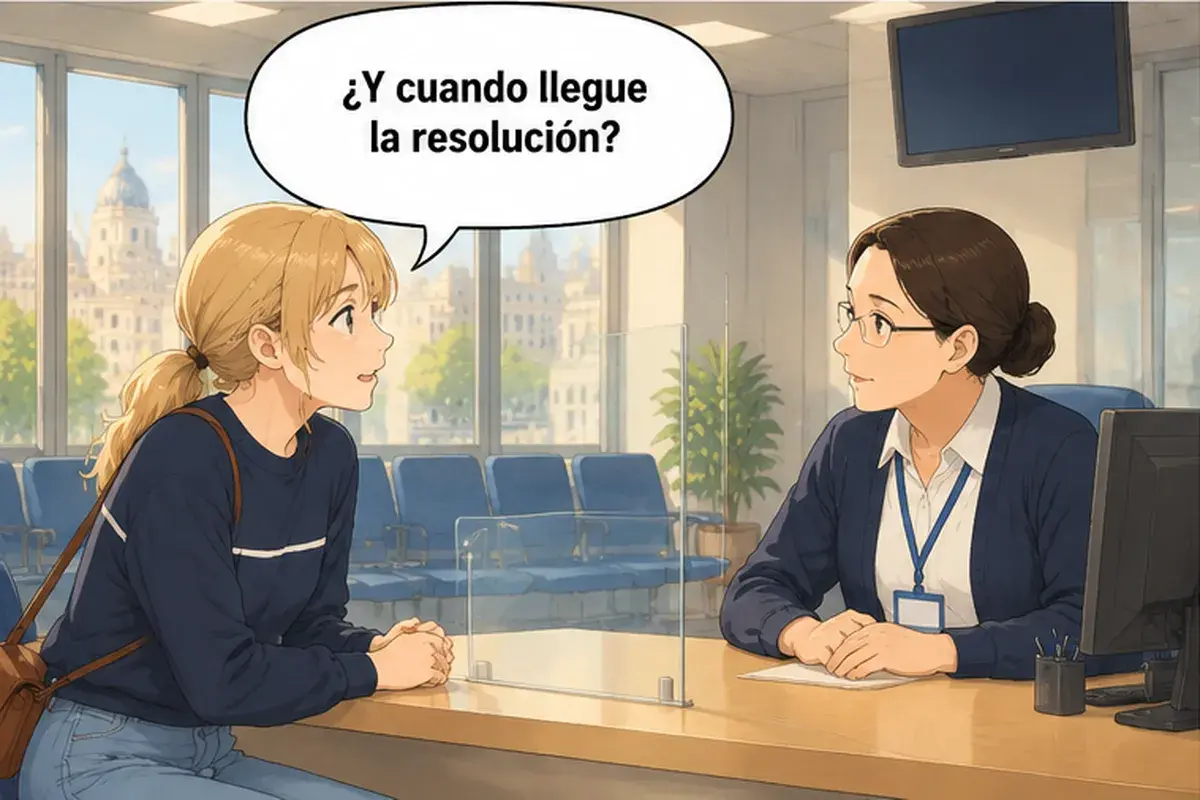
- Ana
¿Y cuando llegue la resolución?
And when the decision comes?
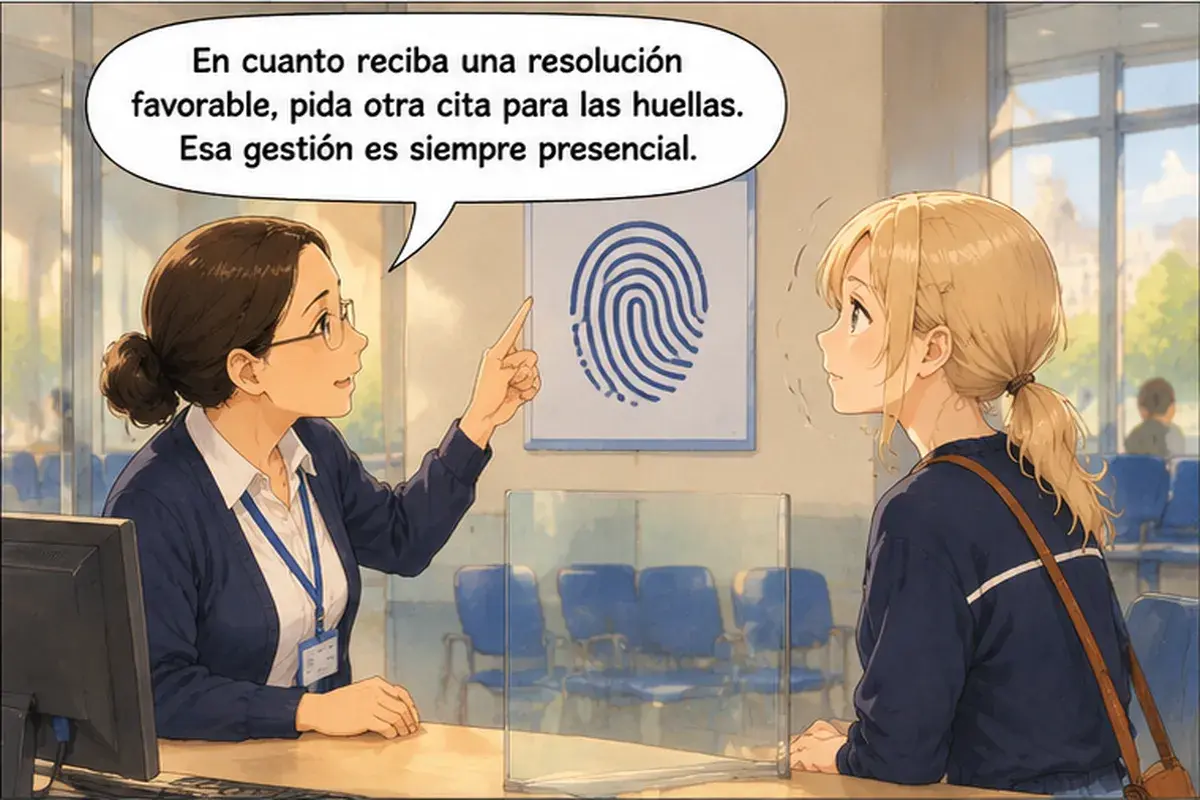
- Funcionaria
En cuanto reciba una resolución favorable, pida otra cita para las huellas. Esa gestión es siempre presencial.
As soon as you get a favorable decision, make another appointment for the fingerprints. That procedure is always done in person (formal).
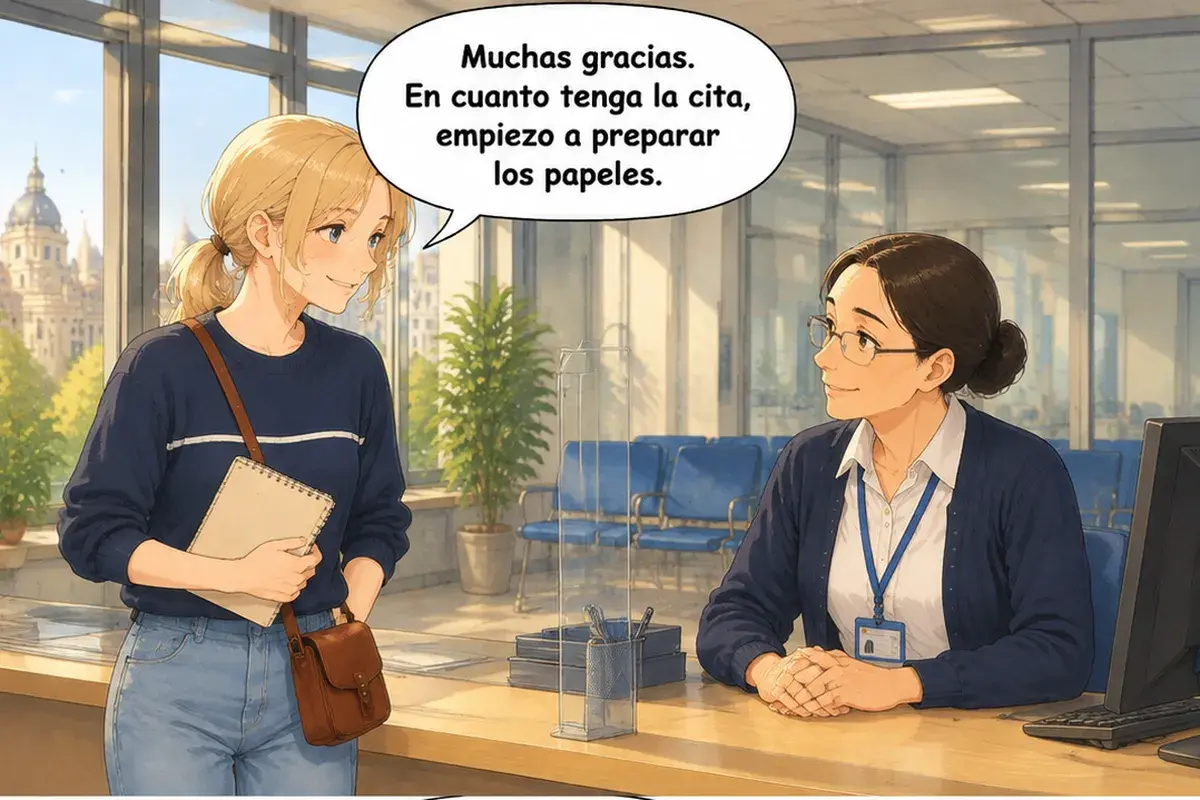
- Ana
Muchas gracias. En cuanto tenga la cita, empiezo a preparar los papeles.
Thank you very much. As soon as I have the appointment, I'll start getting the papers ready.
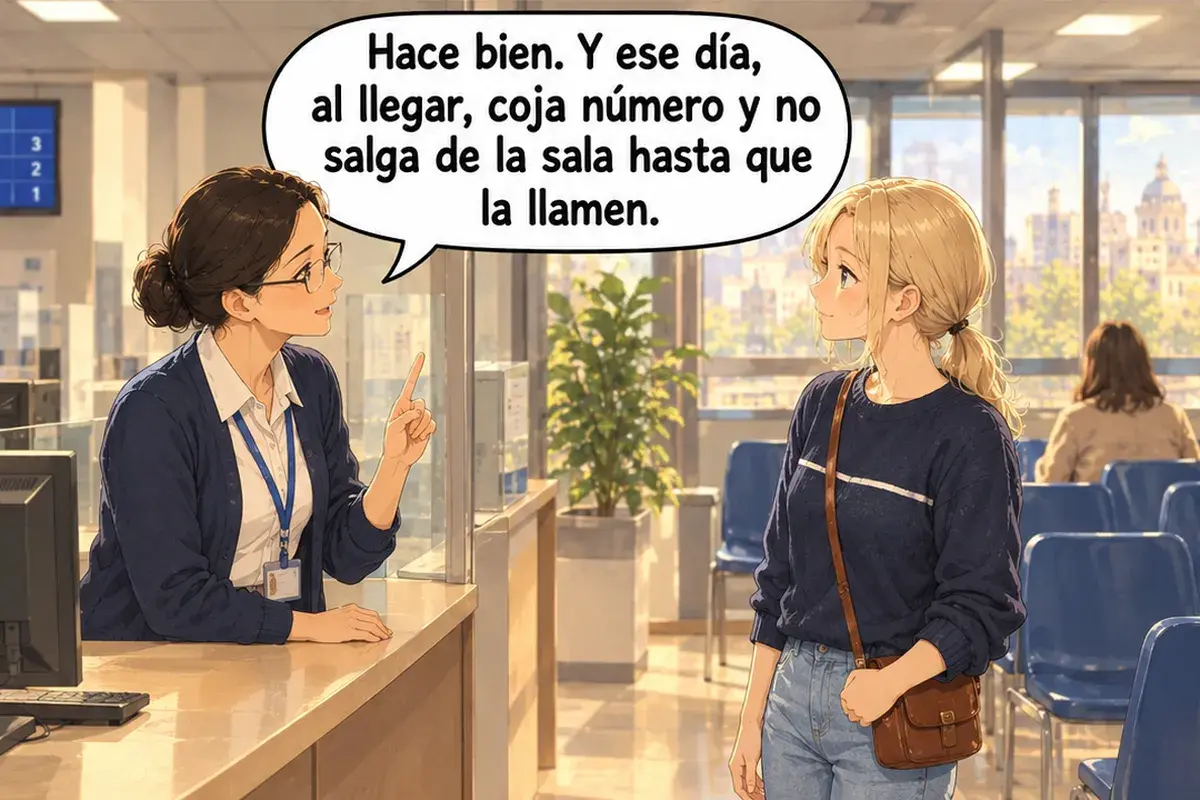
- Funcionaria
Hace bien. Y ese día, al llegar, coja número y no salga de la sala hasta que la llamen.
You're doing the right thing. And that day, when you arrive, take a number and don't leave the room until they call you (formal).
Grammar for this text
Time linking words about the future. After en cuanto, hasta que and después de que, the speaker is talking about something that hasn't happened yet, so the verb is in the subjunctive: en cuanto salgan citas nuevas ("as soon as new appointments come out"), hasta que caduque la tarjeta ("until the card expires"), después de que la oficina revise su solicitud ("after the office reviews your application": the office reviews it and you get the decision, so there are two different people). After antes de que, the subjunctive is always used: antes de que llegue el día.
Hasta que works like English "until": hasta que salga en la pantalla ("until it comes up on the screen"), hasta que la llamen ("until they call you").
Al llegar means "when you arrive": al + infinitive.
Official language. Se requiere means "is required" (in everyday speech: hace falta). Imprímalo, rellénelo, pídalo are polite usted commands with the pronoun attached: "print it", "fill it out", "ask for it".
Local words. Cita previa is an appointment booked in advance: without one, they won't see you. Las huellas are fingerprints, taken for the new card.
Words and grammar of the unit: Renew your residence card.
Learn the words from the texts with flashcards
In the app, you can tap any word in a text to see its translation, forms and examples, and new words stick with flashcards. 15 minutes a day.
Start for freeEverything is open for free. No card needed to sign up.