
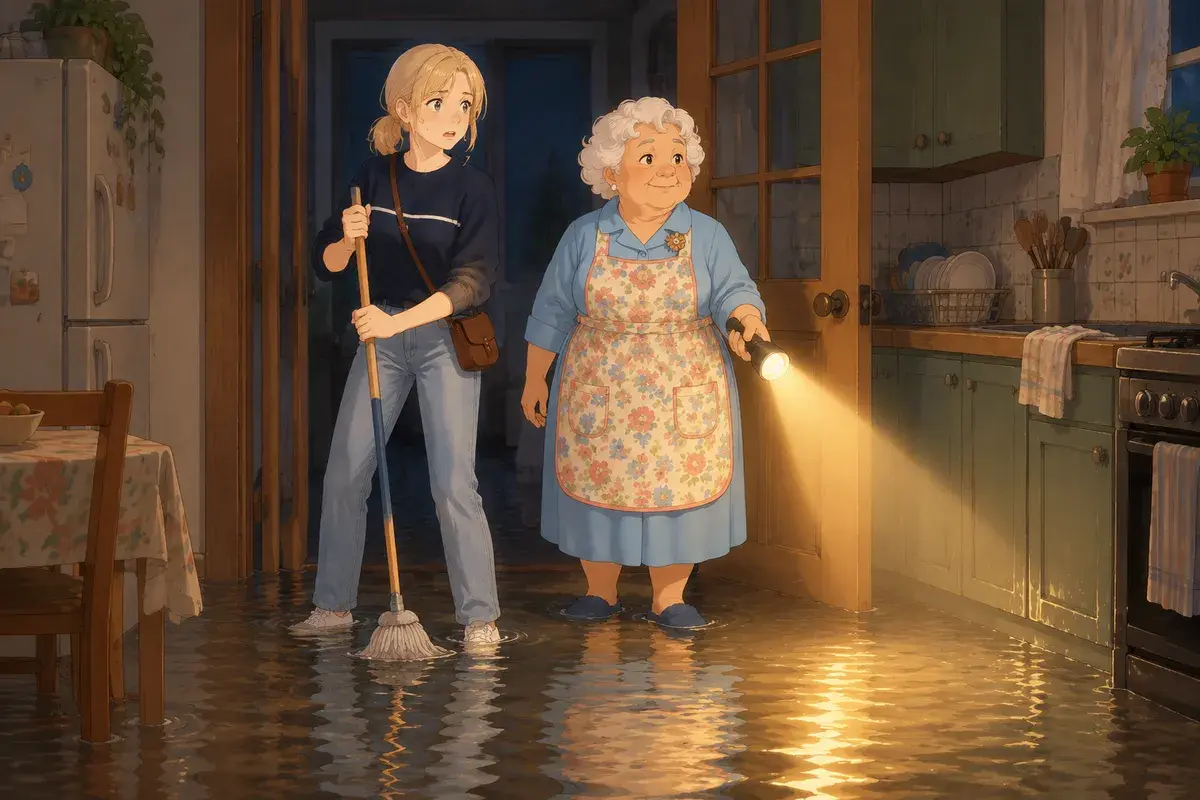
Spanish story with translation · B2 · 18 lines
Lo que pasó aquella noche What happened that night
Comic · 9 panels
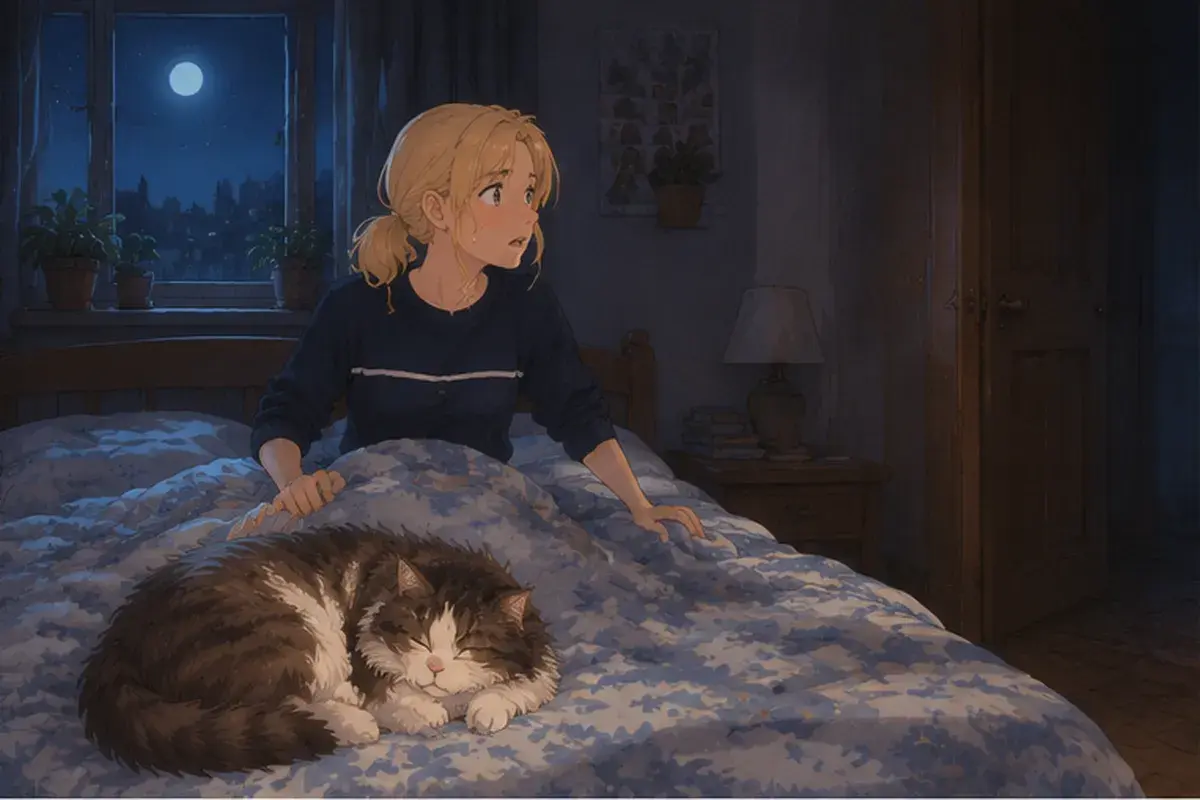
Serían las tres de la madrugada cuando me despertó un ruido extraño.
It was probably about three in the morning when a strange noise woke me up.
«Será Coco», pensé; pero Coco dormía a mis pies, tan tranquilo.
"It must be Coco," I thought; but Coco was sleeping at my feet, perfectly calm.
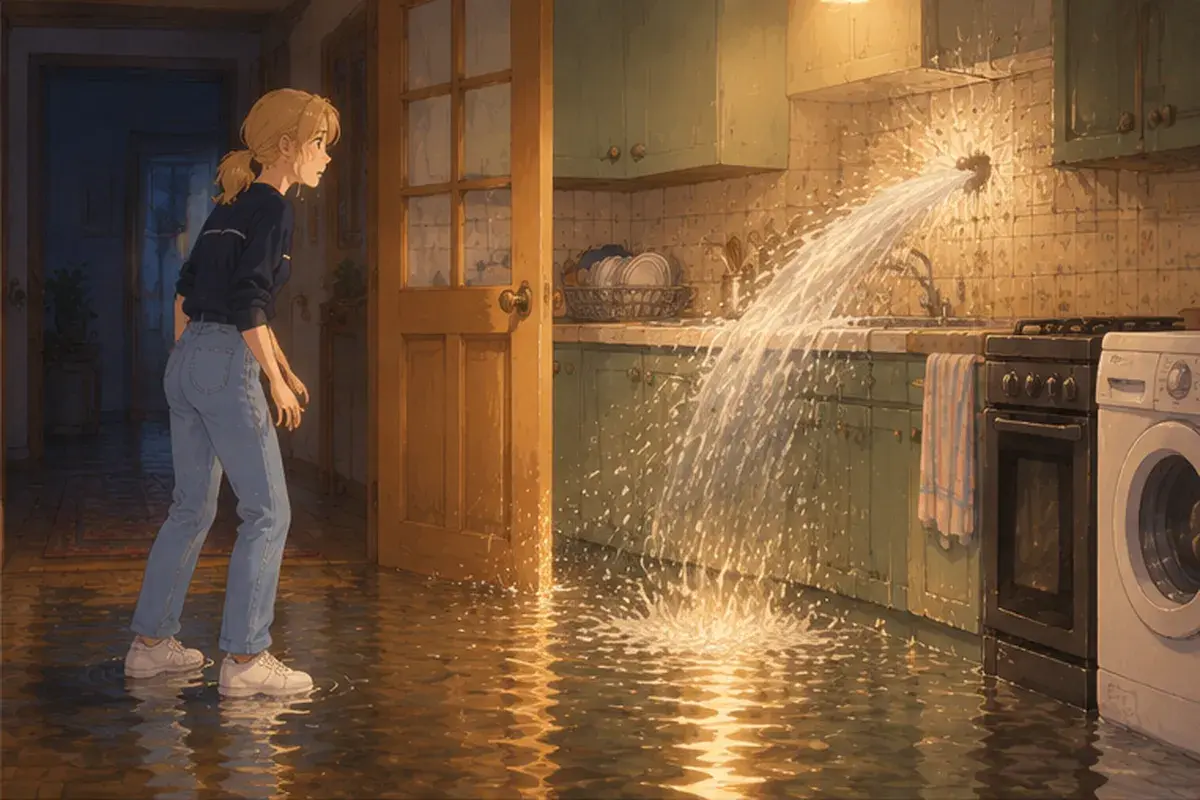
Me levanté en pijama, abrí la puerta de la cocina y vi un chorro de agua que salía de la pared. No era el tubo nuevo del baño: era otra tubería.
I got up in my pajamas, opened the kitchen door and saw a stream of water coming out of the wall. It wasn't the new pipe in the bathroom: it was a different pipe.
El agua llevaría un buen rato saliendo, porque ya había inundado la cocina y corría por el parqué del pasillo.
The water had probably been coming out for quite a while, because it had already flooded the kitchen and was running across the parquet floor in the hallway.
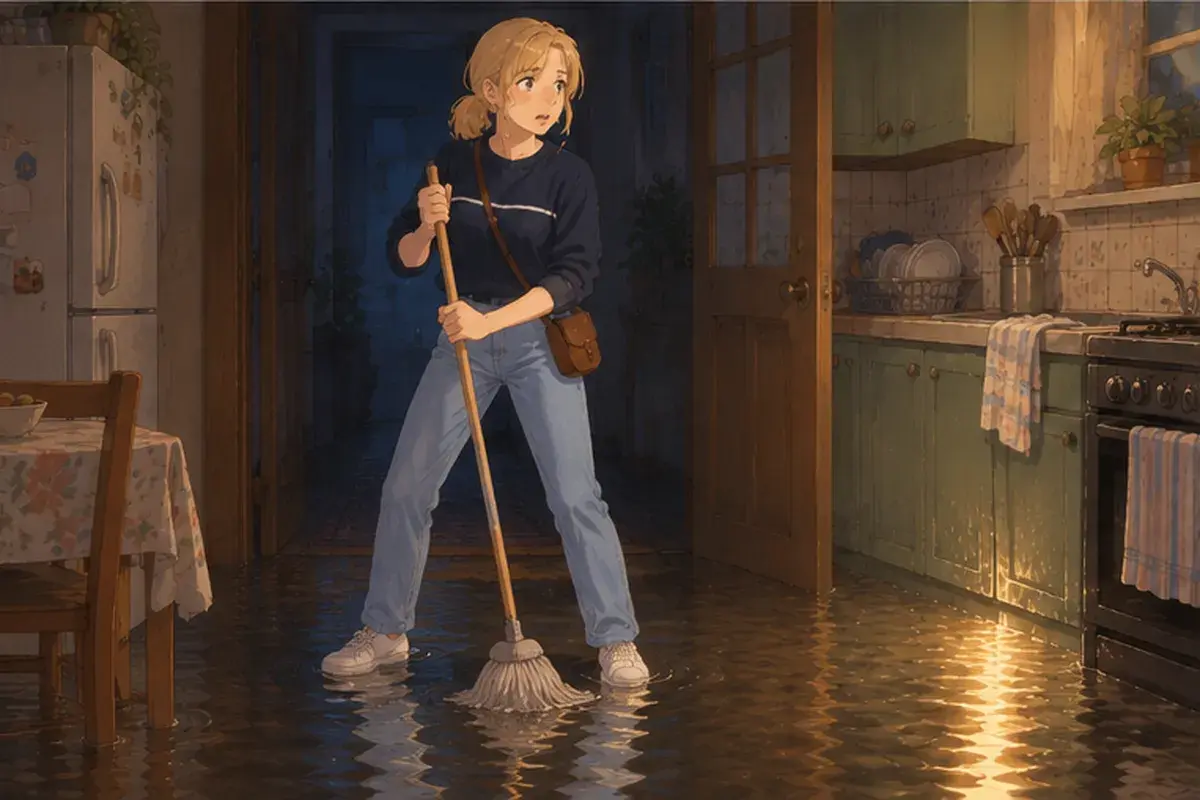
Me entró pánico y tardé en reaccionar. Luego cogí la fregona, como si con una fregona se pudiera parar una inundación.
I panicked and was slow to react. Then I grabbed the mop, as if you could stop a flood with a mop.
Tenía que cerrar la llave de paso, pero ¿dónde estaría? Busqué en la cocina, en el baño, en la terraza: nada.
I had to close the shutoff valve, but where could it be? I looked in the kitchen, in the bathroom, on the terrace: nothing.
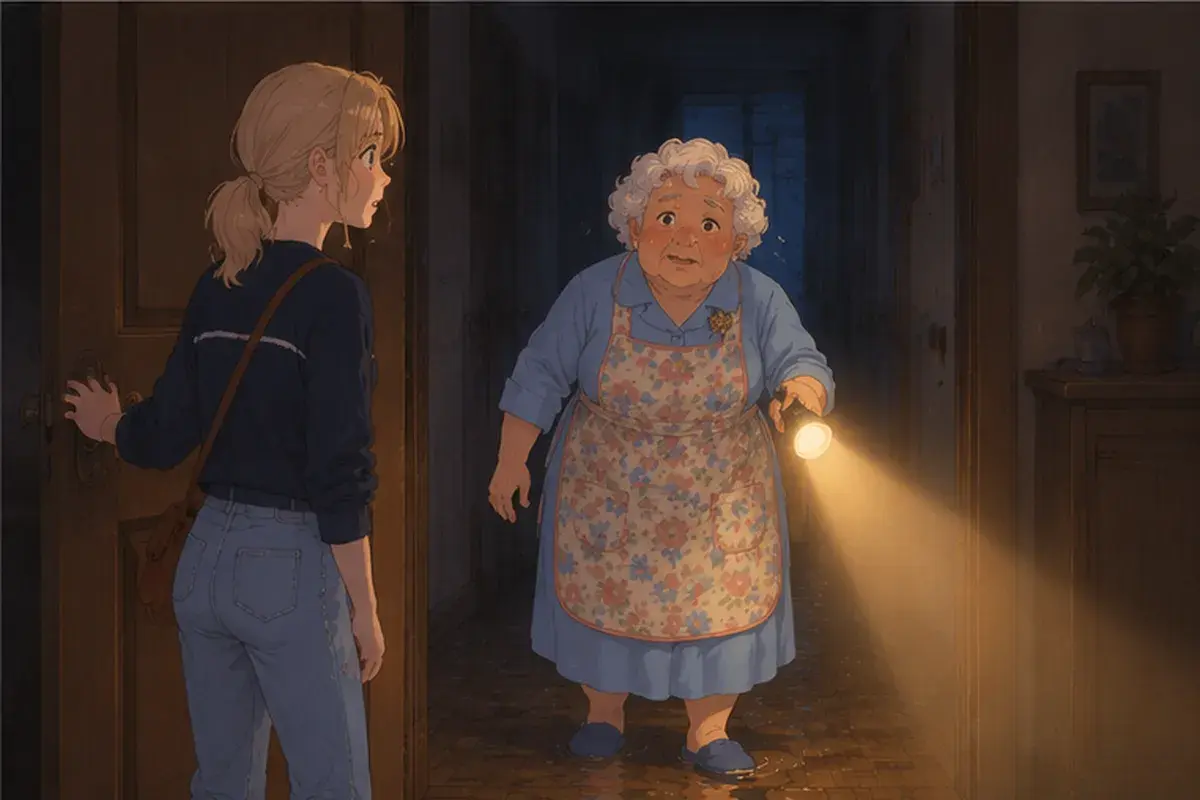
En ese momento se fue la luz y alguien empezó a llamar a mi puerta con fuerza.
At that moment the power went out and someone started banging on my door.
Era doña Concha, la vecina del segundo, con una linterna. Debió de subir corriendo, porque casi no podía hablar.
It was doña Concha, the neighbor from the second floor, with a flashlight. She must have run up the stairs, because she could hardly speak.
Pensé que venía a gritarme: yo llevaba menos de tres meses en el edificio y apenas nos habíamos saludado.
I thought she'd come to yell at me: I'd been in the building less than three months and we'd barely said hello to each other.
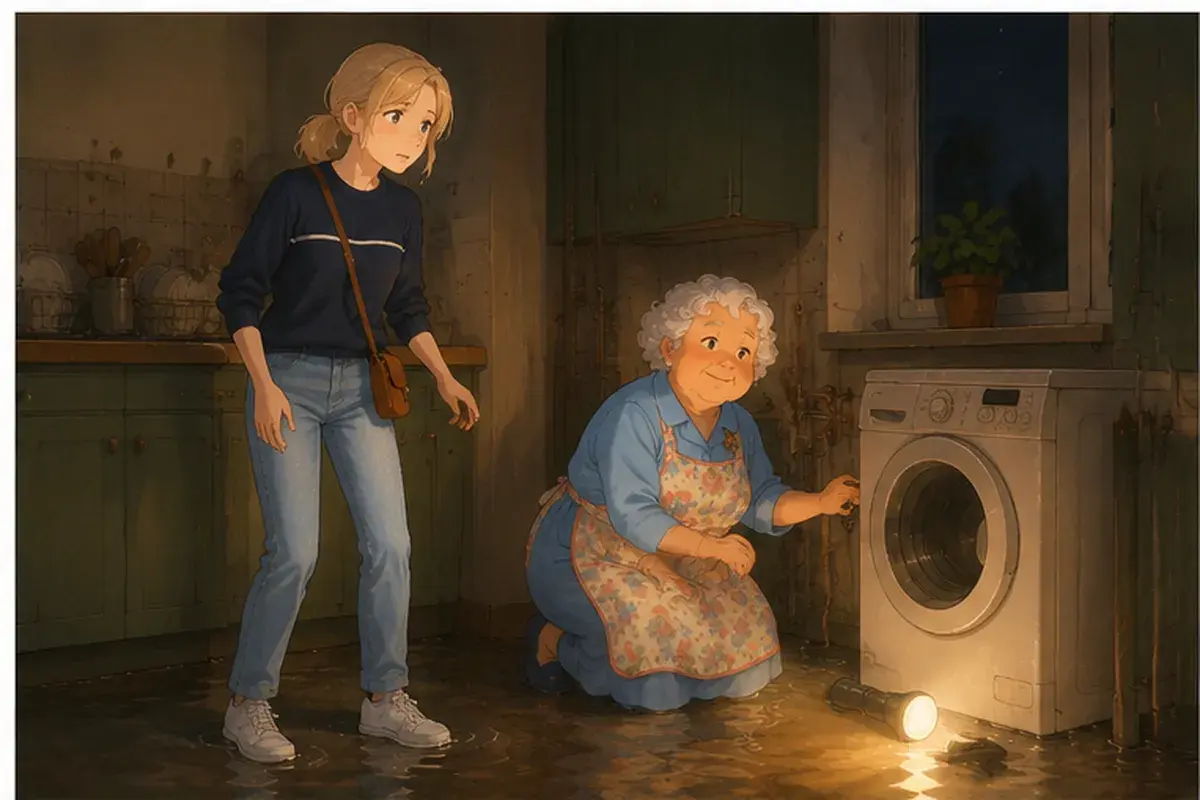
Pero no gritó. «Hija, la llave de paso está detrás de la lavadora», dijo, y la cerró en un momento.
But she didn't yell. "Honey, the shutoff valve is behind the washing machine," she said, and closed it in a moment (to a woman).
Resulta que su hermana vivió en mi piso durante veinte años: doña Concha lo conocía mejor que yo.
It turns out her sister lived in my apartment for twenty years: doña Concha knew it better than I did.
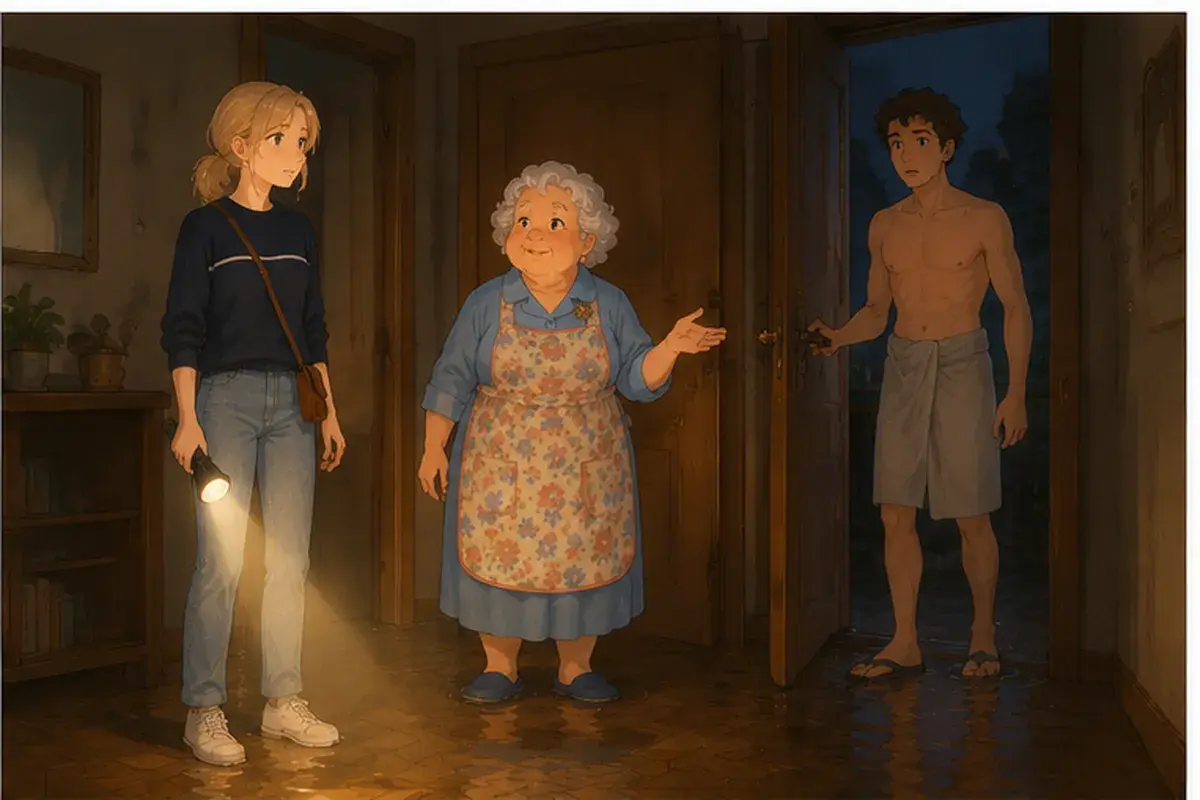
Con el ruido salieron más vecinos. Un chico del ático bajó medio desnudo, con una toalla: pensaría que había un incendio.
The noise brought out more neighbors. A guy from the top-floor apartment came down half-naked, in a towel: he probably thought there was a fire.
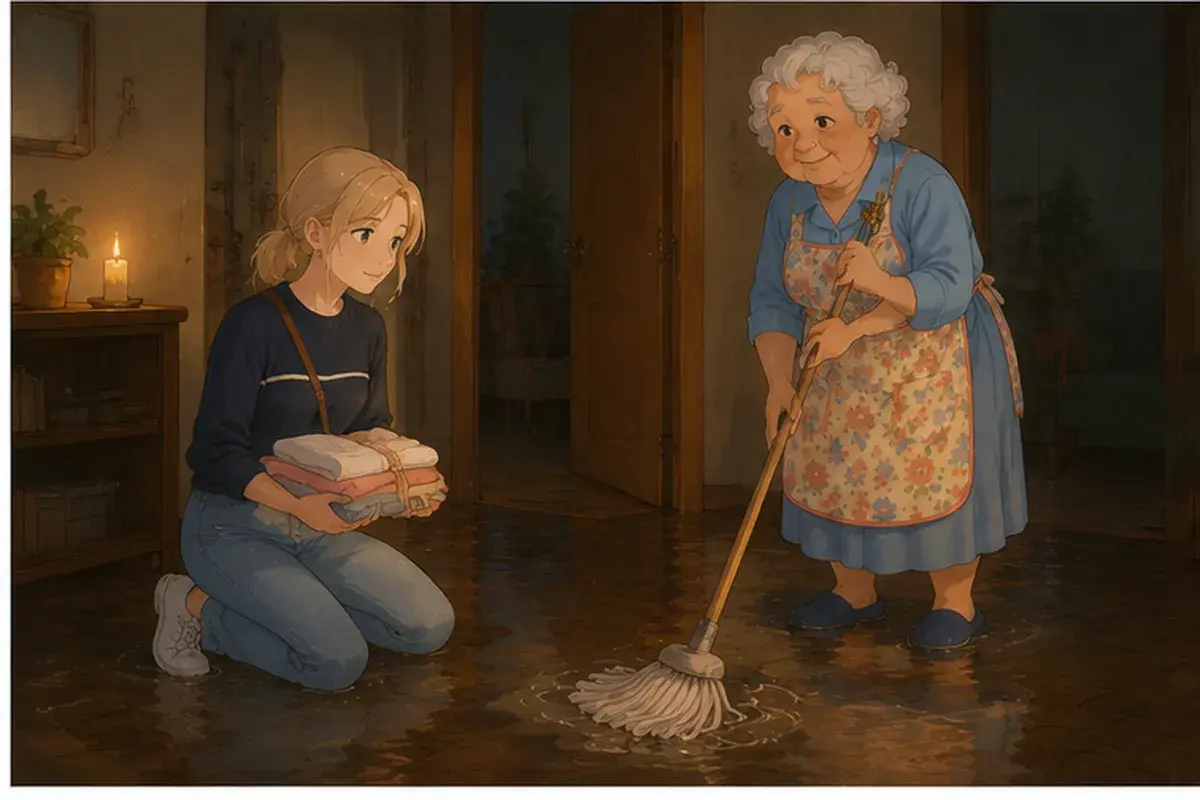
Entre las dos secamos el pasillo: ella con mi fregona y yo con todas las toallas de la casa.
The two of us dried the hallway together: she used my mop and I used every towel in the house.
A eso de las cinco, doña Concha me llevó a su cocina y preparó chocolate caliente a la luz de una vela.
Around five, doña Concha took me to her kitchen and made hot chocolate by candlelight.
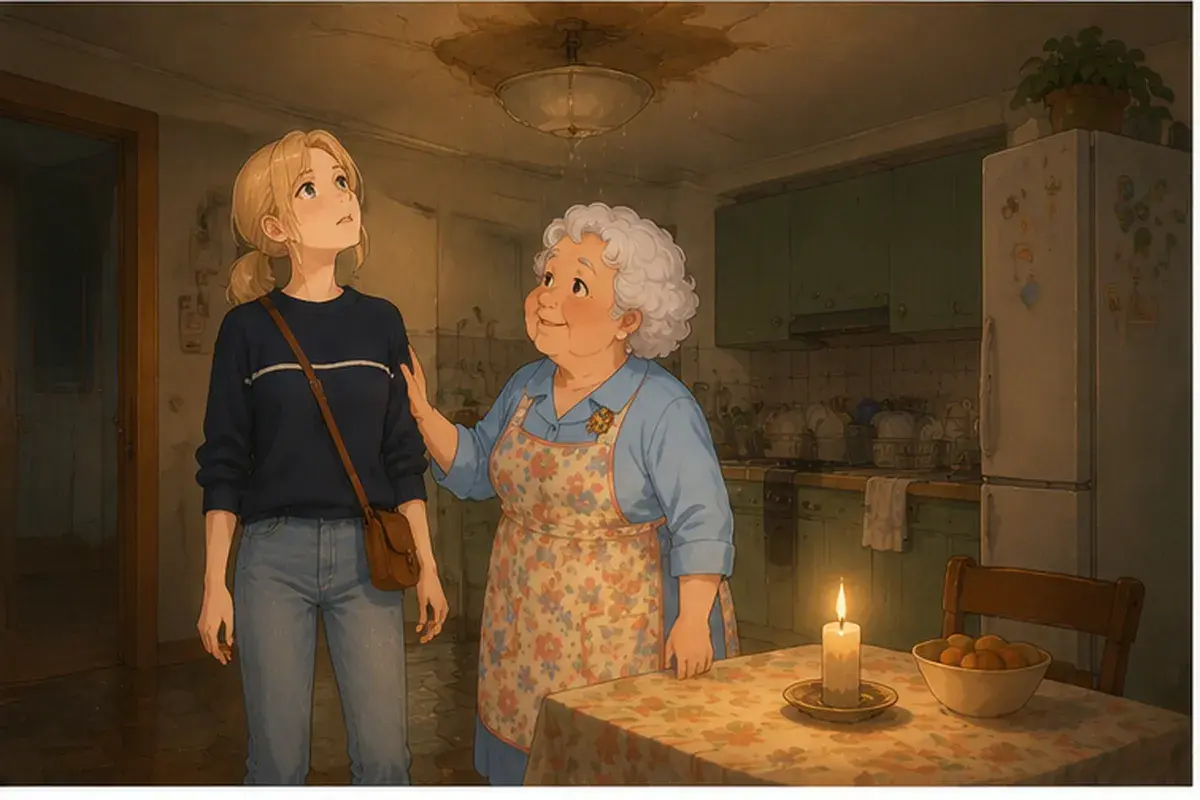
Entonces vi su techo: una mancha enorme y una lámpara llena de agua. Estaba a punto de pedirle perdón, pero no me dejó.
Then I saw her ceiling: a huge stain and a light fixture full of water. I was about to apologize to her, but she didn't let me.
«Tú no tienes la culpa, hija. Esa tubería tendría cuarenta años: en esta casa nadie cambia nada hasta que se rompe».
"It's not your fault, honey. That pipe was probably about forty years old: in this building nobody replaces anything until it breaks." (to a woman)
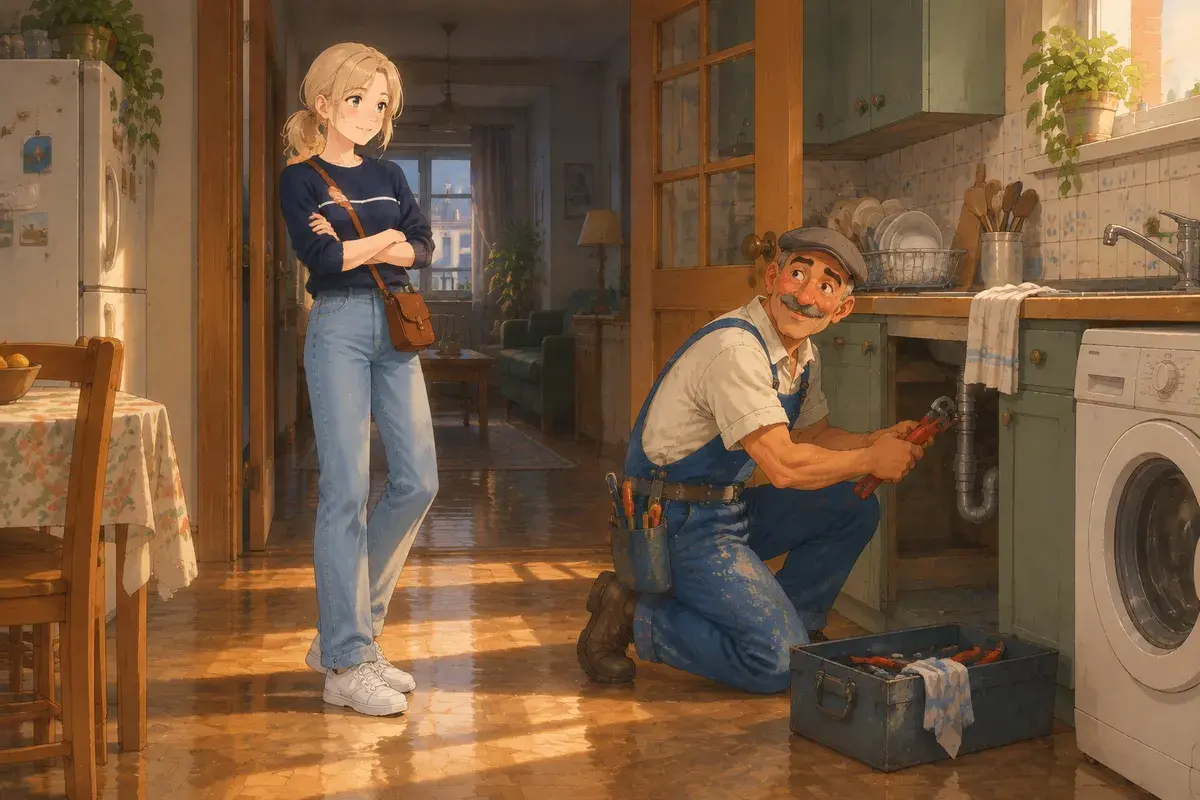
Al cabo de dos días vino Manolo, el fontanero que suele llegar tarde. Esta vez fue puntual: quién lo diría.
Two days later Manolo came, the plumber who's usually late. This time he was on time: who would have thought.
Desde aquella noche sé dos cosas: dónde está la llave de paso y que tengo una vecina estupenda.
Since that night I know two things: where the shutoff valve is and that I have a wonderful neighbor.
Grammar for this text
Guessing about the past. serían las tres — it was probably about three. el agua llevaría un buen rato saliendo — the water had probably been coming out for quite a while. ¿dónde estaría? — where could it be?: this is how you wonder to yourself. pensaría que había un incendio — he probably thought there was a fire. esa tubería tendría cuarenta años — that pipe was probably about forty years old.
«Será Coco» — the same kind of guess, but about the present (unit 2): "it must be Coco", what Ana thinks at that very second.
Debió de subir corriendo — "she must have run up the stairs": a conclusion from the fact that the neighbor could barely speak.
In order: en ese momento — at that moment, resulta que — it turns out, a eso de las cinco — around five, al cabo de dos días — two days later.
Como si con una fregona se pudiera parar una inundación — after como si it's always the imperfect subjunctive (unit 18), like English "as if you could". Nadie cambia nada hasta que se rompe — after hasta que it's the normal form (indicative) here: this is what always happens, not something in the future (unit 10). Se fue la luz — the power went out. Hija — a warm way for an older person to talk to a younger one, not only to a daughter: "honey", "dear".
Quién lo diría — "who would have thought": diría is the conditional of decir (stem dir-, like haría from hacer). It's a set phrase: Manolo, who is always late, suddenly came on time.
Estaba a punto de pedirle perdón — "I was about to apologize to her" (B1, unit 8). El fontanero que suele llegar tarde — "who is usually late" (soler, B1).
Words and grammar of the unit: Report an insurance claim.
Learn the words from the texts with flashcards
In the app, you can tap any word in a text to see its translation, forms and examples, and new words stick with flashcards. 15 minutes a day.
Start for freeEverything is open for free. No card needed to sign up.