

Spanish dialogue with translation · B2 · 18 lines
¿Cuatro días o cinco? Four days or five?
Comic · 18 panels

- Lucía
Chicos, hoy hacemos un debate con reglas: cada uno argumenta cuando le toca y al final contamos los votos. El tema: ¿semana laboral de cuatro días, sí o no?
Guys, today we're having a debate with rules: everyone makes their case when it's their turn, and at the end we count the votes. The topic: a four-day workweek, yes or no?

- Pablo
Yo soy partidario, digan lo que digan los jefes. En primer lugar, con tres días libres la gente descansa de verdad y vuelve al trabajo con la moral alta.
I'm in favor, whatever the bosses say. First of all, with three days off people really rest and come back to work with high morale (man speaking).

- Sergio
Francamente, yo no lo veo: si trabajamos menos horas, hacemos menos trabajo. Es más, muchas empresas pequeñas no podrían pagarlo.
Frankly, I don't see it: if we work fewer hours, we do less work. What's more, a lot of small companies couldn't afford it.

- Lucía
Sergio, no interrumpas, que no es tu turno. Pablo, ¿tienes algún dato concreto?
Sergio, don't interrupt, it's not your turn. Pablo, do you have any specific data?

- Pablo
Sí: aquí en Valencia se hizo un experimento hace unos años, un mes entero con semanas de cuatro días. Según la encuesta que hicieron después, la gente estaba menos cansada y tenía menos estrés.
Yes: an experiment was done here in Valencia a few years ago, a whole month of four-day weeks. According to the survey they did afterward, people were less tired and had less stress.
- Sergio
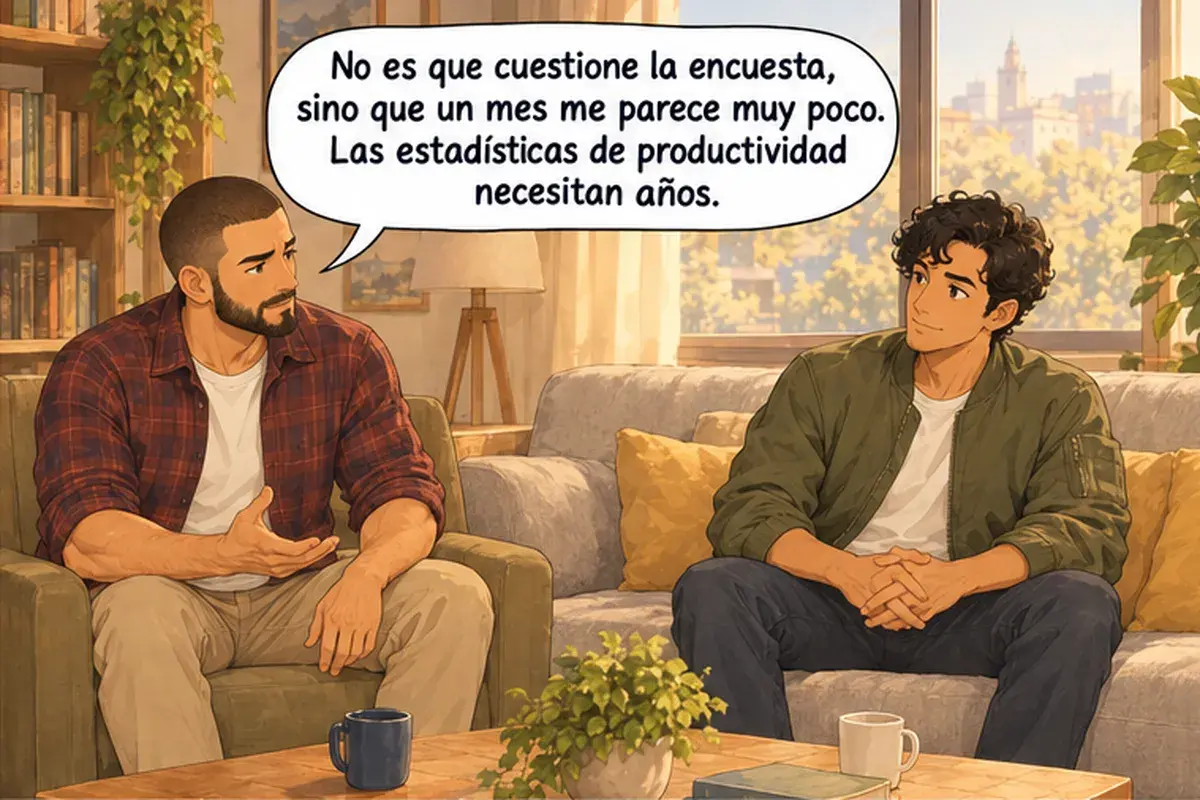
No es que cuestione la encuesta, sino que un mes me parece muy poco. Las estadísticas de productividad necesitan años.
It's not that I question the survey, it's that a month seems like very little time to me. Productivity statistics take years.

- Ana
Por un lado, Sergio tiene razón: un mes es poco. Por otro, no trabajamos bien porque pasemos muchas horas en la oficina, sino porque estamos descansados.
On the one hand, Sergio is right: a month isn't much. On the other, we work well not because we spend a lot of hours at the office, but because we're rested.
- Sergio
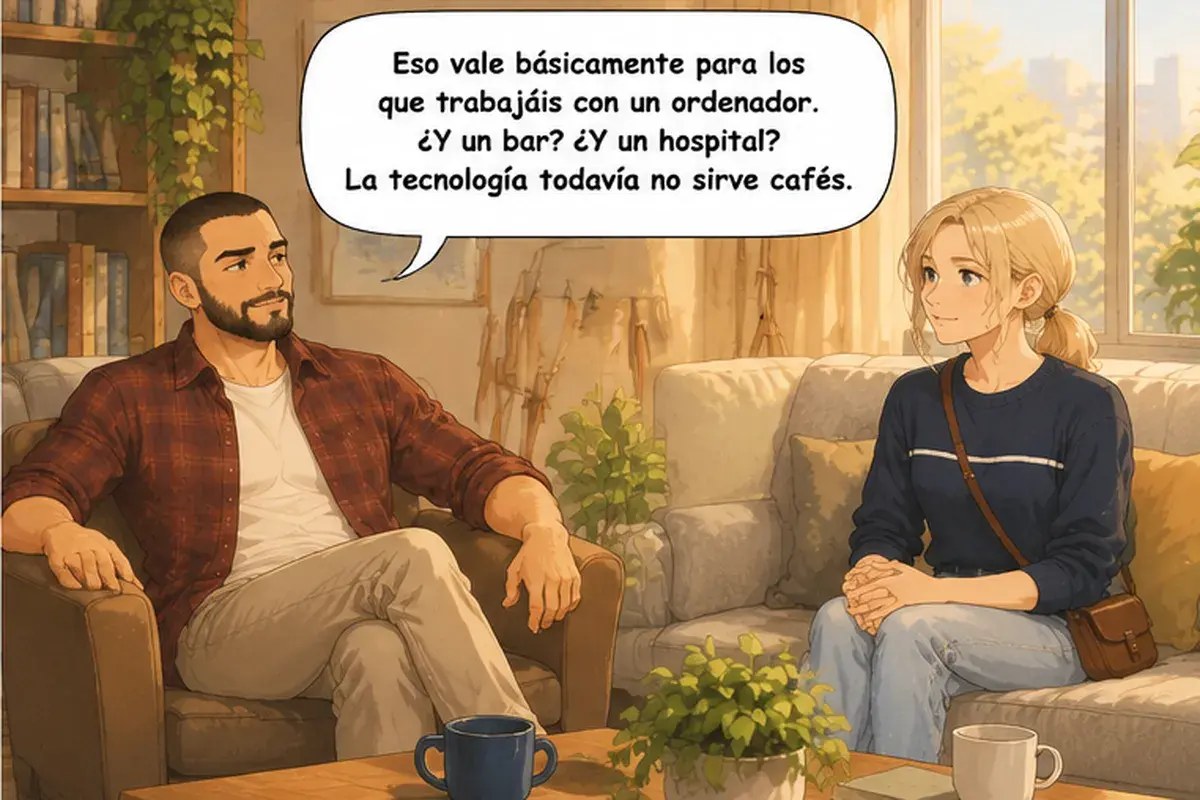
Eso vale básicamente para los que trabajáis con un ordenador. ¿Y un bar? ¿Y un hospital? La tecnología todavía no sirve cafés.
That basically applies to those of you who work on a computer. What about a bar? What about a hospital? Technology still doesn't serve coffee.

- Pablo
Precisamente: en un bar habría que contratar a más gente, y eso es crear empleo.
Exactly: in a bar you'd have to hire more people, and that's creating jobs.

- Ana
Yo no lo considero una cuestión de productividad, sino de conciliación. De hecho, mis compañeras con hijos son las que más lo piden.
I don't consider it a question of productivity, but of work-life balance. In fact, the women I work with who have kids are the ones who ask for it most.

- Sergio
Oye, no es que yo esté en contra del bienestar. Es que nadie me explica quién lo paga.
Listen, it's not that I'm against well-being. It's just that nobody explains to me who pays for it.
- Lucía
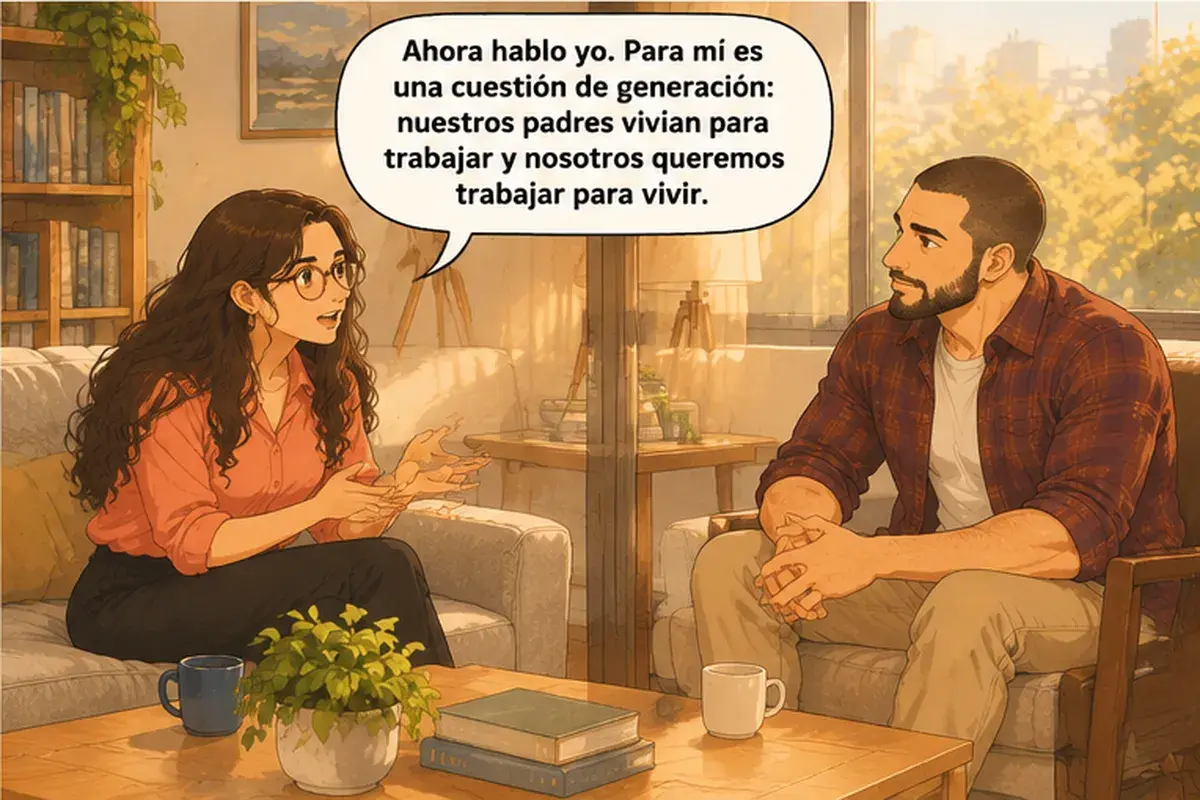
Ahora hablo yo. Para mí es una cuestión de generación: nuestros padres vivían para trabajar y nosotros queremos trabajar para vivir.
Now I'll speak. For me, it's a question of generation: our parents lived to work, and we want to work to live.

- Sergio
Muy bonito, pero es un debate mundial y de momento nadie ha encontrado la solución.
Very nice, but it's a worldwide debate, and so far nobody has found the solution.

- Lucía
Se acabó el tiempo. En resumen: Pablo y Ana, a favor; Sergio, en contra.
Time's up. To sum up: Pablo and Ana, in favor; Sergio, against.

- Sergio
En contra, no. A favor, siempre que alguien me explique quién lo paga.
Not against. In favor, as long as somebody explains to me who pays for it.

- Lucía
Pues entonces, tres votos y medio a favor. Gana la semana de cuatro días.
Well then, three and a half votes in favor. The four-day week wins.

- Pablo
¿Y qué haríamos con el viernes libre?
And what would we do with Friday off?

- Ana
Lo de siempre: quedar aquí y discutir, pero sin reglas.
Same as always: meet up here and argue, but without rules.
Grammar for this text
No es que…, sino que… — no es que cuestione la encuesta, sino que un mes me parece muy poco: "it's not that I question the survey, it's that a month seems like very little time to me". What Sergio rejects is in the subjunctive (cuestione); what he claims is in the normal form (parece). In conversation the second half starts with es que: no es que yo esté en contra del bienestar. Es que nadie me explica quién lo paga.
Not because…, but because… No trabajamos bien porque pasemos muchas horas en la oficina, sino porque estamos descansados. The no goes with the reason: we do work well, just not because of the hours at the office. That's why pasemos is in the subjunctive, and the real reason, estamos, is in the normal form.
Connectors for an argument. En primer lugar — "first of all". Sergio adds a stronger point: es más, muchas empresas pequeñas no podrían pagarlo — "what's more…". Ana weighs both sides with por un lado and por otro, and then backs up her point with a fact: de hecho, mis compañeras con hijos son las que más lo piden — "in fact…". Lucía sums up: en resumen. En un bar habría que contratar a más gente — "in a bar you'd have to hire more people": habría que is hay que in the conditional.
Los que trabajáis con un ordenador — "those of you who work on a computer": the verb is in the vosotros form because Sergio is talking about his friends themselves.
Digan lo que digan los jefes — "whatever the bosses say": a set phrase; the rule comes later.
Words and grammar of the unit: Make your case in a debate.
Learn the words from the texts with flashcards
In the app, you can tap any word in a text to see its translation, forms and examples, and new words stick with flashcards. 15 minutes a day.
Start for freeEverything is open for free. No card needed to sign up.