

Spanish dialogue with translation · B1 · 18 lines
Cuando llegues, escríbeme When you arrive, write me
Comic · 17 panels

- Ana
¡Katia, por fin! Llevo un mes contando los días, te lo juro.
Katia, finally! I've been counting the days for a month, I swear.

- Katia
Yo también tengo muchas ganas de verte. Mira, te cuento el itinerario: salgo el jueves por la mañana y hago escala en Estambul.
I really want to see you too. Look, let me tell you my itinerary: I leave on Thursday morning and have a layover in Istanbul.

- Ana
¿Es muy larga la escala?
Is the layover very long?
- Katia
Tres horas. Y ya tengo el visado: me lo dieron el lunes.
Three hours. And I already have the visa: they gave it to me on Monday.

- Ana
¡Menos mal! Cuando tengas la tarjeta de embarque del segundo vuelo, envíame una foto: así sabré a qué hora llegas.
Thank goodness! When you have the boarding pass for the second flight, send me a picture: that way I'll know what time you arrive.
- Katia
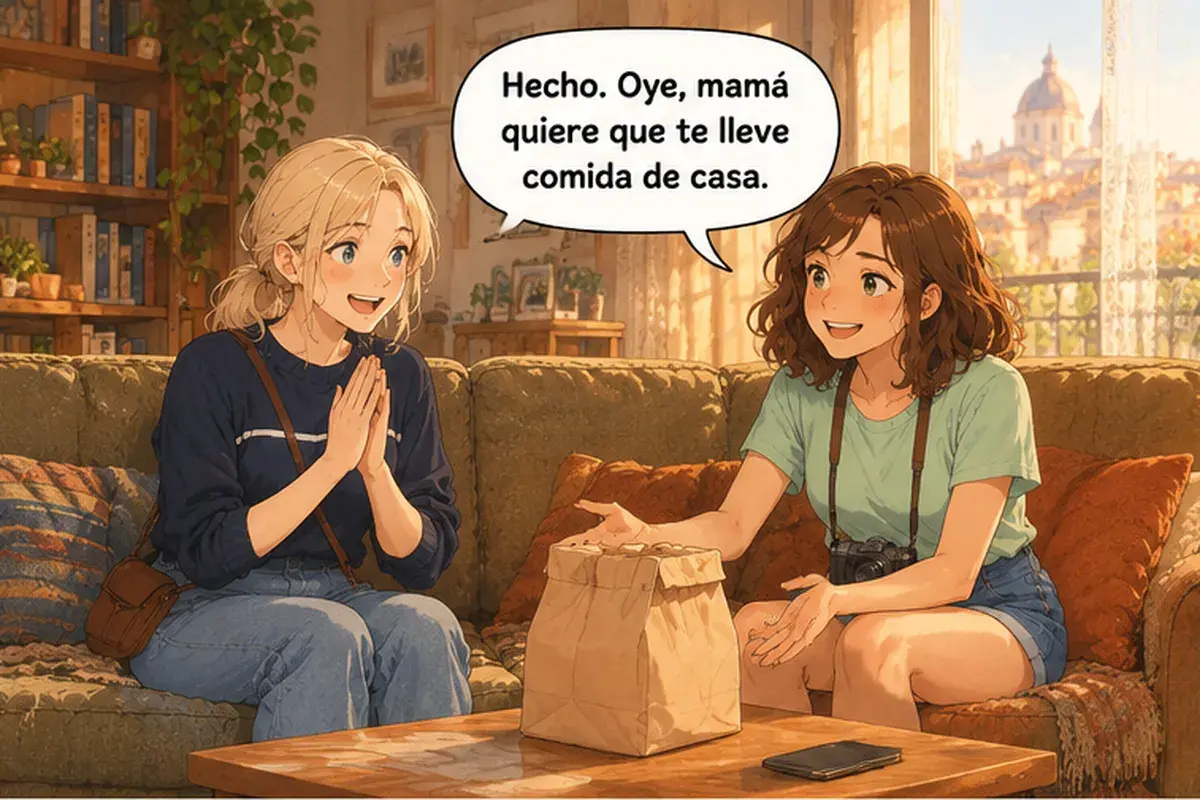
Hecho. Oye, mamá quiere que te lleve comida de casa.
Deal. Hey, Mom wants me to bring you food from home.

- Ana
¡Pero no traigas carne ni queso, que en la aduana te los tiran! Mejor trae chocolate de casa: lo echo de menos.
But don't bring meat or cheese, because they'll throw them out at customs! Better bring chocolate from home: I miss it.

- Katia
Vale. Otra cosa: ya sabes que el aterrizaje me da mucho miedo.
OK. One more thing: you know the landing scares me a lot.
- Ana
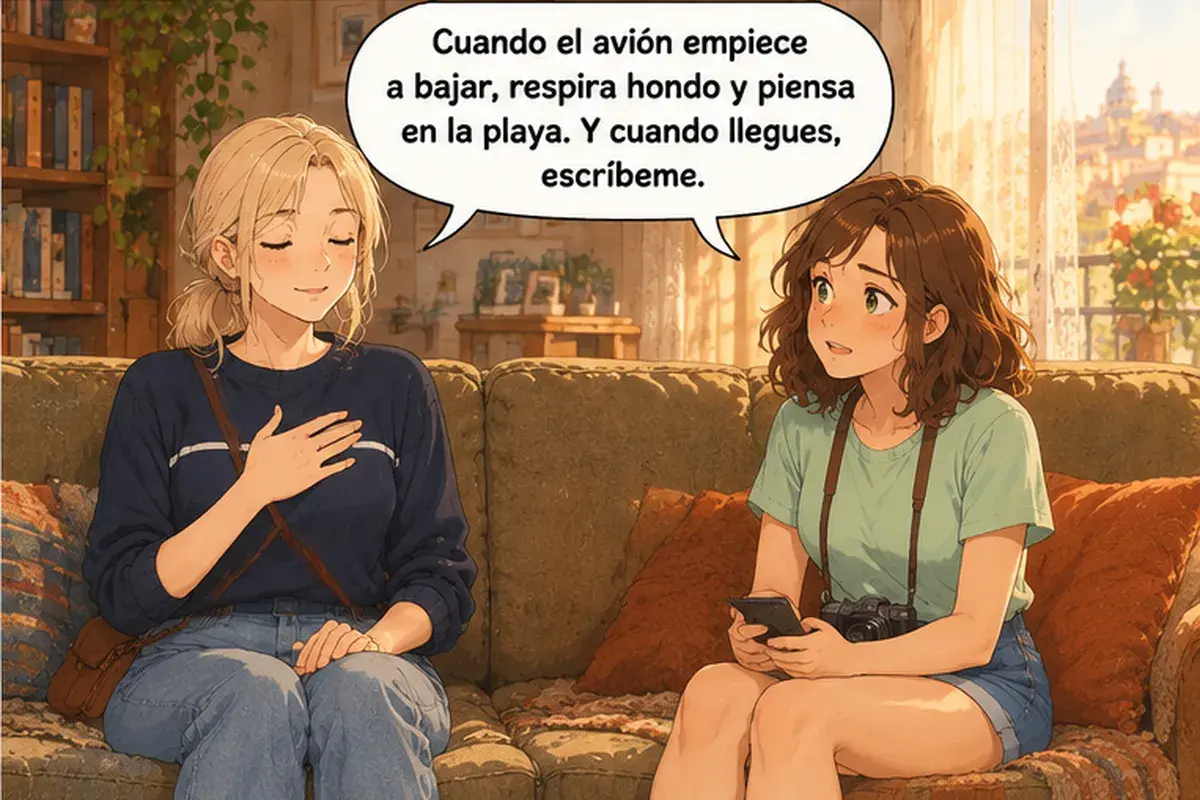
Cuando el avión empiece a bajar, respira hondo y piensa en la playa. Y cuando llegues, escríbeme.
When the plane starts to descend, take a deep breath and think about the beach. And when you arrive, write me.

- Katia
Te escribo nada más llegar. ¿Y qué hago cuando salga del avión?
I'll write you as soon as I arrive. And what do I do when I leave the plane?
- Ana
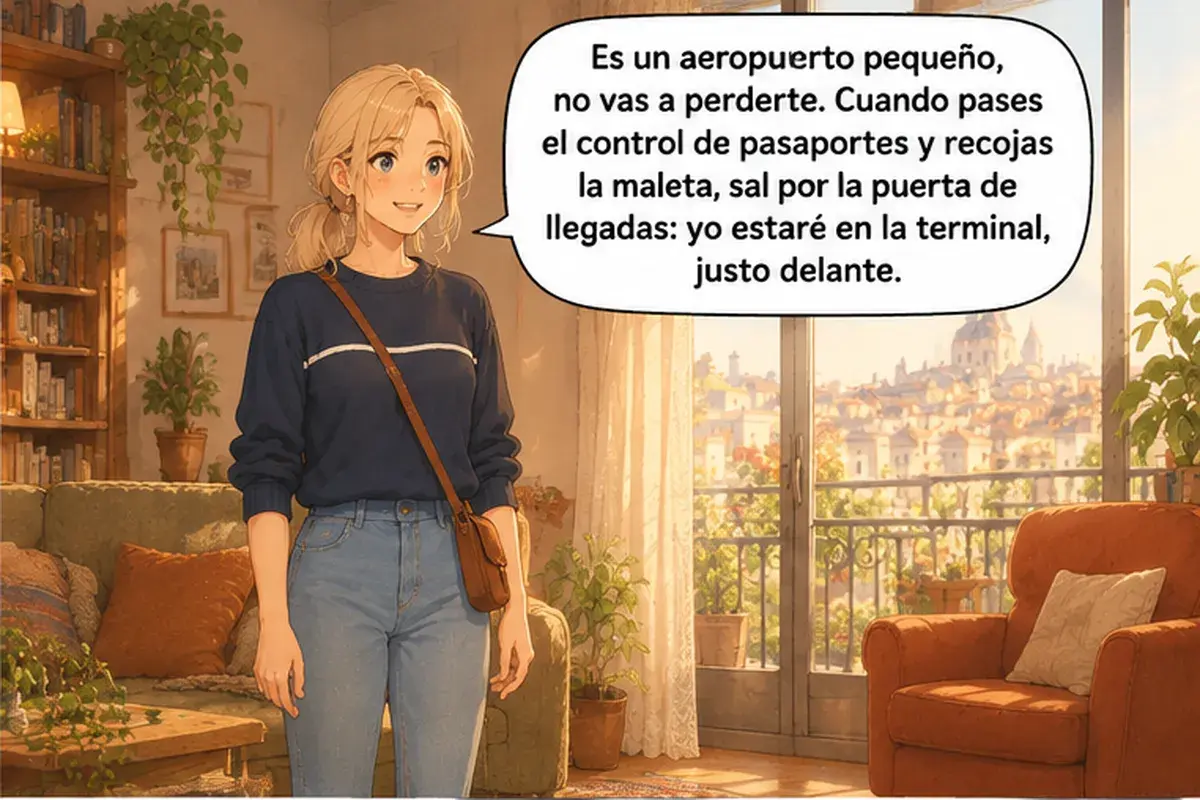
Es un aeropuerto pequeño, no vas a perderte. Cuando pases el control de pasaportes y recojas la maleta, sal por la puerta de llegadas: yo estaré en la terminal, justo delante.
It's a small airport, you're not going to get lost. When you go through passport control and pick up your suitcase, go out through the arrivals door: I'll be in the terminal, right in front.

- Katia
¿Vienes a buscarme? ¡Me hace mucha ilusión! Pensaba ir sola en metro.
Are you coming to pick me up? I'm so excited! I was planning to go alone on the metro (woman speaking).

- Ana
¡Claro que voy! Quiero darte la bienvenida como en las películas, con un cartel y todo.
Of course I'm coming! I want to welcome you like in the movies, with a sign and everything.

- Katia
¡Qué vergüenza! Bueno, ¿y qué has planeado para estos días?
How embarrassing! Well, and what have you planned for these days?

- Ana
Nada muy turístico. Cuando estés descansada, te acompañaré al centro, y cuando haga calor, iremos a la playa.
Nothing very touristy. When you're rested, I'll go downtown with you, and when it's hot, we'll go to the beach (to a woman).
- Katia
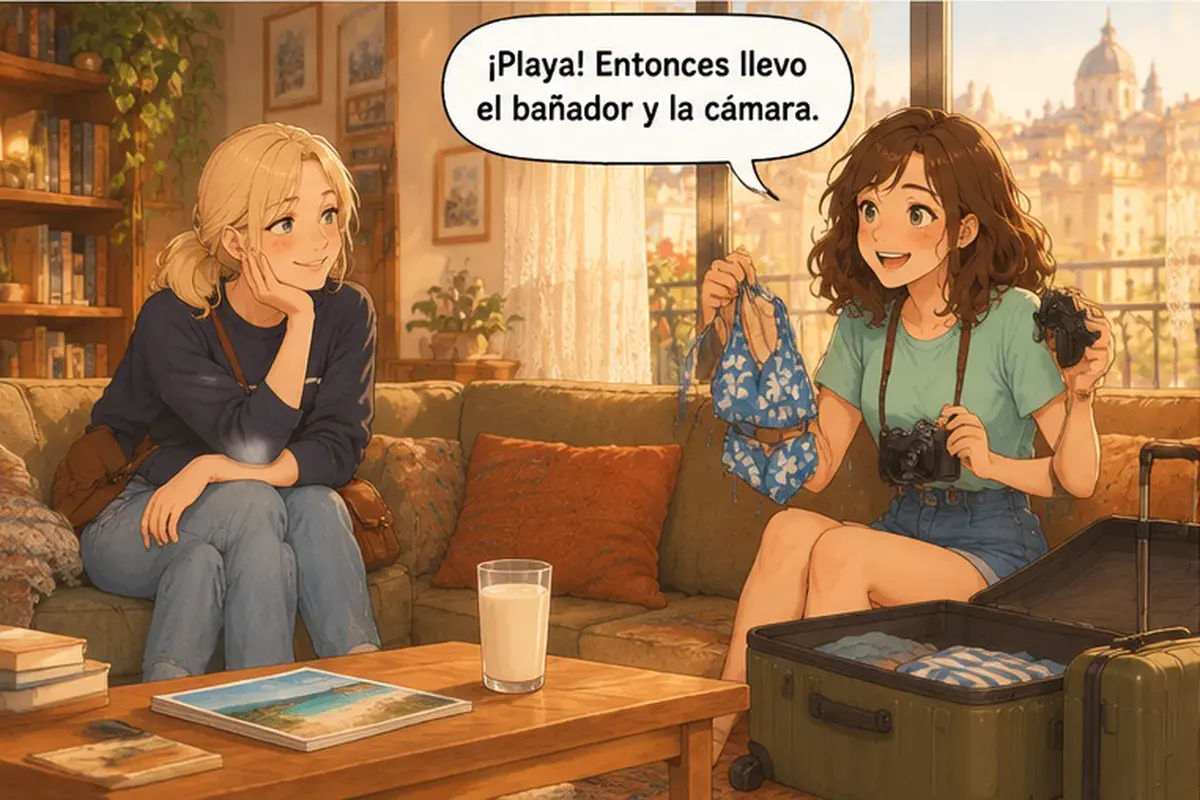
¡Playa! Entonces llevo el bañador y la cámara.
The beach! Then I'll bring my swimsuit and the camera.

- Ana
Y yo estoy deseando enseñarte mi barrio. Ya verás: cuando pruebes la horchata, no querrás volver a casa.
And I can't wait to show you my neighborhood. You'll see: when you try the horchata, you won't want to go back home.

- Katia
Cuando la pruebe, te lo diré. ¡Hasta el jueves!
When I try it, I'll tell you. See you Thursday!
Grammar for this text
Cuando + subjunctive about the future. Everything the sisters are arranging is still ahead, so cuando is followed by the subjunctive: cuando tengas (tener), cuando llegues (llegar; the u keeps the hard "g" sound), cuando el avión empiece (empezar), cuando salga (salir), cuando pases… y recojas (recoger), cuando estés, cuando haga calor, cuando pruebes (probar). The second half of the sentence has a request (envíame, respira, escríbeme, sal) or the future (iremos, te lo diré, no querrás).
No subjunctive here: así sabré a qué hora llegas — this isn't the linking word "when", it's a question inside a sentence ("what time").
Expressions. Nada más llegar — "as soon as I arrive" (nada más + infinitive). Me hace mucha ilusión — "I'm so excited"; it works like me gusta. Mamá quiere que te lleve — "Mom wants me to bring you" (unit 18). Te los tiran — "they'll throw them out": los stands for the meat and the cheese.
Words and grammar of the unit: Plan a guest's visit.
Learn the words from the texts with flashcards
In the app, you can tap any word in a text to see its translation, forms and examples, and new words stick with flashcards. 15 minutes a day.
Start for freeEverything is open for free. No card needed to sign up.