

Spanish dialogue with translation · B1 · 18 lines
¿Me lo dejaría en ciento cuarenta? Would you let me have it for a hundred and forty? (formal)
Comic · 18 panels
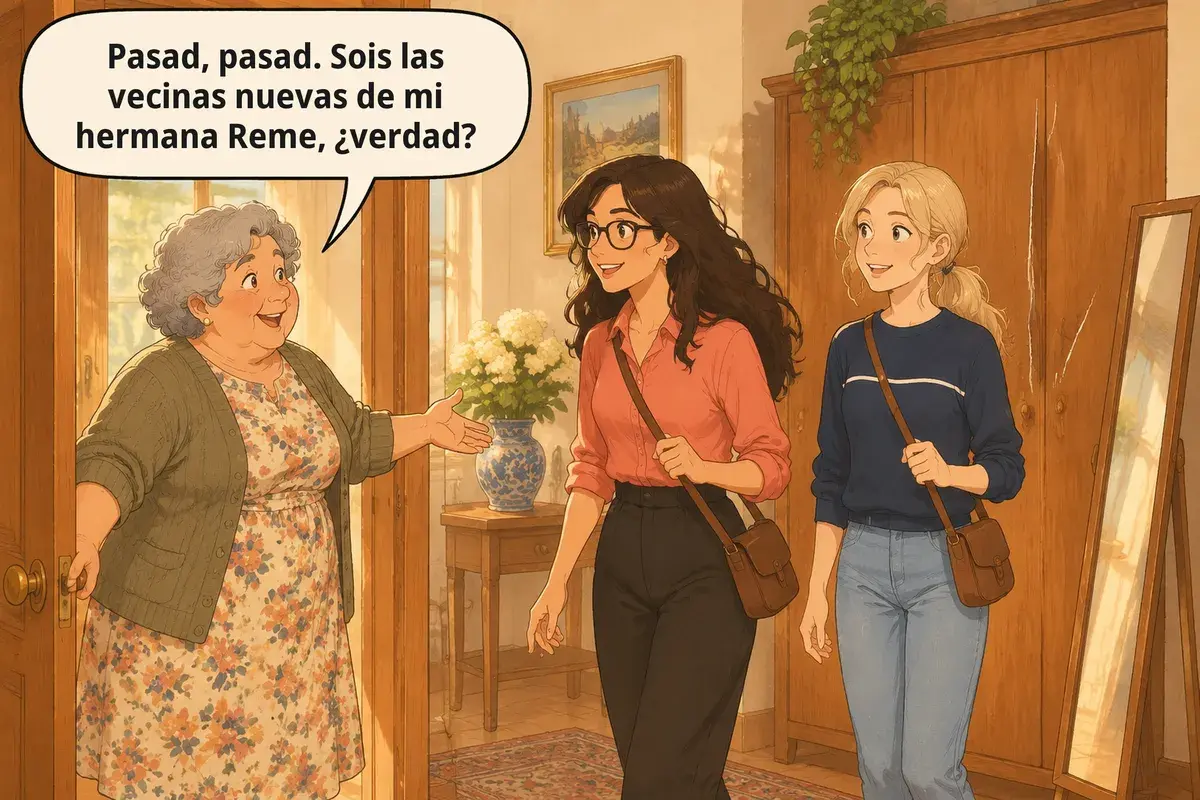
- Charo
Pasad, pasad. Sois las vecinas nuevas de mi hermana Reme, ¿verdad?
Come in, come in. You're my sister Reme's new neighbors, right? (to several women)
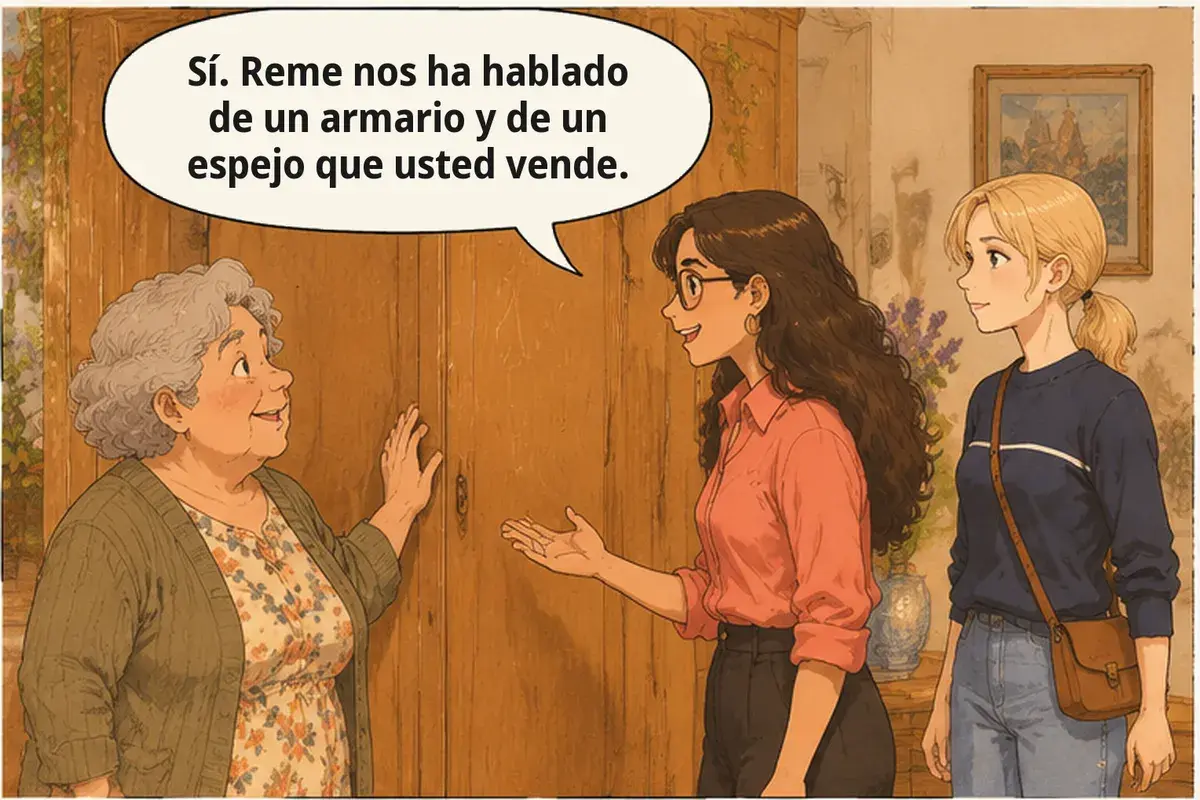
- Lucía
Sí. Reme nos ha hablado de un armario y de un espejo que usted vende.
Yes. Reme told us about a wardrobe and a mirror you're selling (formal).
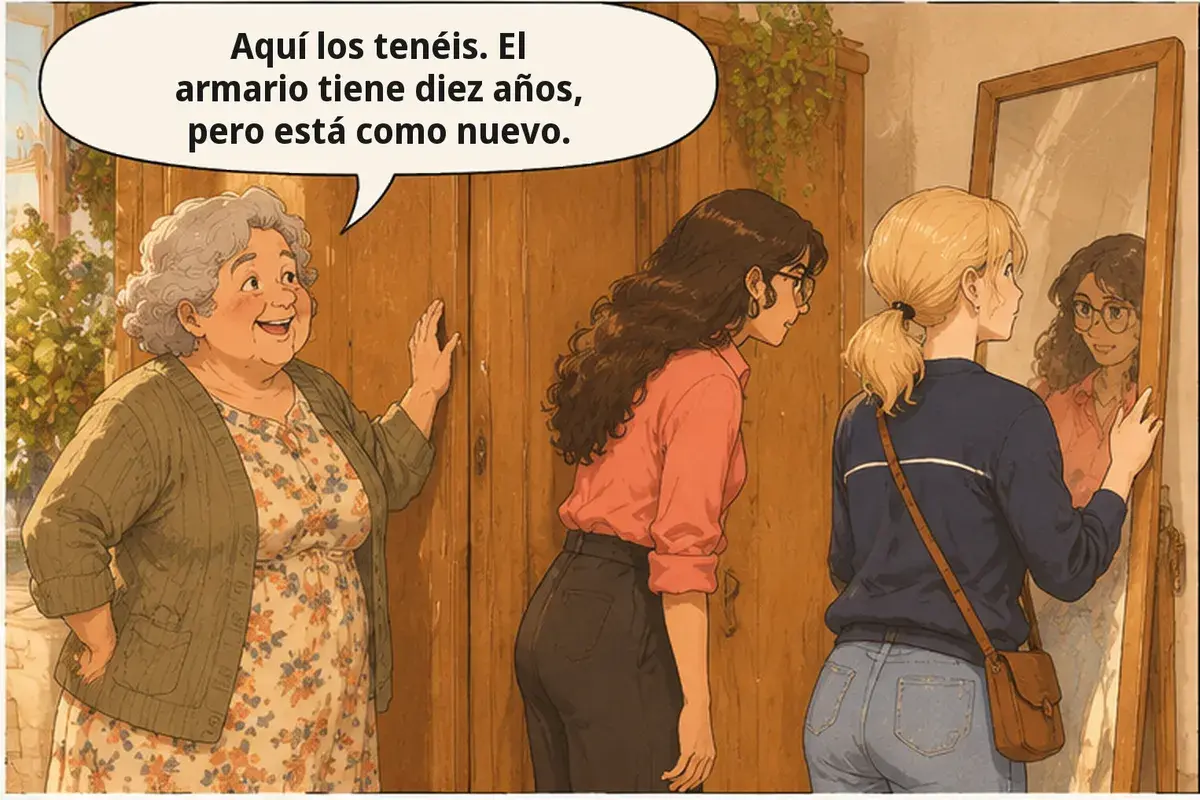
- Charo
Aquí los tenéis. El armario tiene diez años, pero está como nuevo.
Here you have them (to several people). The wardrobe is ten years old, but it's like new.
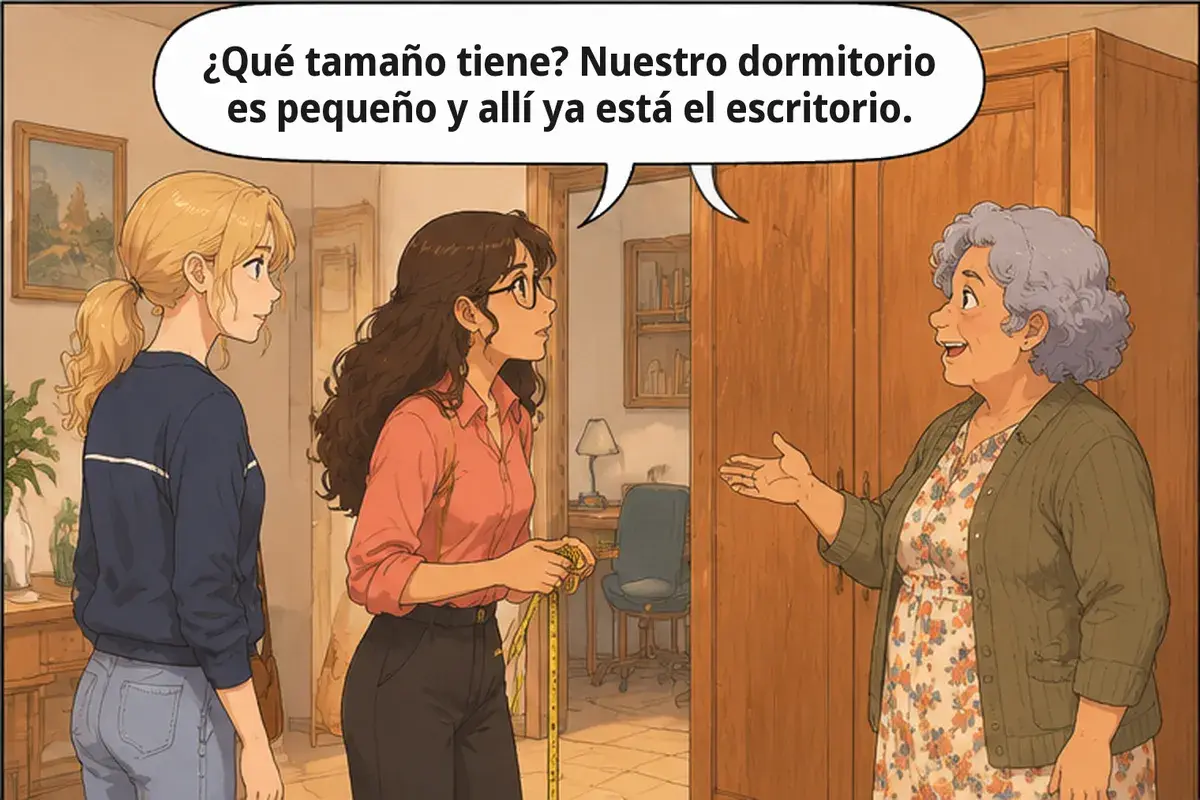
- Lucía
¿Qué tamaño tiene? Nuestro dormitorio es pequeño y allí ya está el escritorio.
What size is it? Our bedroom is small, and the desk is already in there.
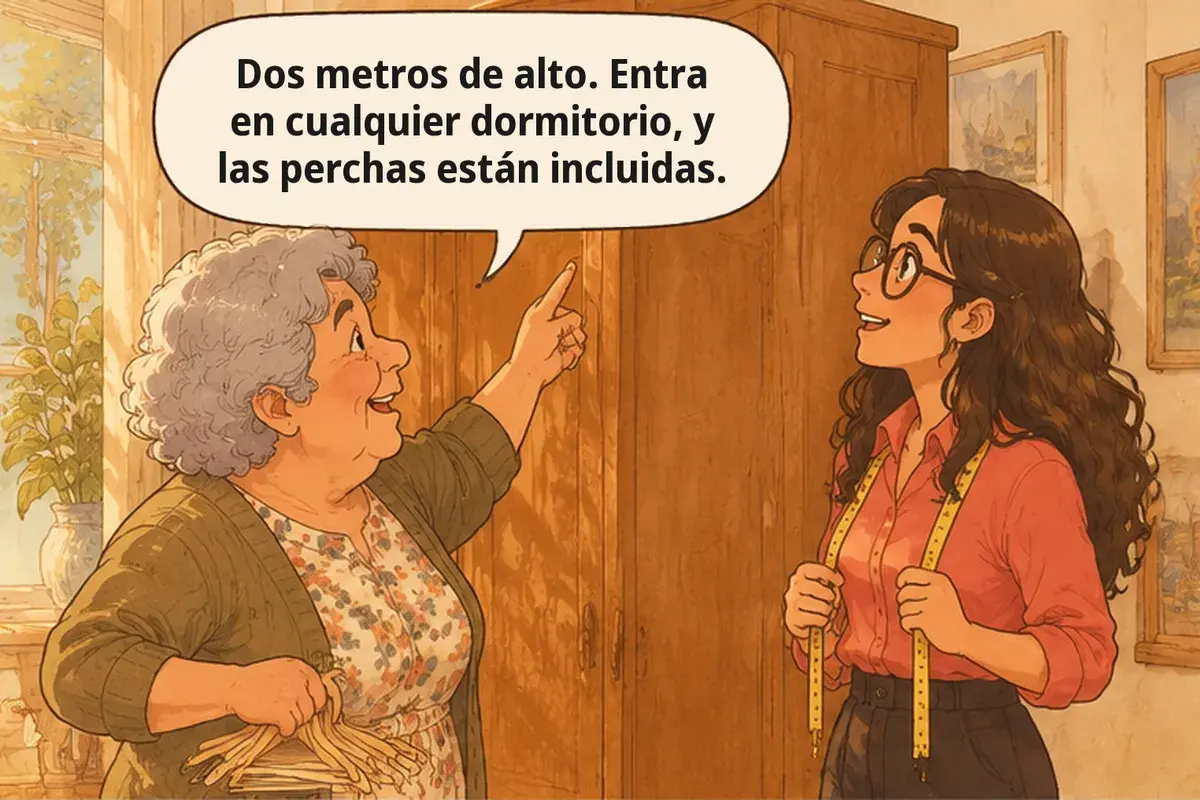
- Charo
Dos metros de alto. Entra en cualquier dormitorio, y las perchas están incluidas.
Two meters tall. It fits in any bedroom, and the hangers are included.
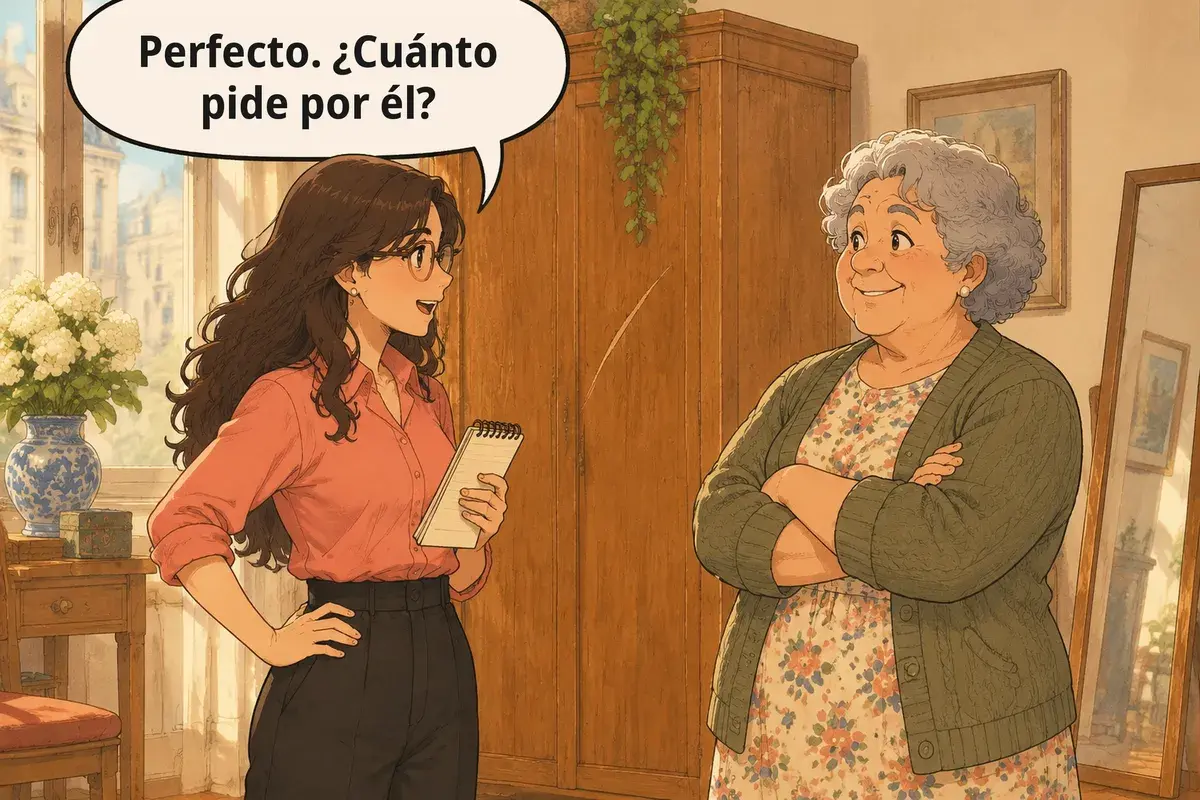
- Lucía
Perfecto. ¿Cuánto pide por él?
Perfect. How much are you asking for it? (formal)
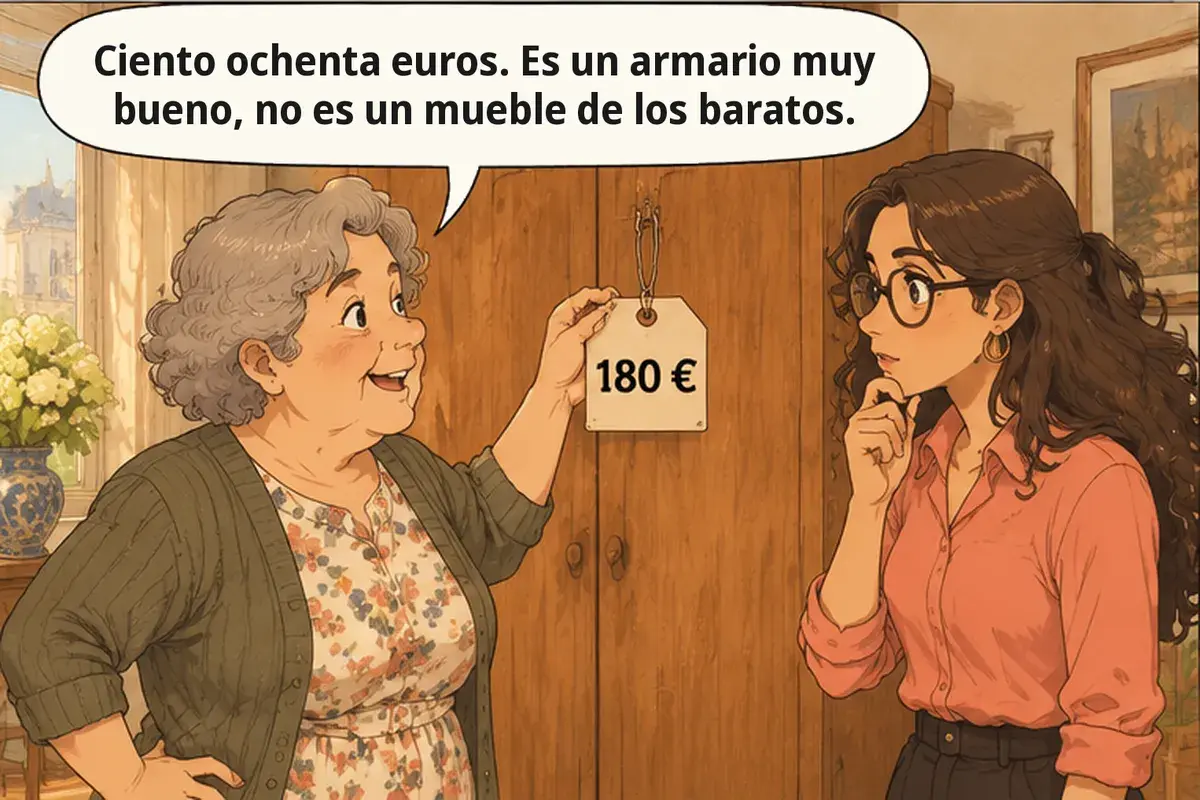
- Charo
Ciento ochenta euros. Es un armario muy bueno, no es un mueble de los baratos.
A hundred and eighty euros. It's a very good wardrobe, not one of those cheap pieces of furniture.
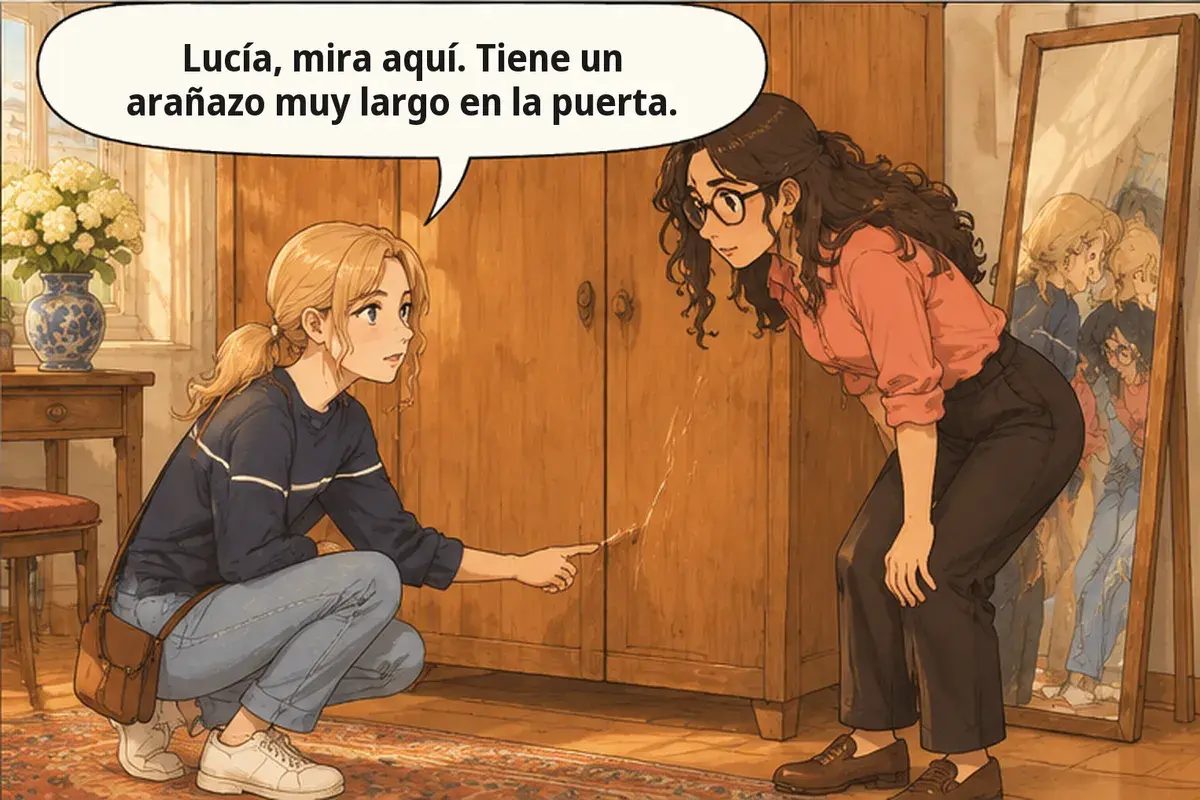
- Ana
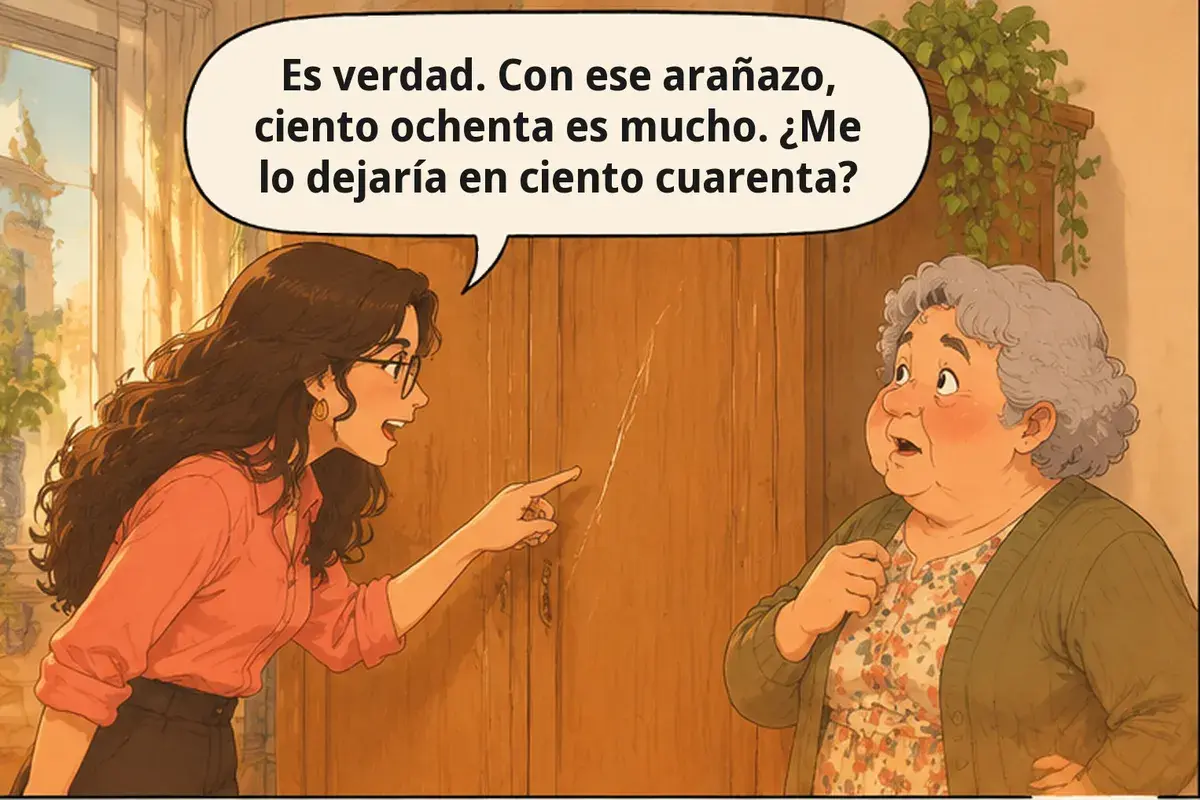
Lucía, mira aquí. Tiene un arañazo muy largo en la puerta.
Lucía, look here. It has a very long scratch on the door.
- Lucía
Es verdad. Con ese arañazo, ciento ochenta es mucho. ¿Me lo dejaría en ciento cuarenta?
That's true. With that scratch, a hundred and eighty is a lot. Would you let me have it for a hundred and forty? (formal)

- Charo
¡Anda, hija, ciento cuarenta! Te lo dejo en ciento sesenta y no hablamos más.
Oh, honey, a hundred and forty! I'll let you have it for a hundred and sixty, and we'll say no more.
- Lucía
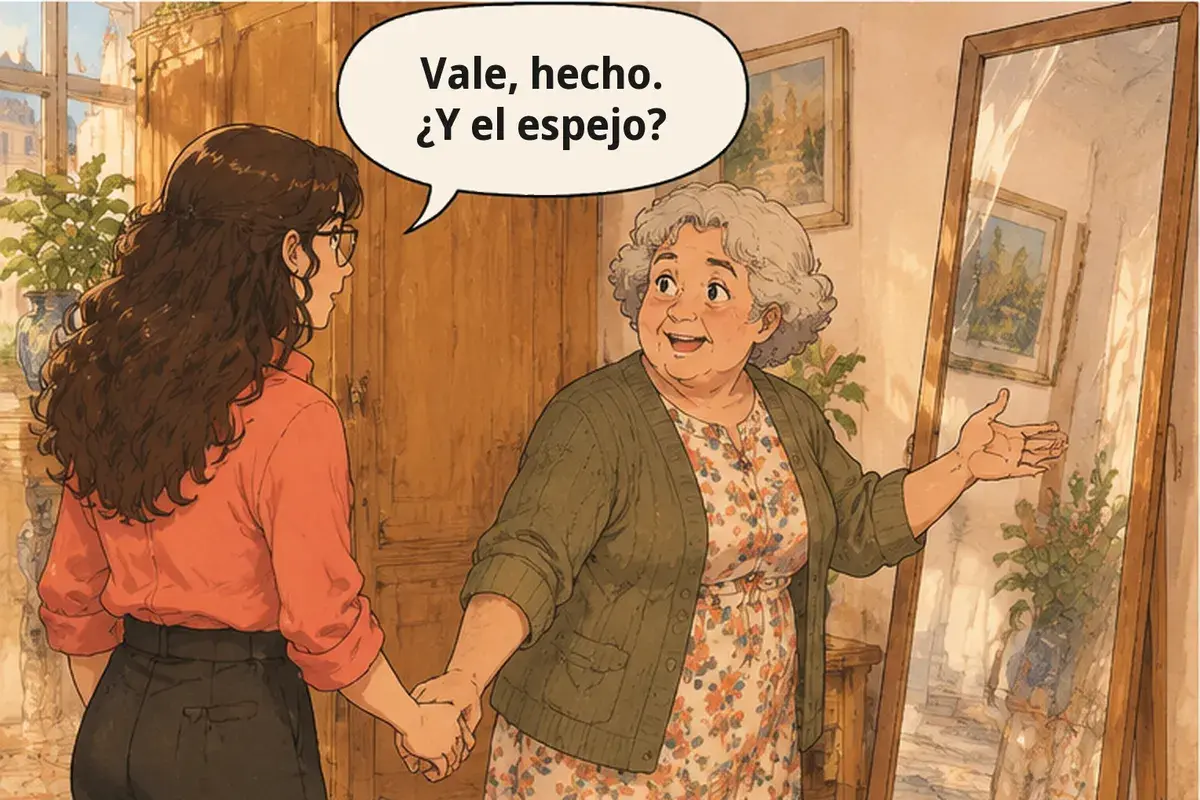
Vale, hecho. ¿Y el espejo?
OK, deal. And the mirror?
- Ana
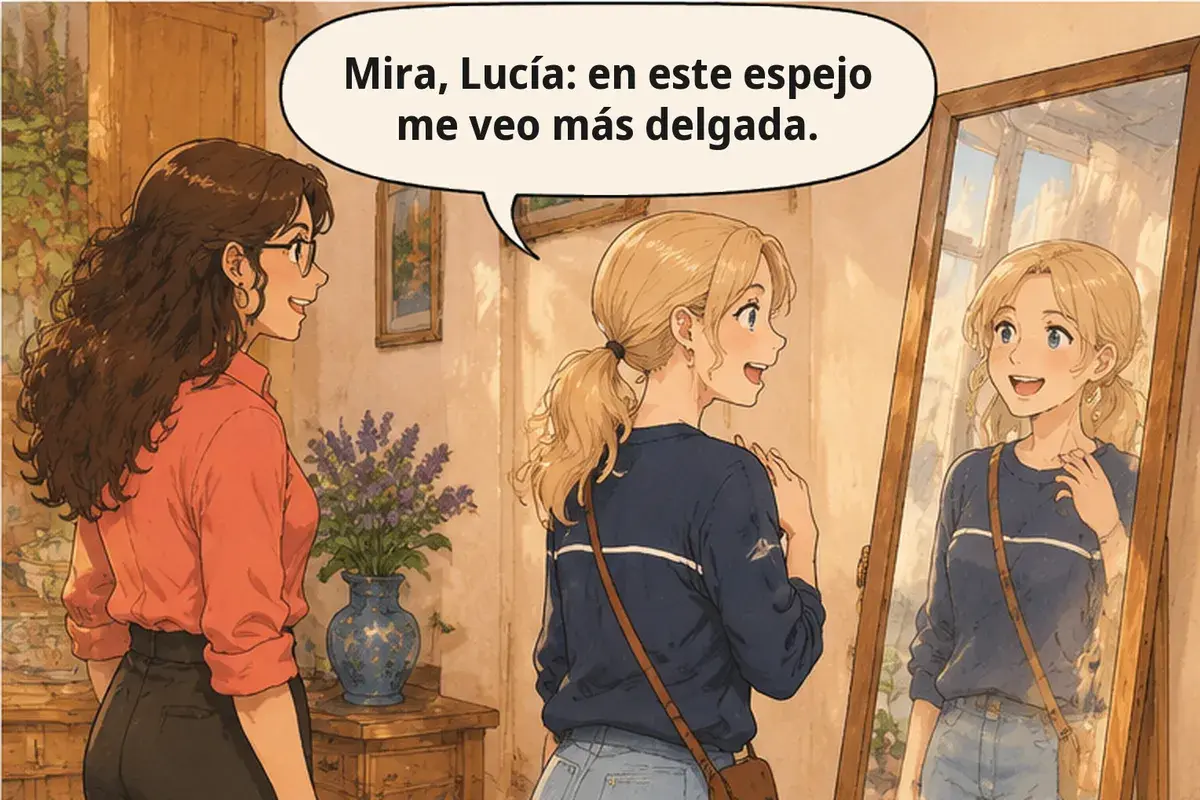
Mira, Lucía: en este espejo me veo más delgada.
Look, Lucía: I look thinner in this mirror (woman speaking).
- Charo
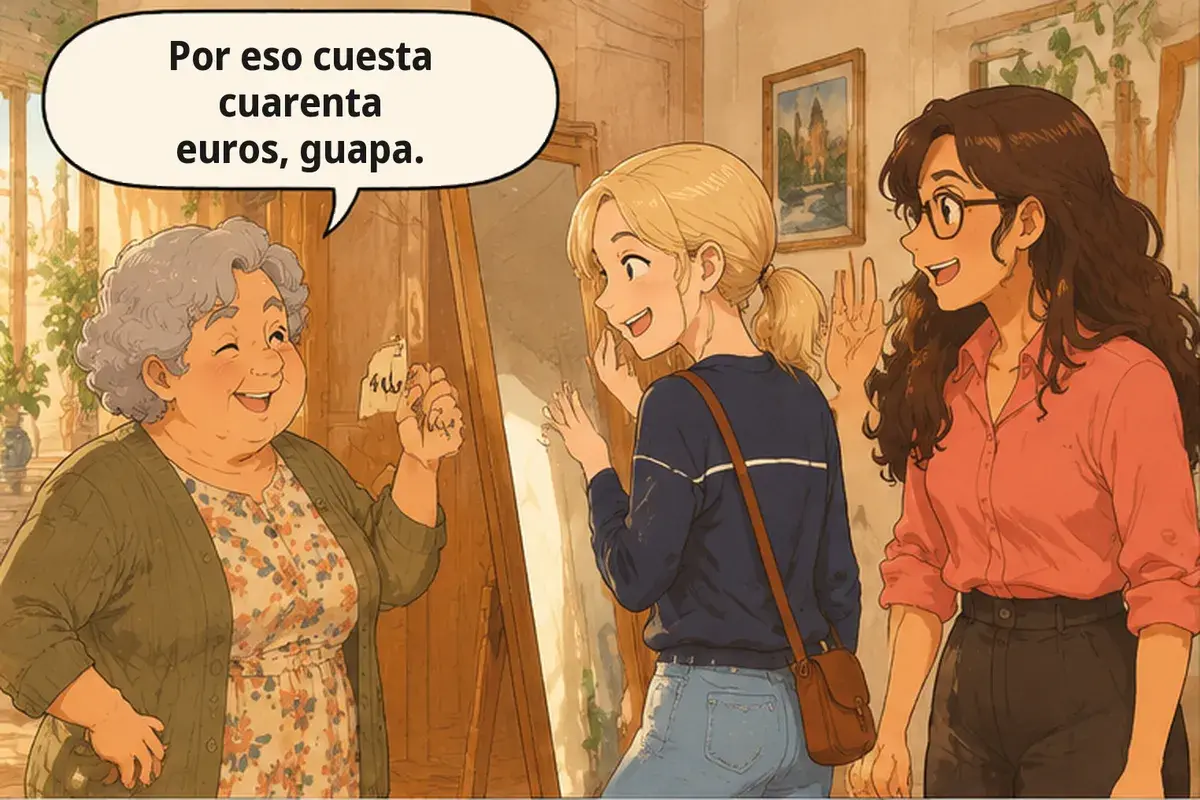
Por eso cuesta cuarenta euros, guapa.
That's why it costs forty euros, gorgeous (to a woman).
- Lucía
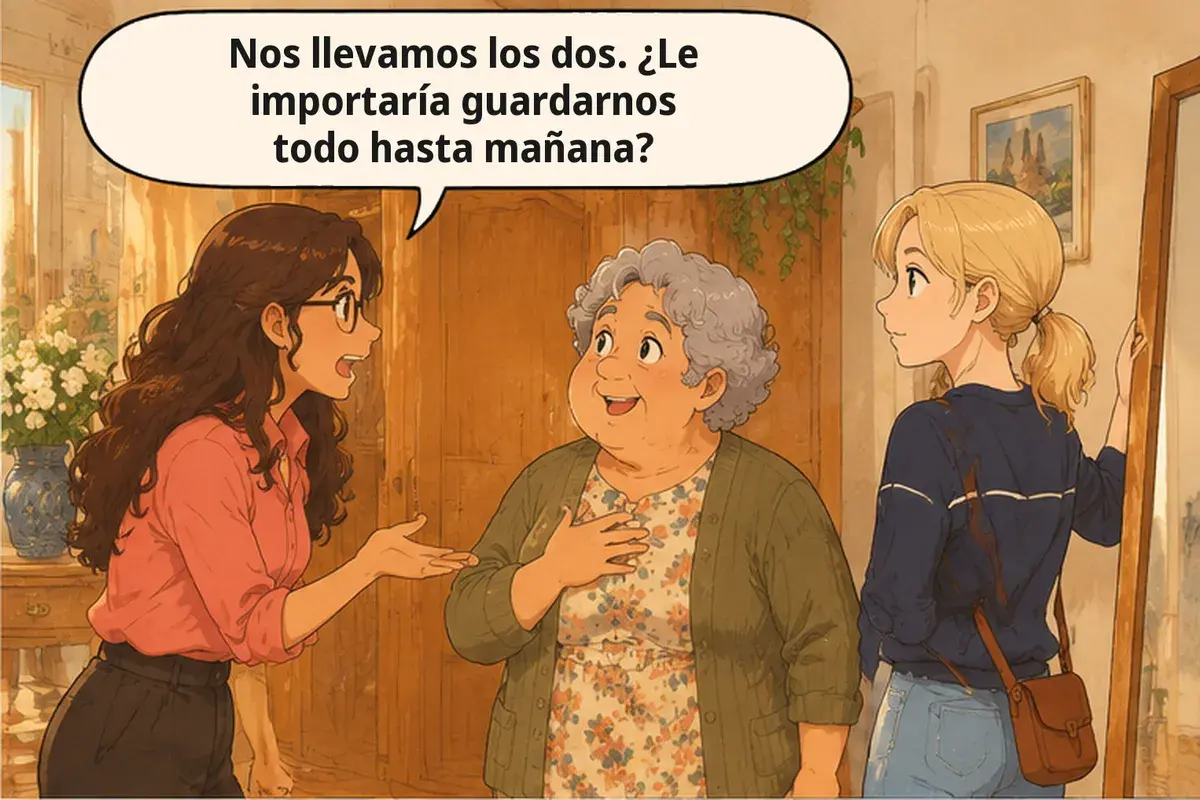
Nos llevamos los dos. ¿Le importaría guardarnos todo hasta mañana?
We'll take both. Would you mind holding everything for us until tomorrow? (formal)
- Charo
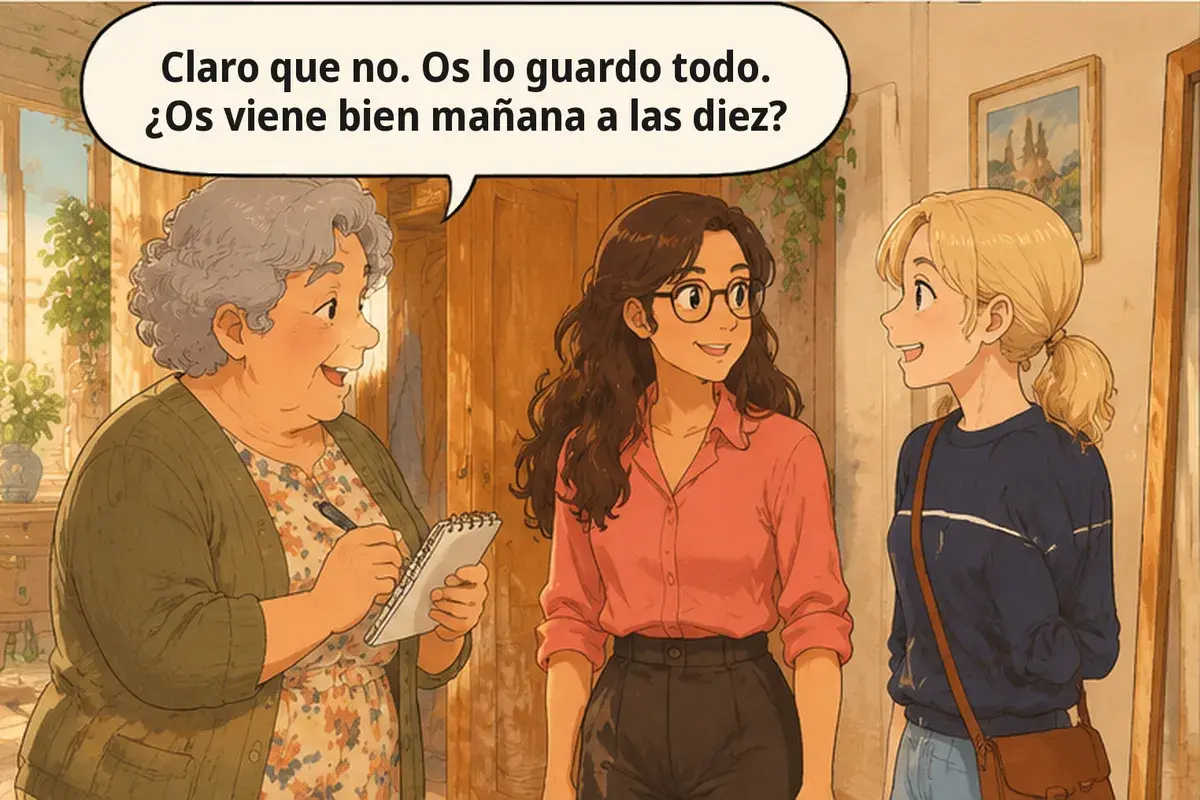
Claro que no. Os lo guardo todo. ¿Os viene bien mañana a las diez?
Of course not. I'll hold it all for you. Does tomorrow at ten work for you? (to several people)
- Lucía
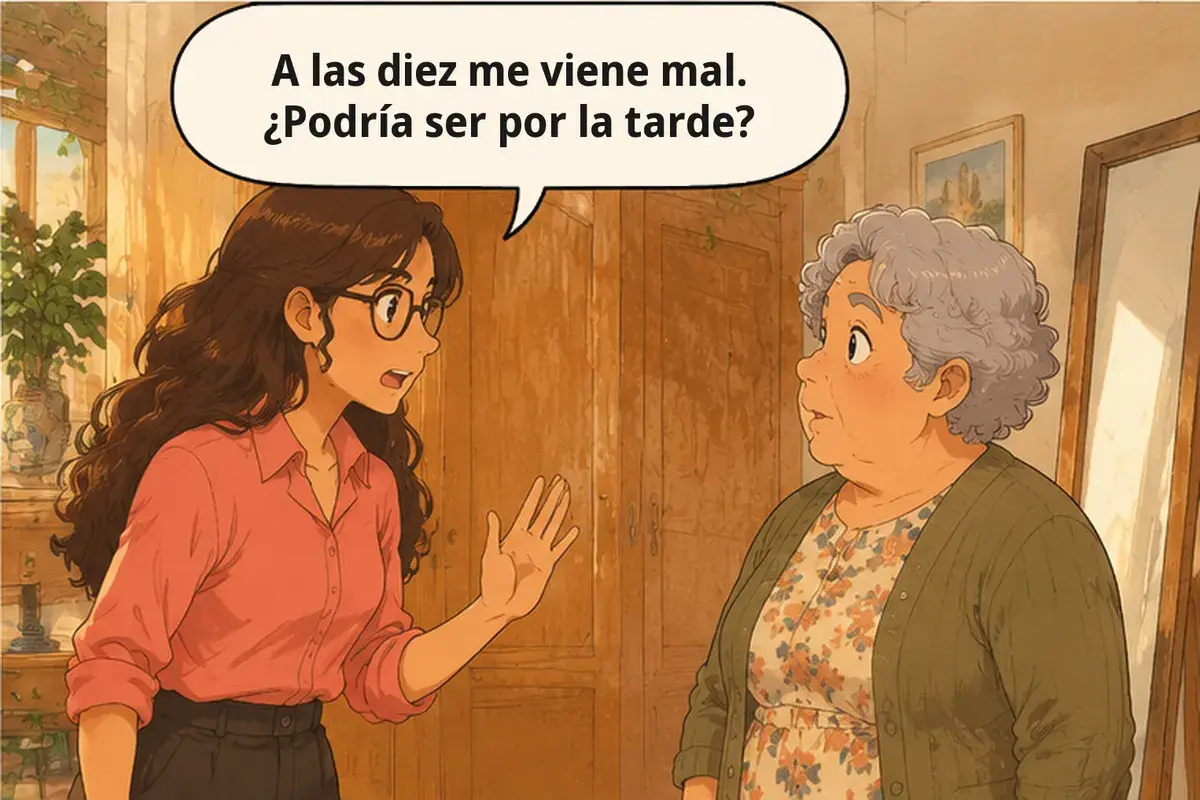
A las diez me viene mal. ¿Podría ser por la tarde?
Ten is a bad time for me. Could it be in the afternoon?
- Charo
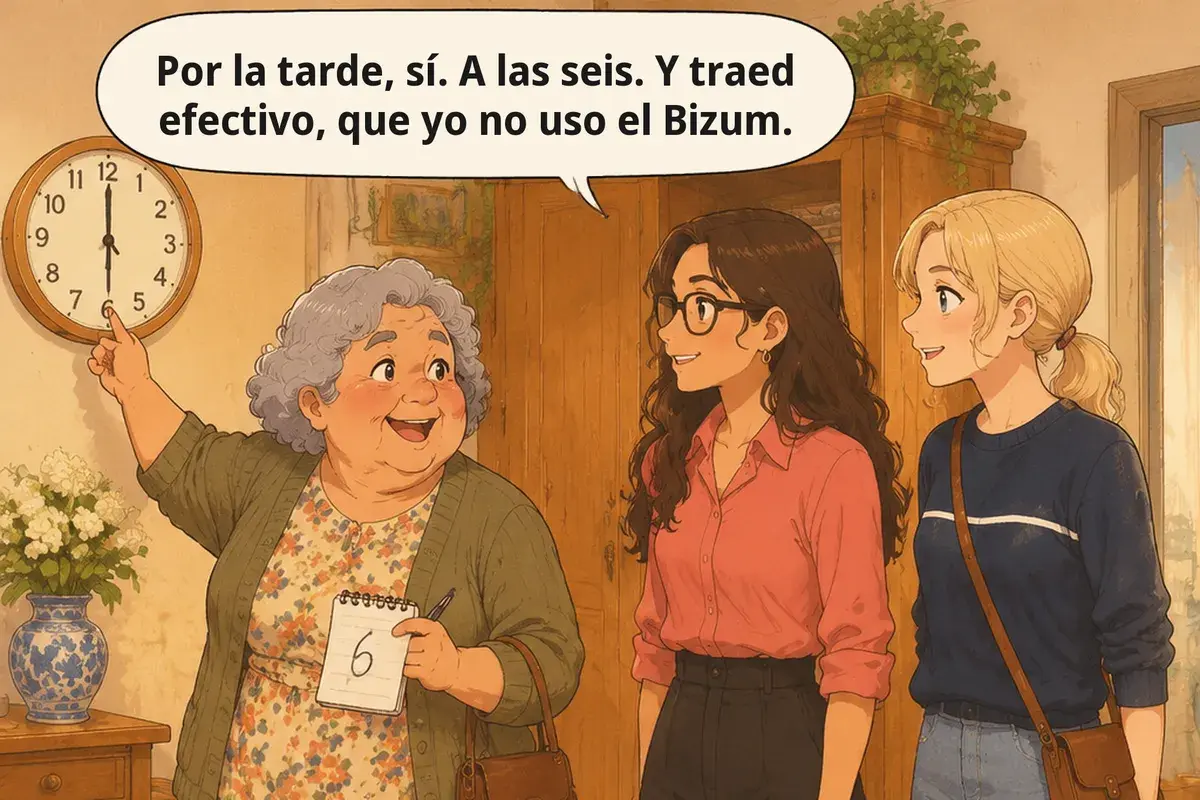
Por la tarde, sí. A las seis. Y traed efectivo, que yo no uso el Bizum.
In the afternoon, yes. At six. And bring cash, because I don't use Bizum (to several people).
- Ana
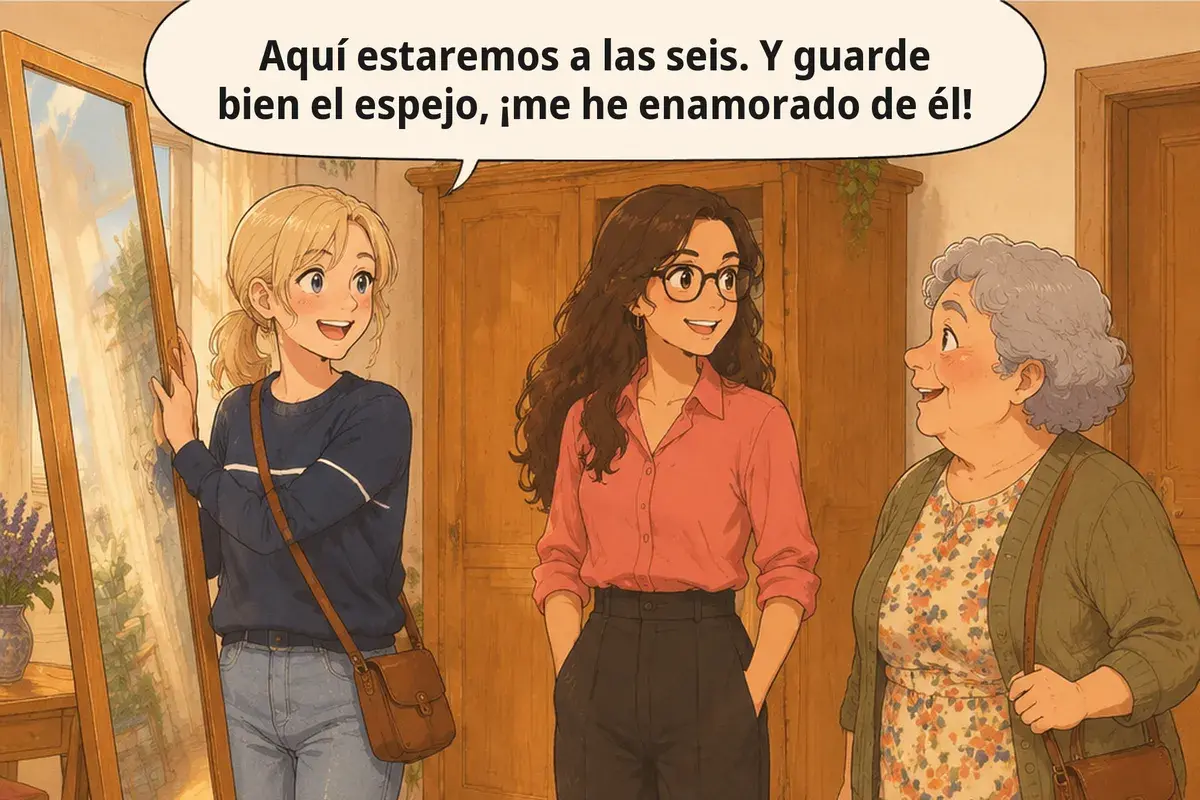
Aquí estaremos a las seis. Y guarde bien el espejo, ¡me he enamorado de él!
We'll be here at six. And keep the mirror safe, I've fallen in love with it! (formal)
Grammar for this text
Haggling with the conditional. ¿Me lo dejaría en ciento cuarenta? — "would you let me have it for a hundred and forty?". Dejar en here means "to let someone have something for that price", and lo is the wardrobe. The conditional (dejaría) makes the request polite and leaves room for a no. The seller agrees in the present: Te lo dejo en ciento sesenta — "I'll let you have it for a hundred and sixty". More in the unit grammar.
Asking and agreeing. ¿Le importaría guardarnos todo hasta mañana? — Would you mind holding everything for us until tomorrow? (formal) The request is from unit 4. To agree, say claro que no — "of course not", just like the answer to "Would you mind…?" in English. Os lo guardo todo — I'll hold it all for you (to several people): the pair os lo is from unit 10, and todo at the end shows that lo means both the wardrobe and the mirror.
Convenient or not. ¿Os viene bien mañana a las diez? — Does tomorrow at ten work for you? (to several people) The answer: A las diez me viene mal. — Ten is a bad time for me. The subject is the time, not the person. ¿Podría ser por la tarde? — Could it be in the afternoon? Podría softens the request.
Small things. ¿Cuánto pide por él? — How much are you asking for it? (formal) Later Charo herself switches to tú with Lucía (te lo dejo), and Lucía does the same. Traed efectivo — Bring cash (to several people): a vosotros command, made by dropping the -r of traer and adding -d, like llamad in unit 12. Bizum is an app for sending money by phone number; older people often don't use it.
Words and grammar of the unit: Buy and sell secondhand things.
Learn the words from the texts with flashcards
In the app, you can tap any word in a text to see its translation, forms and examples, and new words stick with flashcards. 15 minutes a day.
Start for freeEverything is open for free. No card needed to sign up.