

Spanish dialogue with translation · B1 · 14 lines
¿Dónde pongo esto? Where do I put this?
Comic · 14 panels
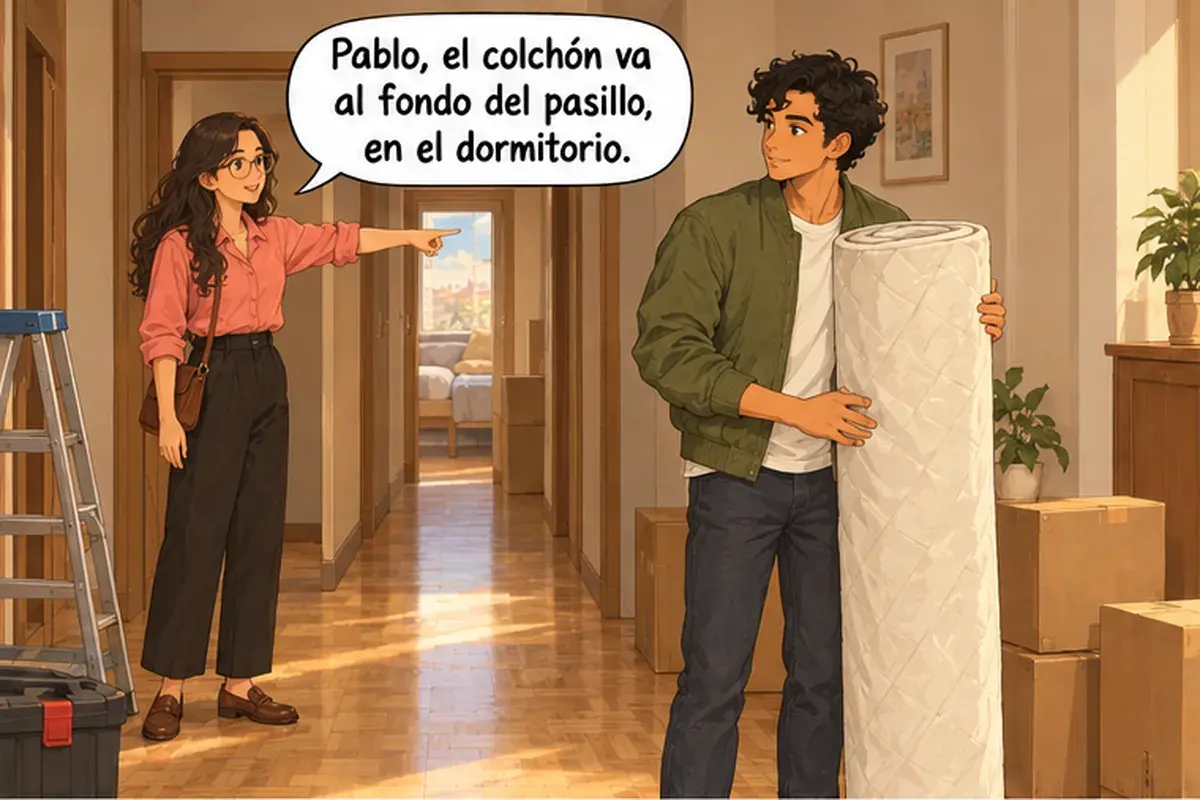
- Lucía
Pablo, el colchón va al fondo del pasillo, en el dormitorio.
Pablo, the mattress goes at the end of the hall, in the bedroom.
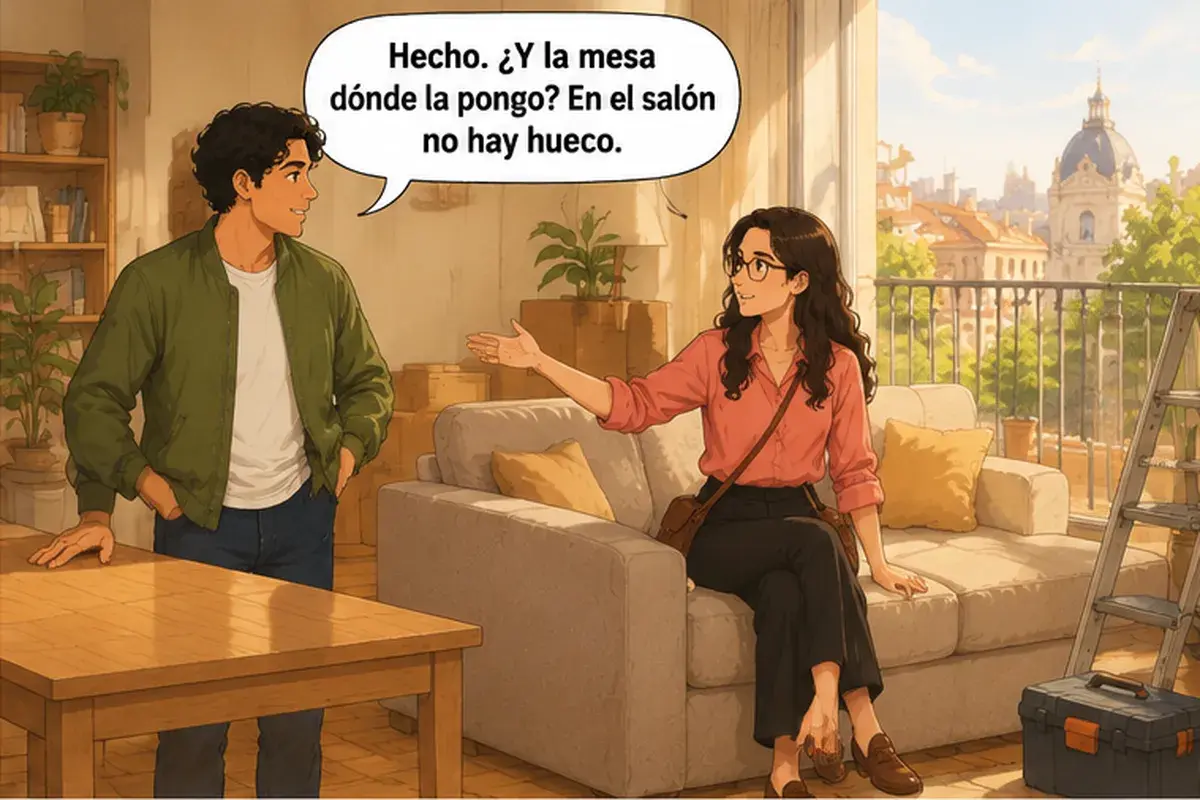
- Pablo
Hecho. ¿Y la mesa dónde la pongo? En el salón no hay hueco.
Got it. And where do I put the table? There's no room in the living room.
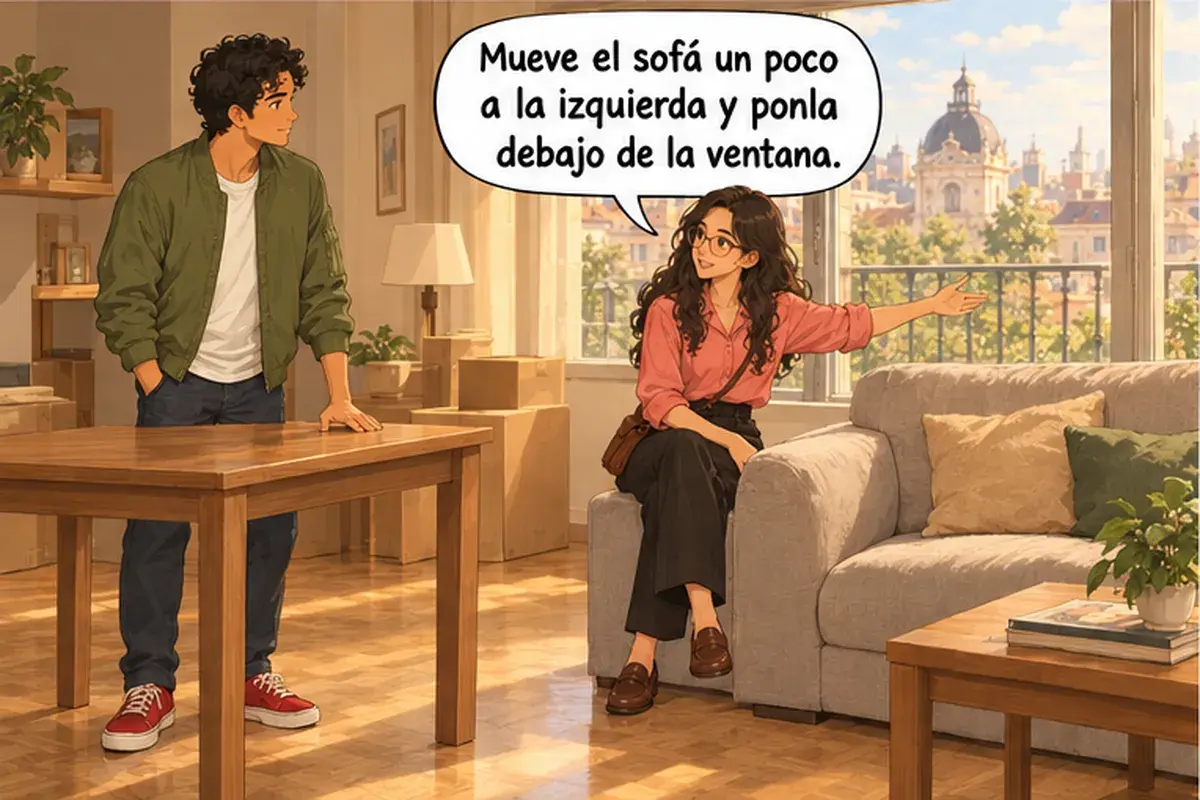
- Lucía
Mueve el sofá un poco a la izquierda y ponla debajo de la ventana.
Move the sofa a little to the left and put the table under the window.
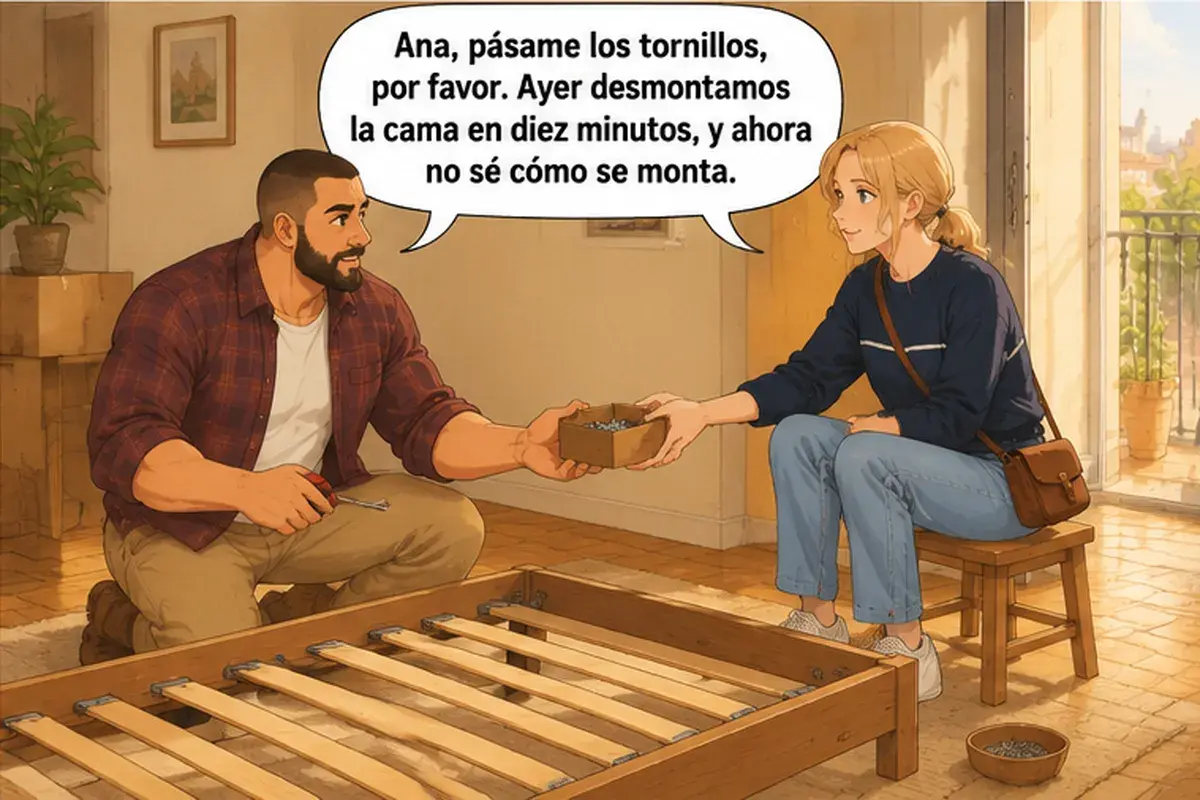
- Sergio
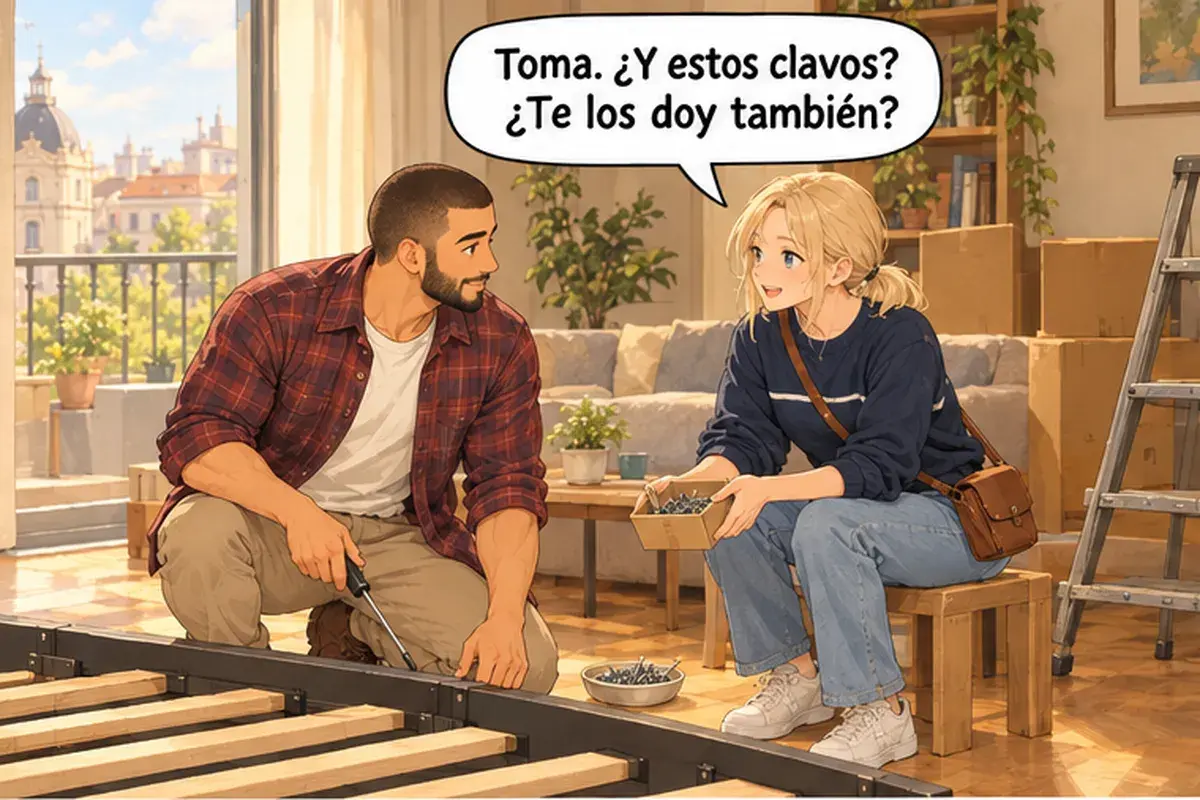
Ana, pásame los tornillos, por favor. Ayer desmontamos la cama en diez minutos, y ahora no sé cómo se monta.
Ana, pass me the screws, please. Yesterday we took the bed apart in ten minutes, and now I don't know how to put it together.
- Ana
Toma. ¿Y estos clavos? ¿Te los doy también?
Here. And these nails? Should I give them to you too?
- Sergio
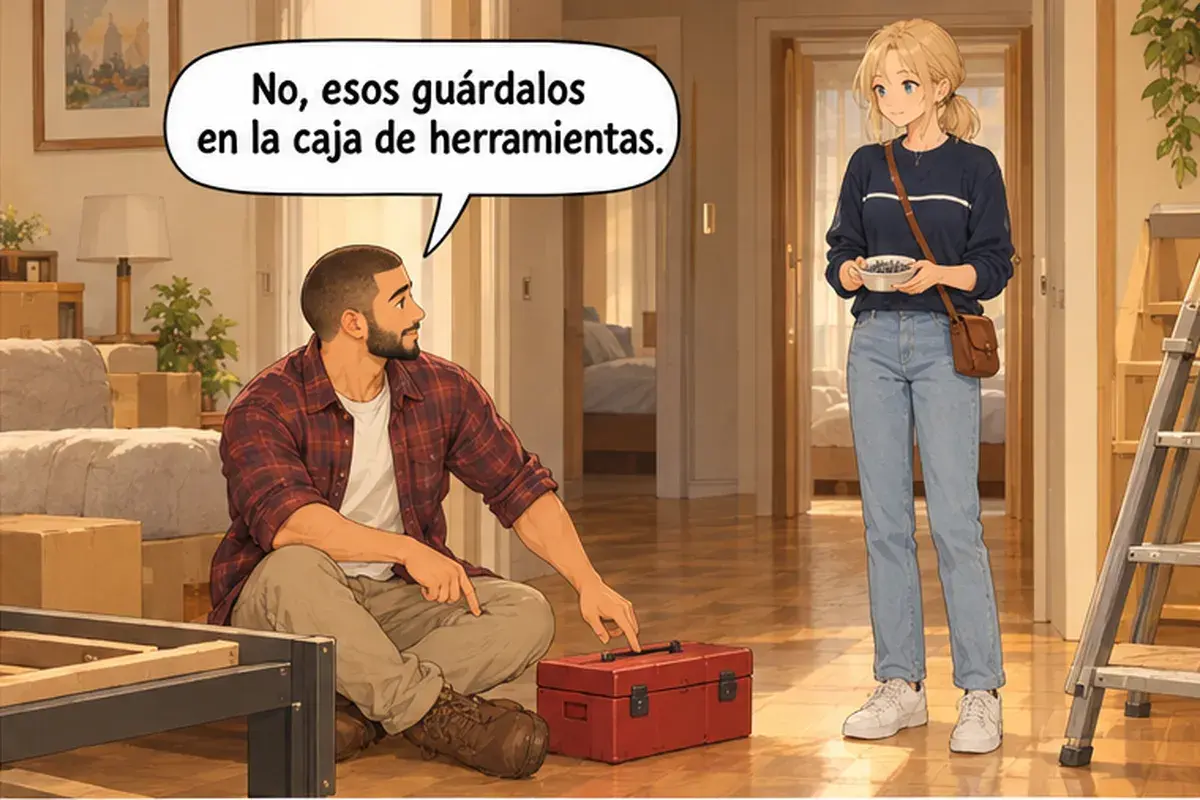
No, esos guárdalos en la caja de herramientas.
No, put those away in the toolbox.
- Ana
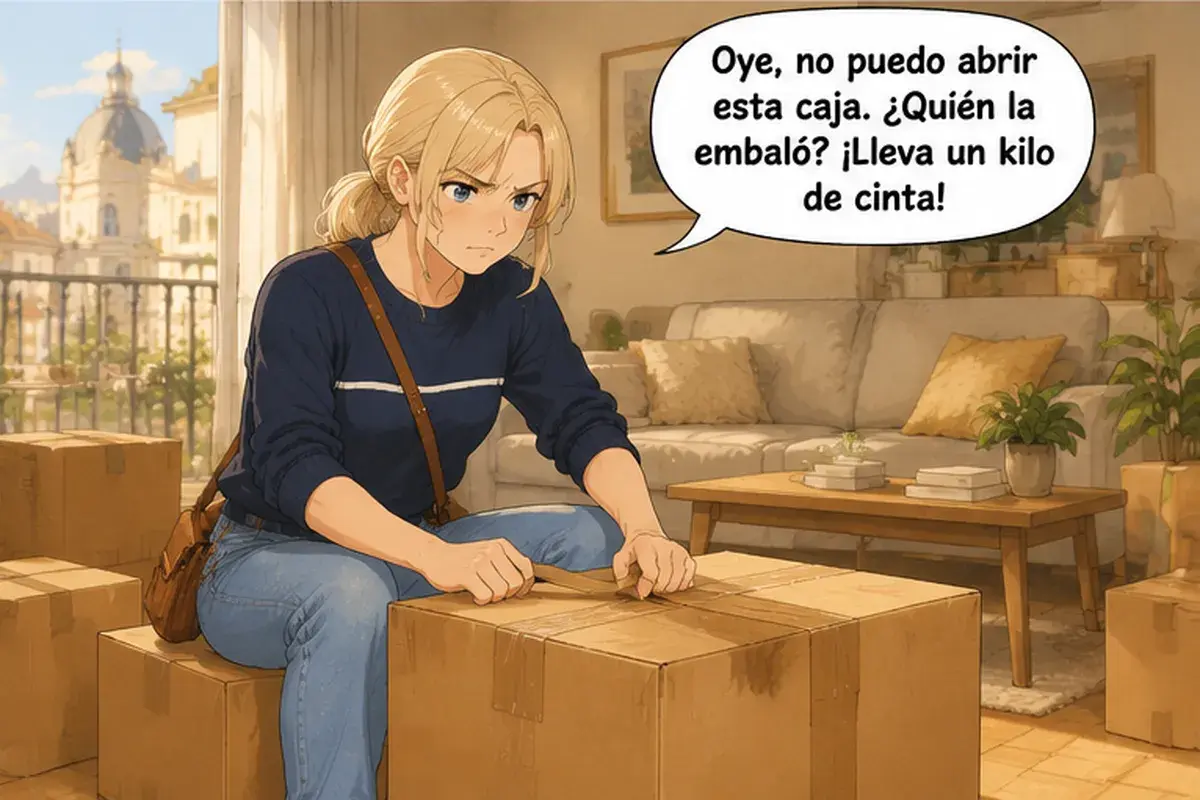
Oye, no puedo abrir esta caja. ¿Quién la embaló? ¡Lleva un kilo de cinta!
Hey, I can't open this box. Who packed it? It has a kilo of tape on it!
- Sergio
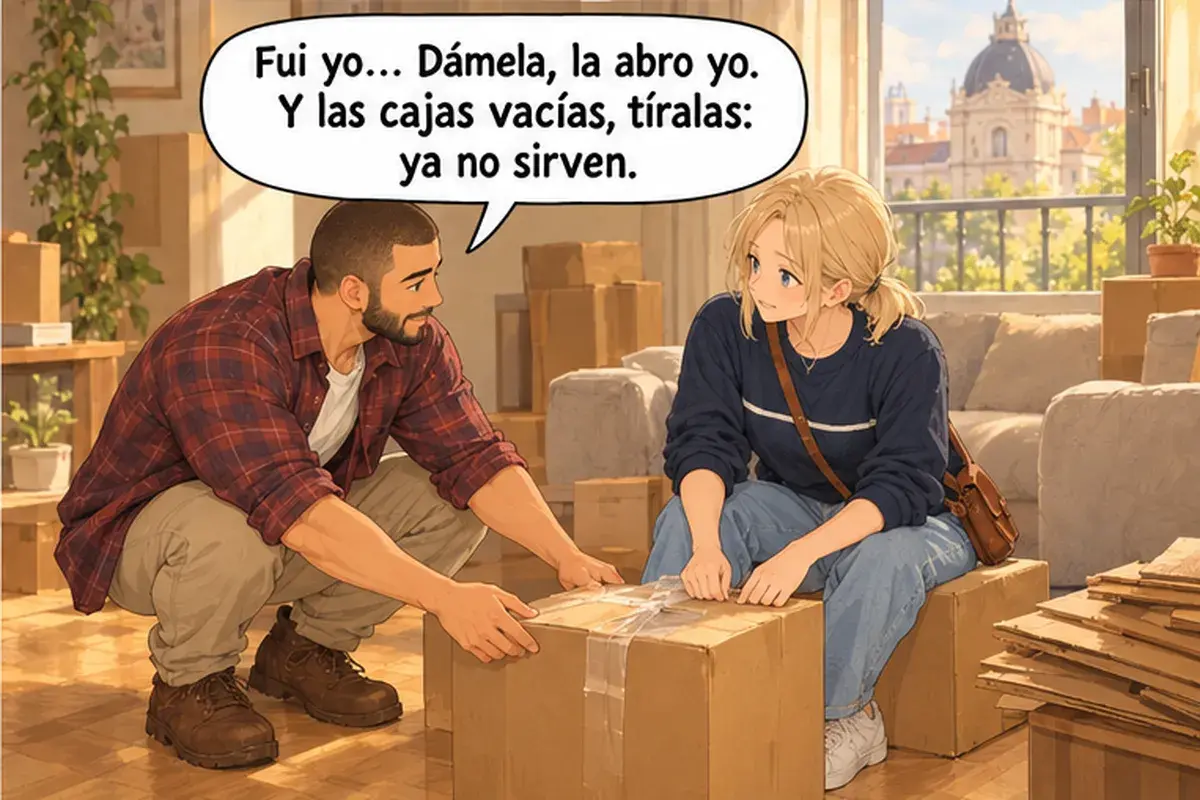
Fui yo… Dámela, la abro yo. Y las cajas vacías, tíralas: ya no sirven.
It was me… Give it to me, I'll open it. And the empty boxes, throw them out: they're no use anymore.
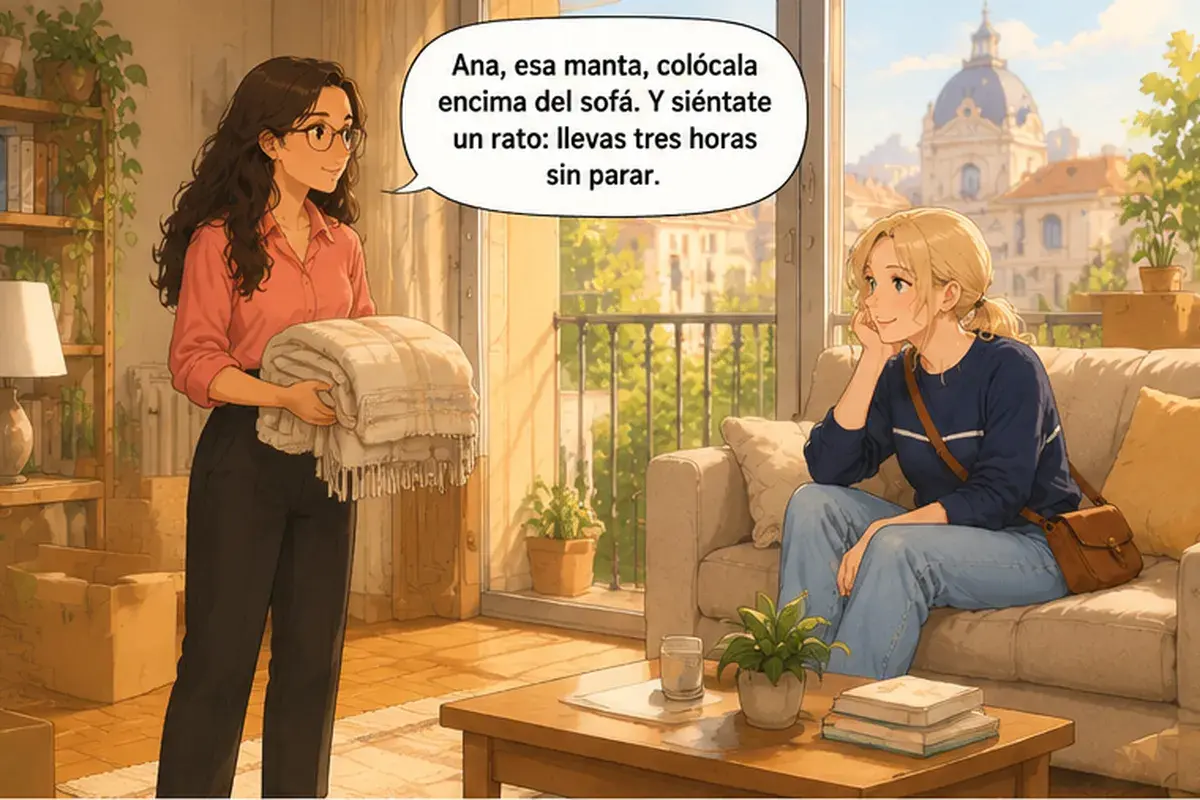
- Lucía
Ana, esa manta, colócala encima del sofá. Y siéntate un rato: llevas tres horas sin parar.
Ana, that blanket, put it on the sofa. And sit down for a while: you've been going for three hours without a break.
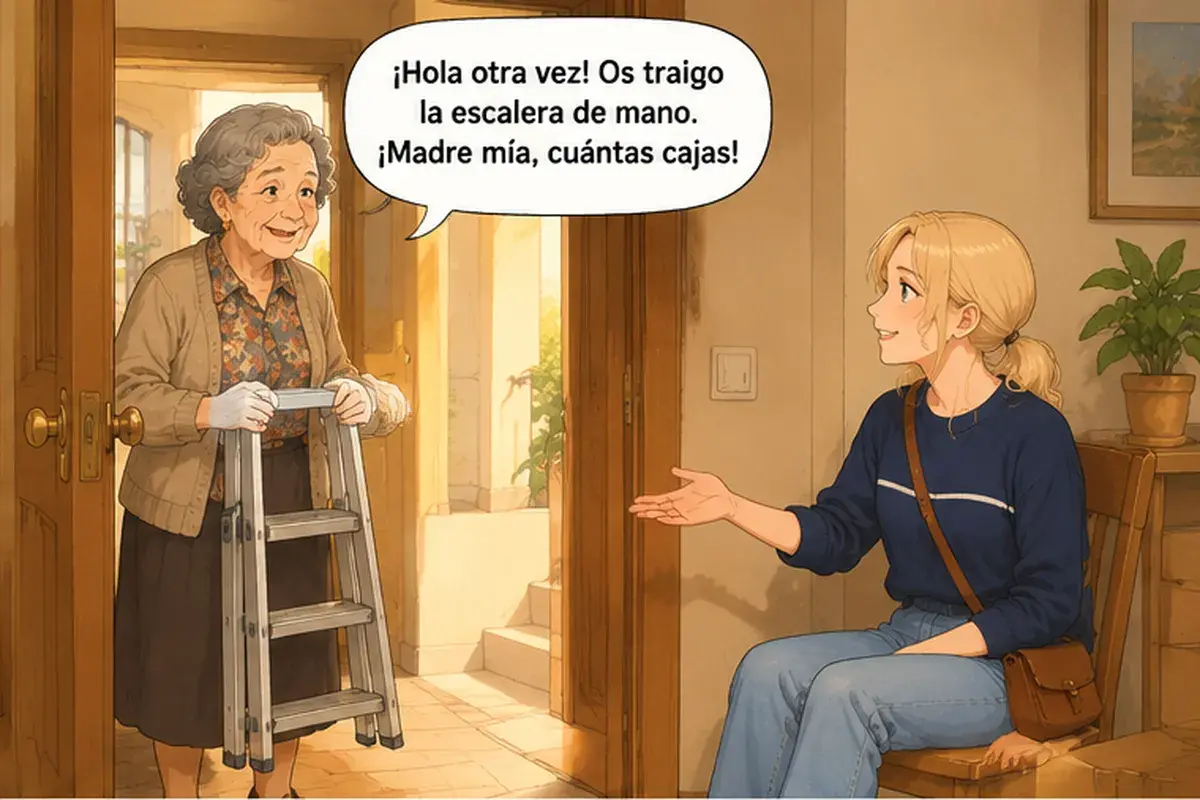
- Vecina
¡Hola otra vez! Os traigo la escalera de mano. ¡Madre mía, cuántas cajas!
Hello again! I've brought you the stepladder. Oh my gosh, so many boxes! (to several people)
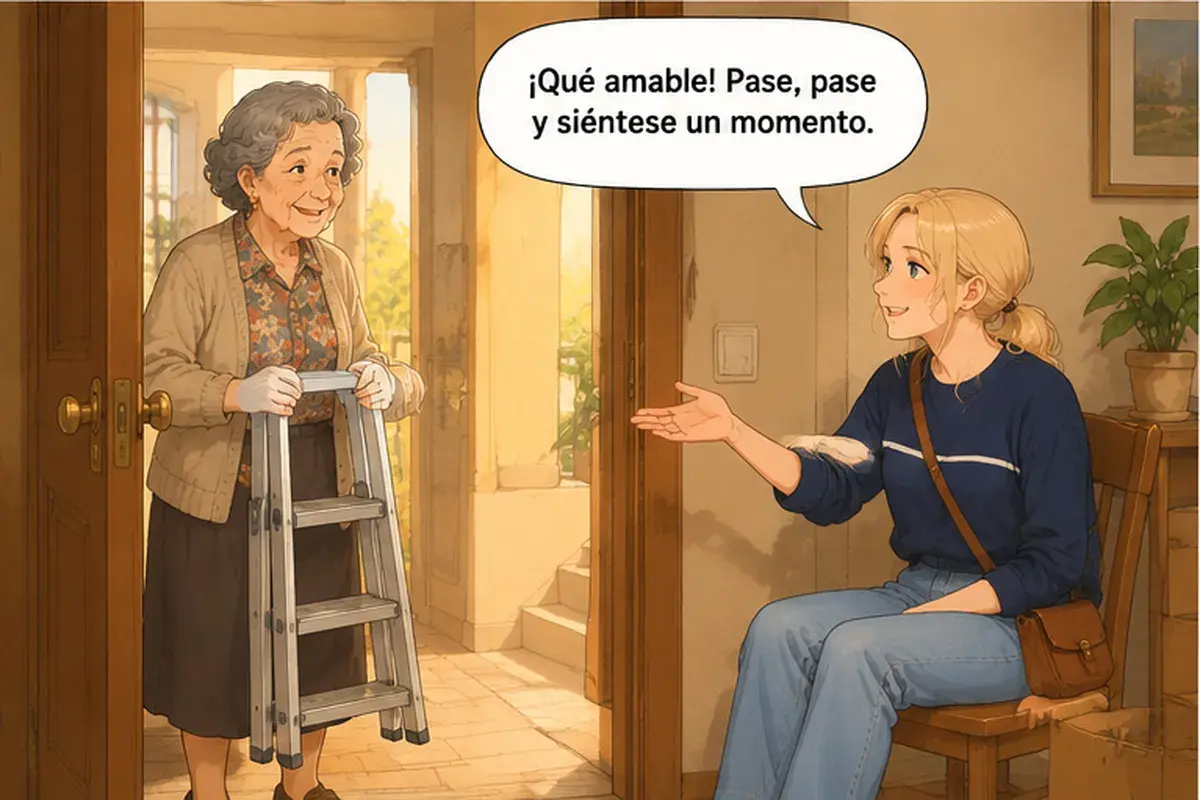
- Ana
¡Qué amable! Pase, pase y siéntese un momento.
How kind! Come in, come in and sit down for a moment (formal).
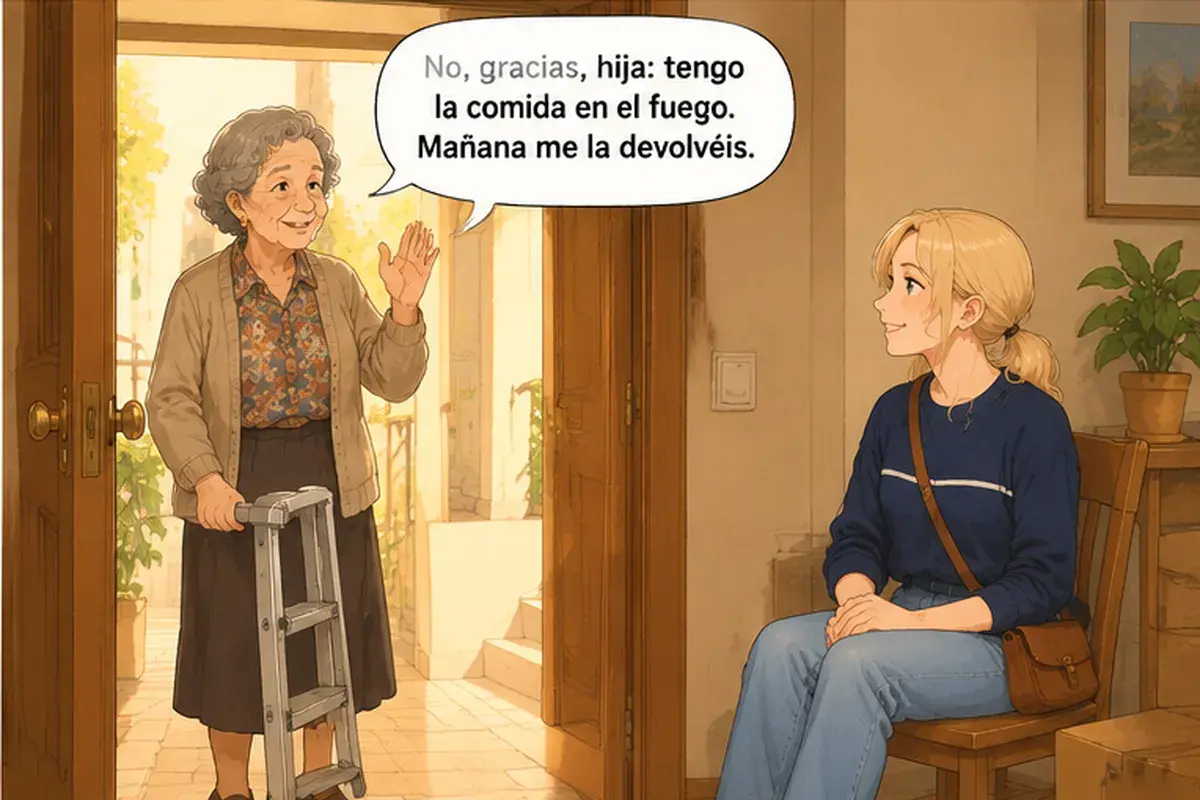
- Vecina
No, gracias, hija: tengo la comida en el fuego. Mañana me la devolvéis.
No, thanks, dear: I have food on the stove. You'll give it back to me tomorrow (to several people).
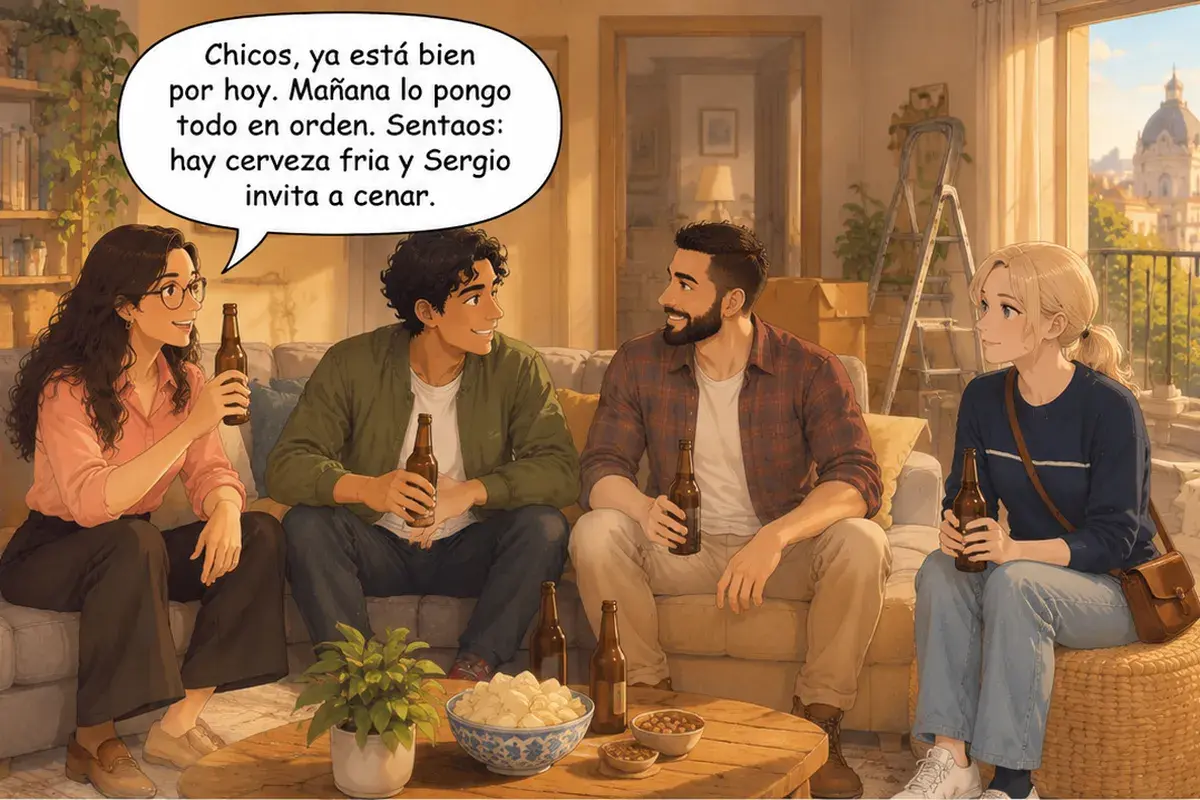
- Lucía
Chicos, ya está bien por hoy. Mañana lo pongo todo en orden. Sentaos: hay cerveza fría y Sergio invita a cenar.
Guys, that's enough for today. Tomorrow I'll put everything in order. Sit down: there's cold beer and Sergio is treating us to dinner (to several people).
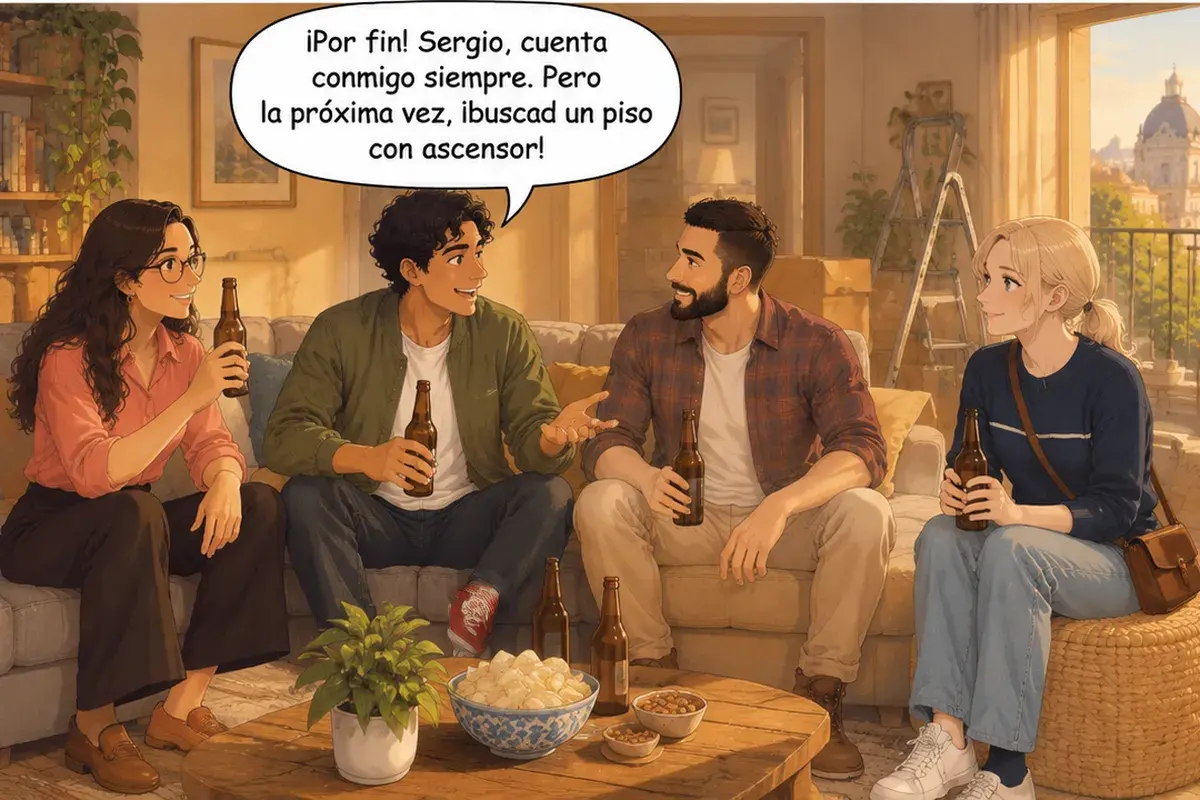
- Pablo
¡Por fin! Sergio, cuenta conmigo siempre. Pero la próxima vez, ¡buscad un piso con ascensor!
Finally! Sergio, always count on me. But next time, look for an apartment with an elevator! (to several people)
Grammar for this text
The thing first, then a pronoun in the command. Esa manta, colócala encima del sofá — that blanket, put it on the sofa. The thing is named at the start, then repeated with the pronoun la. The same: esos guárdalos (put those away), las cajas vacías, tíralas (throw out the empty boxes), ¿la mesa dónde la pongo? (where do I put the table?). In English you'd usually just say "put the blanket on the sofa"; in Spanish, when the thing comes first, the pronoun is required.
Two pronouns. Dámela — give it to me. ¿Te los doy? (should I give them to you?) and me la devolvéis (you'll give it back to me): these aren't commands, so the pronouns go before the verb.
Tú, usted, vosotros. To a friend: siéntate; to the neighbor: pase y siéntese; to the whole group: sentaos (sentad + os, the d drops).
Set phrases. Hecho — got it, will do. Fui yo — it was me (I packed it): here fui is from ser, not from ir; this is how you admit who did something. Ya está bien por hoy — that's enough for today. Cuenta conmigo — count on me. Hija (daughter) — older people use it to address a young woman warmly, like "dear".
Words and grammar of the unit: Ask friends to help you move.
Learn the words from the texts with flashcards
In the app, you can tap any word in a text to see its translation, forms and examples, and new words stick with flashcards. 15 minutes a day.
Start for freeEverything is open for free. No card needed to sign up.