
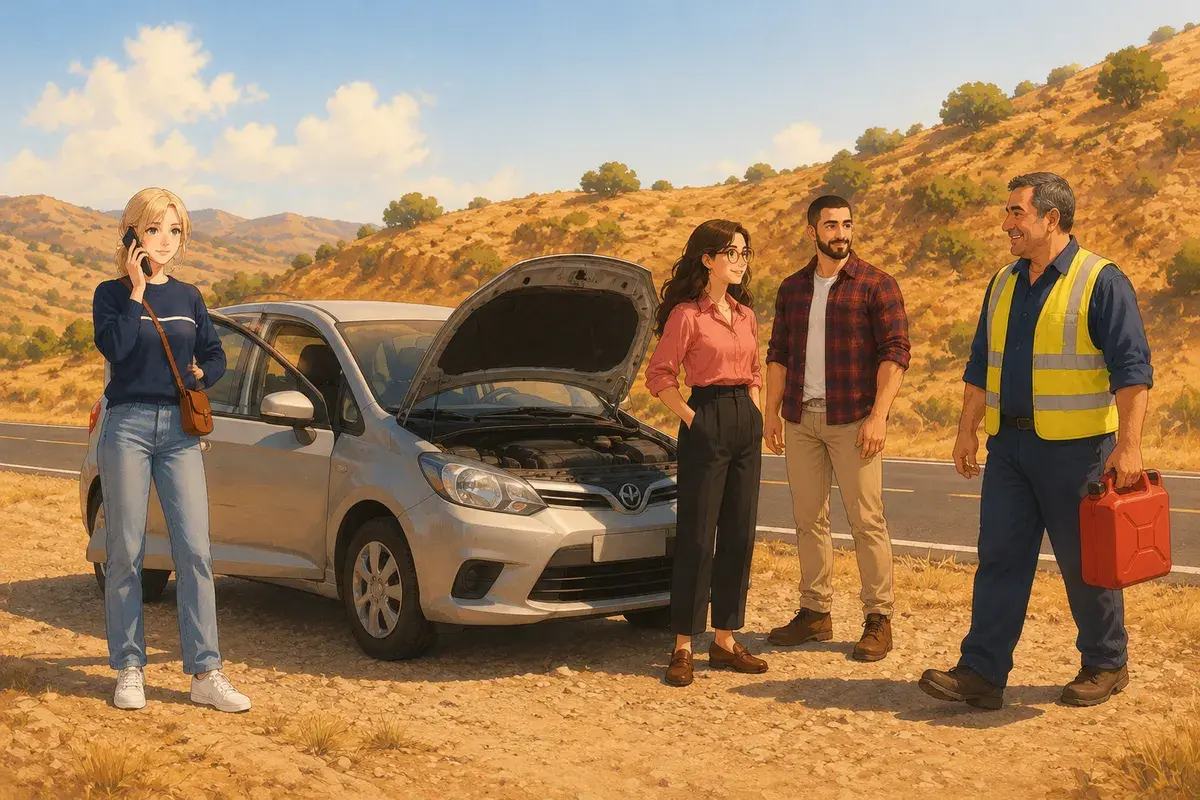
Spanish dialogue with translation · B1 · 18 lines
Una llamada desde la gasolinera A call from the gas station
Comic · 18 panels
- Pablo
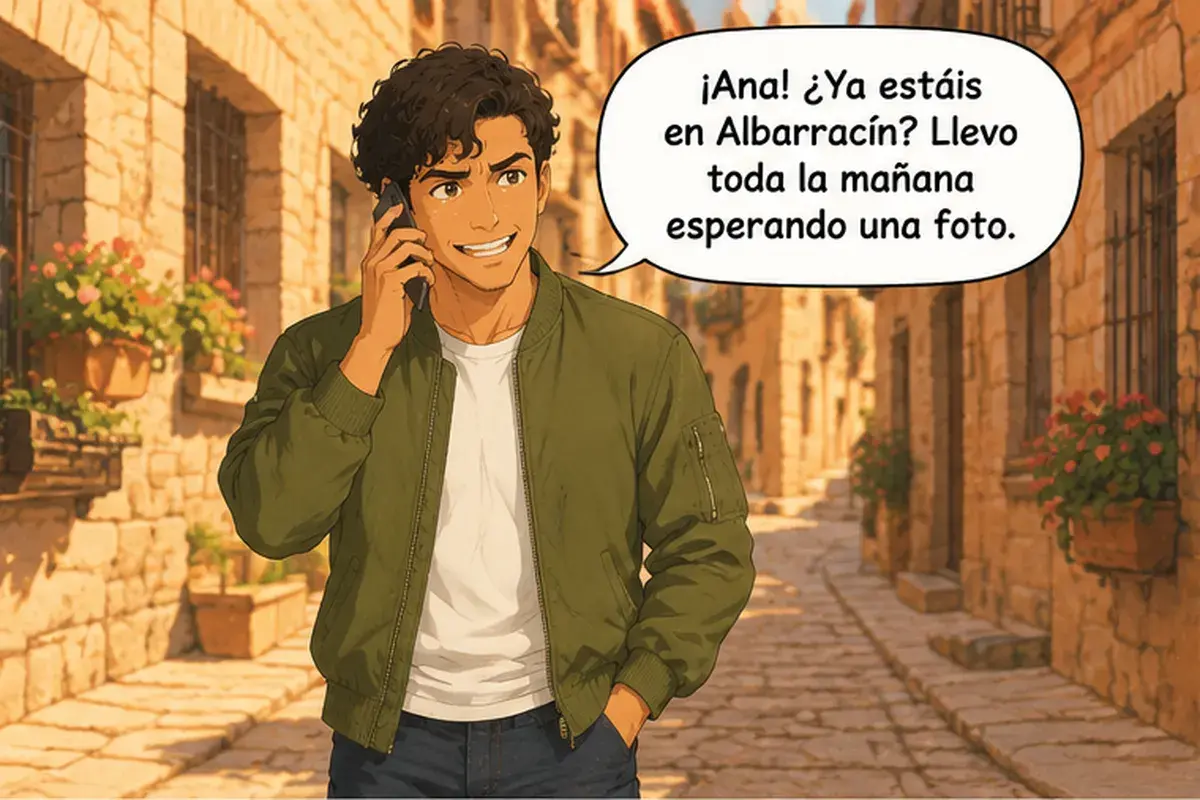
¡Ana! ¿Ya estáis en Albarracín? Llevo toda la mañana esperando una foto.
Ana! Are you in Albarracín yet? I've been waiting for a photo all morning. (to several people)
- Ana
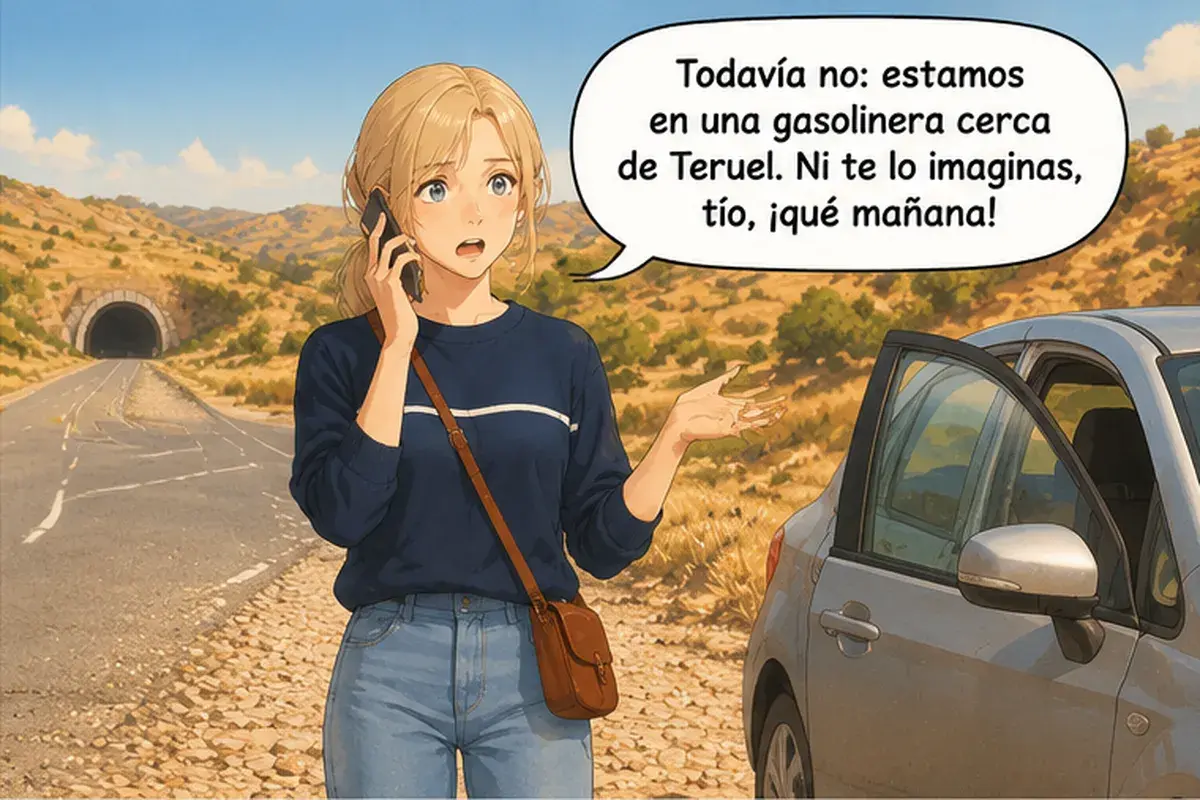
Todavía no: estamos en una gasolinera cerca de Teruel. Ni te lo imaginas, tío, ¡qué mañana!
Not yet: we're at a gas station near Teruel. You can't even imagine, dude. What a morning!
- Pablo
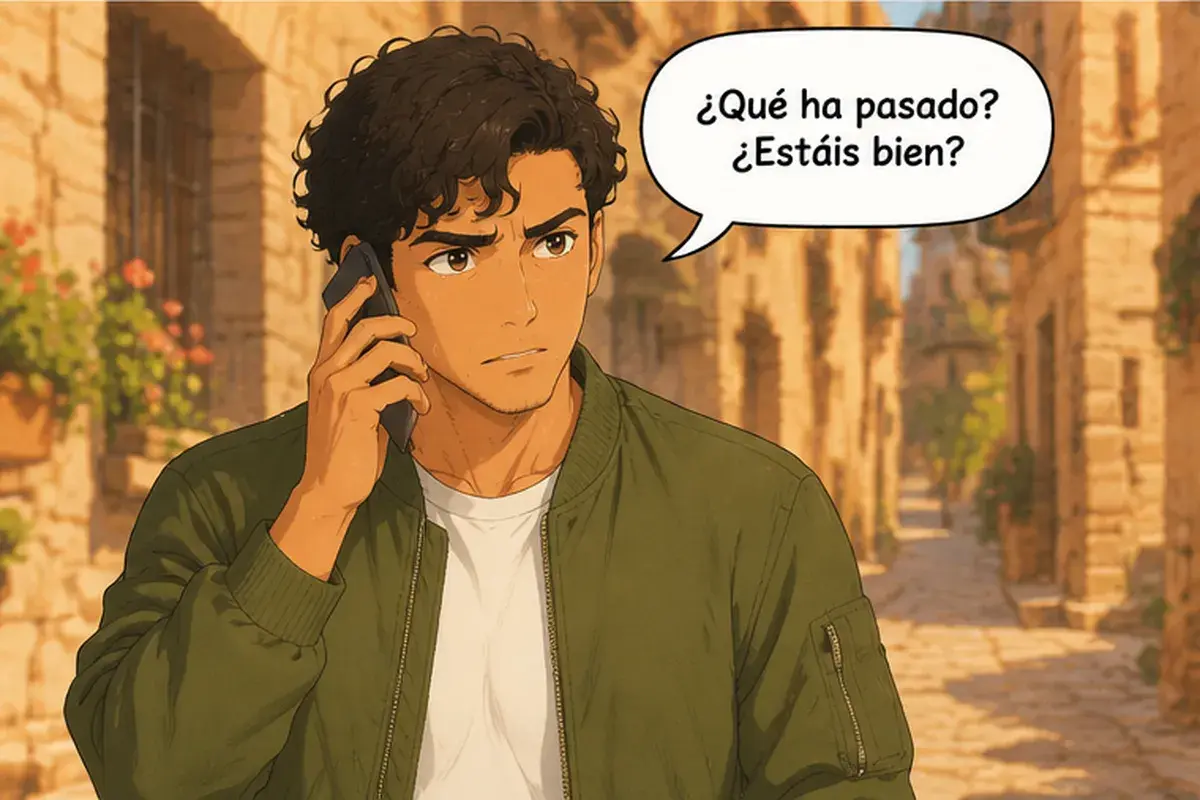
¿Qué ha pasado? ¿Estáis bien?
What happened? Are you OK? (to several people)
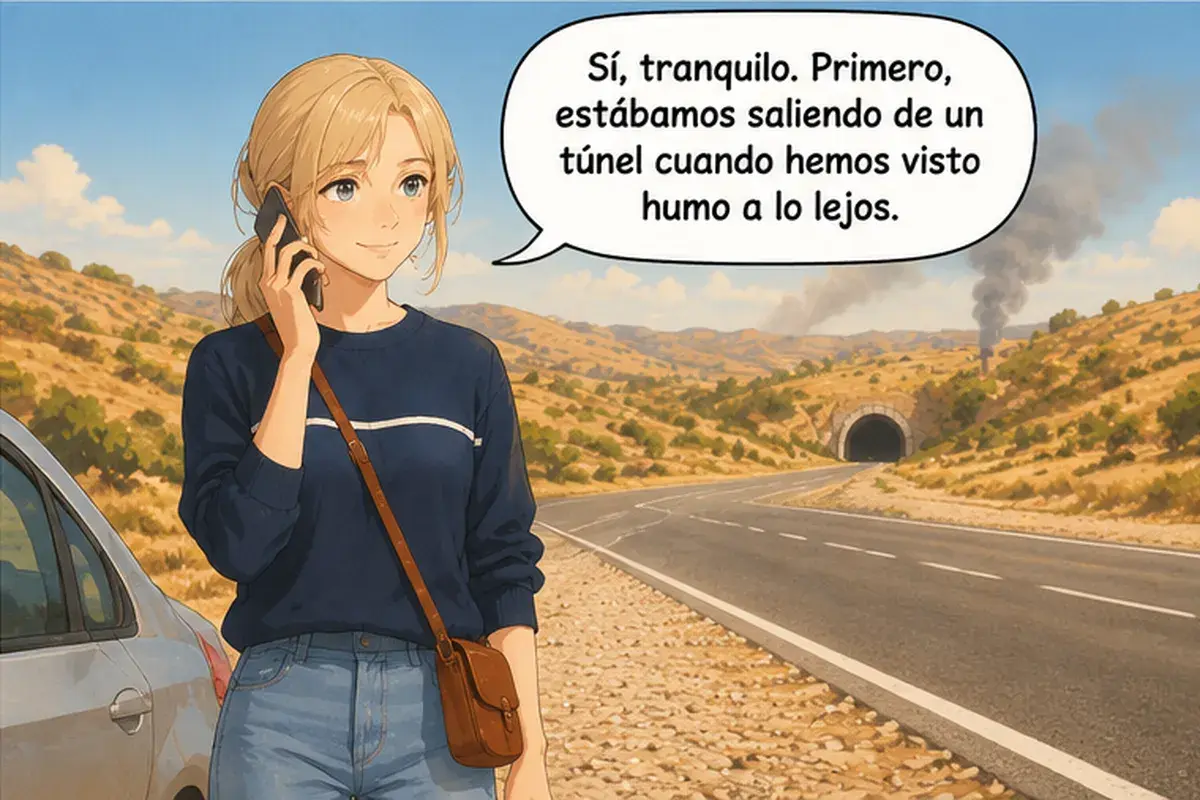
- Ana
Sí, tranquilo. Primero, estábamos saliendo de un túnel cuando hemos visto humo a lo lejos.
Yes, don't worry. First, we were just coming out of a tunnel when we saw smoke in the distance. (to a man)
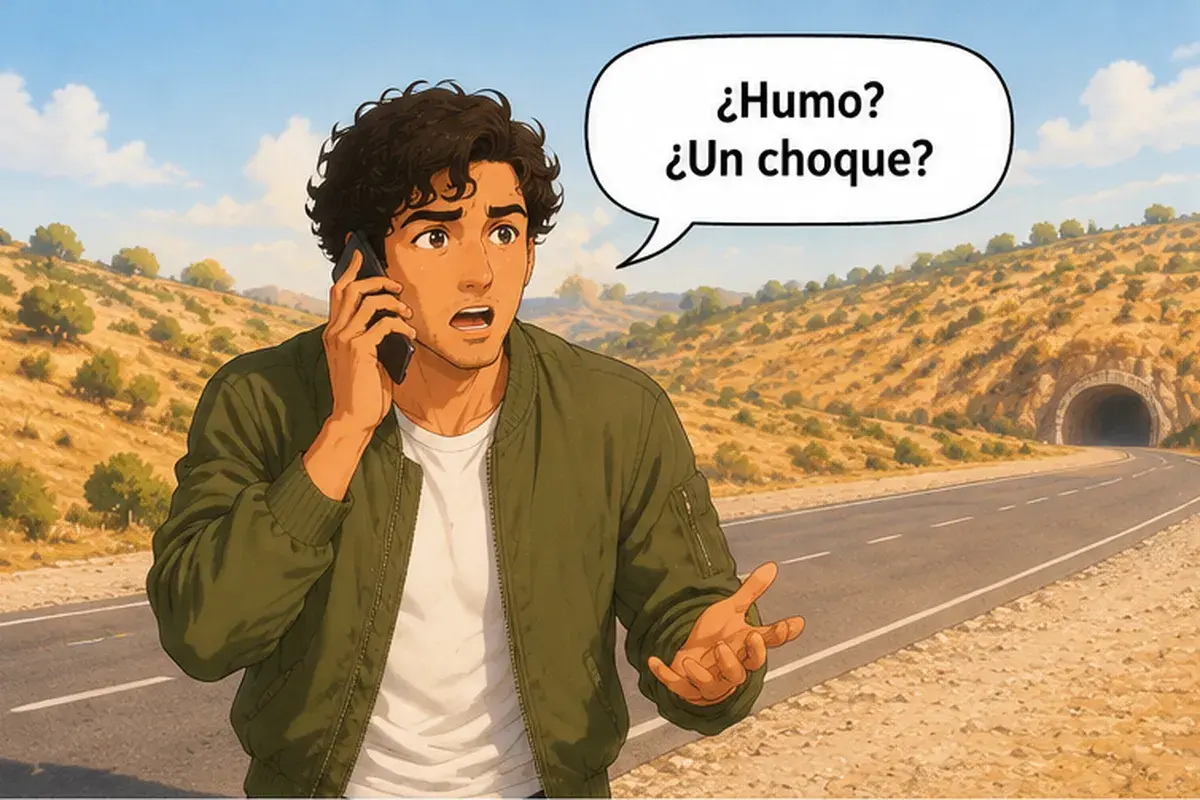
- Pablo
¿Humo? ¿Un choque?
Smoke? A crash?
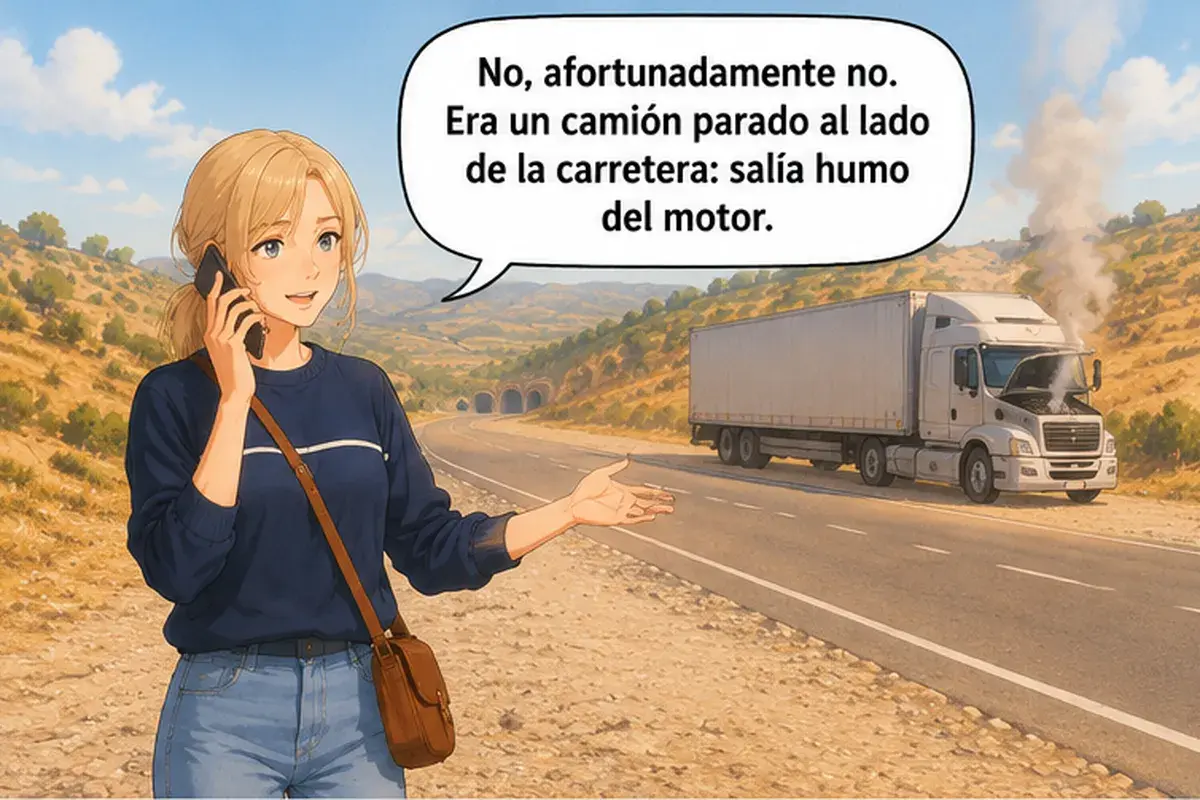
- Ana
No, afortunadamente no. Era un camión parado al lado de la carretera: salía humo del motor.
No, fortunately not. It was a truck stopped at the side of the road: smoke was coming out of the engine.
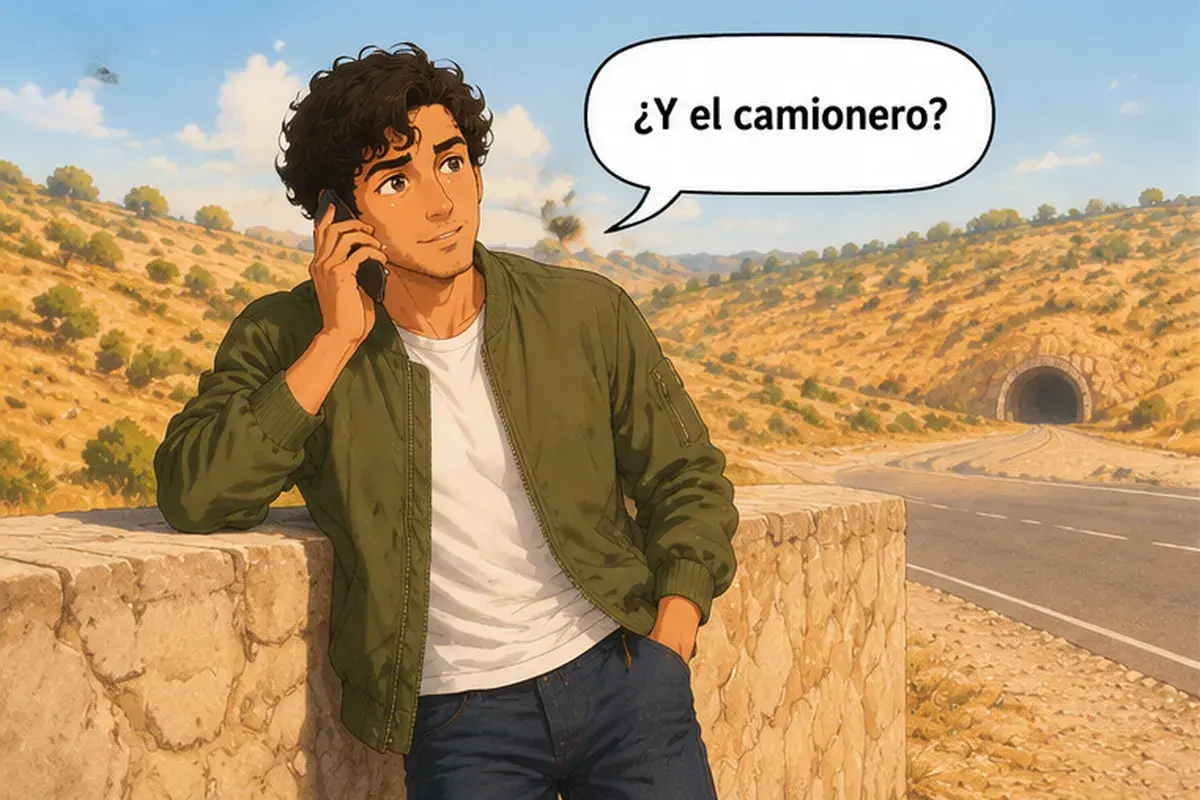
- Pablo
¿Y el camionero?
And the truck driver?
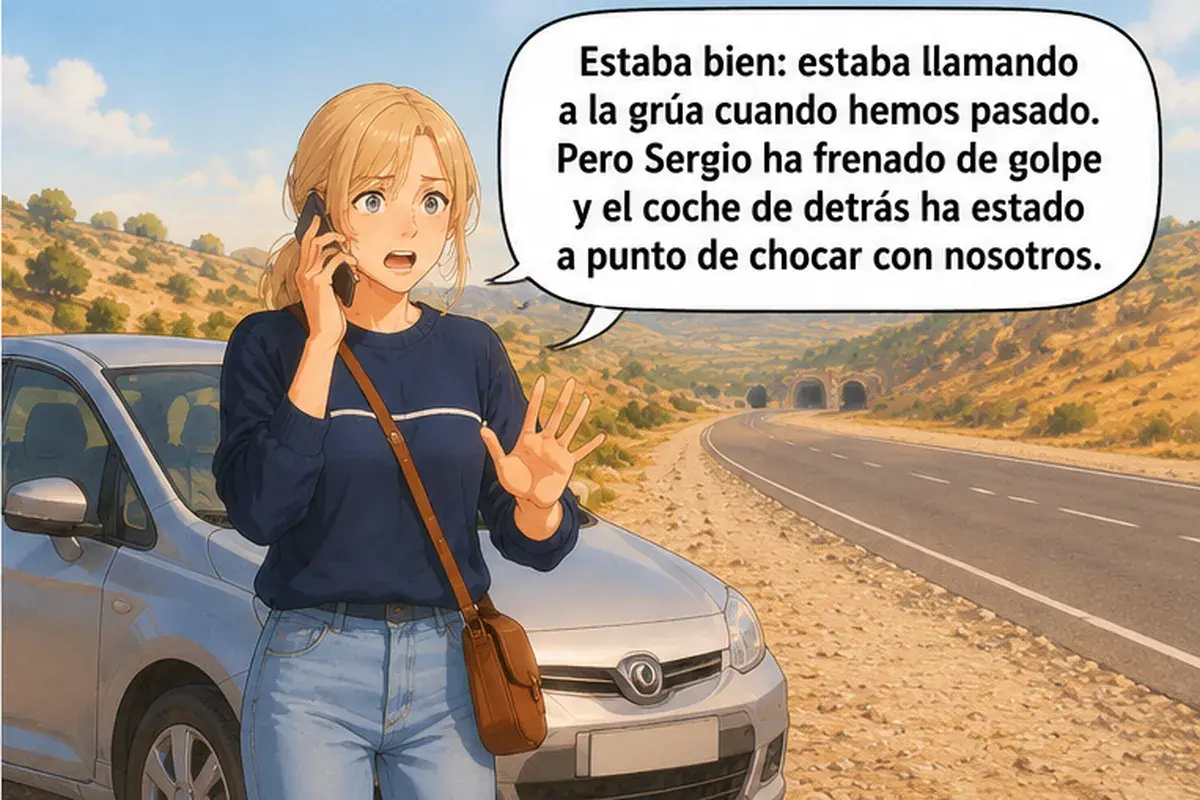
- Ana
Estaba bien: estaba llamando a la grúa cuando hemos pasado. Pero Sergio ha frenado de golpe y el coche de detrás ha estado a punto de chocar con nosotros.
He was fine: he was calling the tow truck when we drove by. But Sergio braked suddenly, and the car behind us almost crashed into us.
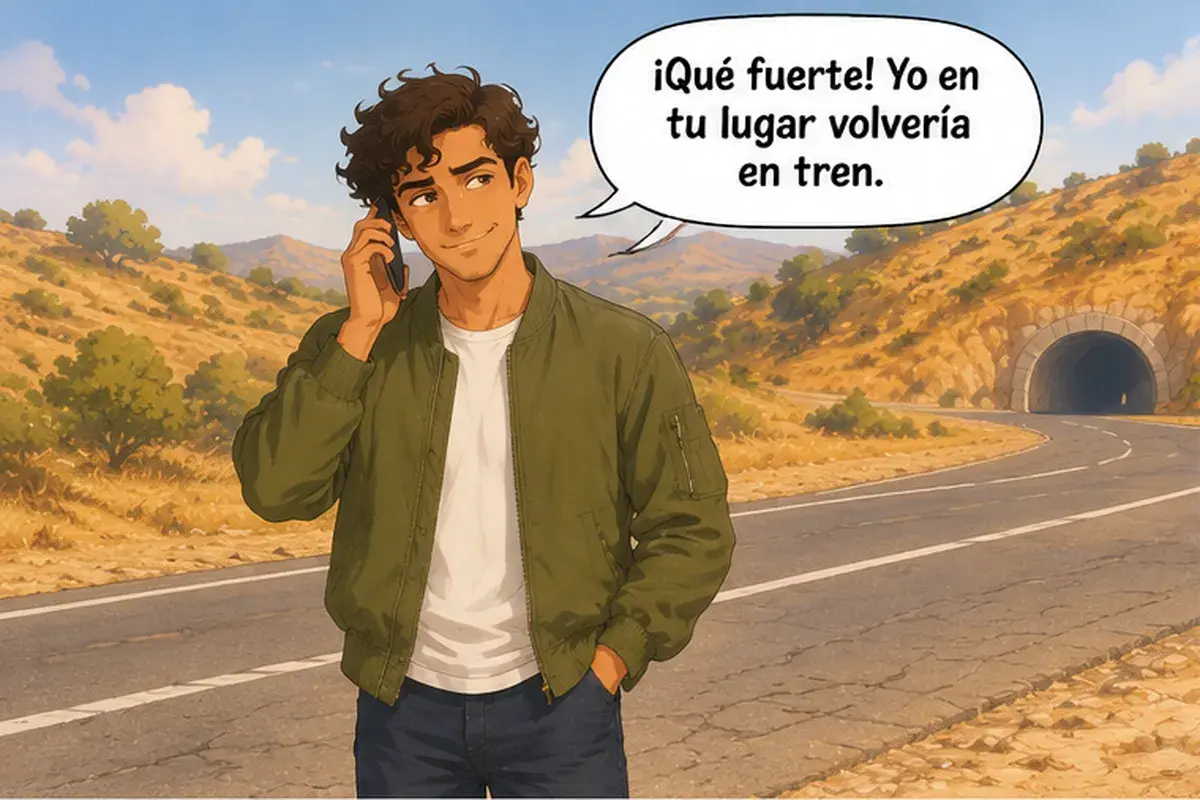
- Pablo
¡Qué fuerte! Yo en tu lugar volvería en tren.
No way! In your place, I'd go back by train.
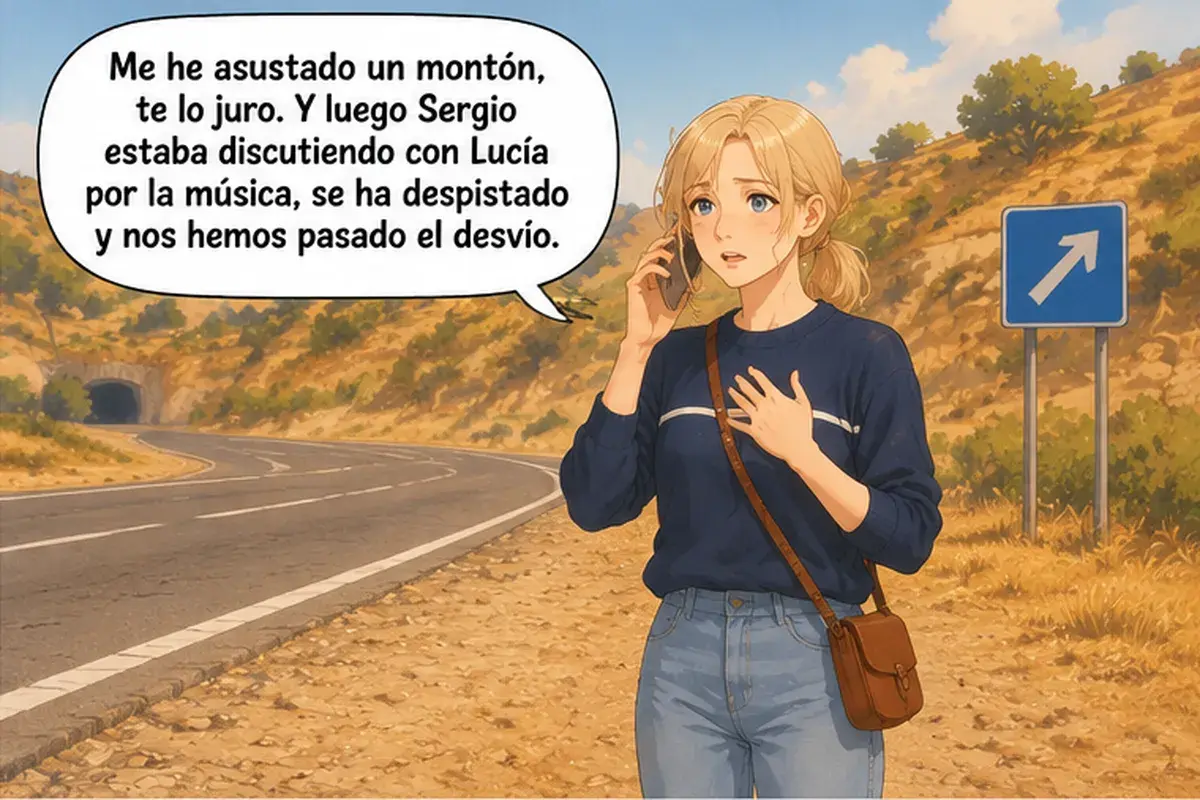
- Ana
Me he asustado un montón, te lo juro. Y luego Sergio estaba discutiendo con Lucía por la música, se ha despistado y nos hemos pasado el desvío.
I got really scared, I swear. And then Sergio was arguing with Lucía about the music, he got distracted, and we missed the turnoff.
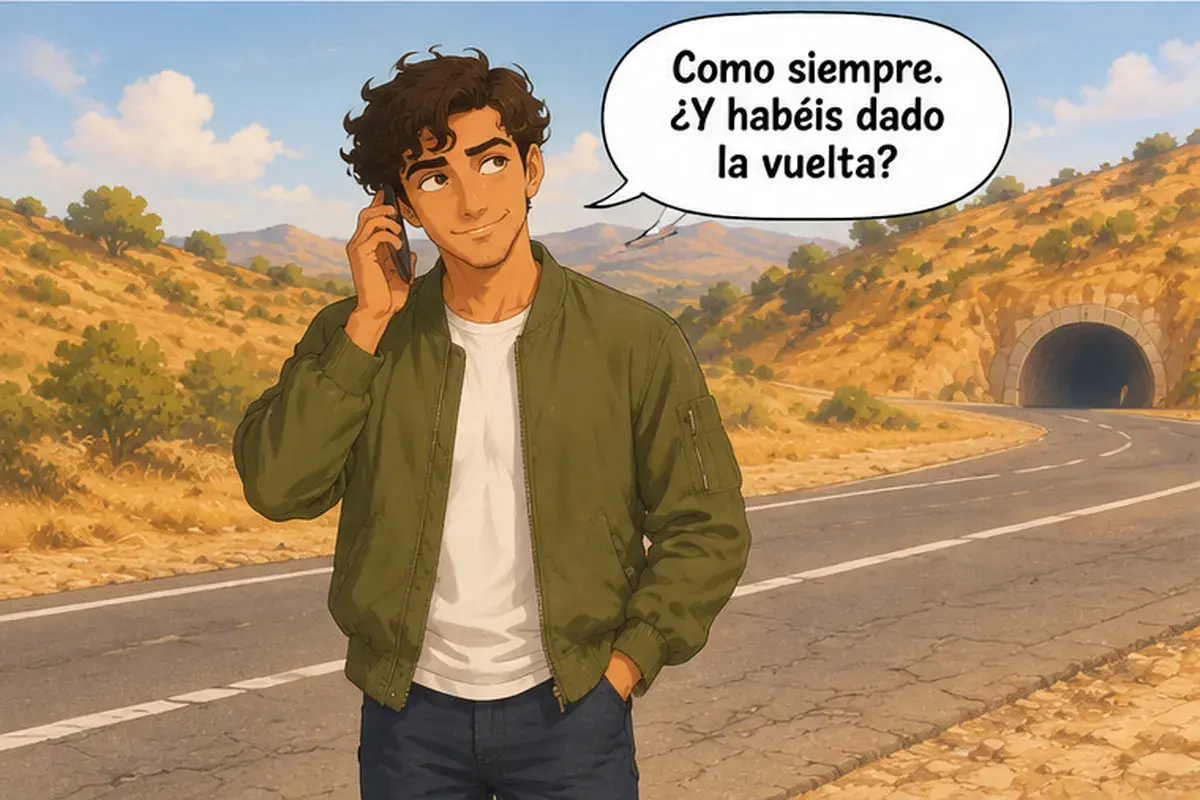
- Pablo
Como siempre. ¿Y habéis dado la vuelta?
As always. And did you turn around? (to several people)
- Ana
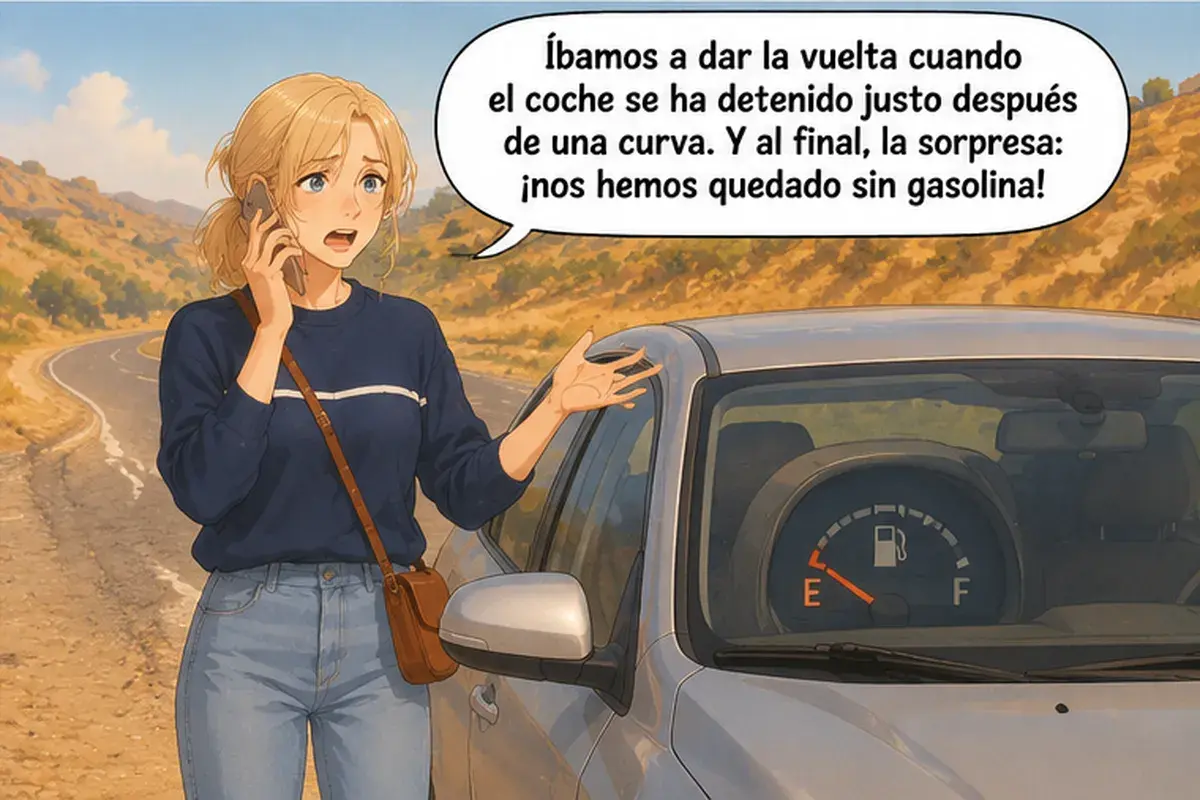
Íbamos a dar la vuelta cuando el coche se ha detenido justo después de una curva. Y al final, la sorpresa: ¡nos hemos quedado sin gasolina!
We were going to turn around when the car stopped right after a curve. And in the end, the surprise: we ran out of gas!
- Pablo
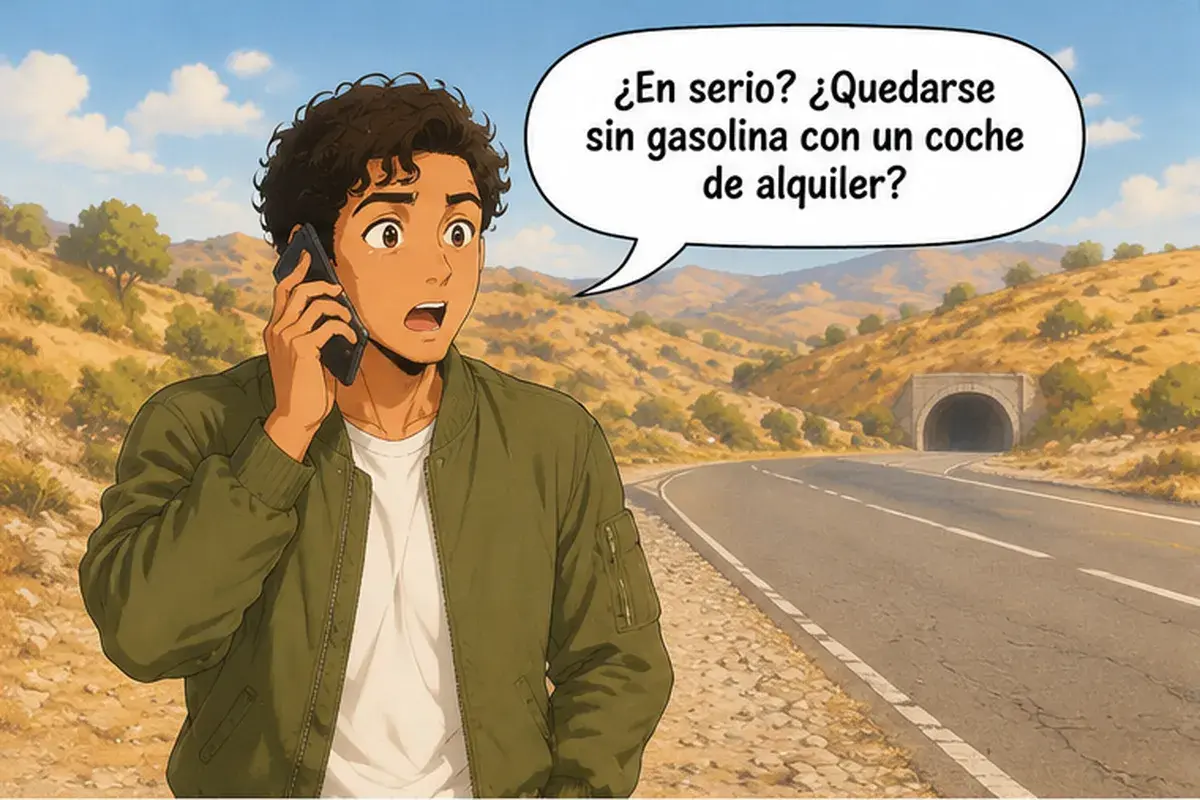
¿En serio? ¿Quedarse sin gasolina con un coche de alquiler?
Seriously? Running out of gas in a rental car?
- Ana
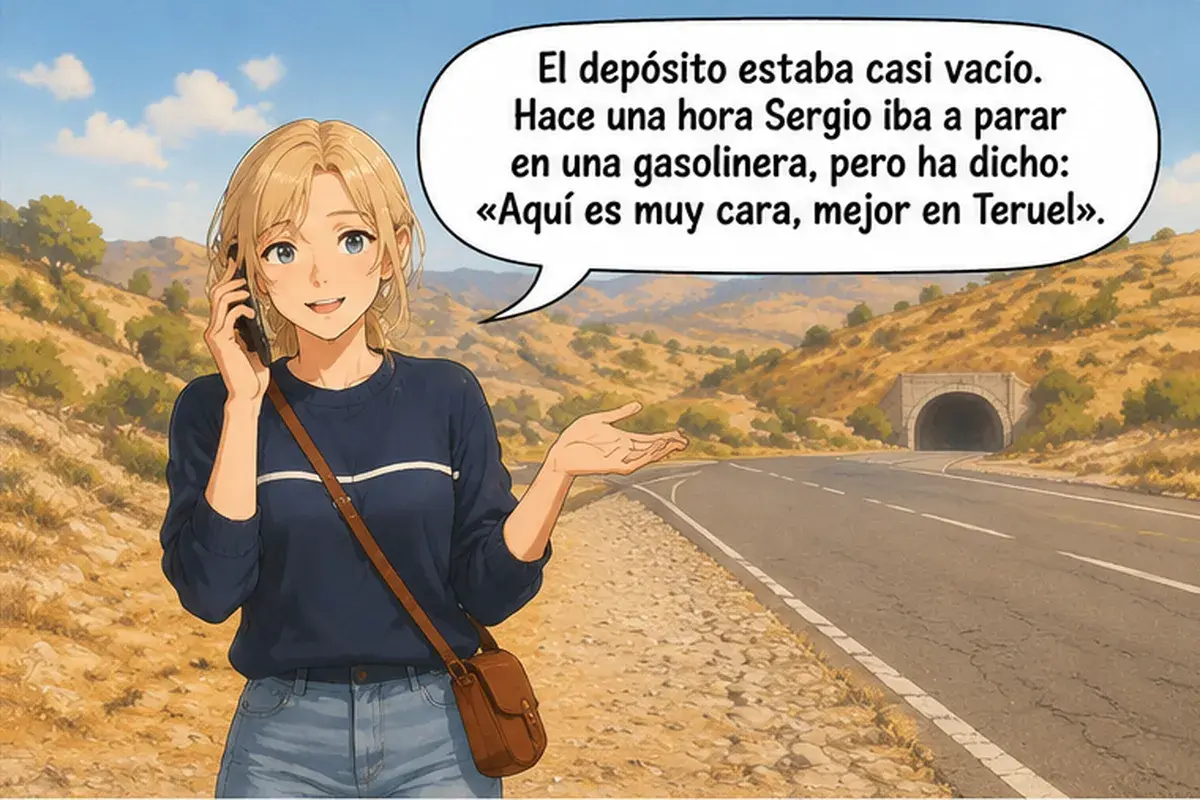
El depósito estaba casi vacío. Hace una hora Sergio iba a parar en una gasolinera, pero ha dicho: «Aquí es muy cara, mejor en Teruel».
The tank was almost empty. An hour ago Sergio was going to stop at a gas station, but he said: "It's very expensive here, better in Teruel."
- Pablo
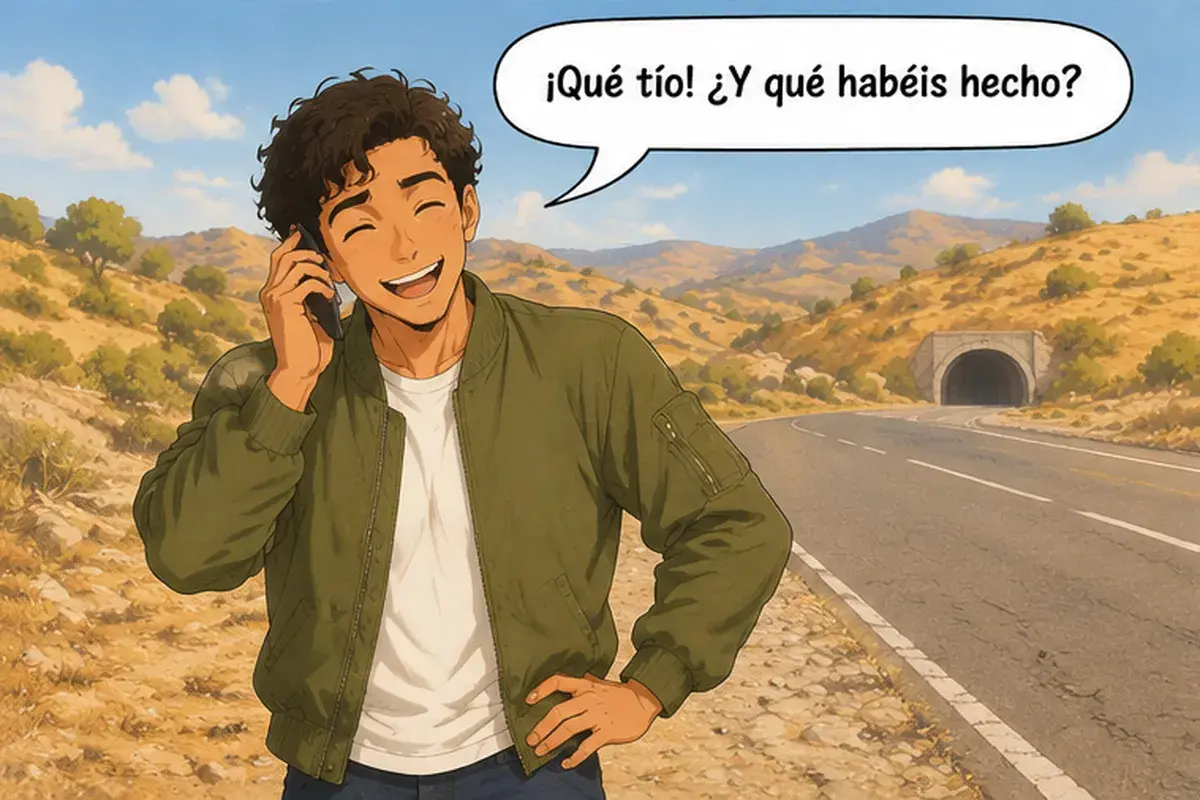
¡Qué tío! ¿Y qué habéis hecho?
What a guy! And what did you do? (to several people)
- Ana
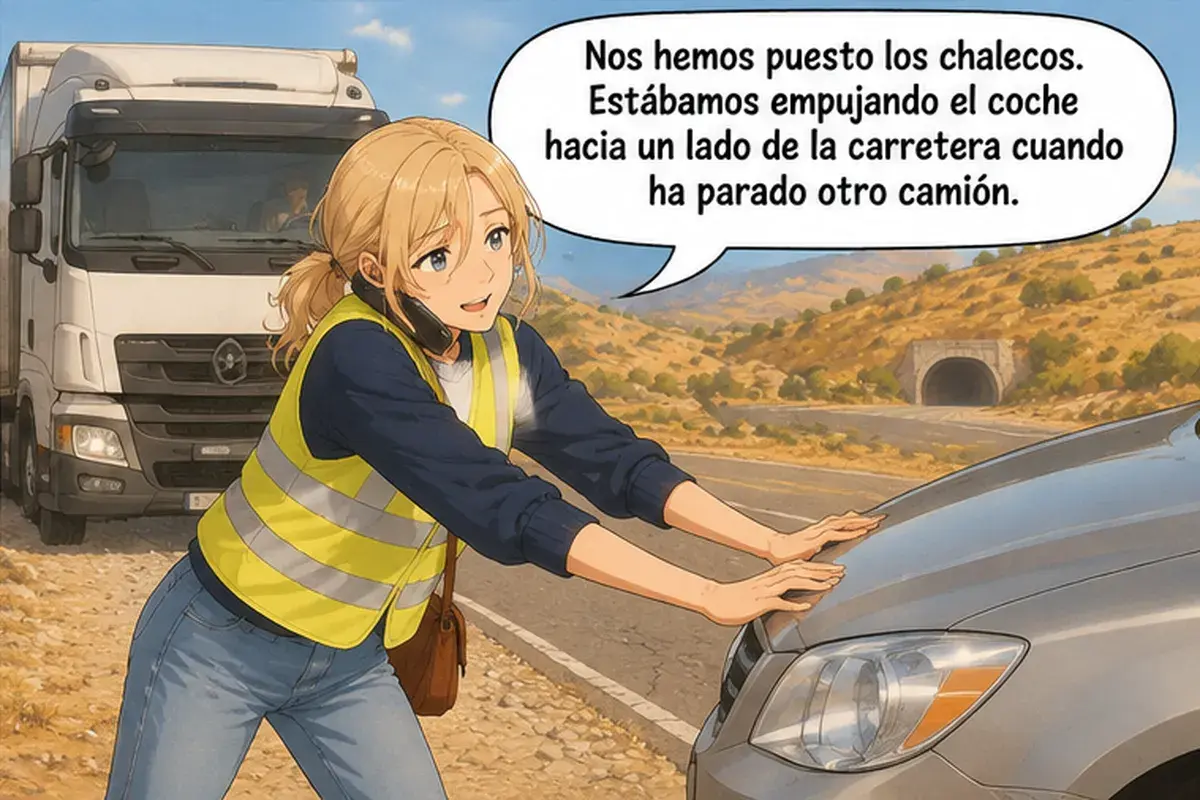
Nos hemos puesto los chalecos. Estábamos empujando el coche hacia un lado de la carretera cuando ha parado otro camión.
We put on our vests. We were pushing the car to the side of the road when another truck stopped.
- Pablo
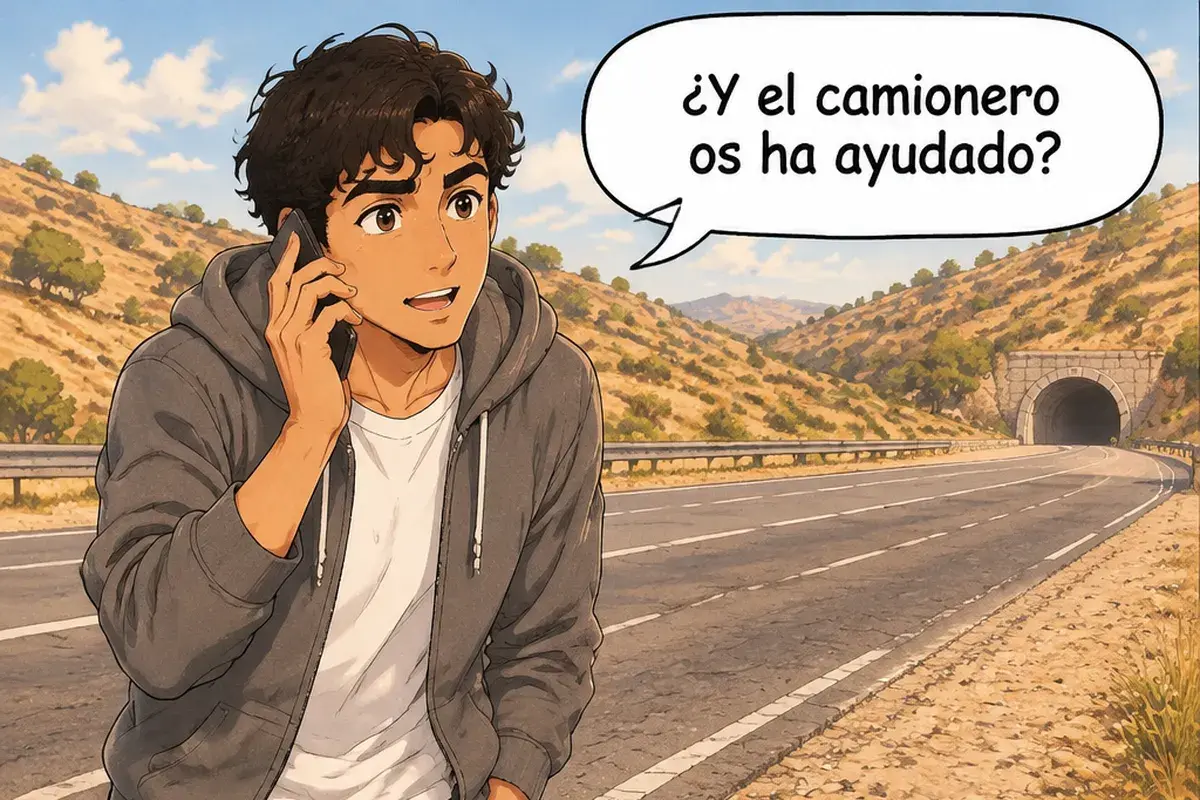
¿Y el camionero os ha ayudado?
And did the truck driver help you? (to several people)
- Ana
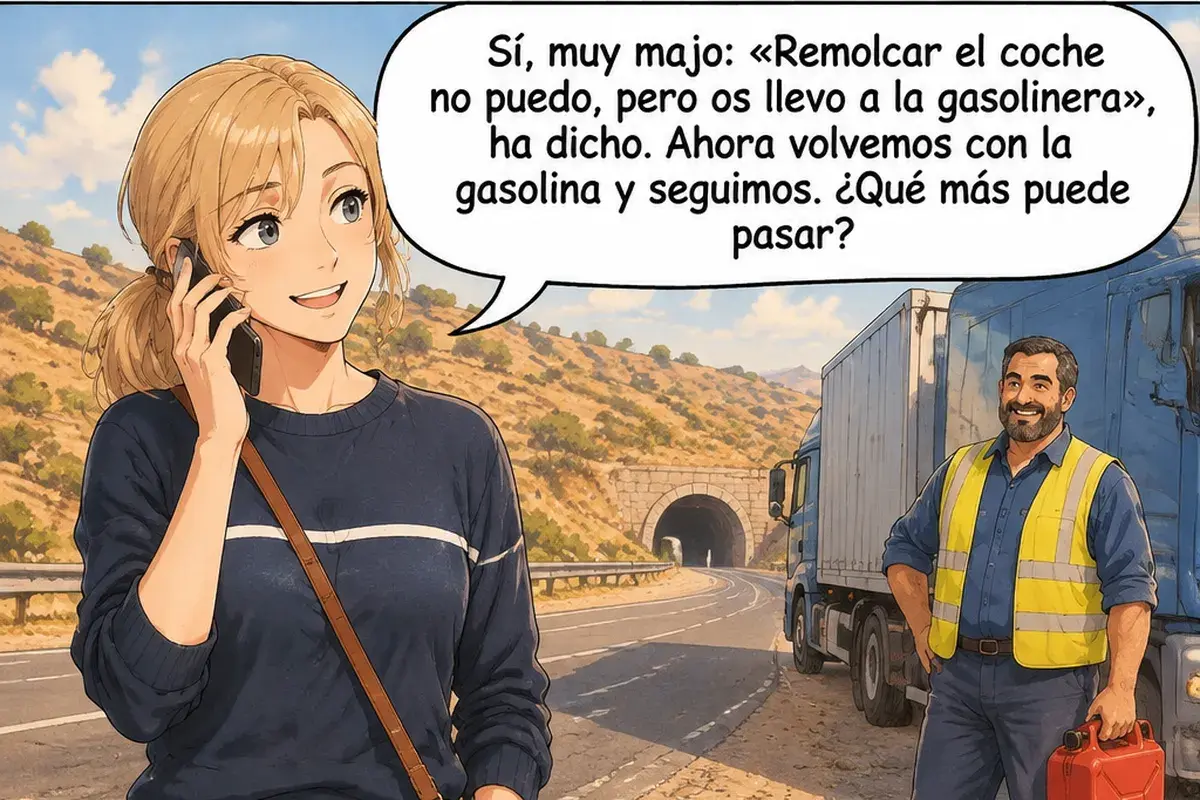
Sí, muy majo: «Remolcar el coche no puedo, pero os llevo a la gasolinera», ha dicho. Ahora volvemos con la gasolina y seguimos. ¿Qué más puede pasar?
Yes, he was really nice: "I can't tow the car, but I'll take you all to the gas station," he said. Now we're going back with the gas and we'll keep going. What else can happen?
Grammar for this text
What was going on, and what cut in. Estábamos saliendo de un túnel cuando hemos visto humo (we were just coming out of a tunnel when we saw smoke). What was going on is estaba + gerund. What cut in happened today, an hour or two ago, so it's in the present perfect (he hecho, A2, unit 2); in a story about last week it would be cuando vimos humo. The same: estábamos empujando el coche… cuando ha parado otro camión.
We were going to, but… Íbamos a dar la vuelta cuando el coche se ha detenido (we were going to turn around when the car stopped). Dar la vuelta here means "to turn around".
Almost. Ha estado a punto de chocar (it almost crashed into us): no negative, just like English "almost". About today, ha estado; about the past, estuvo a punto de.
In order. Primero… luego… al final…: Ana tells the story of her morning step by step.
Set phrases. Ni te lo imaginas (you can't even imagine) and te lo juro (I swear): learn them as whole phrases; the rule for two pronouns comes later. Nos hemos pasado el desvío (we missed the turnoff).
Words and grammar of the unit: Tell what went wrong on a road trip.
Learn the words from the texts with flashcards
In the app, you can tap any word in a text to see its translation, forms and examples, and new words stick with flashcards. 15 minutes a day.
Start for freeEverything is open for free. No card needed to sign up.