

Spanish dialogue with translation · B1 · 18 lines
¿Te gusta Diego? Do you like Diego?
Comic · 18 panels
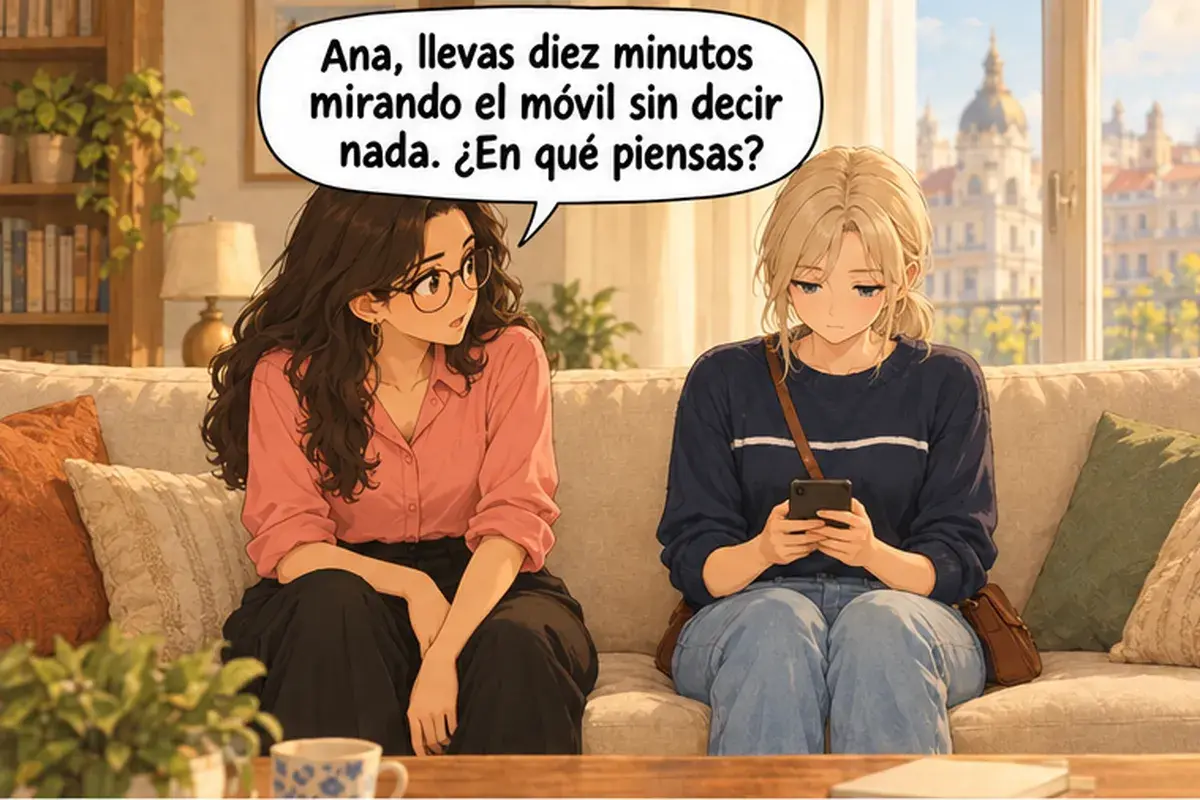
- Lucía
Ana, llevas diez minutos mirando el móvil sin decir nada. ¿En qué piensas?
Ana, you've been staring at your phone for ten minutes without saying anything. What are you thinking about?

- Ana
En nada… Bueno, en alguien.
About nothing… Well, about someone.
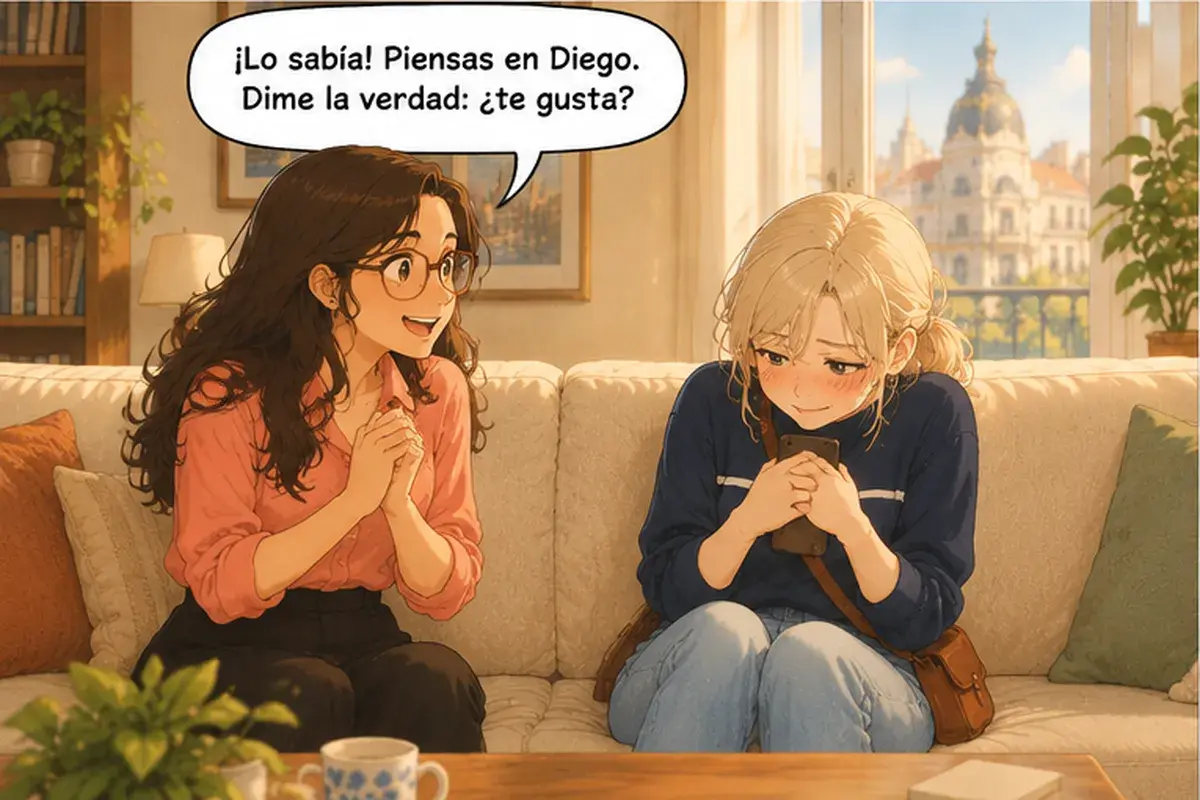
- Lucía
¡Lo sabía! Piensas en Diego. Dime la verdad: ¿te gusta?
I knew it! You're thinking about Diego. Tell me the truth: do you like him?
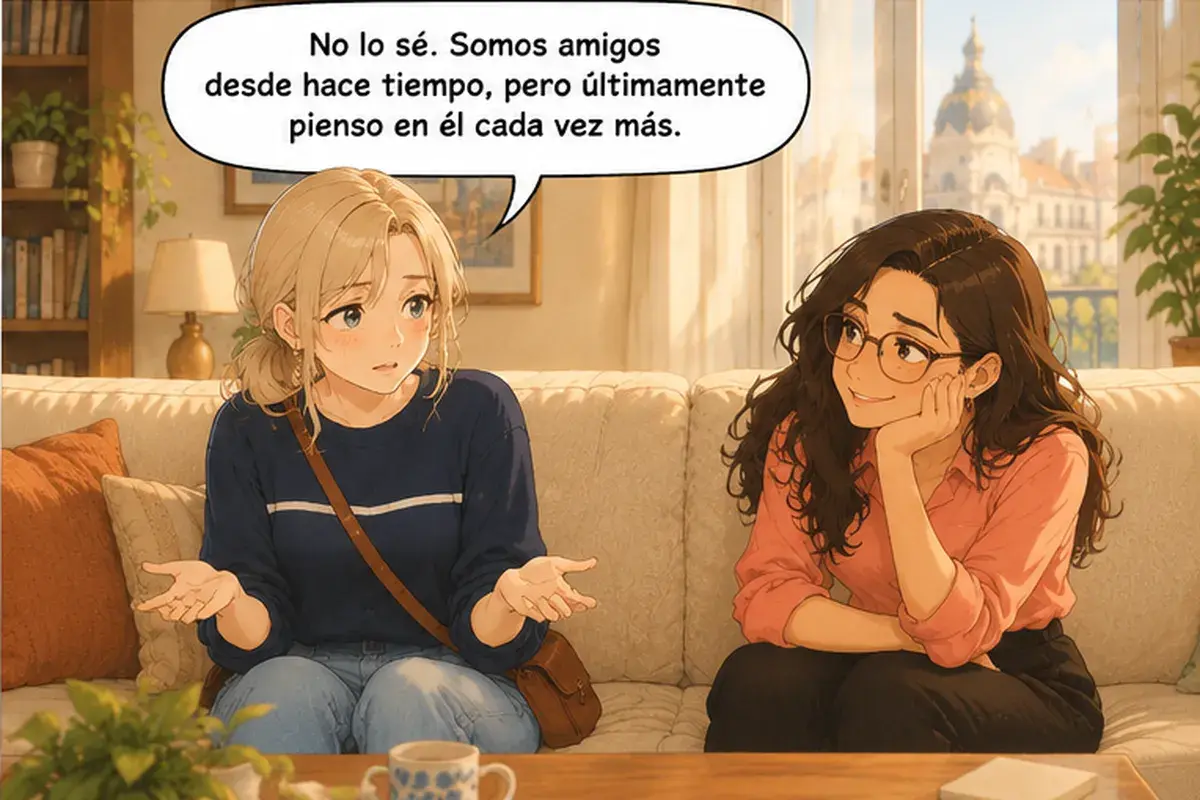
- Ana
No lo sé. Somos amigos desde hace tiempo, pero últimamente pienso en él cada vez más.
I don't know. We've been friends for a while, but lately I think about him more and more.
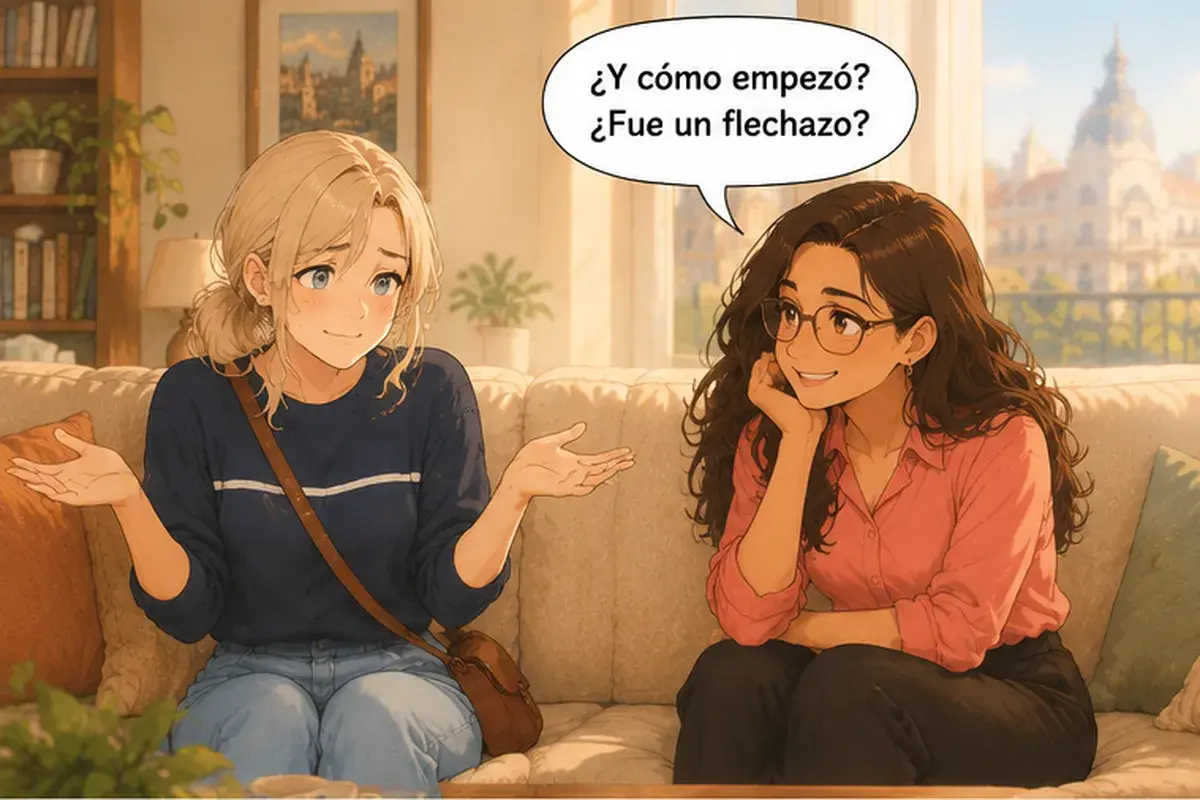
- Lucía
¿Y cómo empezó? ¿Fue un flechazo?
And how did it start? Was it love at first sight?
- Ana
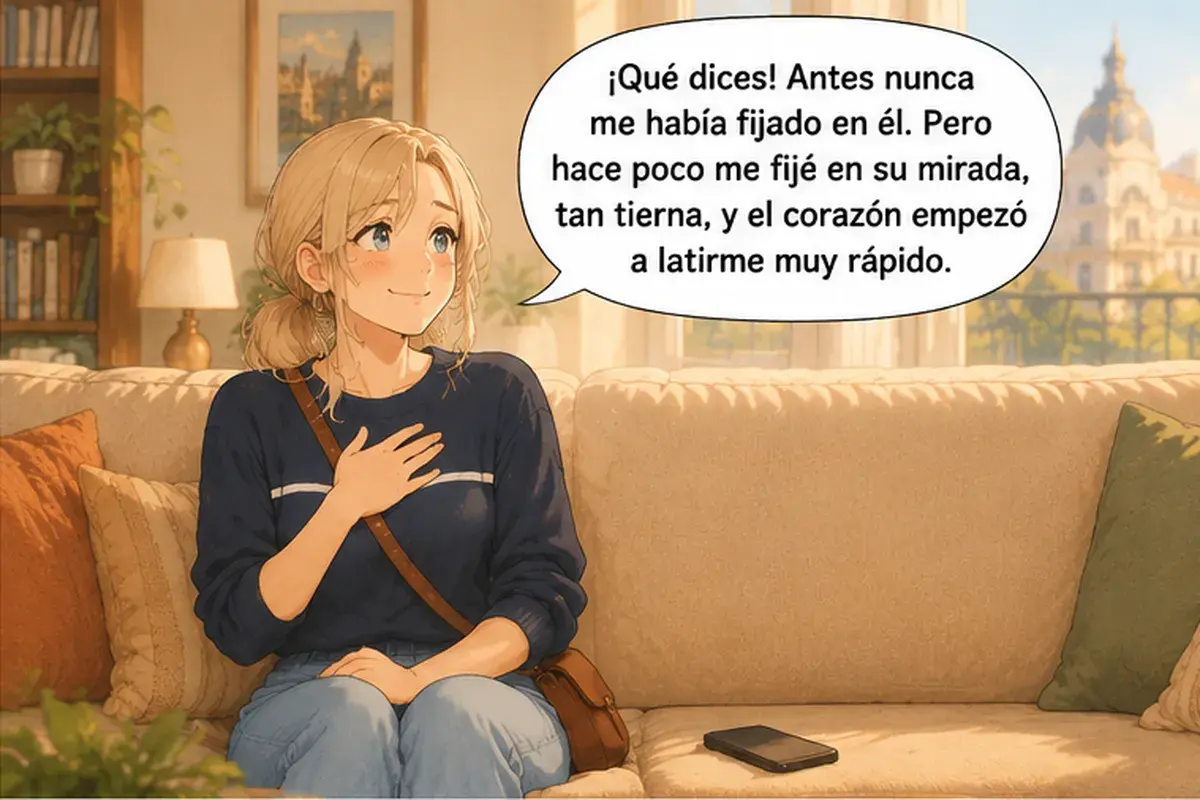
¡Qué dices! Antes nunca me había fijado en él. Pero hace poco me fijé en su mirada, tan tierna, y el corazón empezó a latirme muy rápido.
What are you talking about! I'd never noticed him before. But recently I noticed the look in his eyes, so tender, and my heart started beating really fast.
- Lucía
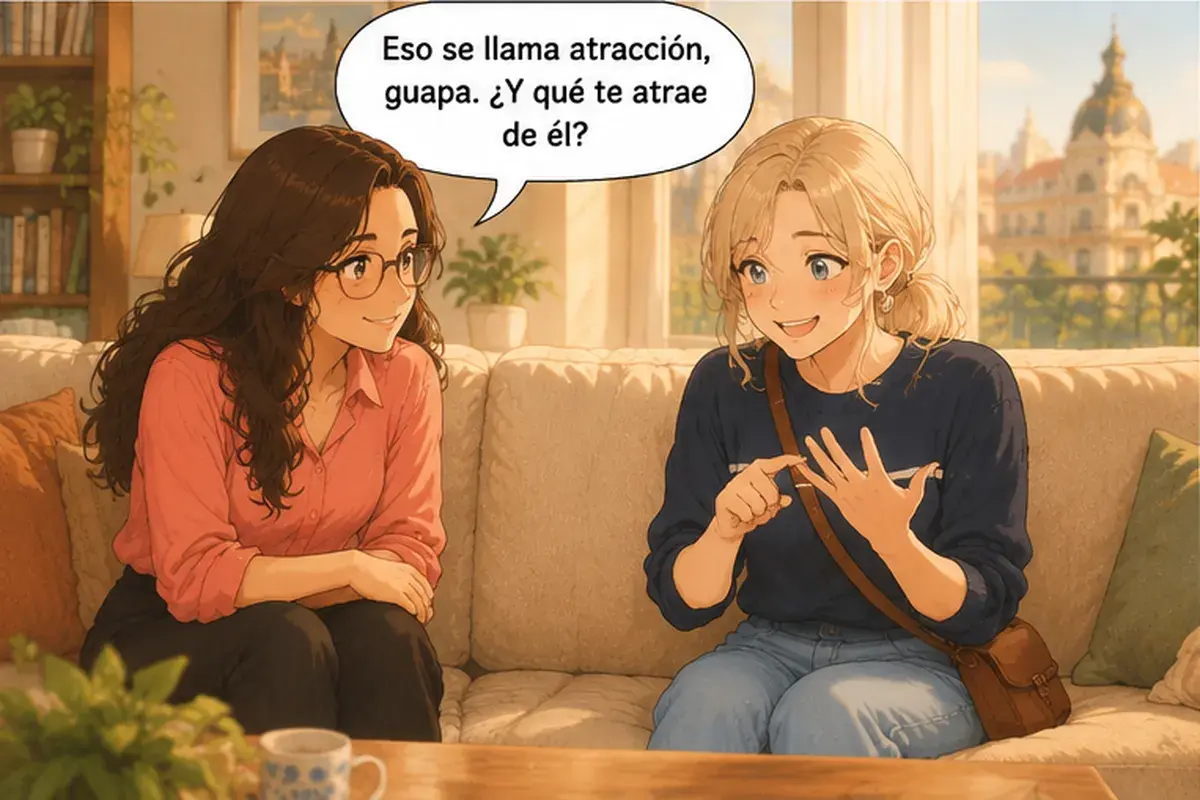
Eso se llama atracción, guapa. ¿Y qué te atrae de él?
That's called attraction, honey. And what attracts you to him? (to a woman)
- Ana
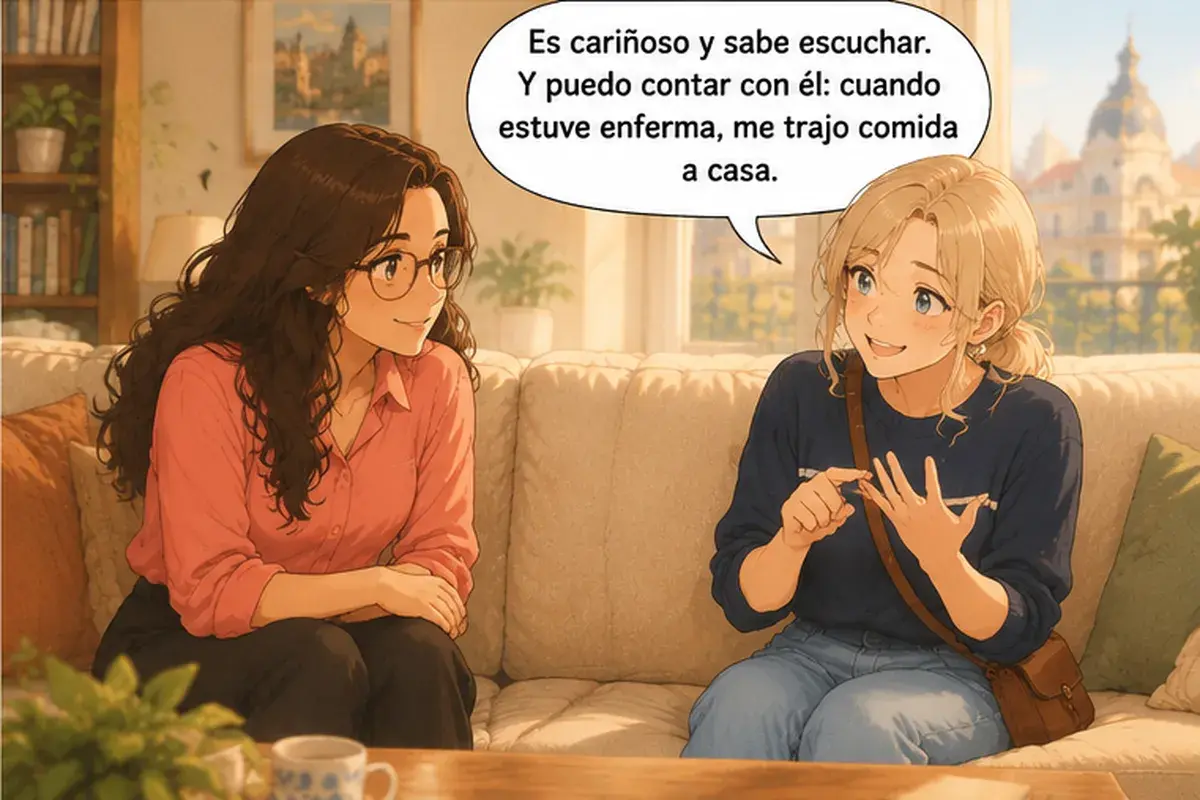
Es cariñoso y sabe escuchar. Y puedo contar con él: cuando estuve enferma, me trajo comida a casa.
He's affectionate and he knows how to listen. And I can count on him: when I was sick, he brought me food at home (woman speaking).

- Lucía
¡Qué gesto más bonito! Es encantador. Yo creo que estás enamorada de él.
What a sweet gesture! He's charming. I think you're in love with him (to a woman).

- Ana
No sé si estoy enamorada. Solo sé que me acuerdo de él todo el día… y que anoche soñé con él.
I don't know if I'm in love. All I know is that I keep remembering him all day long… and that I dreamed about him last night (woman speaking).
- Lucía
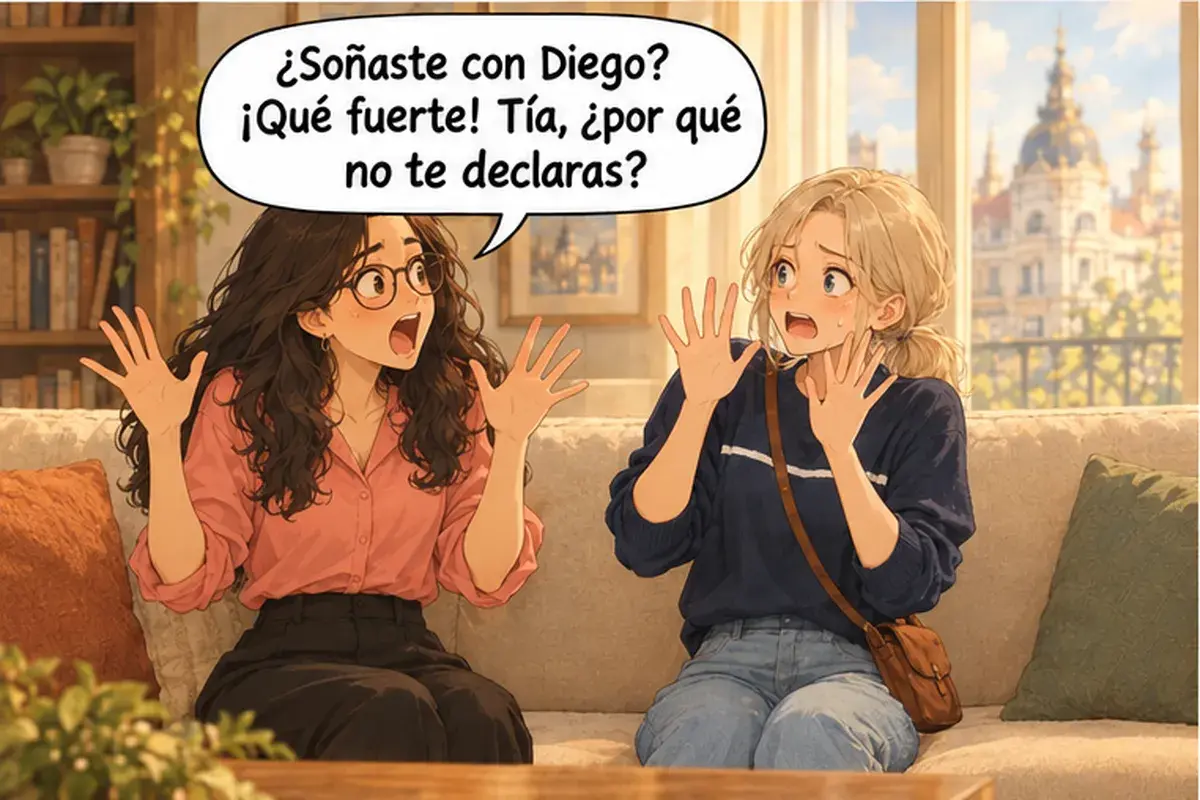
¿Soñaste con Diego? ¡Qué fuerte! Tía, ¿por qué no te declaras?
You dreamed about Diego? Wow! Girl, why don't you tell him you love him?
- Ana
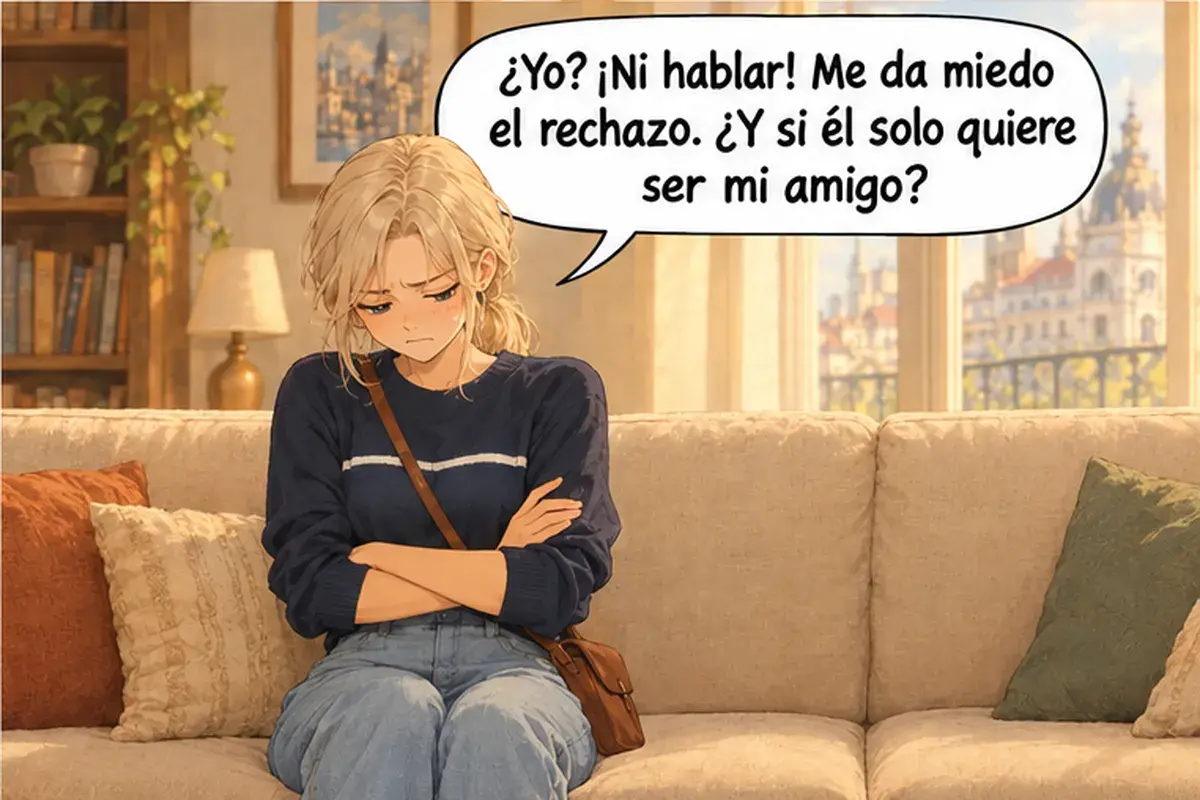
¿Yo? ¡Ni hablar! Me da miedo el rechazo. ¿Y si él solo quiere ser mi amigo?
Me? No way! Rejection scares me. What if he just wants to be my friend?
- Lucía
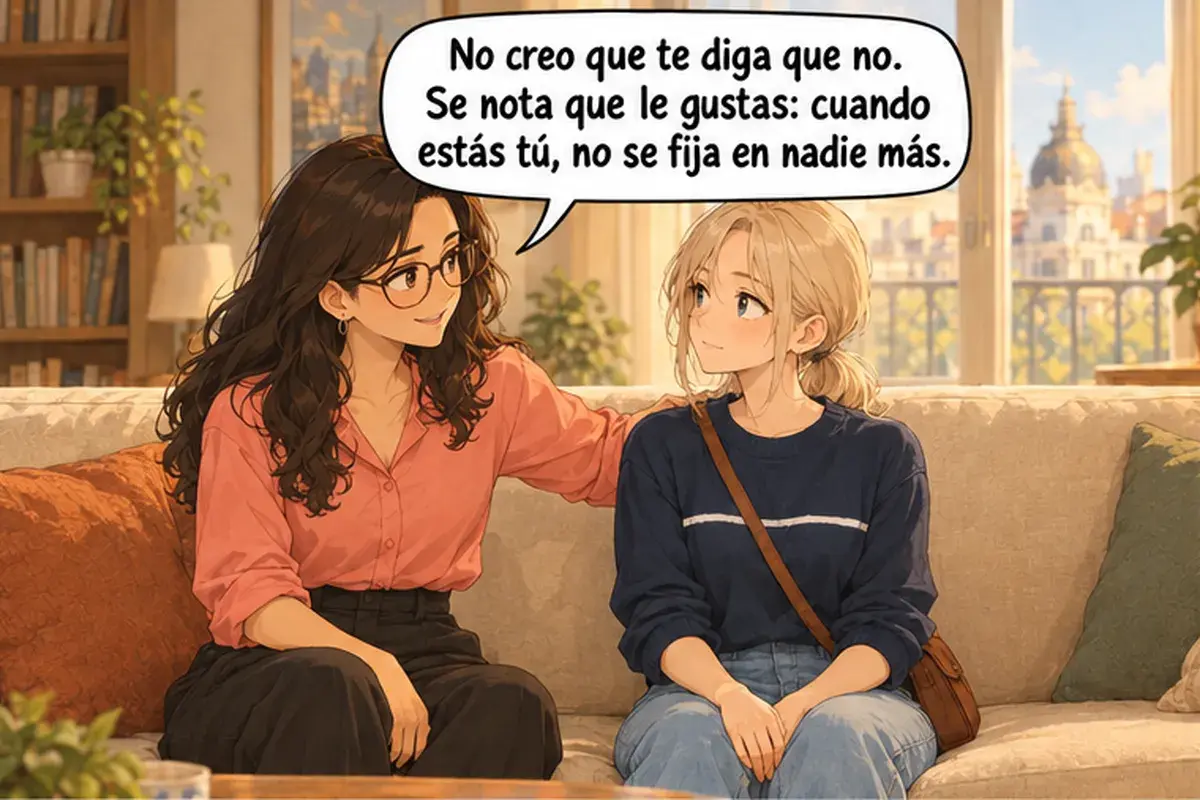
No creo que te diga que no. Se nota que le gustas: cuando estás tú, no se fija en nadie más.
I don't think he'll say no to you. You can tell he likes you: when you're around, he doesn't notice anyone else.

- Ana
Es que no confío en mis sentimientos. Hoy estoy segura y mañana tengo mil dudas.
It's just that I don't trust my feelings. Today I'm sure and tomorrow I have a thousand doubts (woman speaking).

- Lucía
¡Qué poco romántica eres! Confía en mí, que de esto sé un poco.
You're so unromantic! Trust me, I know a bit about this (to a woman).

- Ana
Mira quién habla. ¿No dices siempre que tu media naranja se niega a bailar contigo?
Look who's talking. Don't you always say your other half refuses to dance with you?
- Lucía
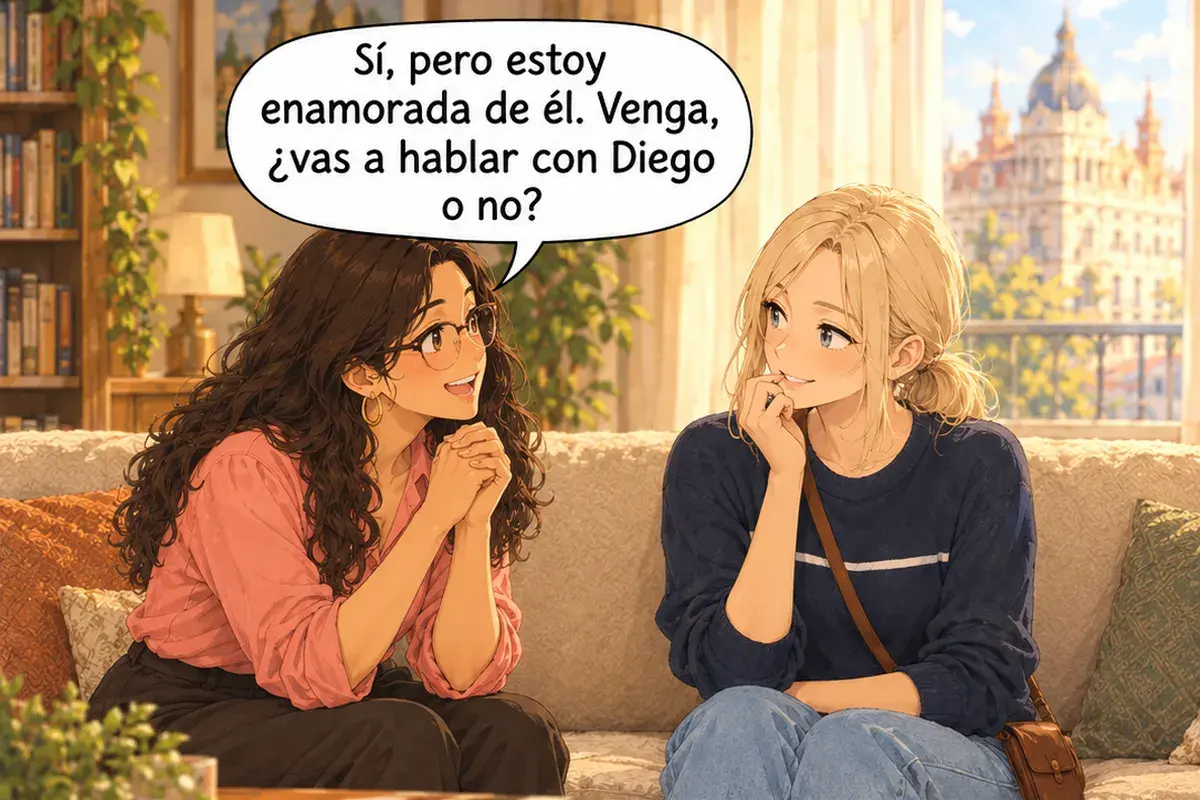
Sí, pero estoy enamorada de él. Venga, ¿vas a hablar con Diego o no?
Yes, but I'm in love with him (woman speaking). Come on, are you going to talk to Diego or not?
- Ana
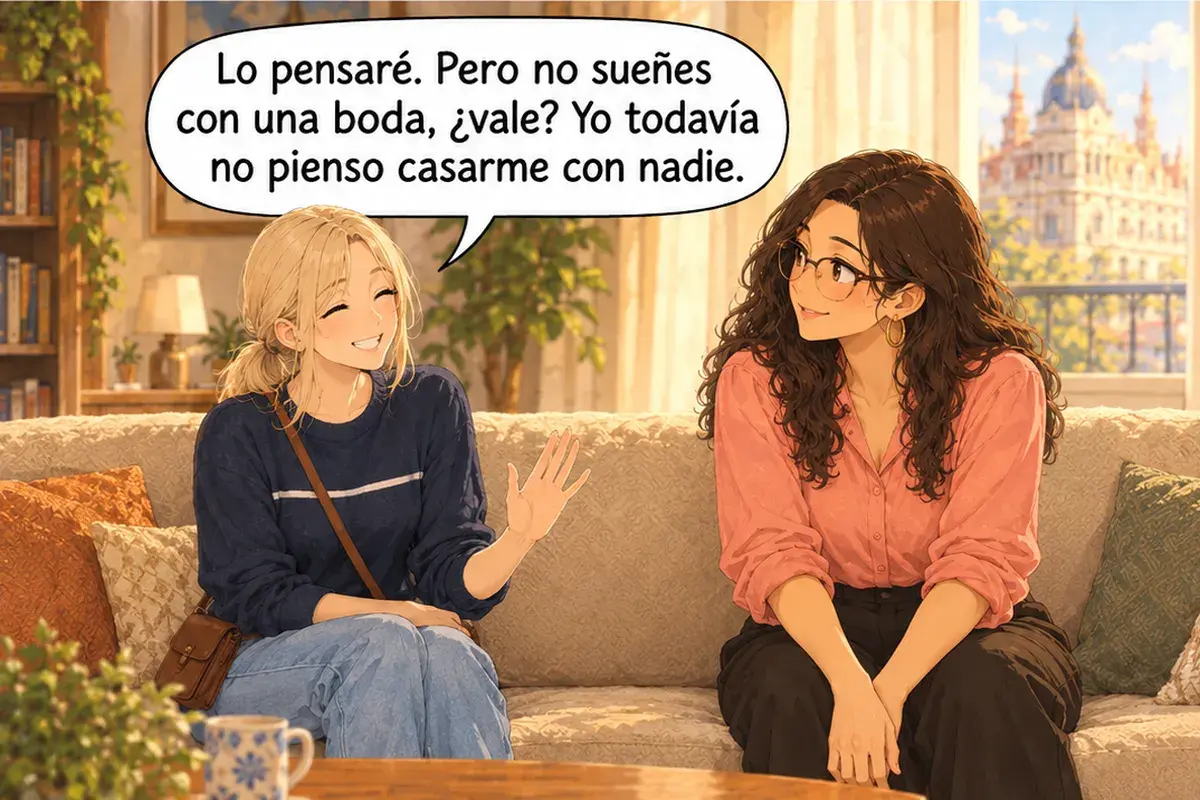
Lo pensaré. Pero no sueñes con una boda, ¿vale? Yo todavía no pienso casarme con nadie.
I'll think about it. But don't dream about a wedding, OK? I'm not planning to marry anyone yet.
Grammar for this text
A verb and its preposition. The whole conversation runs on verbs like these: pienso en él — "I think about him", me fijé en su mirada — "I noticed the look in his eyes", contar con él — "to count on him", me acuerdo de él — "I remember him", soñé con él — "I dreamed about him", casarme con nadie — "(not) marry anyone".
A question and a short answer start with the same preposition: ¿En qué piensas? — En nada… en alguien.
Pensar without en. No pienso casarme — "I'm not planning to get married": pensar + infinitive means you intend to do something. Lo pensaré — "I'll think about it".
You already know these. No creo que te diga — after no creo que comes the subjunctive (unit 24). No sueñes — "don't dream" (unit 16). Nunca me había fijado — "I'd never noticed" (unit 9).
Se nota que le gustas — "you can tell he likes you". Literally "you please him": you are the one who is liked, so the verb is in the tú form — gustas; le means "to him".
Colloquial. Media naranja — "other half", playful. Mira quién habla — "look who's talking". Tía here is "girl", said to a friend, not "aunt".
Words and grammar of the unit: Talk about falling in love.
Learn the words from the texts with flashcards
In the app, you can tap any word in a text to see its translation, forms and examples, and new words stick with flashcards. 15 minutes a day.
Start for freeEverything is open for free. No card needed to sign up.