

Spanish dialogue with translation · B1 · 18 lines
¿Qué has decidido? What have you decided?
Comic · 18 panels

- Lucía
Ana, no aguanto más esta incertidumbre. ¿Te marchas a Madrid o te quedas?
Ana, I can't stand this uncertainty anymore. Are you leaving for Madrid or are you staying?
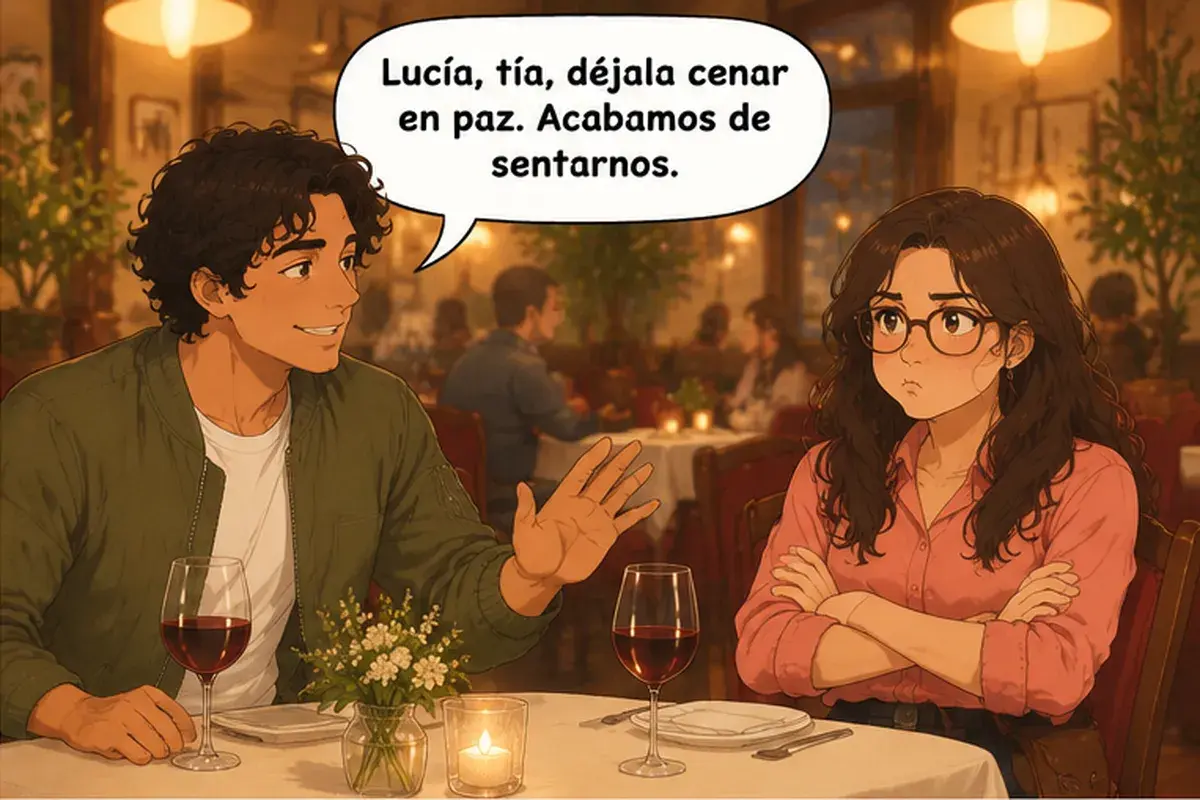
- Pablo
Lucía, tía, déjala cenar en paz. Acabamos de sentarnos.
Lucía, come on, let her have dinner in peace. We just sat down.
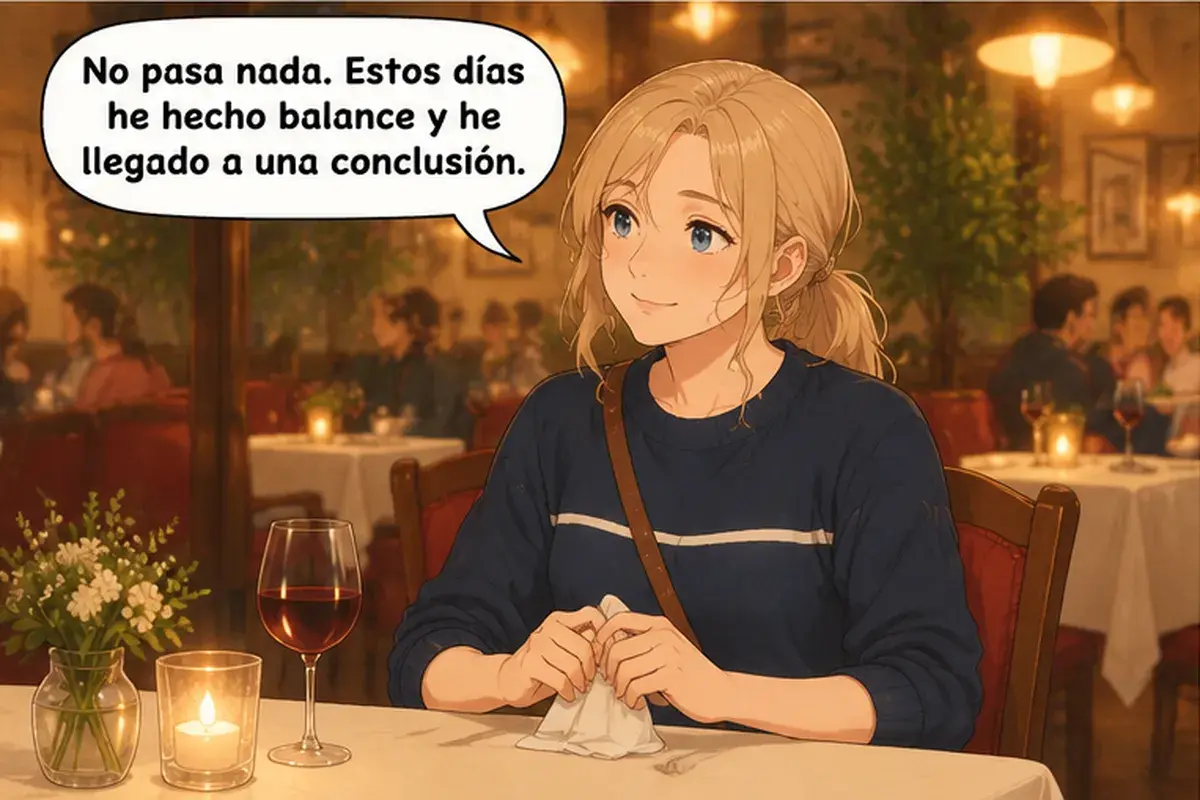
- Ana
No pasa nada. Estos días he hecho balance y he llegado a una conclusión.
It's OK. These past few days I've taken stock, and I've come to a conclusion.

- Sergio
Yo apuesto a que te vas. No creo que digas que no a una oferta así.
I bet you're leaving. I don't think you'll say no to an offer like that.
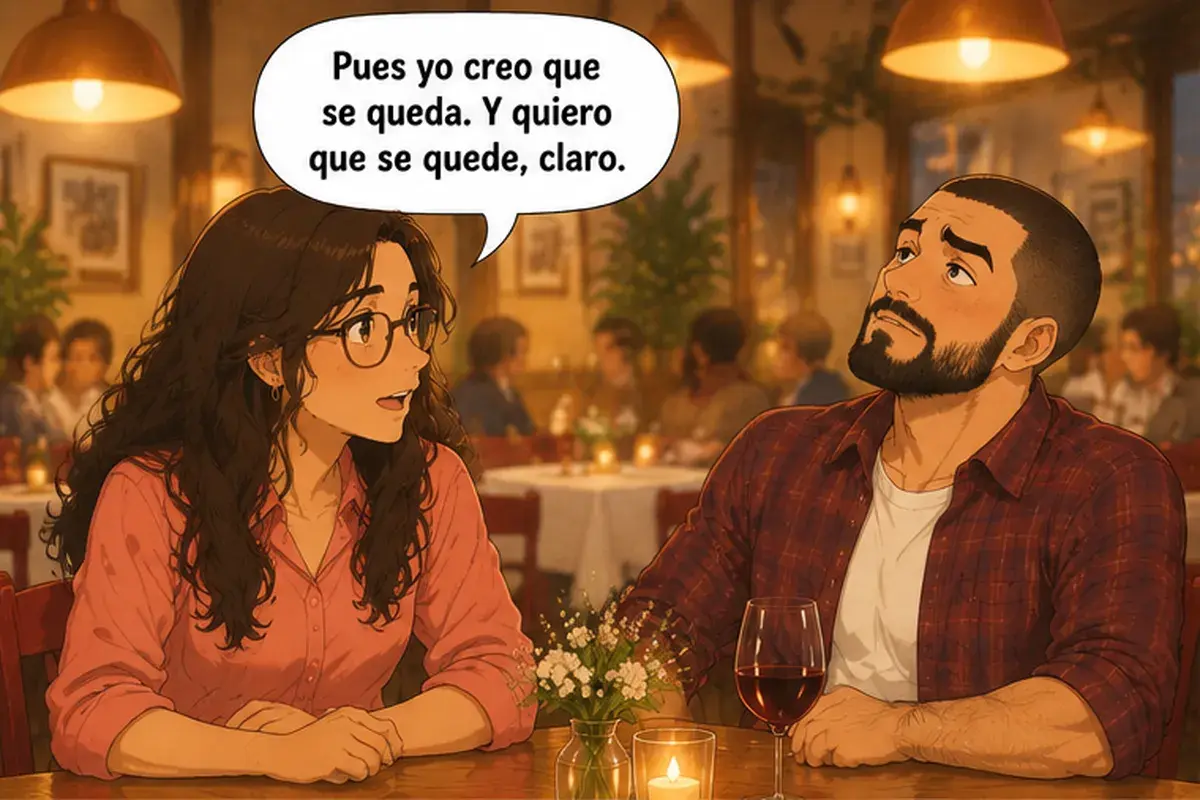
- Lucía
Pues yo creo que se queda. Y quiero que se quede, claro.
Well, I think she's staying. And I want her to stay, of course.

- Ana
La oferta era muy buena. Mi mente decía «Madrid», pero en el fondo yo ya sabía la respuesta.
The offer was very good. My mind was saying "Madrid", but deep down I already knew the answer.

- Pablo
¡Pues dilo ya, porfa!
Well, just say it already, please!

- Ana
Me quedo, definitivamente. Esta mañana he llamado a Madrid para dar las gracias y decir que no.
I'm staying, for good. This morning I called Madrid to thank them and say no.

- Lucía
¡Lo sabía! ¡Me alegro de que te quedes con nosotros!
I knew it! I'm so glad you're staying with us!
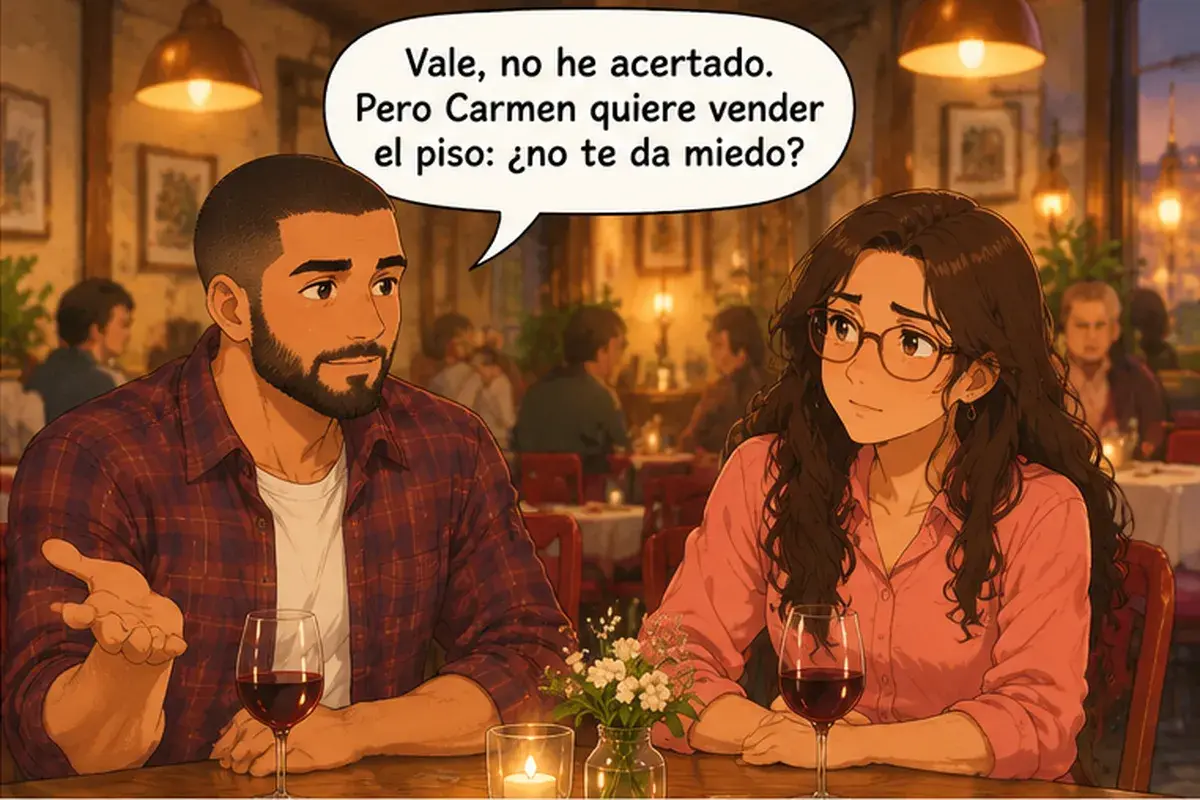
- Sergio
Vale, no he acertado. Pero Carmen quiere vender el piso: ¿no te da miedo?
OK, I didn't get it right. But Carmen wants to sell the apartment: doesn't that scare you?

- Ana
Sí, pero cuando tengo miedo, os llamo a vosotros. Y cuando encuentre otro piso, seréis los primeros en verlo.
Yes, but when I'm scared, I call you. And when I find another apartment, you'll be the first to see it (to several people).

- Pablo
Sea como sea, hace falta valor para decir que no a Madrid.
Either way, it takes courage to say no to Madrid.

- Ana
No sé si es un acierto o un error. Pero no quiero empezar de cero otra vez.
I don't know if it's the right move or a mistake. But I don't want to start from scratch again.
- Sergio
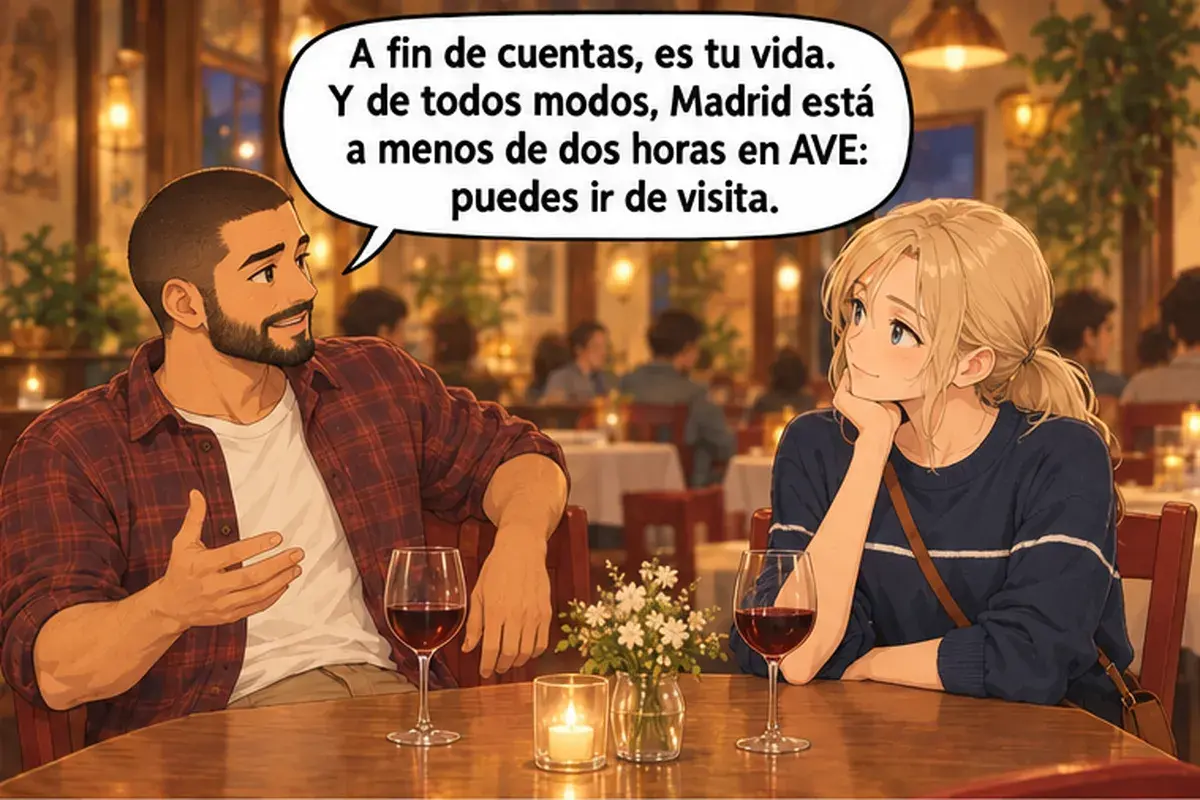
A fin de cuentas, es tu vida. Y de todos modos, Madrid está a menos de dos horas en AVE: puedes ir de visita.
At the end of the day, it's your life. And anyway, Madrid is less than two hours away on the AVE: you can go visit.
- Ana
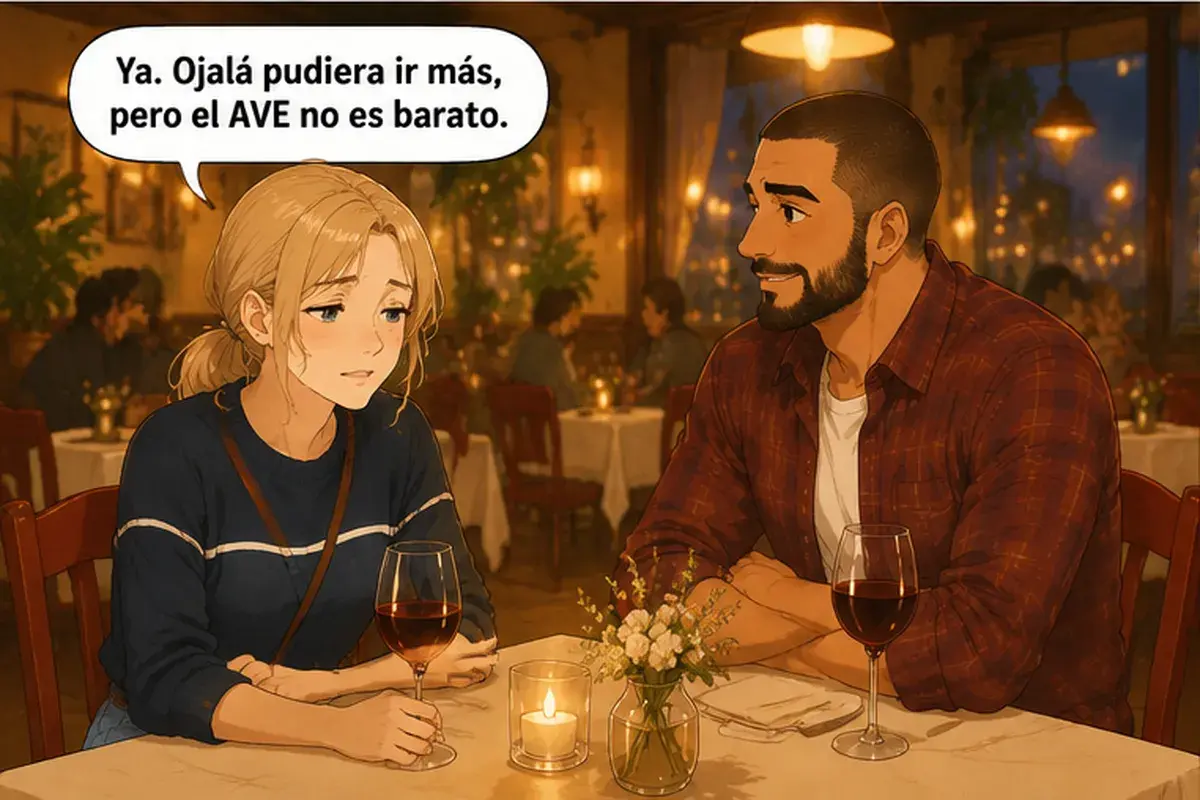
Ya. Ojalá pudiera ir más, pero el AVE no es barato.
I know. I wish I could go more often, but the AVE isn't cheap.

- Lucía
Pase lo que pase, cuenta con nosotros. Te ayudamos a buscar piso para que no te agobies.
Whatever happens, count on us. We'll help you look for an apartment so you don't get stressed out.
- Pablo
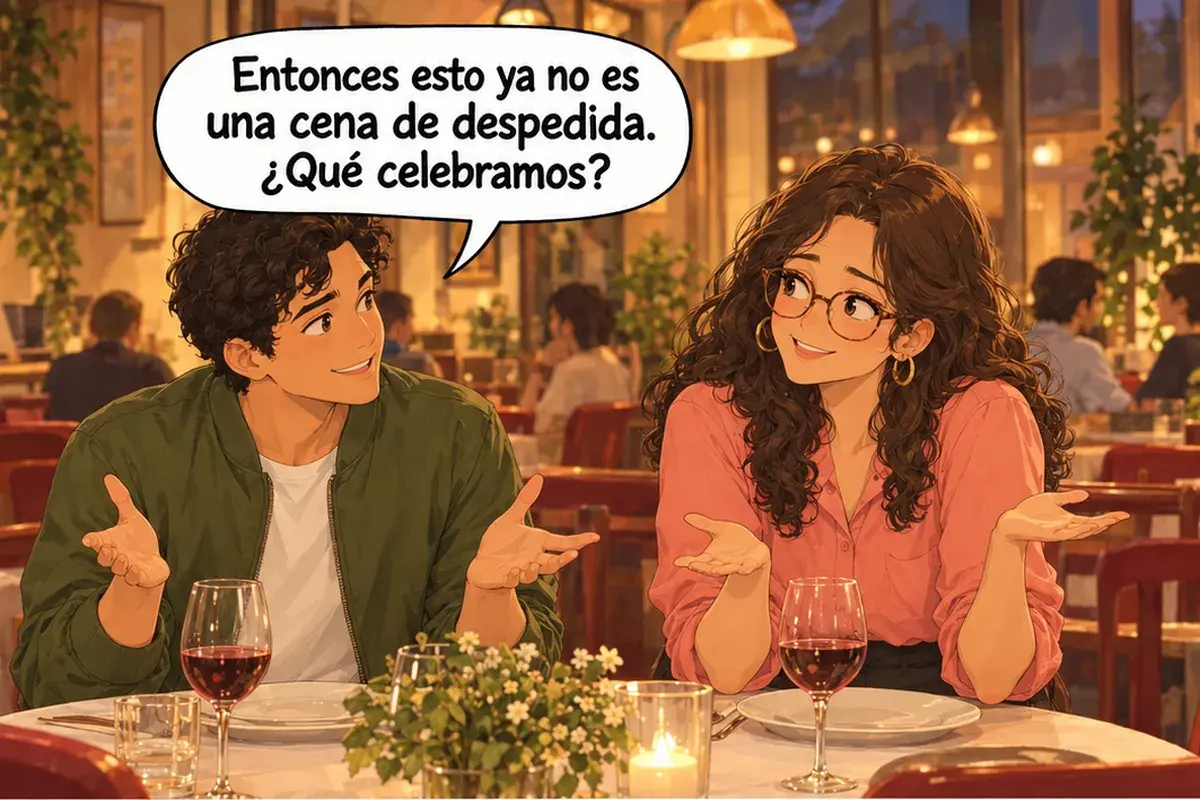
Entonces esto ya no es una cena de despedida. ¿Qué celebramos?
So this isn't a farewell dinner anymore. What are we celebrating?

- Ana
¡Que me quedo! Perdone, cuando pueda, ¿nos trae cuatro copas de vino?
That I'm staying! Excuse me, when you can, will you bring us four glasses of wine? (formal)
Grammar for this text
The normal form and the subjunctive side by side:
- Yo creo que se queda. Y quiero que se quede: an opinion → normal form; a wish → subjunctive.
- No creo que digas que no: doubt → subjunctive.
- Cuando tengo miedo, os llamo: it always happens like this → normal form. Cuando encuentre otro piso: it hasn't happened yet → subjunctive. The same goes for the polite cuando pueda, "when you can" (formal): that's how you ask a waiter.
- para dar las gracias: Ana herself calls and thanks them → infinitive. para que no te agobies: the friends are helping, and it's Ana who shouldn't panic → para que.
Set phrases: pase lo que pase ("whatever happens"), sea como sea ("either way"). Ojalá pudiera means "I wish I could": pudiera comes from poder, and it's the imperfect subjunctive (its stem comes from pudieron). You'll study it in detail at B2, unit 13; for now, learn it as a set phrase. Me alegro de que (unit 18) is a set phrase too.
AVE is Spain's high-speed train: from Valencia to Madrid it takes less than two hours.
Words and grammar of the unit: Explain a hard decision.
Learn the words from the texts with flashcards
In the app, you can tap any word in a text to see its translation, forms and examples, and new words stick with flashcards. 15 minutes a day.
Start for freeEverything is open for free. No card needed to sign up.