

Spanish story with translation · A2 · 12 lines
¿Quién me perseguía? Who was chasing me?
Comic · 7 panels

El sábado volvía a casa sola. Era la una de la madrugada y la calle estaba vacía.
On Saturday I was walking home alone. It was one in the morning and the street was empty (woman speaking).

De pronto oí un ruido detrás de mí y tuve miedo.
Suddenly I heard a noise behind me and I got scared.
Caminé más rápido, pero el ruido me seguía.
I walked faster, but the noise kept following me.

¡Alguien me perseguía! Corrí hasta mi casa: solo quería huir de allí.
Someone was chasing me! I ran all the way home: I just wanted to get away from there.
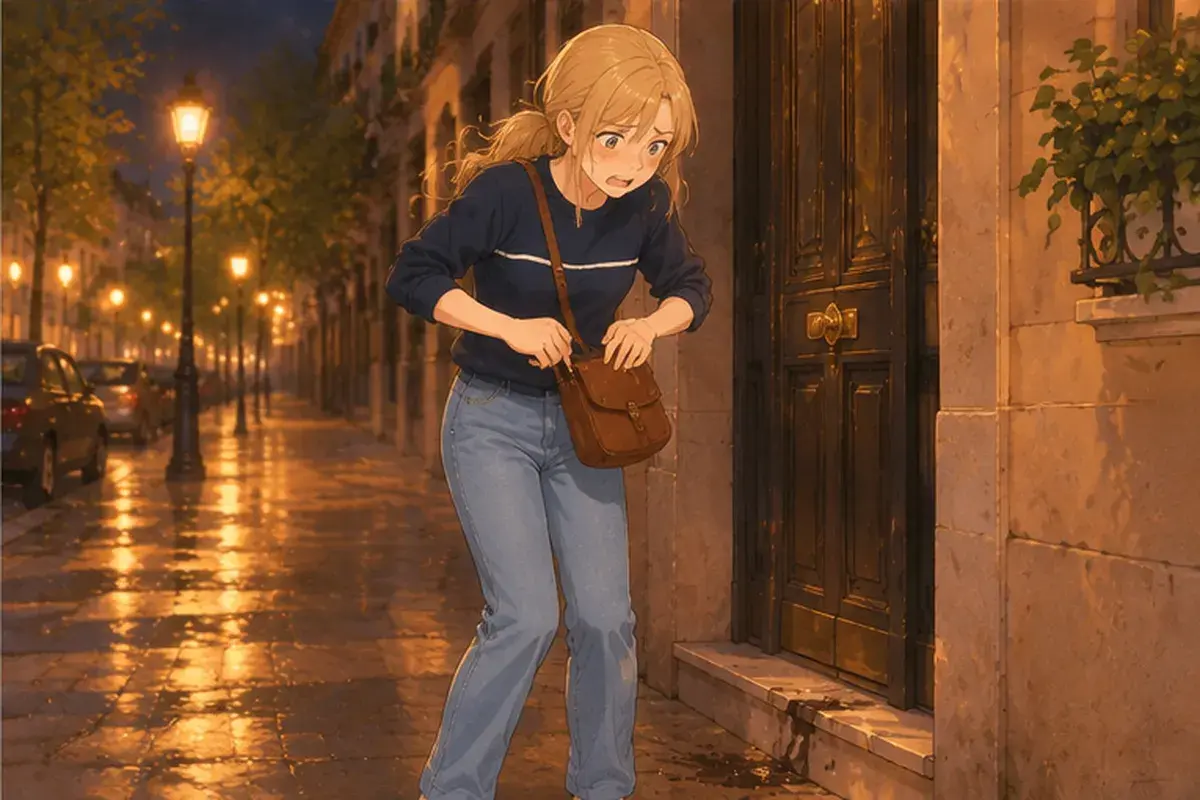
Delante de la puerta busqué las llaves, pero me temblaban las manos.
At the door I looked for my keys, but my hands were shaking.
Entonces sentí algo frío y mojado en la pierna y di un grito.
Then I felt something cold and wet on my leg and I let out a scream.

Miré hacia abajo y vi… ¡un perrito!
I looked down and saw… a little dog!
Era pequeño, estaba empapado y miraba mi bolso.
It was small, it was soaking wet and it was looking at my bag.
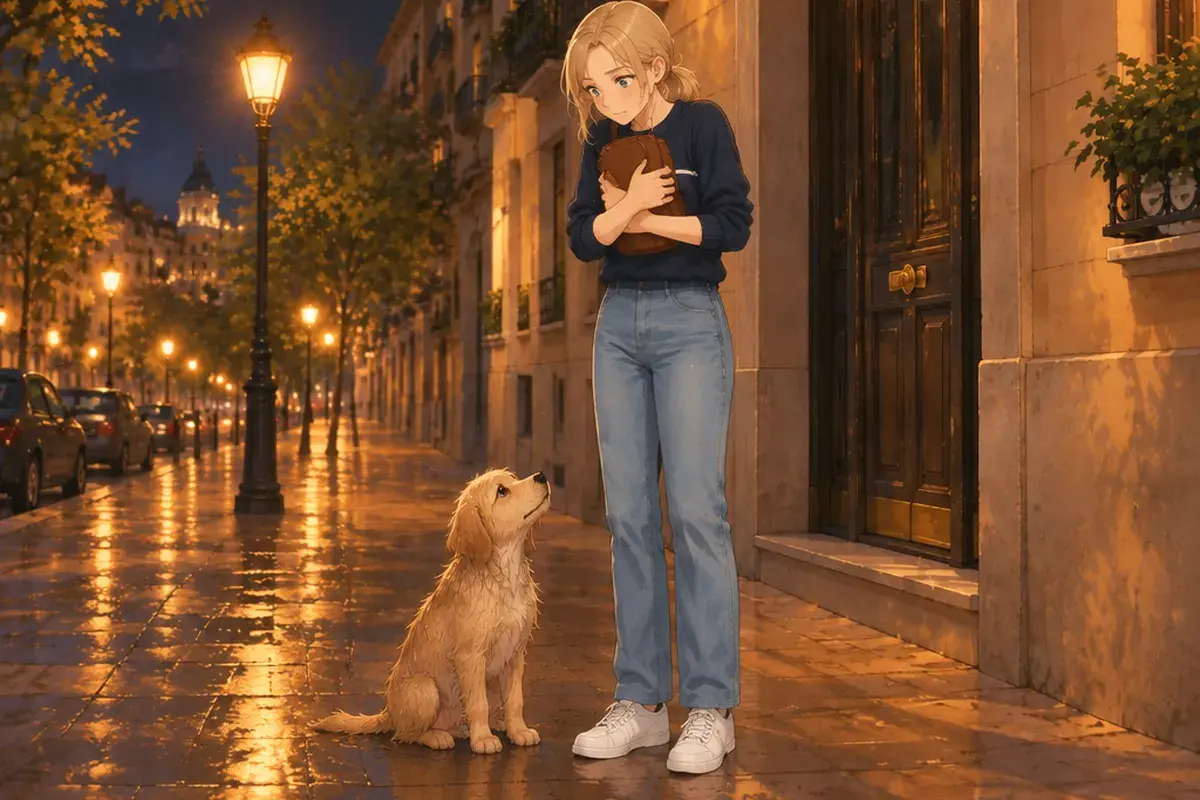
Claro: en el bolso llevaba un bocadillo de jamón.
Of course: I had a ham sandwich in my bag.
Escondí el bocadillo, pero el perrito seguía allí.
I hid the sandwich, but the little dog was still there.

Suspiré y le di un trozo de jamón.
I sighed and gave it a piece of ham.
Ahora me espera todas las noches en la misma esquina.
Now it waits for me every night on the same corner.
Grammar for this text
What went on and what happened. El ruido me seguía, alguien me perseguía, me temblaban las manos went on for a while, so they're in the imperfect. Oí un ruido, corrí, sentí algo frío, di un grito happened at one moment, so they're in the preterite.
Tuve miedo. Tenía miedo means "I was afraid" (a state, the background). Tuve miedo means "I got scared": the fear came at that moment, so it's an event.
Dar un grito means "to scream", literally "to give a scream": di un grito.
Me temblaban las manos means "my hands were shaking". Spanish doesn't say "my hands" here but me + las manos, just like me duele la cabeza, "my head hurts" (A1, unit 12).
Small things. Solo quería huir: after querer the next verb is in the infinitive, like "want to" in English. Le di un trozo — I gave it a piece (le means "to him" or "to it", unit 11). Seguía allí — it was still there, literally "it kept on being there".
Words and grammar of the unit: Tell a story about something that happened.
Learn the words from the texts with flashcards
In the app, you can tap any word in a text to see its translation, forms and examples, and new words stick with flashcards. 15 minutes a day.
Start for freeEverything is open for free. No card needed to sign up.