

Spanish story with translation · A2 · 16 lines
Niebla, un charco y una sorpresa Fog, a puddle and a surprise
Comic · 8 panels
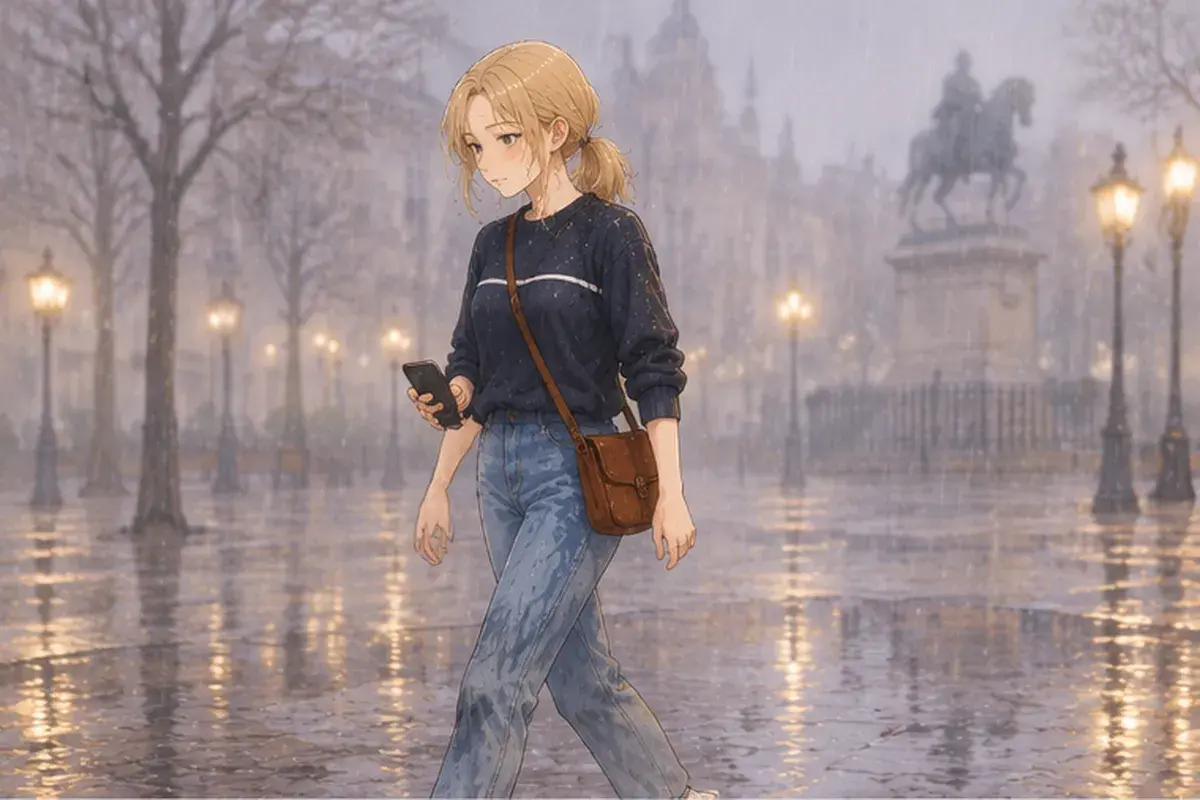
Ayer por la tarde volvía a casa a pie. Llovía y había niebla.
Yesterday afternoon I was walking home. It was raining and there was fog.
No llevaba paraguas y estaba empapada.
I wasn't carrying an umbrella and I was soaked (woman speaking).
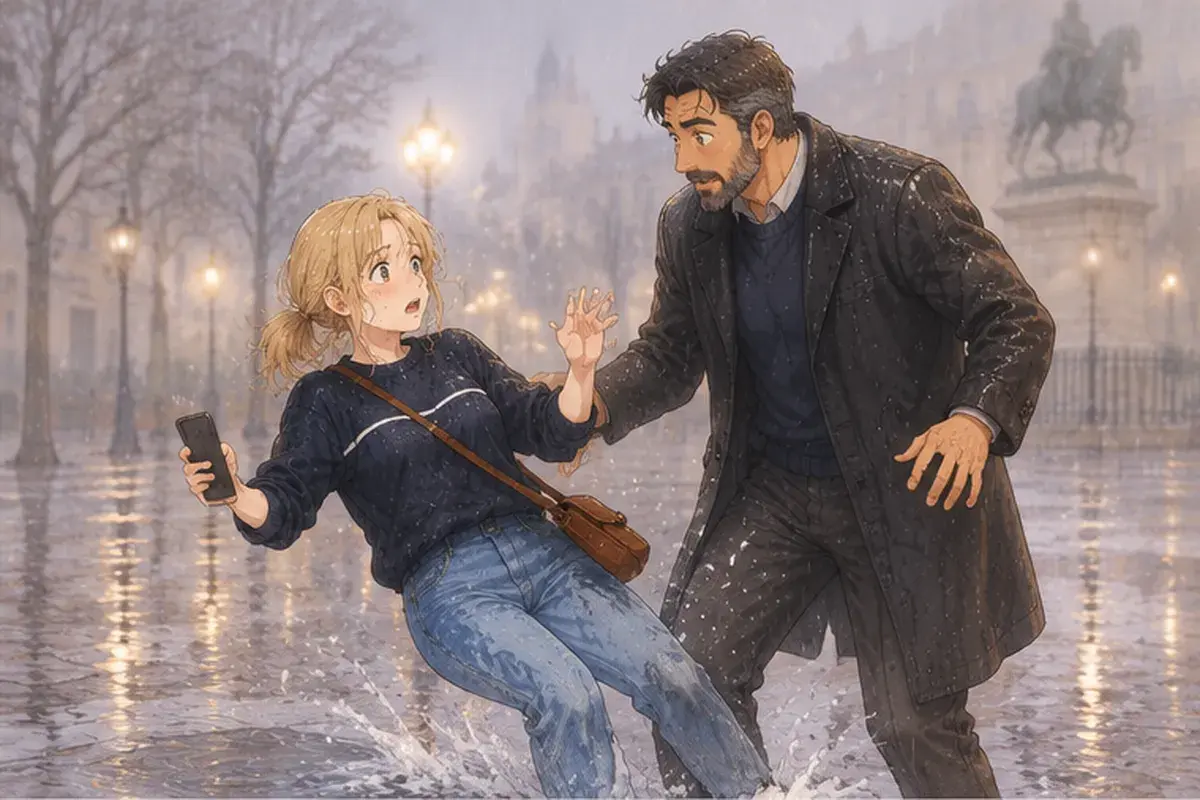
Mientras cruzaba la plaza, miraba el móvil.
While I was crossing the square, I was looking at my phone.
De pronto resbalé en un charco y tropecé con un desconocido.
Suddenly I slipped in a puddle and bumped into a stranger.
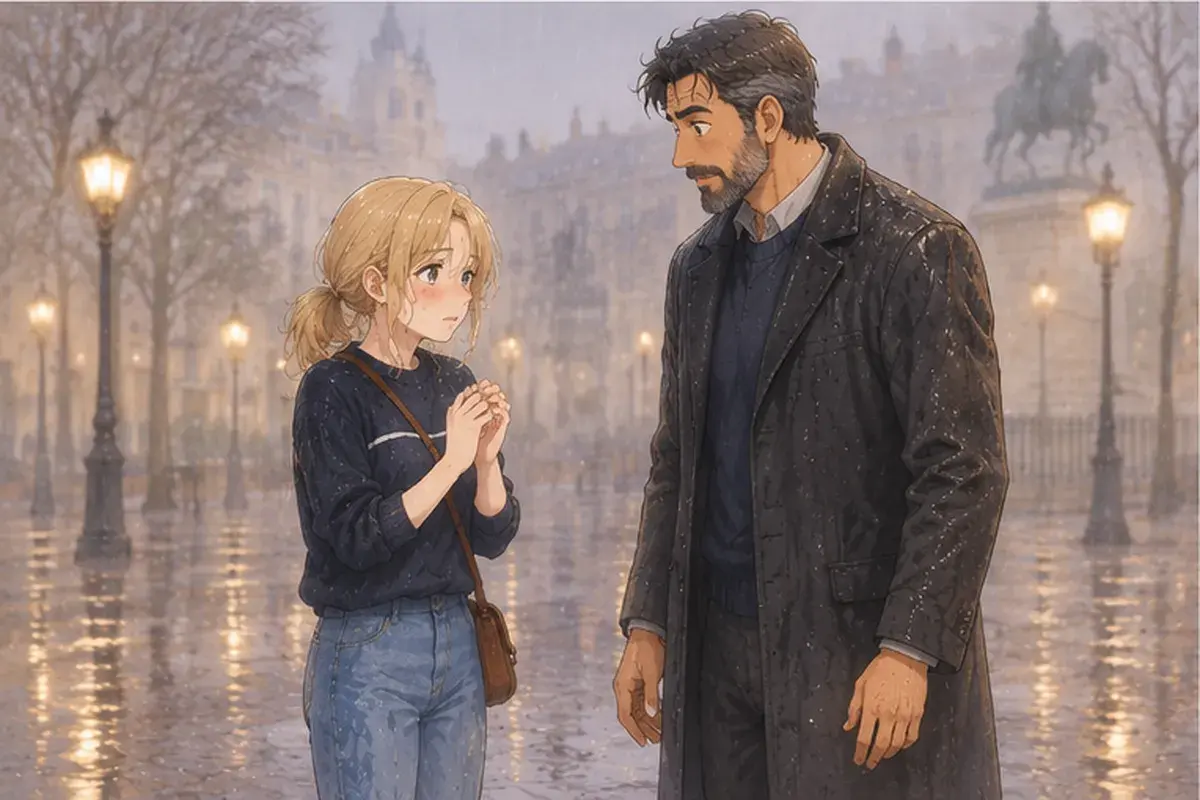
«¡Perdón! ¡Lo siento mucho!», grité. Estaba muy avergonzada.
"Sorry! I'm so sorry!" I shouted. I was very embarrassed (woman speaking).
El hombre era alto, tenía barba y llevaba un abrigo mojado.
The man was tall, he had a beard and he was wearing a wet coat.

Con la niebla no veía bien su cara.
Because of the fog, I couldn't see his face well.
Él me miró, se acercó un poco y me saludó: «¿Ana? ¿Eres tú, Ana?».
He looked at me, came a little closer and said hello: "Ana? Is that you, Ana?"

Me sorprendió mucho. ¿Un desconocido sabía mi nombre?
That really surprised me. A stranger knew my name?
Entonces lo reconocí: ¡era Javier, mi antiguo profesor de español!
Then I recognized him: it was Javier, my former Spanish teacher!
«¡Qué casualidad! ¿Qué haces aquí?», pregunté.
"What a coincidence! What are you doing here?" I asked.
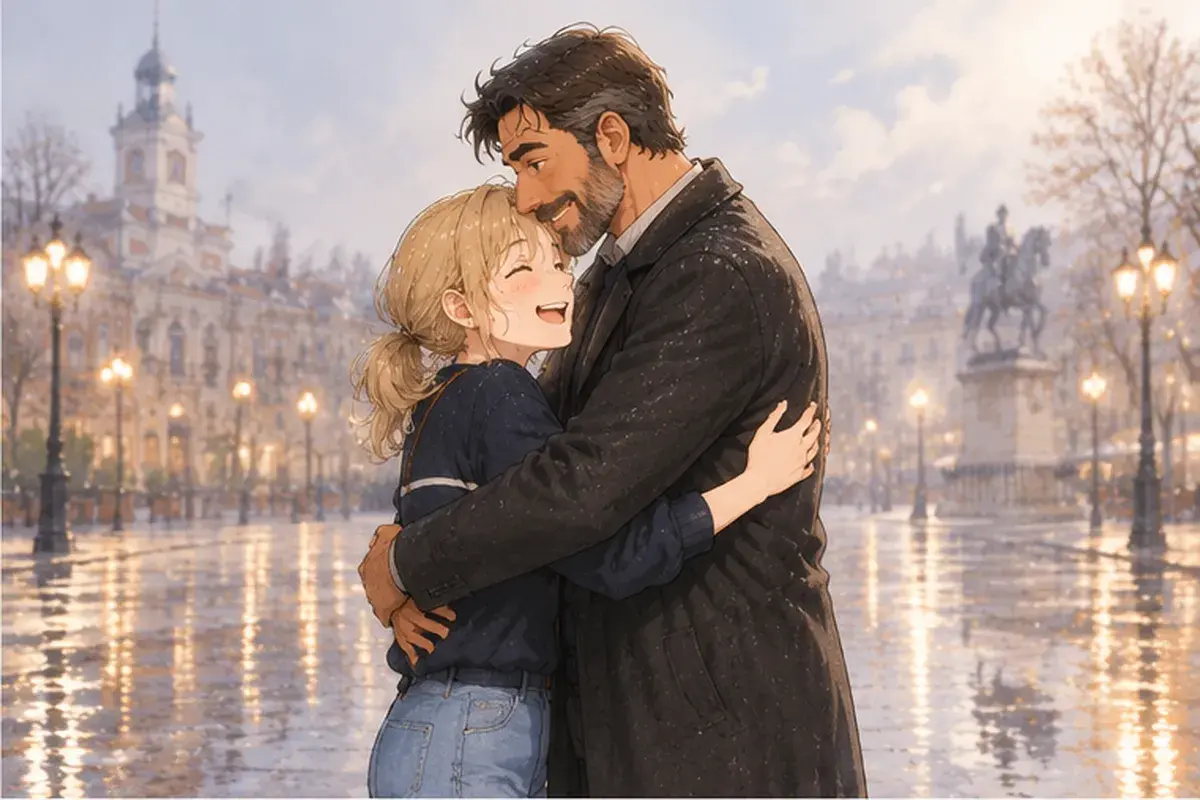
«Soy de Valencia. Volví hace un mes», explicó, y me abrazó.
"I'm from Valencia. I came back a month ago," he explained, and he hugged me.

En ese momento paró de llover y apareció el sol.
At that moment it stopped raining and the sun appeared.
Fuimos a un bar, tomamos un chocolate caliente y charlamos dos horas.
We went to a bar, had a hot chocolate and chatted for two hours.

Y otra casualidad: ¡resulta que Javier vive en mi barrio!
And another coincidence: it turns out Javier lives in my neighborhood!
Llegué a casa con frío, pero muy contenta.
I got home cold, but very happy (woman speaking).
Grammar for this text
Background first, then events. The first three lines are the picture, all in the imperfect: volvía, llovía, había niebla, no llevaba paraguas, estaba empapada, miraba el móvil. After de pronto the events start, and the tense changes to the preterite: resbalé, tropecé, grité, me saludó, lo reconocí.
Describing a person is background too: era alto, tenía barba, llevaba un abrigo mojado.
A named length of time takes the preterite. Charlamos dos horas means "we chatted for two hours". The chat lasted a while, but the time is named and it's over, so Spanish uses the preterite.
Small things. Lo reconocí — I recognized him (lo means "him", unit 5). Volví hace un mes — I came back a month ago. Fuimos here comes from ir: we went. In tropecé (from tropezar) only the spelling changes: z becomes c before e, and the sound stays the same. Paró de llover — it stopped raining: parar de + infinitive means to stop doing something. Con la niebla — because of the fog, literally "with the fog".
Words and grammar of the unit: Tell a story about something that happened.
Learn the words from the texts with flashcards
In the app, you can tap any word in a text to see its translation, forms and examples, and new words stick with flashcards. 15 minutes a day.
Start for freeEverything is open for free. No card needed to sign up.