

Spanish story with translation · A2 · 15 lines
¿De qué trata la película? What's the movie about?
Comic · 9 panels

Lucía, ayer fui al cine con Pablo. Me preguntas de qué trata la película.
Lucía, yesterday I went to the movies with Pablo. You're asking me what the movie is about.
Te cuento el argumento, pero sin el final, tranquila.
I'll tell you the plot, but without the ending, don't worry (to a woman).

El protagonista se llama Marcos. No es un héroe: es un tipo simpático, camarero en un bar de Madrid.
The main character's name is Marcos. He's not a hero: he's a nice guy, a waiter at a bar in Madrid.
Un día conoce a su nueva vecina, Elena, y se enamora de ella.
One day he meets his new neighbor, Elena, and falls in love with her.

Le lleva café, le escribe mensajes y le cuenta chistes malos.
He brings her coffee, writes her messages and tells her bad jokes.
A Elena le dan risa, pero ella nunca le habla de su vida.
They make Elena laugh, but she never talks to him about her life.
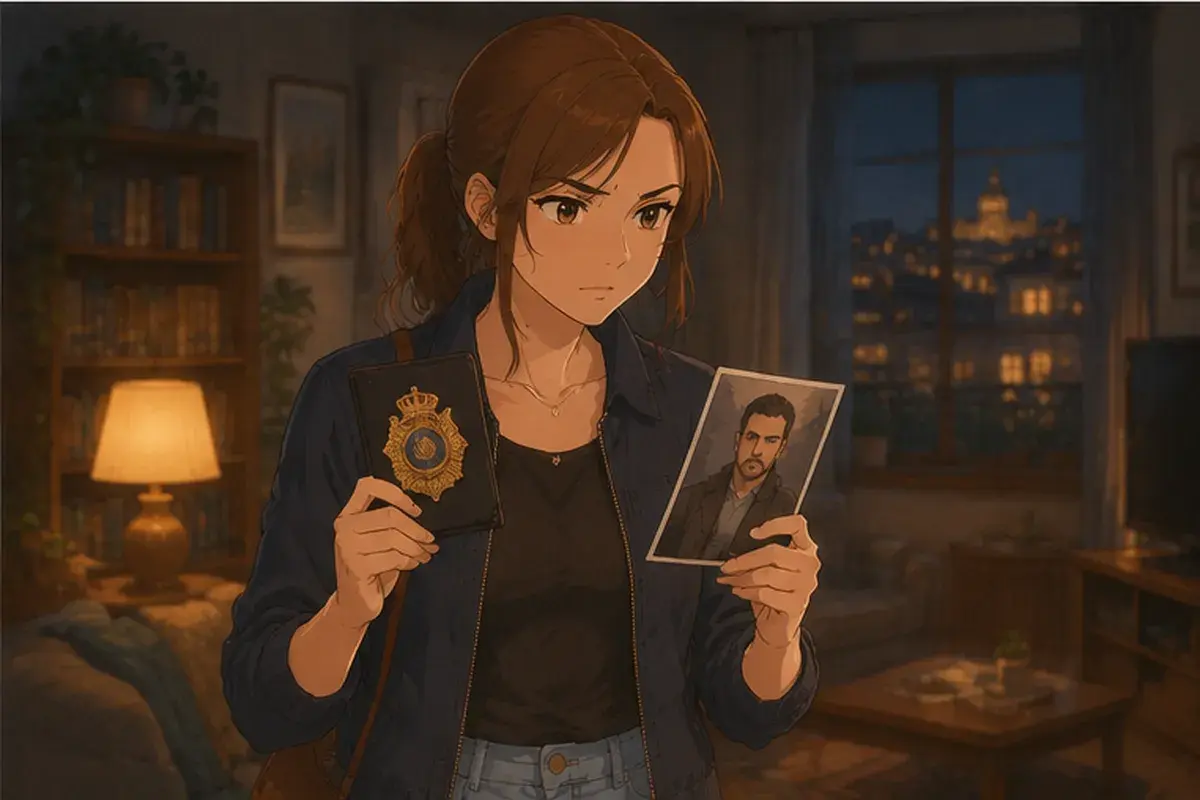
Elena tiene un secreto: es policía y está buscando a un hombre muy malo.
Elena has a secret: she's a police officer and she's looking for a very bad man.
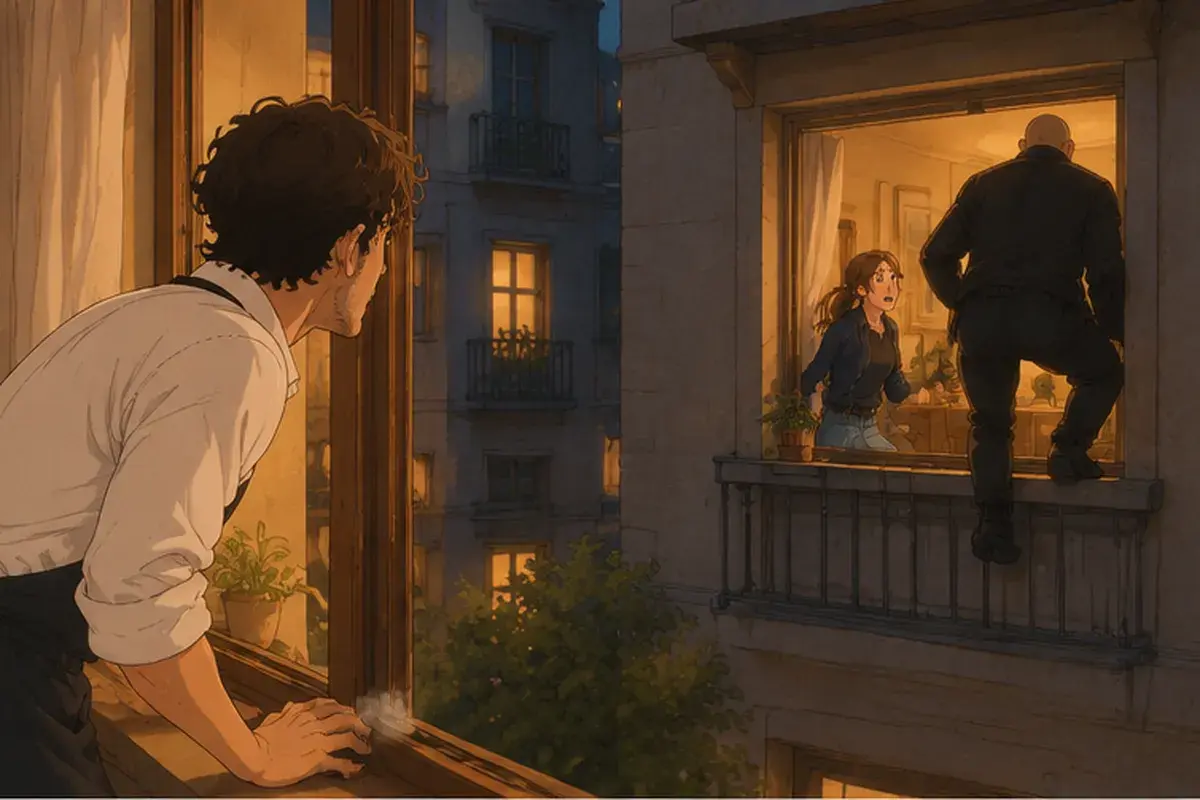
Una noche ese hombre entra en el piso de Elena. Marcos lo ve desde su ventana.
One night that man gets into Elena's apartment. Marcos sees him from his window.
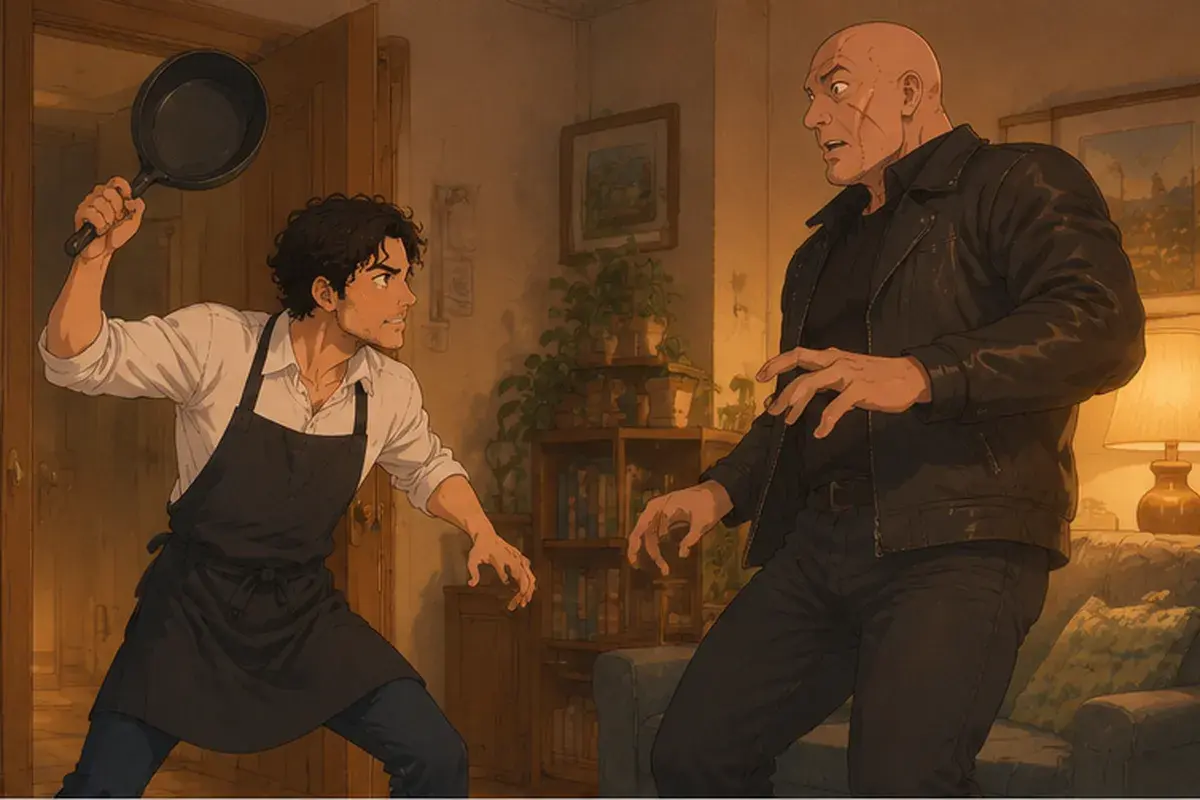
No lo piensa dos veces: coge una sartén y va a salvarla.
He doesn't think twice: he grabs a frying pan and goes to save her.
Es mi escena favorita: Marcos, solo y con una sartén, contra un tipo dos veces más grande que él.
It's my favorite scene: Marcos, alone and with a frying pan, against a guy twice as big as him.

Los dos escapan por la ventana, y Elena por fin le cuenta la verdad.
The two of them escape through the window, and Elena finally tells him the truth.

A Pablo le aburrió un poco: a él no le interesan las historias de amor.
It bored Pablo a little: he isn't interested in love stories.
A mí me encantó. El director es muy joven, y la banda sonora es increíble.
I loved it. The director is very young, and the soundtrack is incredible.

Además, al final ganan los buenos y no muere nadie.
Besides, in the end the good guys win and nobody dies.
¡No! ¡Te he contado el final! Lo siento: odio los spoilers… ¡y acabo de hacer uno!
No! I've told you the ending! I'm sorry: I hate spoilers… and I've just made one!
Grammar for this text
The plot is told in the present tense, just like in English: conoce a su nueva vecina, se enamora de ella, coge una sartén. But your own impressions are in the past: fui al cine, me encantó, a Pablo le aburrió.
Le: to him, to her. Le lleva café, le escribe mensajes, le cuenta chistes (he brings her coffee, writes her messages, tells her jokes). Elena por fin le cuenta la verdad (Elena finally tells him the truth). Le has no gender: the story shows who it is. Compare lo and la, "him" and "her" as a direct object: Marcos lo ve (Marcos sees him), va a salvarla (he goes to save her).
¿De qué trata? means "What's it about?" Se enamora de ella means "he falls in love with her": after enamorarse it's always de, where English says "with".
Le dan risa means "they make her laugh", literally "they give her laughter". It works like gustar.
Es policía means "she's a police officer": policía is both the police and a police officer. Like other jobs after ser, it has no article.
Acabo de hacer uno means "I've just made one": acabar de + infinitive (unit 10).
No lo piensa dos veces means "he doesn't think twice", just like in English; lo here means "it".
Words and grammar of the unit: Choose something to watch tonight.
Learn the words from the texts with flashcards
In the app, you can tap any word in a text to see its translation, forms and examples, and new words stick with flashcards. 15 minutes a day.
Start for freeEverything is open for free. No card needed to sign up.