

Spanish dialogue with translation · A2 · 15 lines
¿Cómo eras de pequeño? What were you like as a kid?
Comic · 15 panels
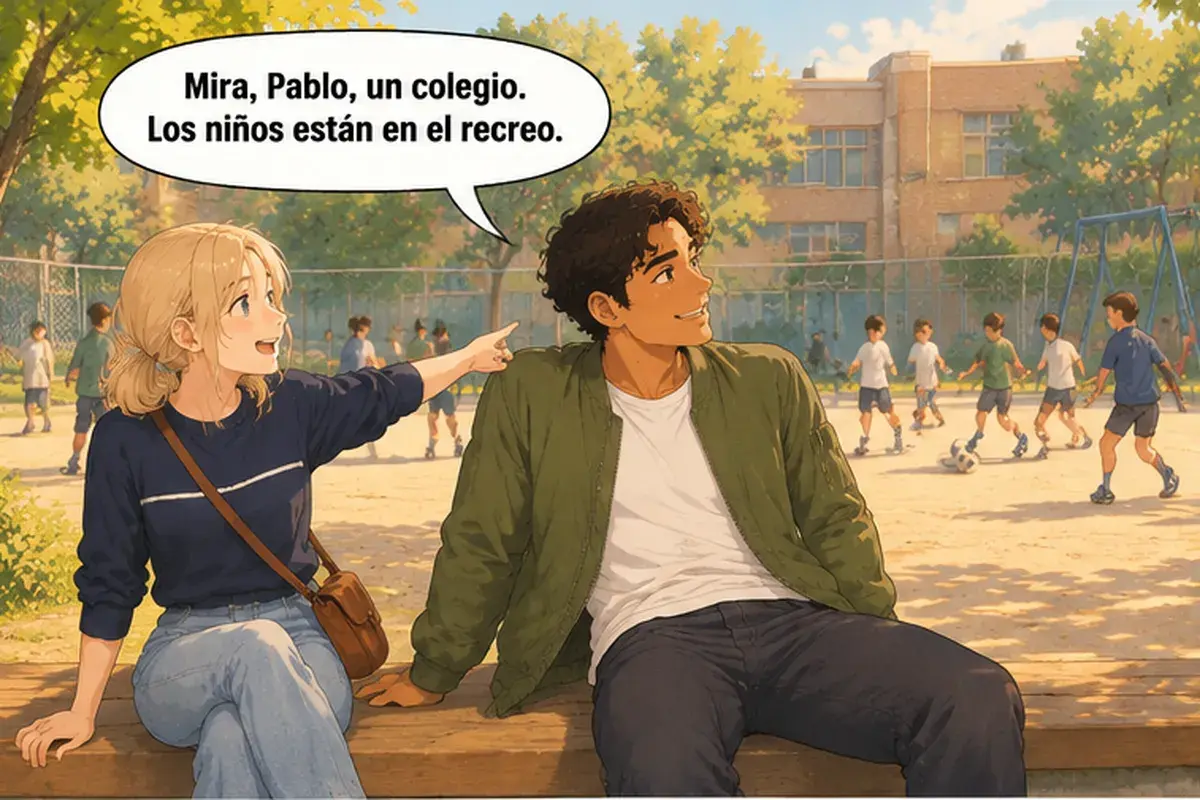
- Ana
Mira, Pablo, un colegio. Los niños están en el recreo.
Look, Pablo, a school. The kids are at recess.
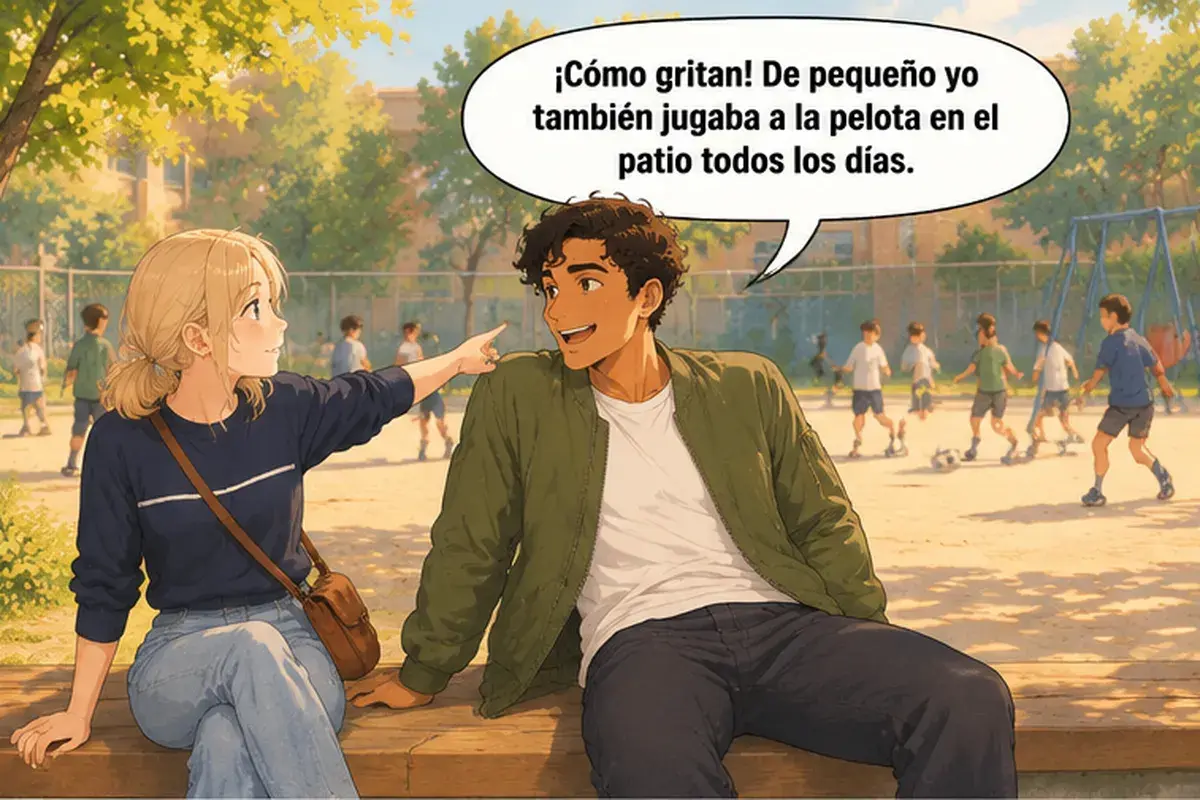
- Pablo
¡Cómo gritan! De pequeño yo también jugaba a la pelota en el patio todos los días.
How they scream! As a kid, I also used to play ball in the yard every day (man speaking).
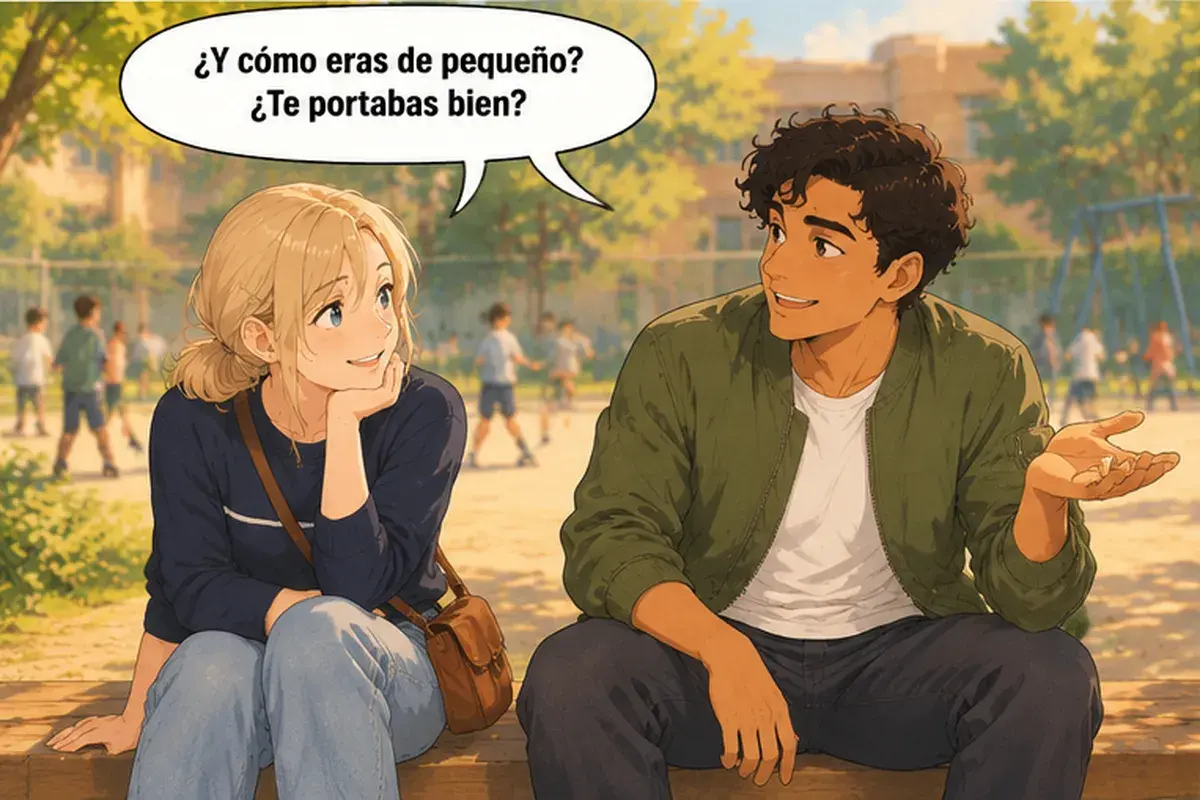
- Ana
¿Y cómo eras de pequeño? ¿Te portabas bien?
And what were you like as a kid? Did you behave? (to a man)
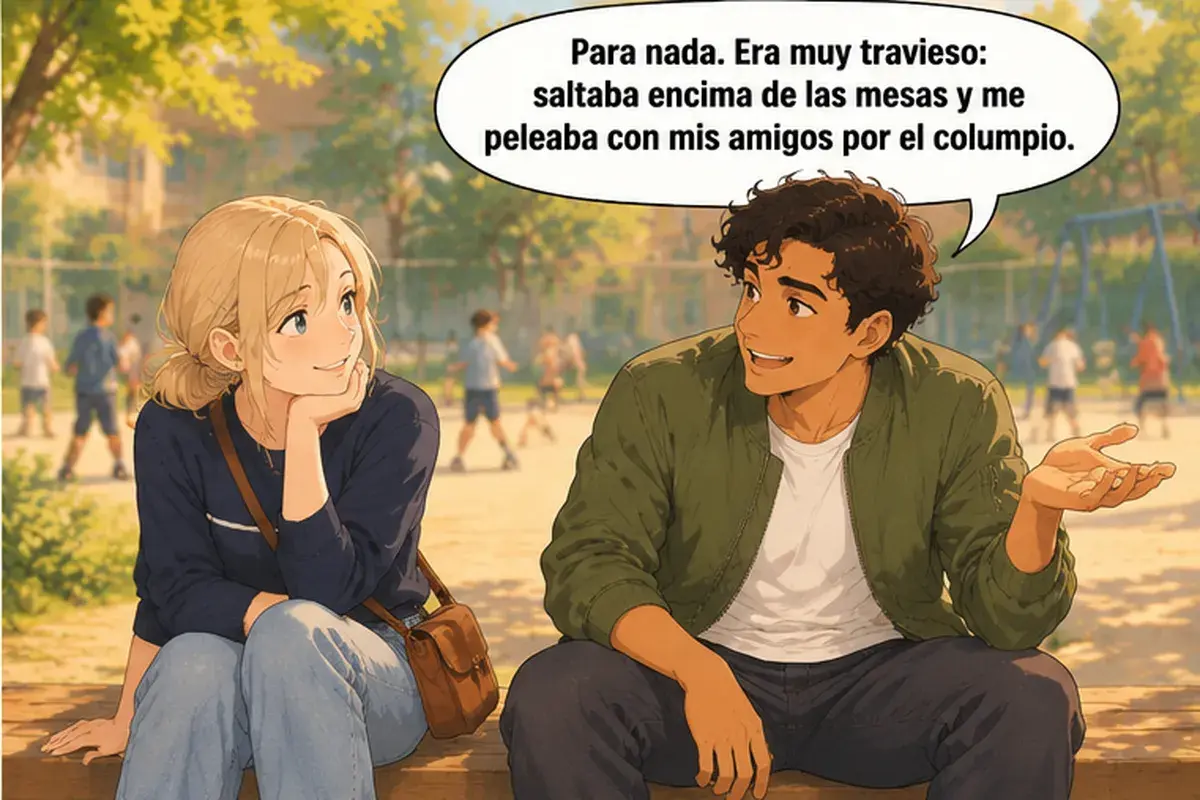
- Pablo
Para nada. Era muy travieso: saltaba encima de las mesas y me peleaba con mis amigos por el columpio.
Not at all. I was very naughty: I used to jump on the tables and fight with my friends over the swing (man speaking).
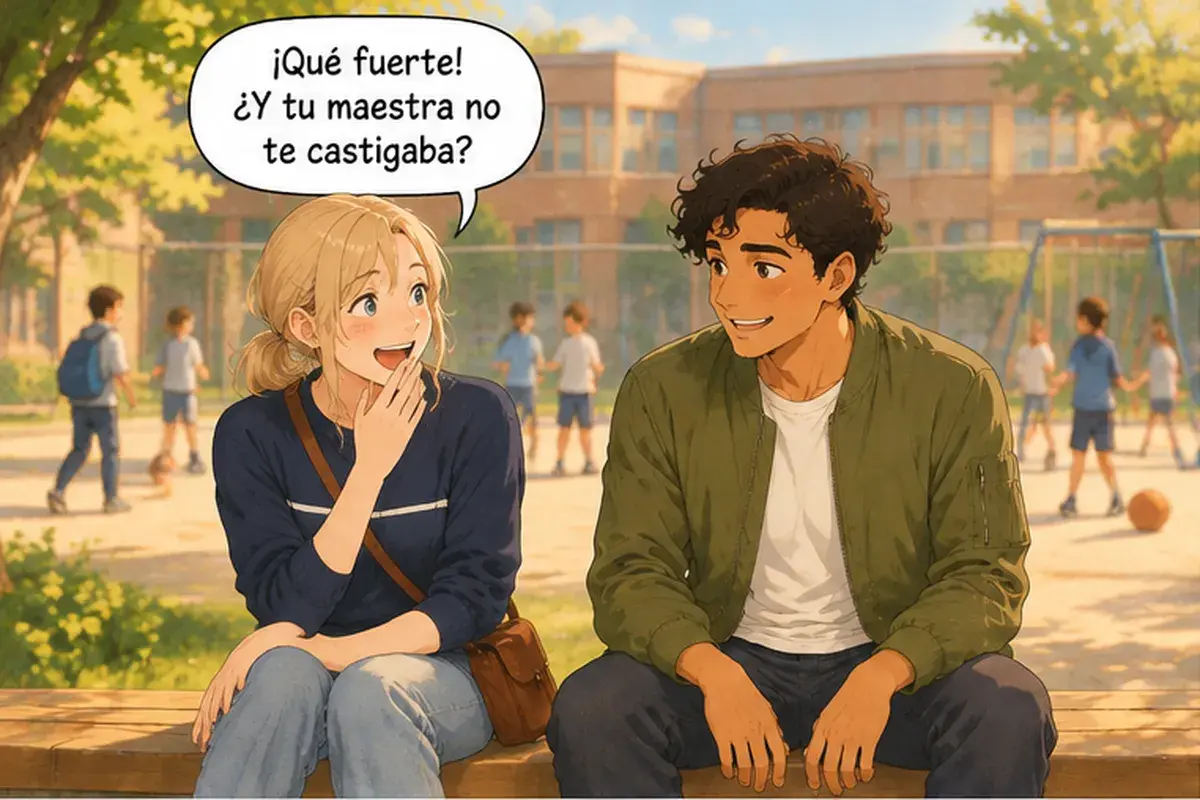
- Ana
¡Qué fuerte! ¿Y tu maestra no te castigaba?
No way! And didn't your teacher punish you?
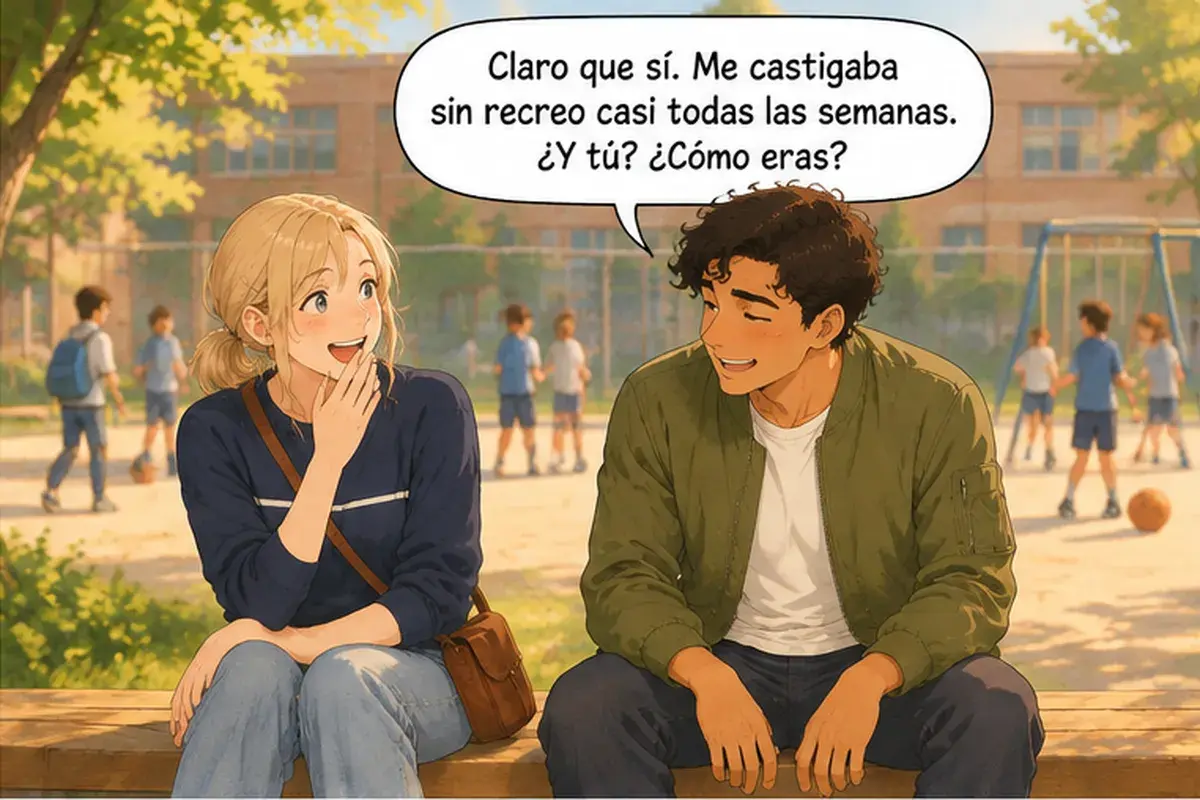
- Pablo
Claro que sí. Me castigaba sin recreo casi todas las semanas. ¿Y tú? ¿Cómo eras?
Of course she did. She used to punish me with no recess almost every week. And you? What were you like?
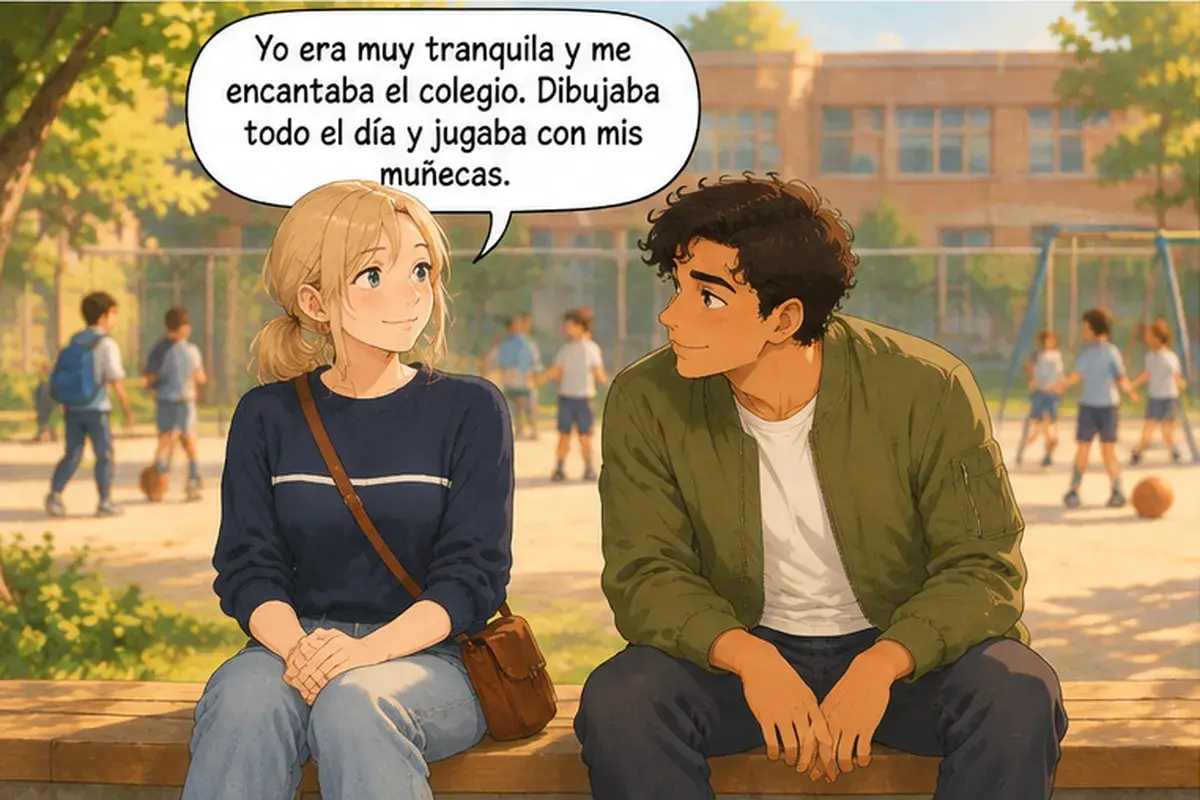
- Ana
Yo era muy tranquila y me encantaba el colegio. Dibujaba todo el día y jugaba con mis muñecas.
I was very calm and I loved school. I used to draw all day and play with my dolls (woman speaking).
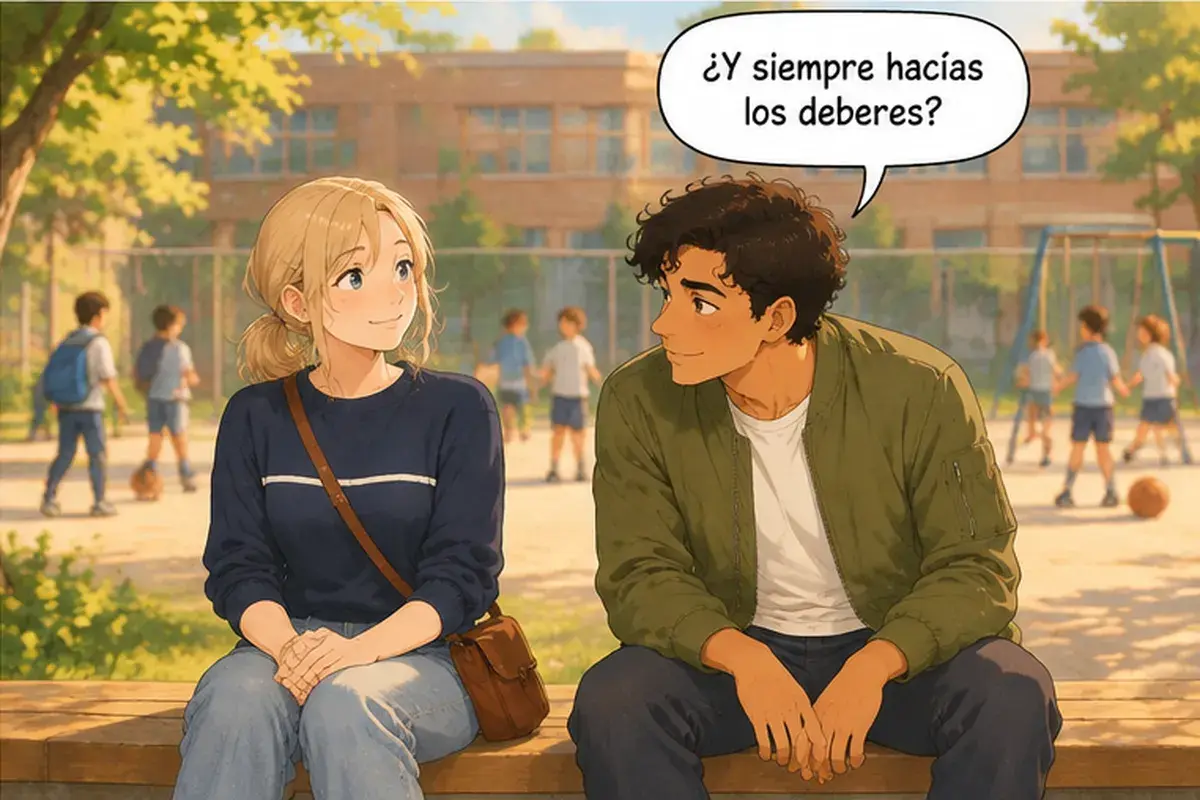
- Pablo
¿Y siempre hacías los deberes?
And did you always do your homework?
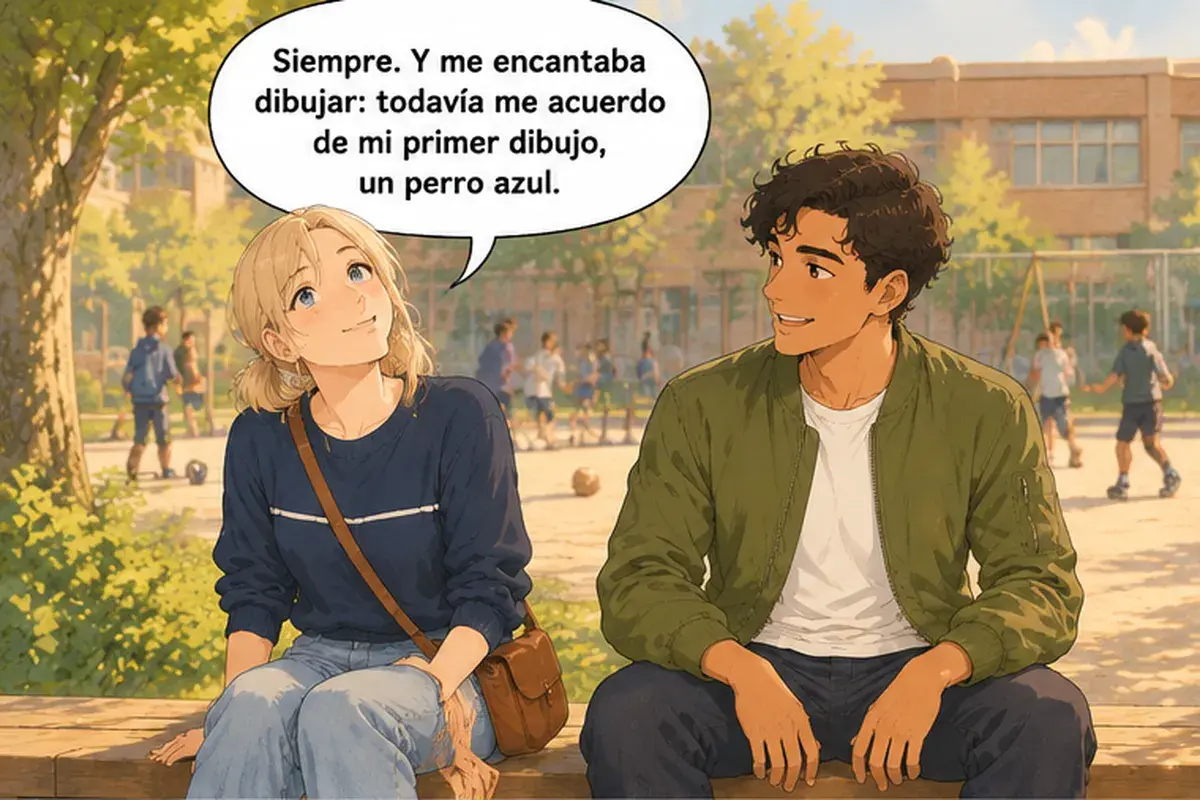
- Ana
Siempre. Y me encantaba dibujar: todavía me acuerdo de mi primer dibujo, un perro azul.
Always. And I loved drawing: I still remember my first drawing, a blue dog.
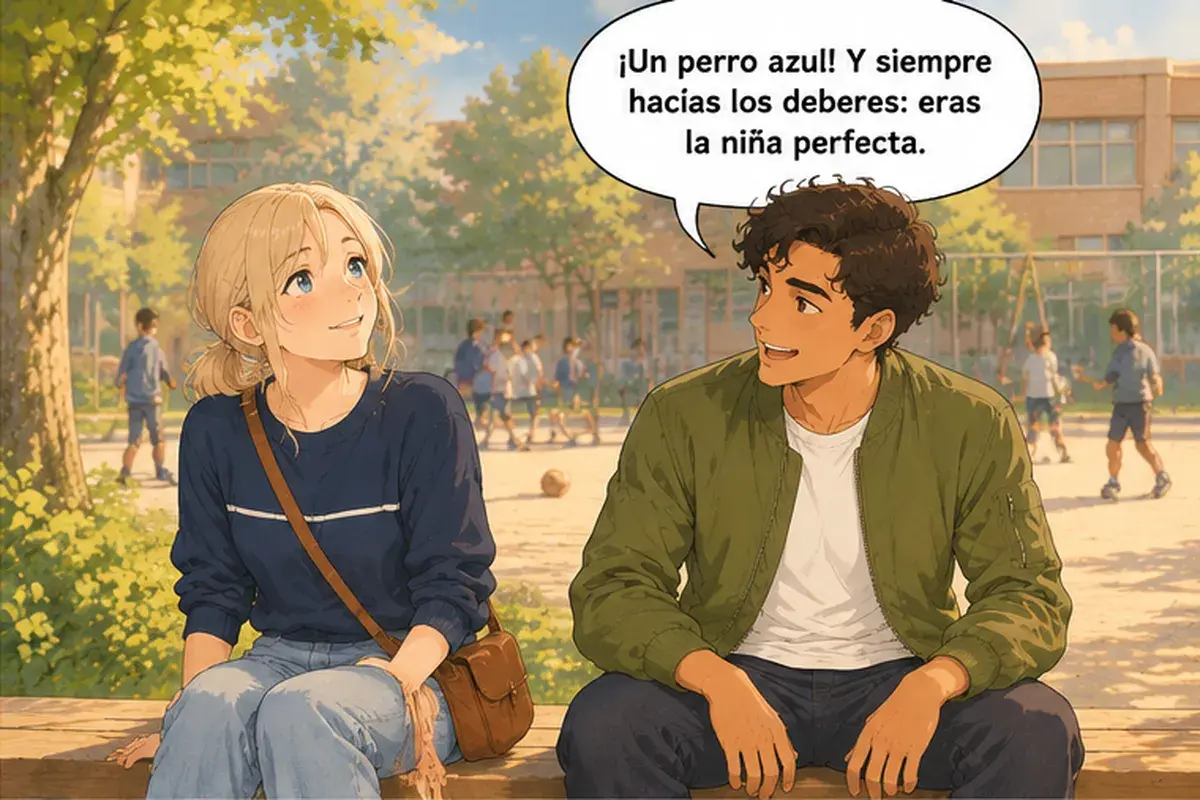
- Pablo
¡Un perro azul! Y siempre hacías los deberes: eras la niña perfecta.
A blue dog! And you always did your homework: you were the perfect girl.
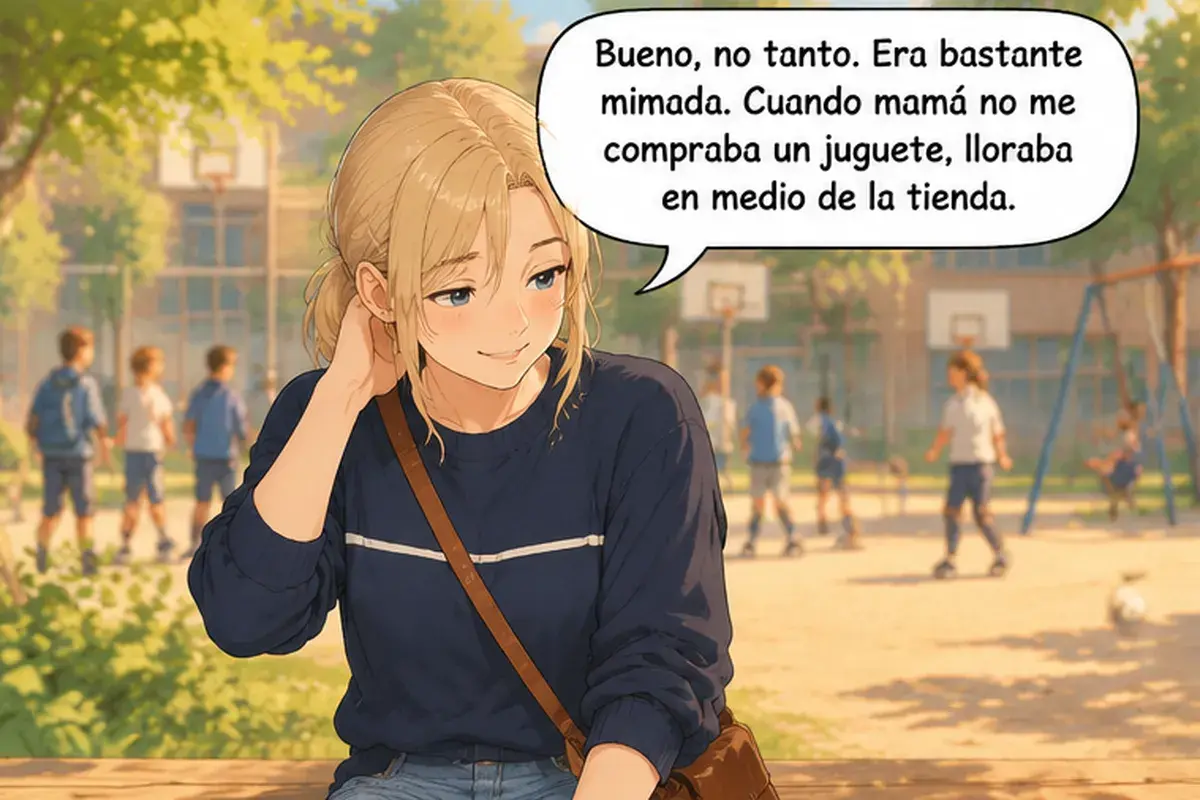
- Ana
Bueno, no tanto. Era bastante mimada. Cuando mamá no me compraba un juguete, lloraba en medio de la tienda.
Well, not so much. I was pretty spoiled. When Mom didn't buy me a toy, I used to cry in the middle of the store (woman speaking).
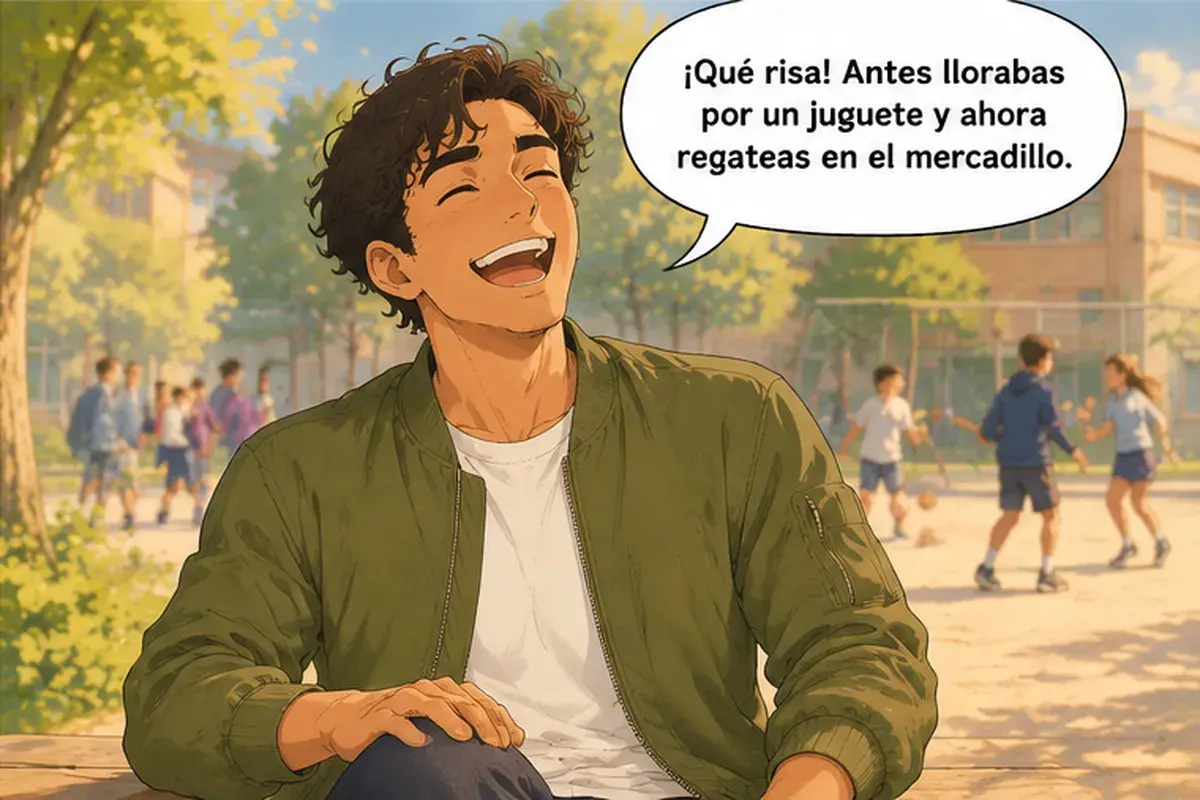
- Pablo
¡Qué risa! Antes llorabas por un juguete y ahora regateas en el mercadillo.
That's so funny! You used to cry over a toy, and now you haggle at the street market.
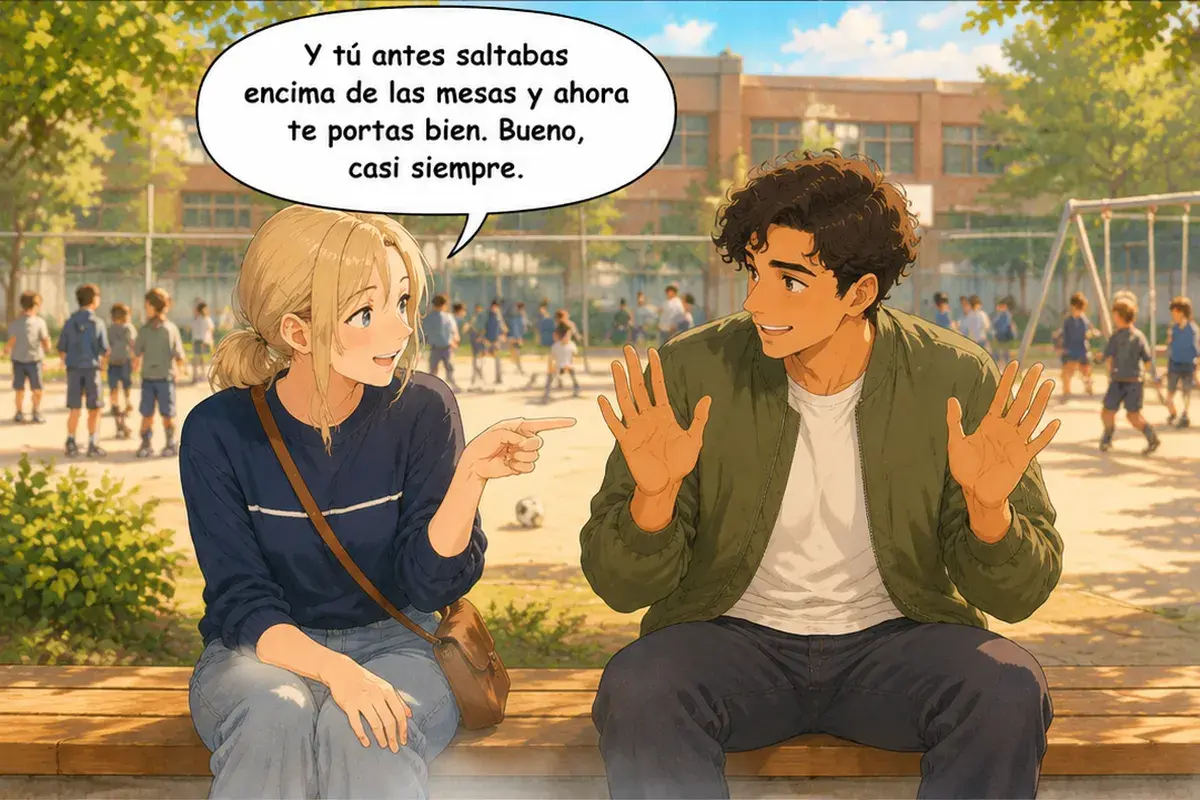
- Ana
Y tú antes saltabas encima de las mesas y ahora te portas bien. Bueno, casi siempre.
And you used to jump on the tables, and now you behave. Well, almost always.
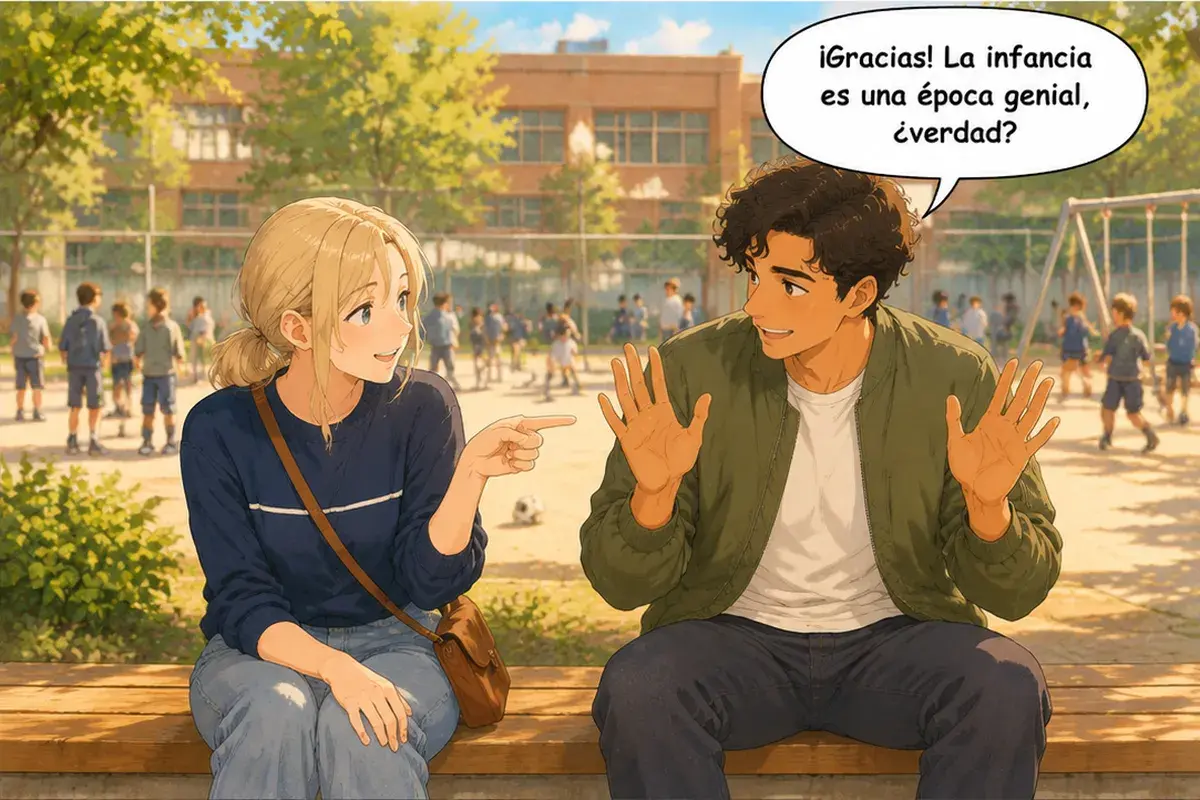
- Pablo
¡Gracias! La infancia es una época genial, ¿verdad?
Thanks! Childhood is a great time, right?
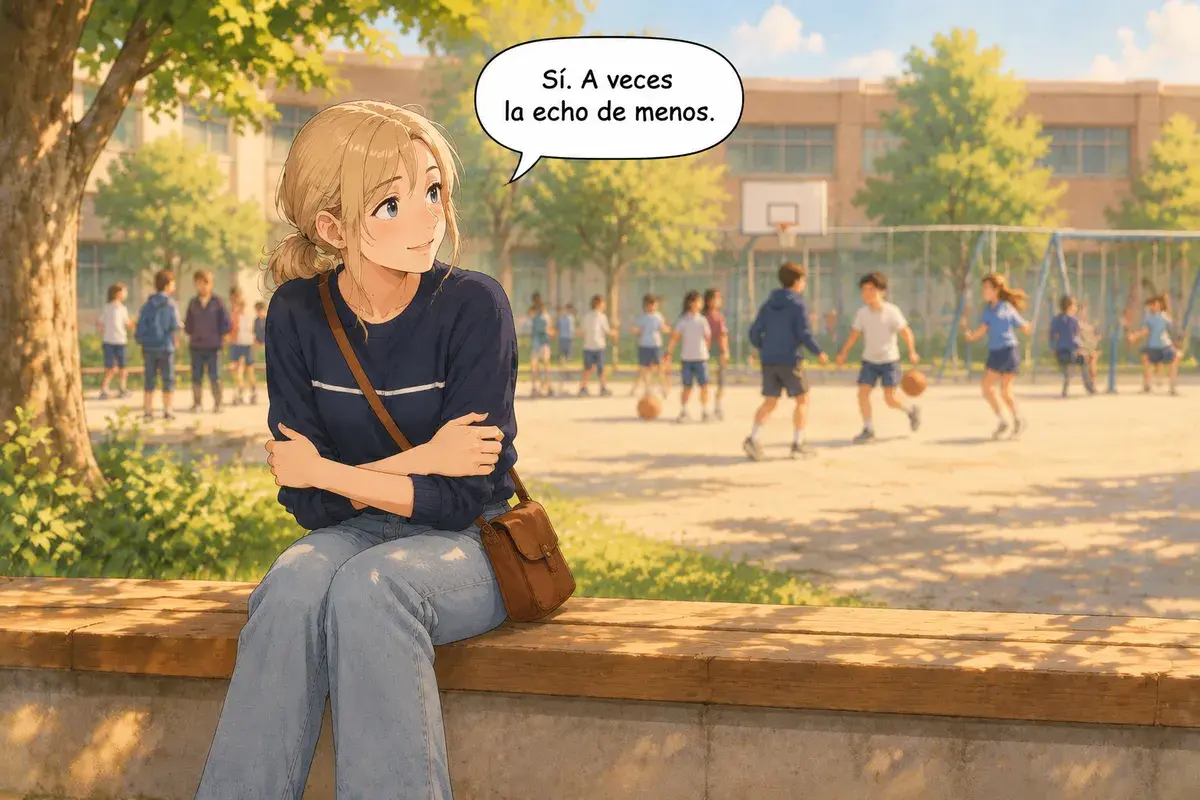
- Ana
Sí. A veces la echo de menos.
Yes. Sometimes I miss it.
Grammar for this text
The imperfect for childhood habits. Everything that was normal in childhood and happened again and again is in this tense: jugaba a la pelota en el patio todos los días — I used to play ball in the schoolyard every day, me castigaba sin recreo casi todas las semanas — almost every week she took away my recess, dibujaba todo el día — I used to draw all day. The ending -aba is for -ar verbs, -ía for the others: hacías los deberes.
Era, eras are the verb ser in the same tense: ¿Cómo eras de pequeño? — What were you like as a kid?
De pequeño / de pequeña — as a kid. It changes for gender: Pablo says de pequeño about himself, and Ana would say de pequeña.
Reflexive verbs work as usual, with the pronoun in front: te portabas bien, me peleaba. Me acuerdo de… — I remember…, always with de.
Antes… ahora… — I used to… now I… After antes comes the imperfect, after ahora the present tense: Antes llorabas por un juguete y ahora regateas.
La echo de menos — I miss it. echar de menos is a set phrase: to miss someone or something. La here is la infancia — childhood.
Words and grammar of the unit: Talk about your childhood.
Learn the words from the texts with flashcards
In the app, you can tap any word in a text to see its translation, forms and examples, and new words stick with flashcards. 15 minutes a day.
Start for freeEverything is open for free. No card needed to sign up.