

Spanish dialogue with translation · A2 · 12 lines
La nueva inquilina The new tenant
Comic · 12 panels

- Dani
¡Hola! ¿Eres Ana, la nueva inquilina? Soy Dani, tu compañero de piso.
Hi! Are you Ana, the new tenant? I'm Dani, your roommate.

- Ana
¡Hola, Dani! Encantada. Mi amiga Lucía está abajo con las maletas.
Hi, Dani! Nice to meet you. My friend Lucía is downstairs with the suitcases (woman speaking).

- Dani
¿Cinco plantas con maletas? Os ayudo: las subimos entre los tres.
Five floors with suitcases? I'll help you: the three of us will carry them up (to several people).
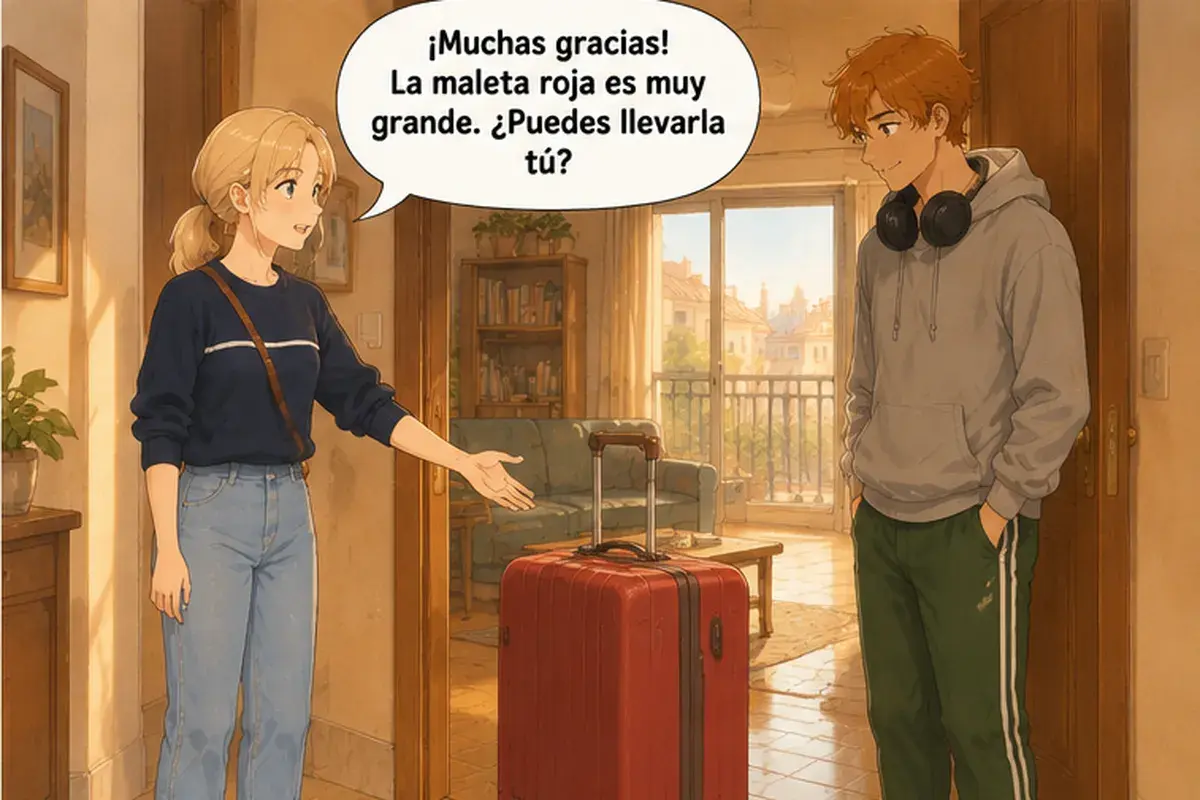
- Ana
¡Muchas gracias! La maleta roja es muy grande. ¿Puedes llevarla tú?
Thanks a lot! The red suitcase is very big. Can you carry it?

- Dani
Claro, la llevo yo.
Sure, I'll carry it.
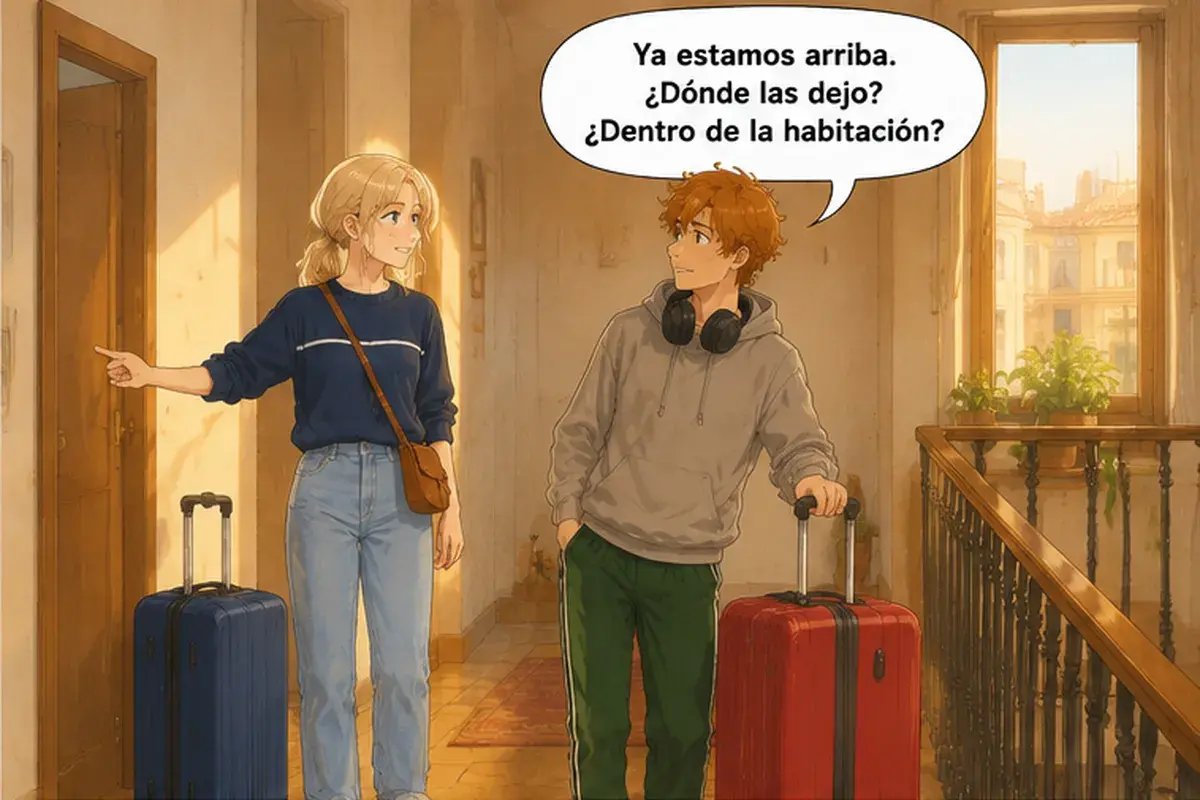
- Dani
Ya estamos arriba. ¿Dónde las dejo? ¿Dentro de la habitación?
We're upstairs now. Where should I leave them? Inside the room?
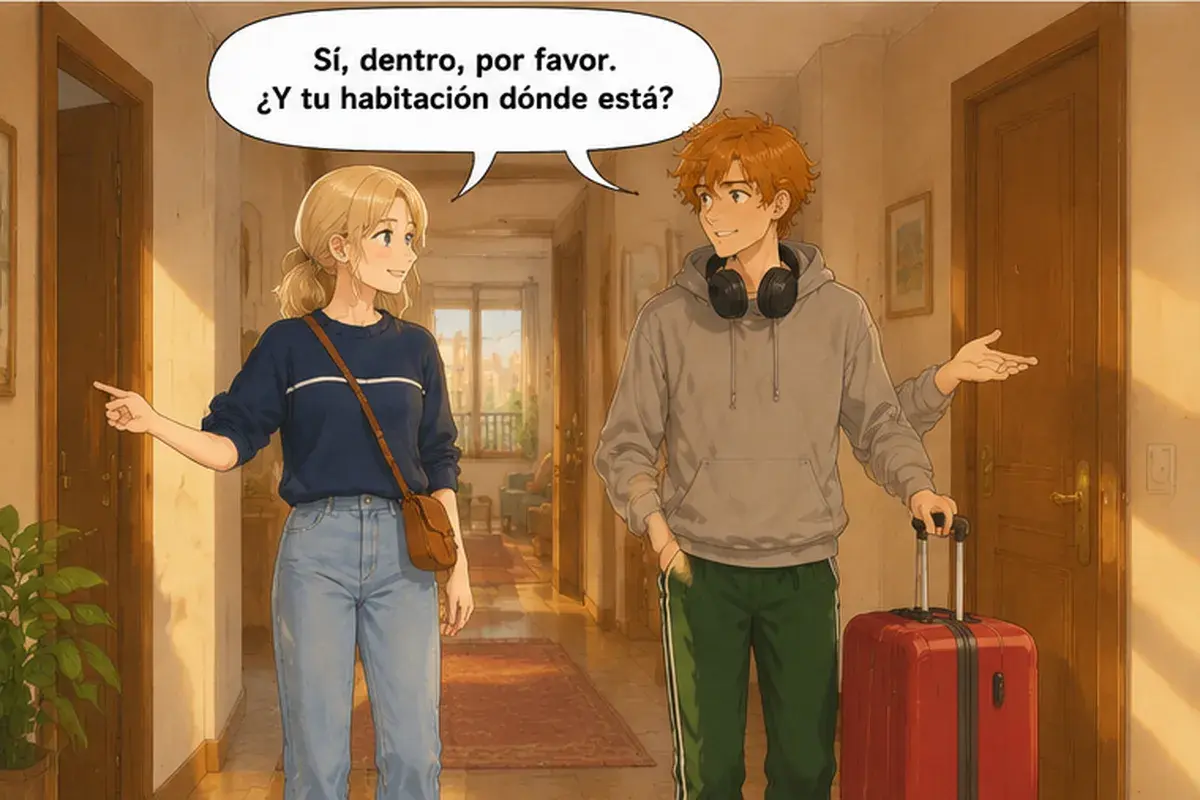
- Ana
Sí, dentro, por favor. ¿Y tu habitación dónde está?
Yes, inside, please. And where's your room?
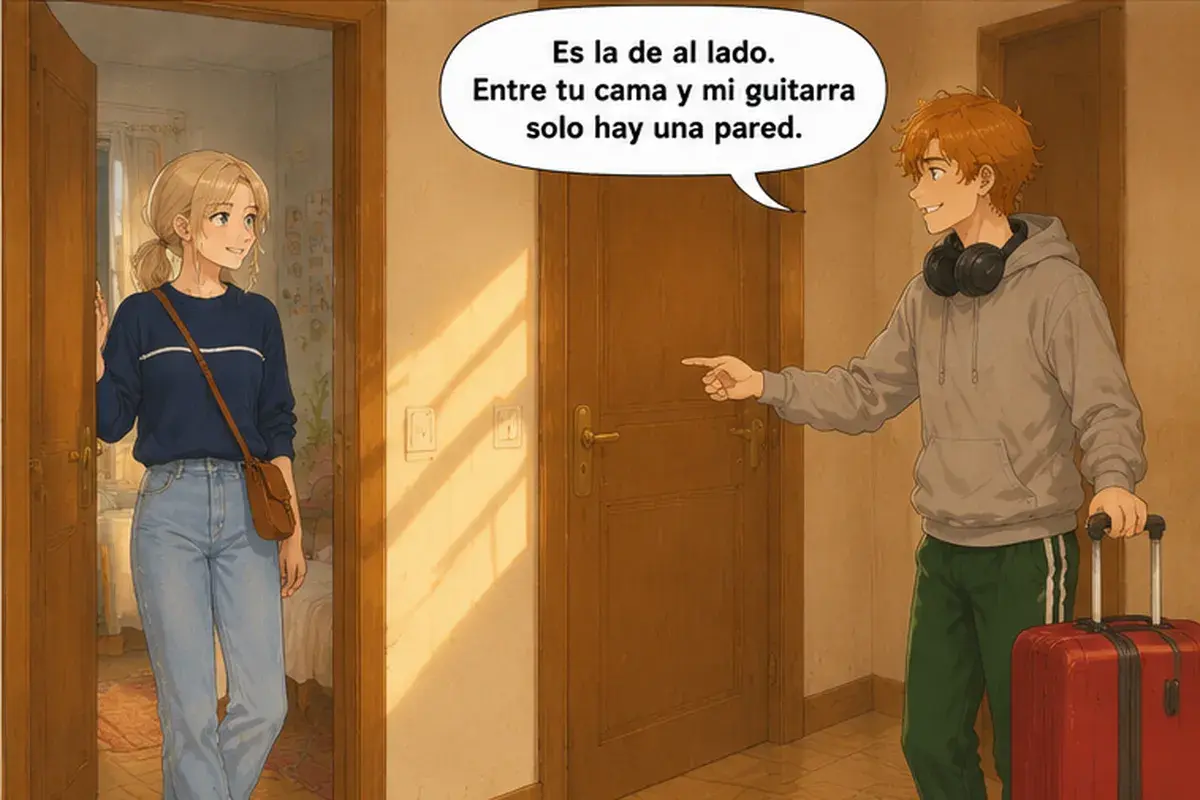
- Dani
Es la de al lado. Entre tu cama y mi guitarra solo hay una pared.
It's the one next door. There's only one wall between your bed and my guitar.
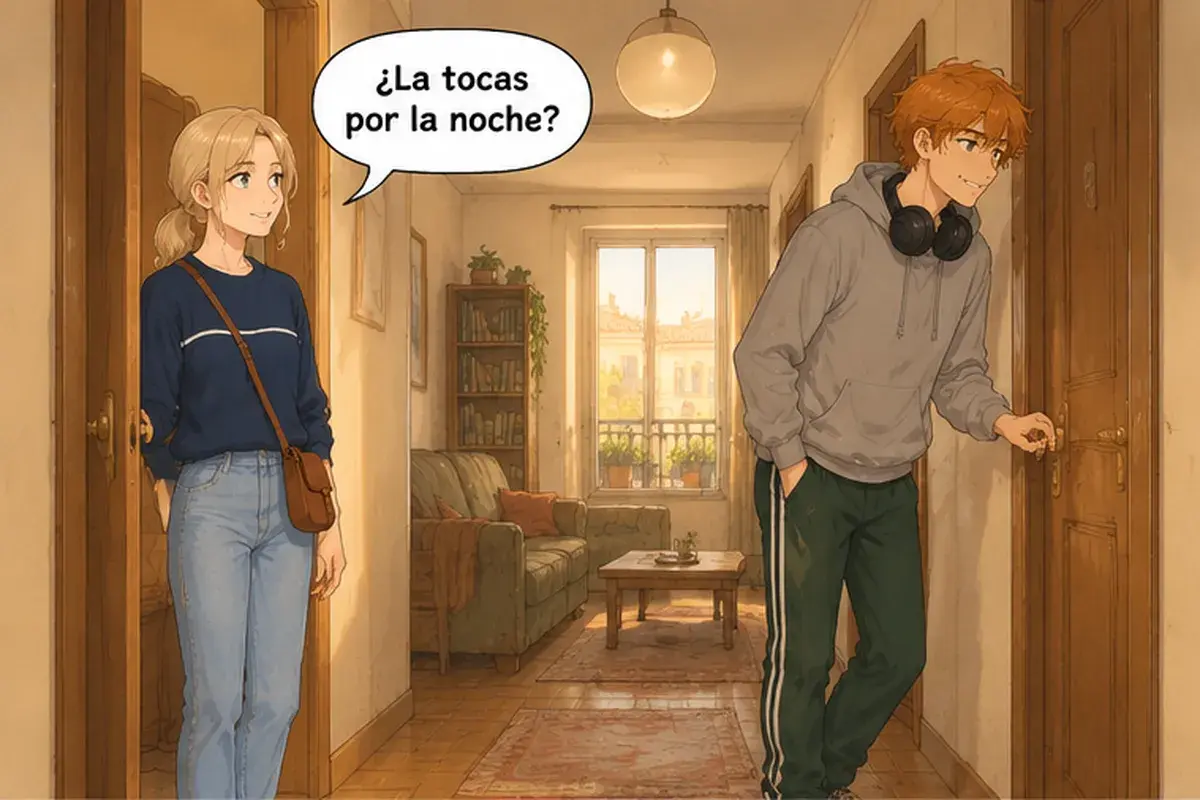
- Ana
¿La tocas por la noche?
Do you play it at night?
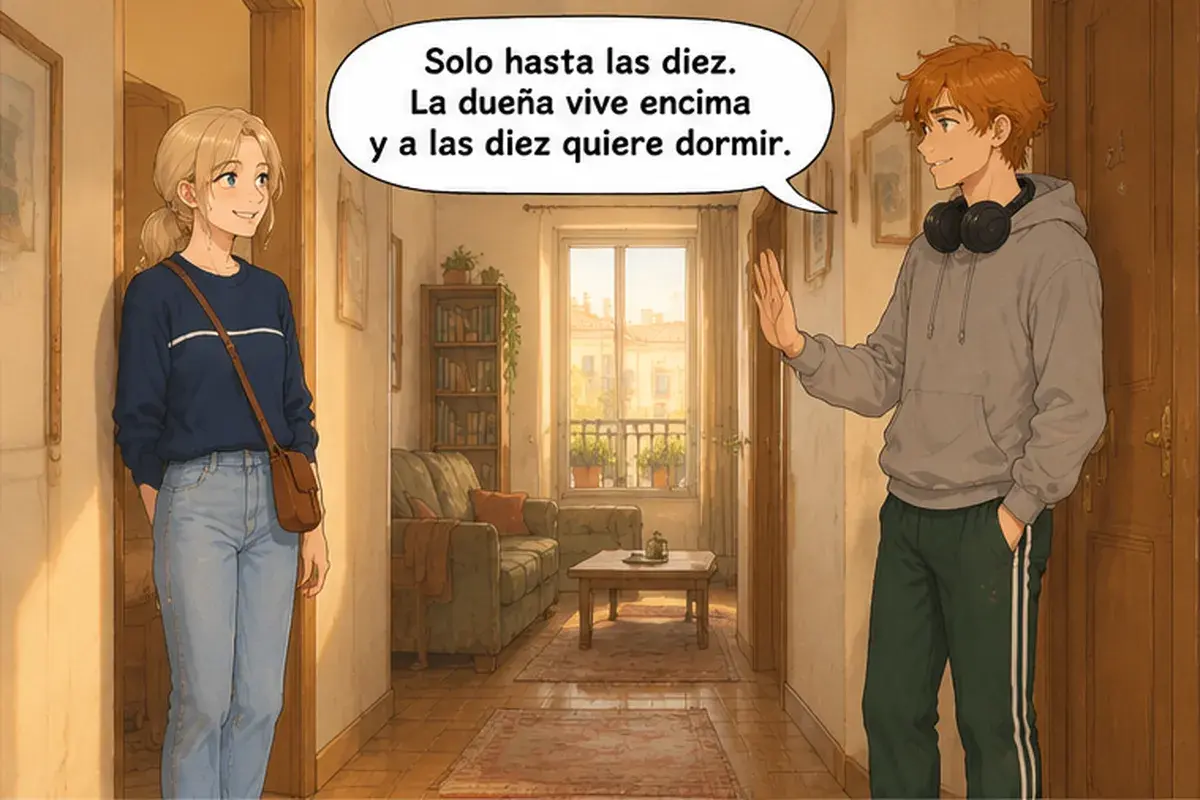
- Dani
Solo hasta las diez. La dueña vive encima y a las diez quiere dormir.
Only until ten. The landlady lives above us, and at ten she wants to sleep.

- Ana
Menos mal. ¿Y las facturas? ¿Cómo las pagáis?
Thank goodness. And the bills? How do you pay them? (to several people)
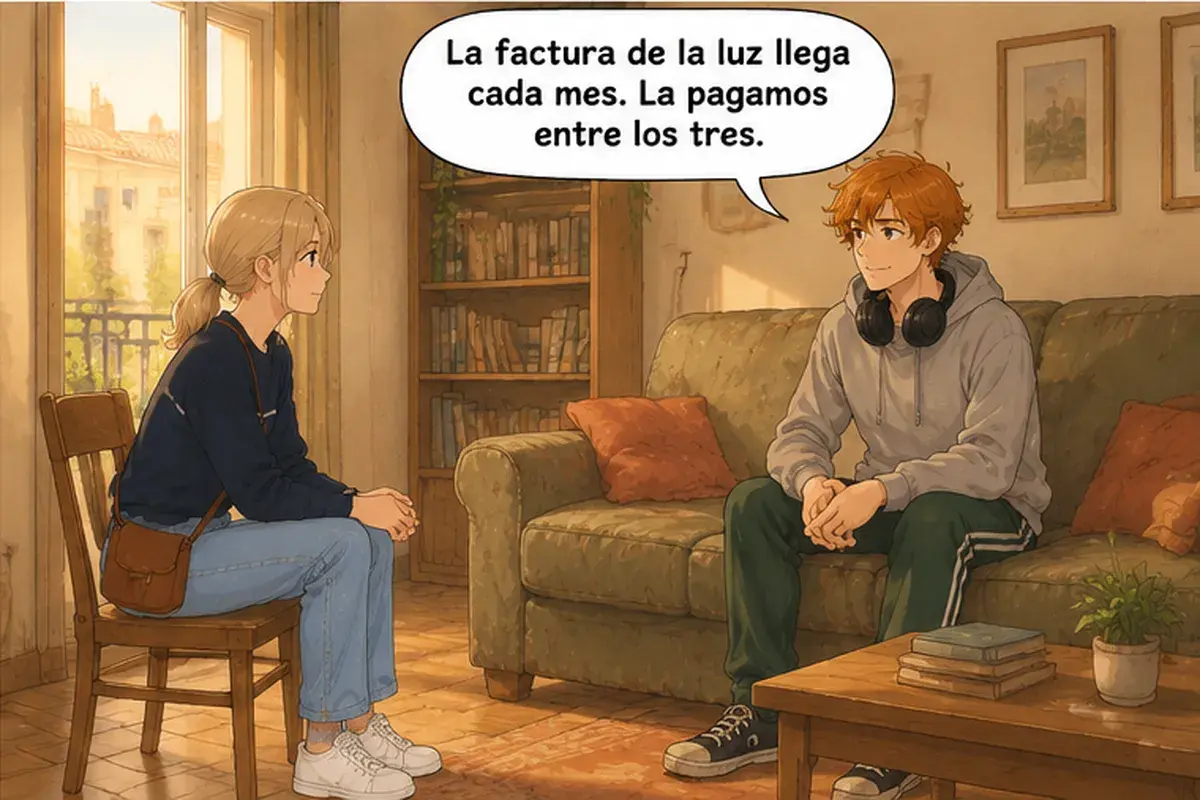
- Dani
La factura de la luz llega cada mes. La pagamos entre los tres.
The electric bill comes every month. The three of us pay for it together.
Grammar for this text
La and las in everyday speech. Las subimos (we'll carry them up: the suitcases); la llevo yo (I'll carry it); ¿dónde las dejo? (where should I leave them?); ¿la tocas? (do you play it? the guitar); ¿cómo las pagáis? (how do you pay them? the bills). The pronoun follows the gender of the Spanish noun: la maleta is feminine, so it's la.
¿Puedes llevarla tú? There are two verbs, so the pronoun is joined to the infinitive. You can also say ¿La puedes llevar tú?
La de al lado means "the one next door", word for word "the one at the side". Al lado without de just means "next door, nearby".
Present instead of future. Os ayudo, las subimos means "I'll help you, we'll carry them up". For something that is about to happen right now, Spanish uses the present tense where English says "I'll".
Entre los tres means "the three of us together", word for word "between the three".
Words and grammar of the unit: Rent a room from an ad.
Learn the words from the texts with flashcards
In the app, you can tap any word in a text to see its translation, forms and examples, and new words stick with flashcards. 15 minutes a day.
Start for freeEverything is open for free. No card needed to sign up.