

Spanish dialogue with translation · A2 · 12 lines
La contraseña The password
Comic · 12 panels
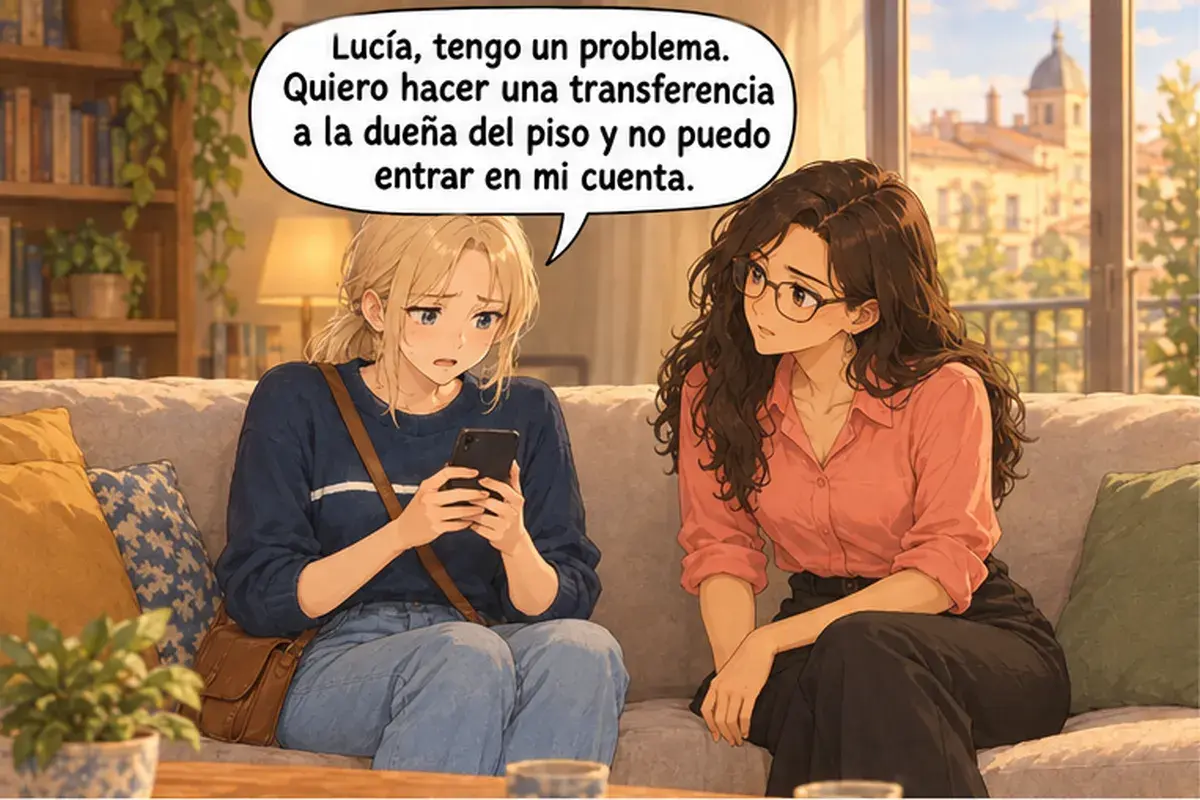
- Ana
Lucía, tengo un problema. Quiero hacer una transferencia a la dueña del piso y no puedo entrar en mi cuenta.
Lucía, I have a problem. I want to make a transfer to my landlady, and I can't get into my account.
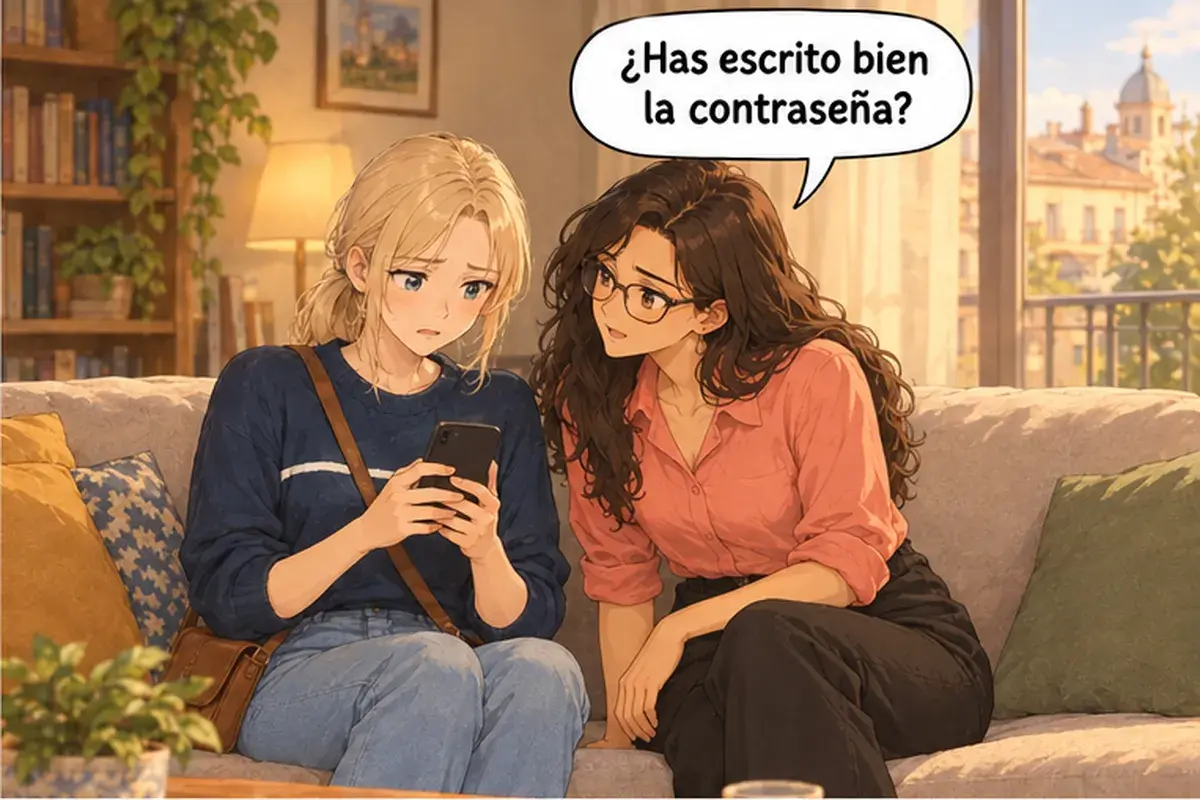
- Lucía
¿Has escrito bien la contraseña?
Have you typed the password correctly?
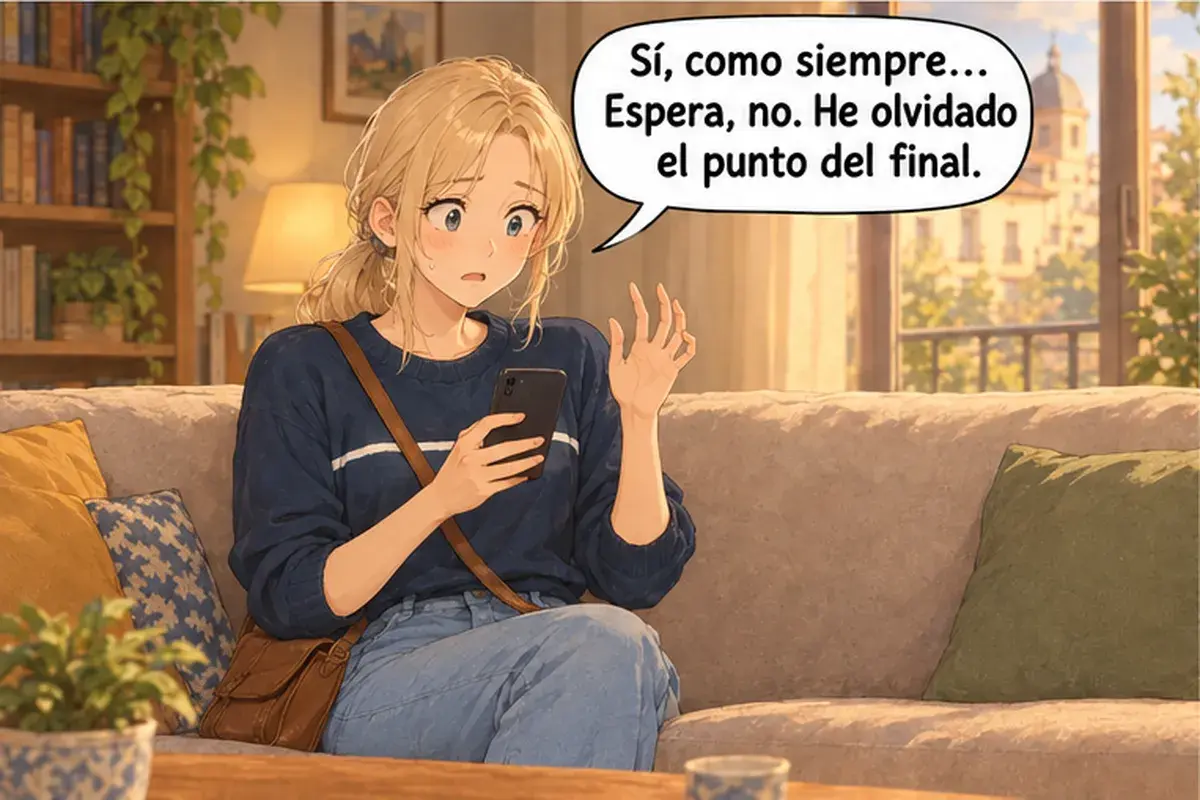
- Ana
Sí, como siempre… Espera, no. He olvidado el punto del final.
Yes, like always… Wait, no. I forgot the period at the end.
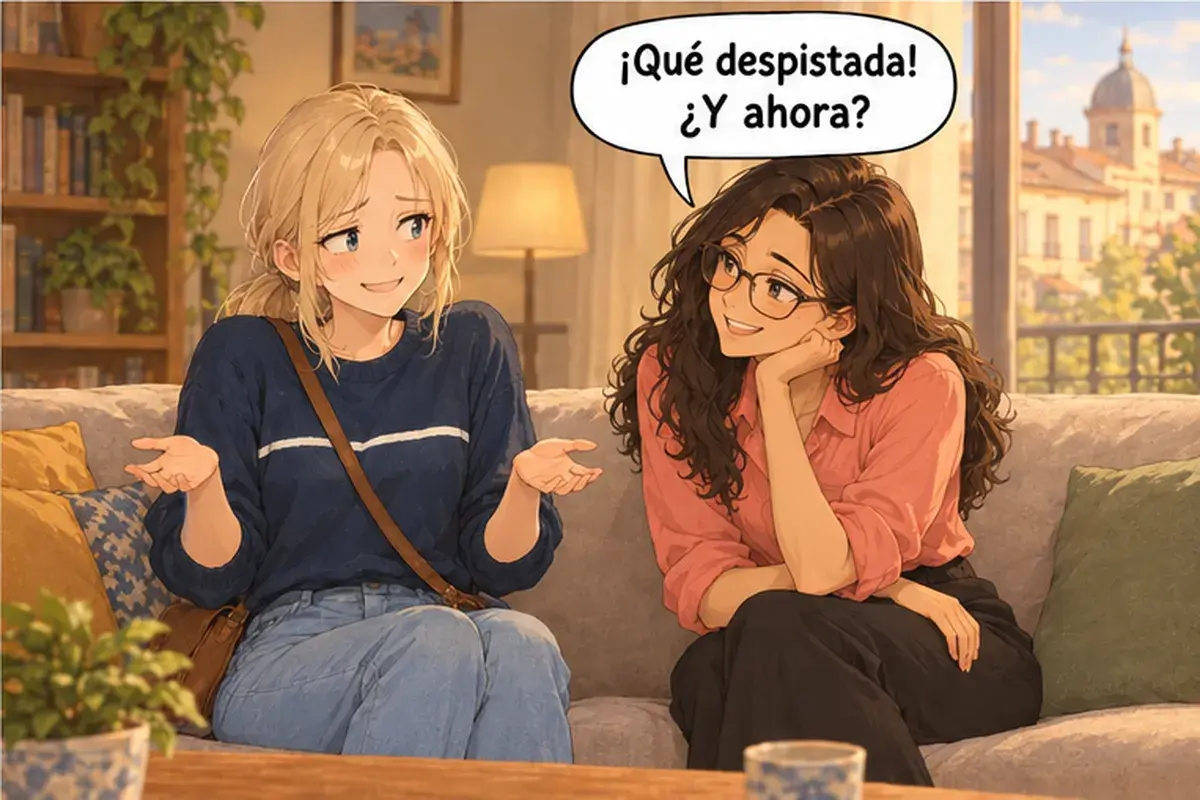
- Lucía
¡Qué despistada! ¿Y ahora?
You're so absent-minded! And now? (to a woman)
- Ana
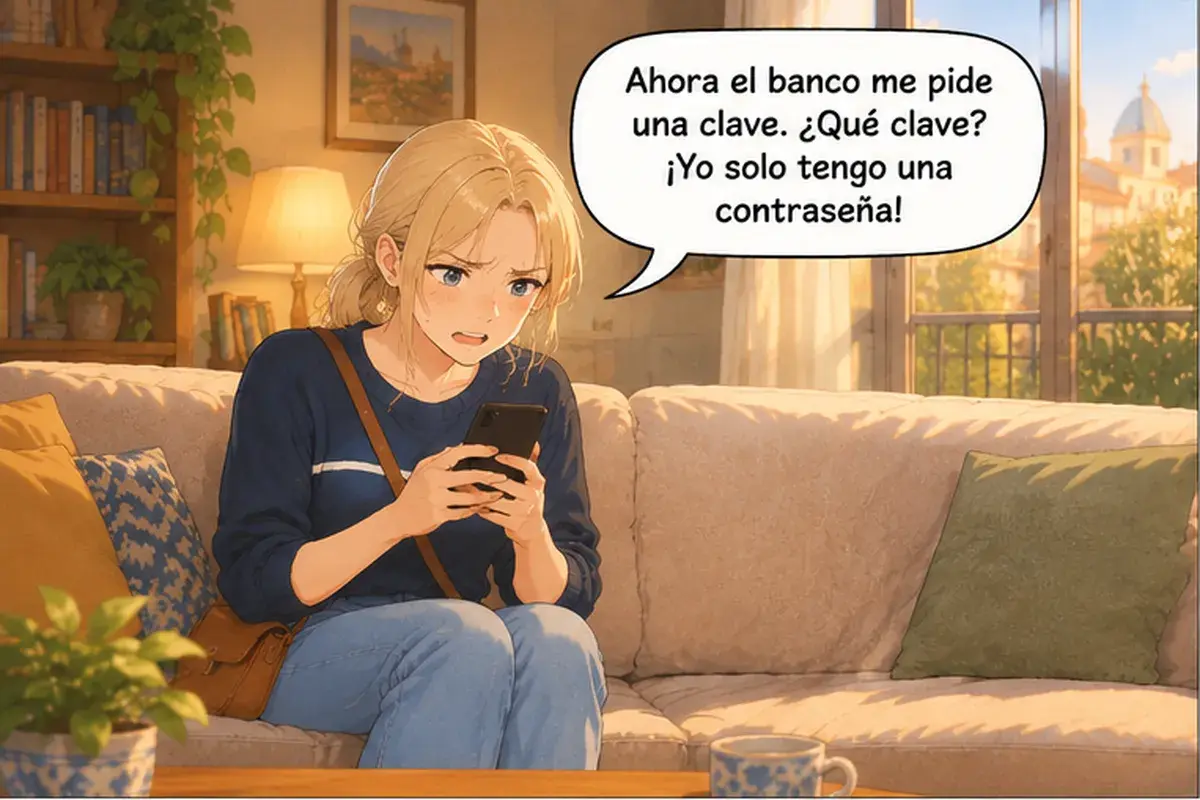
Ahora el banco me pide una clave. ¿Qué clave? ¡Yo solo tengo una contraseña!
Now the bank is asking me for a code. What code? I only have a password!
- Lucía
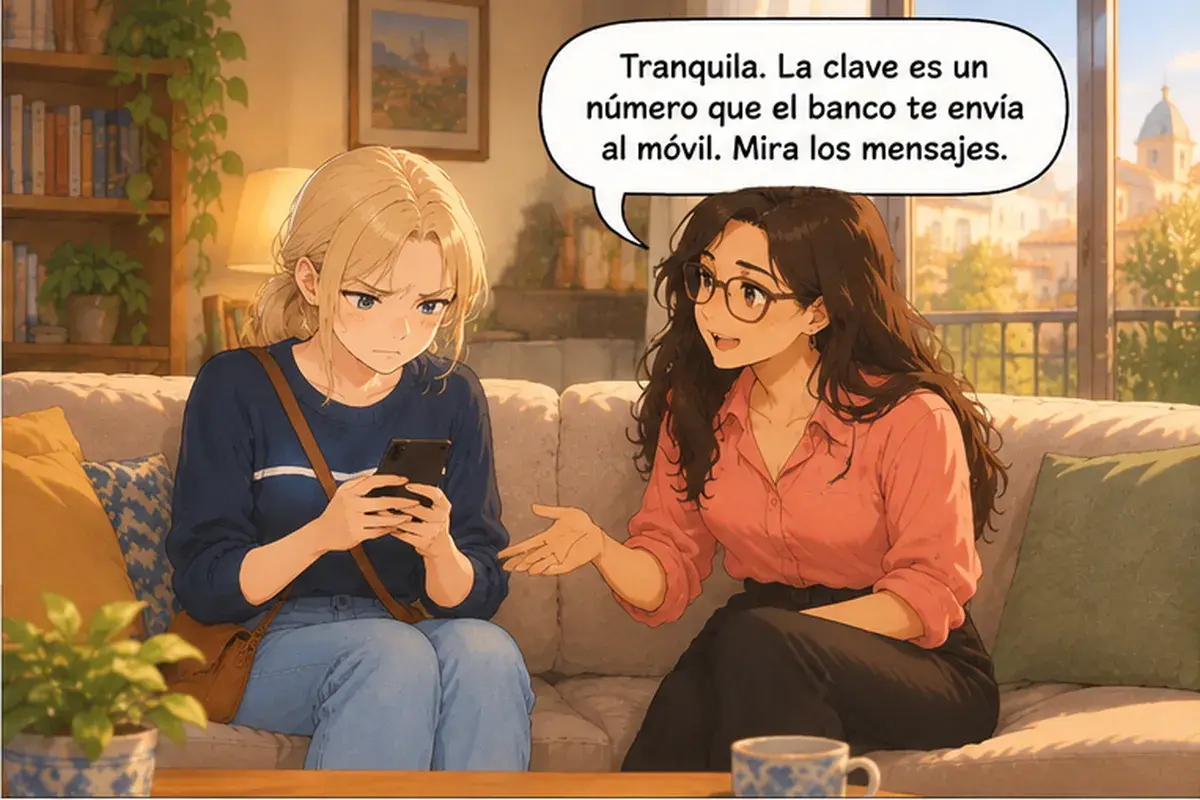
Tranquila. La clave es un número que el banco te envía al móvil. Mira los mensajes.
Relax. The code is a number that the bank sends to your phone. Check your messages. (to a woman)
- Ana
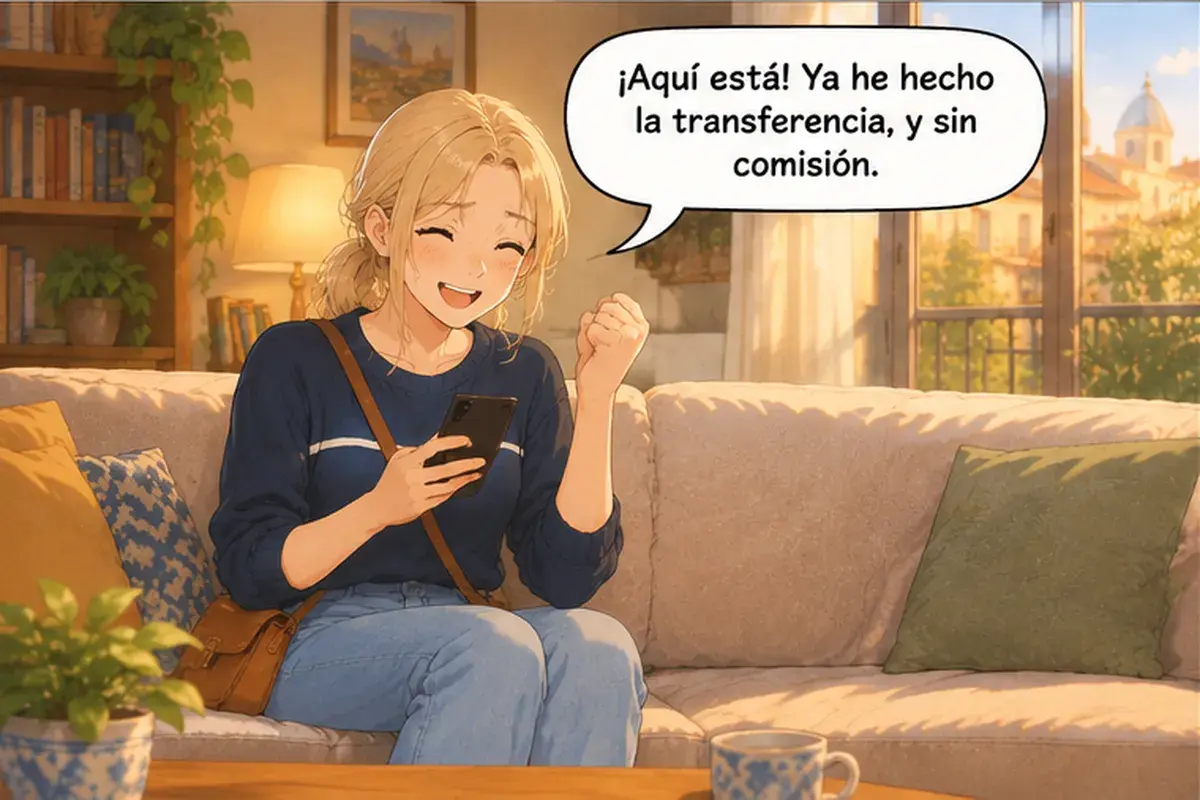
¡Aquí está! Ya he hecho la transferencia, y sin comisión.
Here it is! I've already made the transfer, and with no fee.
- Lucía
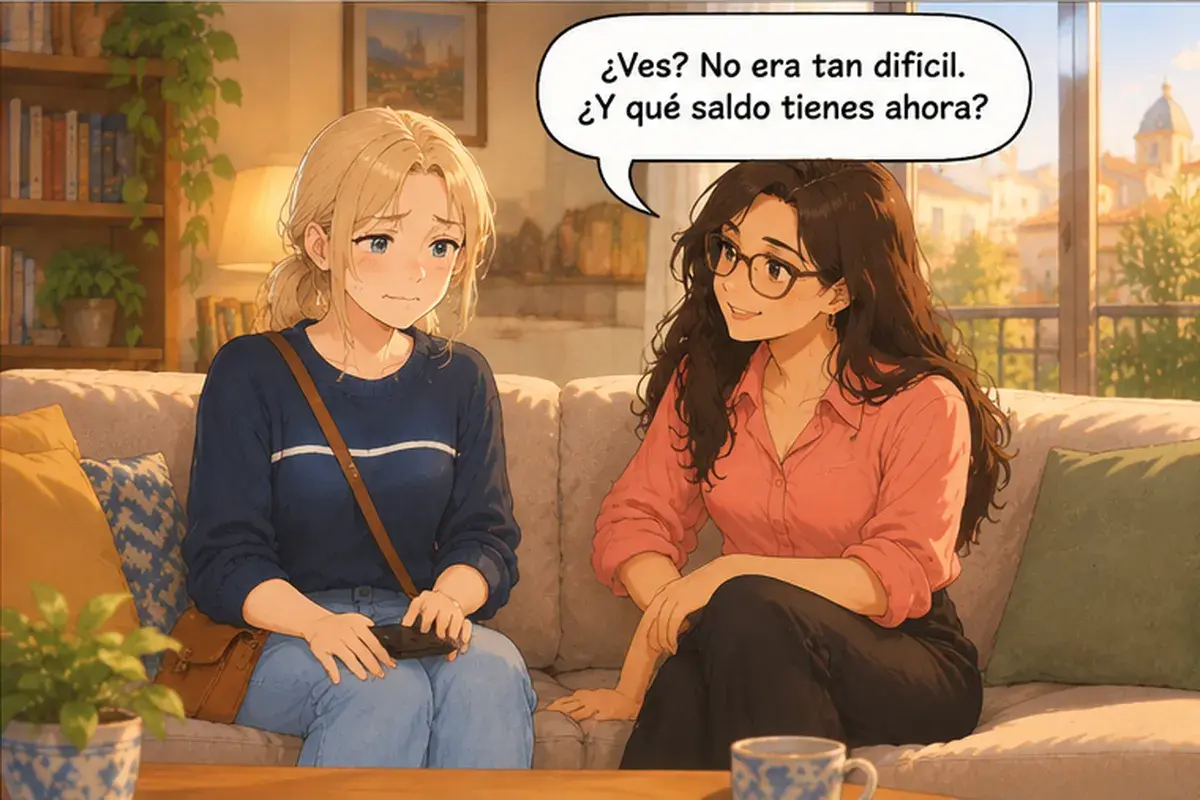
¿Ves? No era tan difícil. ¿Y qué saldo tienes ahora?
See? It wasn't that hard. And what's your balance now?
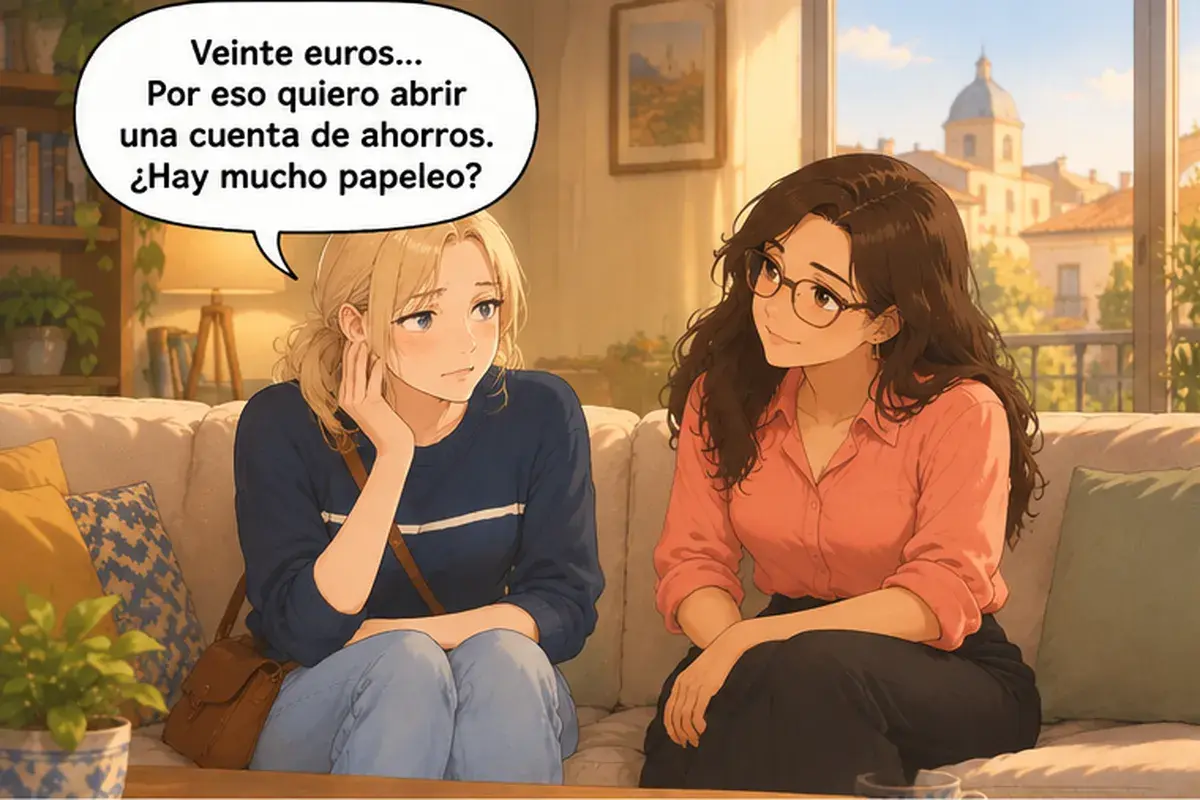
- Ana
Veinte euros… Por eso quiero abrir una cuenta de ahorros. ¿Hay mucho papeleo?
Twenty euros… That's why I want to open a savings account. Is there a lot of paperwork?
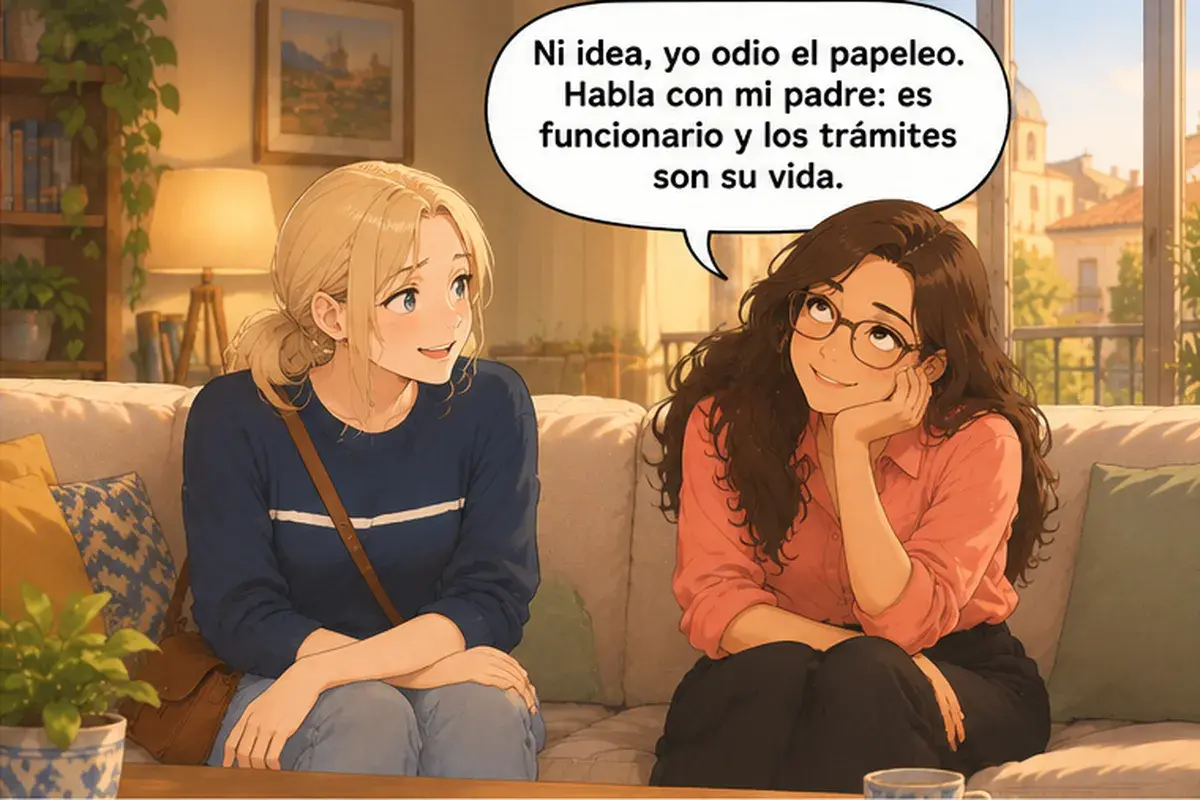
- Lucía
Ni idea, yo odio el papeleo. Habla con mi padre: es funcionario y los trámites son su vida.
No idea, I hate paperwork. Talk to my father: he's a civil servant, and procedures are his life.
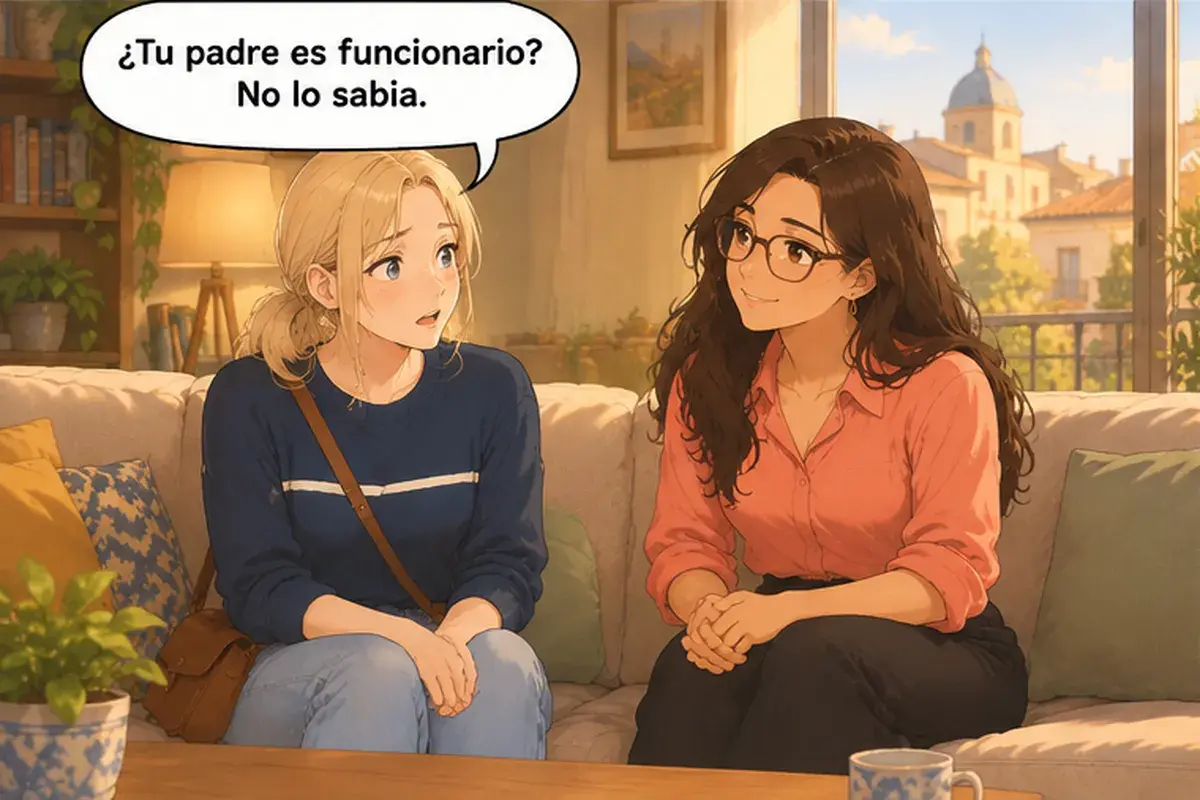
- Ana
¿Tu padre es funcionario? No lo sabía.
Your father is a civil servant? I didn't know that.
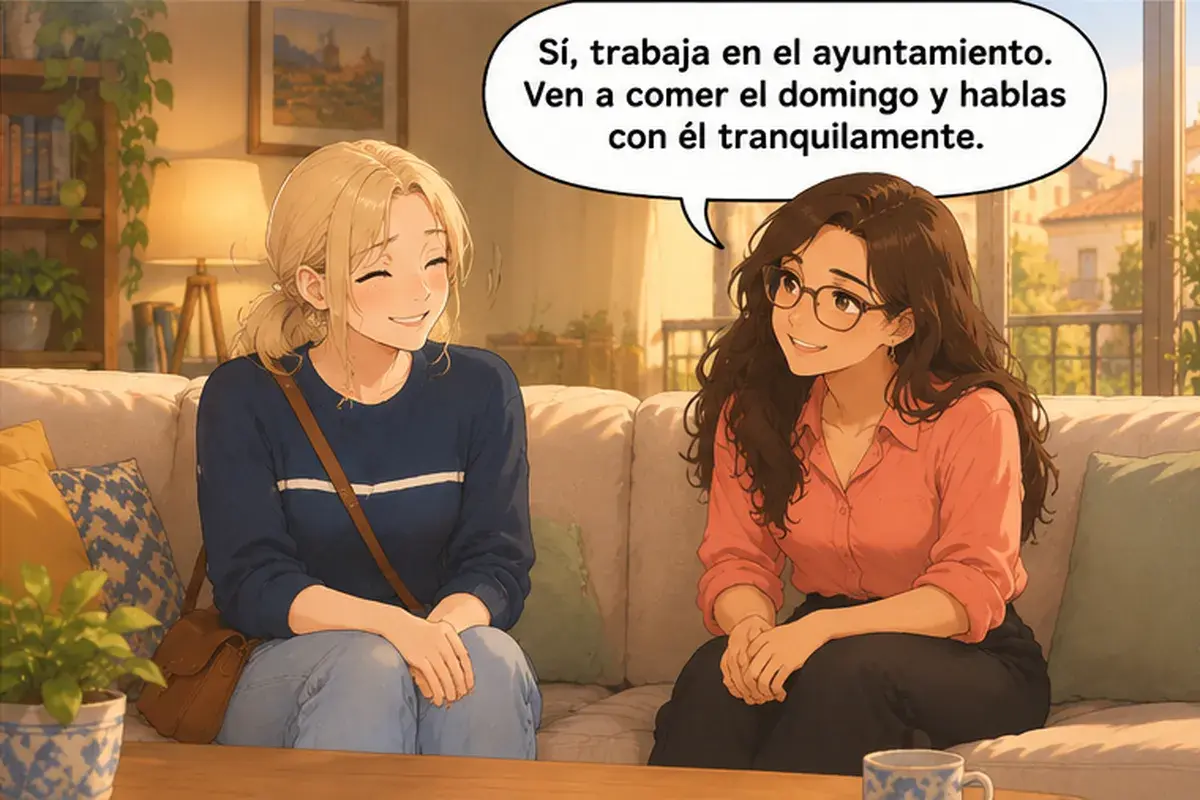
- Lucía
Sí, trabaja en el ayuntamiento. Ven a comer el domingo y hablas con él tranquilamente.
Yes, he works at city hall. Come for lunch on Sunday, and you can talk to him in peace.
Grammar for this text
Jobs without an article. Es funcionario, ¿Tu padre es funcionario? — after ser, Spanish names a job without un. English needs "a": "he's a civil servant".
Una clave → la clave. Ana says me pide una clave: some code, she doesn't know which one. Lucía answers about "that" code: La clave es un número… The same with una transferencia at the start and la transferencia later. But la contraseña has la right away: Ana has only one password for her account.
Sin comisión. After sin (without) there's usually no article: all that matters is that there's no fee.
Odio el papeleo. For things you like or dislike in general, Spanish uses el / la, where English has no article: odio el papeleo — I hate paperwork, just like me gusta el café — I like coffee (A1, unit 5).
Contraseña and clave. Contraseña is a password you made up yourself. Clave is a short code made of numbers: a card PIN or a code the bank texts you.
He olvidado, has escrito, he hecho — the present perfect, "I've done" (units 2–3). Ven — "come" (unit 6).
Words and grammar of the unit: Run errands at the post office and the bank.
Learn the words from the texts with flashcards
In the app, you can tap any word in a text to see its translation, forms and examples, and new words stick with flashcards. 15 minutes a day.
Start for freeEverything is open for free. No card needed to sign up.