

Spanish dialogue with translation · A1 · 14 lines
¡Es tarde! It's late!
Comic · 10 panels
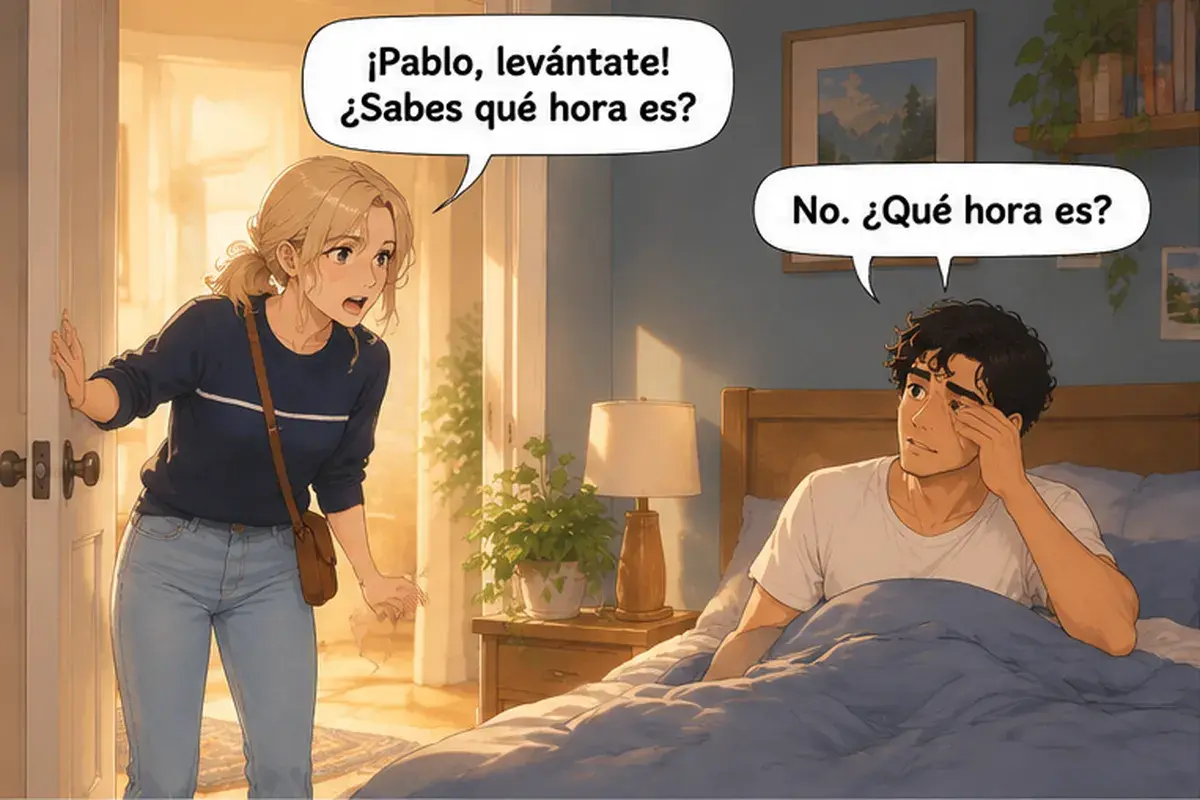
- Ana
¡Pablo, levántate! ¿Sabes qué hora es?
Pablo, get up! Do you know what time it is?
- Pablo
No. ¿Qué hora es?
No. What time is it?
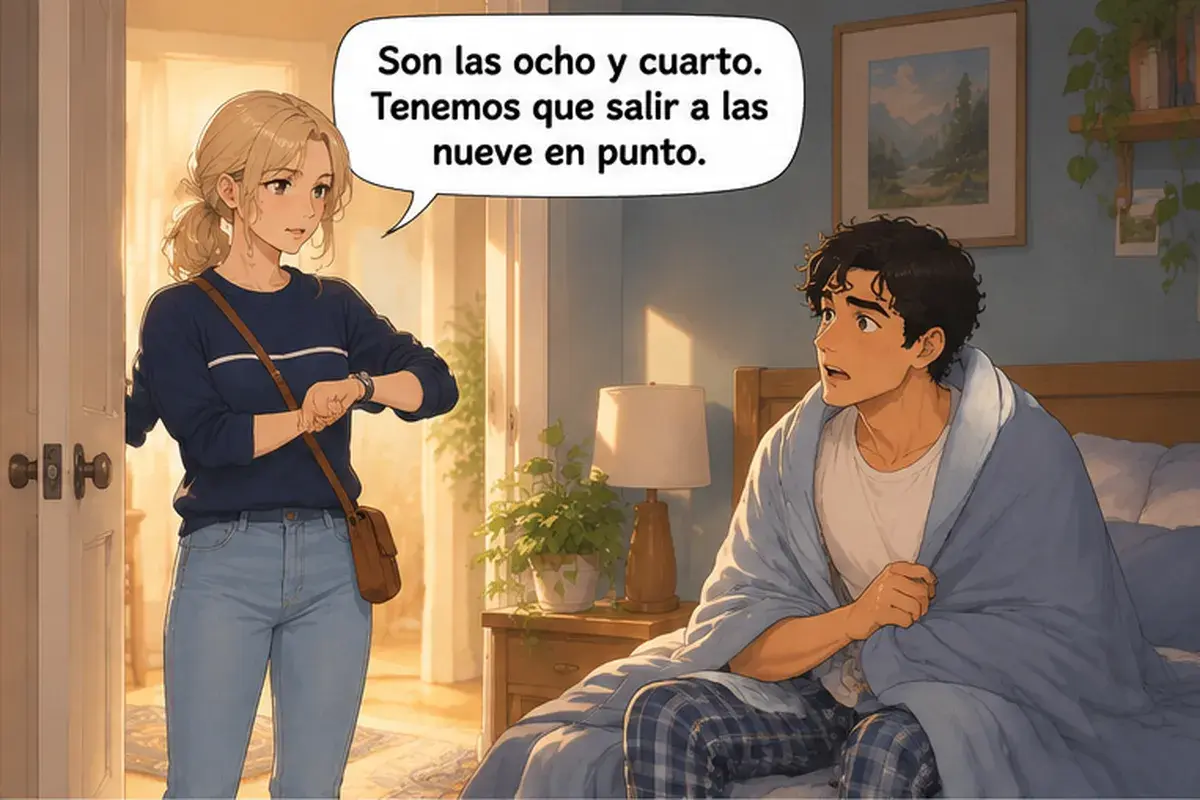
- Ana
Son las ocho y cuarto. Tenemos que salir a las nueve en punto.
It's a quarter past eight. We have to leave at nine o'clock sharp.
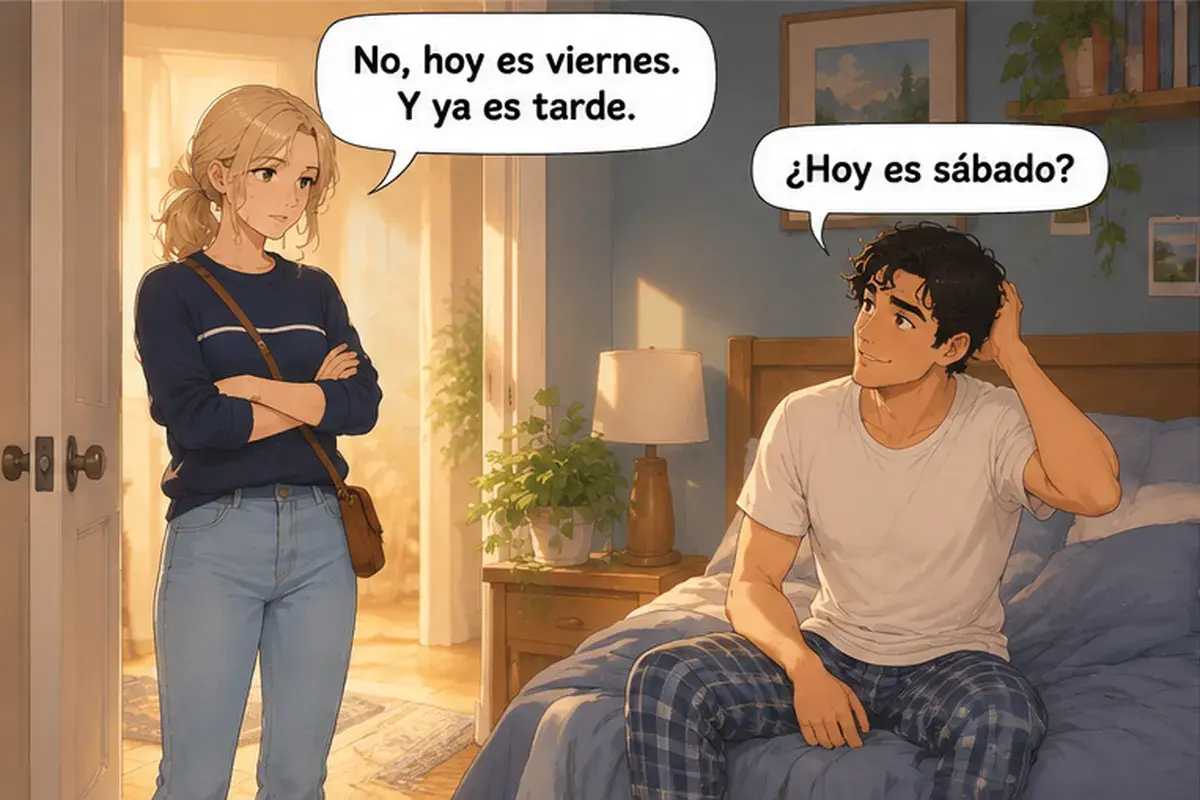
- Pablo
¿Hoy es sábado?
Is it Saturday today?
- Ana
No, hoy es viernes. Y ya es tarde.
No, today is Friday. And it's already late.
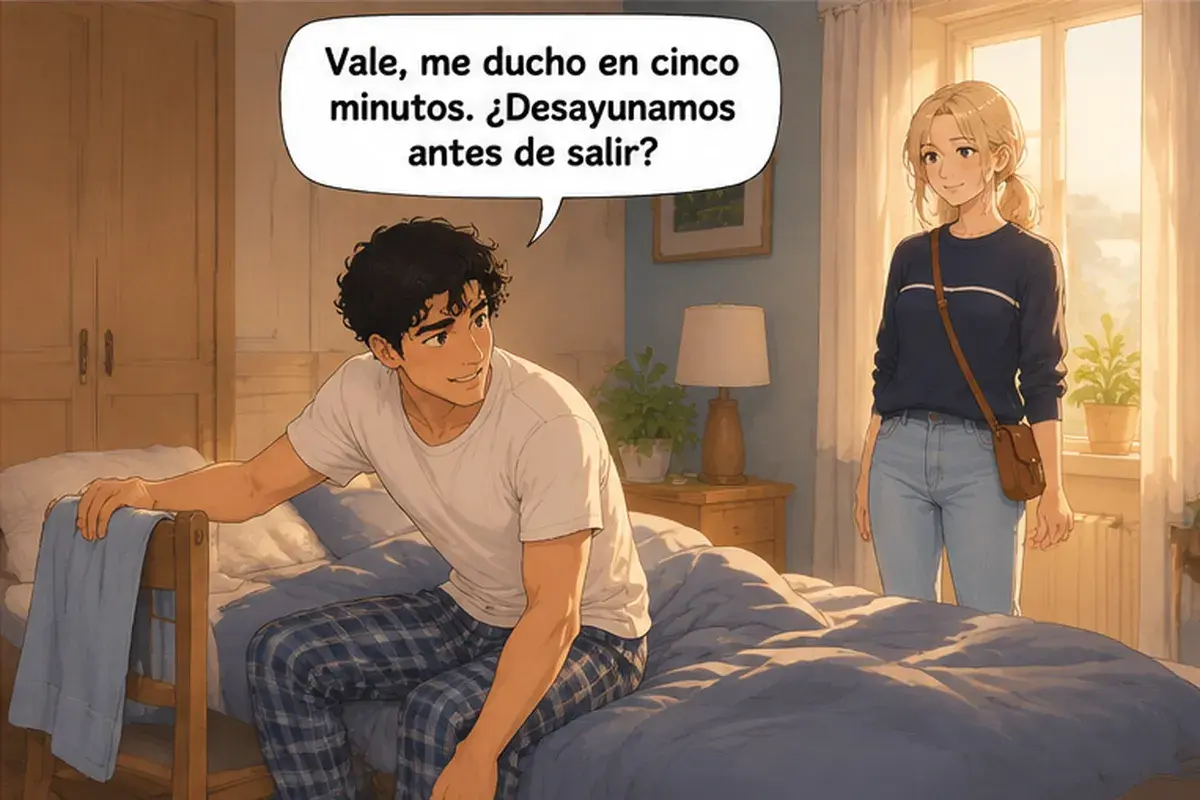
- Pablo
Vale, me ducho en cinco minutos. ¿Desayunamos antes de salir?
OK, I'll take a shower in five minutes. Shall we have breakfast before leaving?
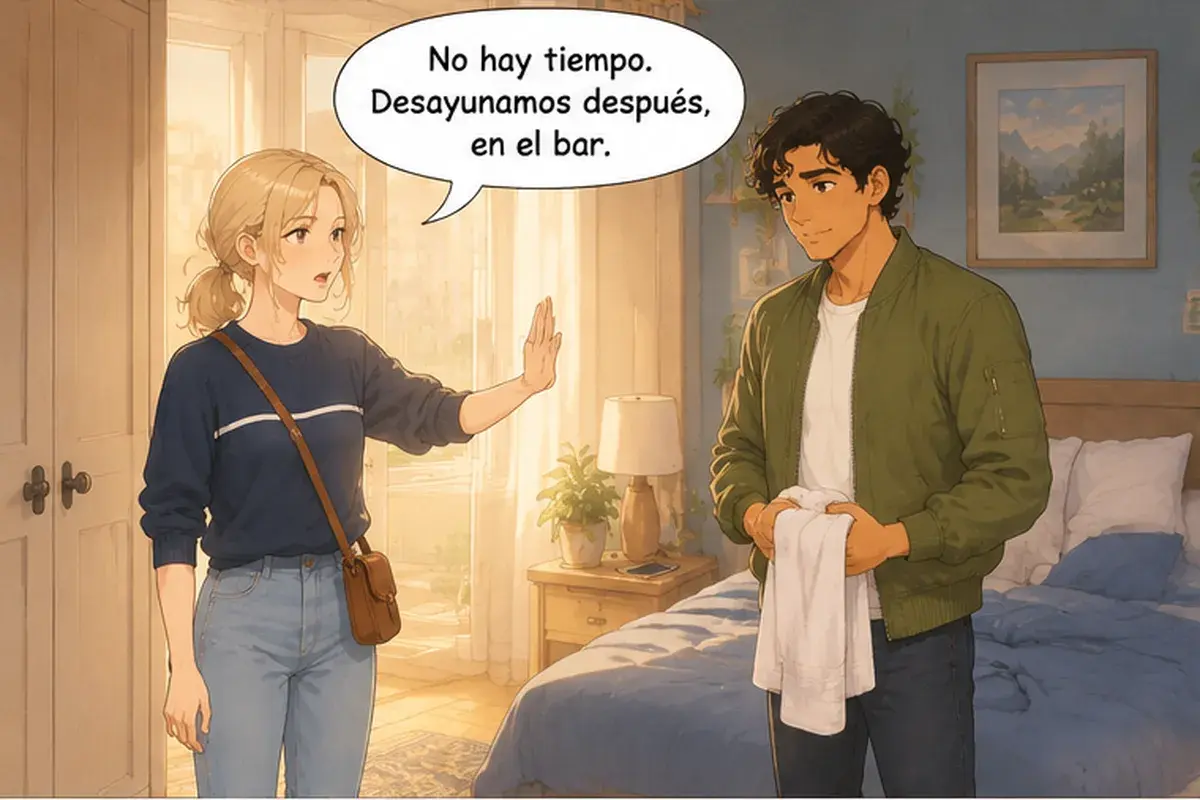
- Ana
No hay tiempo. Desayunamos después, en el bar.
There's no time. We'll have breakfast later, at the bar.
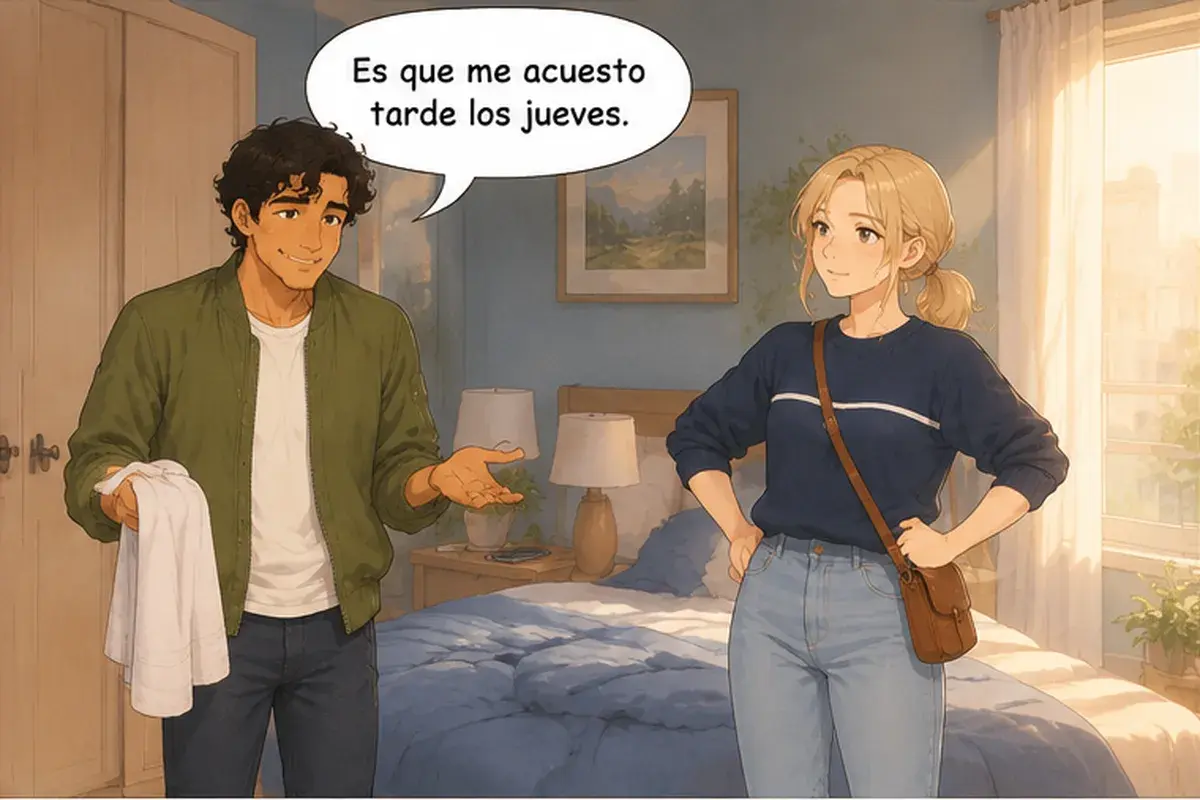
- Pablo
Es que me acuesto tarde los jueves.
It's just that I go to bed late on Thursdays.
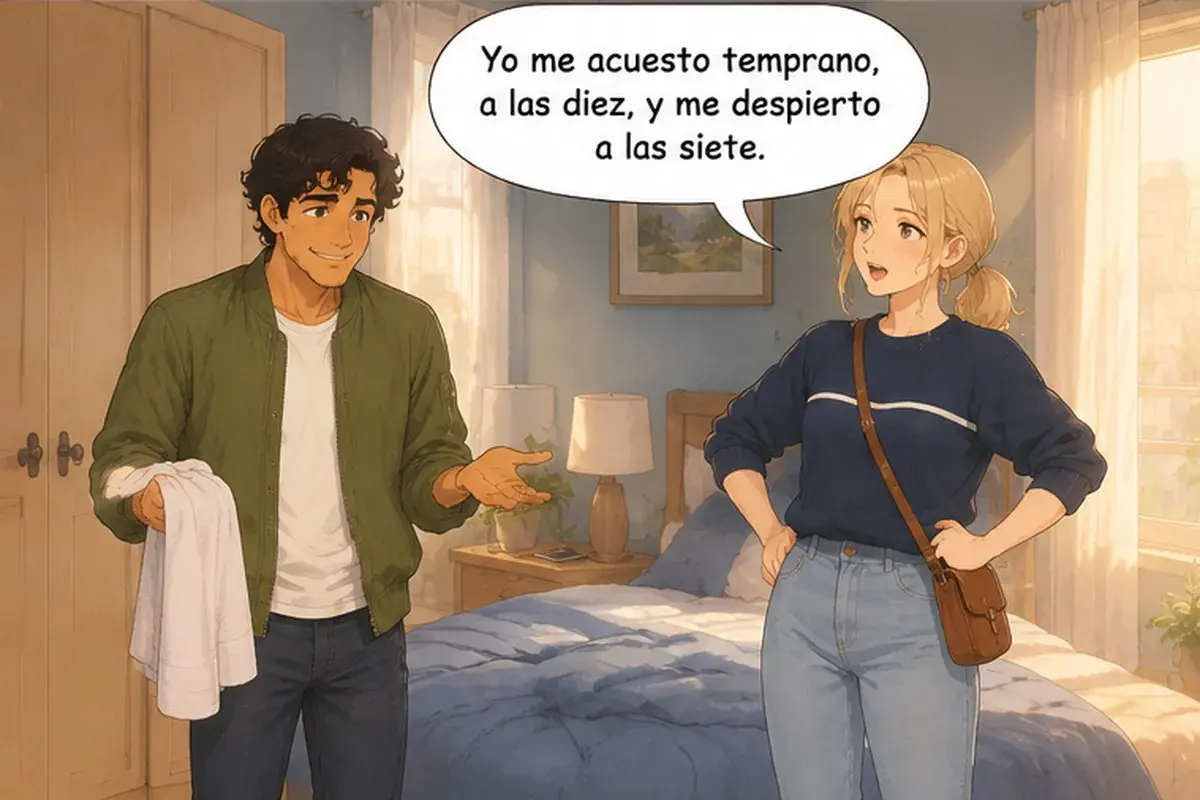
- Ana
Yo me acuesto temprano, a las diez, y me despierto a las siete.
I go to bed early, at ten, and I wake up at seven.
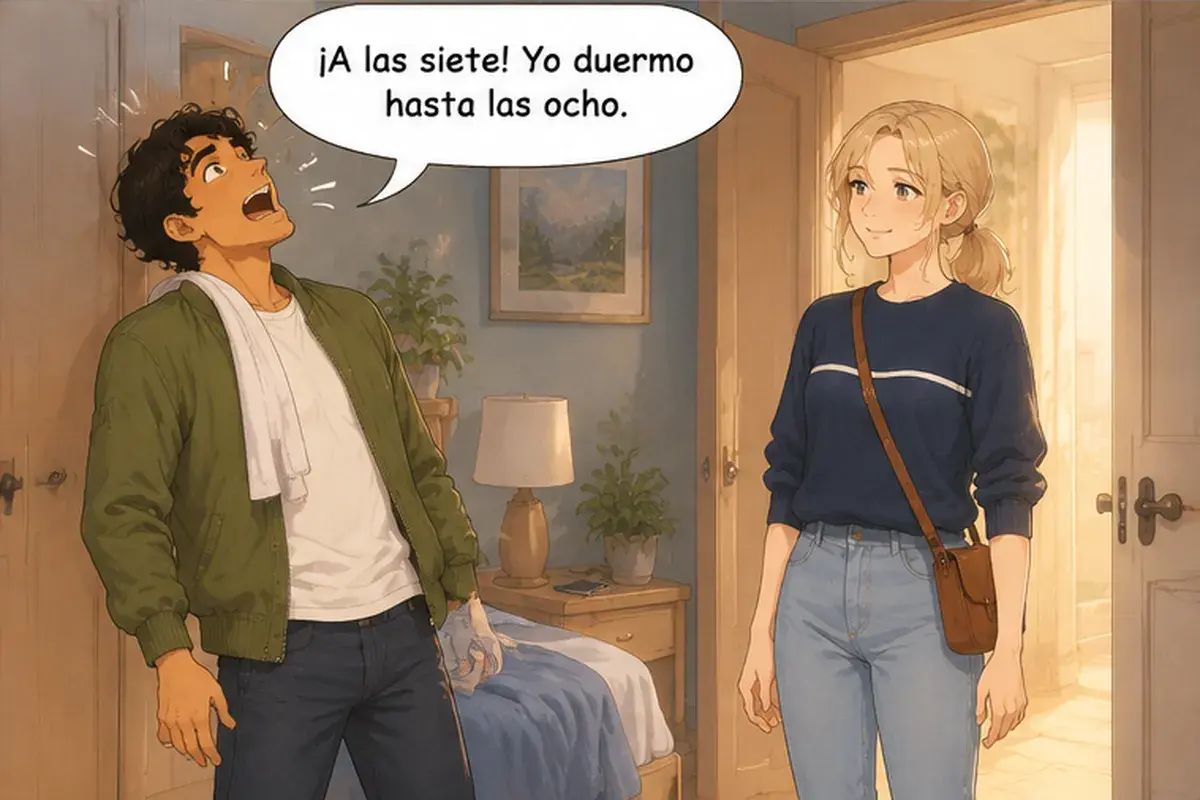
- Pablo
¡A las siete! Yo duermo hasta las ocho.
At seven! I sleep until eight.
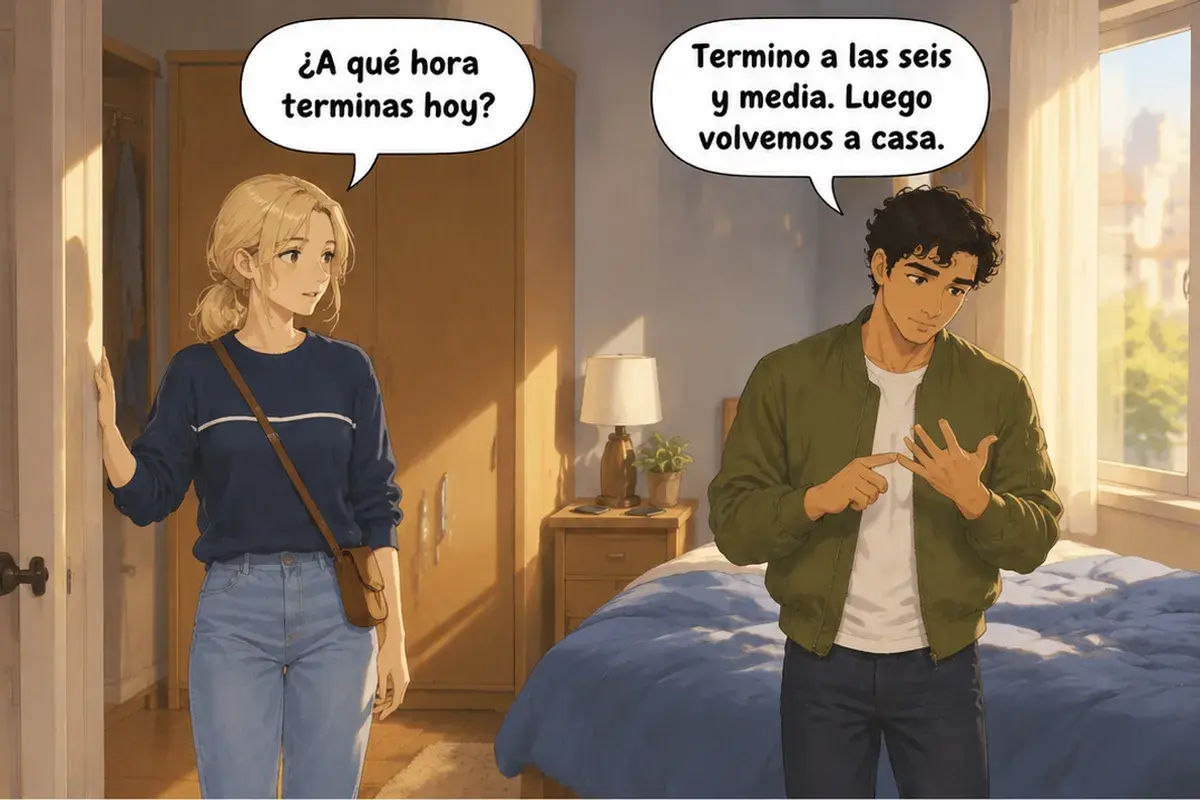
- Ana
¿A qué hora terminas hoy?
What time do you finish today?
- Pablo
Termino a las seis y media. Luego volvemos a casa.
I finish at six thirty. Then we go back home.
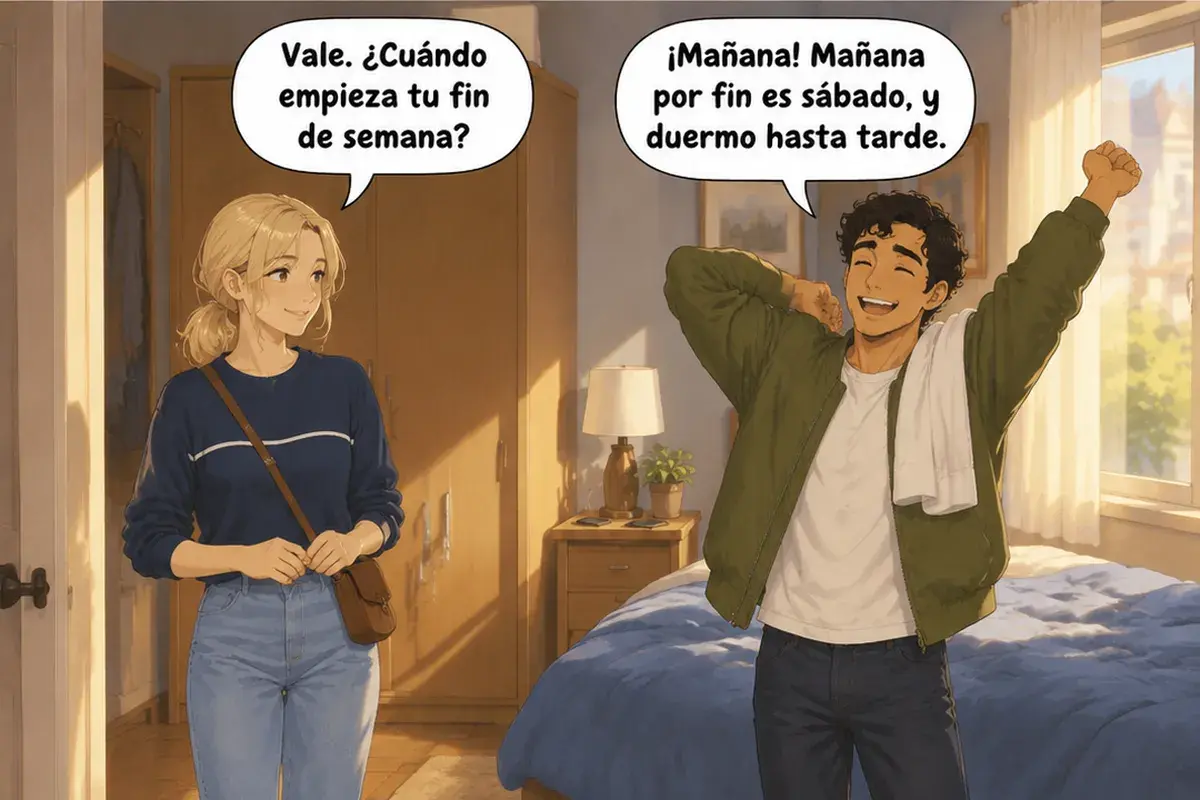
- Ana
Vale. ¿Cuándo empieza tu fin de semana?
OK. When does your weekend start?
- Pablo
¡Mañana! Mañana por fin es sábado, y duermo hasta tarde.
Tomorrow! Tomorrow it's finally Saturday, and I'm sleeping late.
Grammar for this text
Telling time. ¿Qué hora es? — Son las ocho y cuarto: word for word "they are the eight and a quarter", that is, a quarter past eight. It's son (plural) because there's more than one hour; only one o'clock takes es (es la una). The minutes are added to the hour that has already started: y cuarto — "and a quarter", y media — "and a half". So a las seis y media means "at six thirty".
What time it is, and at what time. Son las ocho y cuarto says what time it is now. A las nueve en punto says when something happens: "at nine o'clock sharp". To ask "what time?" about an event, say ¿A qué hora…?: ¿A qué hora terminas hoy?
me ducho, me acuesto, me despierto. These are reflexive verbs: the action goes back to the person who does it, word for word "I put myself to bed", "I wake myself up". In English it's just "I go to bed", "I wake up". Me goes before the verb. When the stress falls on the stem, its vowel changes: acostarse → me acuesto, despertarse → me despierto, and also dormir → duermo, empezar → empieza.
¡levántate! "Get up!" is a command for tú: take the él / ella form (levantarse → levanta) and attach te to the end. The accent mark over the a keeps the stress where it was. More about this in unit 6 of level A2.
Days of the week. Hoy es viernes — "today is Friday", with no article. Los jueves, with los, means "on Thursdays", every Thursday.
Short phrases. Es que me acuesto tarde — es que starts an explanation or an excuse: "it's just that…", "the thing is…". Antes de salir — antes de + infinitive: "before leaving". ¿Desayunamos…? and Luego volvemos a casa — Spanish often uses the present tense for near plans, where English says "shall we…?" or "we'll…".
Words and grammar of the unit: Ask the time and describe your day.
Learn the words from the texts with flashcards
In the app, you can tap any word in a text to see its translation, forms and examples, and new words stick with flashcards. 15 minutes a day.
Start for freeEverything is open for free. No card needed to sign up.