

Spanish dialogue with translation · A1 · 14 lines
Quisiera un café con leche, por favor I'd like a coffee with milk, please
Comic · 10 panels
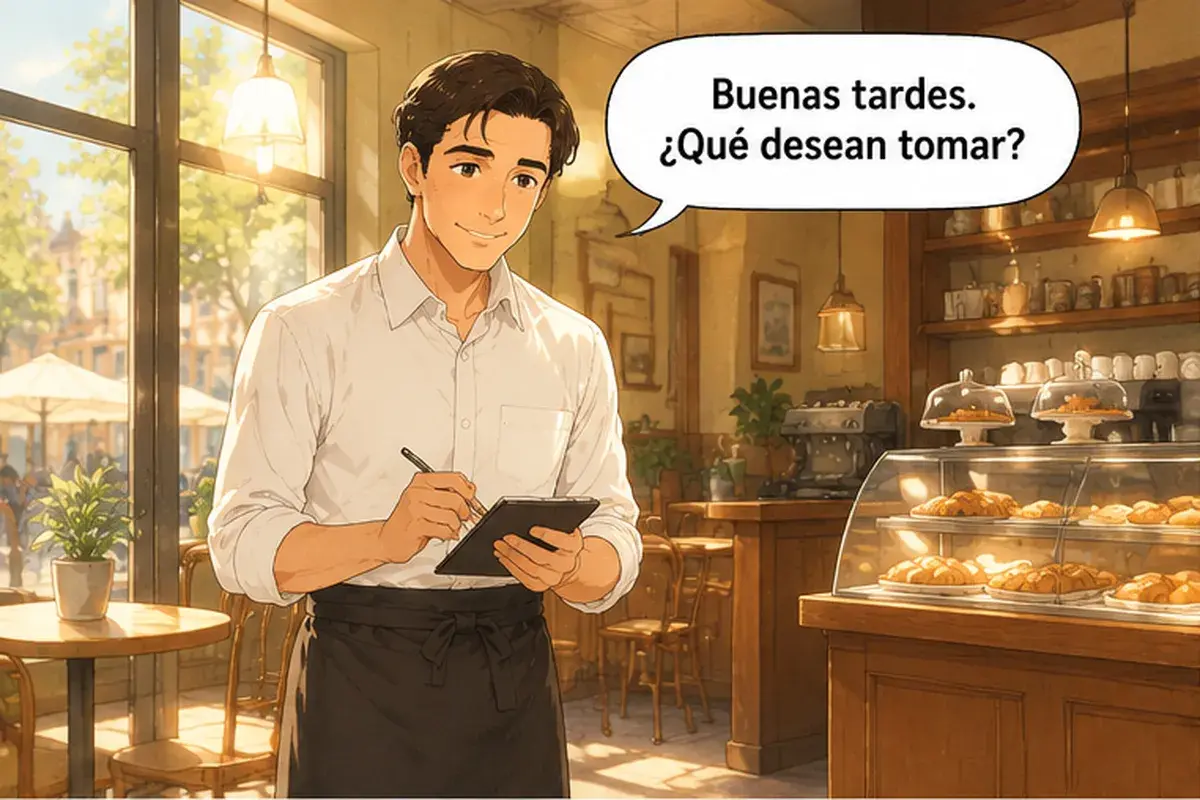
- Camarero
Buenas tardes. ¿Qué desean tomar?
Good afternoon. What would you like to have? (to several people, formal)
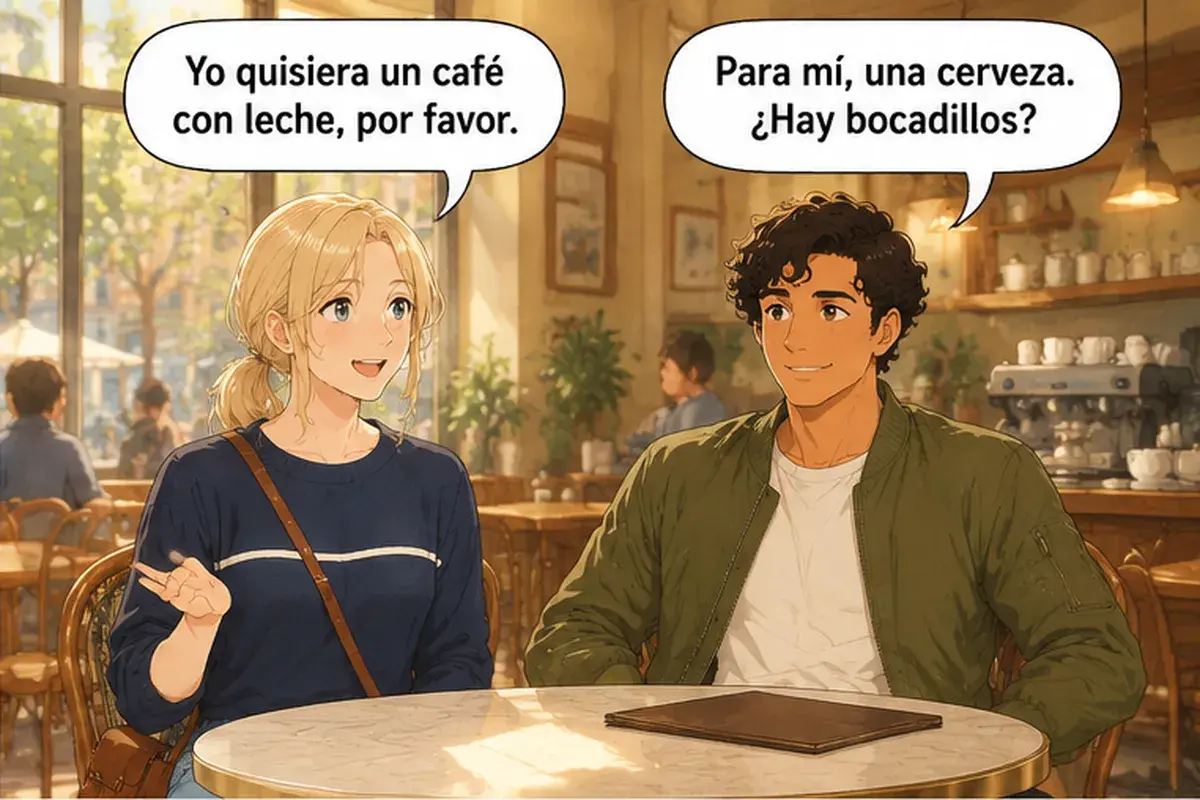
- Ana
Yo quisiera un café con leche, por favor.
I'd like a coffee with milk, please.
- Pablo
Para mí, una cerveza. ¿Hay bocadillos?
For me, a beer. Are there any sandwiches?
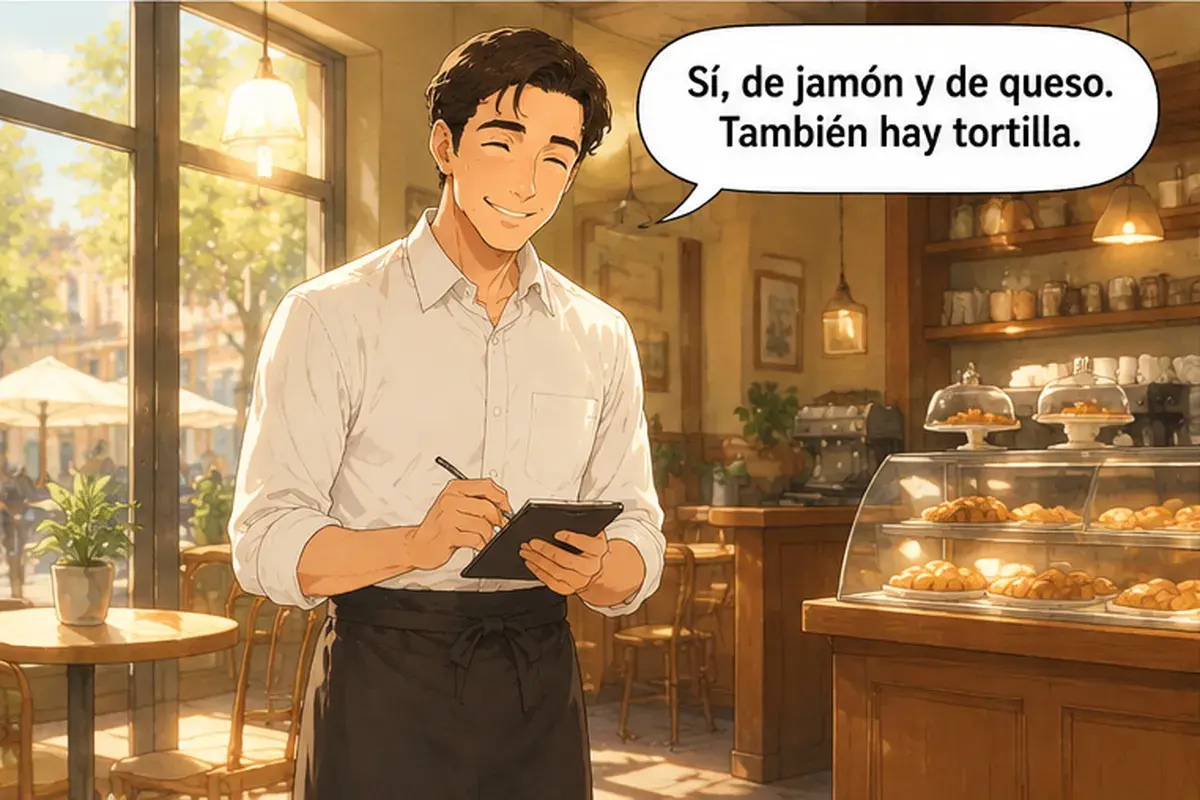
- Camarero
Sí, de jamón y de queso. También hay tortilla.
Yes, ham ones and cheese ones. There's also tortilla.
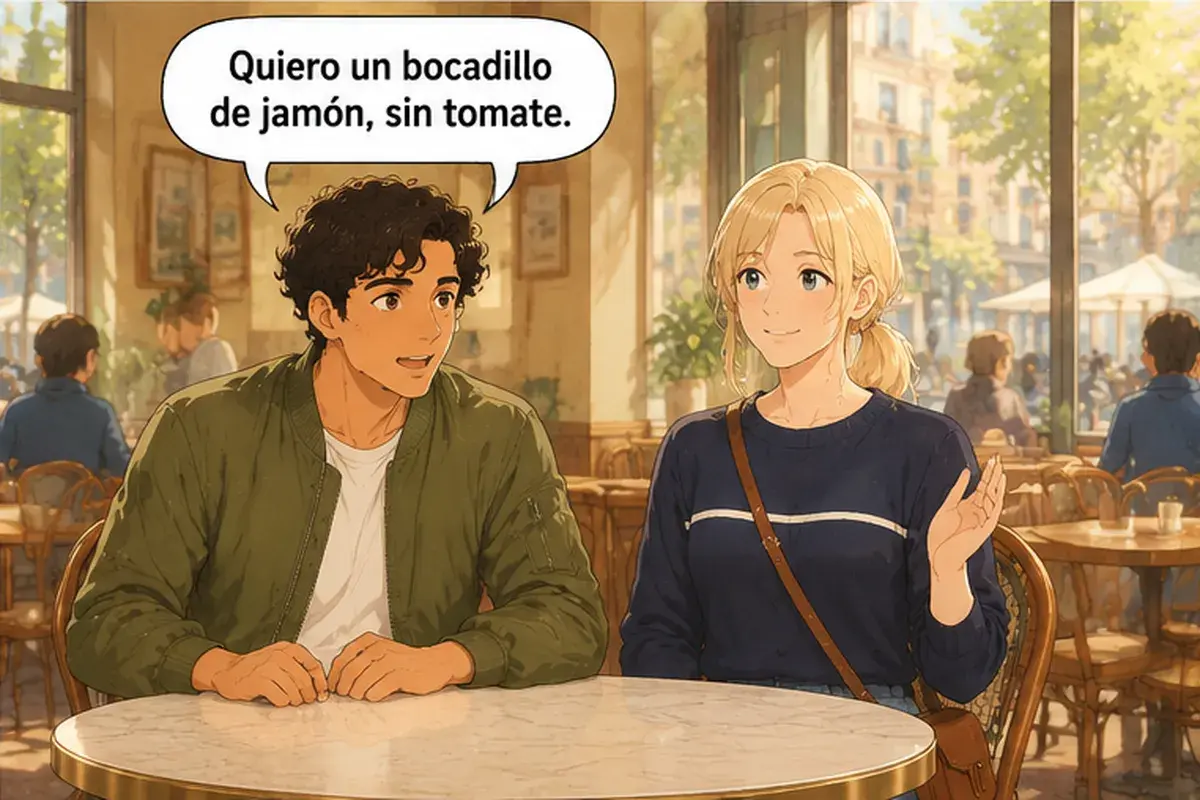
- Pablo
Quiero un bocadillo de jamón, sin tomate.
I want a ham sandwich, without tomato.
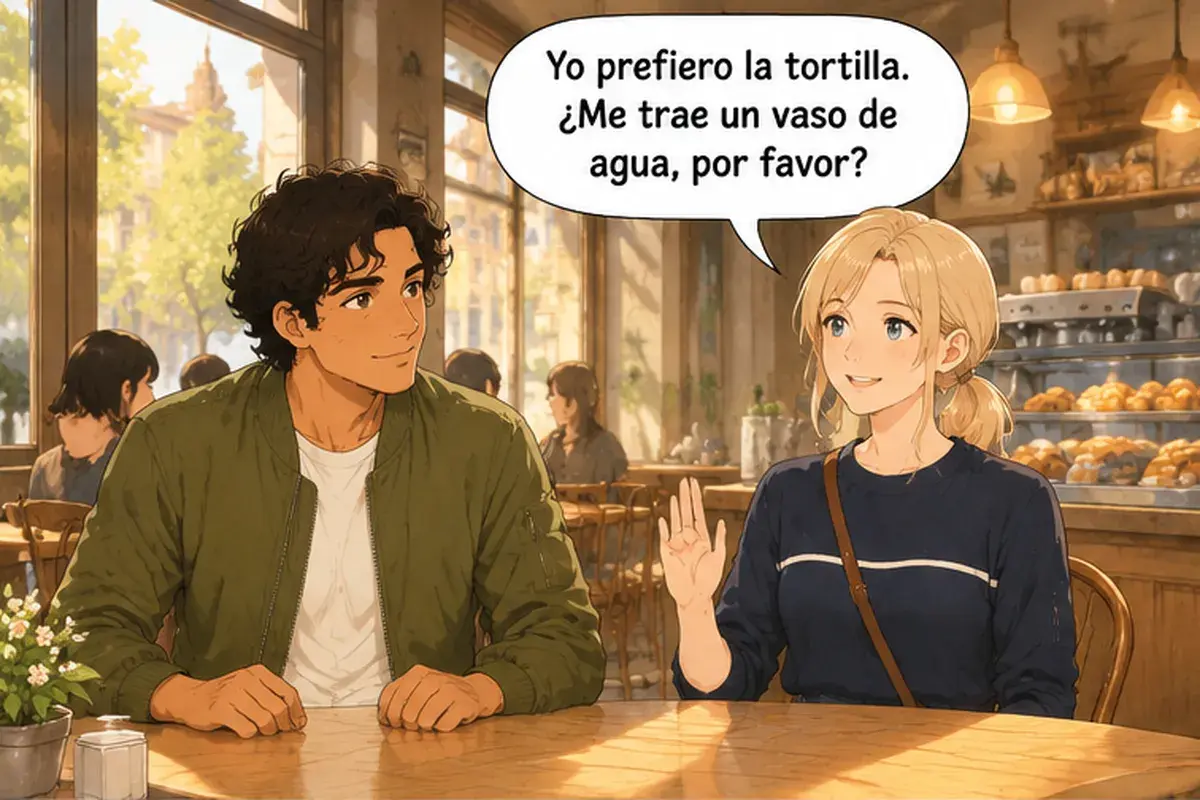
- Ana
Yo prefiero la tortilla. ¿Me trae un vaso de agua, por favor?
I prefer the tortilla. Will you bring me a glass of water, please? (formal)
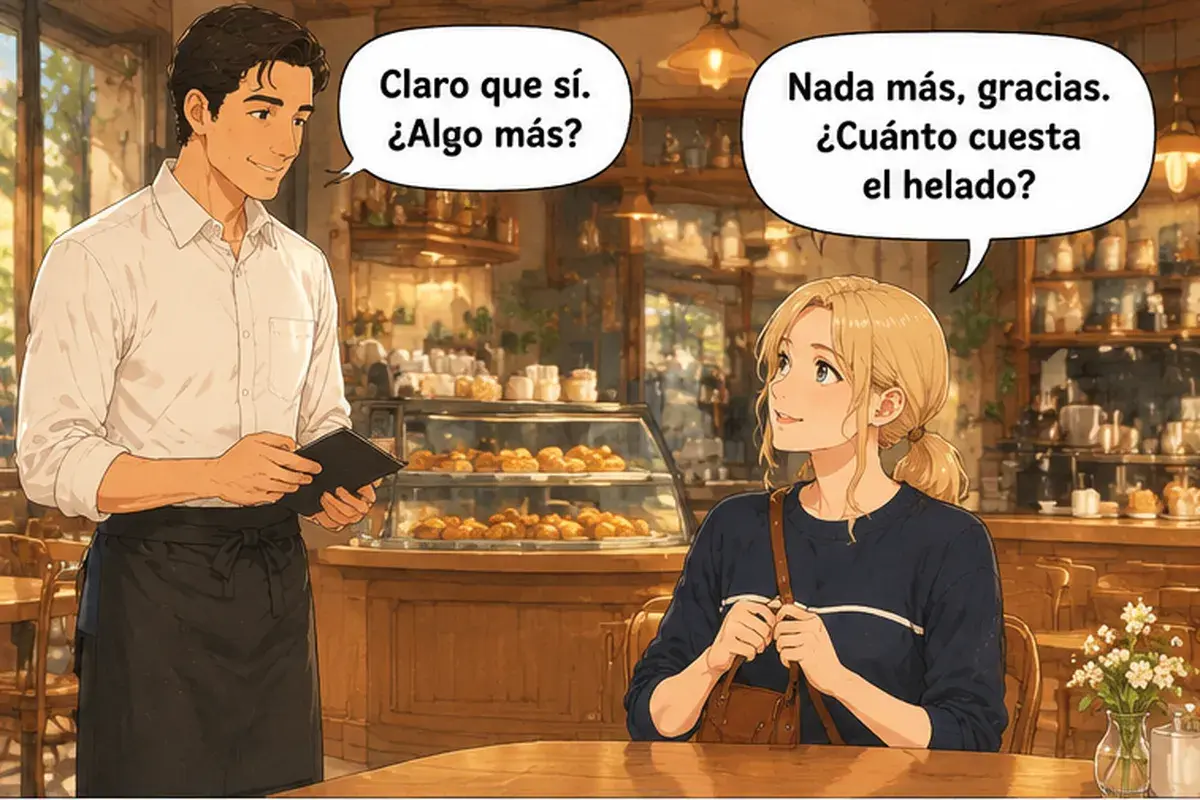
- Camarero
Claro que sí. ¿Algo más?
Of course. Anything else?
- Ana
Nada más, gracias. ¿Cuánto cuesta el helado?
Nothing else, thanks. How much is the ice cream?
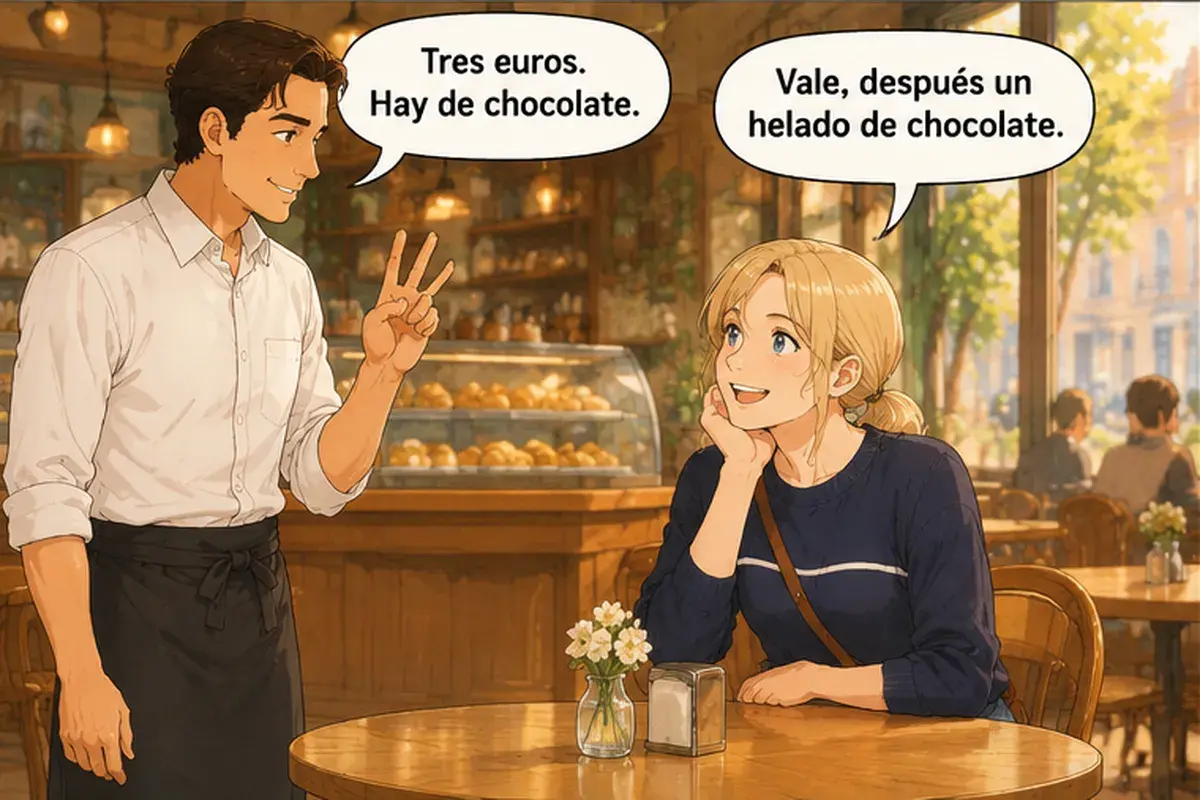
- Camarero
Tres euros. Hay de chocolate.
Three euros. There's chocolate.
- Ana
Vale, después un helado de chocolate.
OK, a chocolate ice cream later.
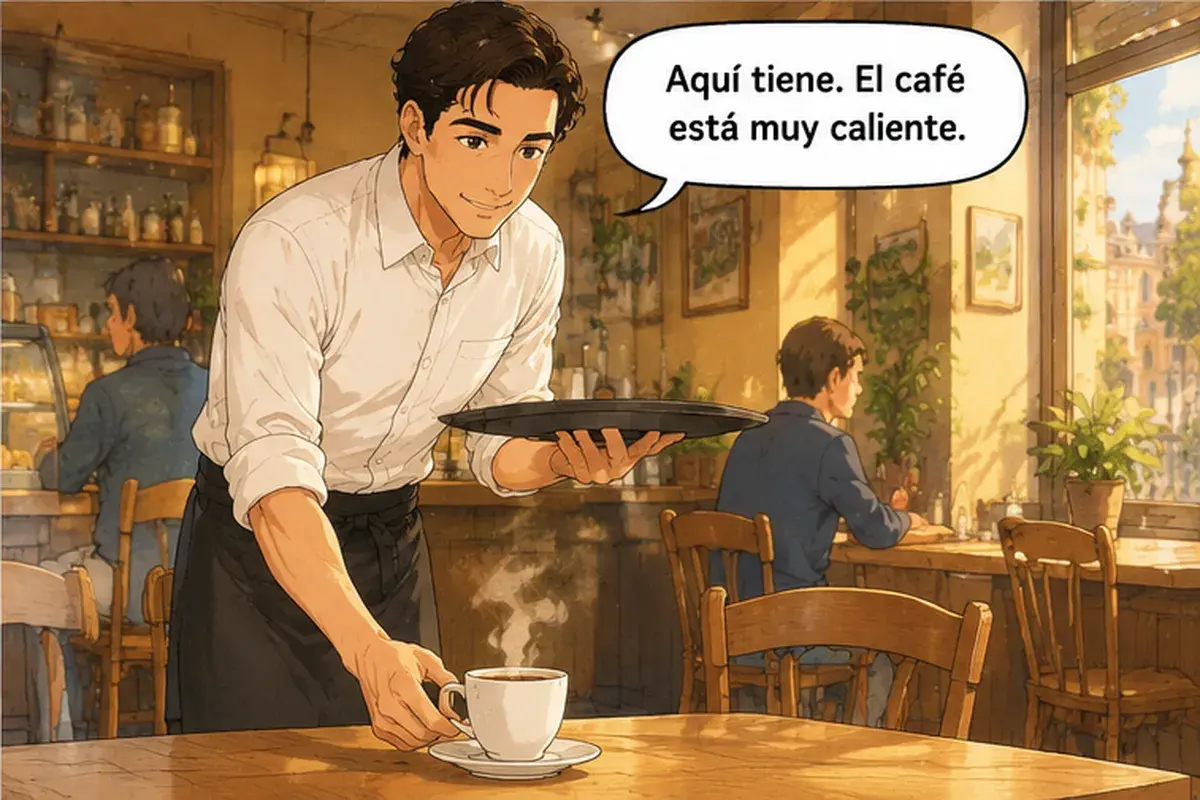
- Camarero
Aquí tiene. El café está muy caliente.
Here you go. The coffee is very hot (formal).

- Pablo
¡Y mi cerveza está muy fría! ¡Qué rica! ¿Me pone otra, por favor?
And my beer is very cold! So good! Can I have another one, please? (formal)
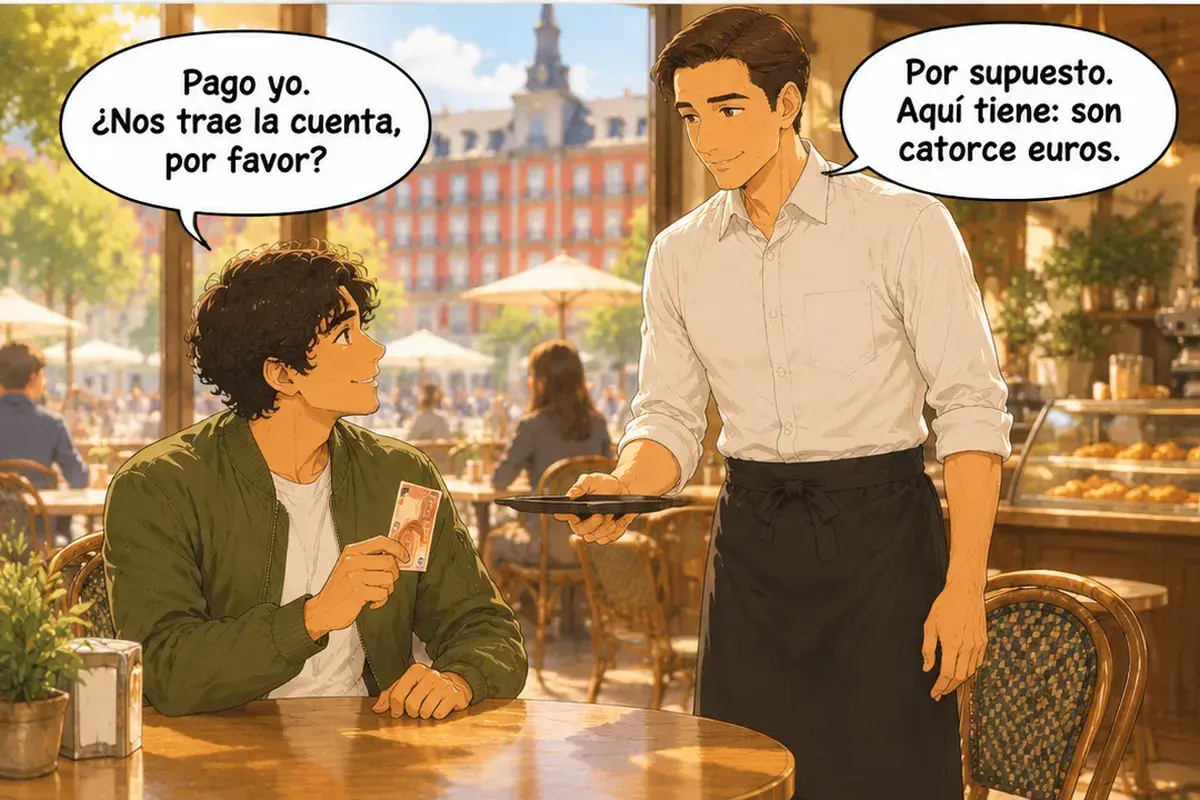
- Pablo
Pago yo. ¿Nos trae la cuenta, por favor?
I'm paying. Will you bring us the check, please? (formal)
- Camarero
Por supuesto. Aquí tiene: son catorce euros.
Of course. Here you go: that's fourteen euros (formal).
Grammar for this text
Ordering politely: quiero and quisiera. Quiero un bocadillo de jamón means "I want a ham sandwich": direct, and perfectly normal. Yo quisiera un café con leche means "I'd like a coffee with milk": more polite, and this is how you talk to a waiter. Both come from querer (to want). Quisiera follows a rule you'll learn much later (the stem quis- and the ending -iera), so for now just learn it as a ready-made word.
Asking: ¿Me trae…? ¿Me trae un vaso de agua, por favor? and ¿Nos trae la cuenta, por favor? Trae comes from traer (to bring): present tense, usted form, because you speak to a waiter formally. Word for word it's "You bring me…?": you ask with a question, not a command. Me and nos mean "me" and "us". The same goes for ¿Me pone otra, por favor?: pone comes from poner (to put, to serve), and otra means "another one" (another cerveza). Don't put una before otra.
What's in it: de jamón, de chocolate. Un bocadillo de jamón is a ham sandwich, un helado de chocolate is a chocolate ice cream: Spanish names the filling or the flavor with de after the noun, where English puts the word first. But it's un café con leche with con (with), because the milk is added to the coffee.
está caliente, está fría. El café está muy caliente, mi cerveza está muy fría: to say what a dish or a drink is like right now (hot, cold), use estar.
son catorce euros, Aquí tiene. The total is said with son: son catorce euros (that's fourteen euros). Aquí tiene means "here you go": you say it when you hand something over. In Pago yo, the yo at the end adds weight: "I'm paying, not you."
Words and grammar of the unit: Order food and ask for the check.
Learn the words from the texts with flashcards
In the app, you can tap any word in a text to see its translation, forms and examples, and new words stick with flashcards. 15 minutes a day.
Start for freeEverything is open for free. No card needed to sign up.