

German dialogue with translation · B2 · 14 lines
Wo ist mein Zuhause? Where is my home?
Comic · 14 panels
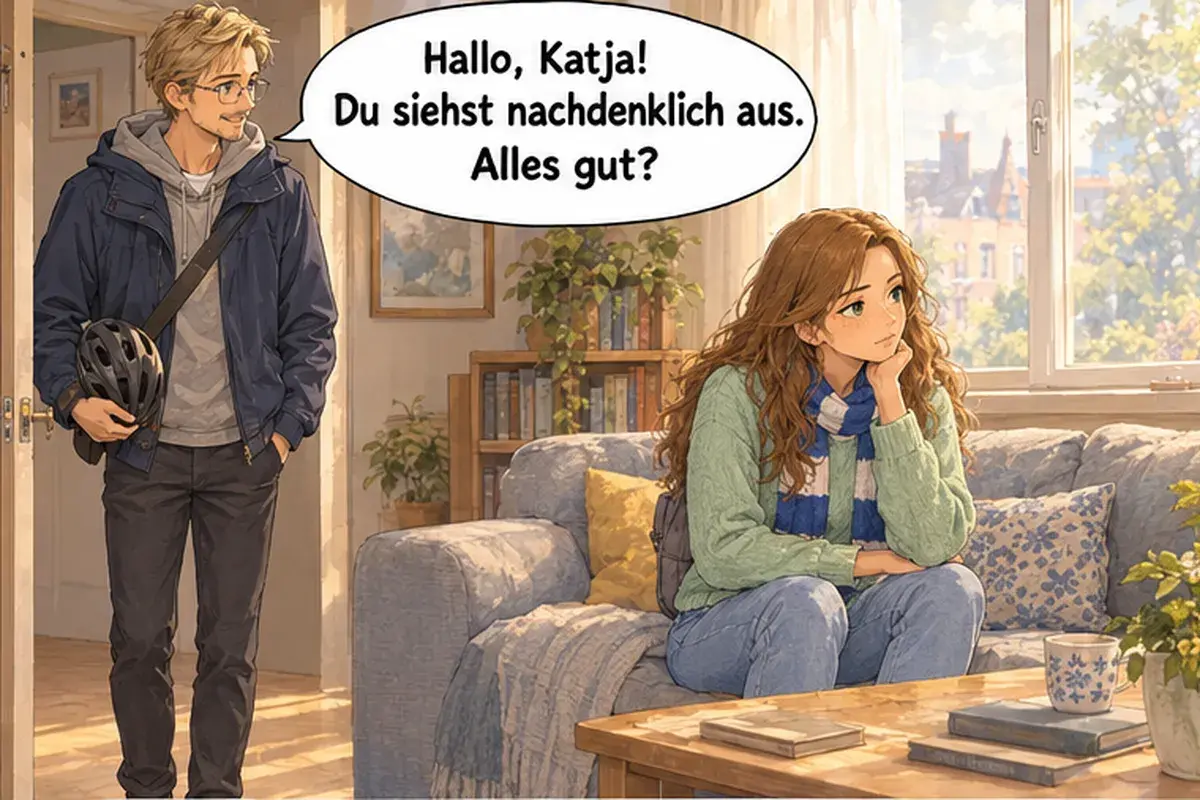
- Lukas
Hallo, Katja! Du siehst nachdenklich aus. Alles gut?
Hi, Katja! You look thoughtful. Everything okay?
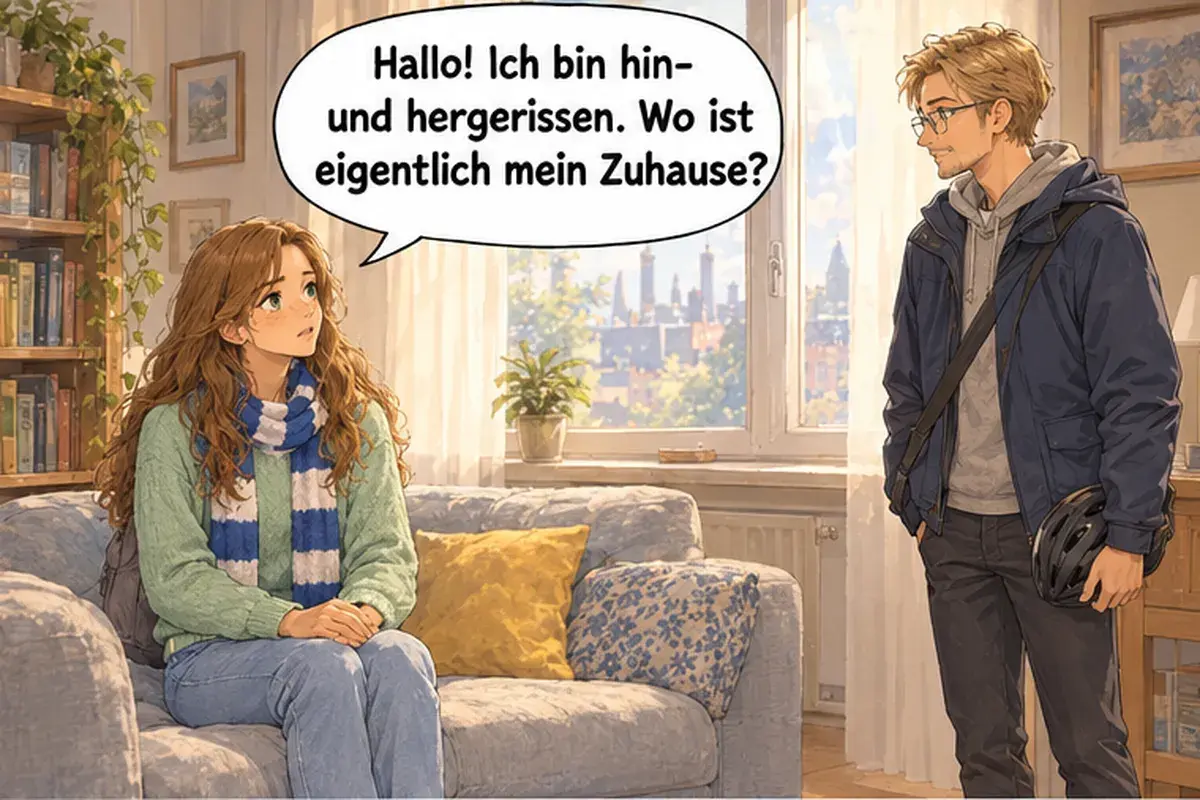
- Katja
Hallo! Ich bin hin- und hergerissen. Wo ist eigentlich mein Zuhause?
Hi! I'm torn. Where is my home, actually?
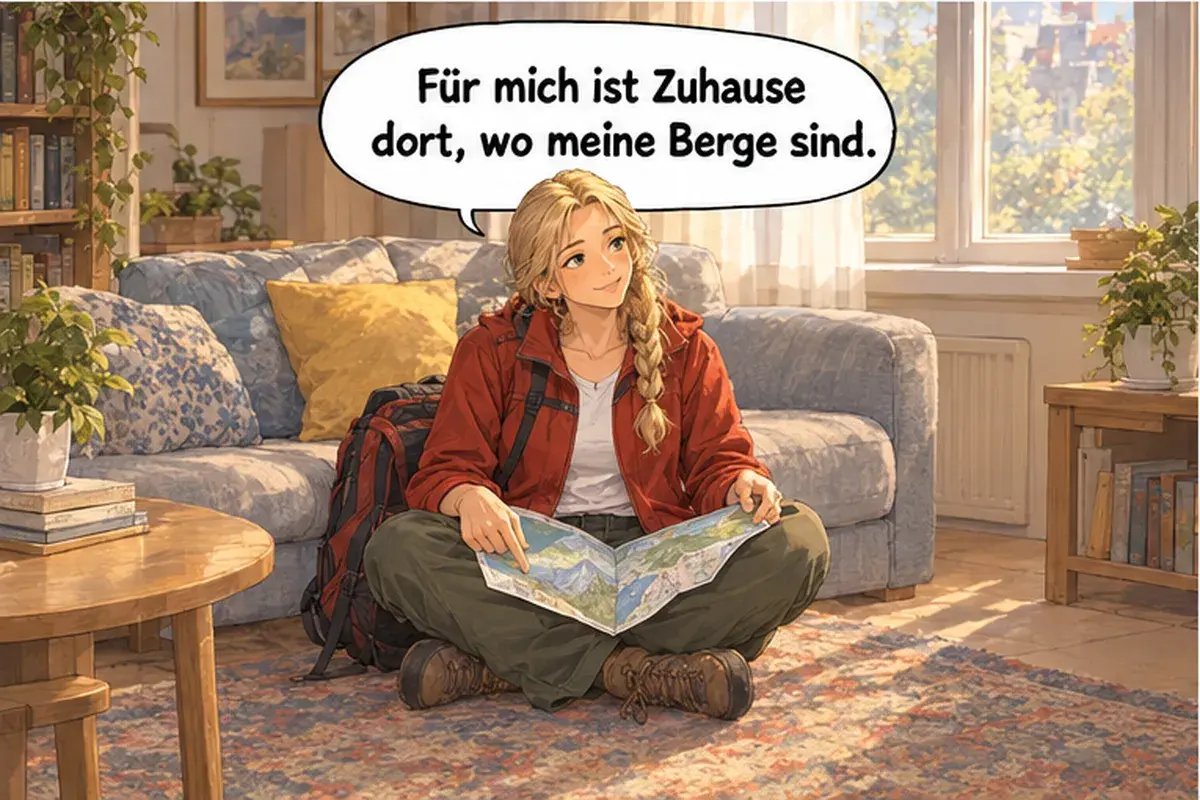
- Hanna
Für mich ist Zuhause dort, wo meine Berge sind.
For me, home is where my mountains are.

- Lukas
Mein Lebensmittelpunkt ist Berlin. Hier bin ich erwachsen geworden.
The center of my life is Berlin. I grew up here.
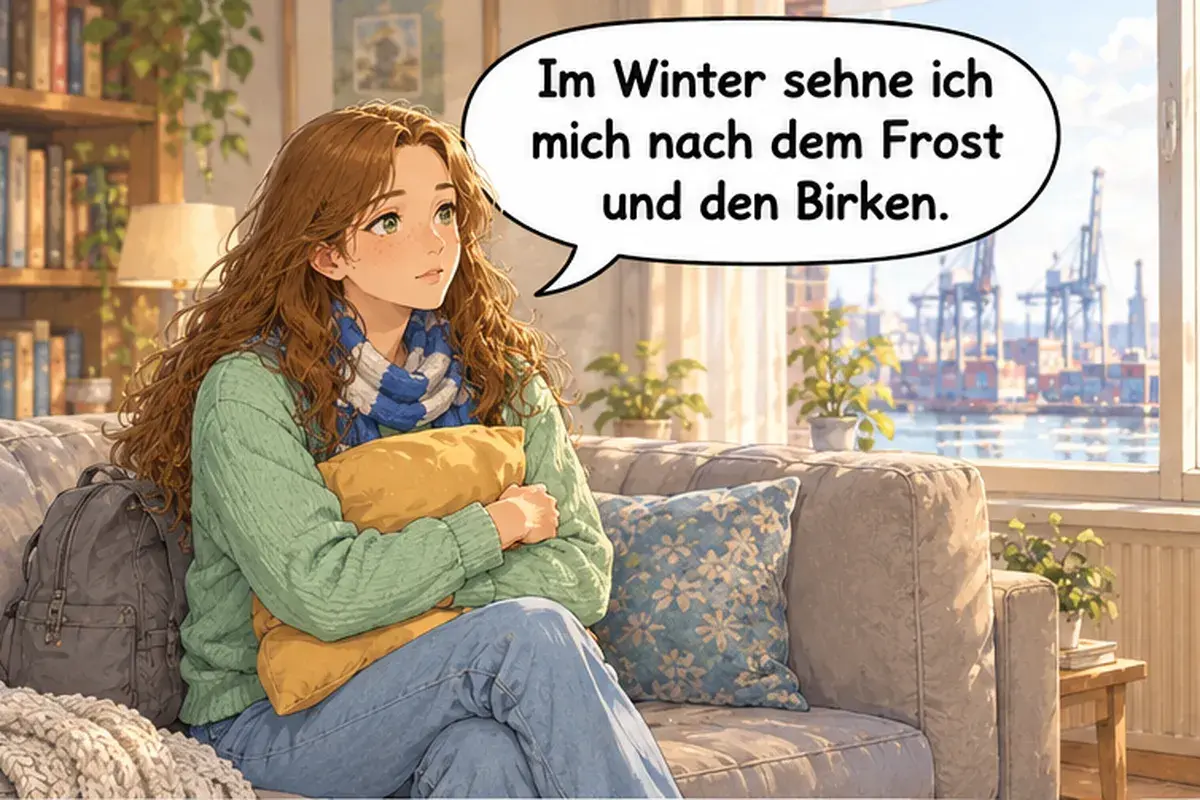
- Katja
Im Winter sehne ich mich nach dem Frost und den Birken.
In winter I long for the frost and the birches.
- Hanna
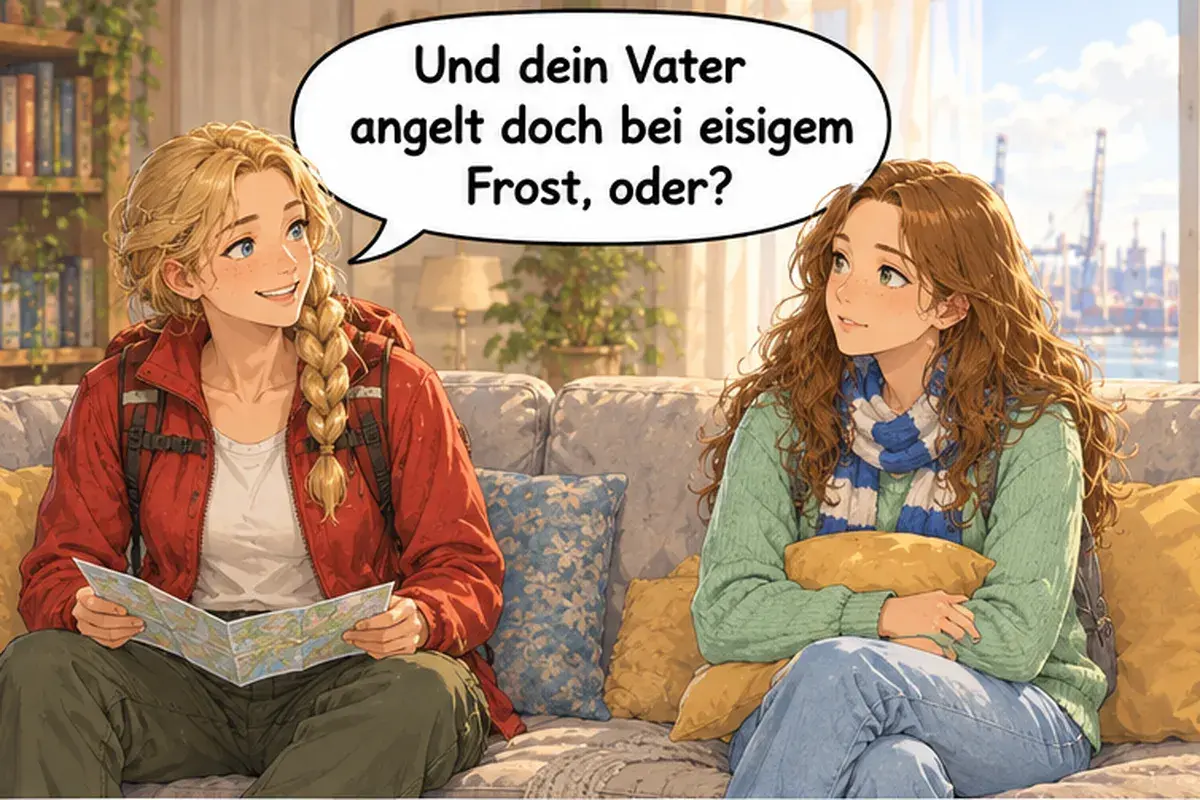
Und dein Vater angelt doch bei eisigem Frost, oder?
And your father goes fishing in icy frost, right?
- Katja
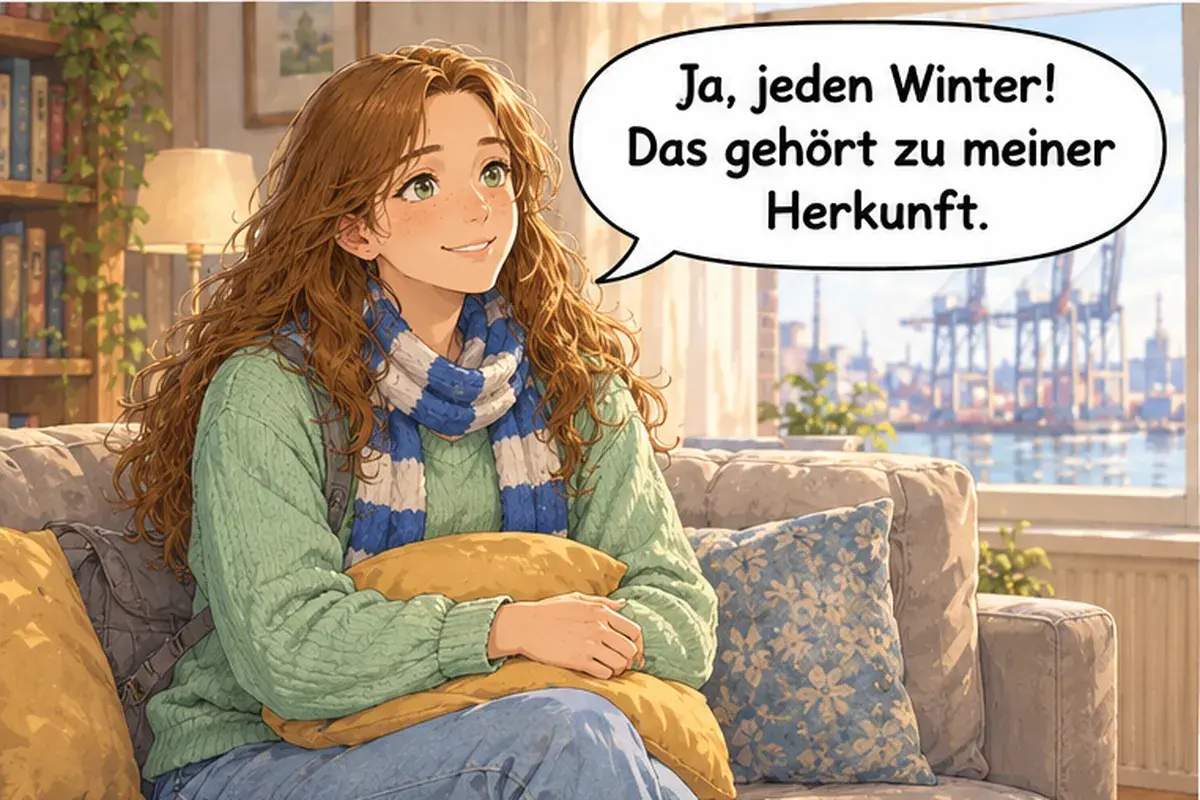
Ja, jeden Winter! Das gehört zu meiner Herkunft.
Yes, every winter! It's part of where I come from.

- Lukas
Heutzutage ist die Entfernung kein Problem mehr.
These days the distance is no longer a problem.

- Katja
Stimmt, aber ein Videoanruf ersetzt keine Nähe.
Right, but a video call doesn't replace closeness.
- Hanna
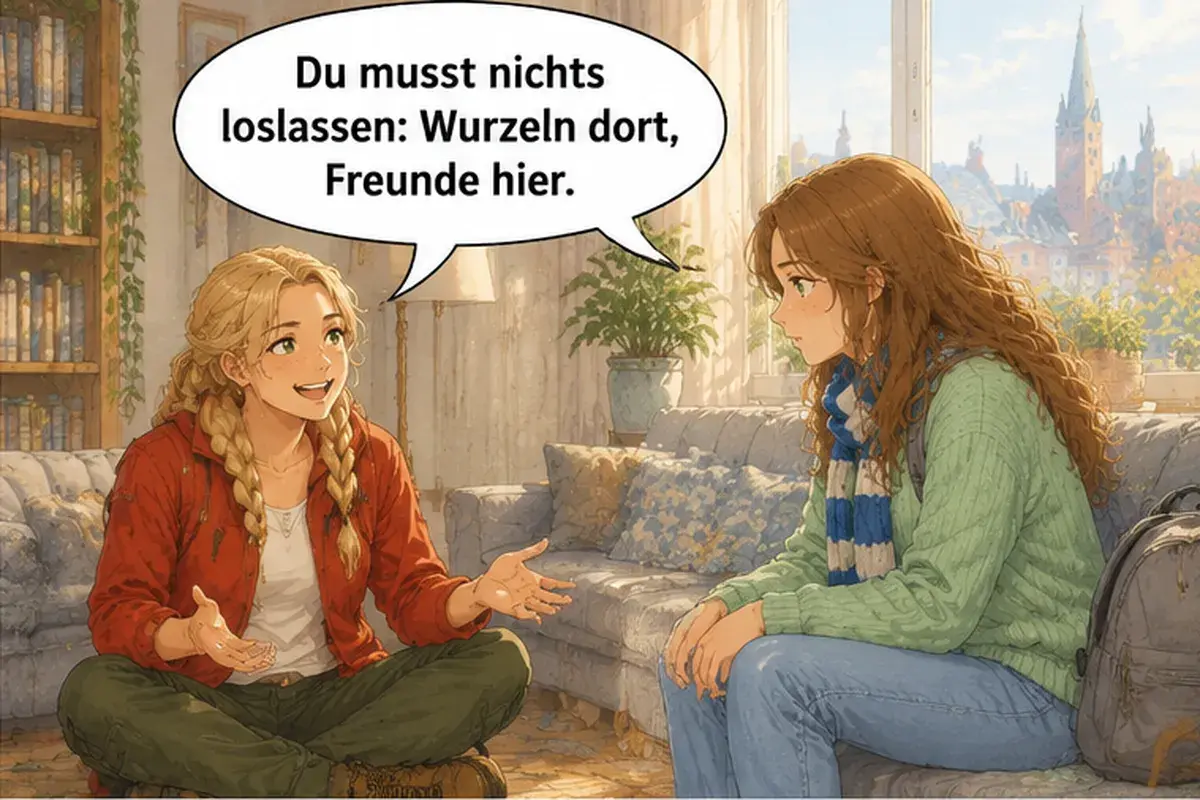
Du musst nichts loslassen: Wurzeln dort, Freunde hier.
You don't have to let go of anything: roots there, friends here.

- Katja
Hier gehöre ich schon ein bisschen dazu. Aber ganz?
I kind of belong here already. But completely?

- Lukas
Das braucht Zeit. Halte fest, was dir wichtig ist.
That takes time. Hold on to what matters to you.

- Katja
Danke, ihr zwei. Ihr seid ein Stück Heimat für mich.
Thanks, you two. You're a piece of home for me. (to several people)

- Hanna
Das hören wir gern. Bis Weihnachten, Katja!
We love hearing that. See you at Christmas, Katja!
Grammar for this text
- Du siehst nachdenklich aus — You look thoughtful.
aussehen("to look, to appear"): the prefixausgoes to the end of the sentence.siehstis theduform ofsehen:echanges toie. - Ich bin hin- und hergerissen — a fixed expression, "I'm torn". Literally "torn back and forth" (the past participle of
reißen, "to tear").binis theichform ofsein. - Für mich ist Zuhause dort, wo meine Berge sind —
dort, wo …means "(there) where …" (see the grammar block above). The verbsindis at the end.Zuhausewith a capital letter is "home" as the place where you belong; "at home" is two words:zu Hause. - Hier bin ich erwachsen geworden — the Perfekt (spoken past) of
erwachsen werden("to grow up"):bin … geworden. Afterhierthe verbbinstands beforeich. - Im Winter sehne ich mich nach dem Frost —
sich sehnen nach+ dative means "to long for". Dein Vater angelt doch bei eisigem Frost —angelnis "to fish with a rod".dochhere works like "right?" or "you know". Afterbeicomes the dative, and an adjective with no article takes the ending-em. - Das gehört zu meiner Herkunft —
gehören zu+ dative means "to be part of something";die Herkunftis "where you come from". Hier gehöre ich schon ein bisschen dazu —dazugehören("to belong, to fit in"):gehöreis theichform, and the prefixdazugoes to the end. - Halte fest, was dir wichtig ist — the imperative of
festhalten("to hold on to"):halte … fest.was dir wichtig istis "what matters to you"; the verb is at the end. Ihr seid ein Stück Heimat für mich —ihr seidis theihrform ofsein: "you (plural) are".
Words and grammar of the unit: Talk about what matters.
Learn the words from the texts with flashcards
In the app, you can tap any word in a text to see its translation, forms and examples, and new words stick with flashcards. 15 minutes a day.
Start for freeEverything is open for free. No card needed to sign up.