

German dialogue with translation · B2 · 14 lines
Kommen wir zur Sache Let's get to the point
Comic · 14 panels

- Sabine
Moin! Alle sind anwesend. Auf der Tagesordnung steht nur eins: unsere Besprechungen.
Hi! Everyone is here. There's only one thing on the agenda: our meetings.

- Tobias
Das ist meine feste Überzeugung: Ohne Besprechung jeden Morgen verlieren wir den Überblick.
That's my firm conviction: without a meeting every morning, we lose track of what's going on.
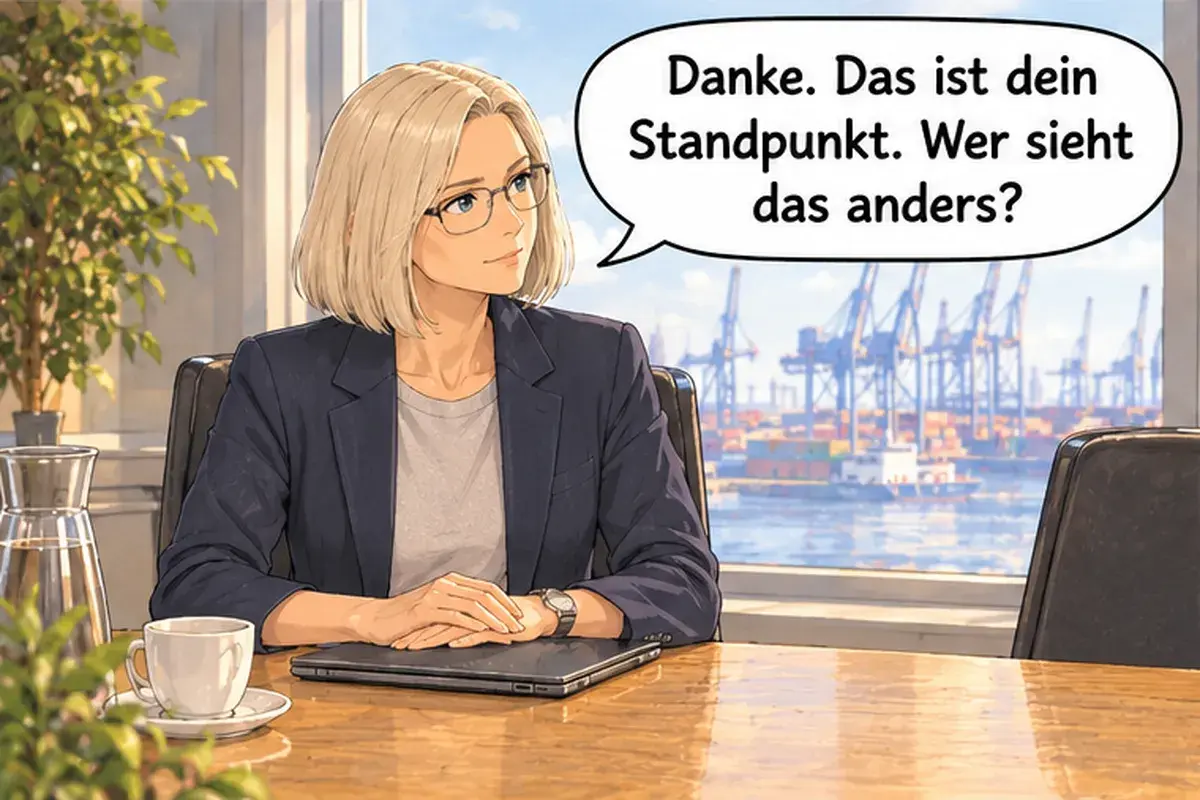
- Sabine
Danke. Das ist dein Standpunkt. Wer sieht das anders?
Thanks. That's your position. Who sees it differently?

- Katja
Jeden Tag? Das ist sinnlos, zumal wir ohnehin viele Nachrichten schreiben.
Every day? That's pointless, especially since we already write lots of messages anyway.

- Tobias
Sinnlos? Ganz im Gegenteil! In Nachrichten sieht man keine Gesichter.
Pointless? Quite the opposite! You can't see faces in messages.
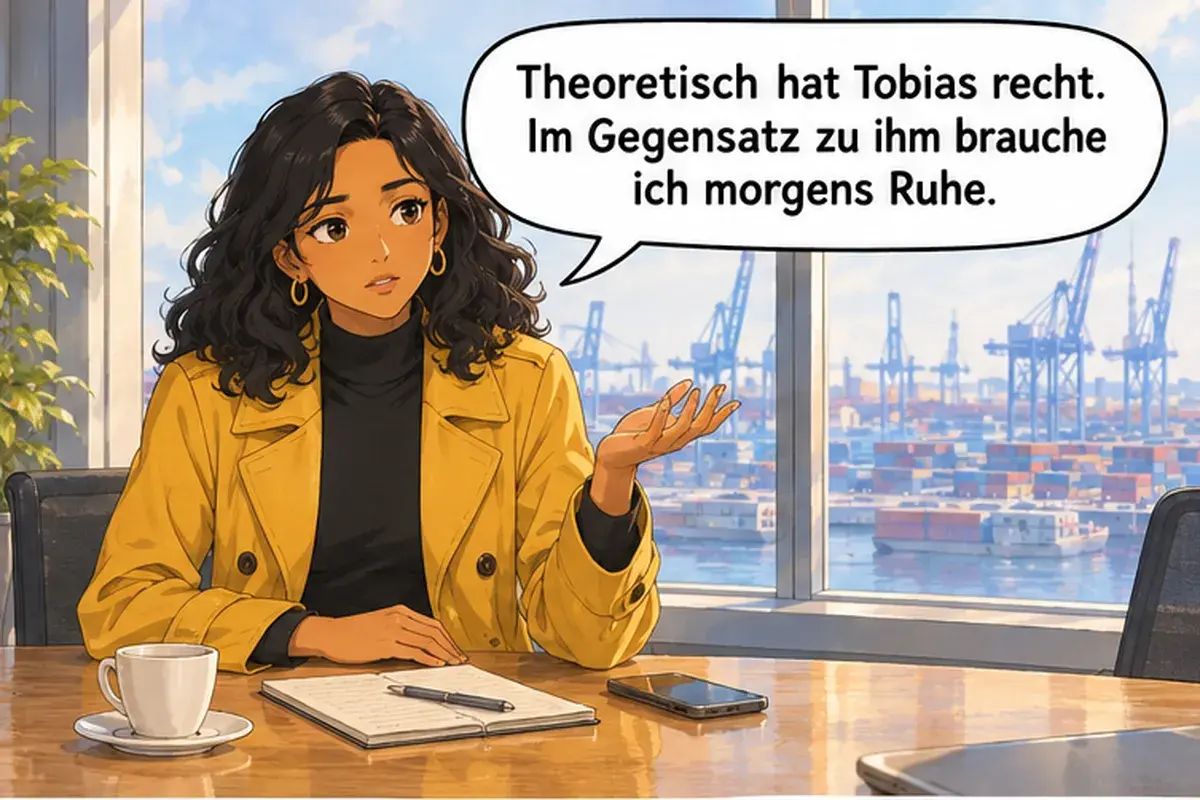
- Priya
Theoretisch hat Tobias recht. Im Gegensatz zu ihm brauche ich morgens Ruhe.
In theory, Tobias is right. In contrast to him, I need quiet in the morning.

- Sabine
Sicherlich habt ihr beide Argumente. Ich will keinen Konflikt, sondern eine Lösung.
Sure, you both have a point (to several people). I don't want a conflict but a solution.
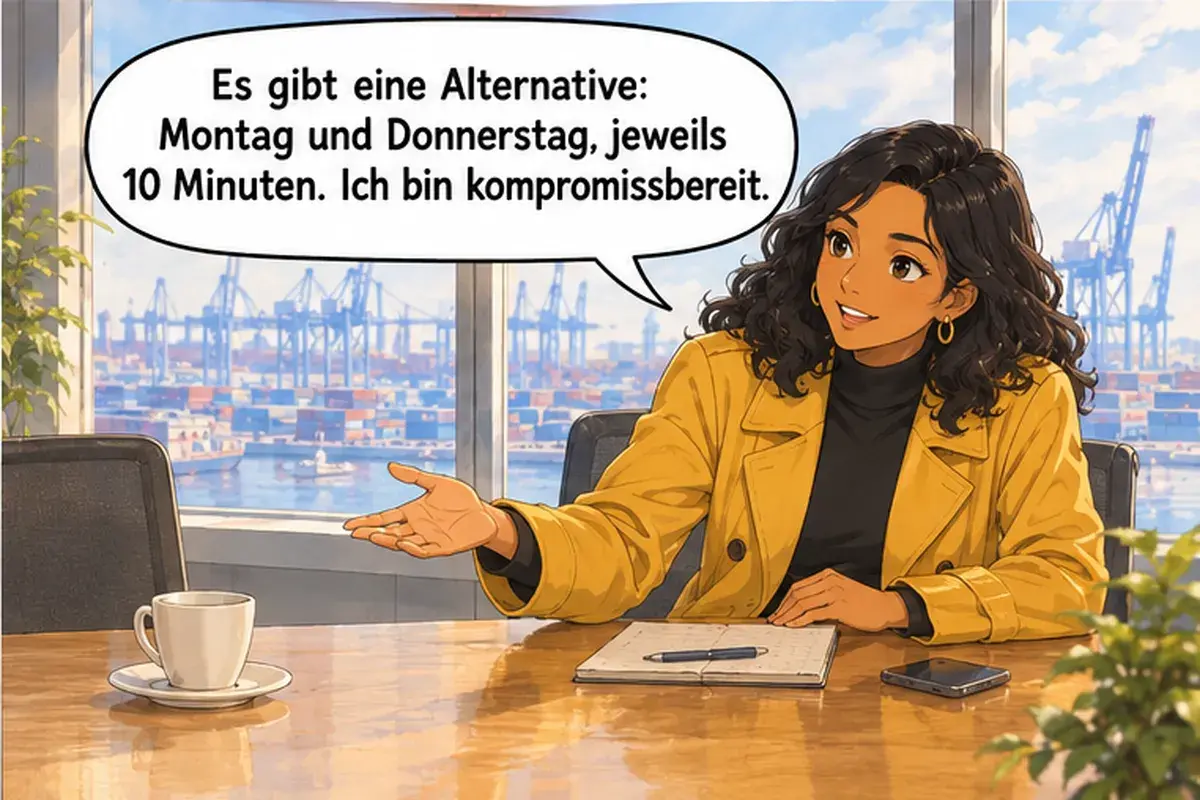
- Priya
Es gibt eine Alternative: Montag und Donnerstag, jeweils 10 Minuten. Ich bin kompromissbereit.
There's an alternative: Monday and Thursday, 10 minutes each. I'm willing to compromise.

- Tobias
Zweimal? Das ist lächerlich, das reicht keineswegs!
Twice? That's ridiculous, that's by no means enough!
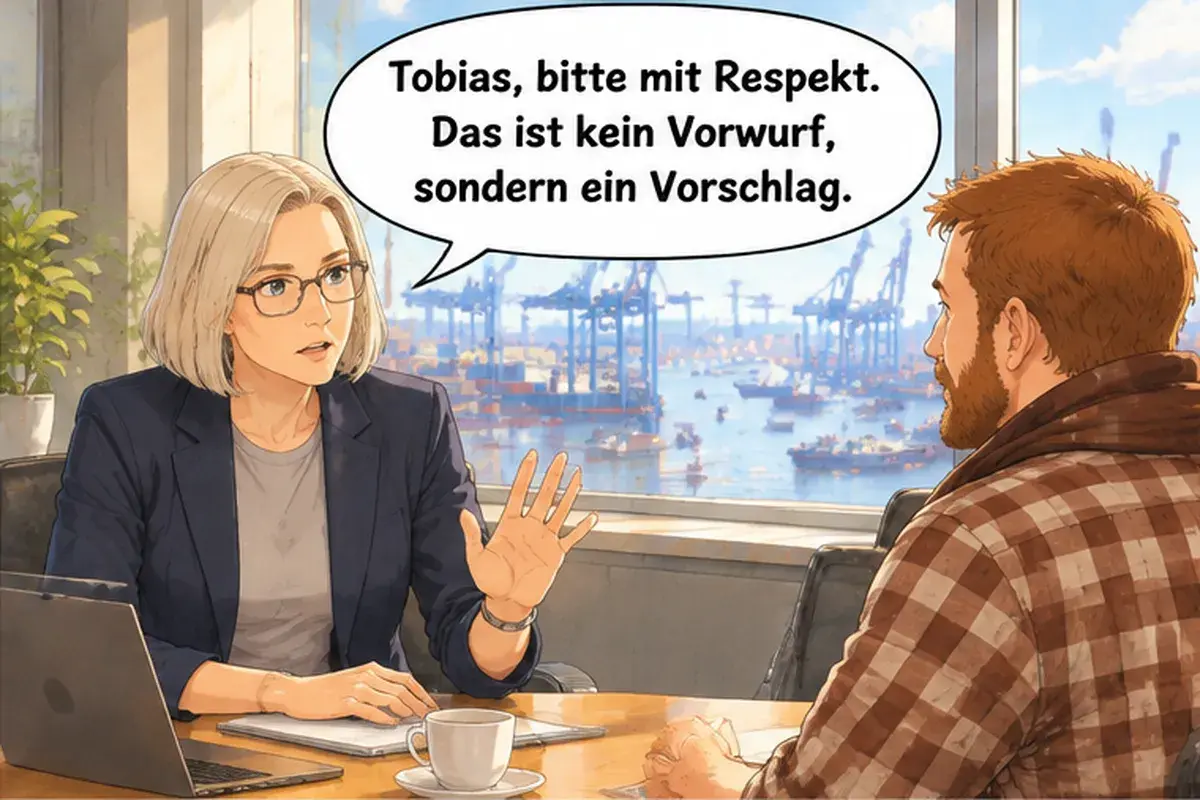
- Sabine
Tobias, bitte mit Respekt. Das ist kein Vorwurf, sondern ein Vorschlag.
Tobias, please, with respect. That's not a reproach, it's a suggestion.

- Katja
Wir brauchen nicht mehr Besprechungen, vielmehr bessere. Betrachten wir es als Test?
We don't need more meetings, but rather better ones. Shall we regard it as a test?
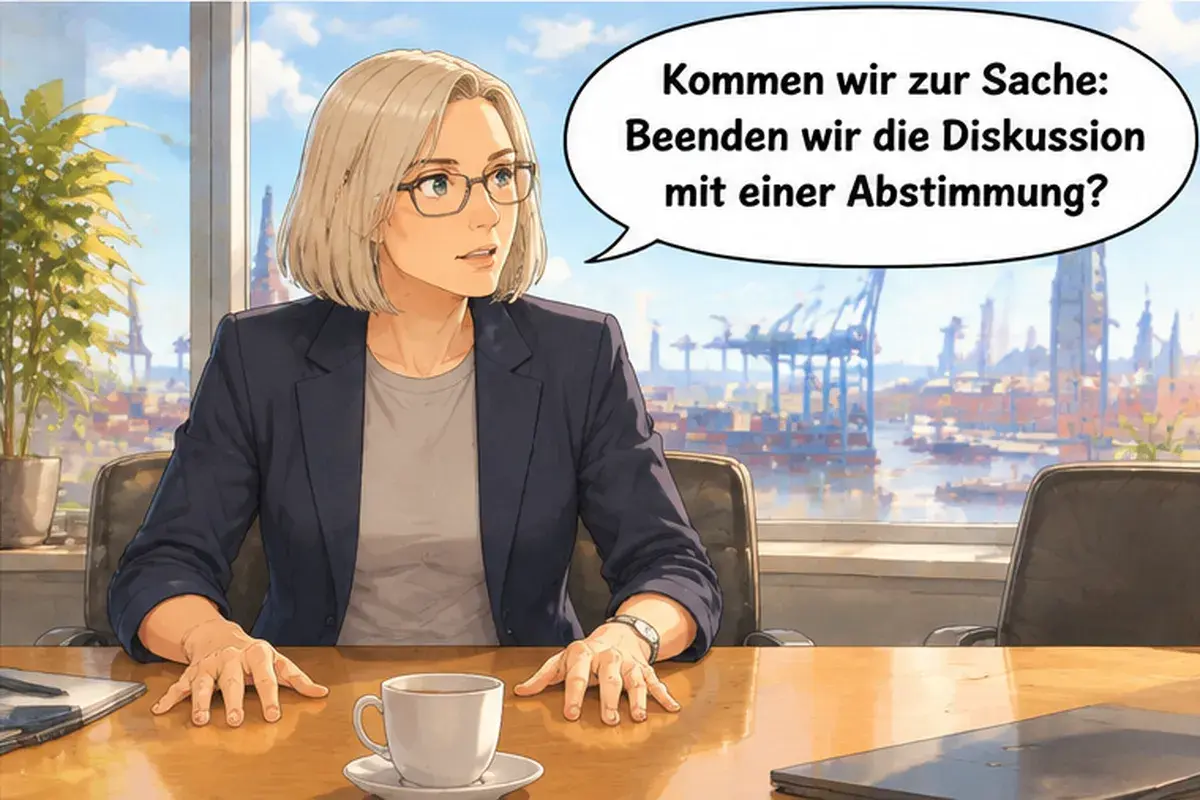
- Sabine
Kommen wir zur Sache: Beenden wir die Diskussion mit einer Abstimmung?
Let's get to the point: shall we end the discussion with a vote?

- Tobias
Na gut, ich sehe es ein. Ihr habt nicht ganz Unrecht.
Oh well, I admit it. You're not entirely wrong (to several people).
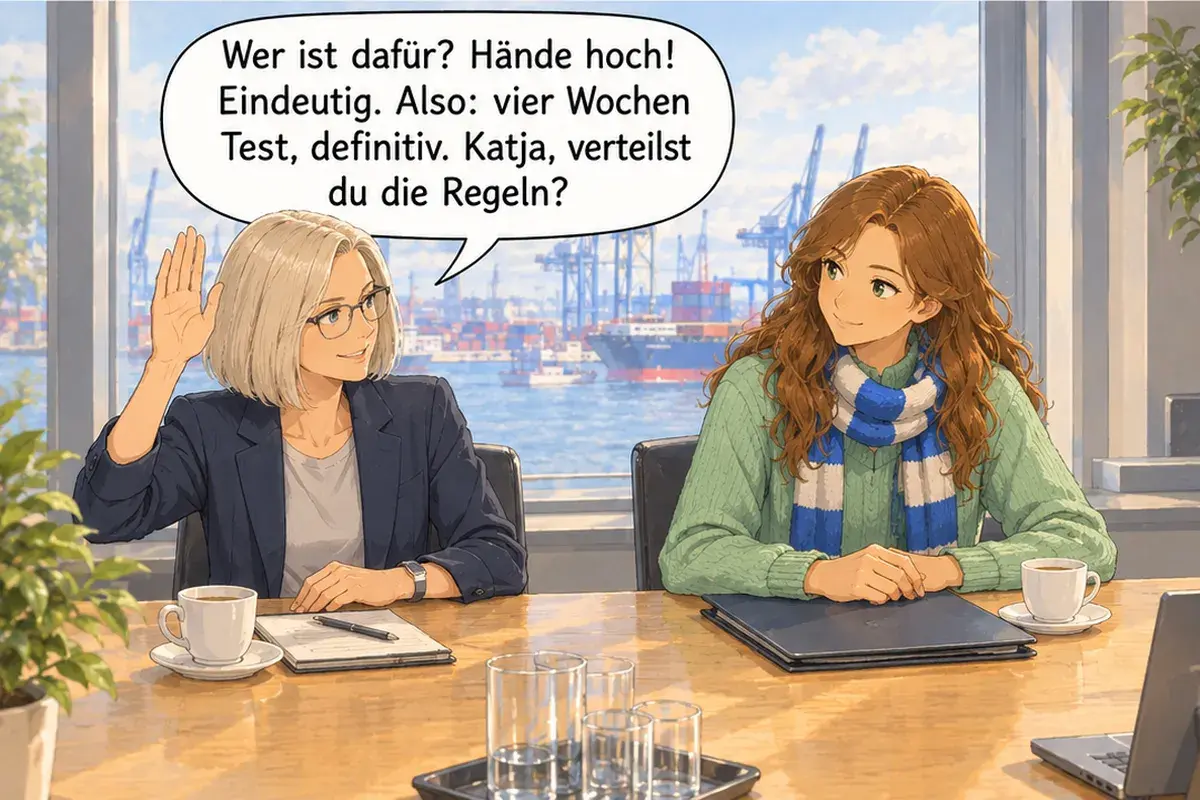
- Sabine
Wer ist dafür? Hände hoch! Eindeutig. Also: vier Wochen Test, definitiv. Katja, verteilst du die Regeln?
Who's in favor? Hands up! Clearly. So: four weeks of testing, definitely. Katja, will you hand out the rules?
Grammar for this text
- Alle sind anwesend — Everyone is here.
anwesendmeans present. Auf der Tagesordnung steht nur eins — There's only one thing on the agenda.die Tagesordnungis the agenda;einsmeans "one item". - Das ist dein Standpunkt — That's your position. Das ist meine feste Überzeugung — That's my firm conviction. A conviction is something a person firmly believes;
festeis feminine aftermeine, so it ends in-e. - Das ist sinnlos, zumal wir ohnehin viele Nachrichten schreiben — That's pointless, especially since we already write lots of messages anyway.
zumalworks likeweil: the verb goes to the end.ohnehinmeans "anyway, in any case". - Ganz im Gegenteil — Quite the opposite. Im Gegensatz zu ihm — In contrast to him. After
zucomes the dative:erbecomesihm. Theoretisch hat Tobias recht — In theory, Tobias is right. Aftertheoretischthe verb comes right away, sohatis second. - Sicherlich habt ihr beide Argumente — Sure, you both have a point (to several people). A concession before a "but". Das reicht keineswegs — That's by no means enough.
keineswegsmeans "not at all". Das ist kein Vorwurf, sondern ein Vorschlag — That's not a reproach, but a suggestion. Usekein …, sondern …for "not …, but …". - Wir brauchen nicht mehr Besprechungen, vielmehr bessere — We don't need more meetings, but rather better ones. Betrachten wir es als Test? — Shall we regard it as a test? A verb in first place means "let's";
betrachten … alsmeans "to regard as". Kommen wir zur Sache — Let's get to the point. - Ich sehe es ein — I admit it. The prefix
einofeinsehengoes to the end. Ihr habt nicht ganz Unrecht — You're not entirely wrong (to several people).Unrecht habenmeans "to be wrong"; you can also write it with a small letter:unrecht. Wer ist dafür? — Who's in favor?dafürmeans "for it". Also: vier Wochen Test — So: four weeks of testing. Katja, verteilst du die Regeln? — Katja, will you hand out the rules?verteilenmeans to hand out or send around.
Words and grammar of the unit: Stand your ground.
Learn the words from the texts with flashcards
In the app, you can tap any word in a text to see its translation, forms and examples, and new words stick with flashcards. 15 minutes a day.
Start for freeEverything is open for free. No card needed to sign up.