

German dialogue with translation · B2 · 14 lines
Und wenn ich etwas kaputtmache? What if I break something?
Comic · 14 panels
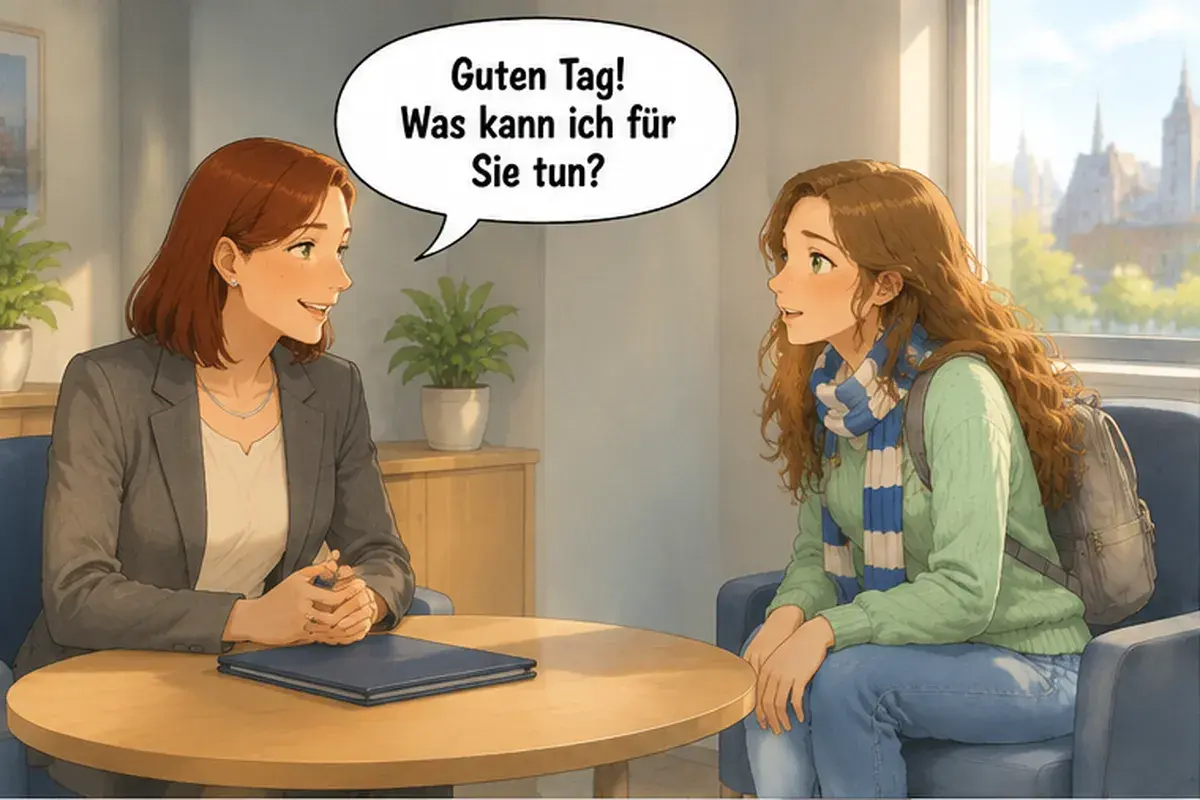
- Versicherungsvertreterin
Guten Tag! Was kann ich für Sie tun?
Hello! How can I help you? (formal)
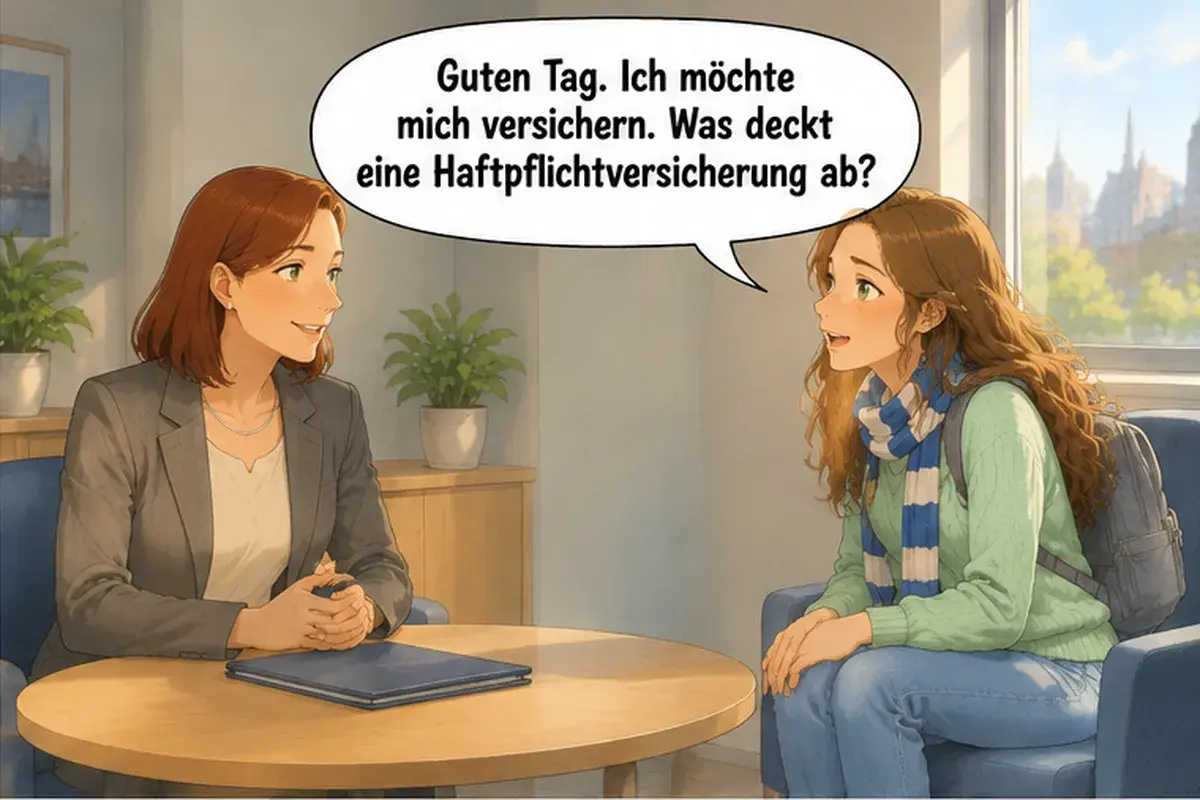
- Katja
Guten Tag. Ich möchte mich versichern. Was deckt eine Haftpflichtversicherung ab?
Hello. I'd like to get insured. What does personal liability insurance cover?
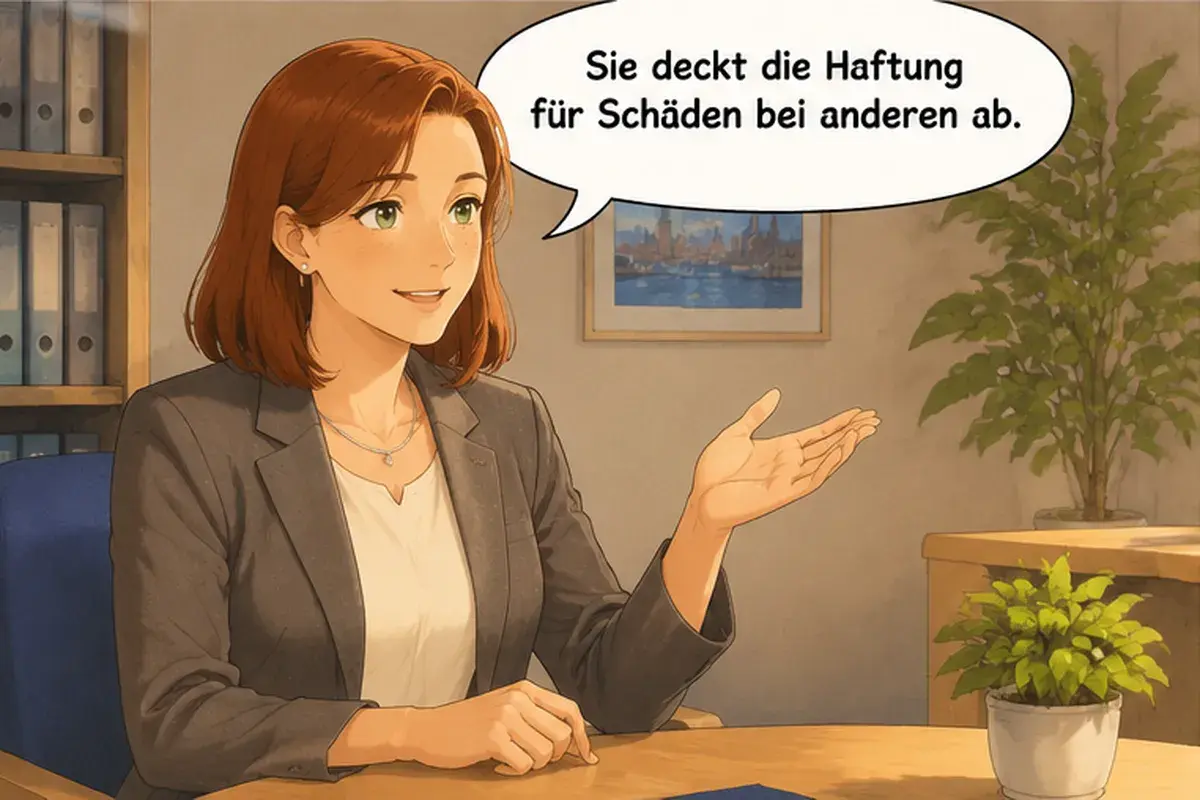
- Versicherungsvertreterin
Sie deckt die Haftung für Schäden bei anderen ab.
It covers liability for damage to others.
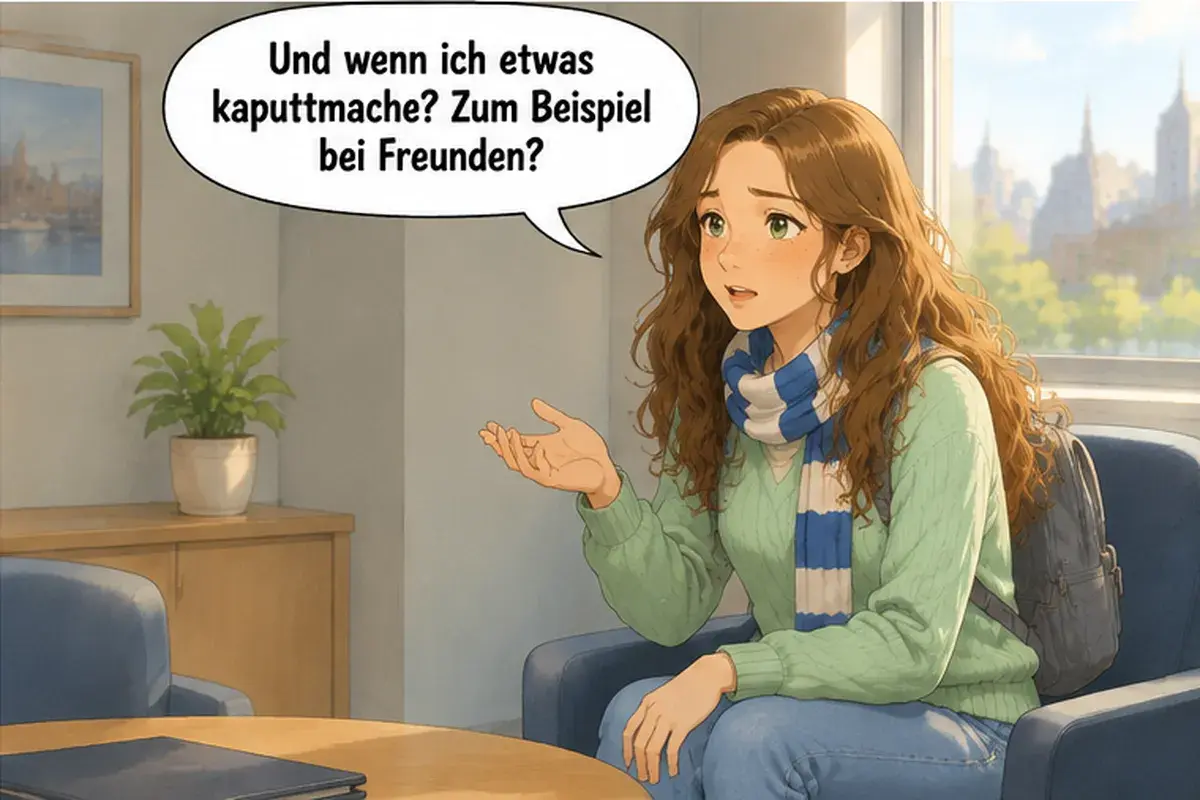
- Katja
Und wenn ich etwas kaputtmache? Zum Beispiel bei Freunden?
And what if I break something? For example, at friends' homes?
- Versicherungsvertreterin
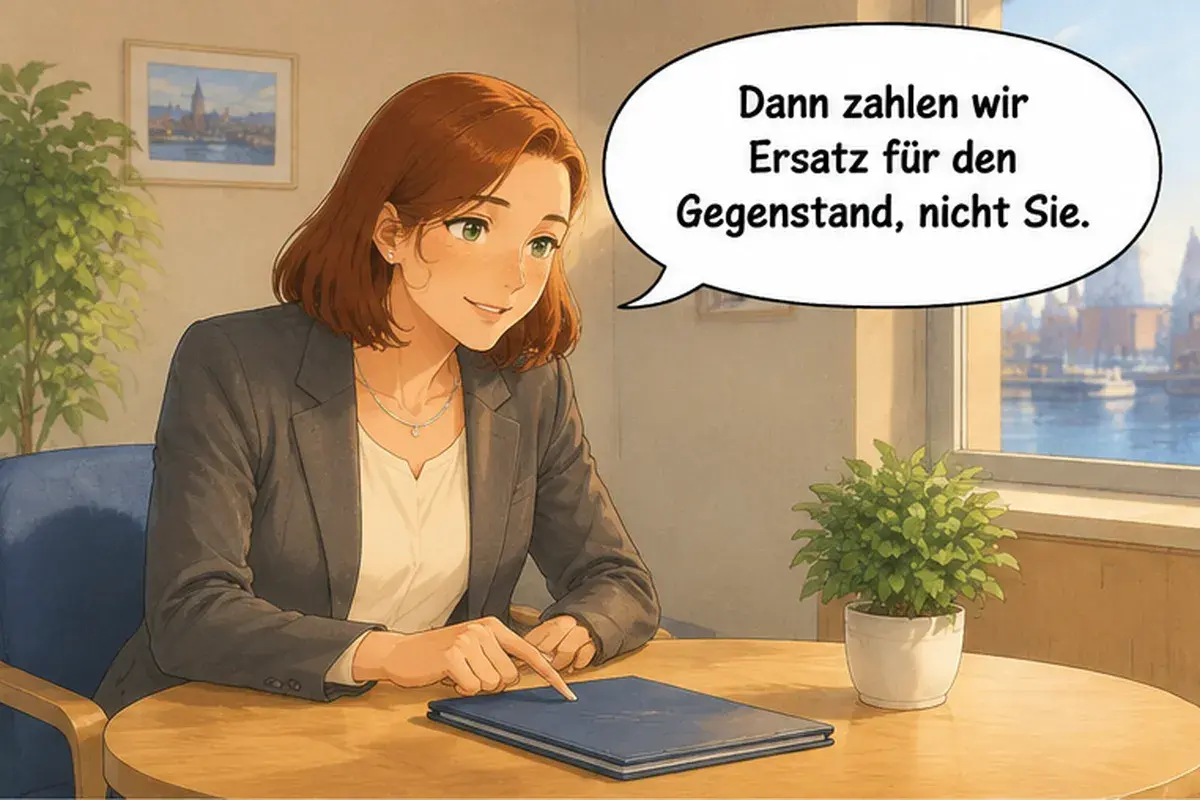
Dann zahlen wir Ersatz für den Gegenstand, nicht Sie.
Then we pay for replacing the item, not you. (formal)

- Katja
Auch wenn es aus Versehen passiert?
Even if it happens by accident?
- Versicherungsvertreterin
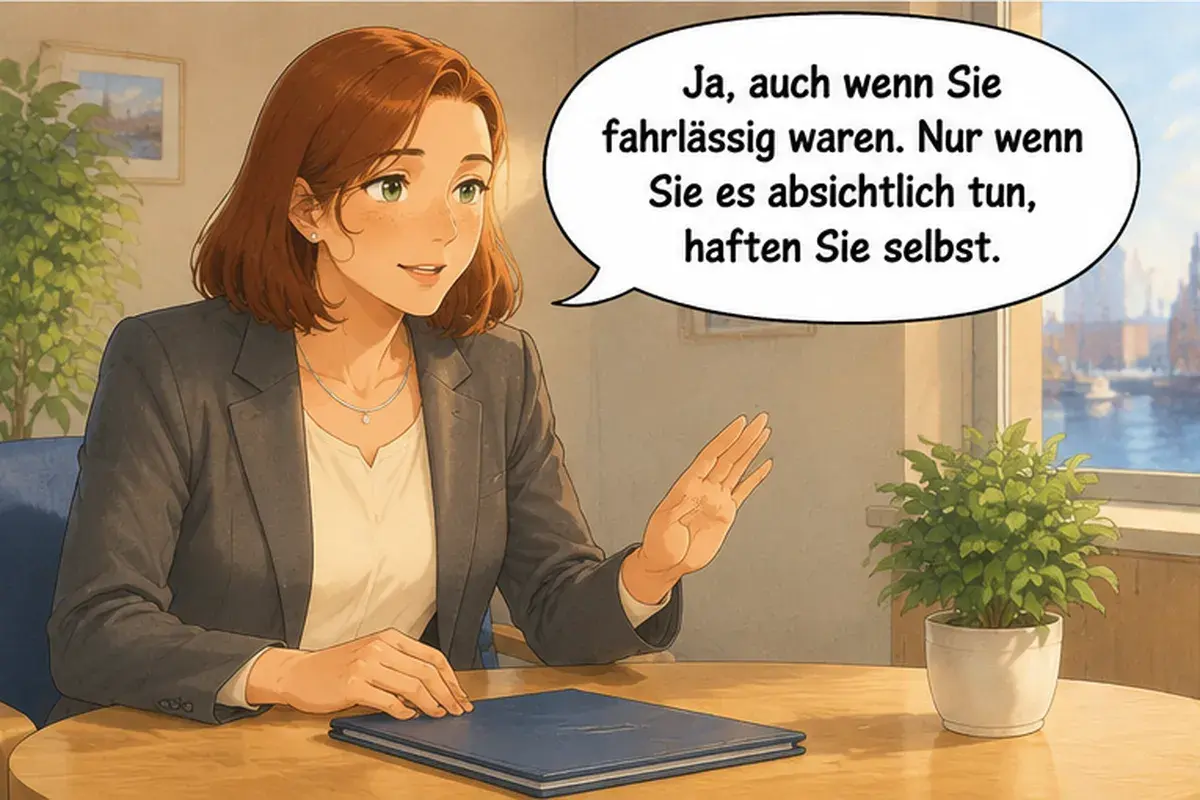
Ja, auch wenn Sie fahrlässig waren. Nur wenn Sie es absichtlich tun, haften Sie selbst.
Yes, even if you were careless. Only if you do it on purpose are you liable yourself. (formal)

- Katja
Sie klingen, als ob jeden Tag ein Schadensfall passieren würde!
You sound as if there were a claim every day! (formal)
- Versicherungsvertreterin
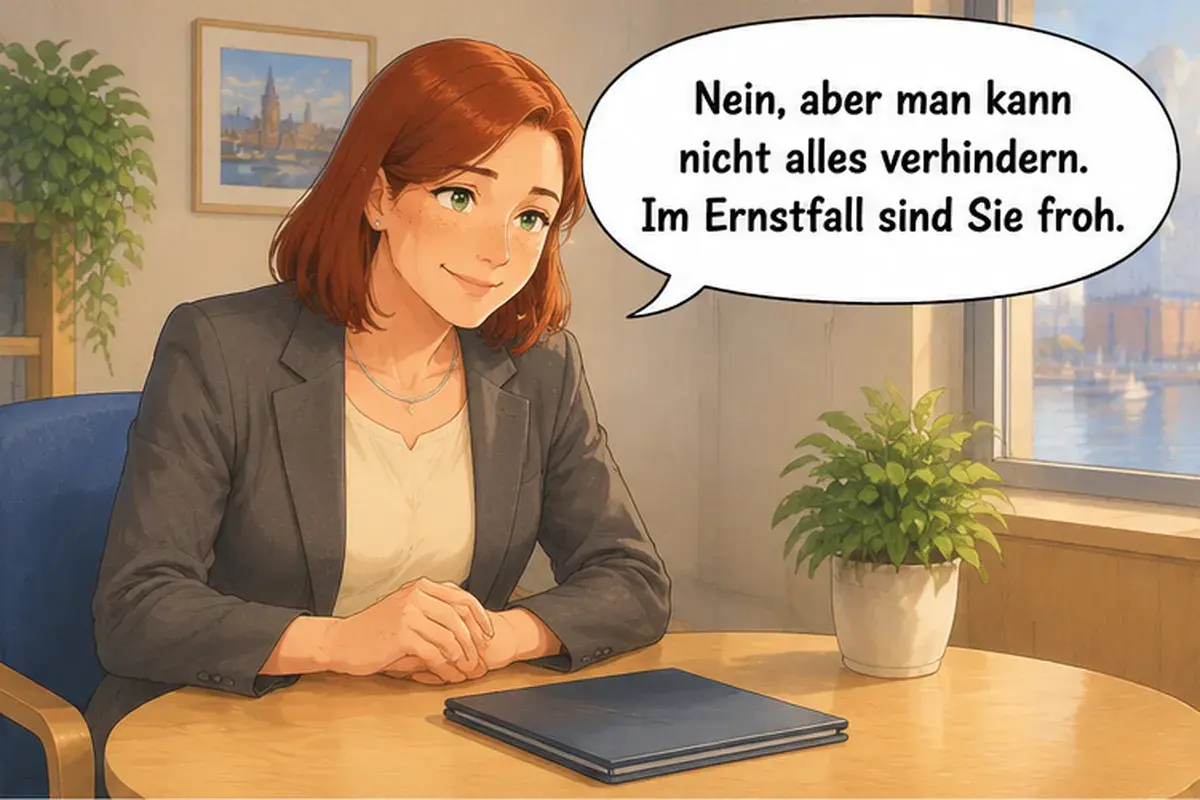
Nein, aber man kann nicht alles verhindern. Im Ernstfall sind Sie froh.
No, but you can't prevent everything. In a real emergency, you'll be glad. (formal)

- Katja
Und meine Möbel? Brauche ich auch eine Hausratversicherung?
And my furniture? Do I need contents insurance too?
- Versicherungsvertreterin
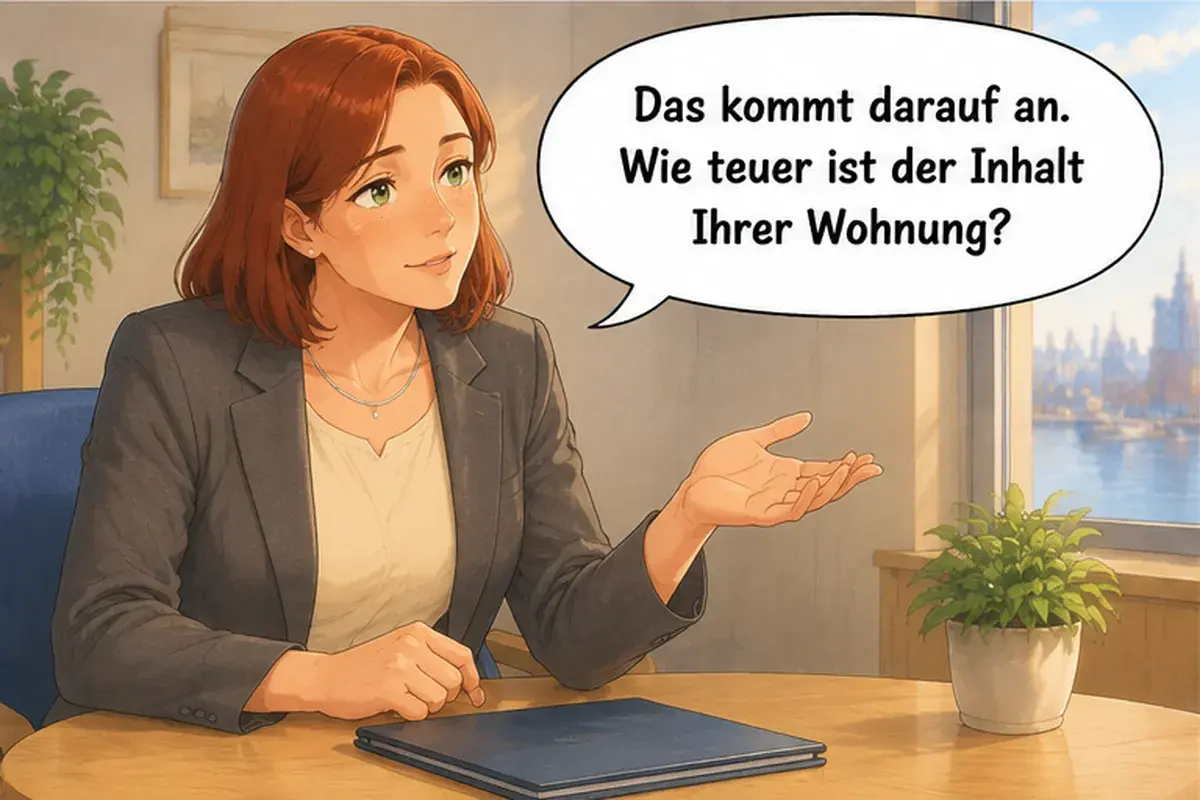
Das kommt darauf an. Wie teuer ist der Inhalt Ihrer Wohnung?
It depends. How expensive are the contents of your apartment? (formal)
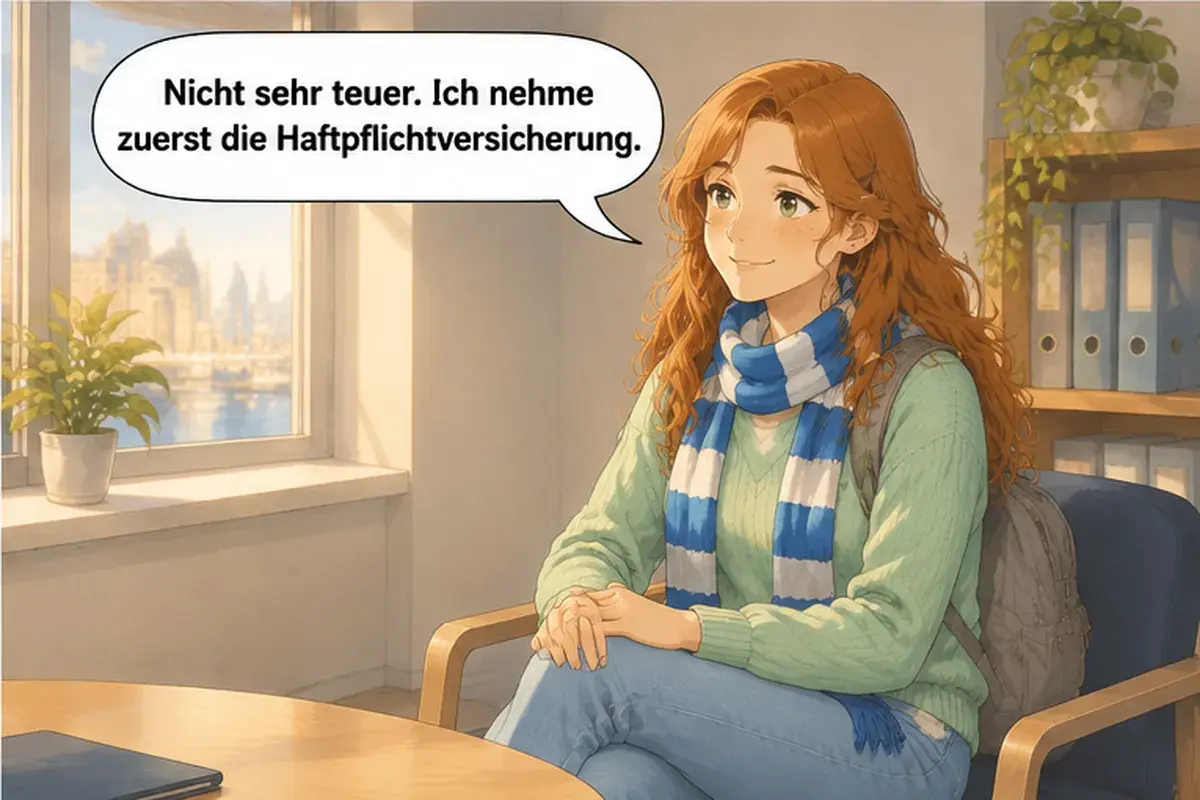
- Katja
Nicht sehr teuer. Ich nehme zuerst die Haftpflichtversicherung.
Not very expensive. I'll take the personal liability insurance first.
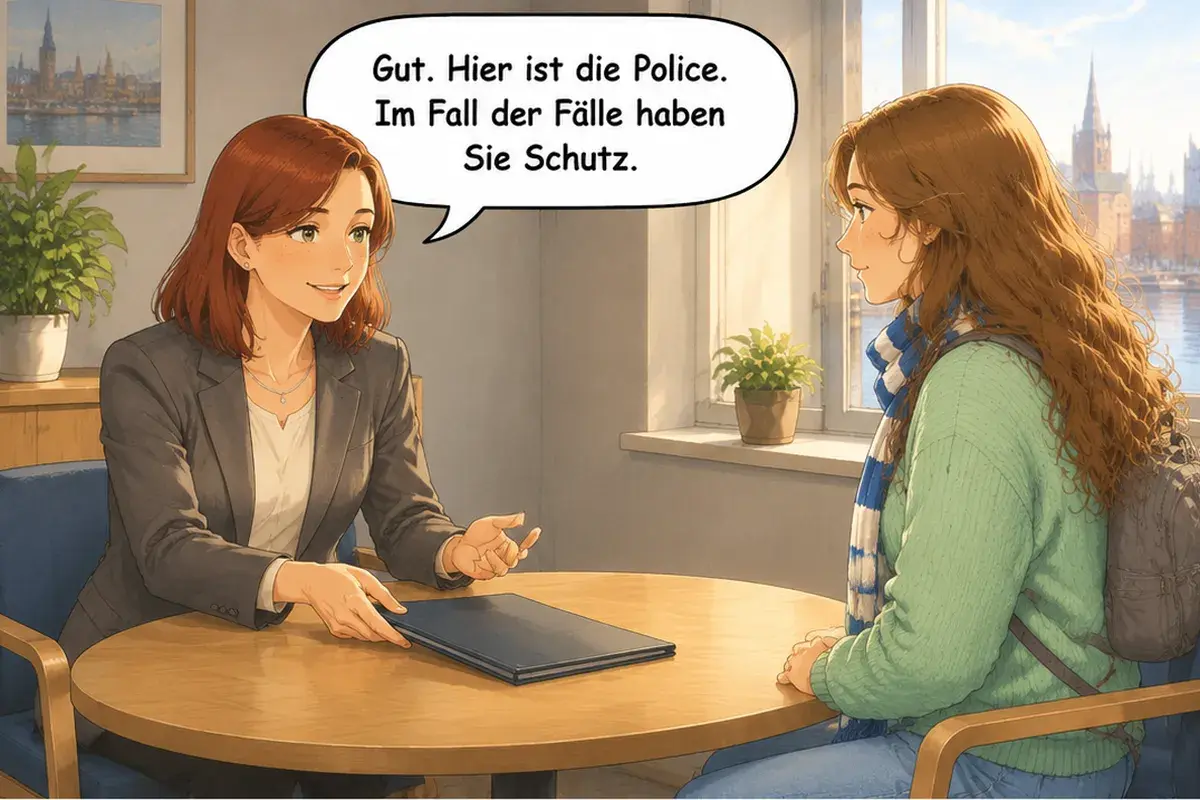
- Versicherungsvertreterin
Gut. Hier ist die Police. Im Fall der Fälle haben Sie Schutz.
Good. Here's the policy. If anything should happen, you have protection. (formal)

- Katja
Danke! Die Einzelheiten lese ich zu Hause. Auf Wiedersehen!
Thanks! I'll read the details at home. Goodbye!
Grammar for this text
- Das kommt darauf an. — A ready-made phrase meaning "it depends." It comes from the verb
ankommen auf(to depend on):daraufmeans "on it," andanis a prefix that moved to the end. More in the unit's grammar section. - Sie deckt die Haftung für Schäden bei anderen ab. —
abdecken(to cover) is separable:decktis in second place andabis at the very end. HereSieat the start means "it" (the insurance), not formal "you."Schädenis the plural ofSchaden; the vowel gets an umlaut. - Und wenn ich etwas kaputtmache? — After
wennthe verb goes to the end and the prefix stays attached:kaputtmache. In a main clause it splits:Ich mache etwas kaputt. - Dann zahlen wir Ersatz für den Gegenstand, nicht Sie —
der Ersatzhere means "compensation" or "replacement."Sieat the end is the formal "you." - Nur wenn Sie es absichtlich tun, haften Sie selbst —
haftenmeans to be responsible for damage with your own money. When thewennclause comes first, the main clause starts with the verb:haften Sie. After the verb,Siemeans "you" (formal). - Sie klingen, als ob jeden Tag ein Schadensfall passieren würde! —
als obmeans "as if." The verb goes to the end in the Konjunktiv II (would-form):passieren würde— "would happen." More in the unit's grammar section. - Im Ernstfall — "in a real emergency." A fixed phrase: learn it as a whole.
- Im Fall der Fälle — "if anything should happen" (literally "in the case of cases"). Also a fixed phrase.
Words and grammar of the unit: Choose the right insurance.
Learn the words from the texts with flashcards
In the app, you can tap any word in a text to see its translation, forms and examples, and new words stick with flashcards. 15 minutes a day.
Start for freeEverything is open for free. No card needed to sign up.