

German story with translation · B2 · 12 lines
Glücklicherweise bin ich abgesichert Luckily, I'm covered
Comic · 12 panels

Im Juni habe ich eine Haftpflichtversicherung abgeschlossen, für alle Fälle.
In June I took out personal liability insurance, just in case.

Im Juli klingelt meine Nachbarin von unten bei mir.
In July my neighbor from downstairs rings my doorbell.

Sie ruft: „Bei mir tropft es, als ob es regnen würde!“
She shouts: “It's dripping at my place as if it were raining!”
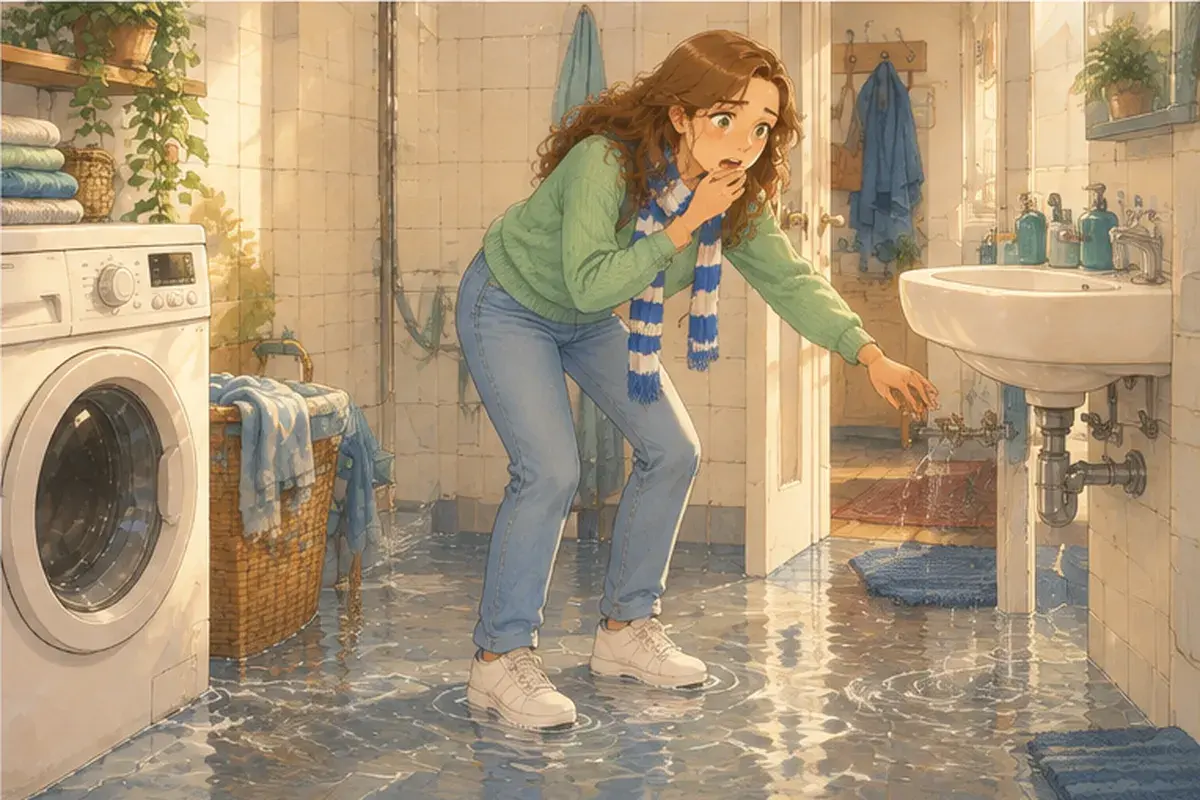
Schock! Ich stelle das Wasser ab, überall ist Chaos.
Shock! I turn off the water, and there's chaos everywhere.

Die Ursache: Der Schlauch der Waschmaschine ist undicht, das Wasser ist ausgelaufen.
The cause: the hose of the washing machine is leaking, and the water has leaked out.

Mein Boden ist feucht, bei ihr tropft die Decke: ein Wasserschaden!
My floor is damp, and her ceiling is dripping: water damage!
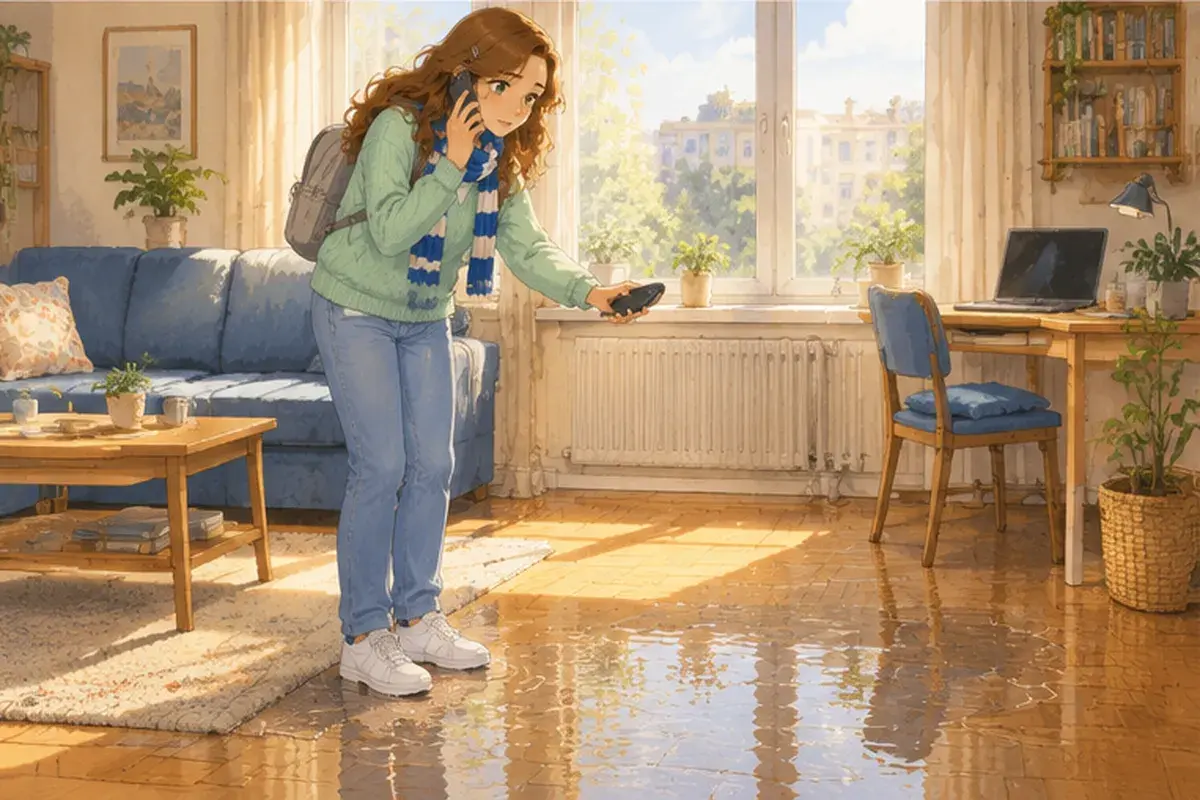
Ich mache Fotos als Beweis und rufe die Vertreterin an.
I take photos as proof and call the representative.

Sie sagt: „Machen Sie online eine Schadensmeldung, dann kommt ein Gutachter.“
She says: “File a damage report online, then an appraiser will come.” (formal)

Der Teppich meiner Nachbarin ist nass, ihre Bücher auch: ein großer Verlust.
My neighbor's carpet is wet, and so are her books: a big loss.

Die Versicherung reguliert den Schaden und ersetzt den Teppich.
The insurance company settles the damage and replaces the carpet.

Ich zahle nur die Selbstbeteiligung, und die ist gering.
I only pay the deductible, and it's low.

Glücklicherweise bin ich abgesichert. Schlimmstenfalls hätte ich selbst für alles aufkommen müssen.
Luckily, I'm covered. At worst, I would have had to pay for everything myself.
Grammar for this text
- Im Juni habe ich eine Haftpflichtversicherung abgeschlossen —
eine Versicherung abschließenmeans "to take out insurance," andeinen Vertrag abschließenmeans "to sign a contract." Useabschließenfor contracts and policies. - Bei mir tropft es, als ob es regnen würde! —
tropftis the es form oftropfen(to drip); it is used for water:es tropft. Afterals obthe verb goes to the end in the Konjunktiv II (would-form):regnen würde— "it would rain," "it were raining." - Ich stelle das Wasser ab. —
abstellenis separable:stelleis in second place andabis at the end. Here it means "to turn off." - Der Schlauch der Waschmaschine ist undicht, das Wasser ist ausgelaufen. —
ausgelaufenis the past participle ofauslaufen(to leak out). It is built withseinbecause the water moves out. - Ich mache Fotos als Beweis und rufe die Vertreterin an. —
als Beweismeans "as proof."Vertreterinis the female form ofVertreter.rufe … anisanrufen: the prefix goes to the end. - Machen Sie online eine Schadensmeldung — a command with
Sie: the verb comes first, thenSie. Afterdannthe word order is the same as in a simple sentence:dann kommt ein Gutachter. - Schlimmstenfalls hätte ich selbst für alles aufkommen müssen. —
hätte … müssenis the past Konjunktiv II with a modal verb (B1): "would have had to."für etwas aufkommenmeans "to pay for something" or "to be responsible for it."schlimmstenfallsmeans "at worst."
Words and grammar of the unit: Choose the right insurance.
Learn the words from the texts with flashcards
In the app, you can tap any word in a text to see its translation, forms and examples, and new words stick with flashcards. 15 minutes a day.
Start for freeEverything is open for free. No card needed to sign up.