

German dialogue with translation · B2 · 16 lines
Wir sprechen abwechselnd We take turns speaking
Comic · 16 panels

- Tandempartner
Moin, Katja! Ich lese gerade Sherlock Holmes im Original, obwohl ich noch jedes dritte Wort nachschlagen muss.
Hi, Katja! I'm reading Sherlock Holmes in the original right now, even though I still have to look up every third word.

- Katja
Super! Conan Doyle ist ein großer Schriftsteller. Aber warum lernst du dafür extra Englisch?
Great! Conan Doyle is a great writer. But why are you learning English just for that?

- Tandempartner
Ich liebe englische Literatur. Darum lerne ich Englisch, auch wenn es nicht leicht ist.
I love English literature. That's why I'm learning English, even if it's not easy.

- Katja
Welche Erzählung liest du?
Which short story are you reading?
- Tandempartner
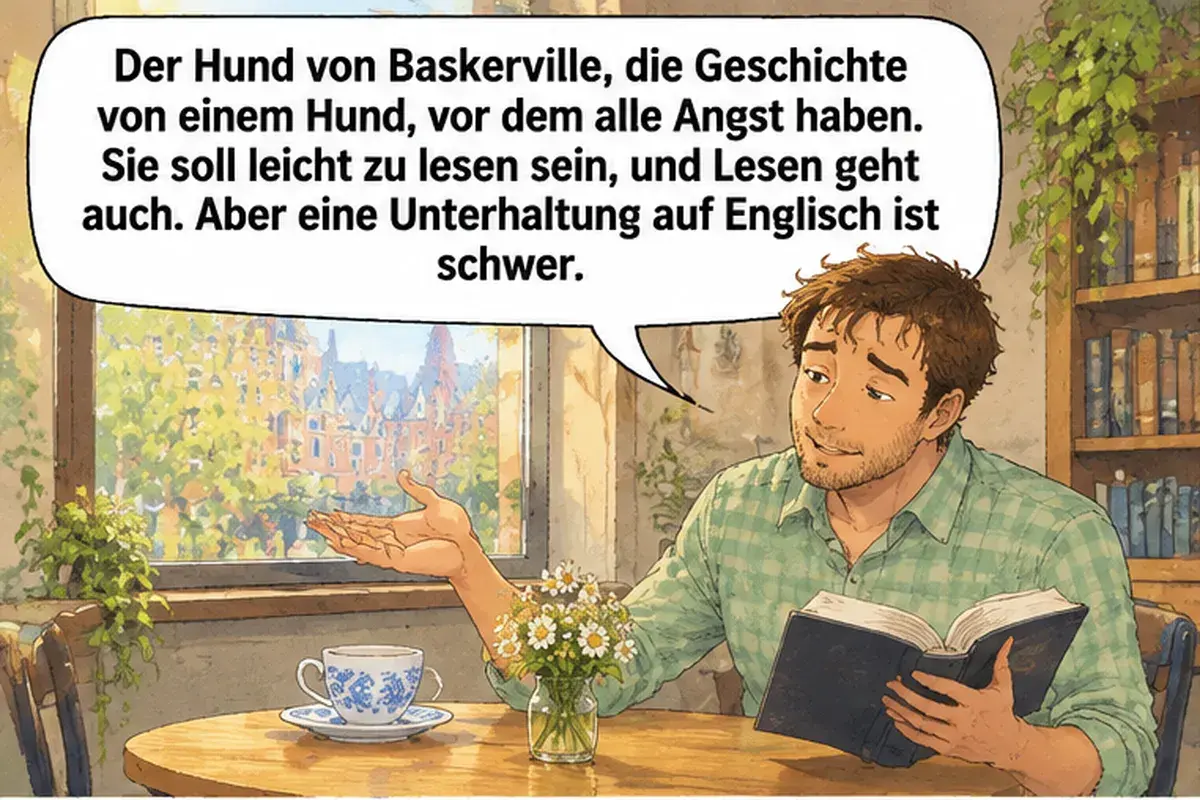
Der Hund von Baskerville, die Geschichte von einem Hund, vor dem alle Angst haben. Sie soll leicht zu lesen sein, und Lesen geht auch. Aber eine Unterhaltung auf Englisch ist schwer.
The Hound of the Baskervilles, the story of a dog that everyone is afraid of. It's said to be easy to read, and reading is going fine. But a conversation in English is hard.

- Katja
Dafür haben wir das Sprachtandem: Wir sprechen abwechselnd Englisch und Deutsch, damit jeder üben kann.
That's what we have the language tandem for: we take turns speaking English and German so that everyone can practice.

- Tandempartner
Genau! Du bist eine super Tandempartnerin: Du hast ein gutes Ohr und hörst jeden Fehler, den ich mache.
Exactly! You're a great tandem partner (to a woman): you have a good ear and you hear every mistake I make.

- Katja
Danke! Seitdem wir uns treffen, bereichert mich der Austausch auch: Ich höre Deutsch mit anderen Ohren.
Thanks! Since we've been meeting, the exchange enriches me too: I hear German with different ears.
- Tandempartner
Das freut mich! Übrigens, ich habe gelesen, dass Conan Doyle nebenbei als Arzt gearbeitet haben soll. Stimmt das?
I'm glad to hear that! By the way, I read that Conan Doyle is said to have worked as a doctor on the side. Is that true?
- Katja
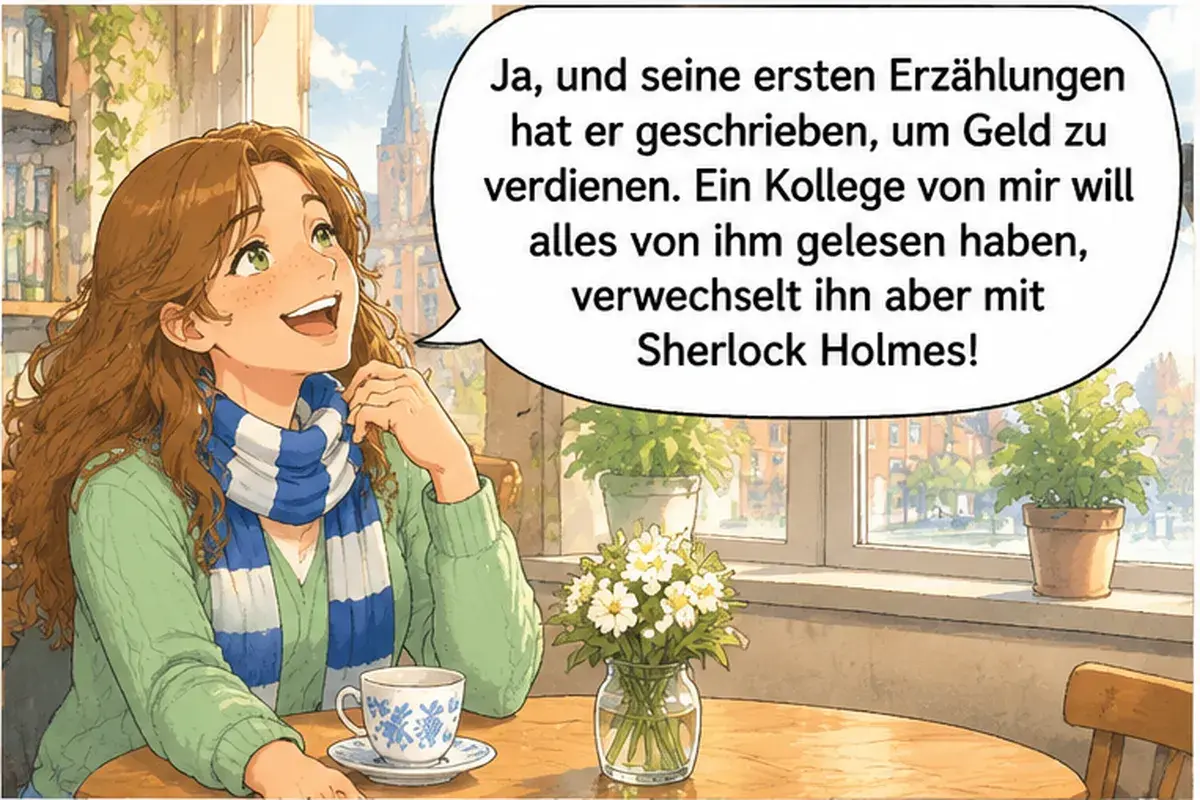
Ja, und seine ersten Erzählungen hat er geschrieben, um Geld zu verdienen. Ein Kollege von mir will alles von ihm gelesen haben, verwechselt ihn aber mit Sherlock Holmes!
Yes, and he wrote his first stories to earn money. A coworker of mine claims to have read everything by him, but he confuses him with Sherlock Holmes!
- Tandempartner
Solche Leute kenne ich auch! Tauschen wir nächstes Mal Redewendungen und Sprichwörter aus, die man im Alltag oft hört?
I know people like that too! Next time, shall we swap idioms and proverbs that you often hear in everyday life?

- Katja
Gern! Liest du mir dann auch ein englisches Gedicht vor?
Sure! Will you also read me an English poem then?
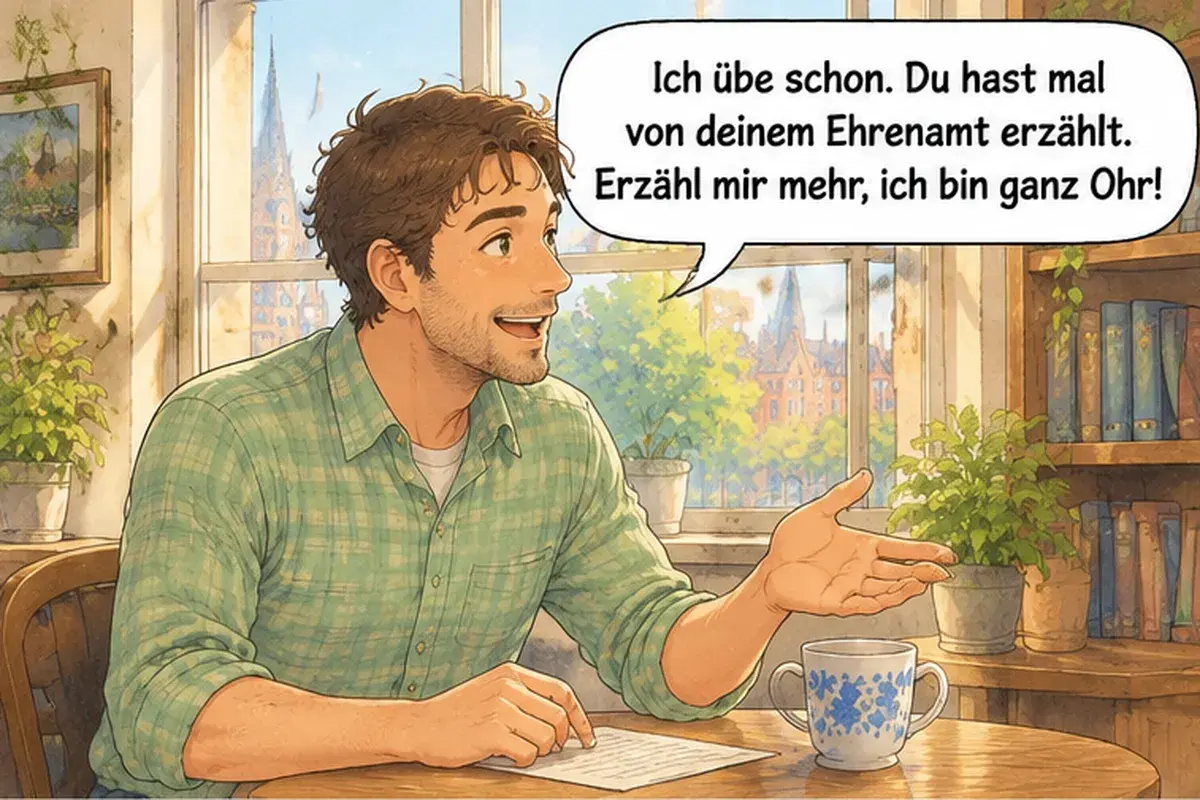
- Tandempartner
Ich übe schon. Du hast mal von deinem Ehrenamt erzählt. Erzähl mir mehr, ich bin ganz Ohr!
I'm already practicing. You once told me about your volunteer work. Tell me more, I'm all ears!

- Katja
Ich engagiere mich bei einer gemeinnützigen Organisation für Kinder, in der alle ehrenamtlich arbeiten.
I'm involved with a nonprofit organization for children where everyone works as a volunteer.

- Tandempartner
Schön! Wo hast du sie gefunden?
Nice! Where did you find it?

- Katja
Auf der Freiwilligenbörse. Komm Samstag zum Stadtteilfest, es gibt Waffeln!
At the volunteer exchange. Come to the neighborhood party on Saturday, there will be waffles!
Grammar for this text
- Ich lese gerade Sherlock Holmes im Original, obwohl ich noch jedes dritte Wort nachschlagen muss —
obwohlmeans "although" and sends the verb to the end, somusscomes last.nachschlagenmeans "to look up" (in a dictionary). - Darum lerne ich Englisch, auch wenn es nicht leicht ist —
darummeans "that's why"; the verb comes right after it, in second place.auch wennmeans "even if, even though":istgoes to the end of its clause. - Sie soll leicht zu lesen sein — here
solldoesn't mean "should" but "is said to": the partner heard it from other people.Sieat the start means "it" (the story). - vor dem alle Angst haben —
demrefers toHund: "a dog that everyone is afraid of".Angst haben vortakes the dative, so it'sdem;habengoes to the end of the clause. - Seitdem wir uns treffen, bereichert mich der Austausch auch —
seitdemmeans "ever since":treffenis at the end of its clause, and the main clause after the comma starts with its verb,bereichert("enriches"). - dass Conan Doyle nebenbei als Arzt gearbeitet haben soll —
soll+gearbeitet haben: "is said to have worked". Ein Kollege von mir will alles von ihm gelesen haben —will+gelesen haben: "claims to have read". These are his own words, and they're hard to believe. - um Geld zu verdienen —
um … zu+ infinitive: "in order to earn money". Redewendungen und Sprichwörter aus, die man im Alltag oft hört — withaustauschen, the prefixausgoes to the end;diemeans "that" (plural), andhörtis at the end of the clause.
Words and grammar of the unit: Talk about helping others.
Learn the words from the texts with flashcards
In the app, you can tap any word in a text to see its translation, forms and examples, and new words stick with flashcards. 15 minutes a day.
Start for freeEverything is open for free. No card needed to sign up.