

German dialogue with translation · B2 · 14 lines
Sagen wir du? Shall we use du?
Comic · 14 panels
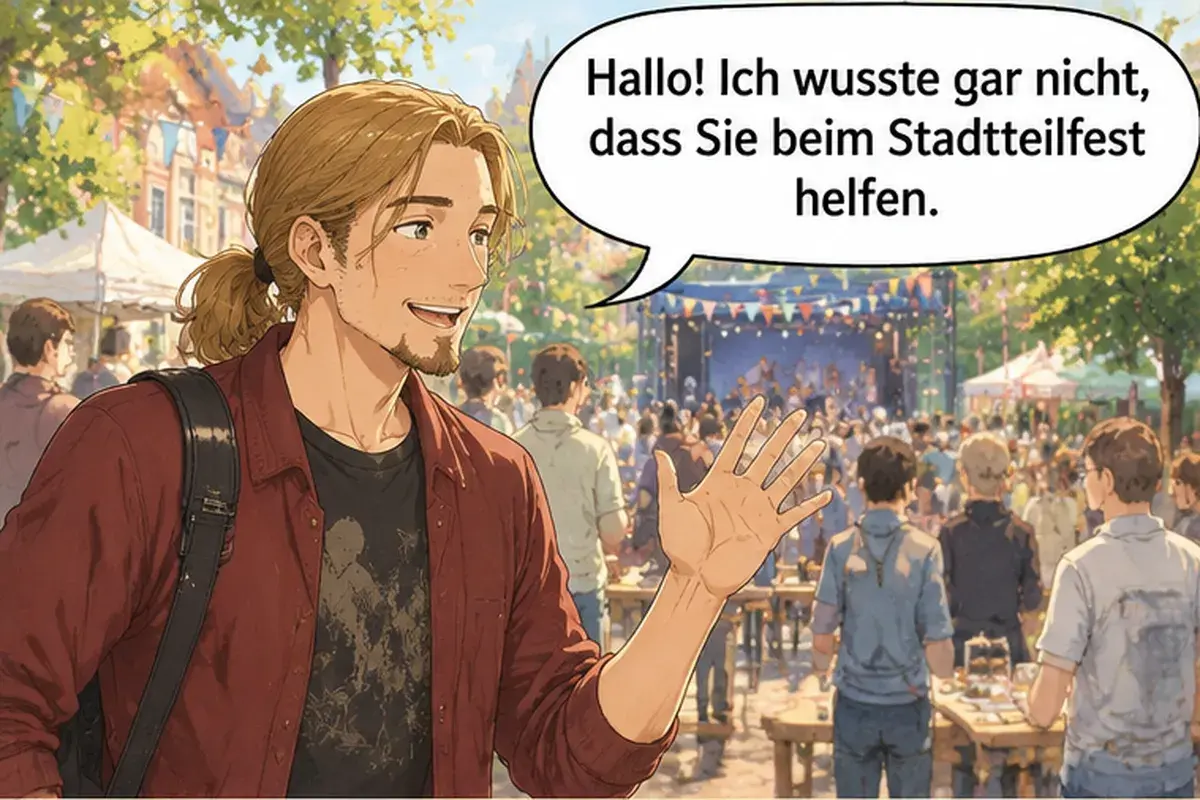
- Herr Brodersen
Hallo! Ich wusste gar nicht, dass Sie beim Stadtteilfest helfen.
Hello! I had no idea that you're helping at the neighborhood party. (formal)

- Katja
Ja, ich verkaufe Gebäck. Alles ist selbstgebacken, auch die Waffeln!
Yes, I'm selling baked goods. Everything is homemade, even the waffles!

- Herr Brodersen
Dann nehme ich eine Waffel. Wohin geht der Erlös?
Then I'll have a waffle. Where do the proceeds go?
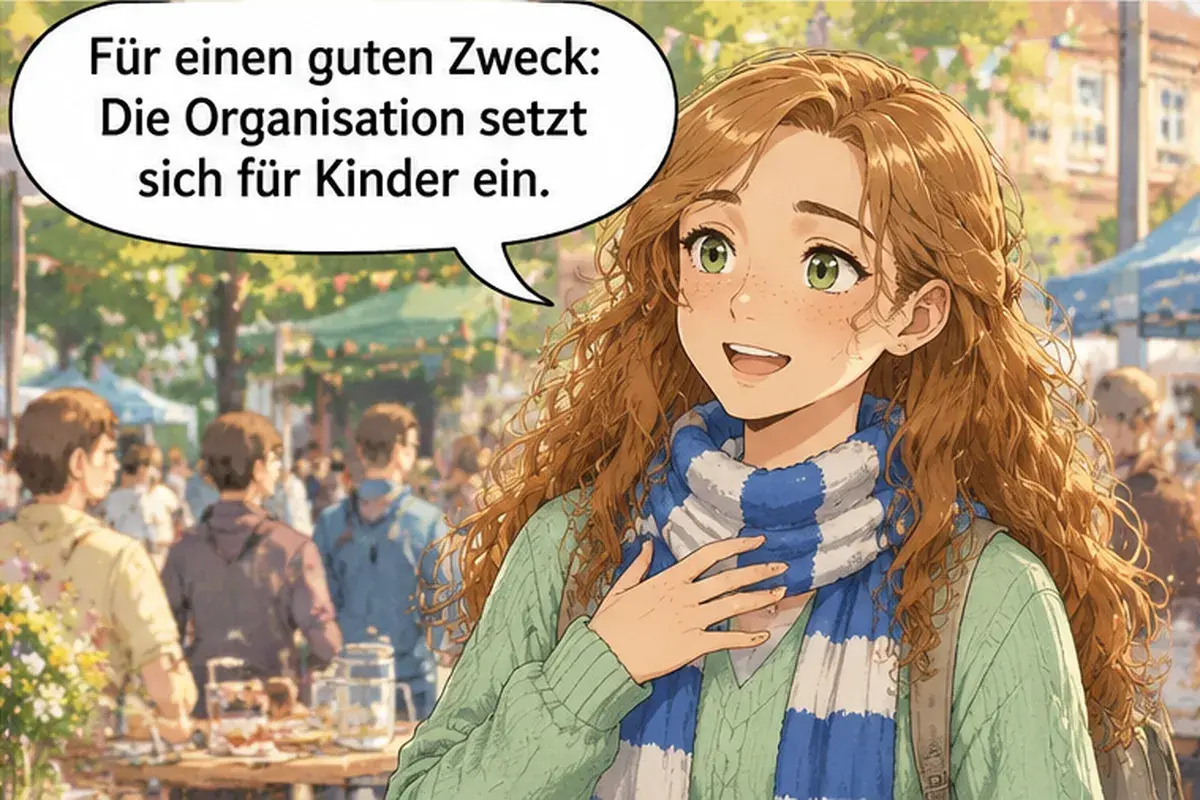
- Katja
Für einen guten Zweck: Die Organisation setzt sich für Kinder ein.
For a good cause: the organization works hard for children.

- Herr Brodersen
Schön, ein soziales Projekt! Und hier feiern alle Generationen zusammen.
Nice, a social project! And here all generations celebrate together.

- Katja
Genau. Und Sie? Wann ist der Auftritt mit der Band?
Exactly. And you? When is the performance with the band? (formal)

- Herr Brodersen
Gleich. Das Publikum wartet schon. Hoffentlich gibt es Applaus!
In a minute. The audience is already waiting. Hopefully there will be applause!

- Katja
Bestimmt! Sie haben Talent, und die Band soll richtig gut sein.
Definitely! You have talent, and the band is said to be really good. (formal)
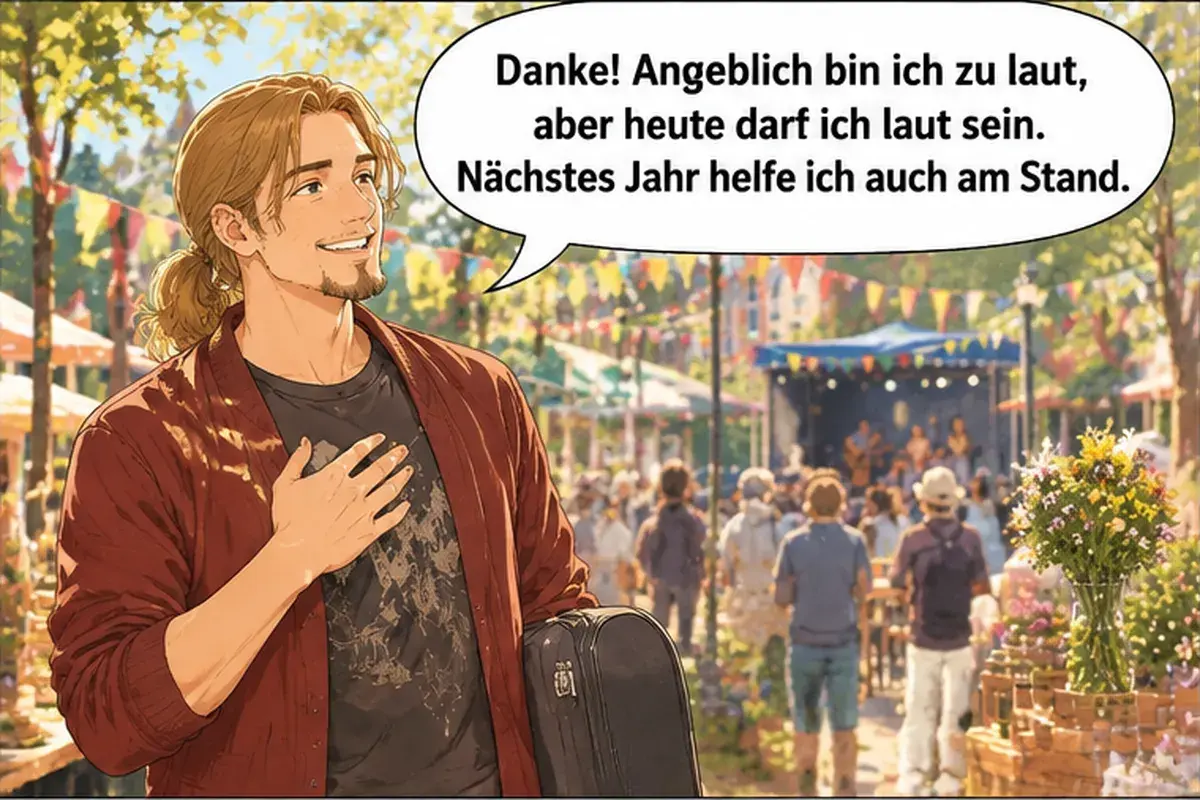
- Herr Brodersen
Danke! Angeblich bin ich zu laut, aber heute darf ich laut sein. Nächstes Jahr helfe ich auch am Stand.
Thanks! Supposedly I'm too loud, but today I'm allowed to be loud. Next year I'll help at the stand too.
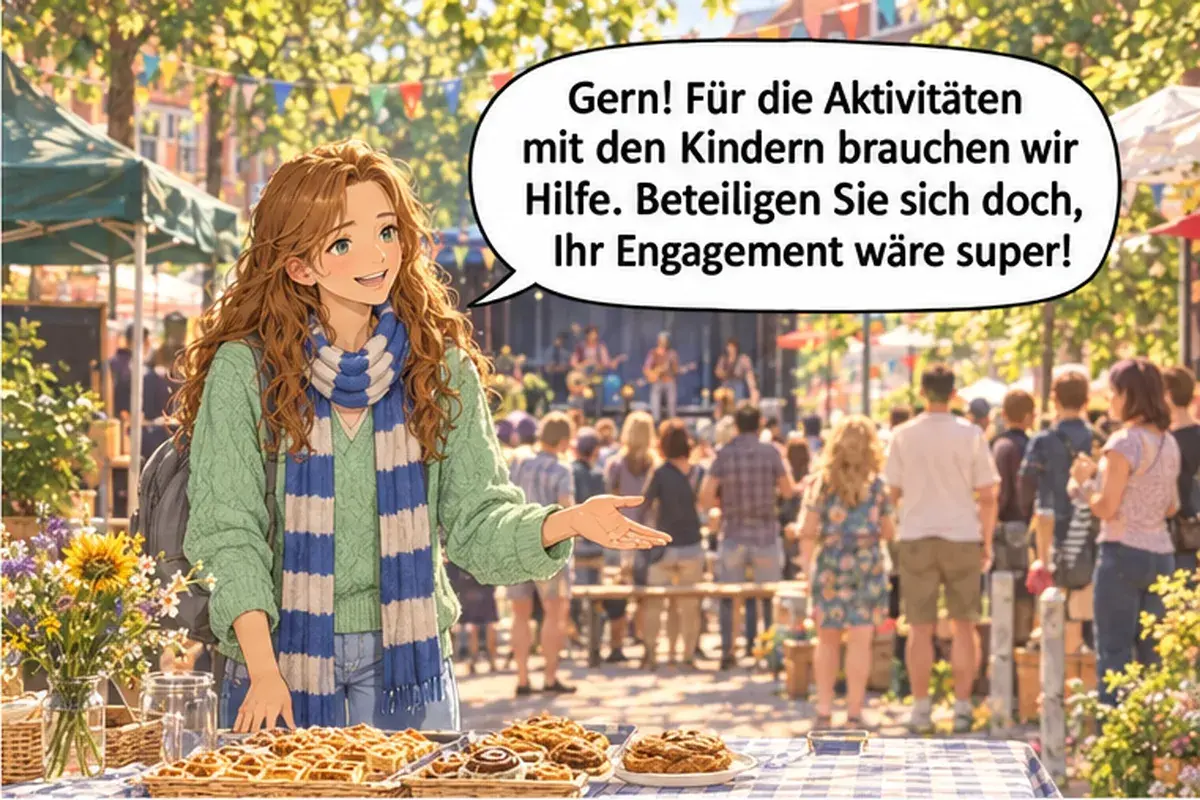
- Katja
Gern! Für die Aktivitäten mit den Kindern brauchen wir Hilfe. Beteiligen Sie sich doch, Ihr Engagement wäre super!
Sure! We need help for the activities with the children. Why don't you join in, your involvement would be great! (formal)
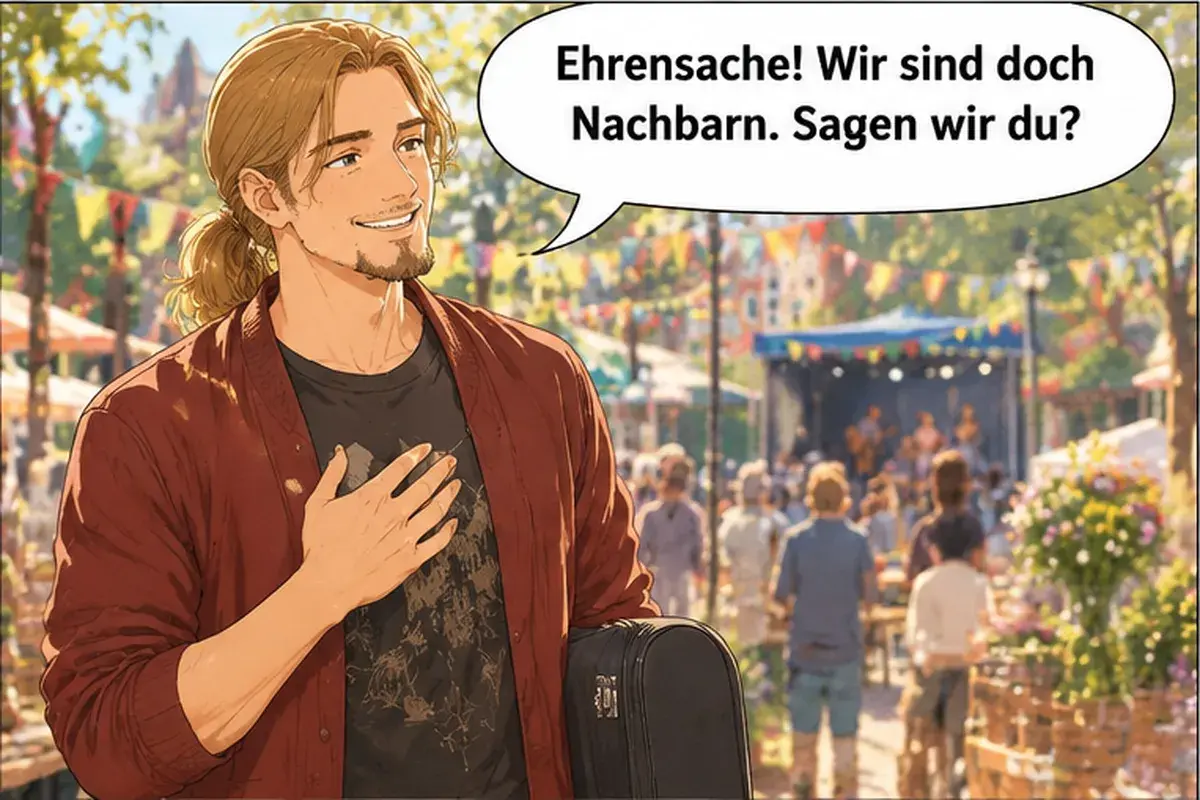
- Herr Brodersen
Ehrensache! Wir sind doch Nachbarn. Sagen wir du?
Of course! We're neighbors, after all. Shall we use du?

- Katja
Gern! Aber wie nenne ich dich? Immer noch Herr Brodersen?
Sure! But what do I call you? Still Herr Brodersen?
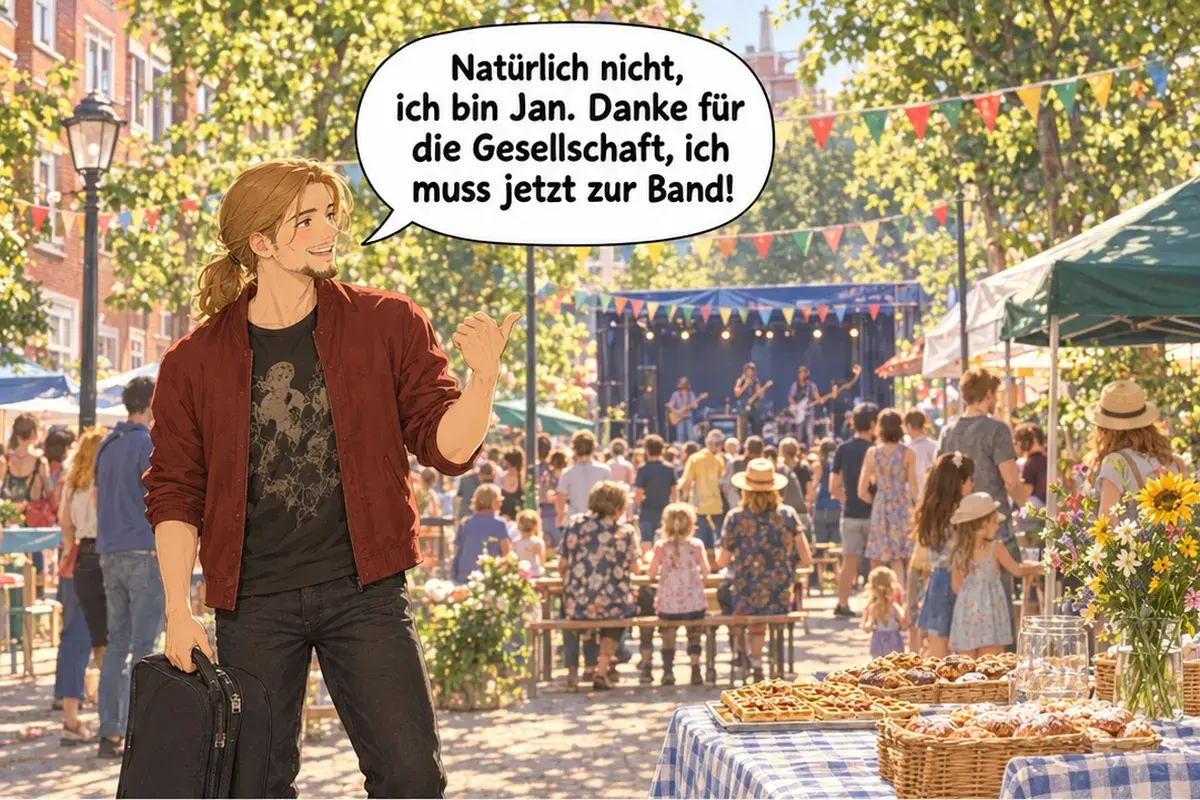
- Herr Brodersen
Natürlich nicht, ich bin Jan. Danke für die Gesellschaft, ich muss jetzt zur Band!
Of course not, I'm Jan. Thanks for the company, I have to go to the band now!
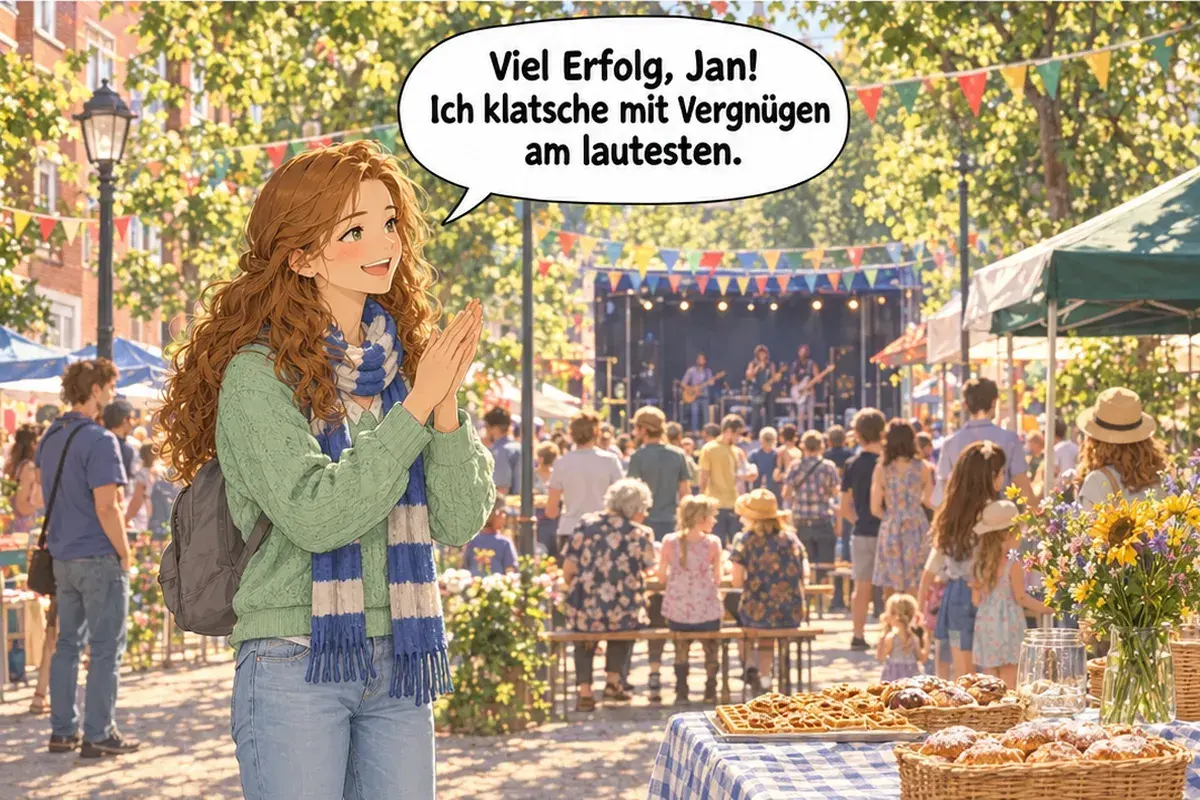
- Katja
Viel Erfolg, Jan! Ich klatsche mit Vergnügen am lautesten.
Good luck, Jan! I'll happily clap the loudest.
Grammar for this text
- Ich wusste gar nicht, dass Sie beim Stadtteilfest helfen —
wussteis the past tense ofwissen: "I knew" (present tense:weiß).gar nichtmeans "not at all".Siewith a capital S is formal "you".beim=bei+dem. - Die Organisation setzt sich für Kinder ein —
sich einsetzen für+ accusative: "to work hard for, to stand up for". The prefixeingoes to the end. - die Band soll richtig gut sein —
sollis theer / sie / esform ofsollen. Here it doesn't mean "should" but "is said to": Katja has heard about the band from other people.seinis at the end. Angeblich bin ich zu laut —angeblichmeans "supposedly": Jan passes on what others say about him and jokes about being loud. - Beteiligen Sie sich doch —
sich beteiligen("to take part") in the imperative for formal "you": the verb comes first, thenSieandsich;dochmakes the request softer. Ihr Engagement wäre super —wäremeans "would be": it's the Konjunktiv II (would-form) ofsein, a polite tone.Ihrwith a capital I is formal "your": Katja is still saying Sie. - Ehrensache! Wir sind doch Nachbarn. Sagen wir du? —
Ehrensacheis casual for "Of course!".Sagen wir du?means "Shall we say du?": the question starts with the verb. - wie nenne ich dich —
nennenmeans "to call": whom —dich, what name —Herr Brodersen. With du you use a first name, not a last name: that's why the answer isich bin Jan. Danke für die Gesellschaft — hereGesellschaftmeans "company": "thanks for the company". - Ich klatsche mit Vergnügen am lautesten —
am lautestenis the superlative: "the loudest".Viel Erfolg!means "Good luck!".
Words and grammar of the unit: Talk about helping others.
Learn the words from the texts with flashcards
In the app, you can tap any word in a text to see its translation, forms and examples, and new words stick with flashcards. 15 minutes a day.
Start for freeEverything is open for free. No card needed to sign up.