

German dialogue with translation · B1 · 15 lines
Ich glaube, ich bin verliebt I think I'm in love
Comic · 15 panels
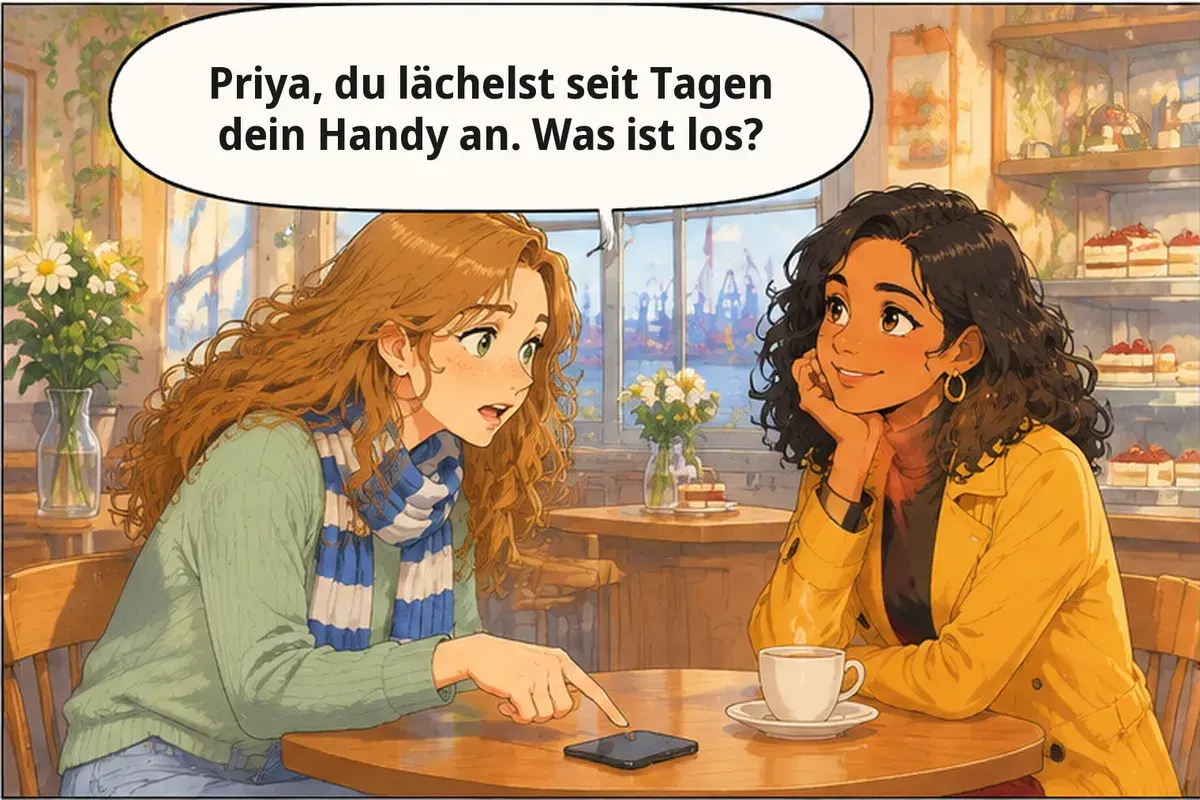
- Katja
Priya, du lächelst seit Tagen dein Handy an. Was ist los?
Priya, you've been smiling at your phone for days. What's going on?
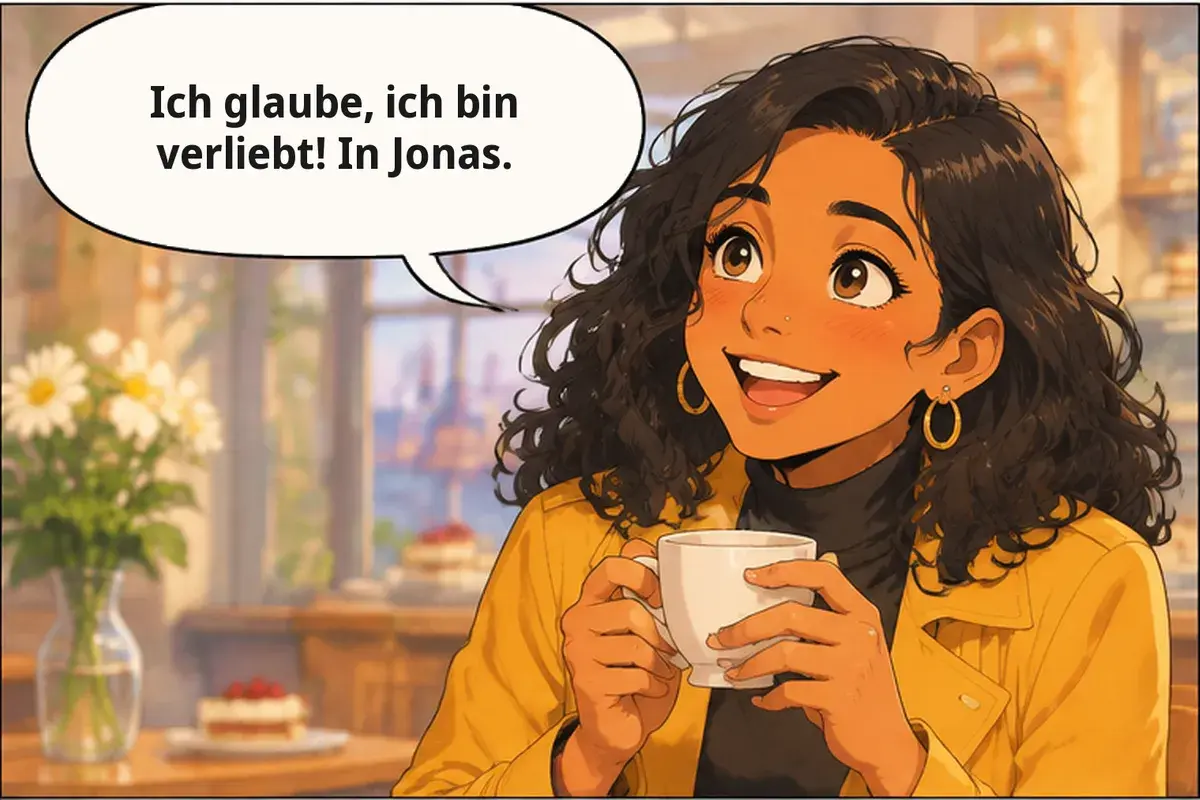
- Priya
Ich glaube, ich bin verliebt! In Jonas.
I think I'm in love! With Jonas.

- Katja
Was? Das hätte ich nie gedacht! Du warst doch so gern Single.
What? I never would have thought that! You were so happy being single.
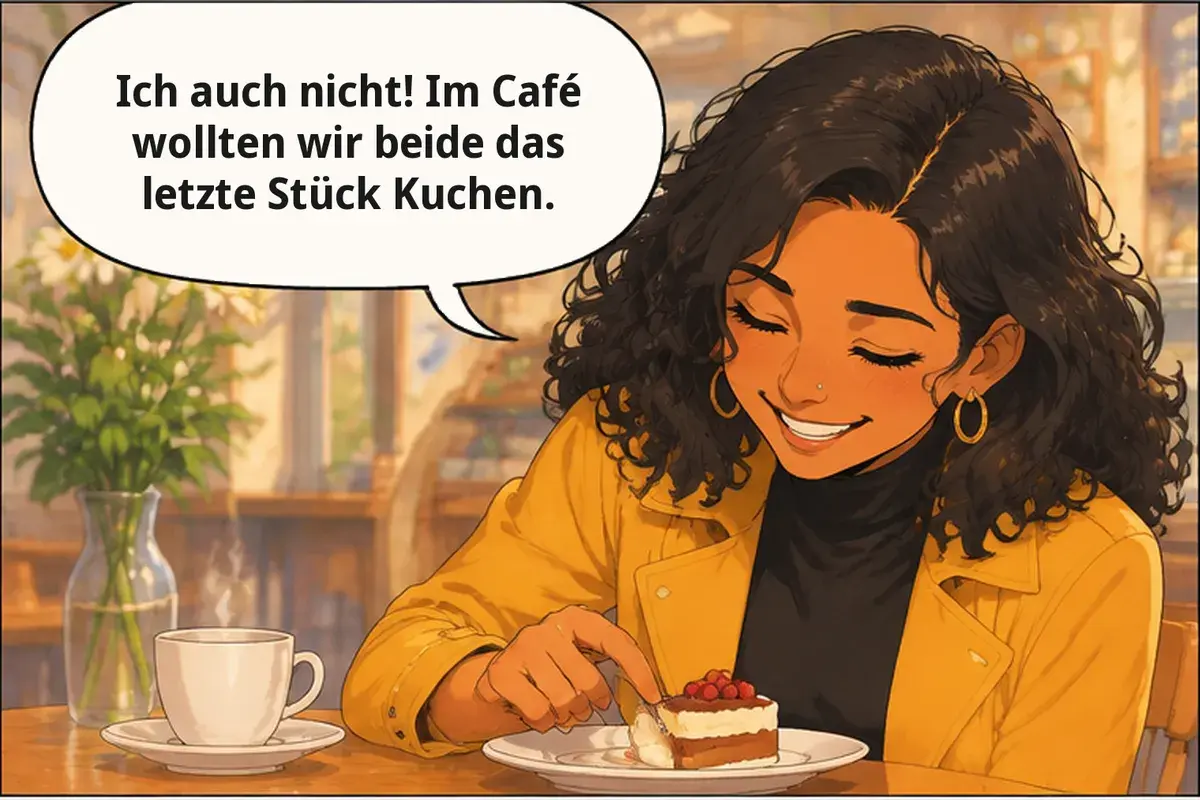
- Priya
Ich auch nicht! Im Café wollten wir beide das letzte Stück Kuchen.
Me neither! At the café we both wanted the last piece of cake.
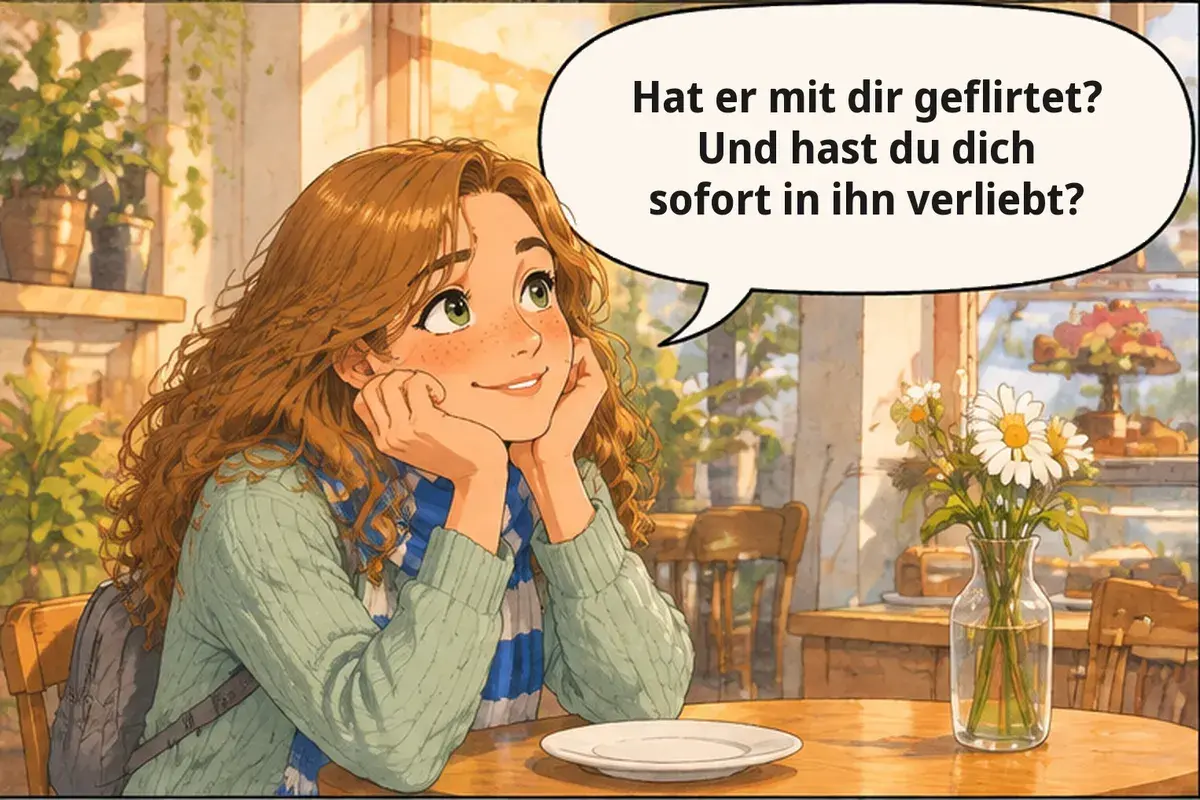
- Katja
Hat er mit dir geflirtet? Und hast du dich sofort in ihn verliebt?
Did he flirt with you? And did you fall in love with him right away?
- Priya
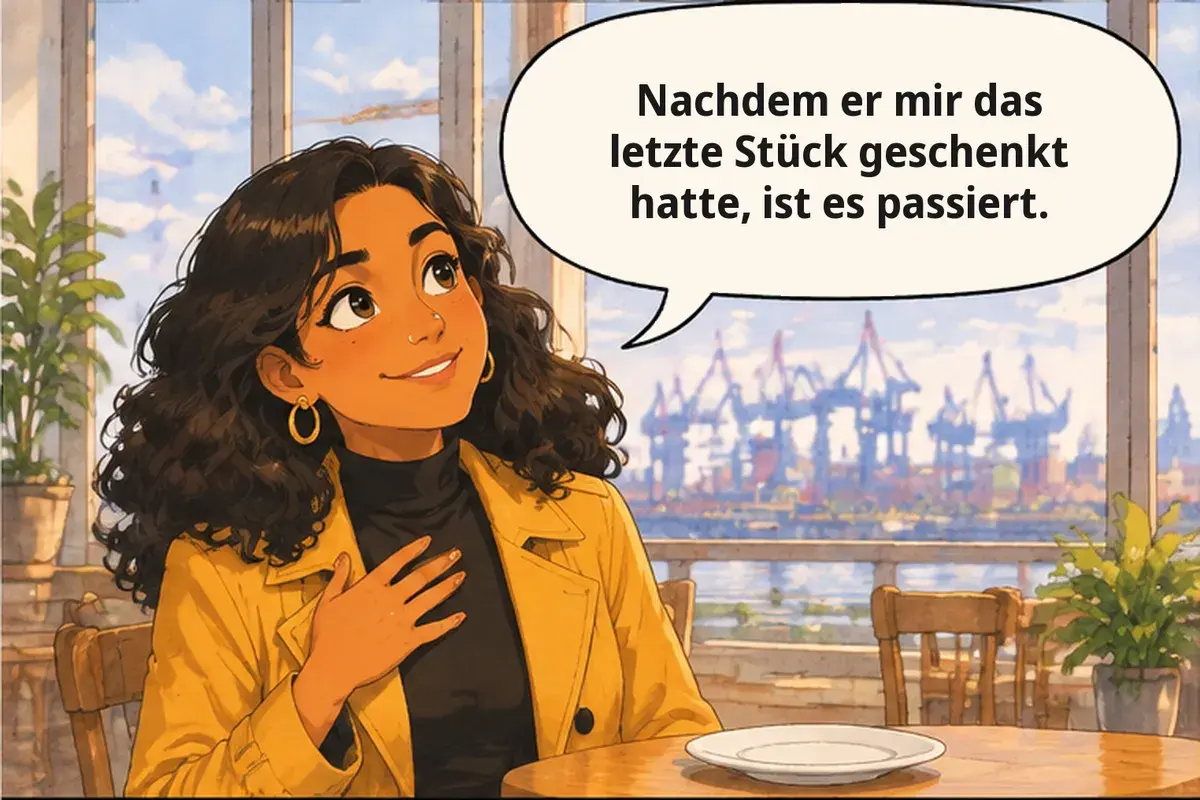
Nachdem er mir das letzte Stück geschenkt hatte, ist es passiert.
It happened after he gave me the last piece.
- Katja
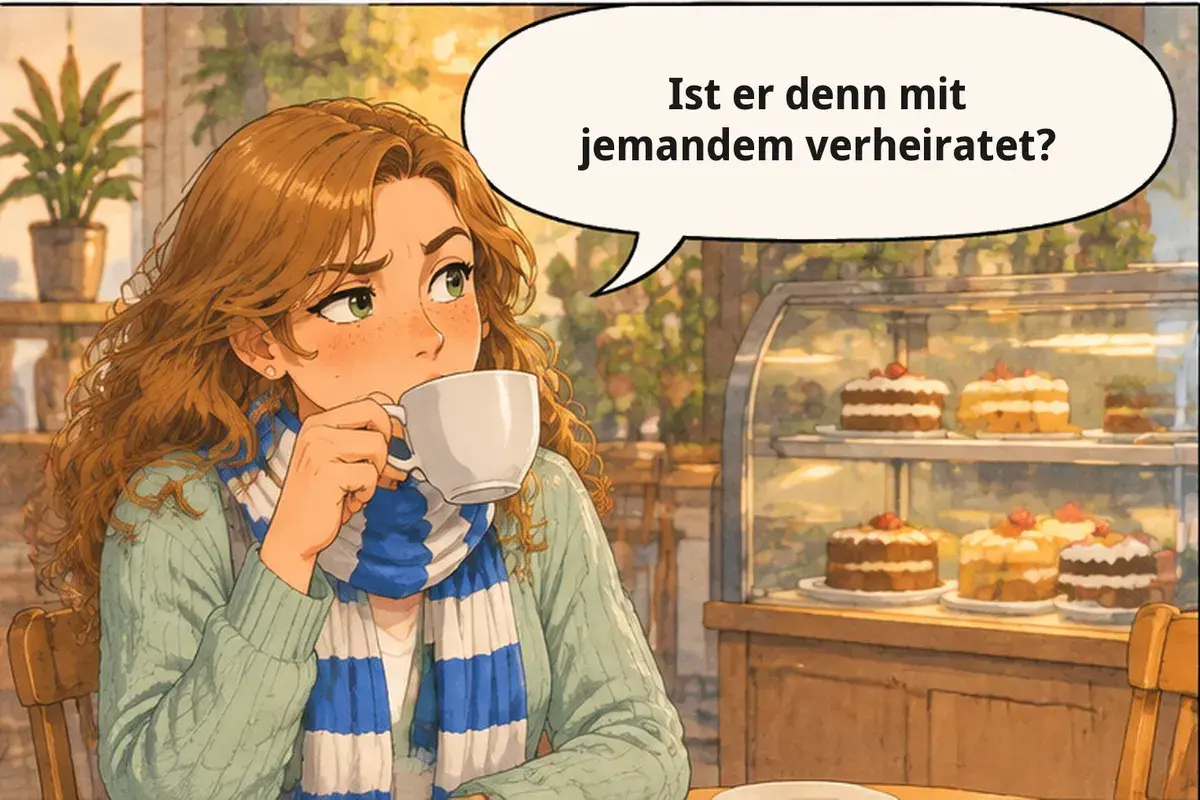
Ist er denn mit jemandem verheiratet?
Is he even married to anyone?
- Priya
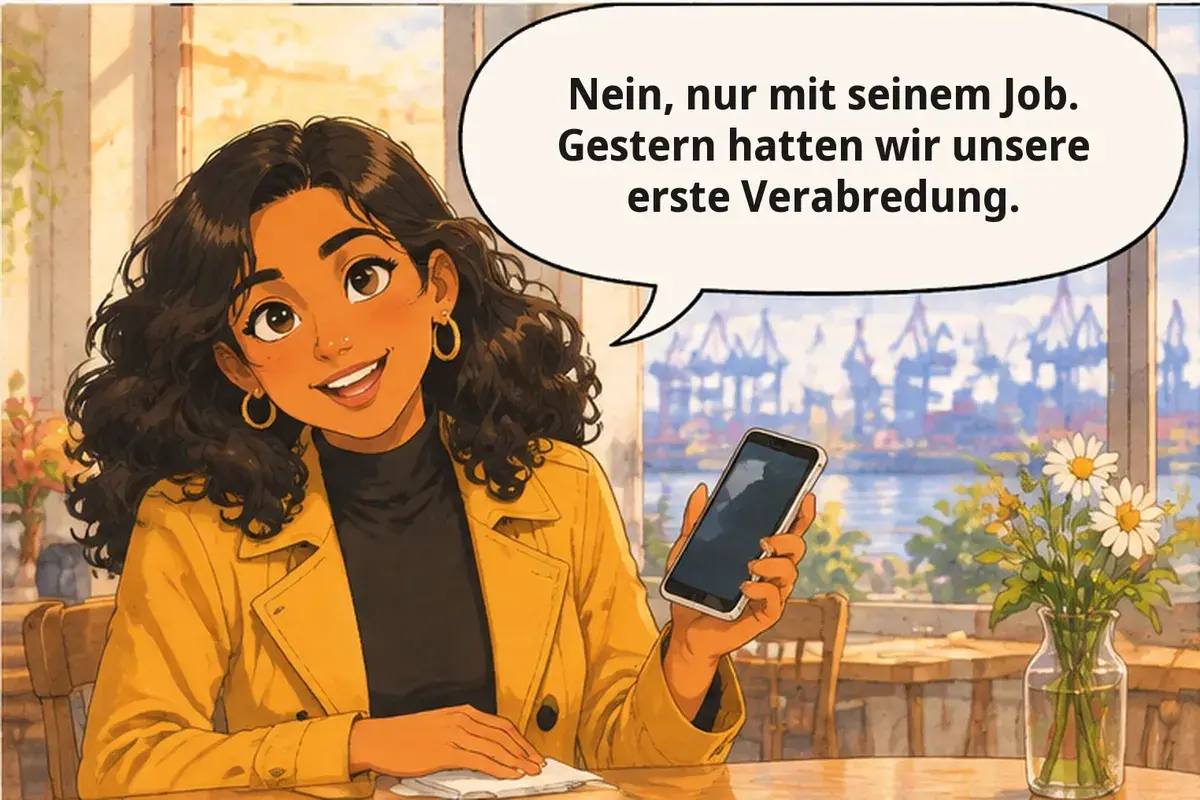
Nein, nur mit seinem Job. Gestern hatten wir unsere erste Verabredung.
No, only to his job. Yesterday we had our first date.
- Katja
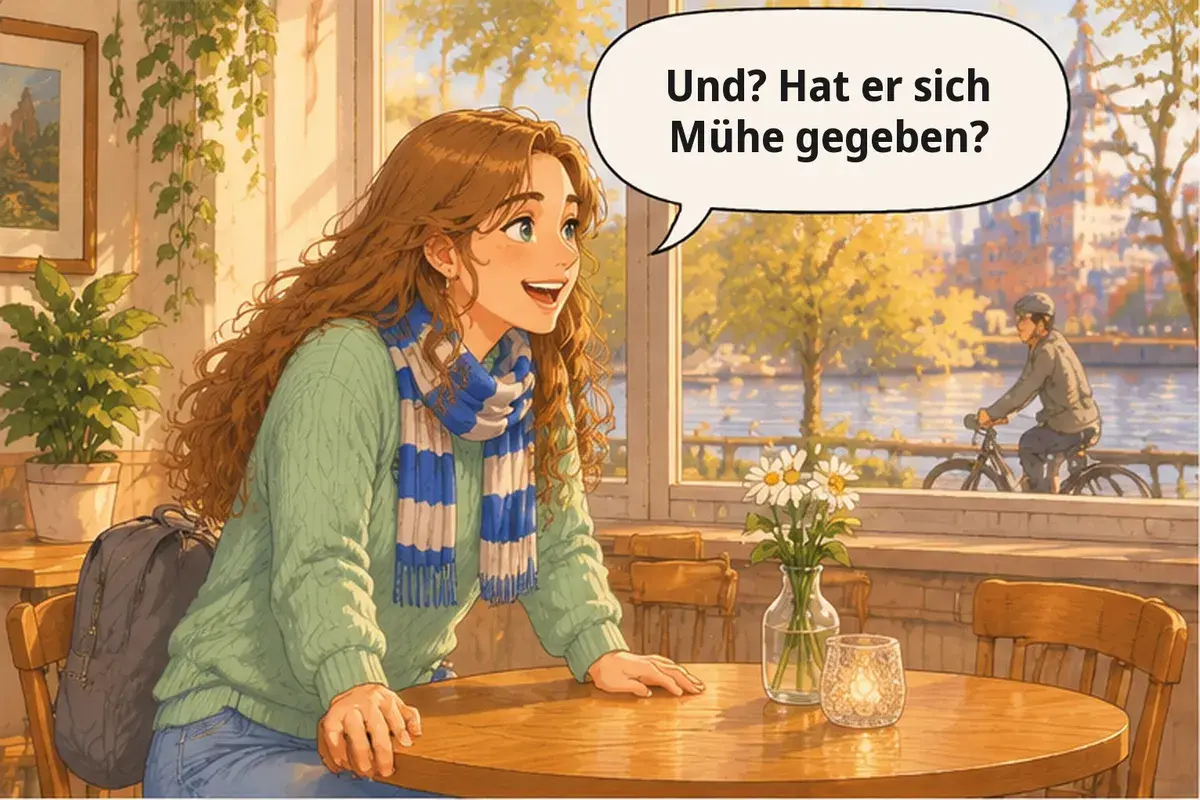
Und? Hat er sich Mühe gegeben?
And? Did he make an effort?
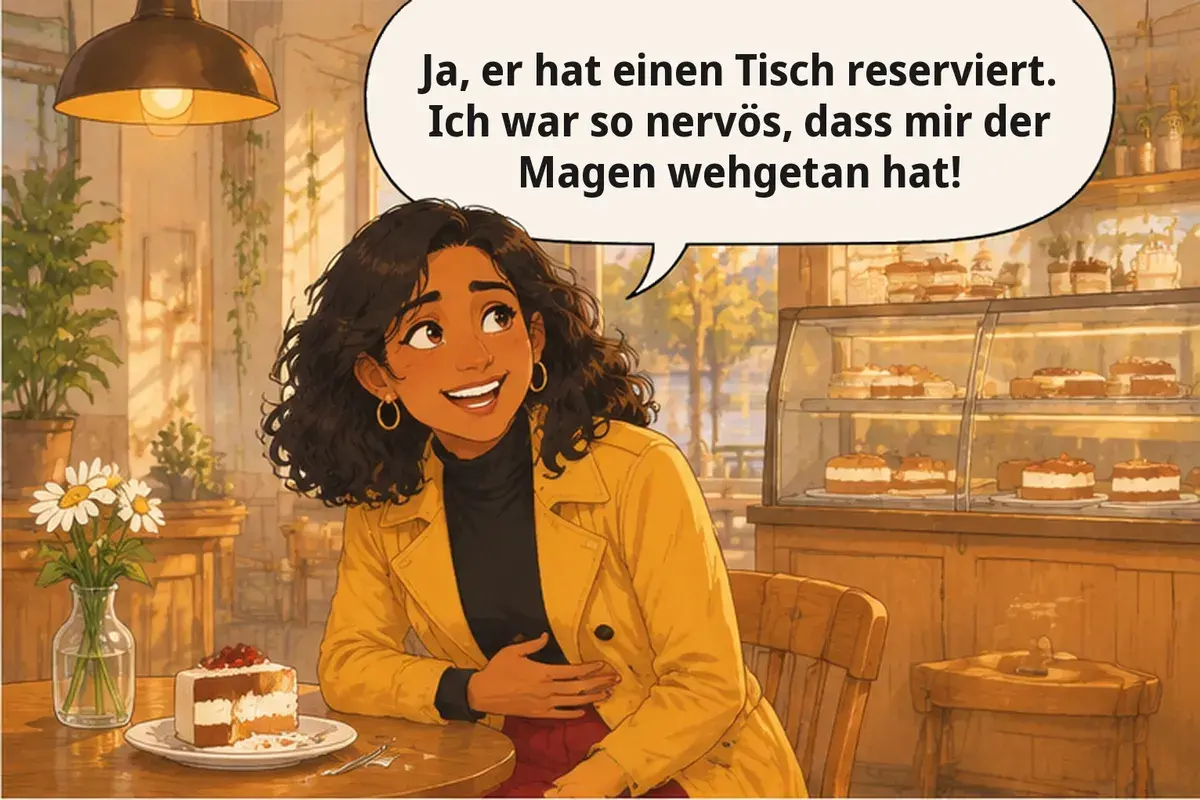
- Priya
Ja, er hat einen Tisch reserviert. Ich war so nervös, dass mir der Magen wehgetan hat!
Yes, he reserved a table. I was so nervous that my stomach hurt!
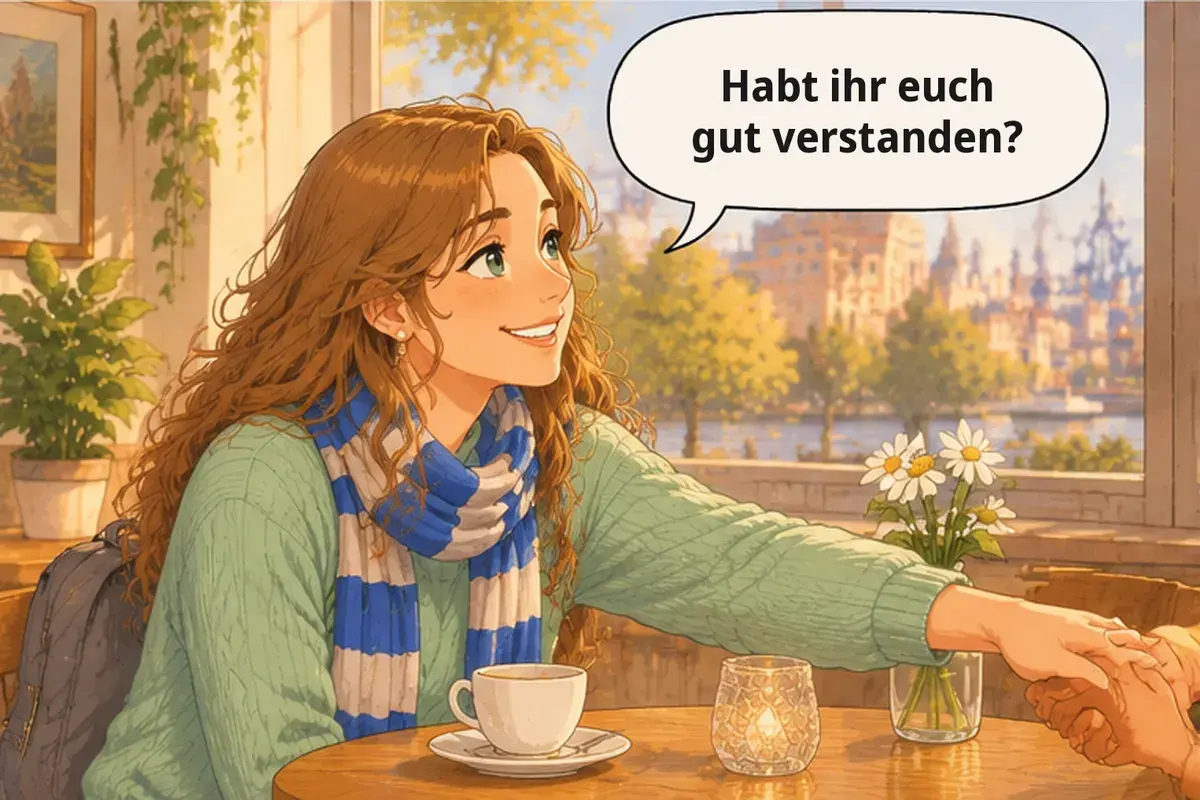
- Katja
Habt ihr euch gut verstanden?
Did you get along well? (to several people)
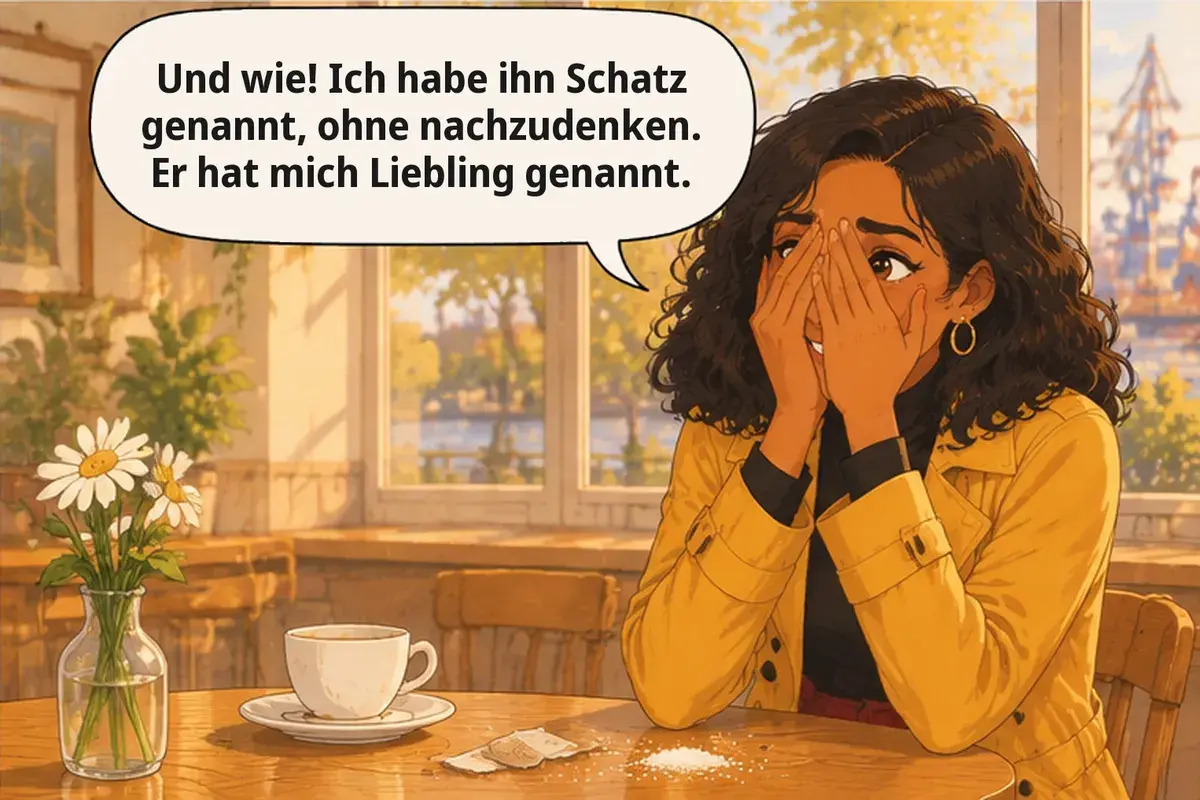
- Priya
Und wie! Ich habe ihn Schatz genannt, ohne nachzudenken. Er hat mich Liebling genannt.
And how! I called him sweetheart without thinking. He called me darling.
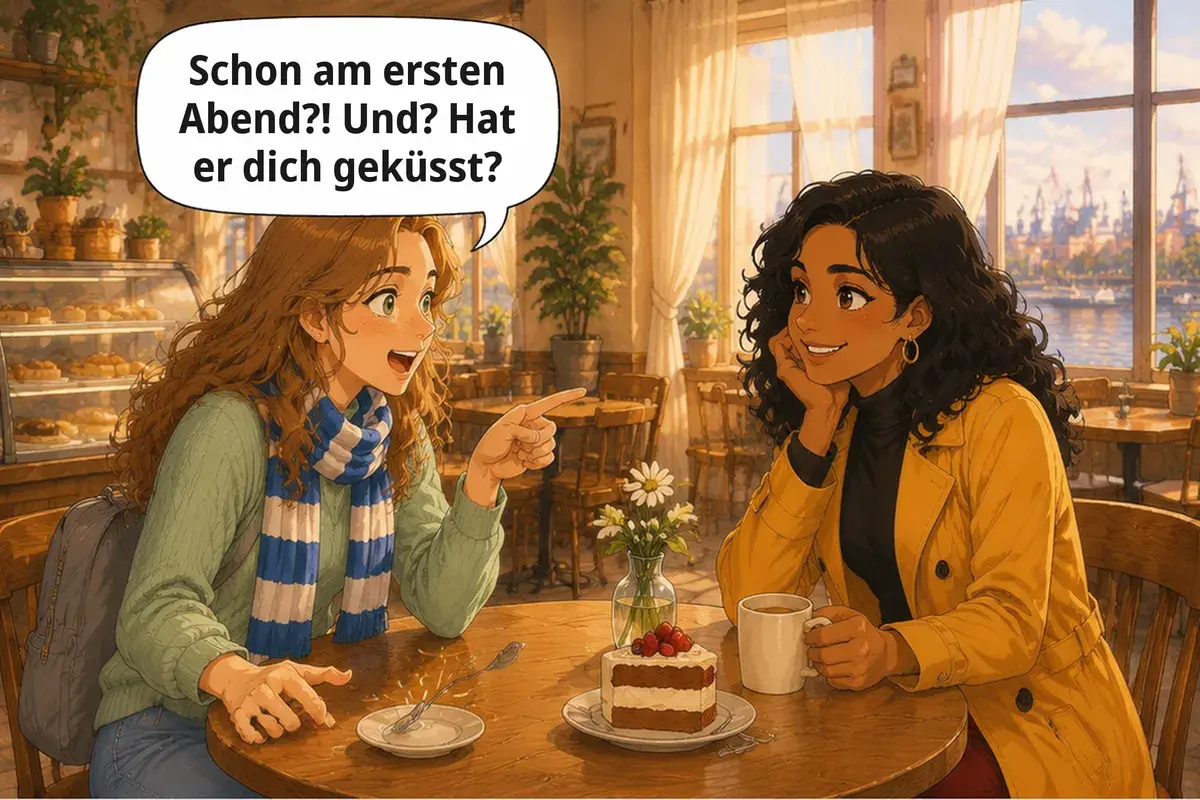
- Katja
Schon am ersten Abend?! Und? Hat er dich geküsst?
Already on the first night?! And? Did he kiss you?
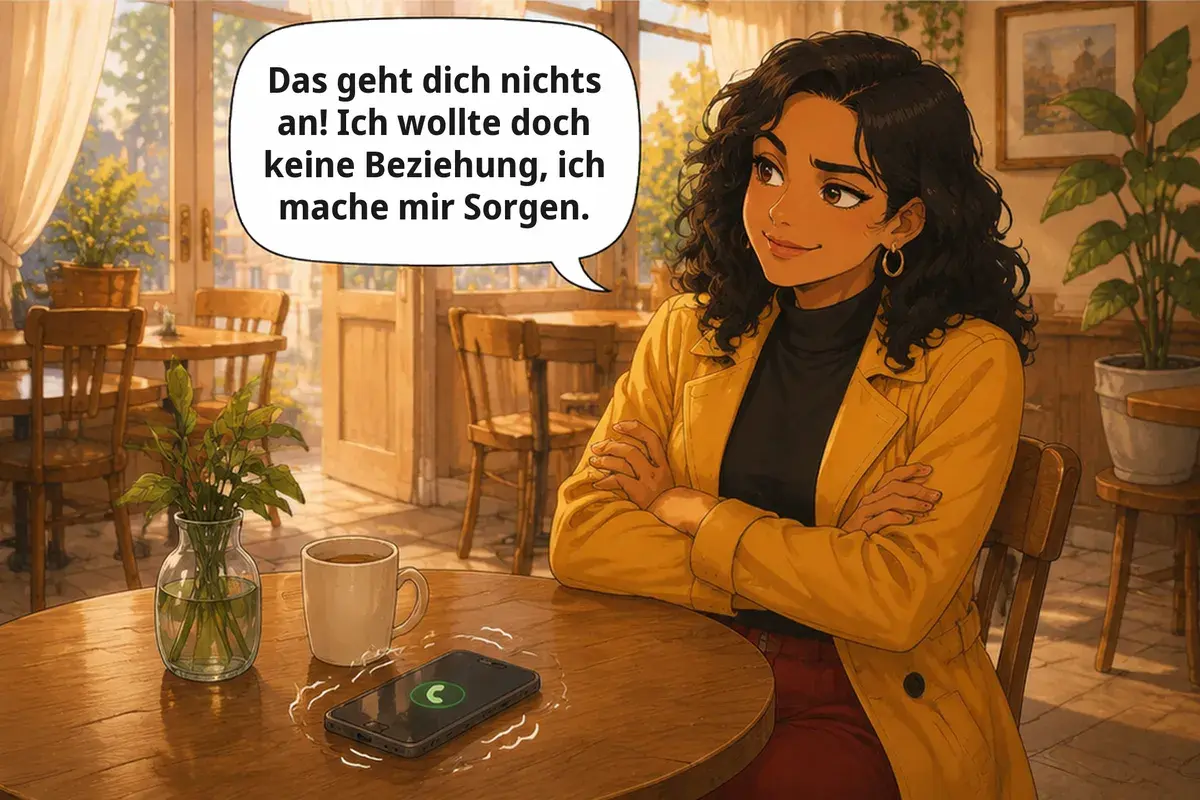
- Priya
Das geht dich nichts an! Ich wollte doch keine Beziehung, ich mache mir Sorgen.
That's none of your business! I didn't even want a relationship, I'm worried.
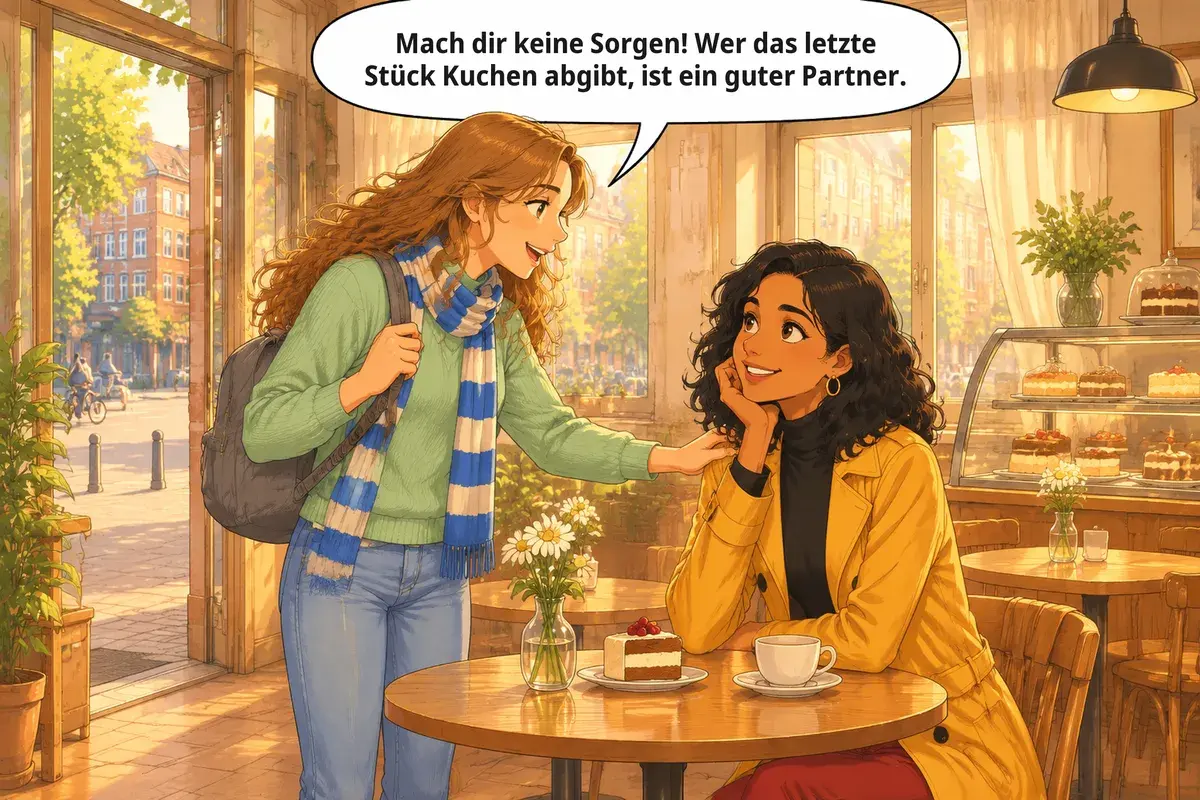
- Katja
Mach dir keine Sorgen! Wer das letzte Stück Kuchen abgibt, ist ein guter Partner.
Don't worry! Someone who gives up the last piece of cake is a good partner.
Grammar for this text
- Ich glaube, ich bin verliebt —
verliebt seinis the state of being in love; with whom is shown byin:verliebt in Jonas. The event "to fall in love" issich verlieben(see the unit's grammar blocks). - Das hätte ich nie gedacht — the past Konjunktiv II (unit 19):
hätte+gedachtmeans "I would never have thought that". - Im Café wollten wir beide das letzte Stück Kuchen —
beidemeans "both";das letzte Stückis "the last piece"; afterStückthere is no preposition:Stück Kuchenis "a piece of cake".Im Cafécomes first for emphasis, sowolltenfollows right after it andwircomes after. - Hast du dich sofort in ihn verliebt —
sich verlieben in+ accusative:in ihn, notin ihm. - Nachdem er mir das letzte Stück geschenkt hatte, ist es passiert —
nachdem+ the Plusquamperfekt (past perfect, unit 15): first he gave it (hatte … geschenkt), then it happened (ist … passiert, the Perfekt). - Ist er denn mit jemandem verheiratet —
verheiratet sein mit+ dative:mit jemandem. nur mit seinem Job is a joke: "married to his job". - dass mir der Magen wehgetan hat —
wehtuntakes the dative for the person who hurts:mir. Das geht dich nichts an means "that's none of your business", said here as a joke.
Words and grammar of the unit: Talk about family and relationships.
Learn the words from the texts with flashcards
In the app, you can tap any word in a text to see its translation, forms and examples, and new words stick with flashcards. 15 minutes a day.
Start for freeEverything is open for free. No card needed to sign up.