
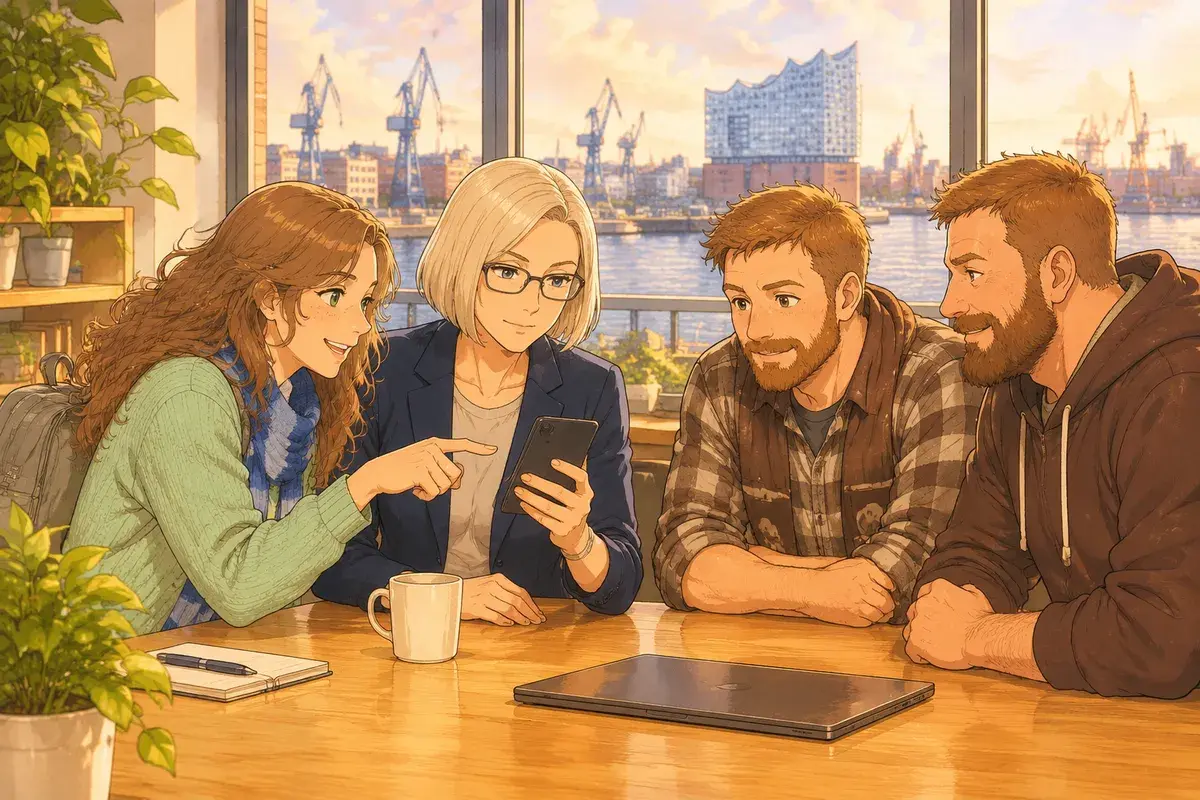
German dialogue with translation · B1 · 16 lines
Das ist meine Tochter This is my daughter
Comic · 16 panels
- Katja
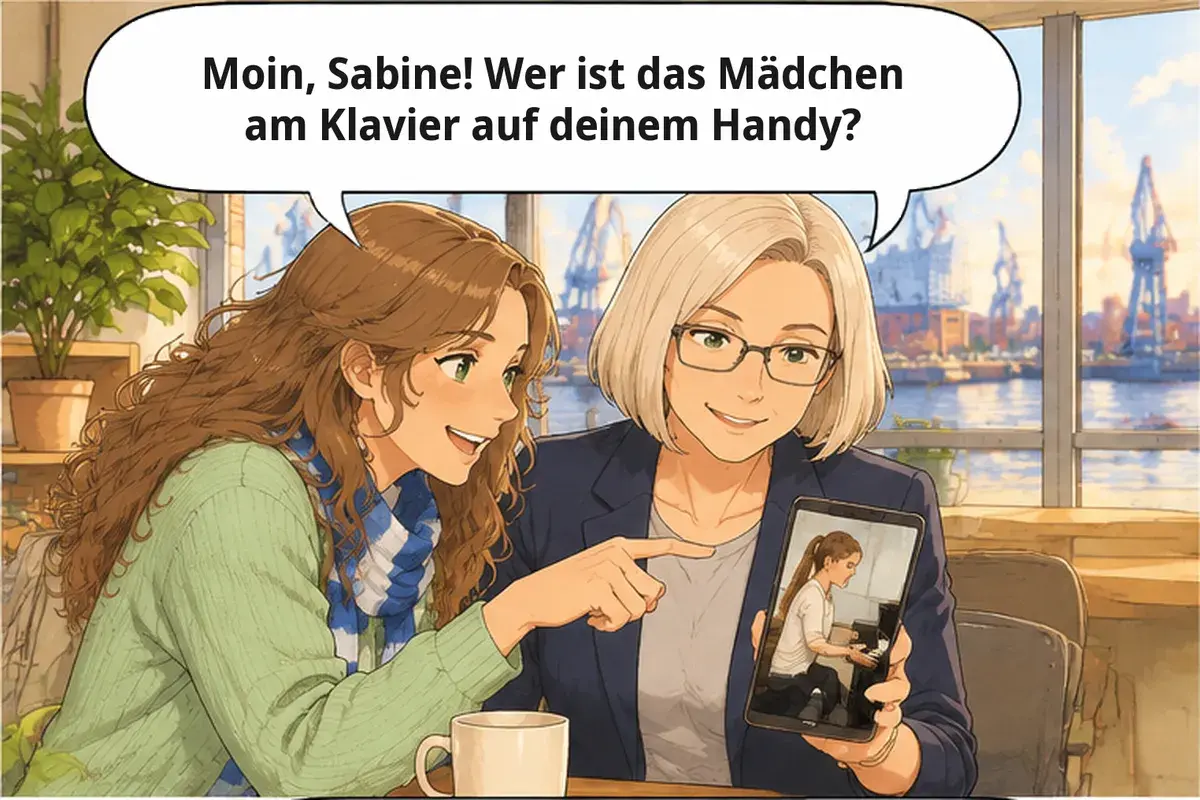
Moin, Sabine! Wer ist das Mädchen am Klavier auf deinem Handy?
Moin, Sabine! Who's the girl at the piano on your phone?
- Sabine
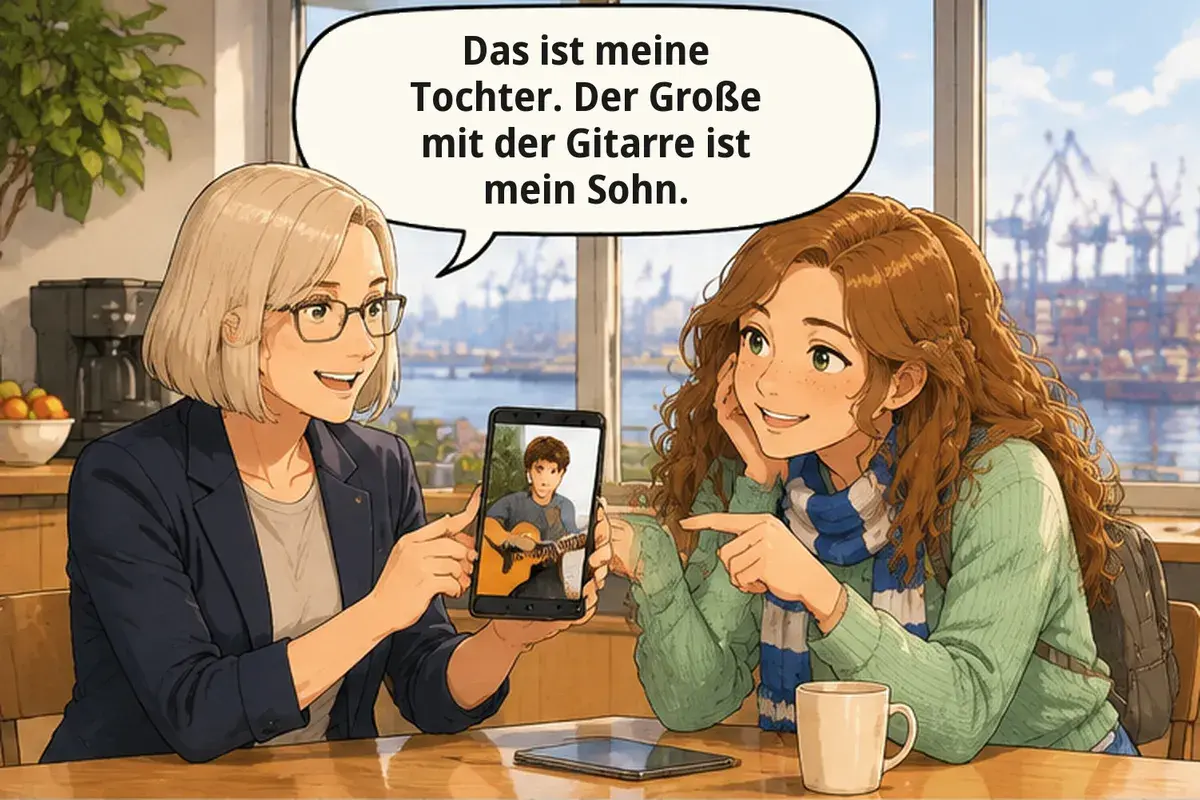
Das ist meine Tochter. Der Große mit der Gitarre ist mein Sohn.
That's my daughter. The tall one with the guitar is my son.
- Katja
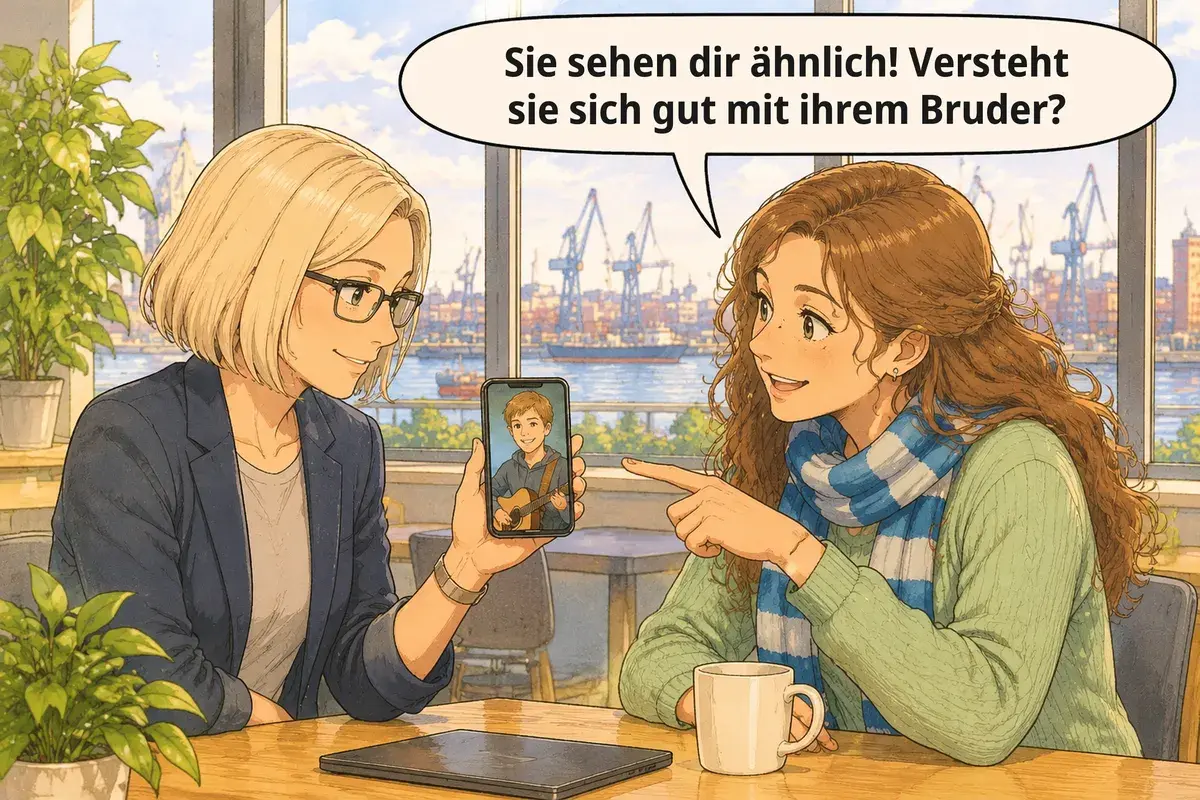
Sie sehen dir ähnlich! Versteht sie sich gut mit ihrem Bruder?
They look like you! Does she get along well with her brother?
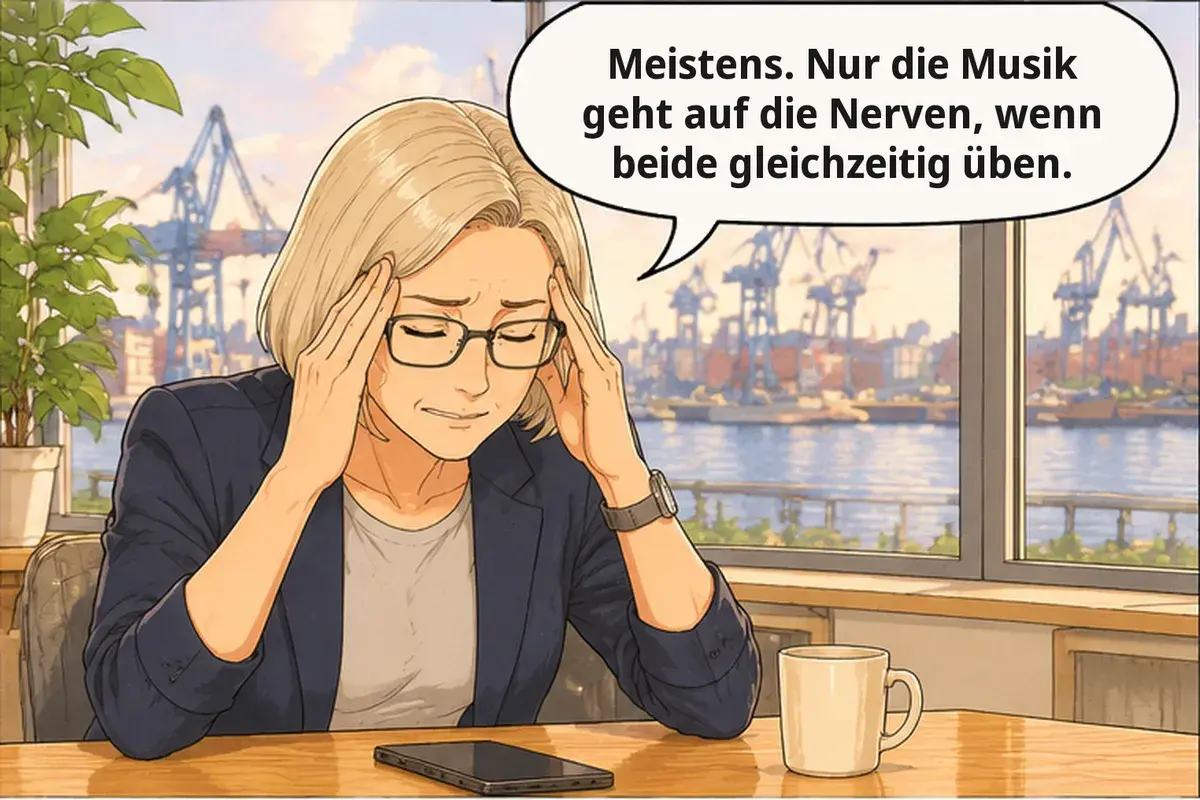
- Sabine
Meistens. Nur die Musik geht auf die Nerven, wenn beide gleichzeitig üben.
Mostly. It's just the music that gets on my nerves when they both practice at the same time.
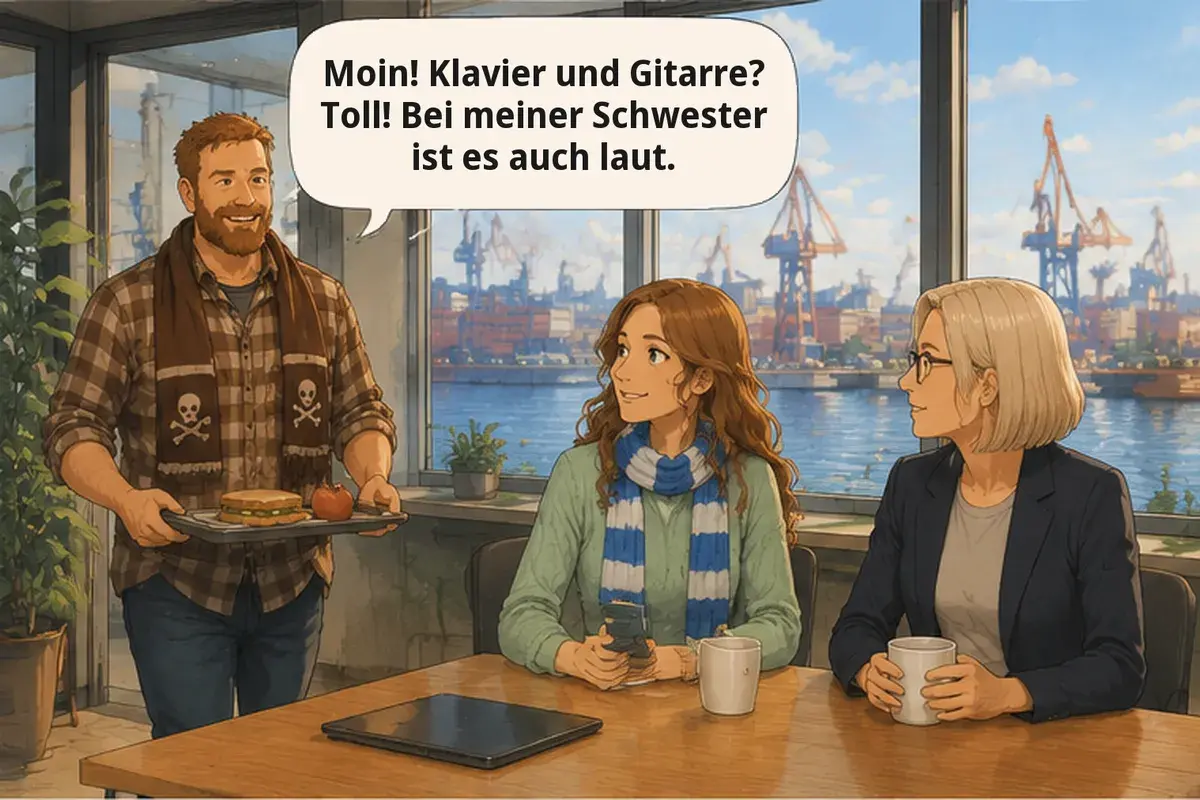
- Tobias
Moin! Klavier und Gitarre? Toll! Bei meiner Schwester ist es auch laut.
Moin! Piano and guitar? Great! It's loud at my sister's place too.
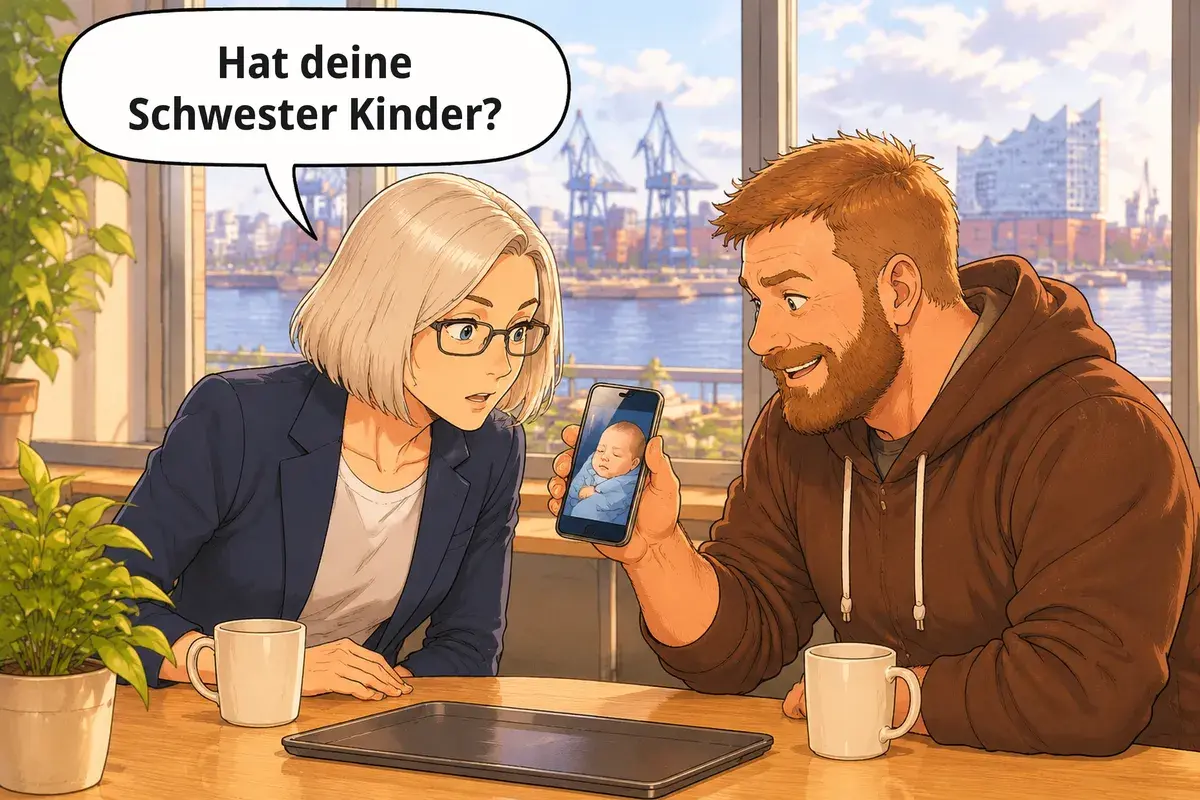
- Sabine
Hat deine Schwester Kinder?
Does your sister have kids?
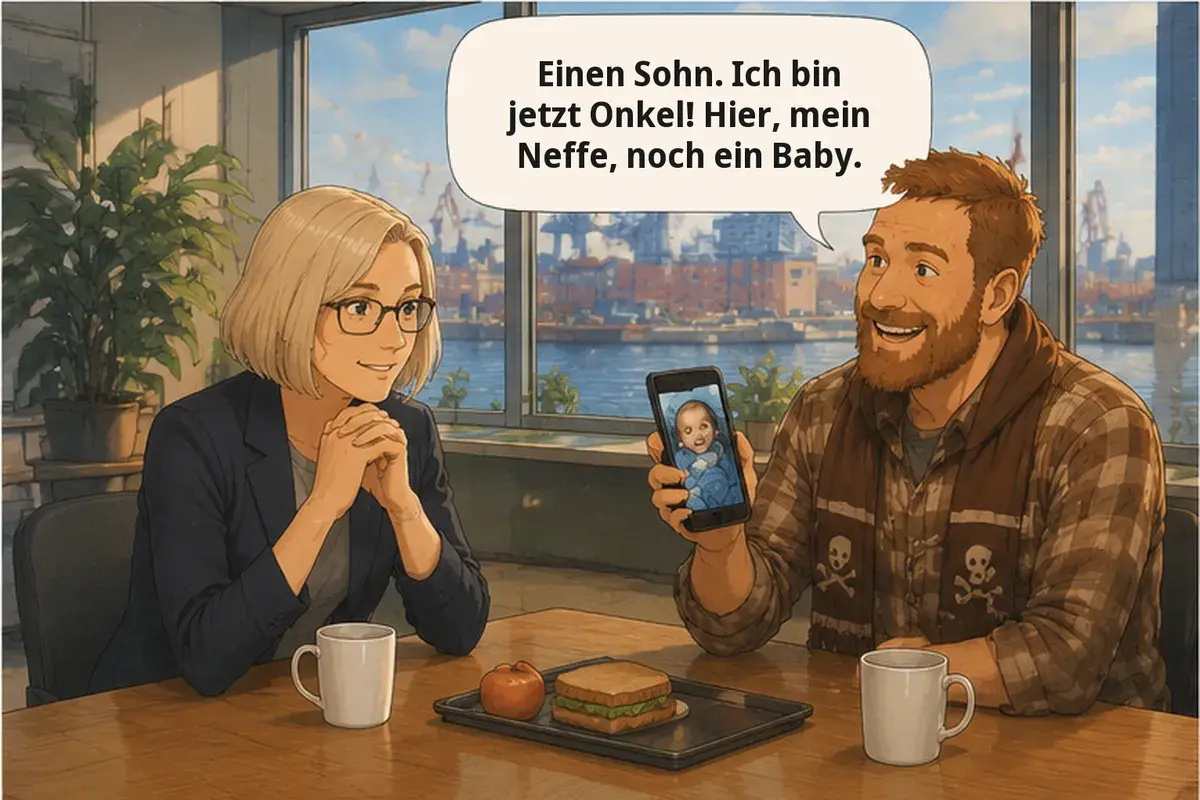
- Tobias
Einen Sohn. Ich bin jetzt Onkel! Hier, mein Neffe, noch ein Baby.
A son. I'm an uncle now! Here, my nephew, still a baby.
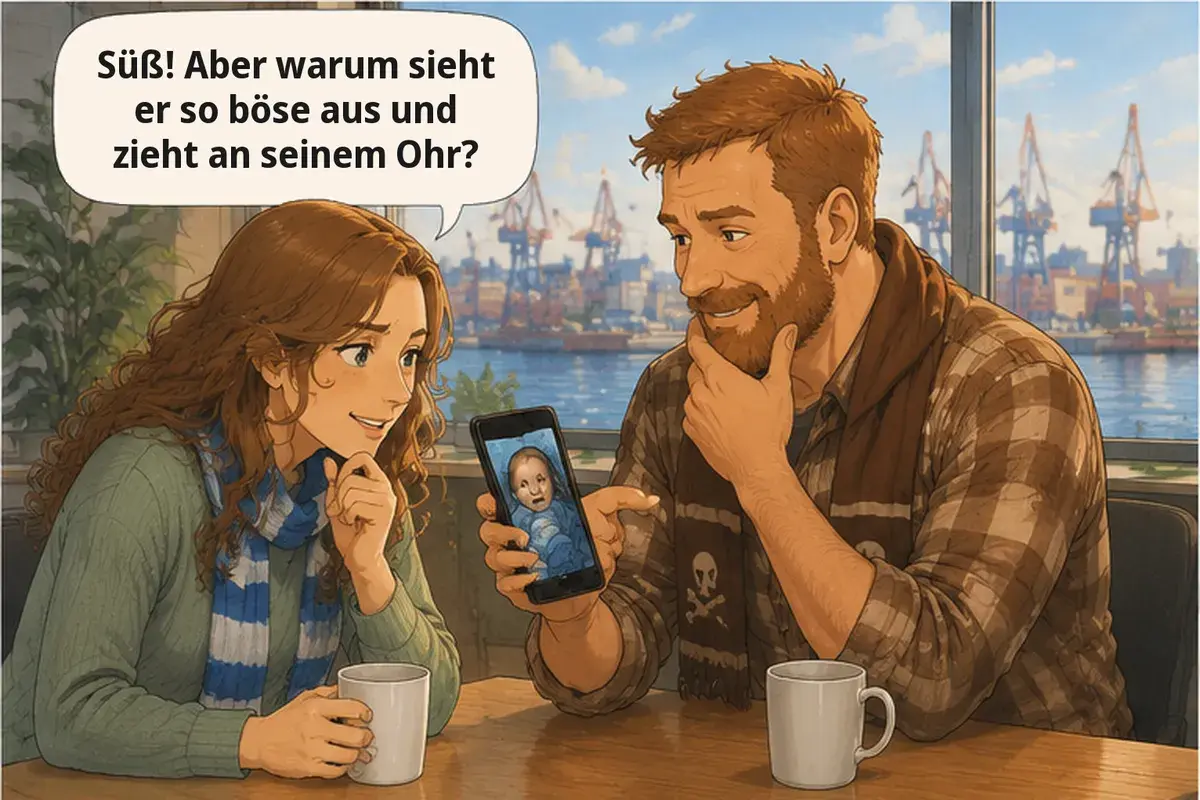
- Katja
Süß! Aber warum sieht er so böse aus und zieht an seinem Ohr?
Cute! But why does he look so angry and pull at his ear?
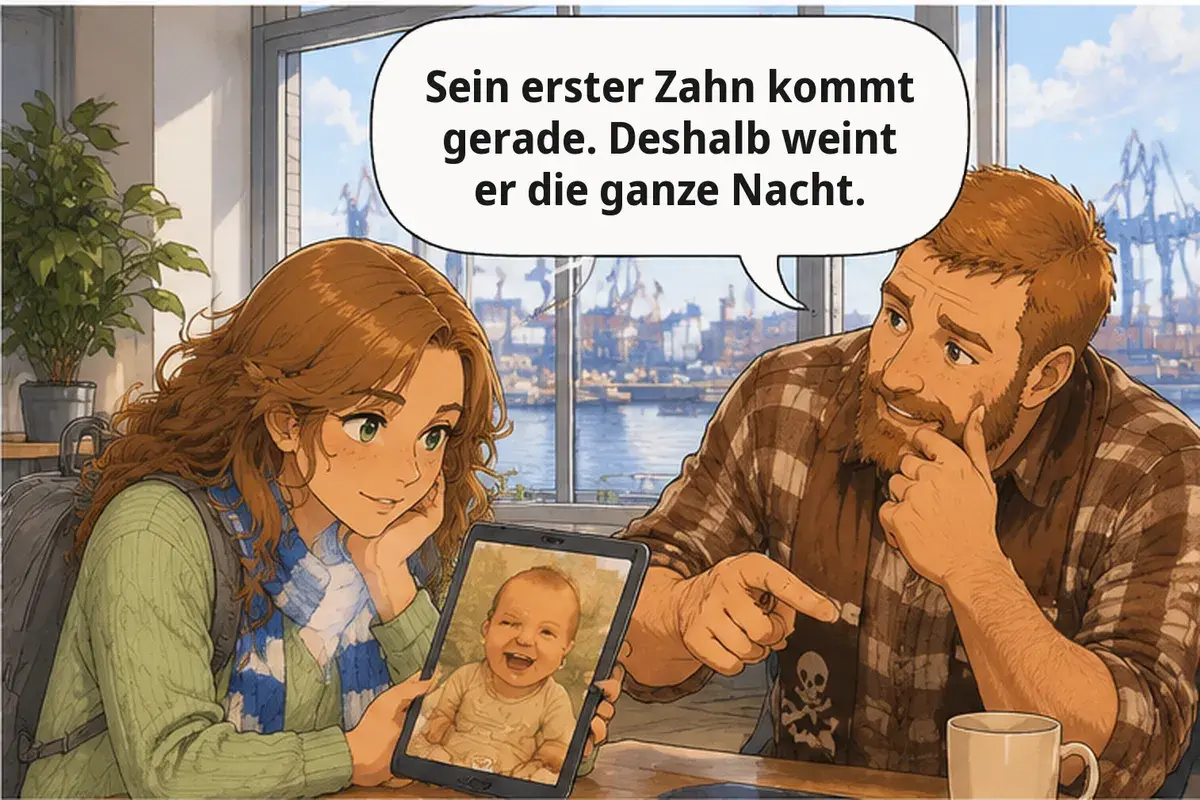
- Tobias
Sein erster Zahn kommt gerade. Deshalb weint er die ganze Nacht.
His first tooth is coming in. That's why he cries all night.
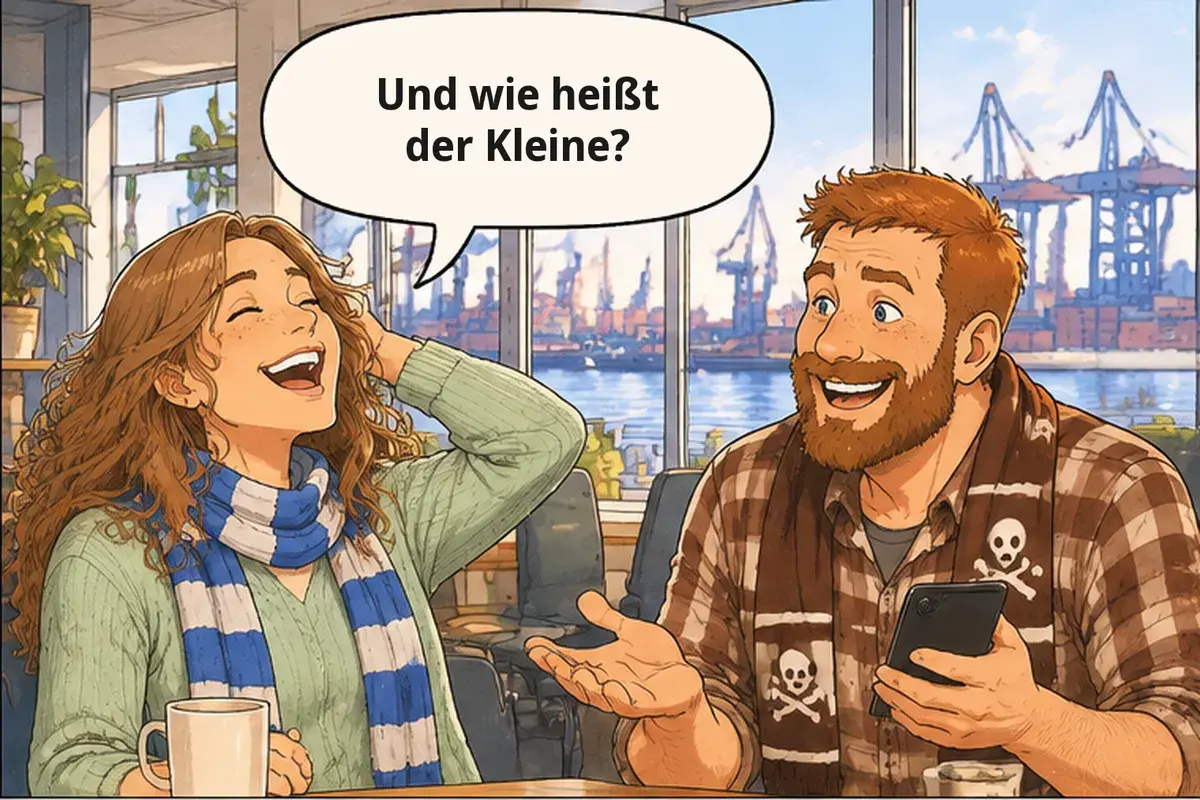
- Katja
Und wie heißt der Kleine?
And what's the little one's name?
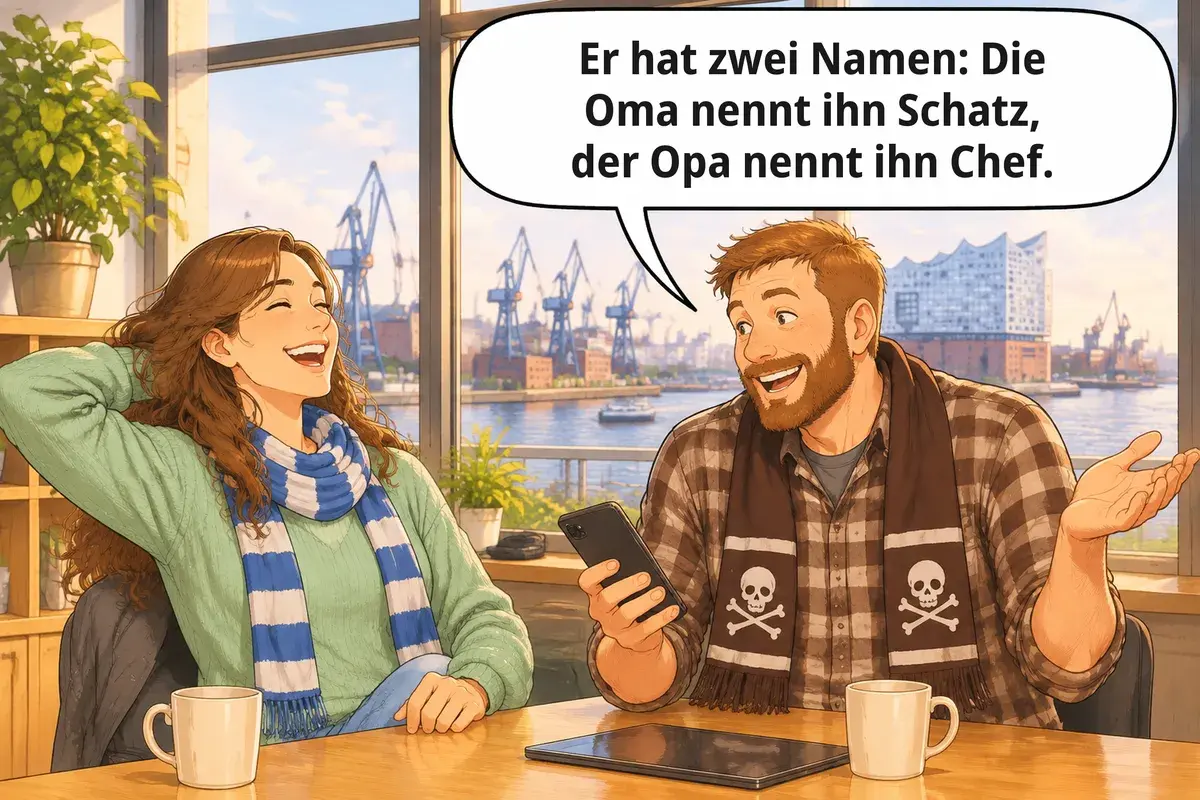
- Tobias
Er hat zwei Namen: Die Oma nennt ihn Schatz, der Opa nennt ihn Chef.
He has two names: Grandma calls him sweetheart, Grandpa calls him boss.
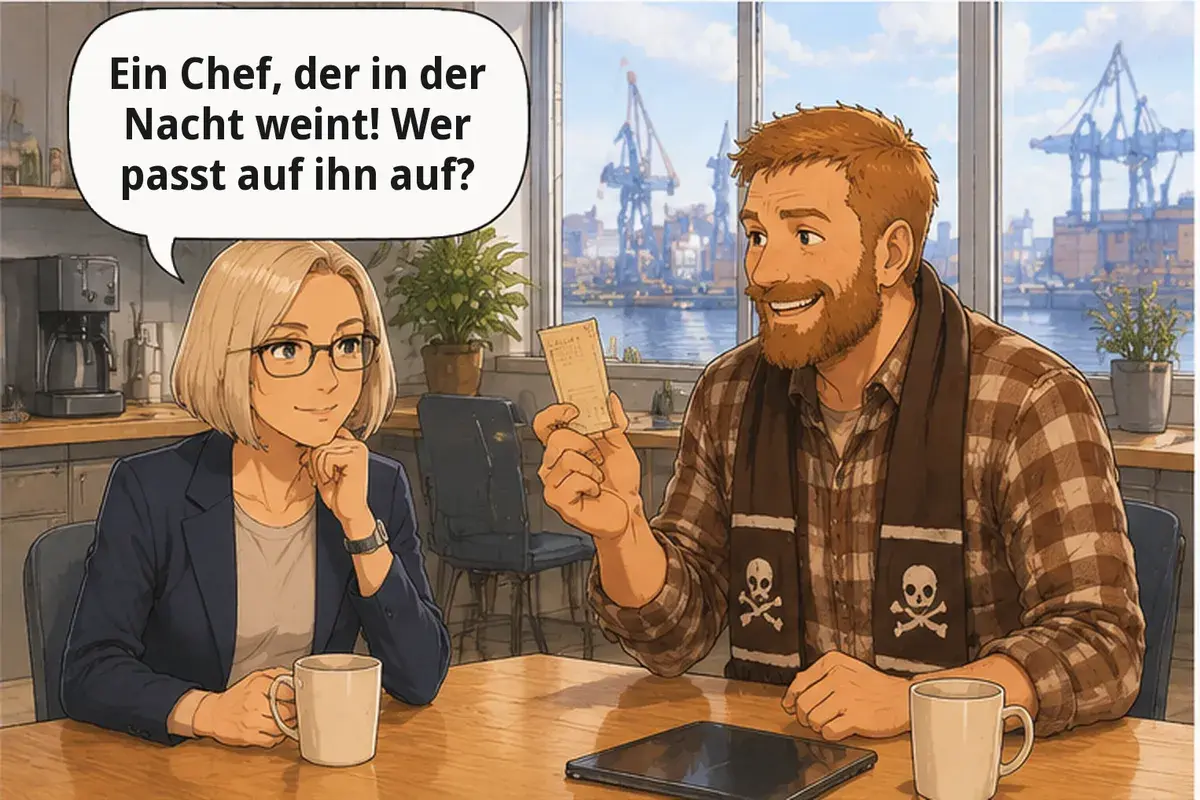
- Sabine
Ein Chef, der in der Nacht weint! Wer passt auf ihn auf?
A boss who cries at night! Who looks after him?
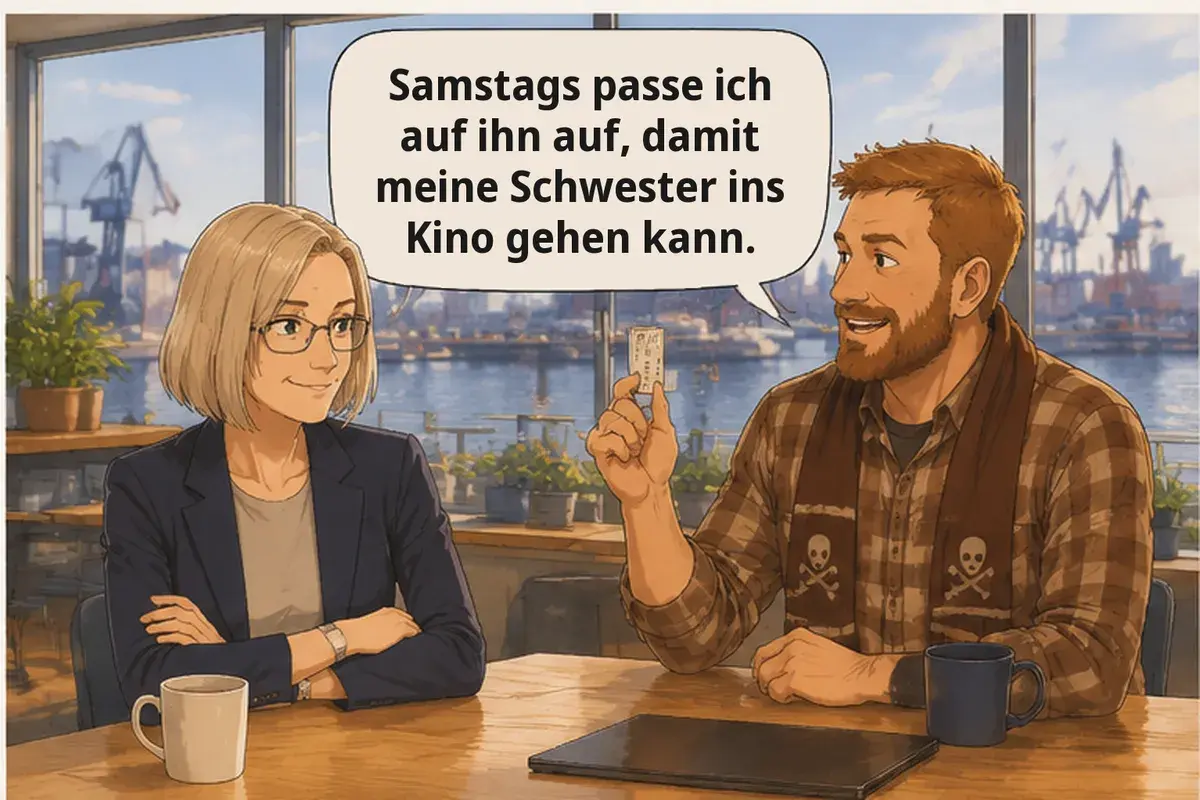
- Tobias
Samstags passe ich auf ihn auf, damit meine Schwester ins Kino gehen kann.
On Saturdays I look after him so my sister can go to the movies.
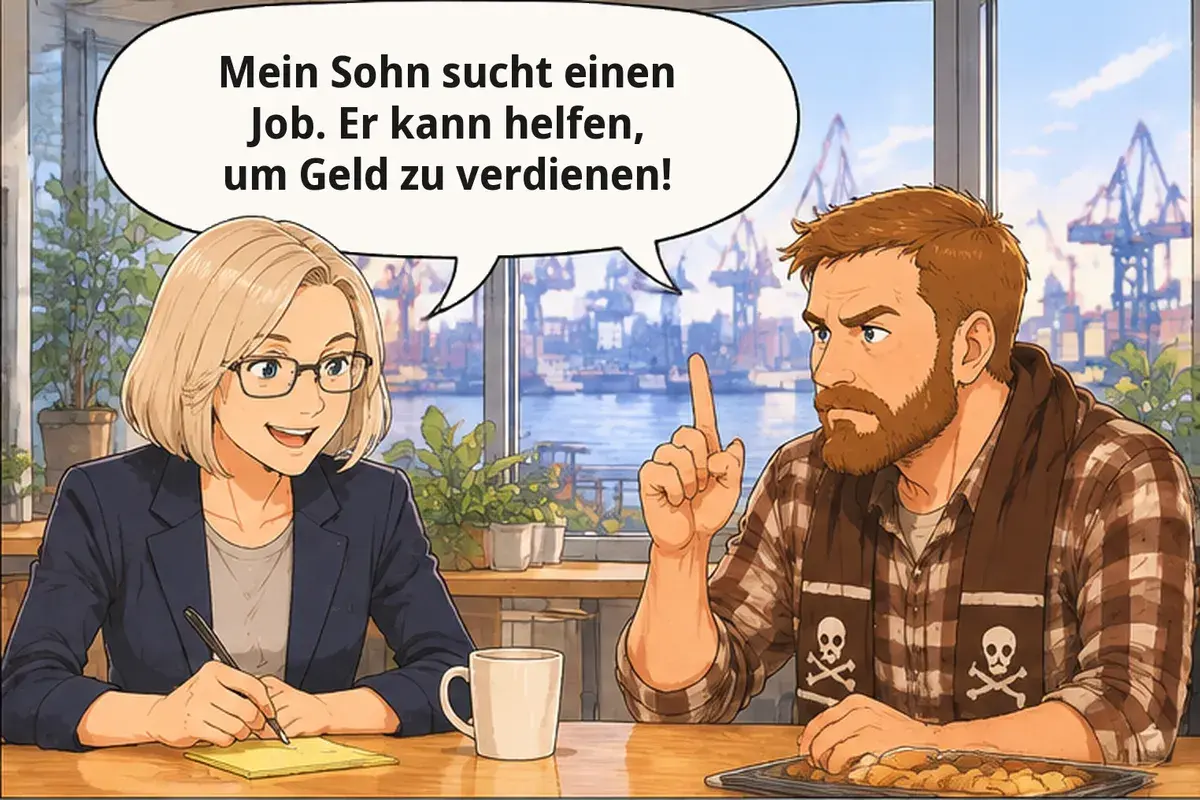
- Sabine
Mein Sohn sucht einen Job. Er kann helfen, um Geld zu verdienen!
My son is looking for a job. He can help out to earn some money!
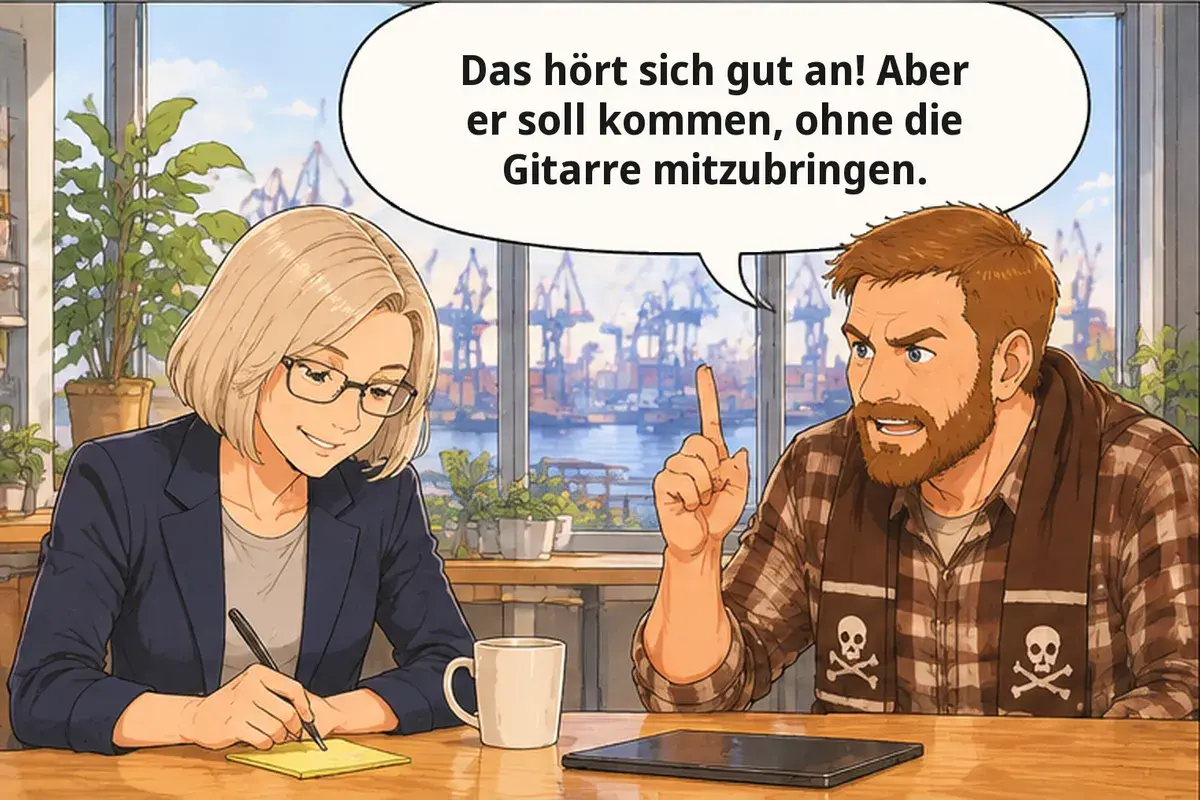
- Tobias
Das hört sich gut an! Aber er soll kommen, ohne die Gitarre mitzubringen.
That sounds good! But he should come without bringing the guitar.
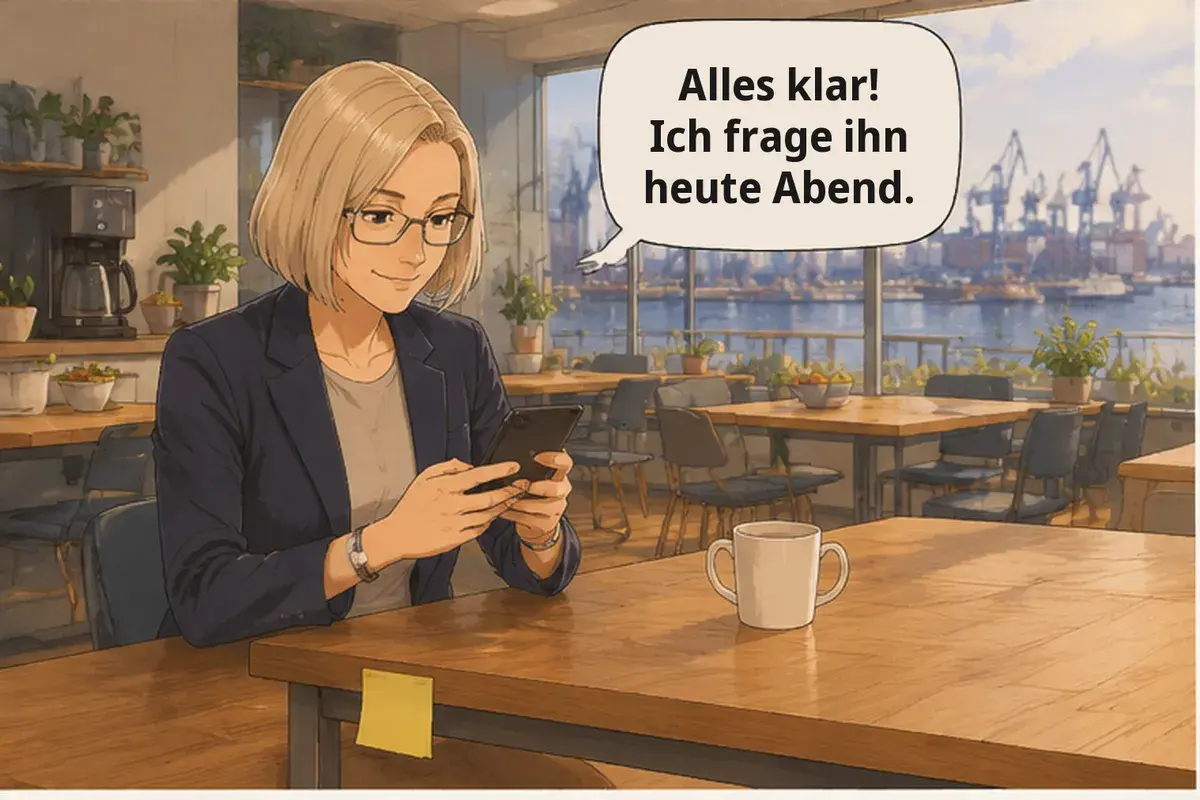
- Sabine
Alles klar! Ich frage ihn heute Abend.
All right! I'll ask him tonight.
Grammar for this text
- Das ist meine Tochter. Der Große mit der Gitarre ist mein Sohn —
meinemeans "my" with a feminine noun (likedie Tochter),meinmeans "my" with a masculine noun (likeder Sohn).Der Großeis the adjectivegroßused as a noun: "the tall one". - Versteht sie sich gut mit ihrem Bruder —
sich verstehen mitmeans "to get along with", andmitis followed by the dative (ihrem Bruder). In a yes/no question the verb comes first. The rule is in the unit's grammar blocks. - Nur die Musik geht auf die Nerven —
auf die Nerven gehenmeans "to get on someone's nerves"; literally "to walk on the nerves".Nervenis always plural. - warum sieht er so böse aus —
aussehenis separable:sieht … aus;böse aussehenmeans "to look angry". Sein erster Zahn kommt gerade — "his first tooth is coming in" (literally "is coming"). - Die Oma nennt ihn Schatz, der Opa nennt ihn Chef —
nennentakes two accusatives: whom? —ihn(like him), what name? —Schatz("sweetheart", not "treasure"). - Samstags passe ich auf ihn auf, damit meine Schwester ins Kino gehen kann — the prefix
aufofaufpassengoes to the end; afterdamit("so that") the verb goes to the end. - Er kann helfen, um Geld zu verdienen —
um … zumeans "to, in order to". ohne die Gitarre mitzubringen —ohne … zumeans "without -ing"; withmitbringen,zugoes inside the verb.
Words and grammar of the unit: Talk about family and relationships.
Learn the words from the texts with flashcards
In the app, you can tap any word in a text to see its translation, forms and examples, and new words stick with flashcards. 15 minutes a day.
Start for freeEverything is open for free. No card needed to sign up.