

German dialogue with translation · B1 · 14 lines
Wir machen einen Rundgang We're going on a walking tour
Comic · 14 panels
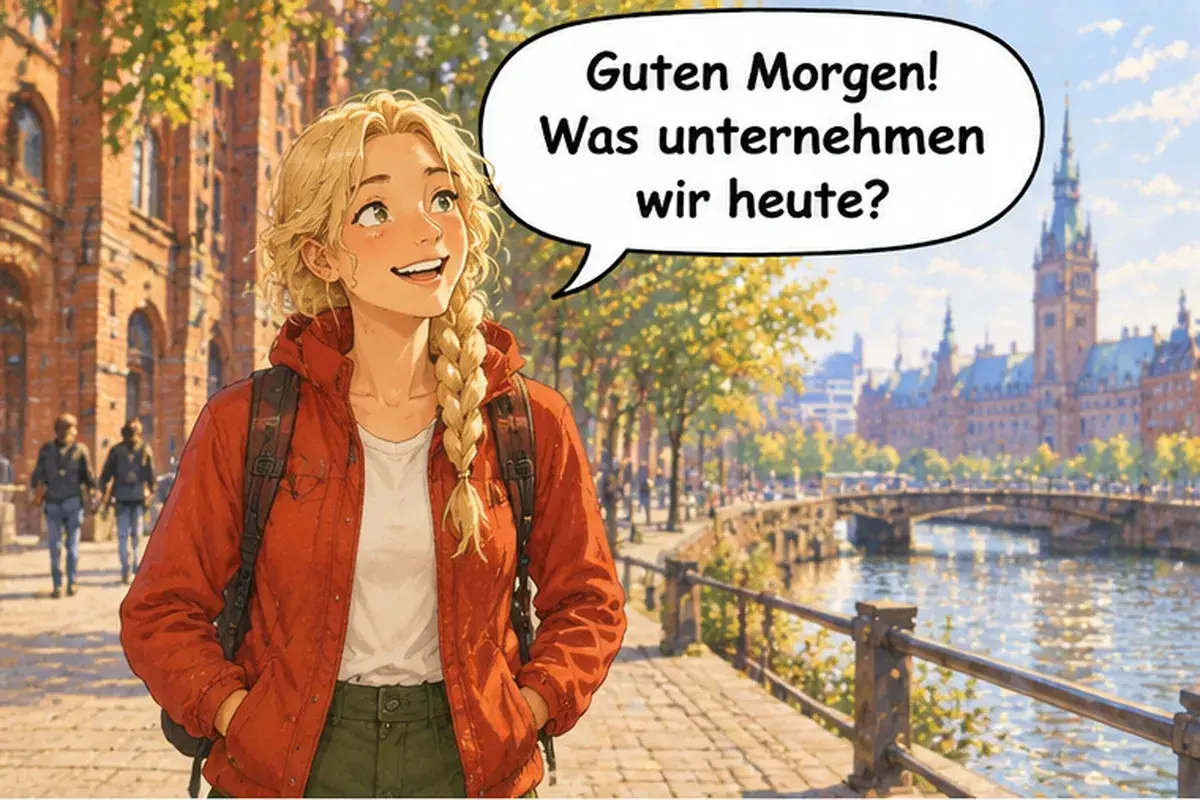
- Hanna
Guten Morgen! Was unternehmen wir heute?
Good morning! What are we doing today?
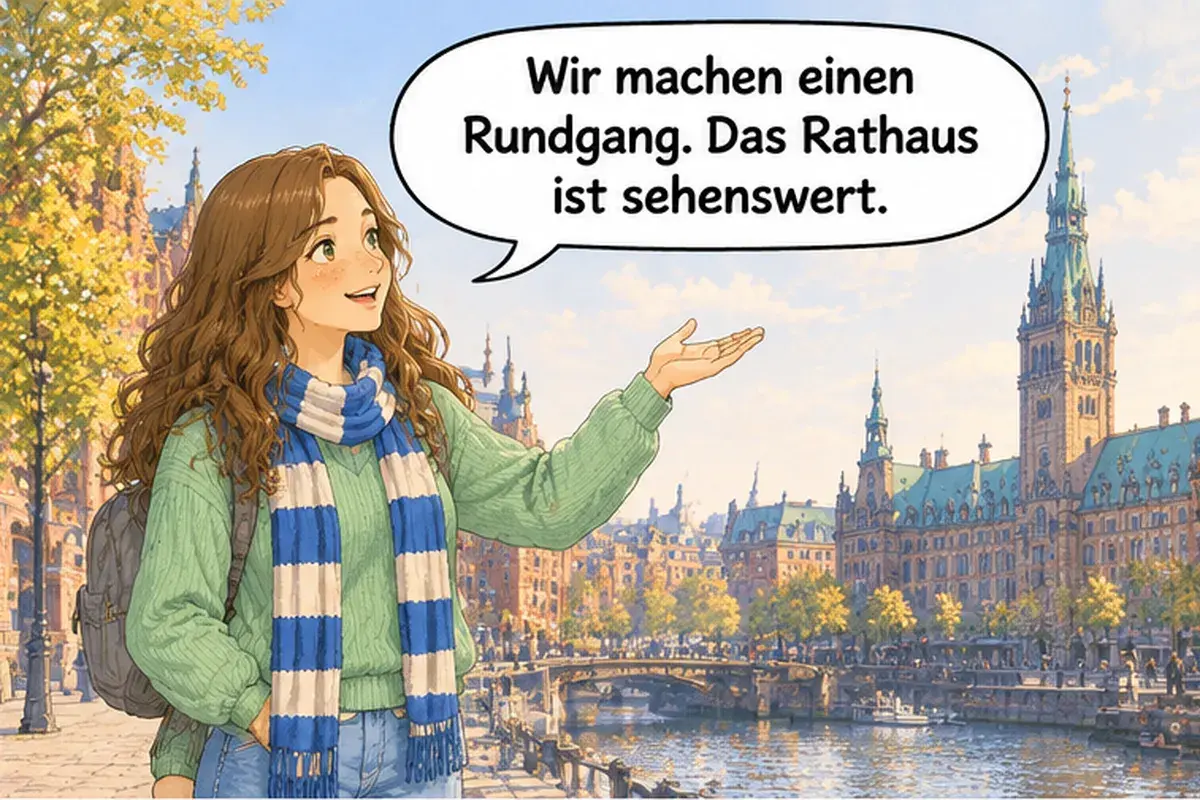
- Katja
Wir machen einen Rundgang. Das Rathaus ist sehenswert.
We're going on a walking tour. City hall is worth seeing.
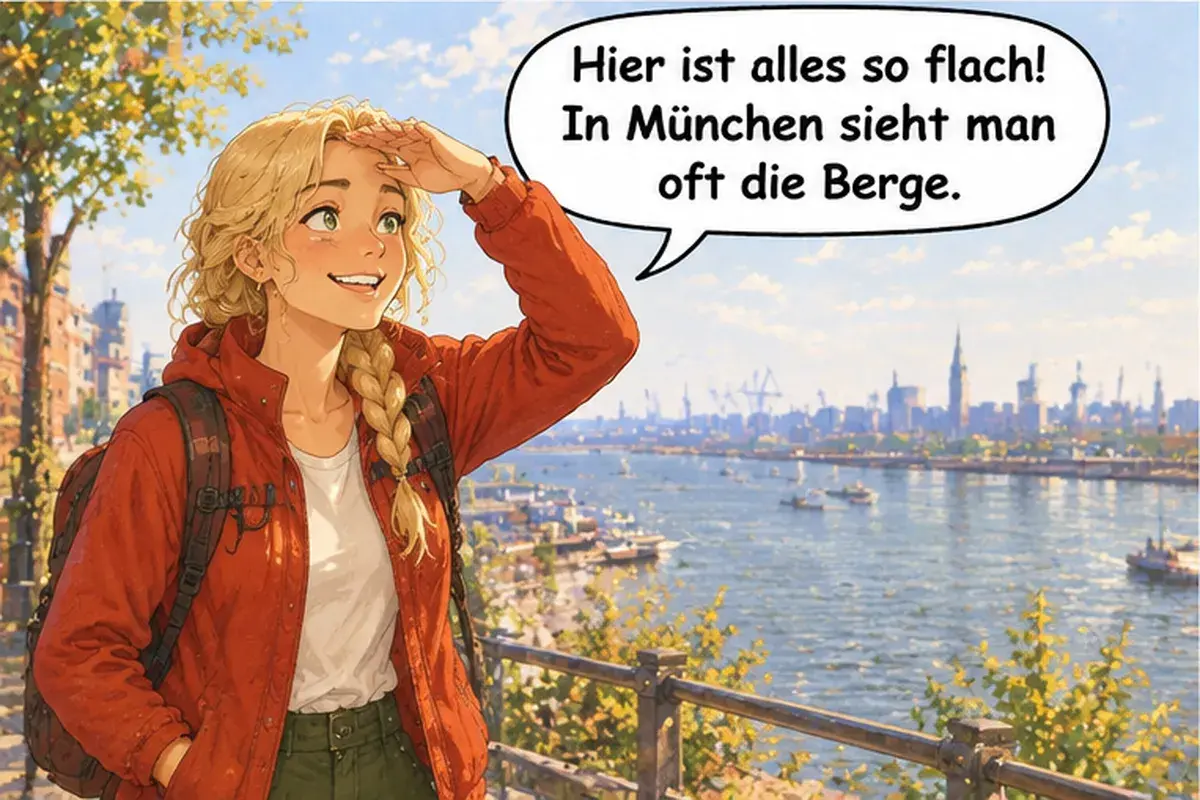
- Hanna
Hier ist alles so flach! In München sieht man oft die Berge.
Everything is so flat here! In Munich you can often see the mountains.
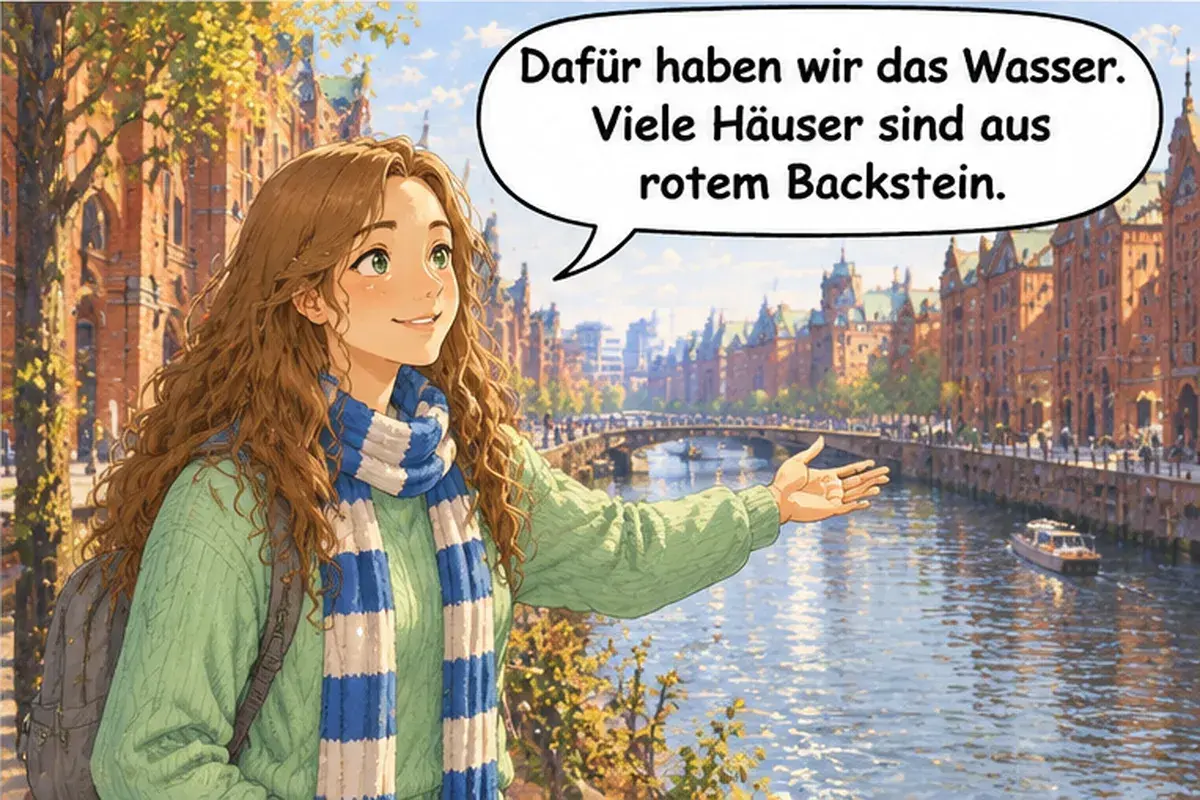
- Katja
Dafür haben wir das Wasser. Viele Häuser sind aus rotem Backstein.
But we have the water. Many of the houses are made of red brick.
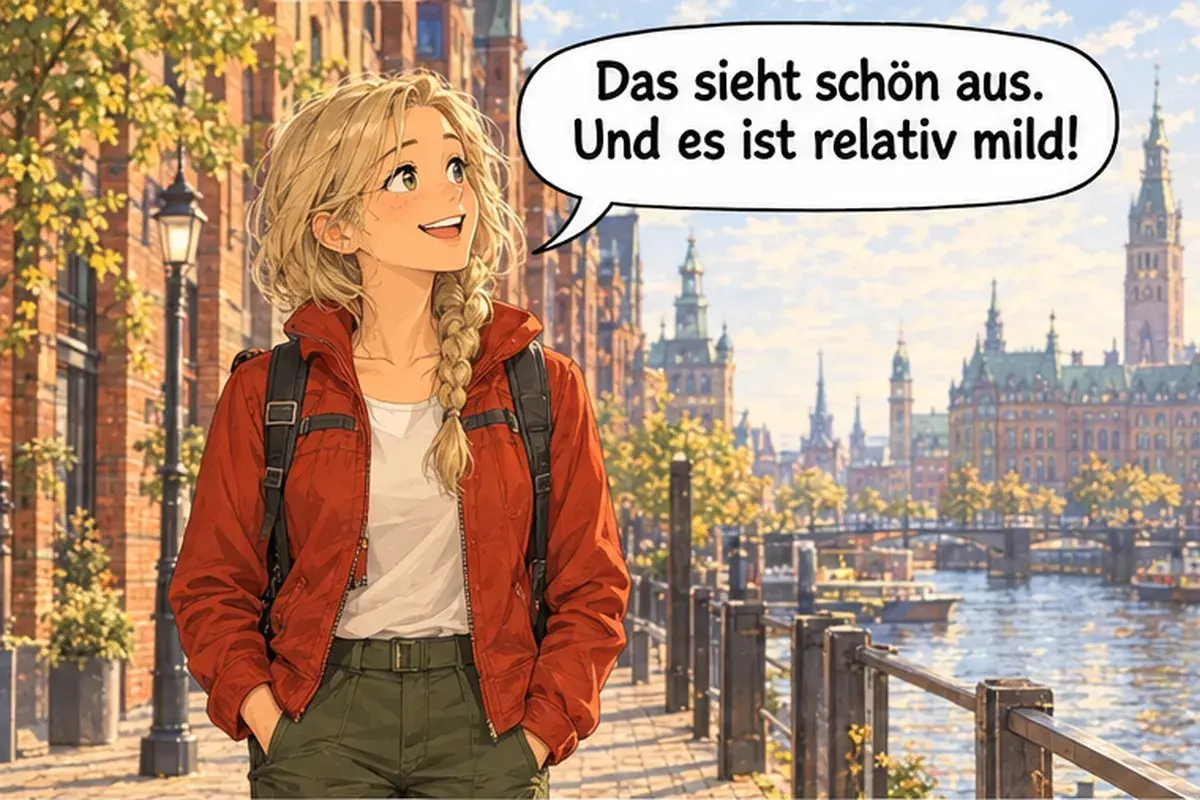
- Hanna
Das sieht schön aus. Und es ist relativ mild!
That looks nice. And it's relatively mild!
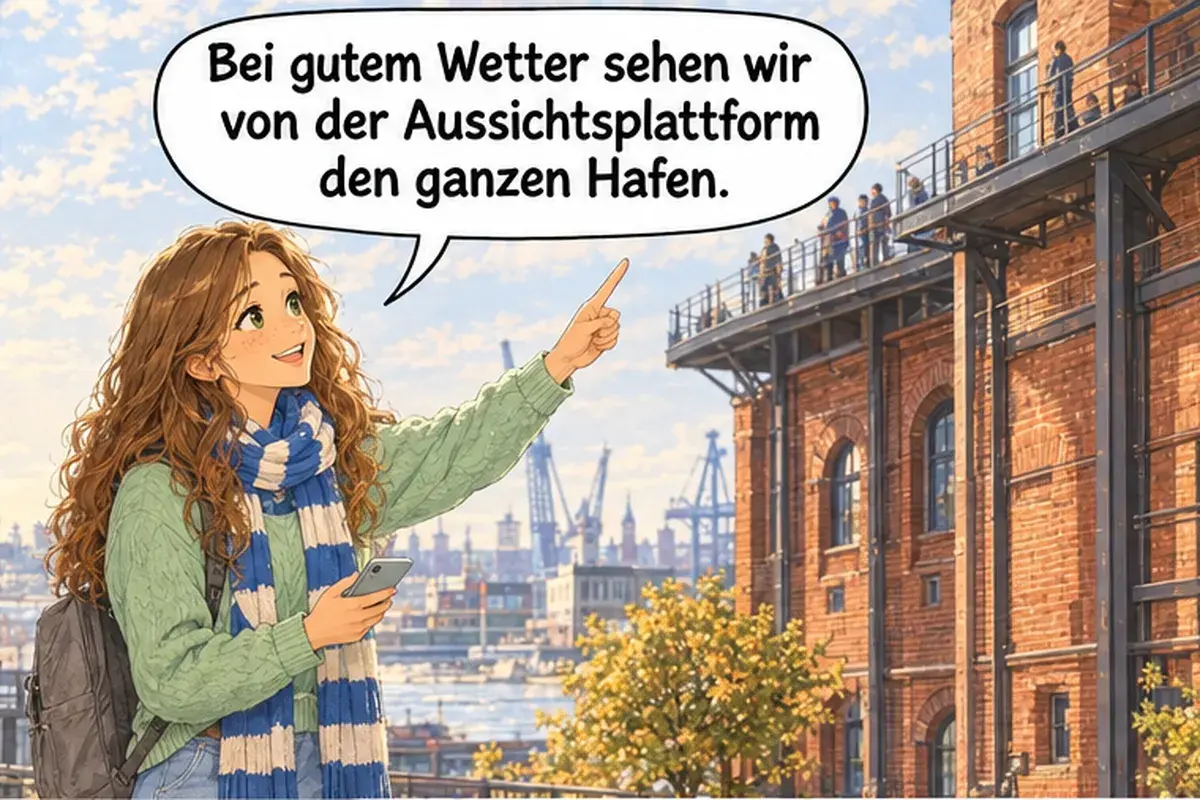
- Katja
Bei gutem Wetter sehen wir von der Aussichtsplattform den ganzen Hafen.
In good weather we can see the whole harbor from the observation deck.
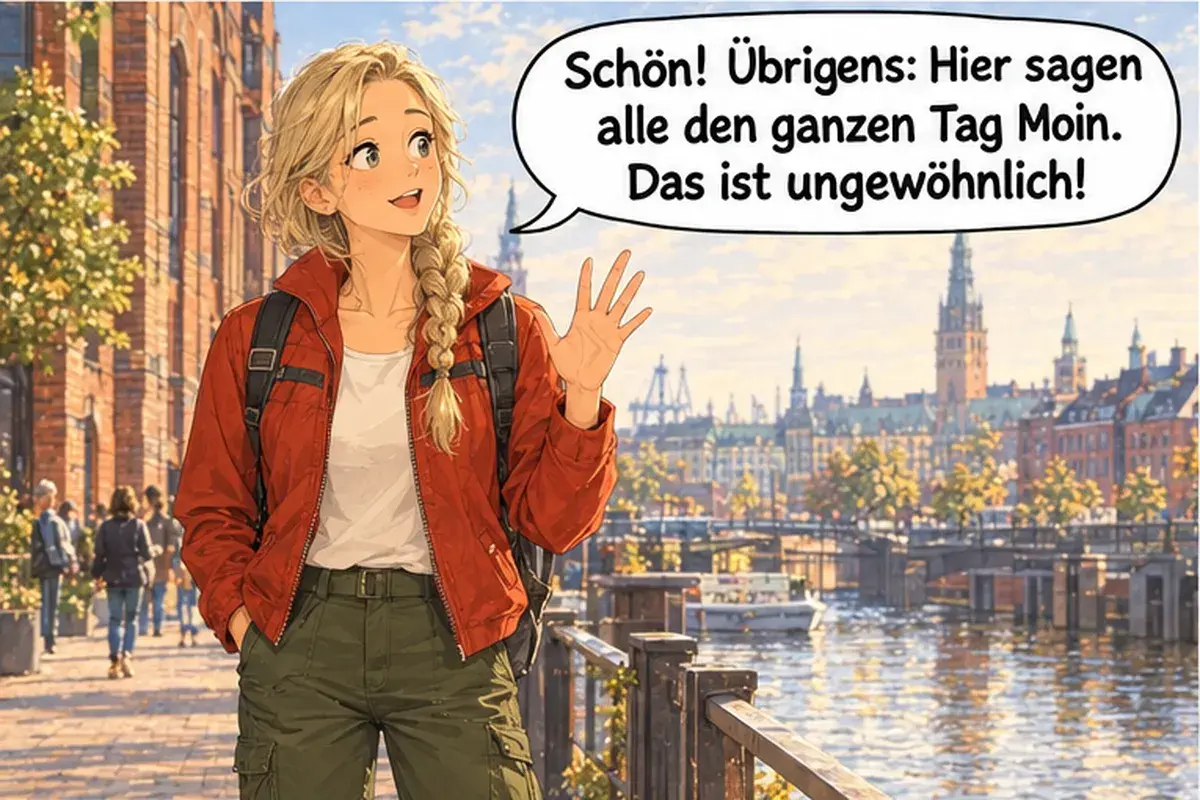
- Hanna
Schön! Übrigens: Hier sagen alle den ganzen Tag Moin. Das ist ungewöhnlich!
Nice! By the way: everyone here says Moin all day long. That's unusual!
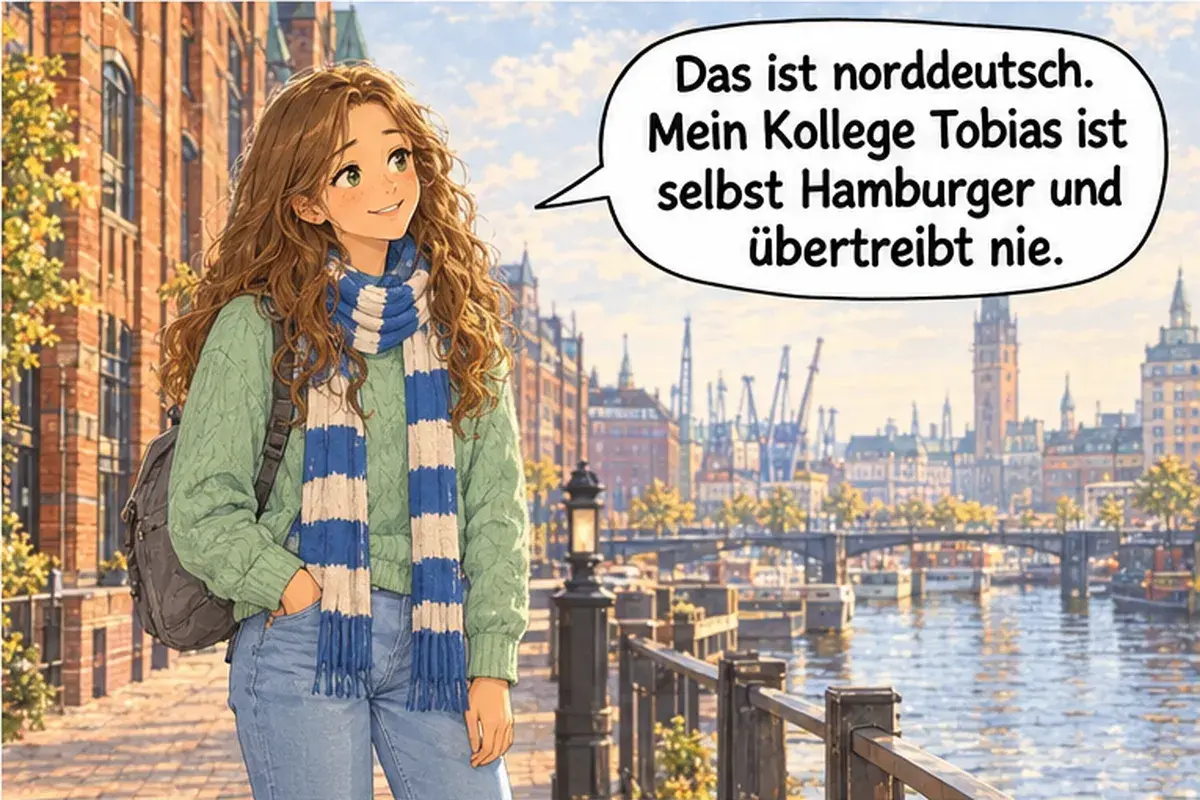
- Katja
Das ist norddeutsch. Mein Kollege Tobias ist selbst Hamburger und übertreibt nie.
That's northern German. My coworker Tobias is from Hamburg himself and never exaggerates.
- Hanna
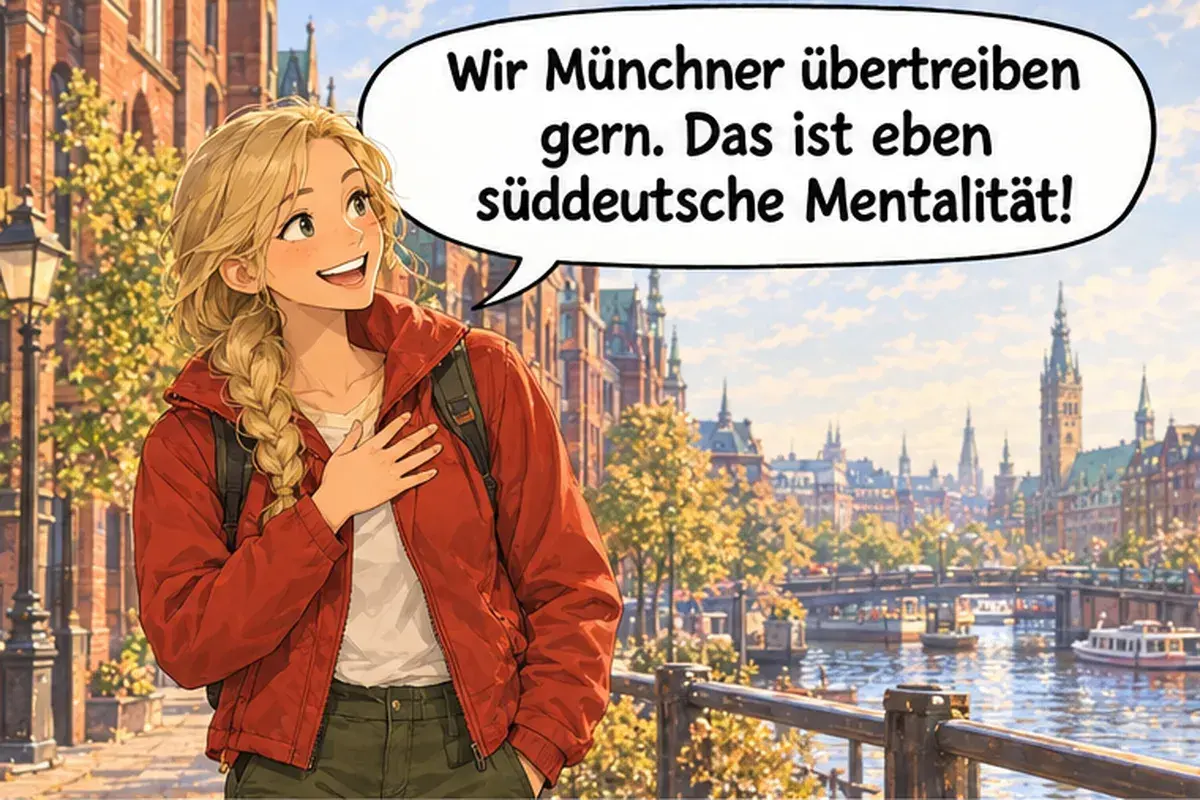
Wir Münchner übertreiben gern. Das ist eben süddeutsche Mentalität!
We people from Munich love to exaggerate. That's just southern German mentality!
- Katja
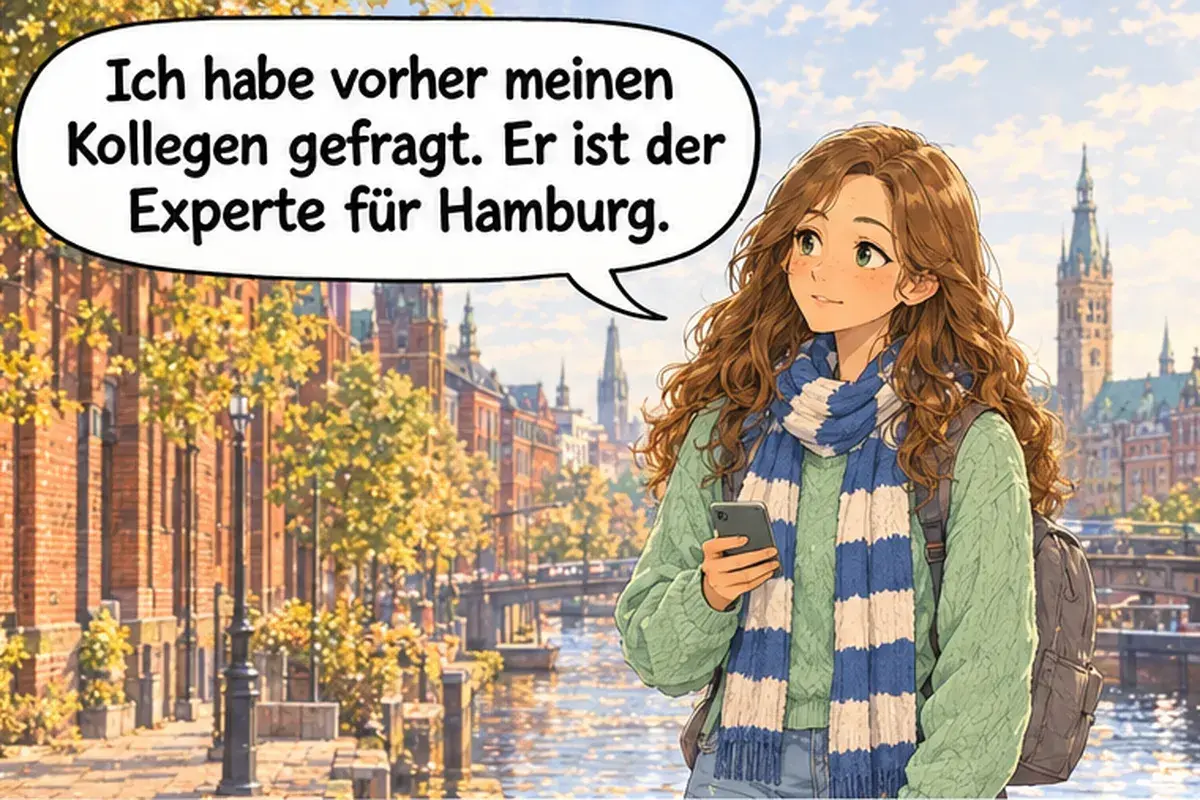
Ich habe vorher meinen Kollegen gefragt. Er ist der Experte für Hamburg.
I asked my coworker beforehand. He's the expert on Hamburg.
- Hanna
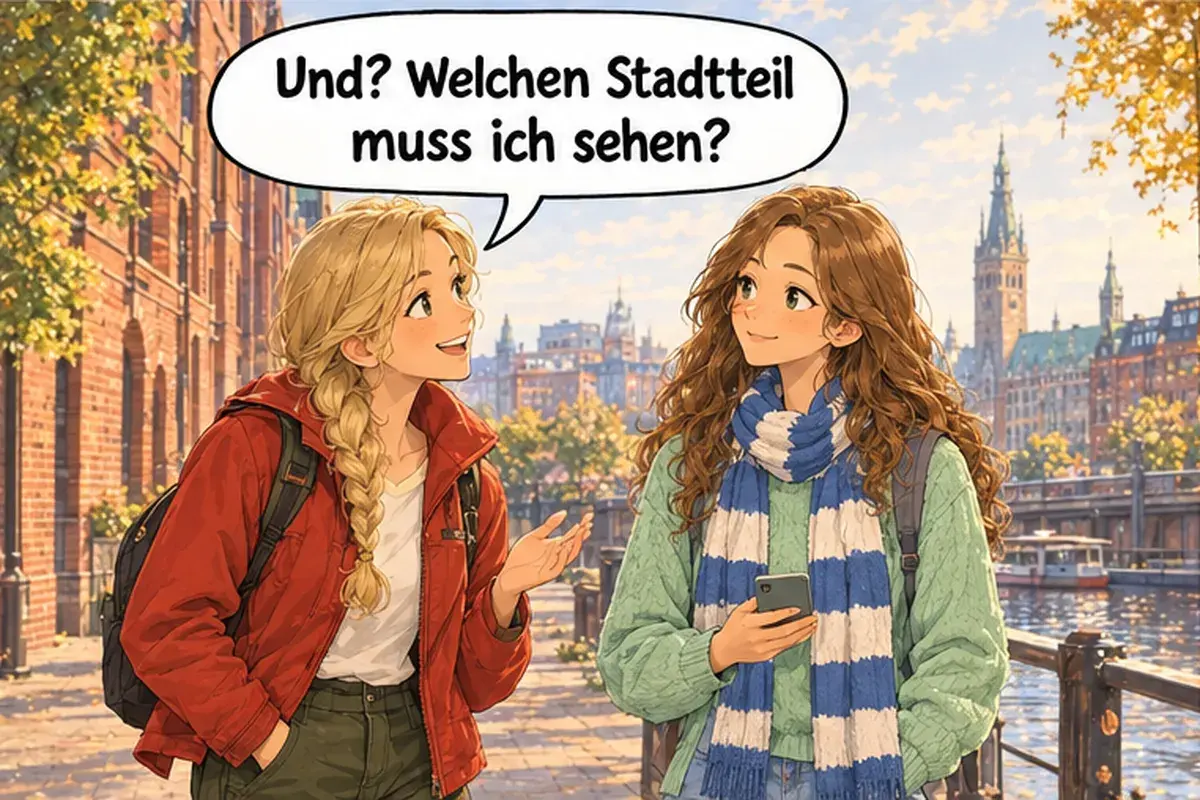
Und? Welchen Stadtteil muss ich sehen?
And? Which district do I have to see?

- Katja
Er sagt: Die Speicherstadt ist nicht schlecht. Das heißt bei ihm: super!
He says: The Speicherstadt isn't bad. Coming from him, that means: super!
- Hanna
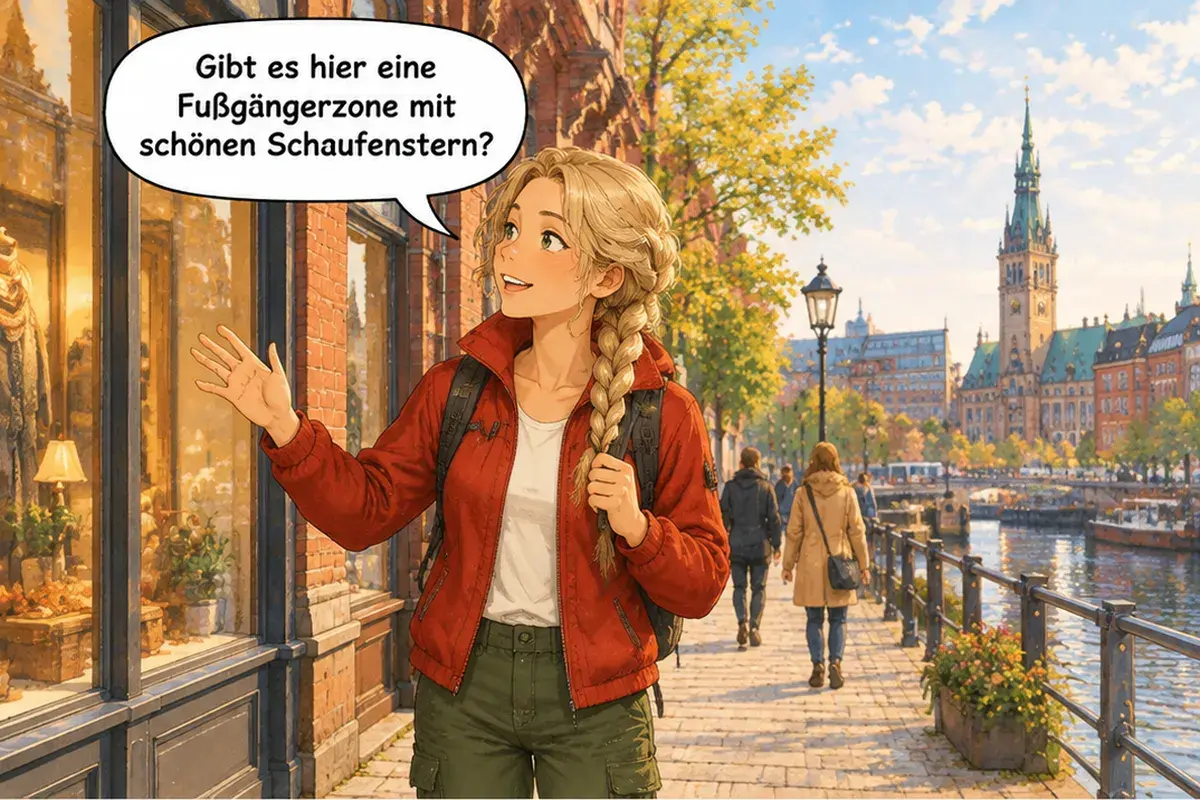
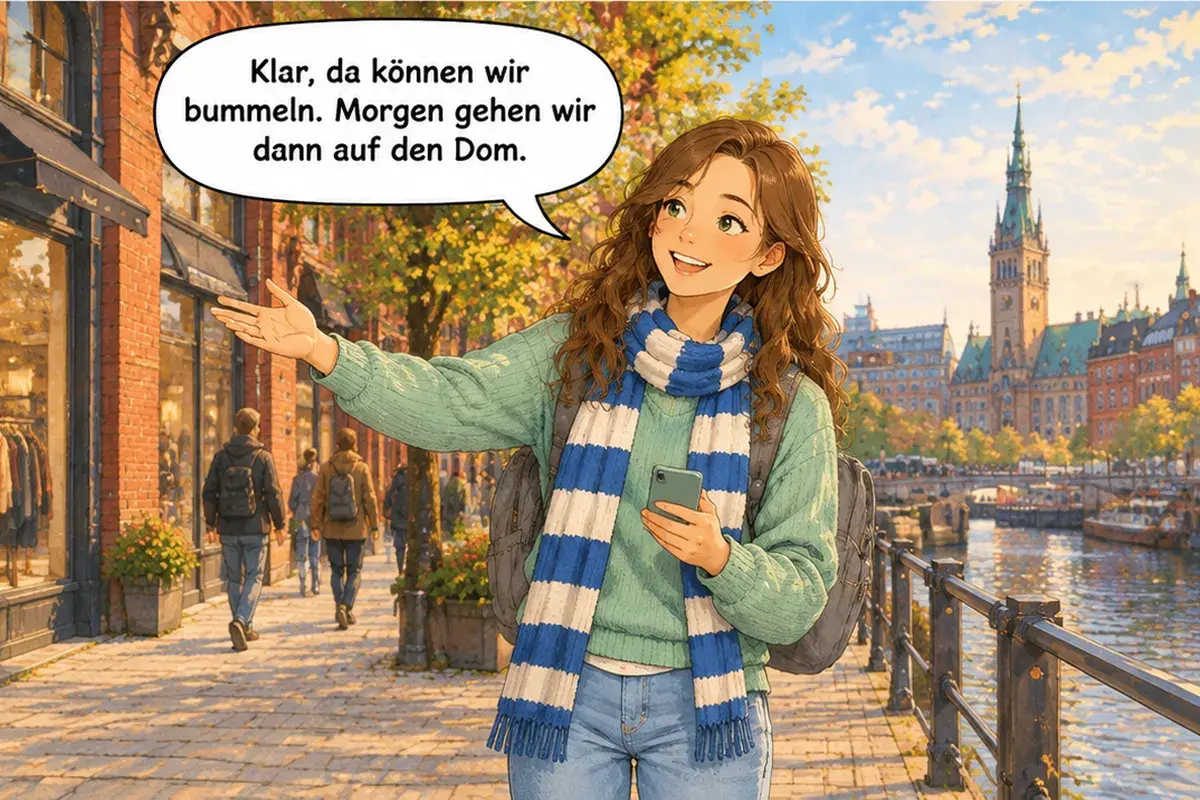
Gibt es hier eine Fußgängerzone mit schönen Schaufenstern?
Is there a pedestrian zone here with nice store windows?
- Katja
Klar, da können wir bummeln. Morgen gehen wir dann auf den Dom.
Sure, we can stroll there. Tomorrow we're going to the Dom.
Grammar for this text
- Was unternehmen wir heute? — What are we doing today?
unternehmenmeans to do something, to plan an activity. The prefixunter-never separates. Theduanderforms change the vowel, likenehmen:du unternimmst,er unternimmt. - Bei gutem Wetter sehen wir von der Aussichtsplattform den ganzen Hafen. — In good weather we can see the whole harbor from the observation deck. The sentence starts with a "when?" phrase, so
sehencomes second andwirfollows it.bei gutem Wetteris dative with no article, ending-em(unit 9).den ganzen Hafenis accusative, like him: the thing the action is done to. - Mein Kollege Tobias ist selbst Hamburger und übertreibt nie. — My coworker Tobias is from Hamburg himself and never exaggerates.
selbstmeans himself here. Aftersein, where someone is from has no article.übertreibtis theerform ofübertreiben; the prefixüber-never separates. - Ich habe vorher meinen Kollegen gefragt. Er ist der Experte für Hamburg. — I asked my coworker beforehand. He's the expert on Hamburg.
meinen Kollegen: in the accusativeder Kollegegets an extra-n(the weak nouns, see the grammar block of this unit). In the nominative,Expertehas no-n. - Er sagt: Die Speicherstadt ist nicht schlecht. Das heißt bei ihm: super! — He says: The Speicherstadt isn't bad. Coming from him, that means: super! People in the north praise things in a dry way:
nicht schlecht(not bad) means "very good". - Morgen gehen wir dann auf den Dom. — Tomorrow we're going to the Dom then. You know
der Domas a cathedral (A2), but in Hamburg theDomis a big fair with carousels; the winter one opened on Friday. Afteraufwith "where to?" you use the accusative:auf den Dom.
Words and grammar of the unit: Host a visitor in your city.
Learn the words from the texts with flashcards
In the app, you can tap any word in a text to see its translation, forms and examples, and new words stick with flashcards. 15 minutes a day.
Start for freeEverything is open for free. No card needed to sign up.