

German dialogue with translation · B1 · 16 lines
Viel Vergnügen! Have fun!
Comic · 16 panels

- Hanna
Als du mir gestern vom Dom erzählt hast, dachte ich, wir gehen in eine Kirche. Aber das hier ist ja ein riesiges Fest!
When you told me about the Dom yesterday, I thought we were going to a church. But this is a huge fair!
- Katja
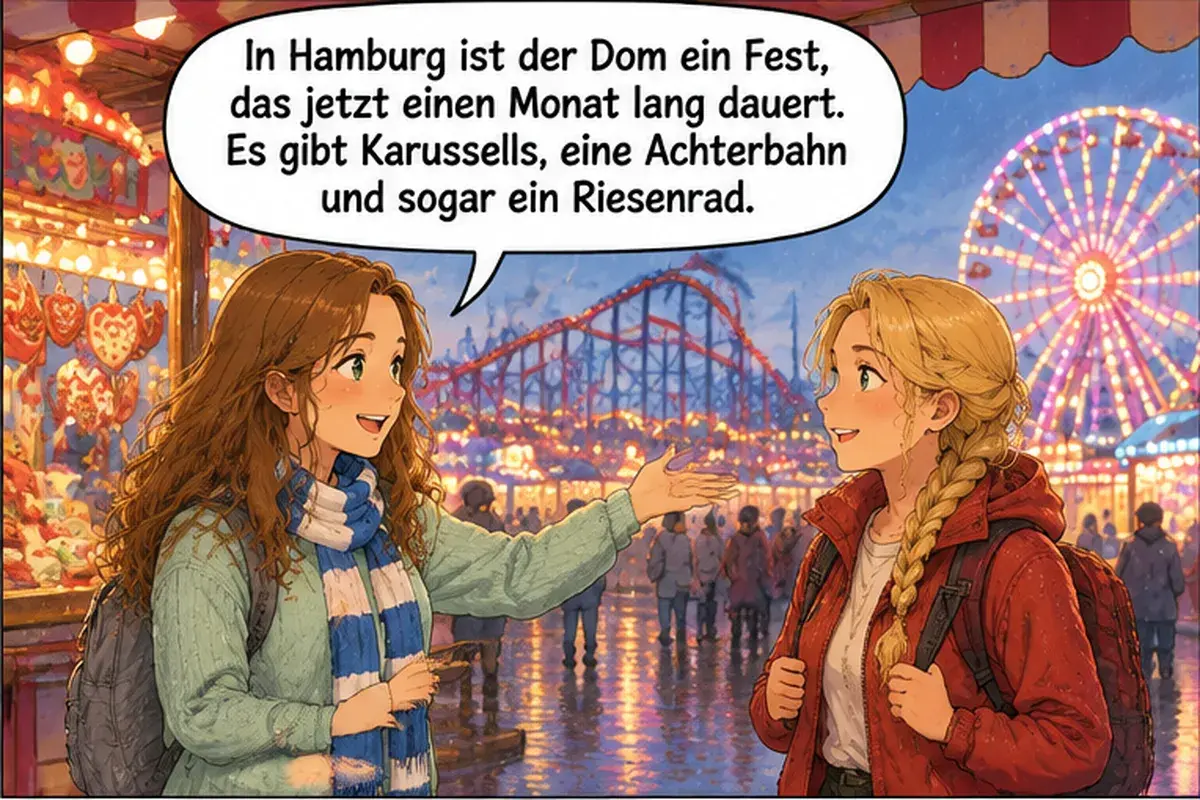
In Hamburg ist der Dom ein Fest, das jetzt einen Monat lang dauert. Es gibt Karussells, eine Achterbahn und sogar ein Riesenrad.
In Hamburg the Dom is a fair that now lasts a month. There are carousels, a roller coaster and even a Ferris wheel.
- Hanna
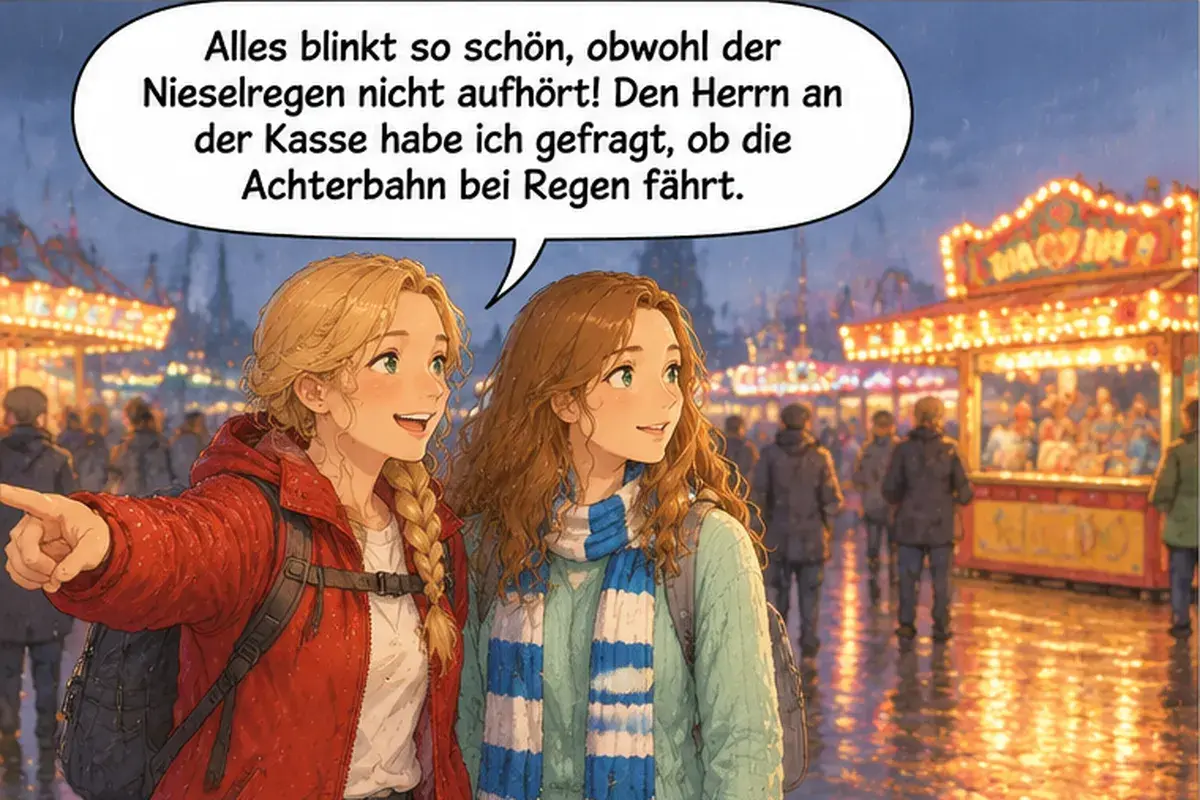
Alles blinkt so schön, obwohl der Nieselregen nicht aufhört! Den Herrn an der Kasse habe ich gefragt, ob die Achterbahn bei Regen fährt.
Everything is blinking so prettily, even though the drizzle won't stop! I asked the gentleman at the ticket booth whether the roller coaster runs in the rain.
- Katja
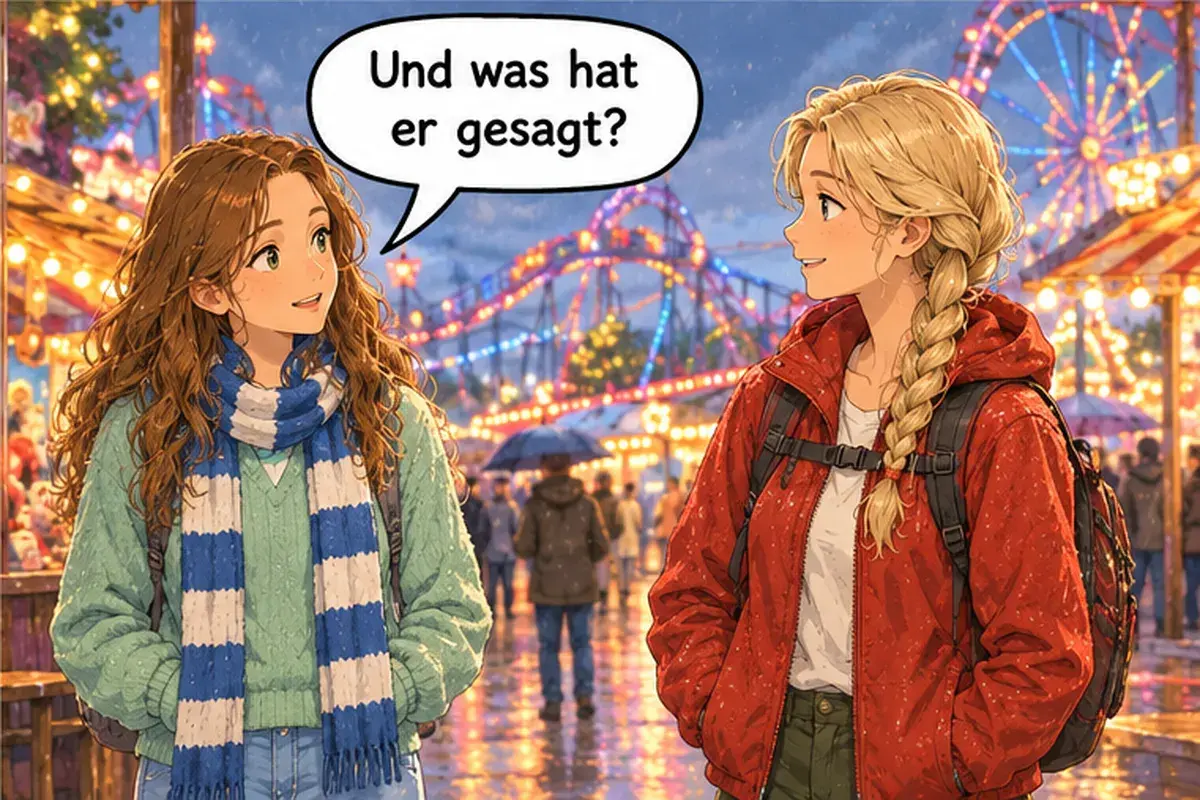
Und was hat er gesagt?
And what did he say?
- Hanna
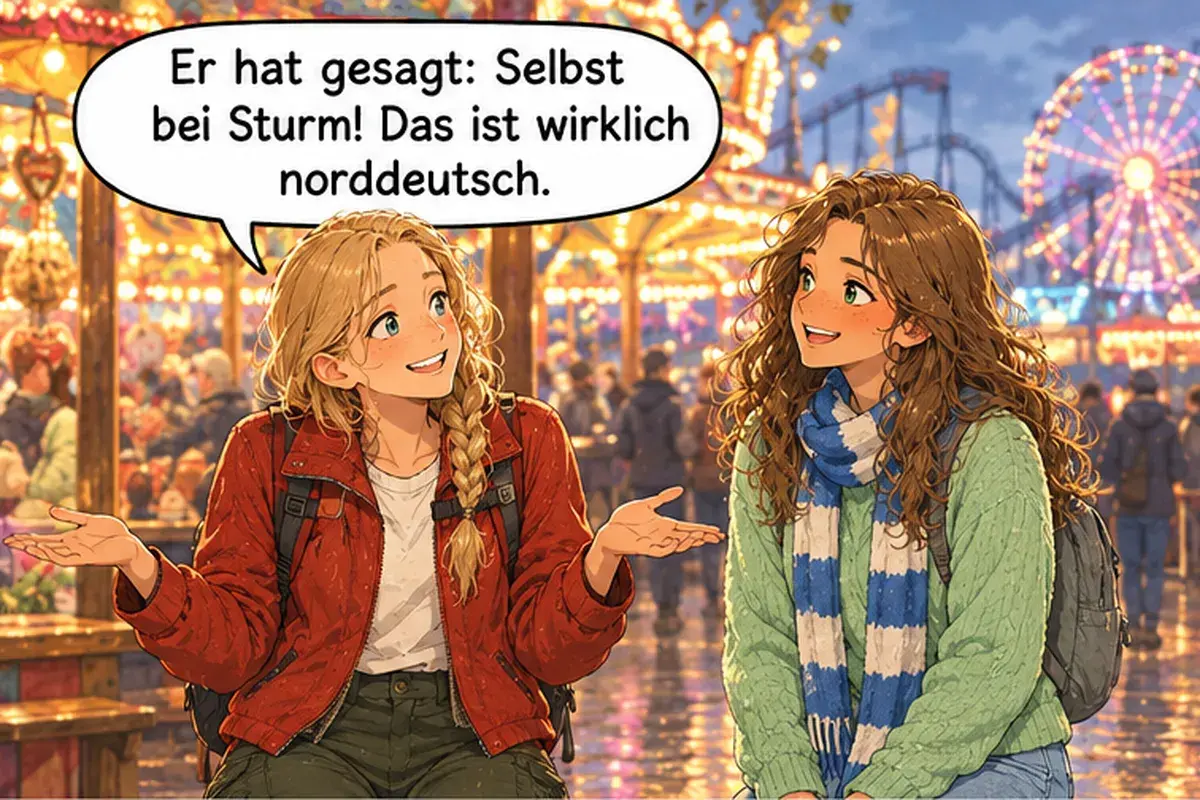
Er hat gesagt: Selbst bei Sturm! Das ist wirklich norddeutsch.
He said: Even in a storm! That's really northern German.
- Katja
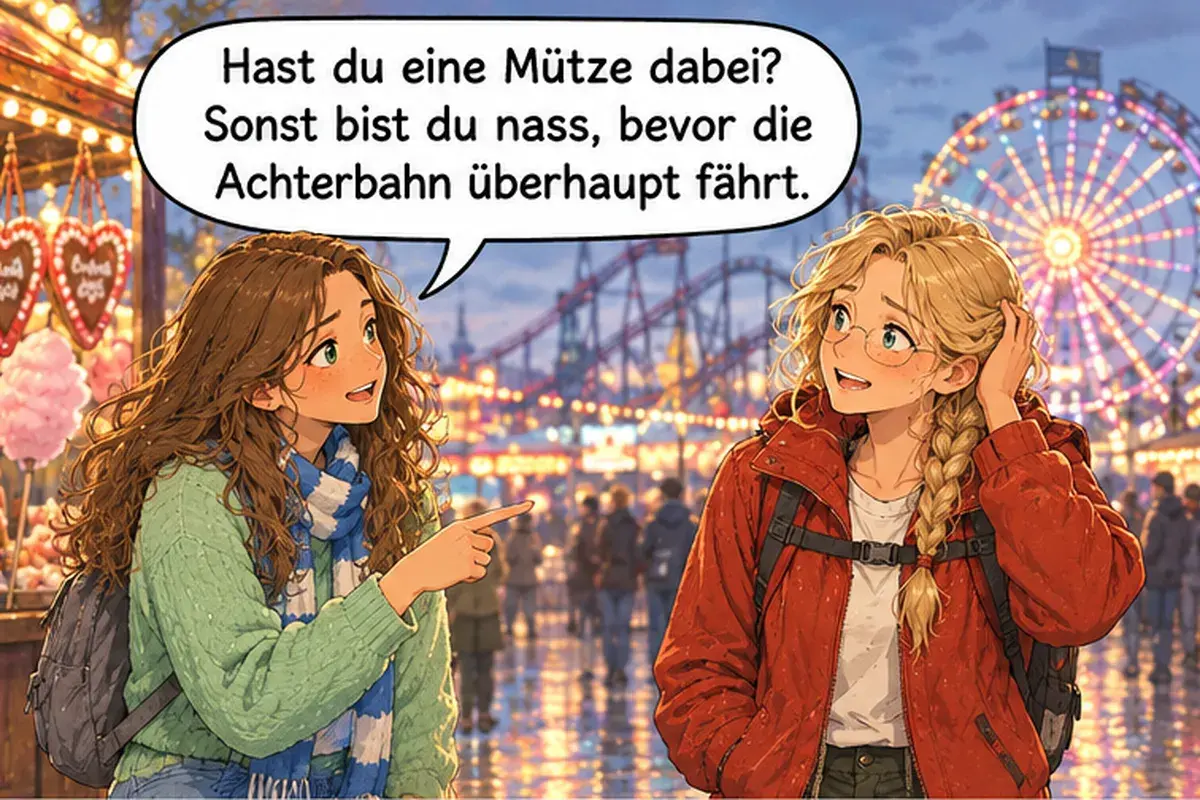
Hast du eine Mütze dabei? Sonst bist du nass, bevor die Achterbahn überhaupt fährt.
Do you have a hat with you? Otherwise you'll be wet before the roller coaster even starts.
- Hanna
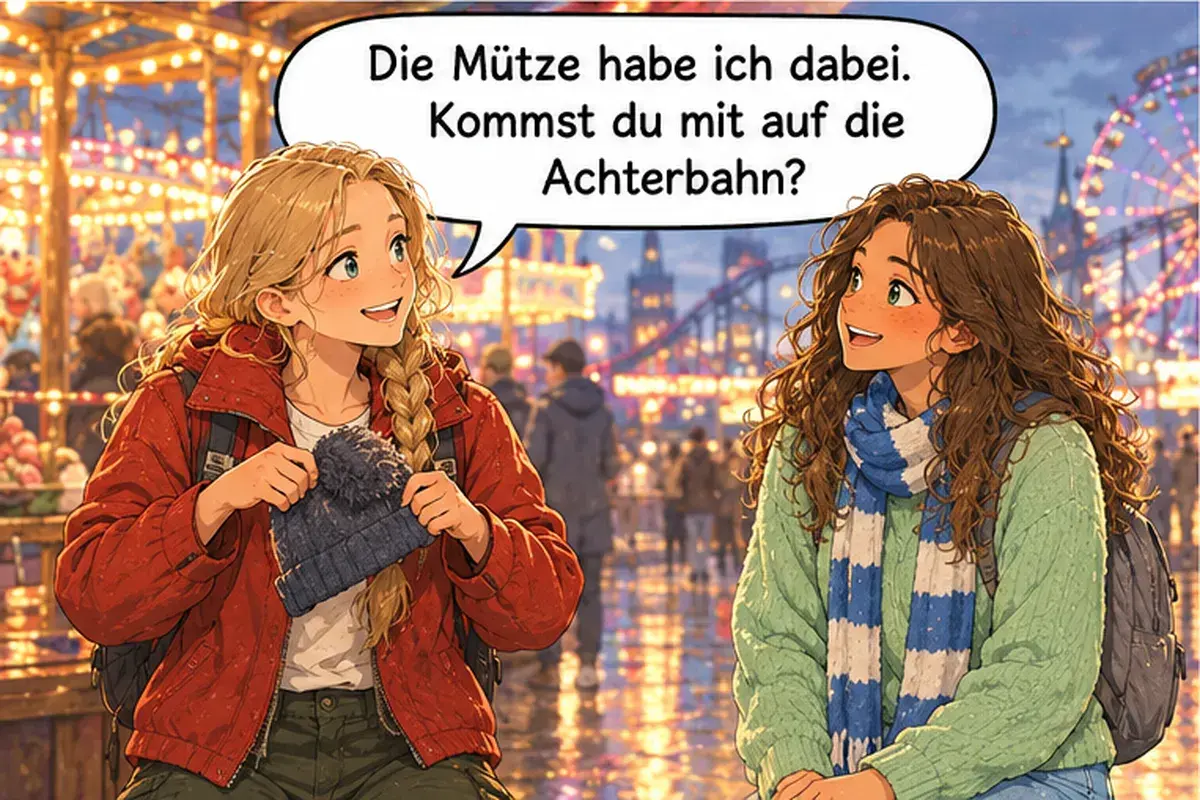
Die Mütze habe ich dabei. Kommst du mit auf die Achterbahn?
I have the hat with me. Are you coming on the roller coaster?
- Katja
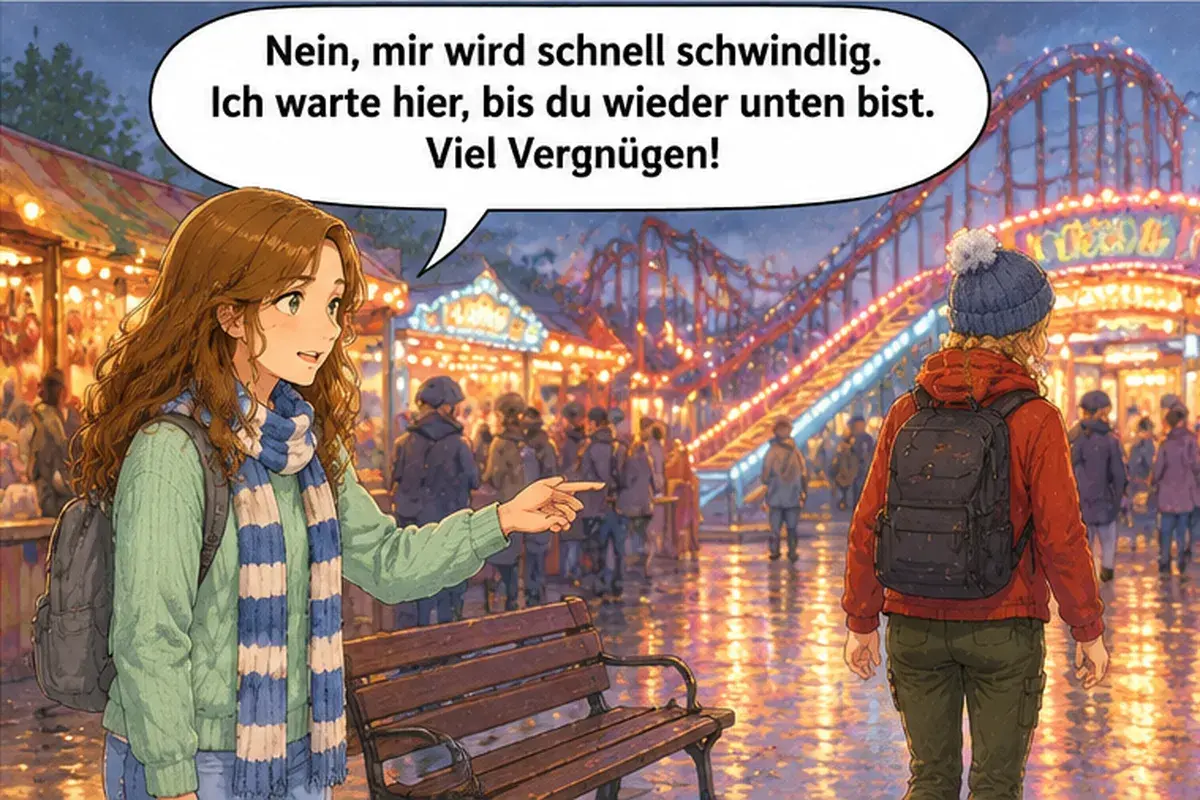
Nein, mir wird schnell schwindlig. Ich warte hier, bis du wieder unten bist. Viel Vergnügen!
No, I get dizzy quickly. I'll wait here until you're back down. Have fun!
- Hanna
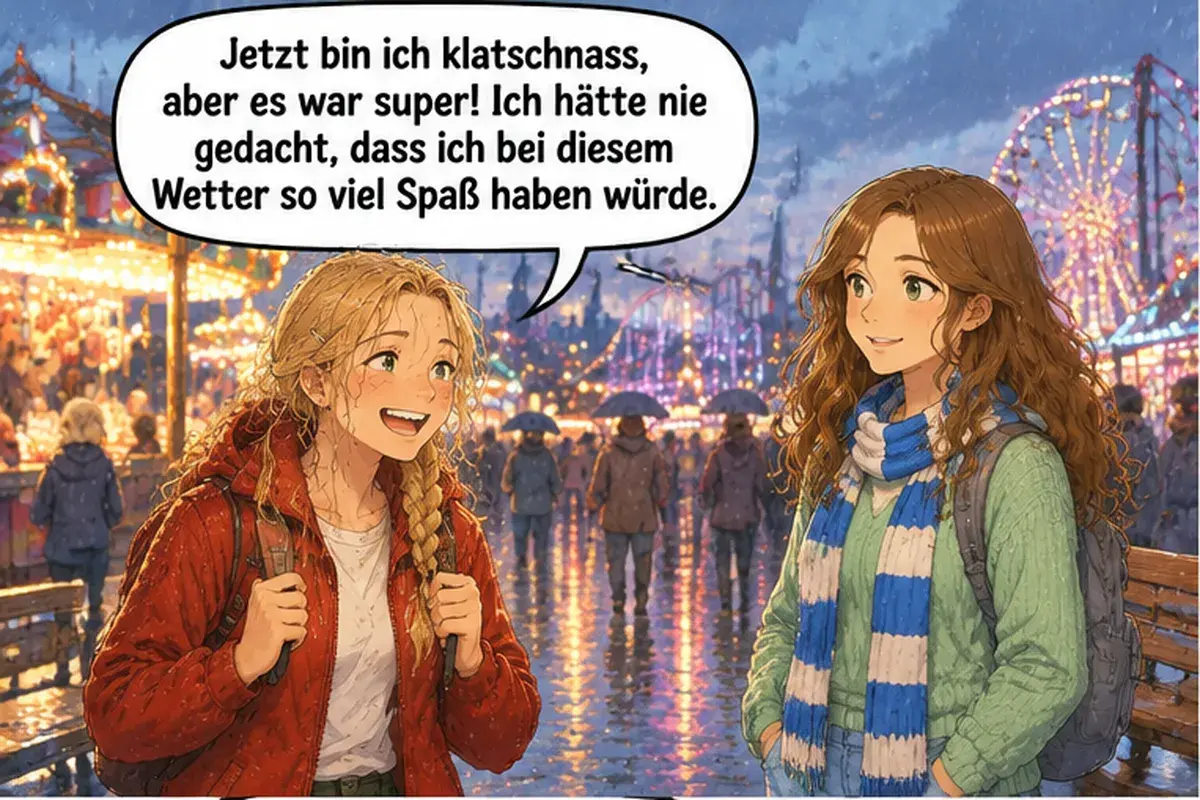
Jetzt bin ich klatschnass, aber es war super! Ich hätte nie gedacht, dass ich bei diesem Wetter so viel Spaß haben würde.
Now I'm soaking wet, but it was great! I never would have thought I'd have so much fun in this weather.
- Katja
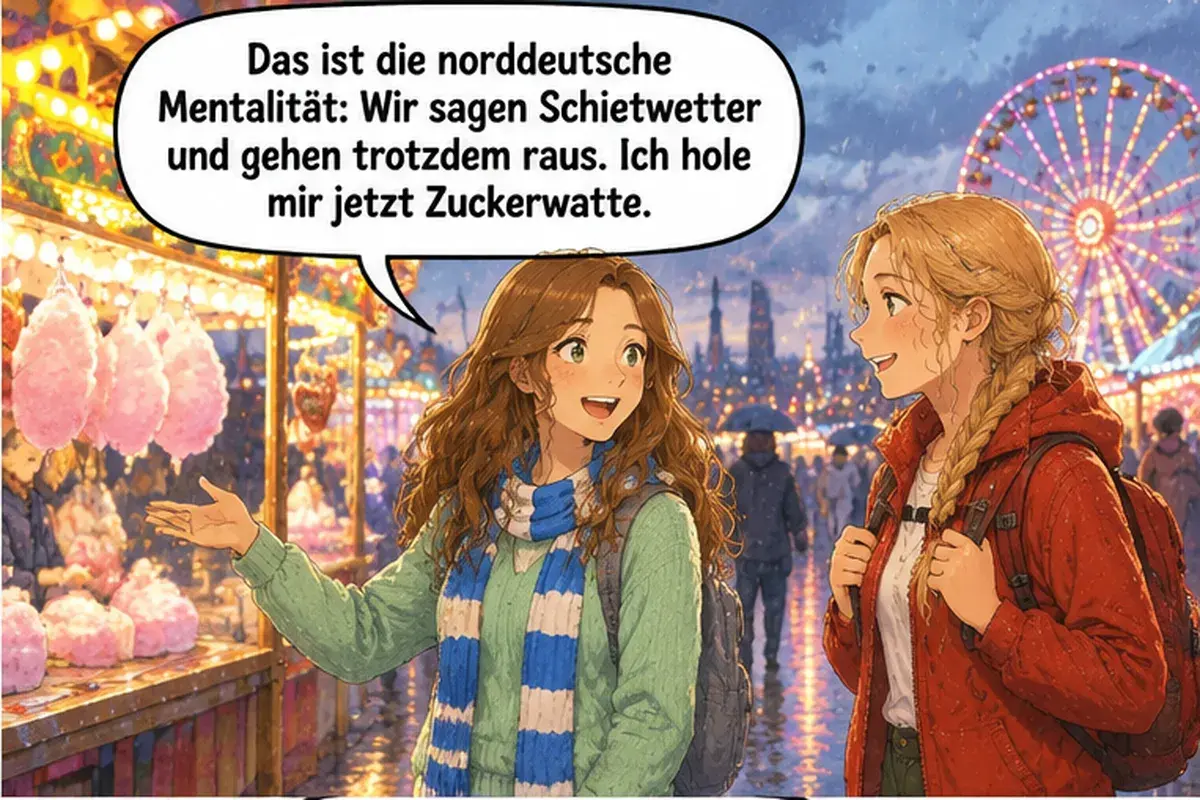
Das ist die norddeutsche Mentalität: Wir sagen Schietwetter und gehen trotzdem raus. Ich hole mir jetzt Zuckerwatte.
That's the northern German mentality: we say Schietwetter and go out anyway. I'm going to get cotton candy now.

- Hanna
Gute Idee, ich nehme dasselbe wie du. Danach brauche ich noch ein Lebkuchenherz als Mitbringsel für Lukas.
Good idea, I'll have the same as you. After that I still need a gingerbread heart as a little souvenir for Lukas.
- Katja
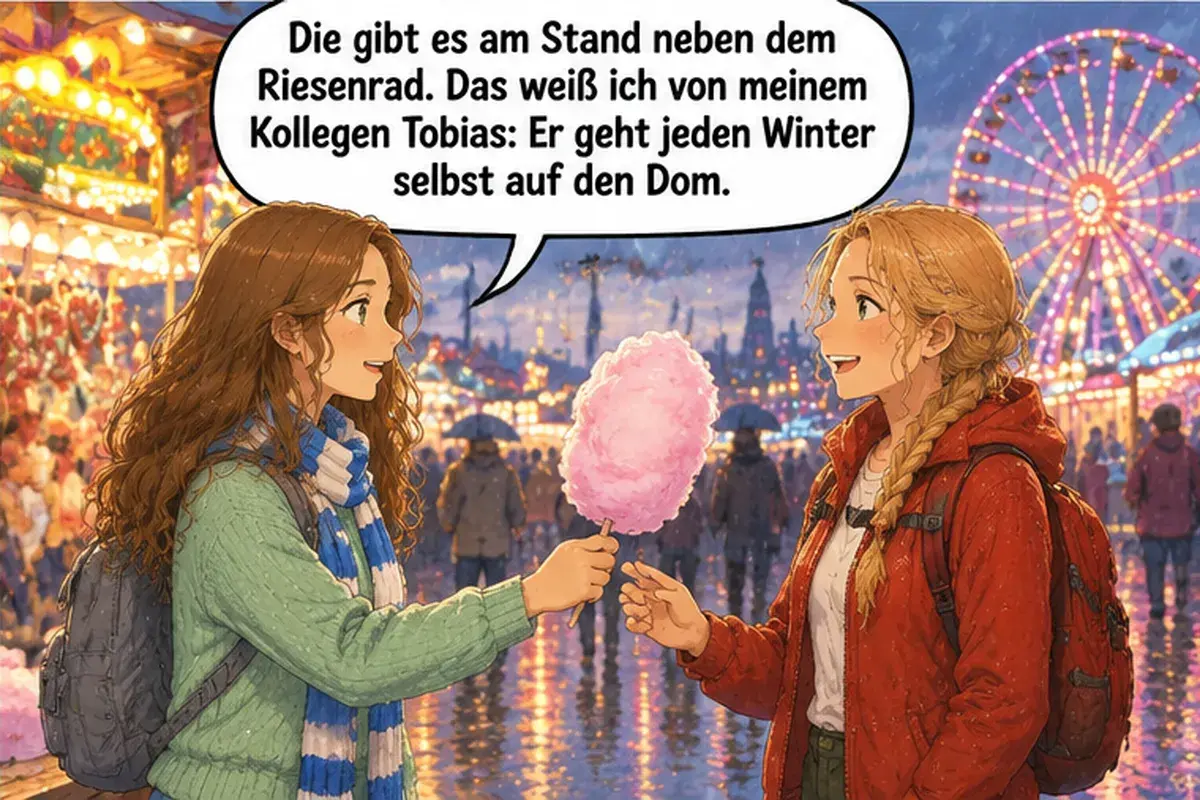
Die gibt es am Stand neben dem Riesenrad. Das weiß ich von meinem Kollegen Tobias: Er geht jeden Winter selbst auf den Dom.
You can get them at the stand next to the Ferris wheel. I know that from my coworker Tobias: he goes to the Dom himself every winter.
- Hanna
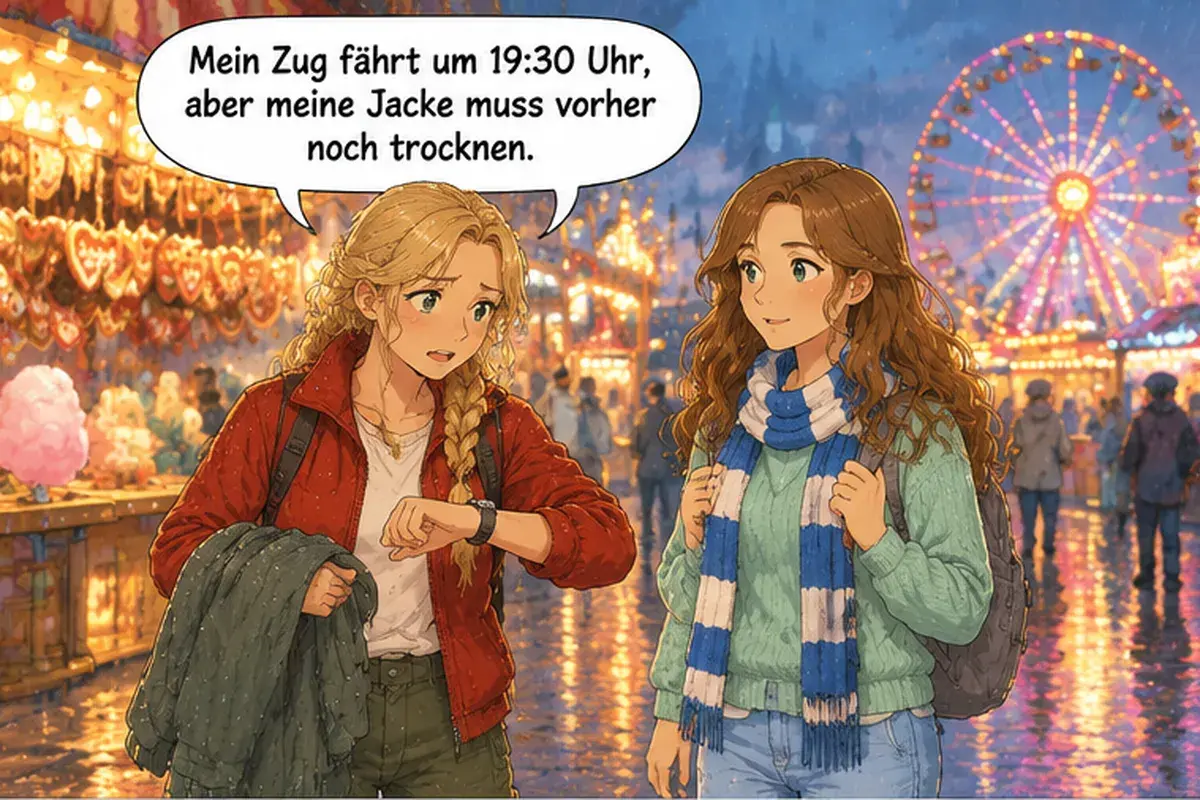
Mein Zug fährt um 19:30 Uhr, aber meine Jacke muss vorher noch trocknen.
My train leaves at 19:30, but my jacket still has to dry first.
- Katja
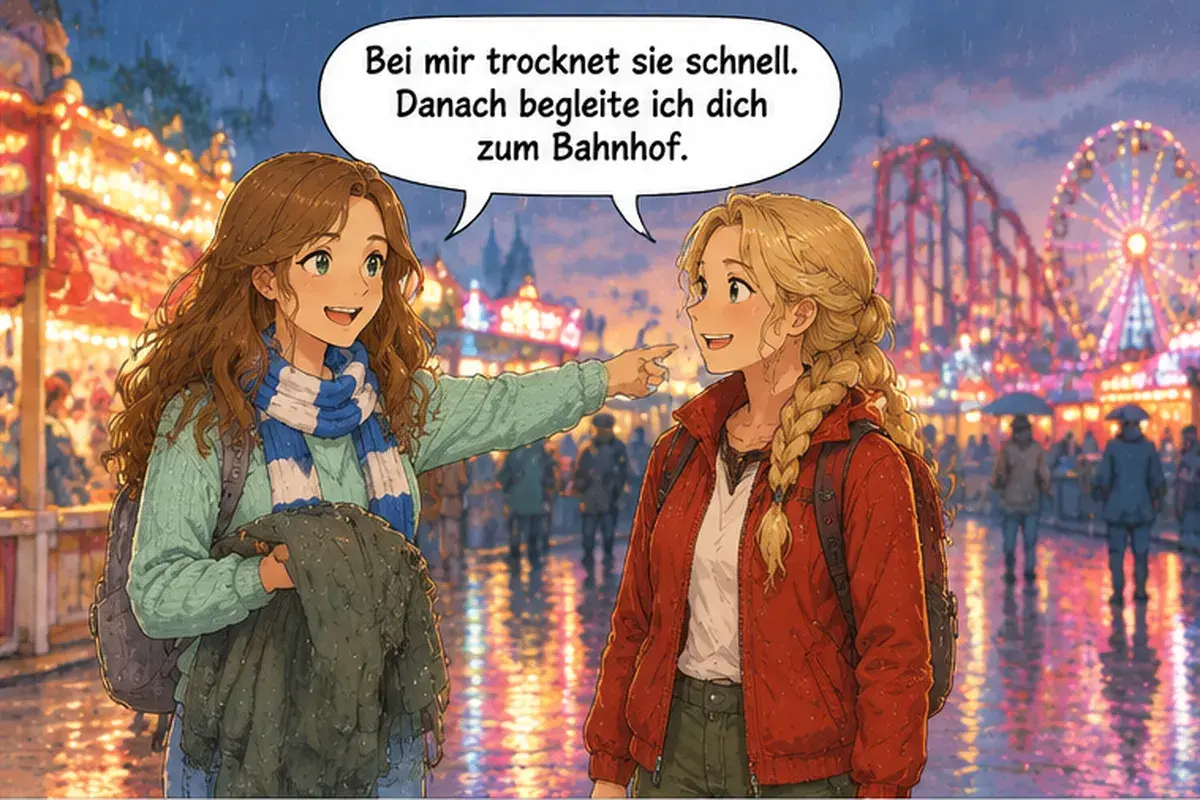
Bei mir trocknet sie schnell. Danach begleite ich dich zum Bahnhof.
It dries quickly at my place. Afterward I'll walk you to the station.
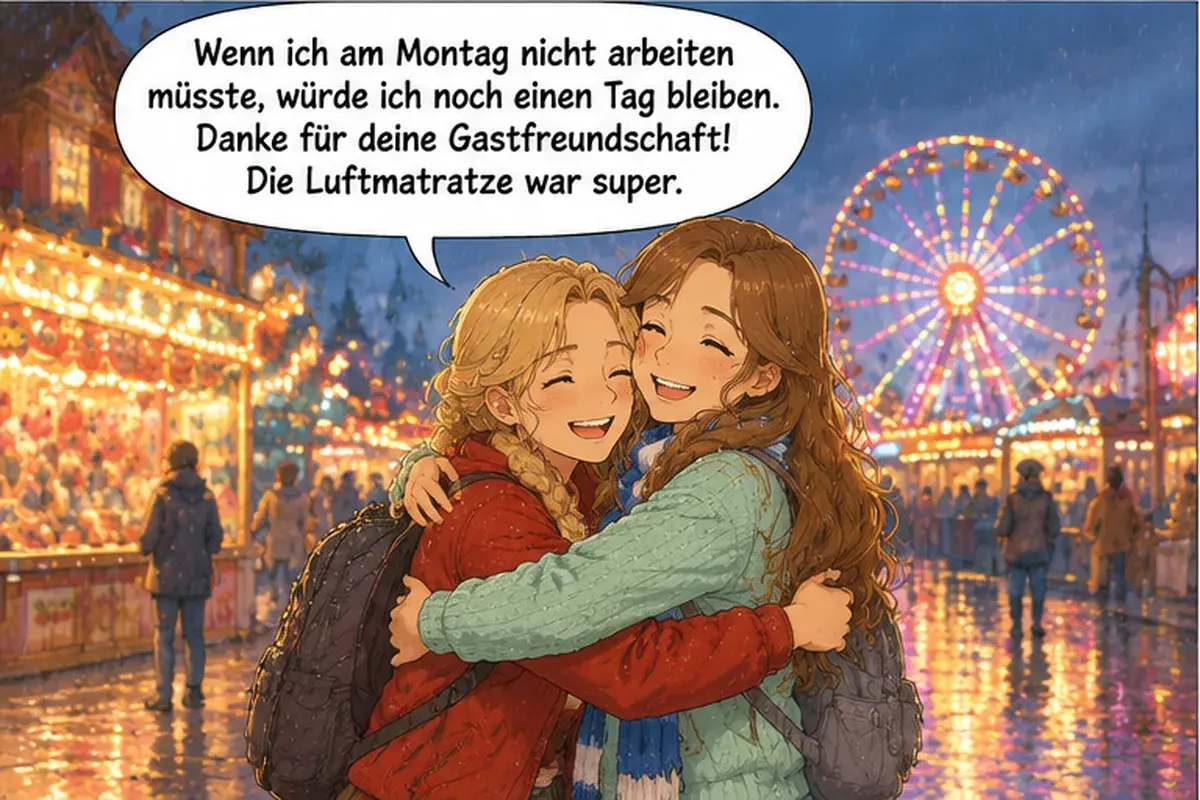
- Hanna
Wenn ich am Montag nicht arbeiten müsste, würde ich noch einen Tag bleiben. Danke für deine Gastfreundschaft! Die Luftmatratze war super.
If I didn't have to work on Monday, I'd stay another day. Thanks for your hospitality! The air mattress was great.
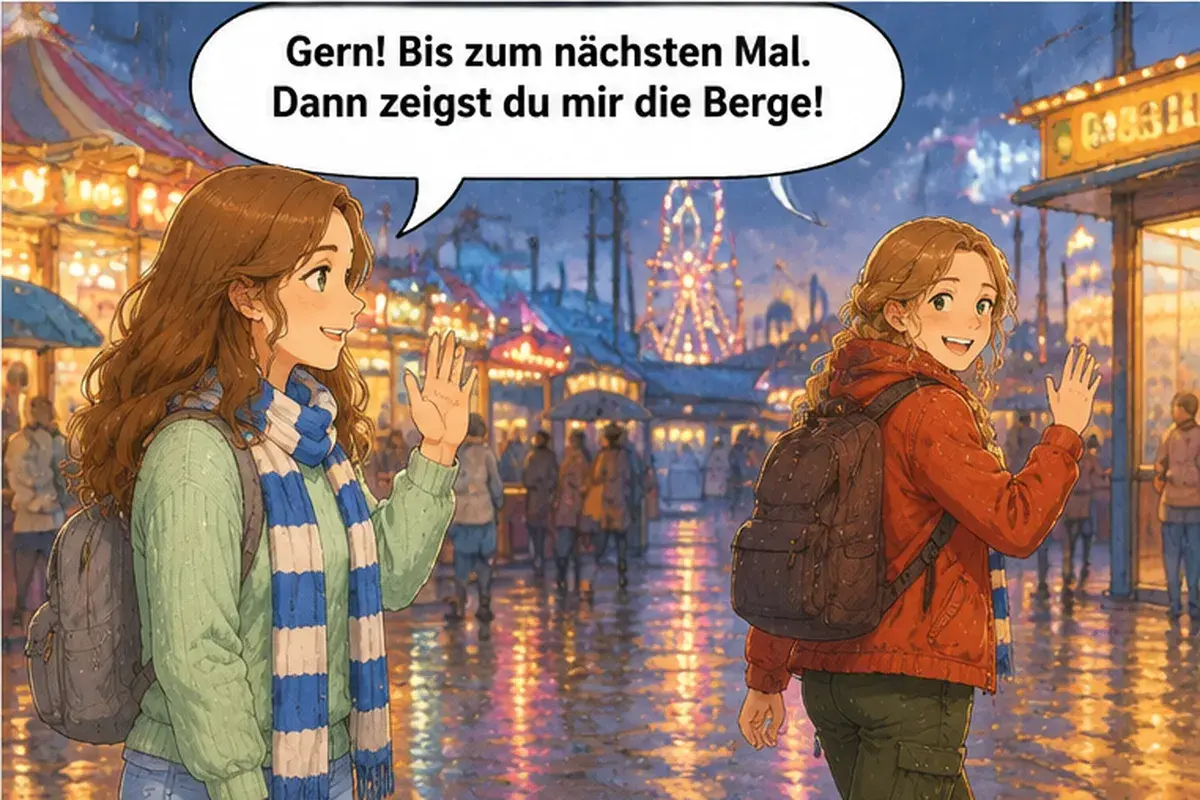
- Katja
Gern! Bis zum nächsten Mal. Dann zeigst du mir die Berge!
You're welcome! Until next time. Then you'll show me the mountains!
Grammar for this text
- Als du mir gestern vom Dom erzählt hast, dachte ich, wir gehen in eine Kirche. — When you told me about the Dom yesterday, I thought we were going to a church.
alsmeans "when" for one event in the past, and the verb goes to the end (erzählt hast). Thendachte ich;dachteis the Präteritum (narrative past) ofdenken. In Hamburg theDomis a fair. - Den Herrn an der Kasse habe ich gefragt, ob die Achterbahn bei Regen fährt. — I asked the gentleman at the ticket booth whether the roller coaster runs in the rain.
der Herris a weak noun: in the accusative it isden Herrn. The object stands first for emphasis, sohabeis second.obmeans "whether". - Er hat gesagt: Selbst bei Sturm! — He said: Even in a storm! Before a word,
selbstmeans "even". After a person, it means "himself". - Nein, mir wird schnell schwindlig. Ich warte hier, bis du wieder unten bist. — No, I get dizzy quickly. I'll wait here until you're back down.
mir wird schwindligmeans "I get dizzy" (miris dative, there is no subject).bismeans "until";bevor("before") works the same way in Sonst bist du nass, bevor die Achterbahn überhaupt fährt. The verb goes to the end. - Ich hätte nie gedacht, dass ich bei diesem Wetter so viel Spaß haben würde. — I never would have thought I'd have so much fun in this weather. This is the past Konjunktiv II (unit 19):
hätte … gedachtmeans "would never have thought". In thedassclause,würdestands at the end afterhaben. - Das weiß ich von meinem Kollegen Tobias — I know that from my coworker Tobias.
der Kollegeis also a weak noun: aftervonit is dative, and the word gets-n:meinem Kollegen. - Er geht jeden Winter selbst auf den Dom — He goes to the Dom himself every winter. After the subject,
selbstmeans "himself". - Ich nehme dasselbe wie du — I'll have the same as you.
dasselbemeans "the same thing", followed bywie(as).
Words and grammar of the unit: Host a visitor in your city.
Learn the words from the texts with flashcards
In the app, you can tap any word in a text to see its translation, forms and examples, and new words stick with flashcards. 15 minutes a day.
Start for freeEverything is open for free. No card needed to sign up.