

German dialogue with translation · A2 · 14 lines
Wo sehen Sie sich in fünf Jahren? Where do you see yourself in five years?
Comic · 14 panels
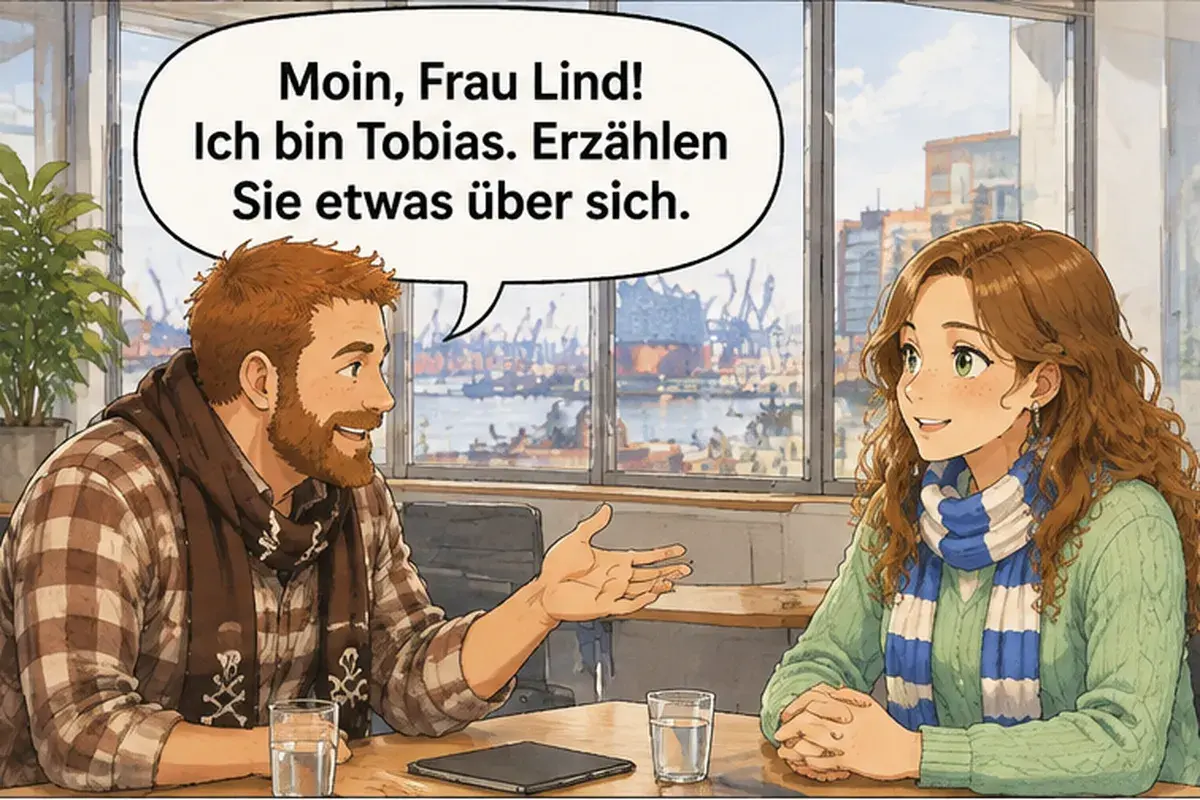
- Tobias
Moin, Frau Lind! Ich bin Tobias. Erzählen Sie etwas über sich.
Hi, Frau Lind! I'm Tobias. Tell me a little about yourself. (formal)

- Katja
Moin! Ich habe an der Universität studiert und interessiere mich für Logistik.
Hi! I studied at the university, and I'm interested in logistics.
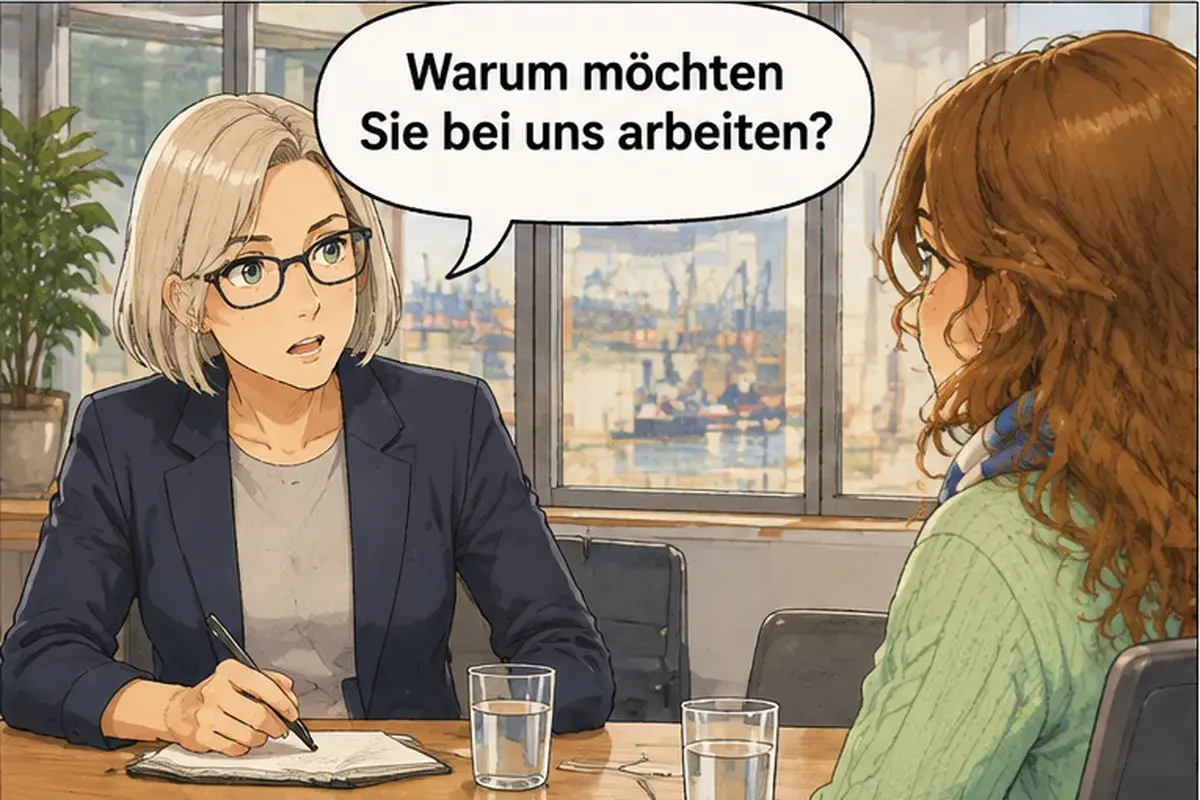
- Sabine
Warum möchten Sie bei uns arbeiten?
Why would you like to work for us? (formal)

- Katja
Ich bin neugierig und suche eine neue Herausforderung. Ich würde gern im Team arbeiten.
I'm curious, and I'm looking for a new challenge. I'd like to work on a team.
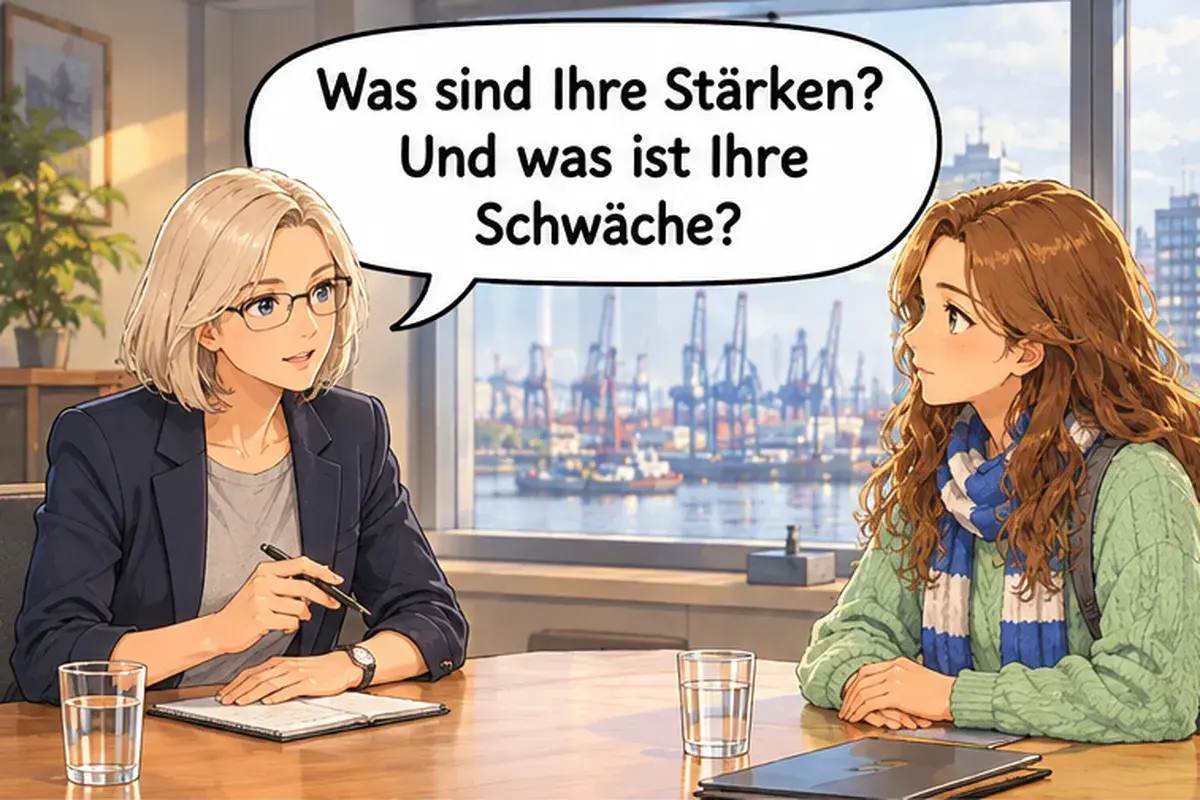
- Sabine
Was sind Ihre Stärken? Und was ist Ihre Schwäche?
What are your strengths? And what's your weakness? (formal)

- Katja
Ich bin zuverlässig und kreativ. Manchmal bin ich ungeduldig.
I'm reliable and creative. Sometimes I'm impatient.
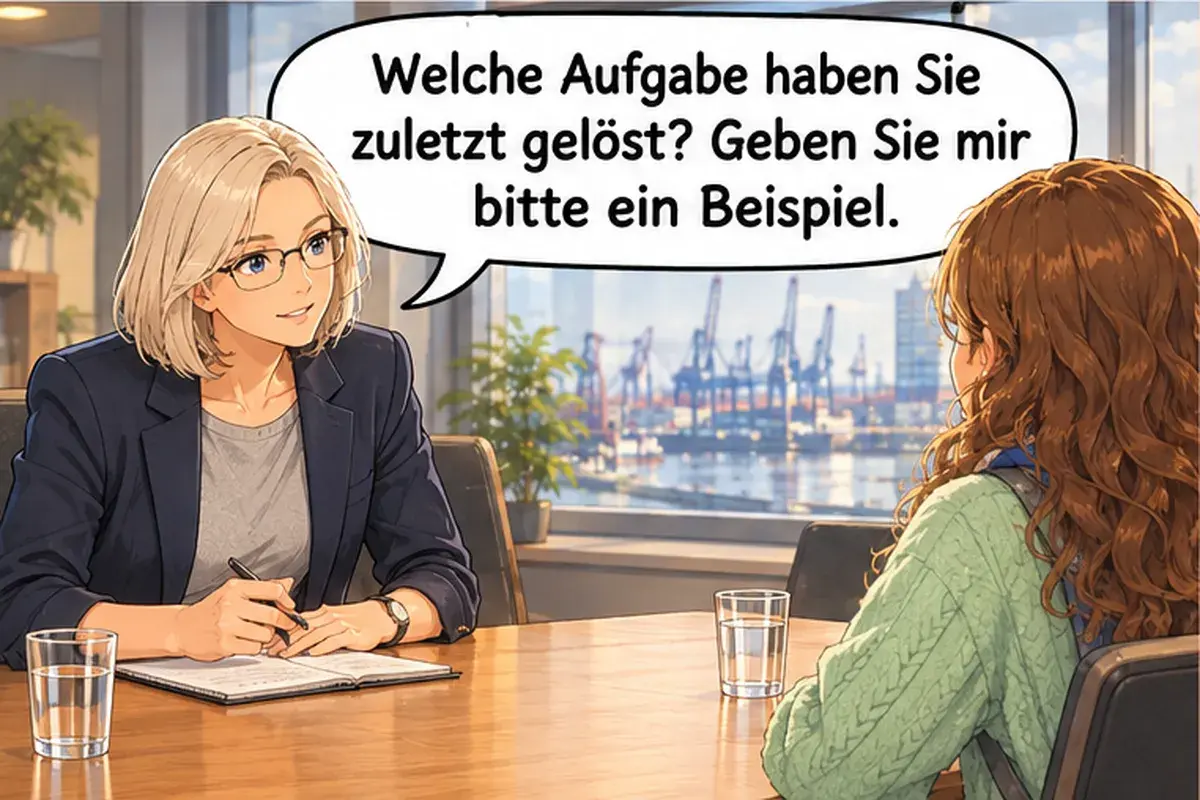
- Sabine
Welche Aufgabe haben Sie zuletzt gelöst? Geben Sie mir bitte ein Beispiel.
What task did you solve most recently? Please give me an example. (formal)
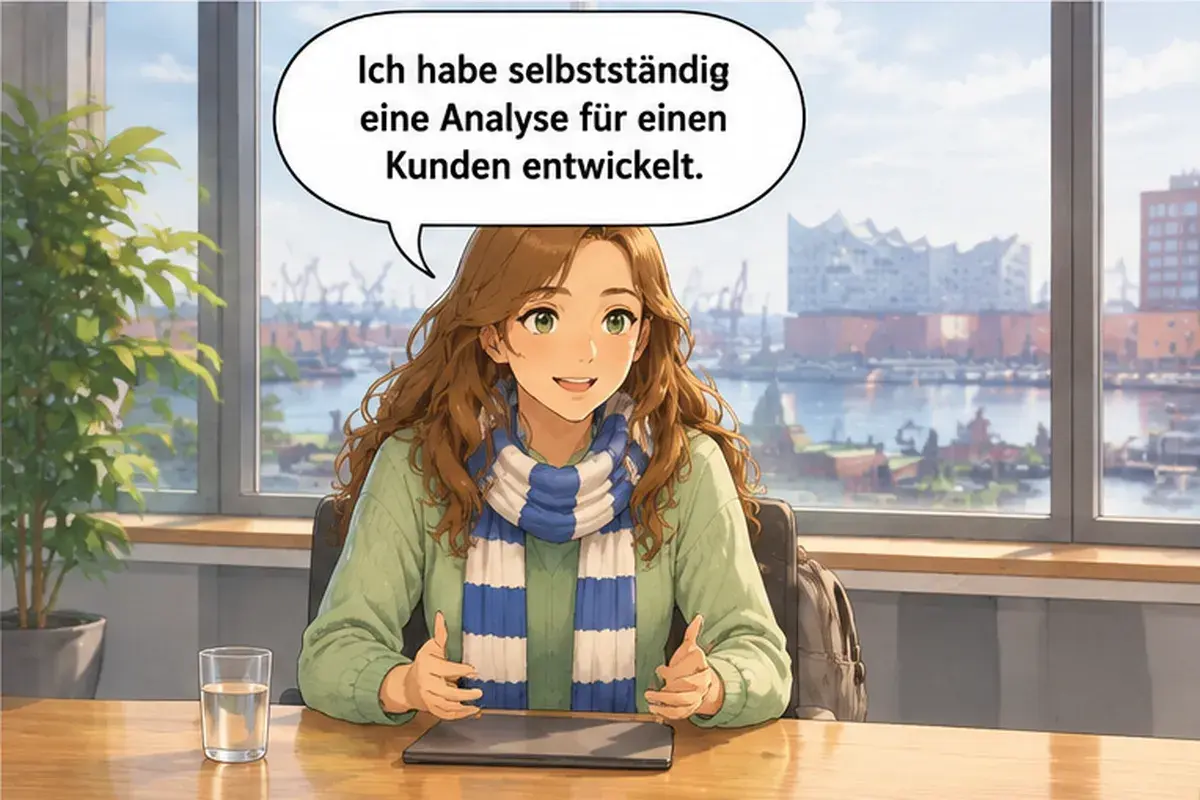
- Katja
Ich habe selbstständig eine Analyse für einen Kunden entwickelt.
I developed an analysis for a client on my own.
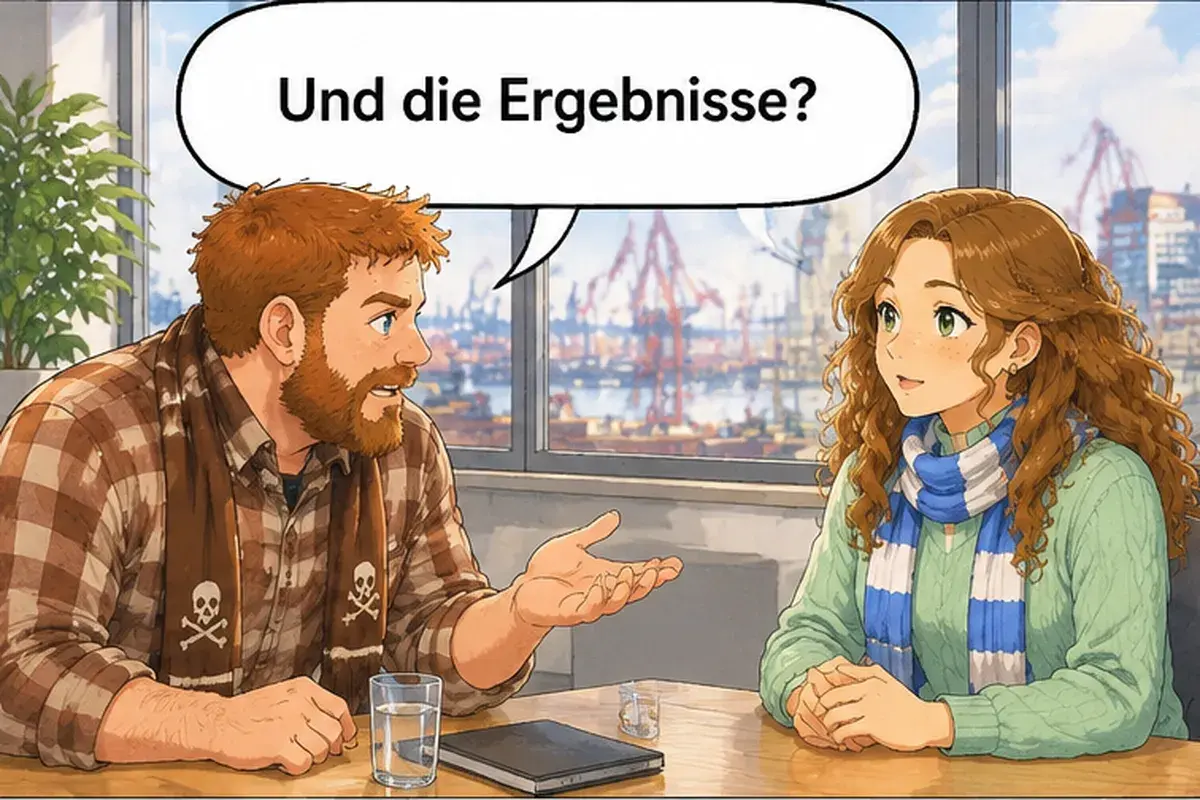
- Tobias
Und die Ergebnisse?
And the results?

- Katja
Ich habe den Bericht geliefert und alles in einer Präsentation gezeigt.
I delivered the report and showed everything in a presentation.

- Tobias
Bei uns wird Deutsch und Englisch gesprochen. Wie sind Ihre Kenntnisse?
German and English are spoken at our company. What are your skills like? (formal)
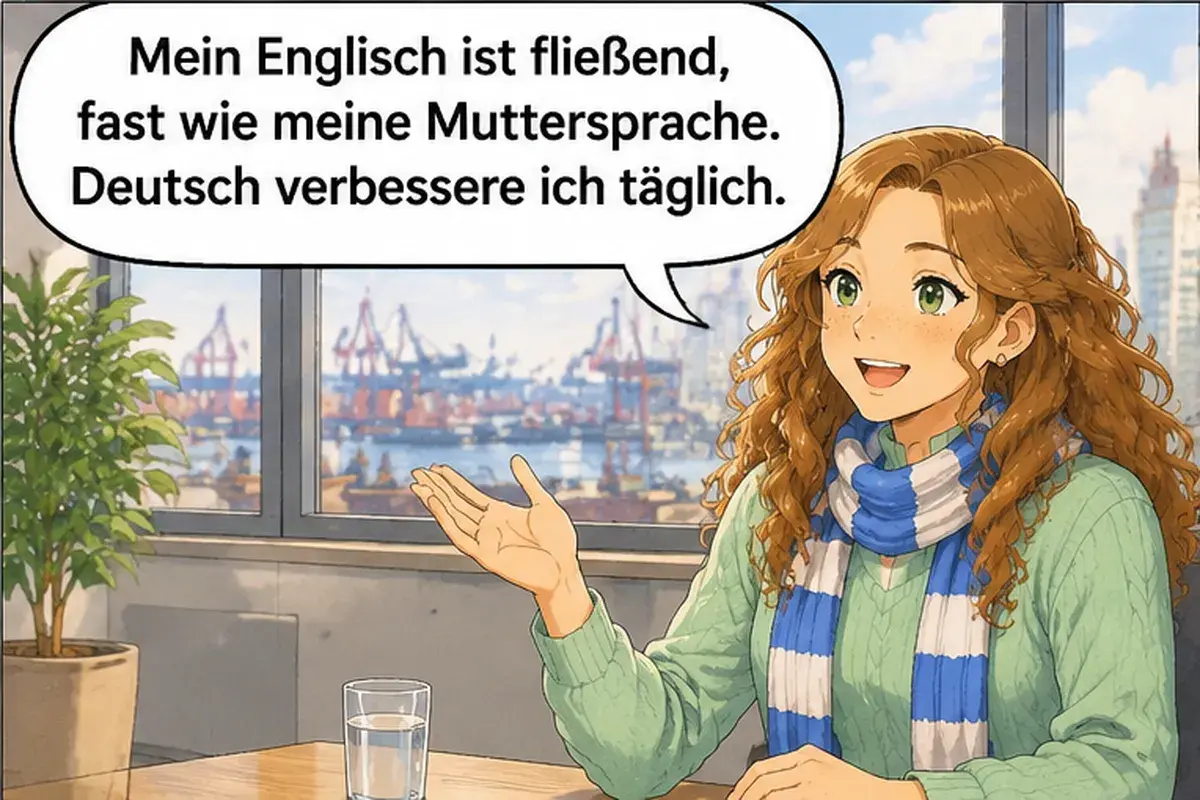
- Katja
Mein Englisch ist fließend, fast wie meine Muttersprache. Deutsch verbessere ich täglich.
My English is fluent, almost like my native language. I'm improving my German every day.
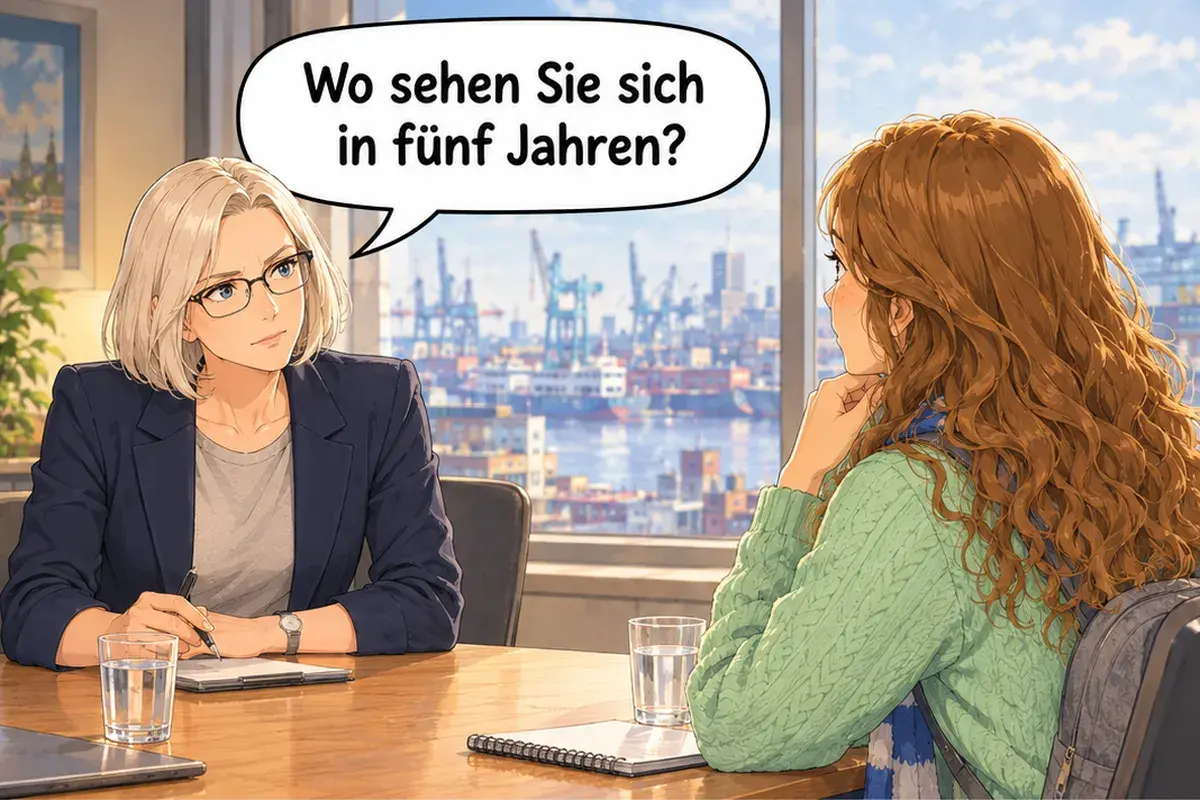
- Sabine
Wo sehen Sie sich in fünf Jahren?
Where do you see yourself in five years? (formal)

- Katja
Ich würde gern ein Team leiten. Ich bin motiviert und möchte mehr Verantwortung.
I'd like to lead a team. I'm motivated, and I'd like more responsibility.
Grammar for this text
- Erzählen Sie etwas über sich — a polite request, the Sie command: the verb comes first, then
Sie.über sichmeans "about yourself": withSie, the reflexive pronoun issich. - Ich habe an der Universität studiert — the Perfekt (spoken past).
-ierenverbs take noge-:studiert(fromstudieren).an der Universitätmeans "at the university": dative (an+der). - interessiere mich für Logistik —
sich interessieren fürmeans "to be interested in"; afterfürcomes the accusative. English says "in", German saysfür. - Welche Aufgabe haben Sie zuletzt gelöst? — past participles:
gelöst(fromlösen:ge-+ stem +-t), and the same withgeliefertandgezeigt. Butentwickelthas noge-: the verb starts with the prefixent-. - Bei uns wird Deutsch und Englisch gesprochen — "German and English are spoken at our company."
wird+ the past participlegesprochen(fromsprechen, an irregular verb: the stem changes tosproch) is the passive: something is done, and we don't say who does it. Job ads talk like this; you don't have to say it yourself. - Wo sehen Sie sich in fünf Jahren? —
sich sehenmeans "to see yourself".in fünf Jahrenmeans "in five years" (from now); afterincomes the dative, and in the dative pluralJahradds-n:Jahren. - Ich würde gern ein Team leiten —
würdemeans "would" (a form ofwerden; the rule is in the unit grammar).leiten(to lead) goes to the very end.
Words and grammar of the unit: Get through a job interview.
Learn the words from the texts with flashcards
In the app, you can tap any word in a text to see its translation, forms and examples, and new words stick with flashcards. 15 minutes a day.
Start for freeEverything is open for free. No card needed to sign up.