

German dialogue with translation · A2 · 14 lines
Ich bin nervös, aber auch gespannt I'm nervous, but also curious
Comic · 14 panels
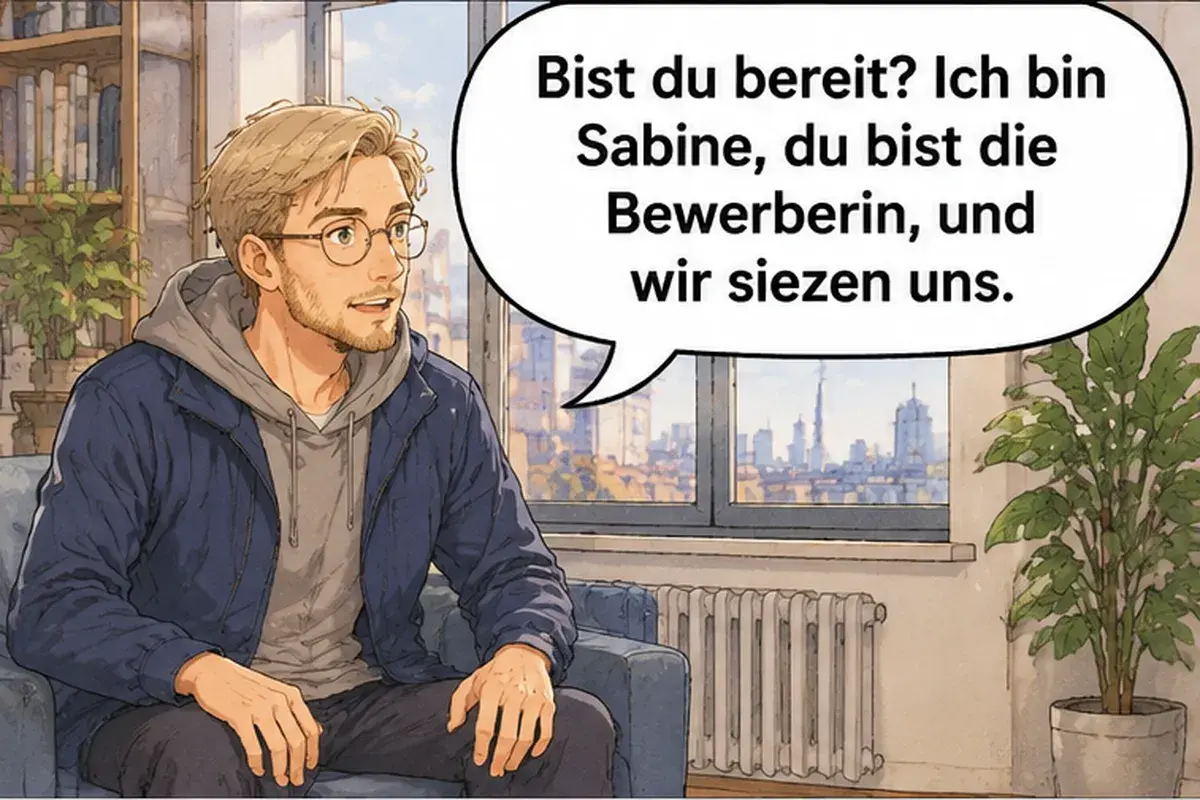
- Lukas
Bist du bereit? Ich bin Sabine, du bist die Bewerberin, und wir siezen uns.
Are you ready? I'm Sabine, you're the applicant, and we say Sie to each other.
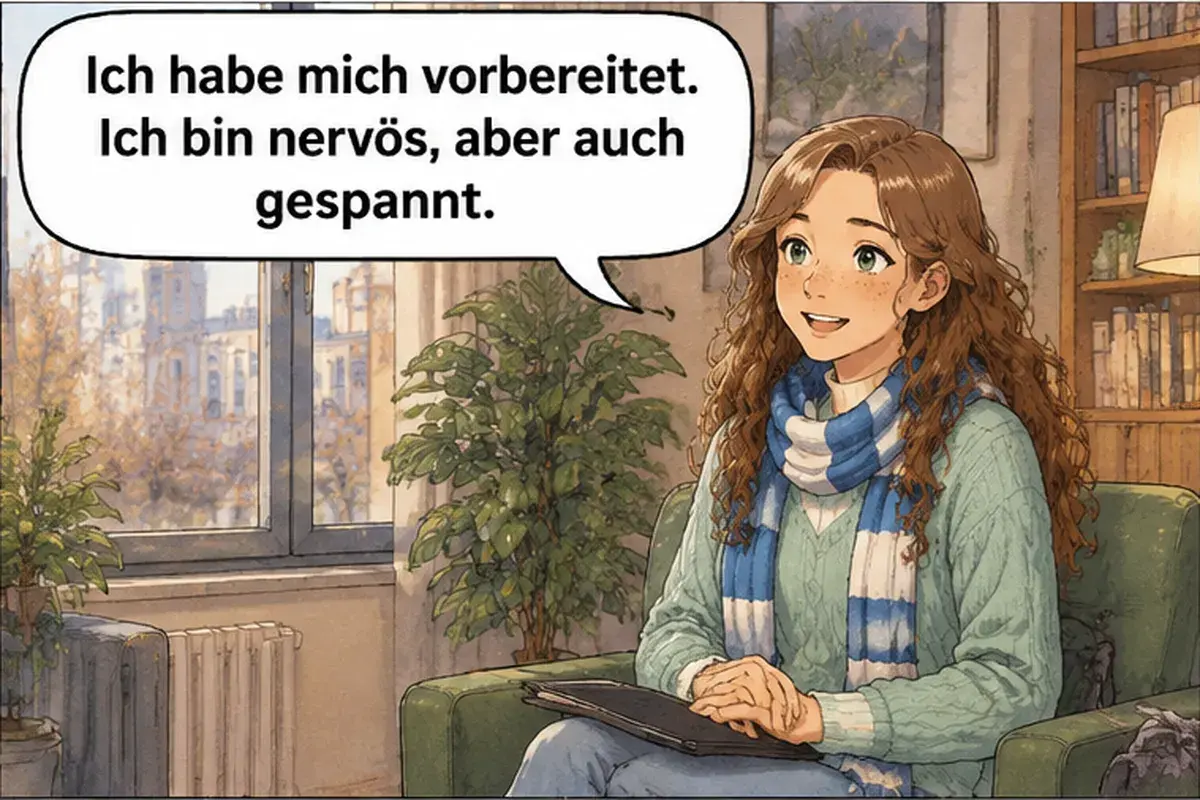
- Katja
Ich habe mich vorbereitet. Ich bin nervös, aber auch gespannt.
I've prepared. I'm nervous, but also curious.
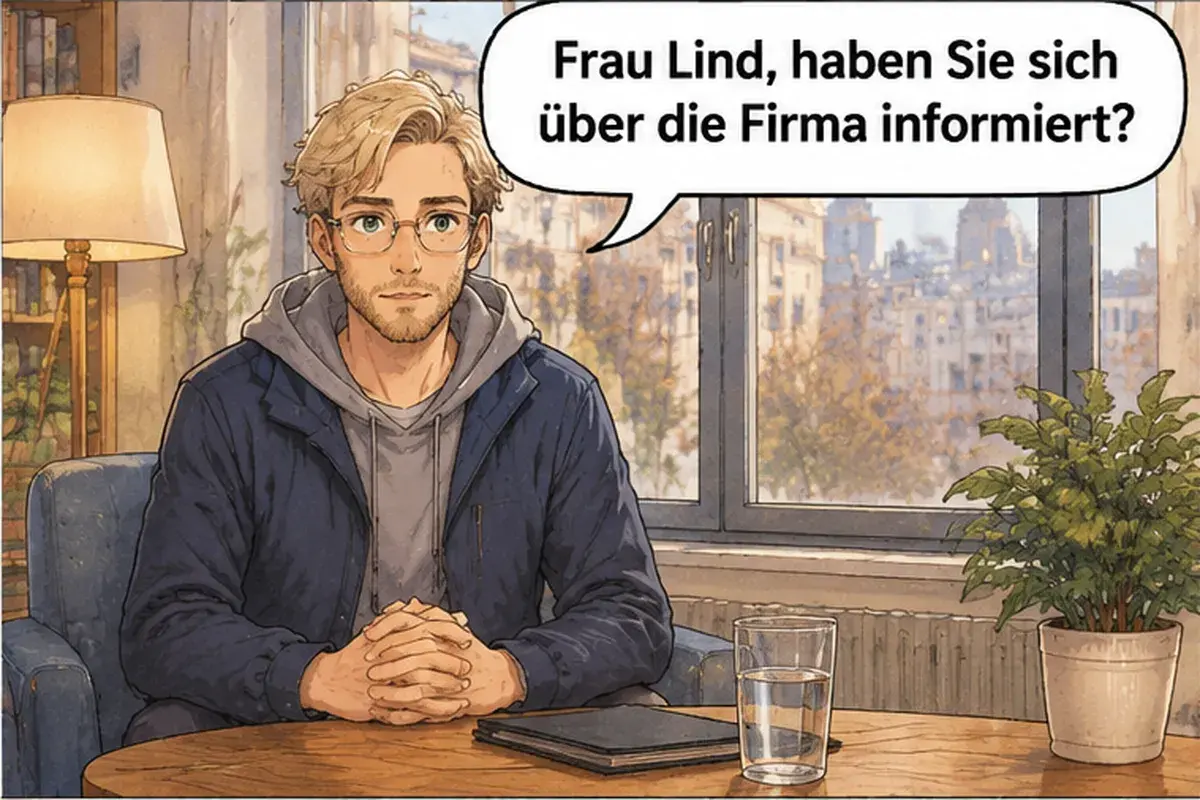
- Lukas
Frau Lind, haben Sie sich über die Firma informiert?
Frau Lind, have you found out about the company? (formal)

- Katja
Ja, auf der Webseite. Die Firma macht einen guten Eindruck.
Yes, on the website. The company makes a good impression.
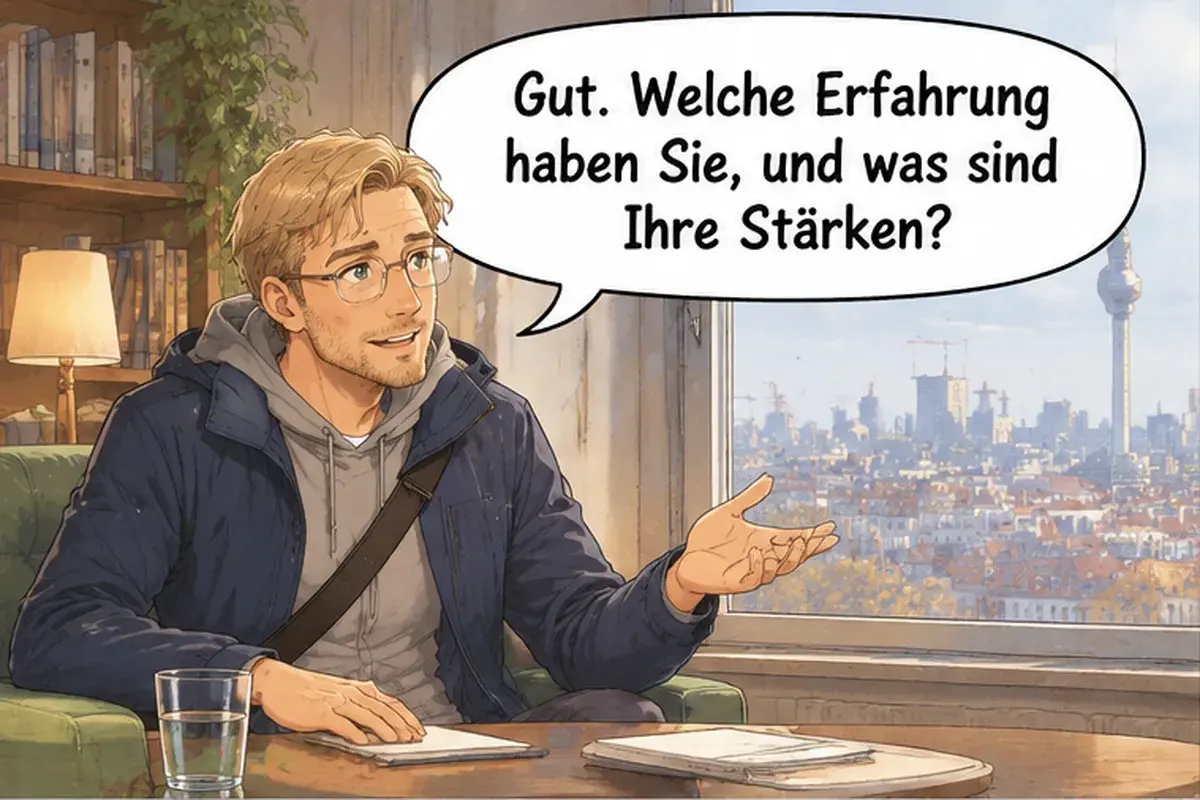
- Lukas
Gut. Welche Erfahrung haben Sie, und was sind Ihre Stärken?
Good. What experience do you have, and what are your strengths? (formal)
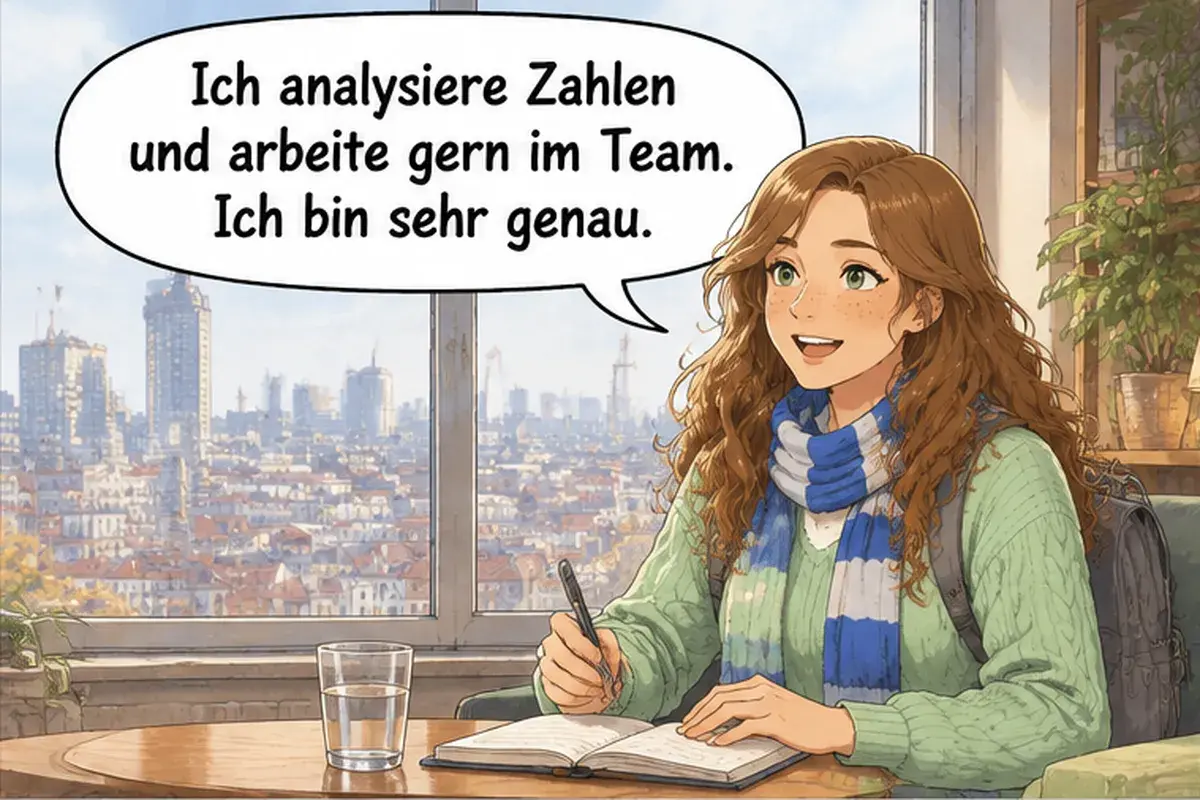
- Katja
Ich analysiere Zahlen und arbeite gern im Team. Ich bin sehr genau.
I analyze numbers, and I like working on a team. I'm very precise.
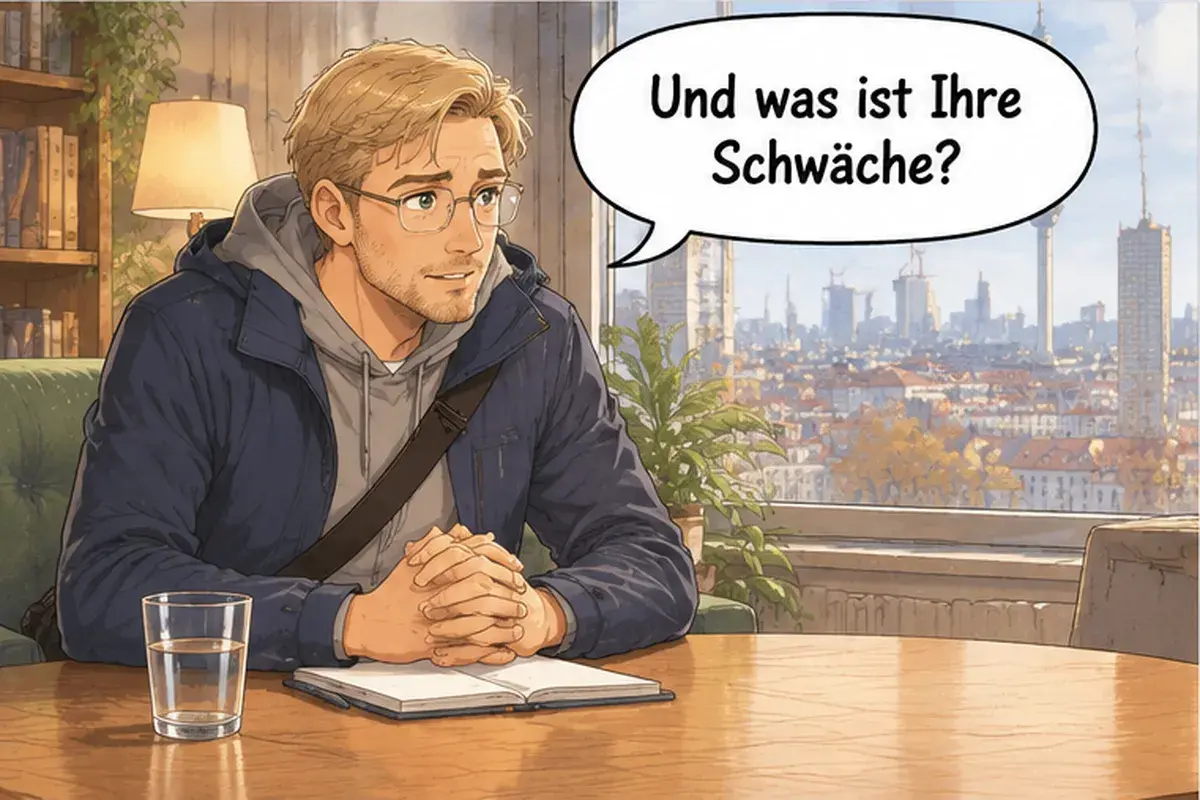
- Lukas
Und was ist Ihre Schwäche?
And what's your weakness? (formal)

- Katja
Meine Schwäche ist Kuchen!
My weakness is cake!
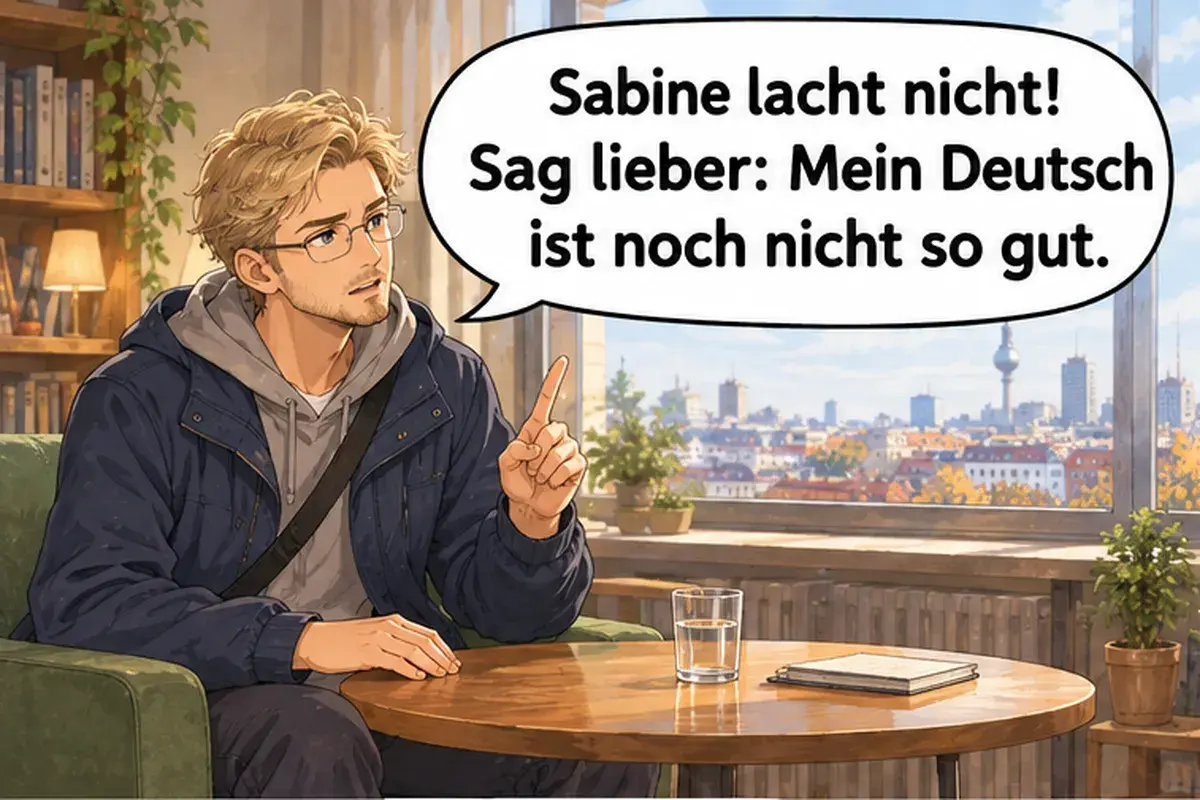
- Lukas
Sabine lacht nicht! Sag lieber: Mein Deutsch ist noch nicht so gut.
Sabine doesn't laugh! Say this instead: "My German isn't that good yet."
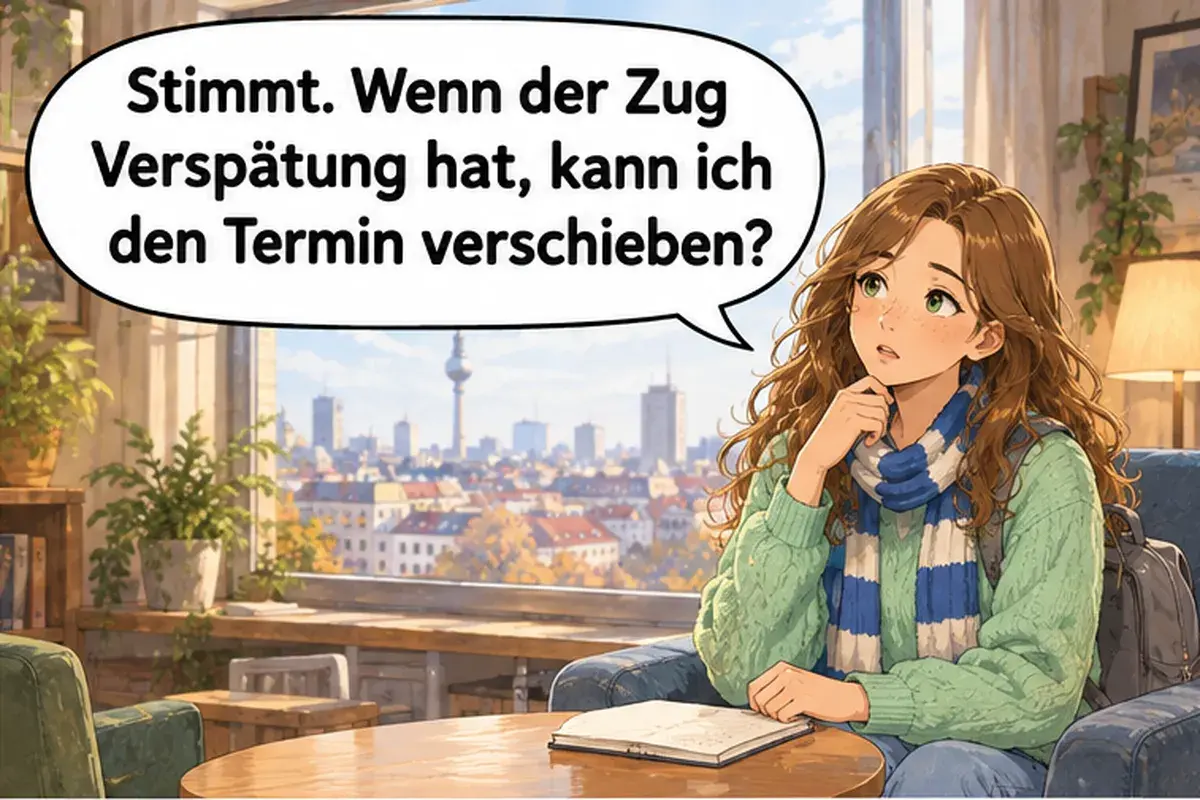
- Katja
Stimmt. Wenn der Zug Verspätung hat, kann ich den Termin verschieben?
True. If the train is late, can I reschedule the appointment?
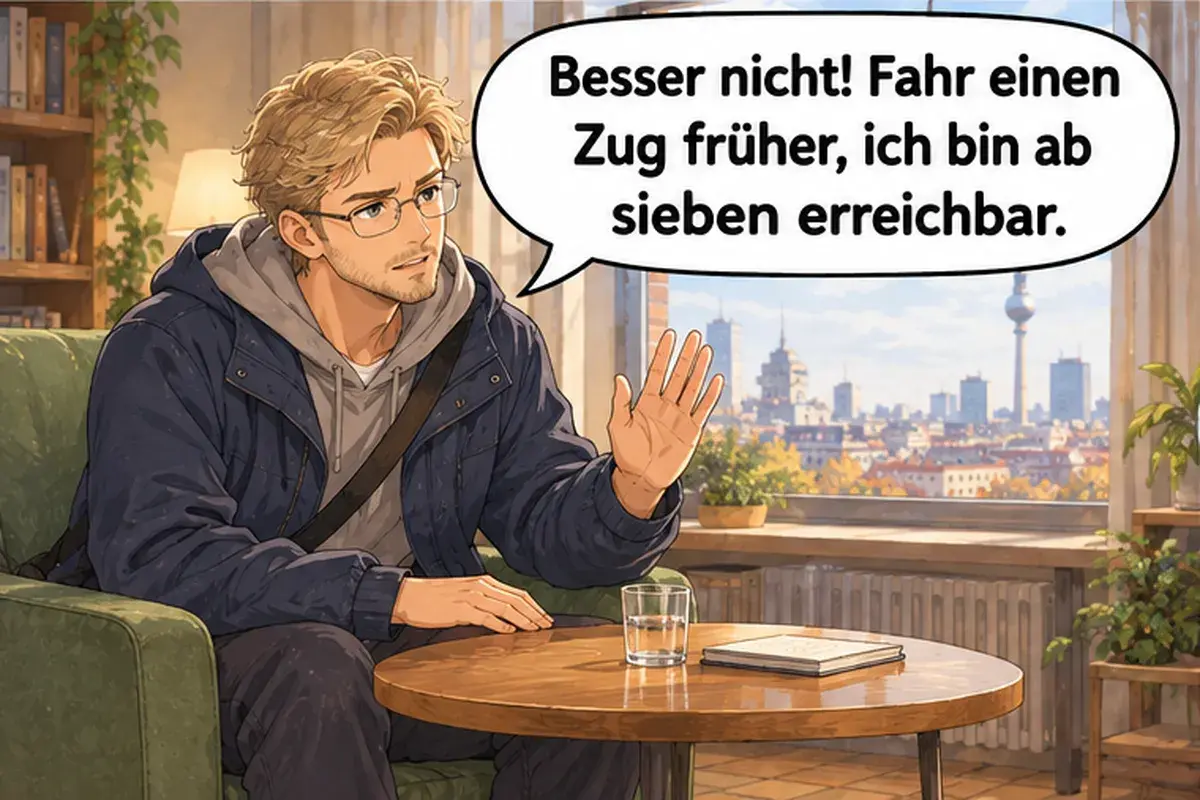
- Lukas
Besser nicht! Fahr einen Zug früher, ich bin ab sieben erreichbar.
Better not! Take an earlier train; I can be reached from seven on.
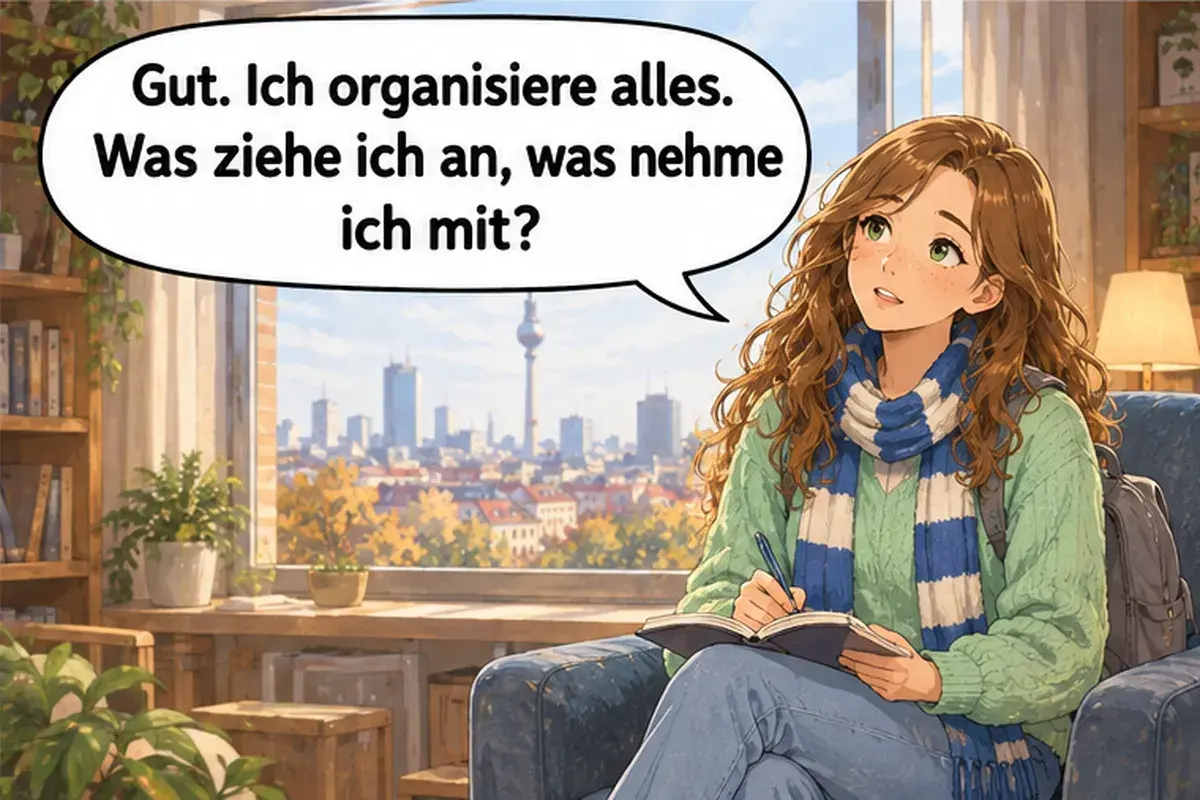
- Katja
Gut. Ich organisiere alles. Was ziehe ich an, was nehme ich mit?
Good. I'll organize everything. What do I wear, and what do I take with me?
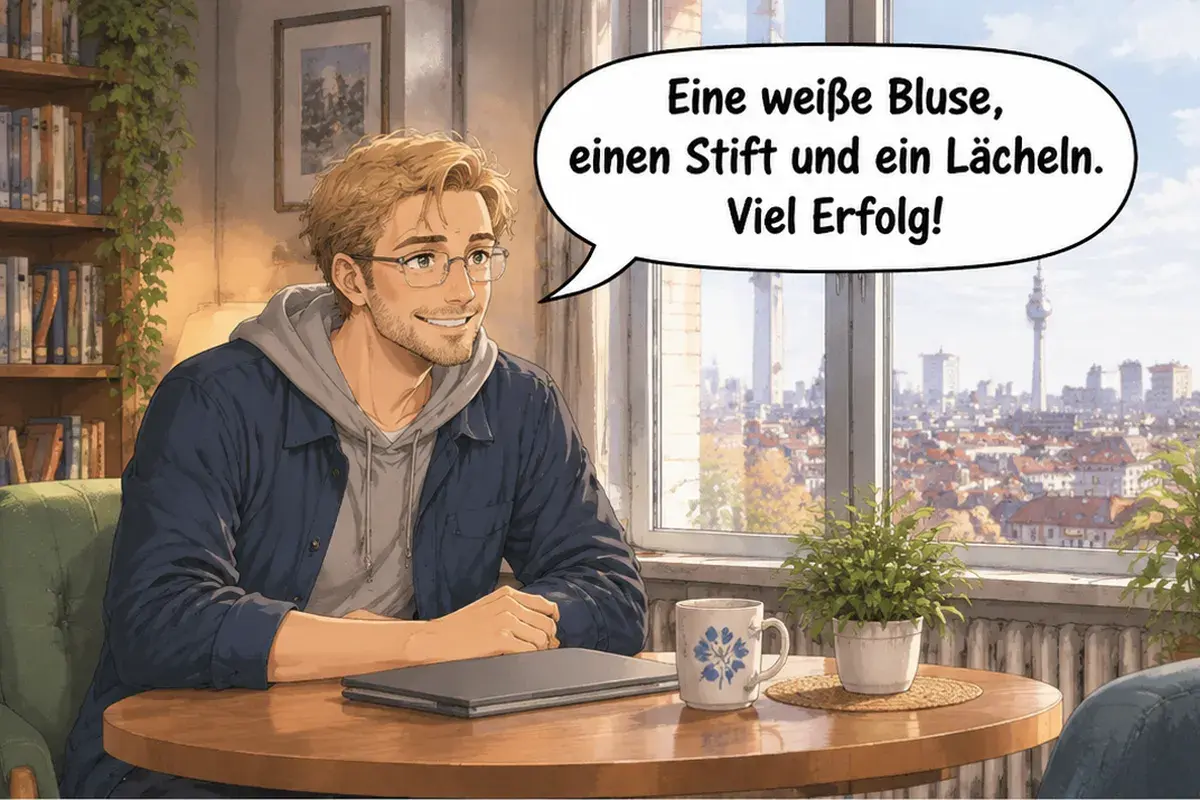
- Lukas
Eine weiße Bluse, einen Stift und ein Lächeln. Viel Erfolg!
A white blouse, a pen and a smile. Good luck!
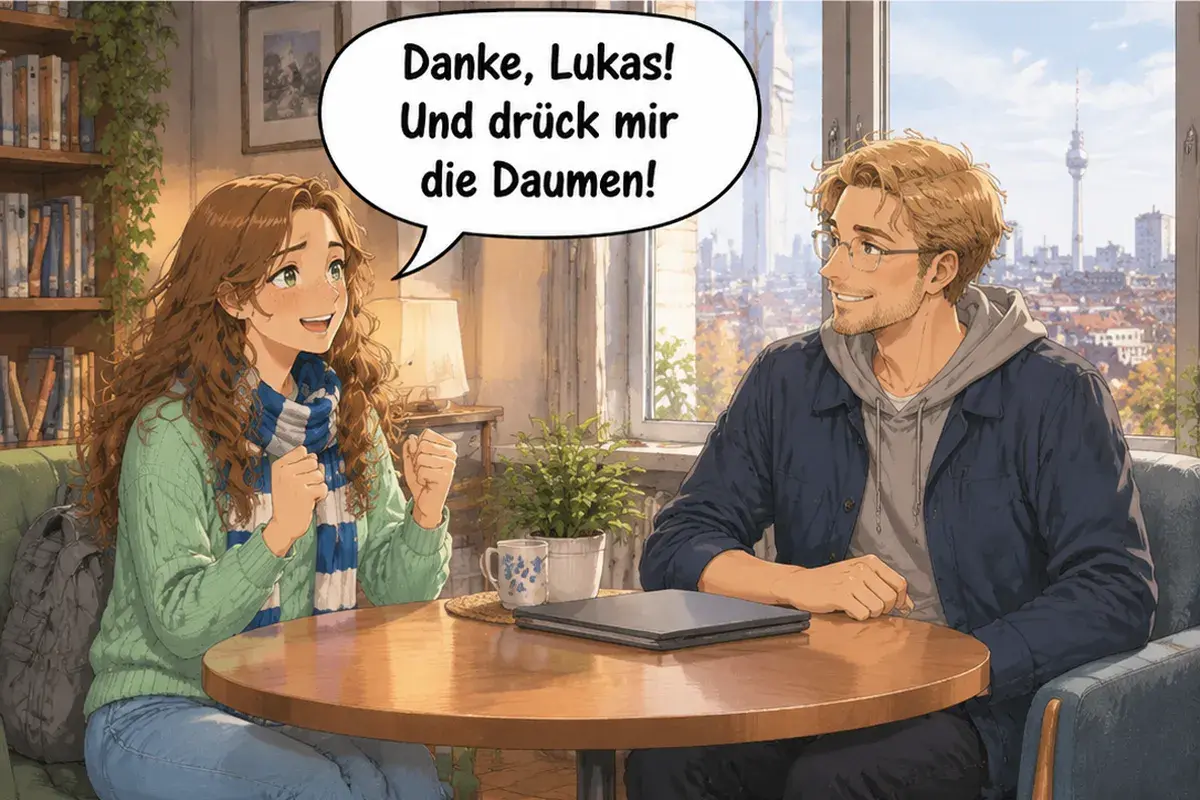
- Katja
Danke, Lukas! Und drück mir die Daumen!
Thanks, Lukas! And keep your fingers crossed for me!
Grammar for this text
- Ich bin Sabine, du bist die Bewerberin, und wir siezen uns —
sich siezenmeans "to saySieto each other":unsmeans "each other" (unit 6). Lukas is playing Sabine, so from now on he saysSieto Katja. Ich habe mich vorbereitet —sich vorbereitenmeans "to prepare, to get ready";michis "myself". In the Perfekt (spoken past), the past participlevorbereitethas noge-: the rootbereitenstarts withbe-. - Haben Sie sich über die Firma informiert? —
sich informieren über+ accusative: "to find out about". The past participleinformierthas noge-either (it's an-ierenverb). WithSie, the reflexive word is alwayssich. - Meine Schwäche ist Kuchen! — a joke:
Schwächeis both a weak point and a weakness for sweets, just like in English. Sabine is strict, so Lukas suggests naming a real weakness:Mein Deutsch ist noch nicht so gut. - Wenn der Zug Verspätung hat, kann ich den Termin verschieben? — the
wennclause comes first and counts as one place, so the verb comes right after it:kann ich. Inside thewennclause,hatis at the end.Verspätung habenmeans "to be late" (about trains and buses). - Fahr einen Zug früher — the du command of
fahren:fahr, with no ending.einen Zug frühermeans "one train earlier". - Was ziehe ich an, was nehme ich mit? —
anziehen(to put on) andmitnehmen(to take along) are separable verbs:ziehe … an,nehme … mit.nehmeis the ich form ofnehmen(the du form isnimmst, A1, unit 4). - Und drück mir die Daumen! —
Daumen drückenis how German says "keep your fingers crossed"; word for word, "press the thumbs".drückis the du command, andmirmeans "for me" (unit 5).
Words and grammar of the unit: Setting up a job interview.
Learn the words from the texts with flashcards
In the app, you can tap any word in a text to see its translation, forms and examples, and new words stick with flashcards. 15 minutes a day.
Start for freeEverything is open for free. No card needed to sign up.