
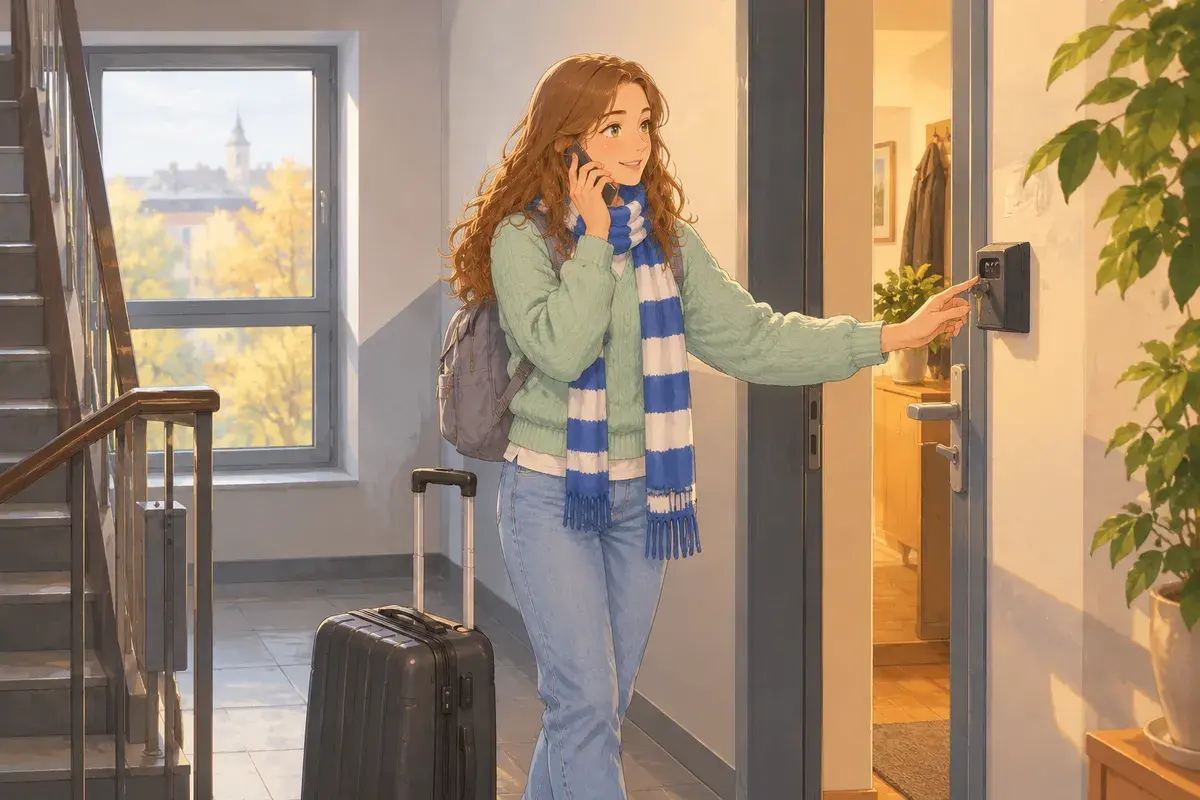
German dialogue with translation · A2 · 14 lines
Bekomme ich auch eine Gästekarte? Do I get a guest card too?
Comic · 14 panels
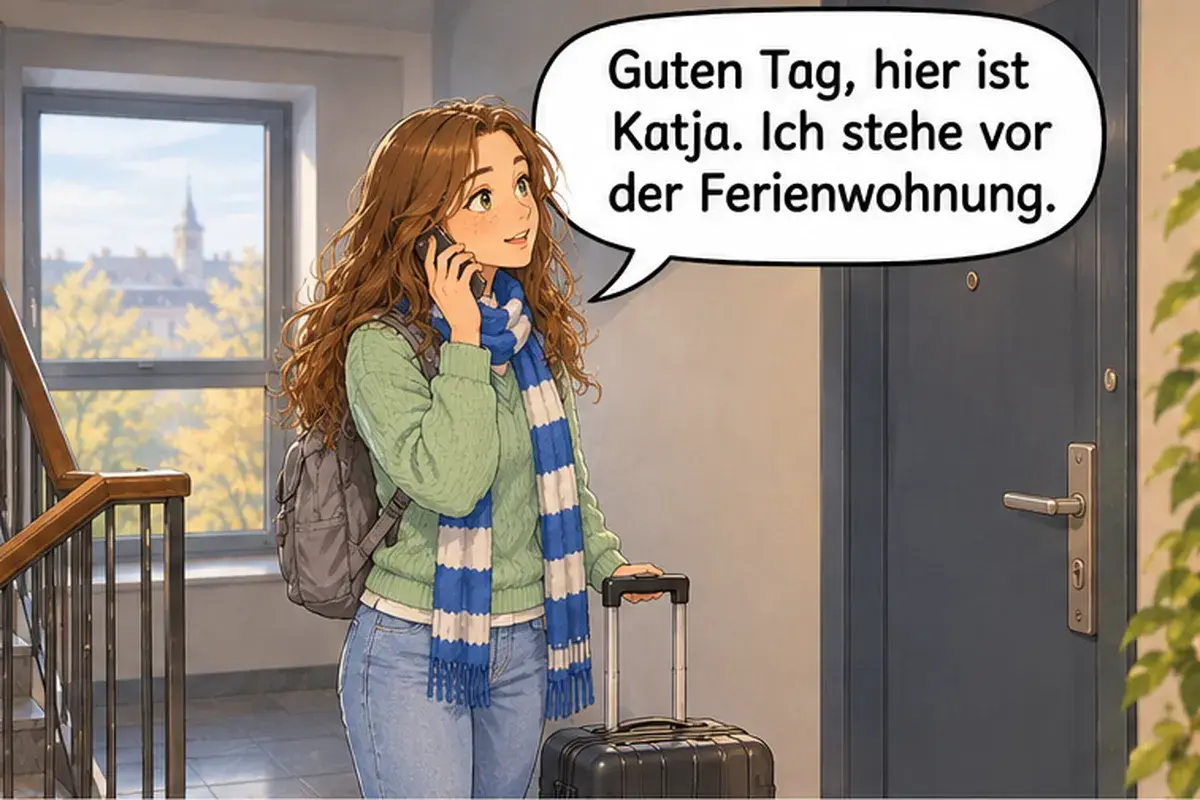
- Katja
Guten Tag, hier ist Katja. Ich stehe vor der Ferienwohnung.
Hello, this is Katja. I'm standing in front of the vacation rental.
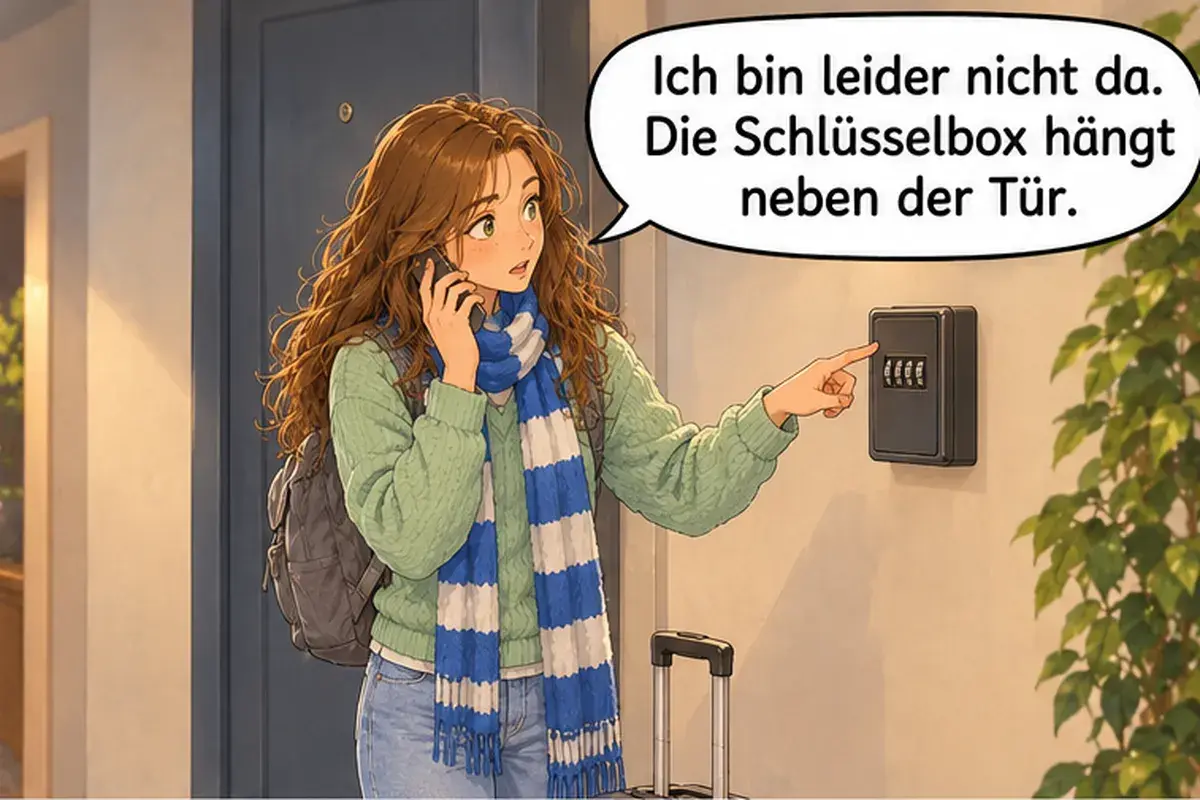
- Gastgeberin
Ich bin leider nicht da. Die Schlüsselbox hängt neben der Tür.
Unfortunately, I'm not there. The key box is hanging next to the door.
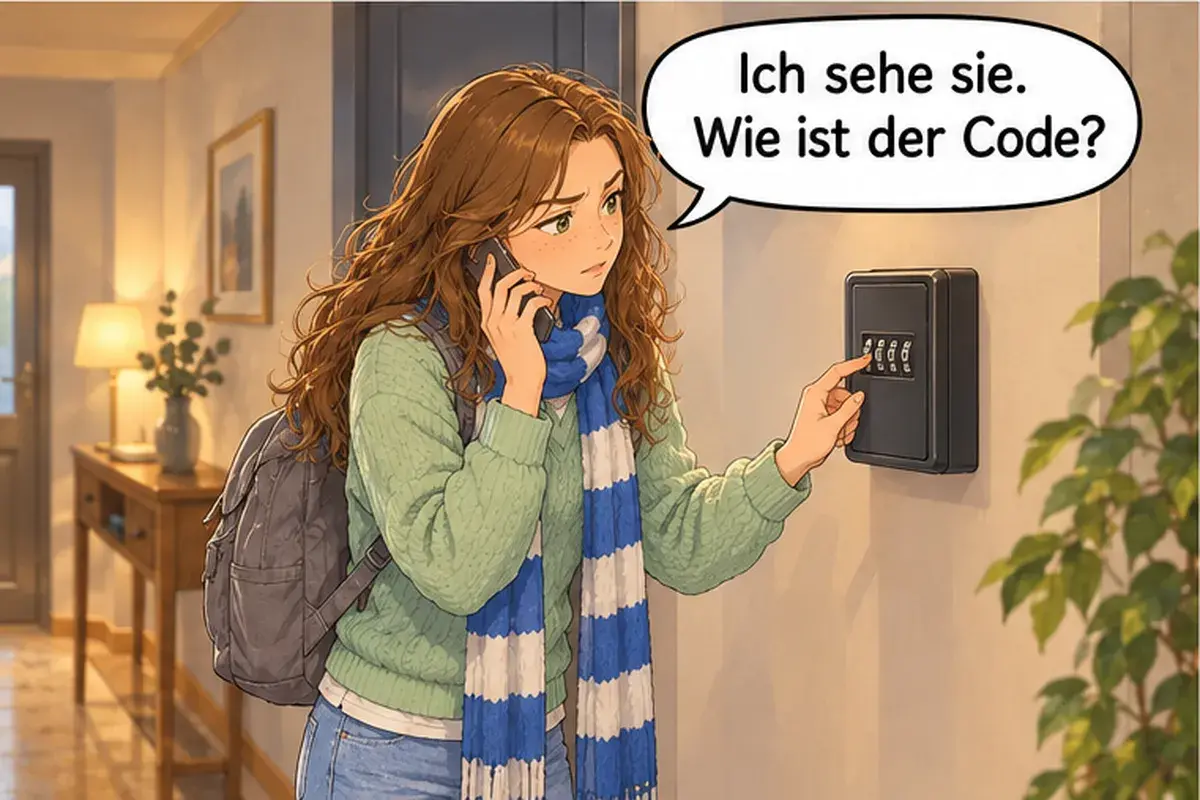
- Katja
Ich sehe sie. Wie ist der Code?
I see it. What's the code?
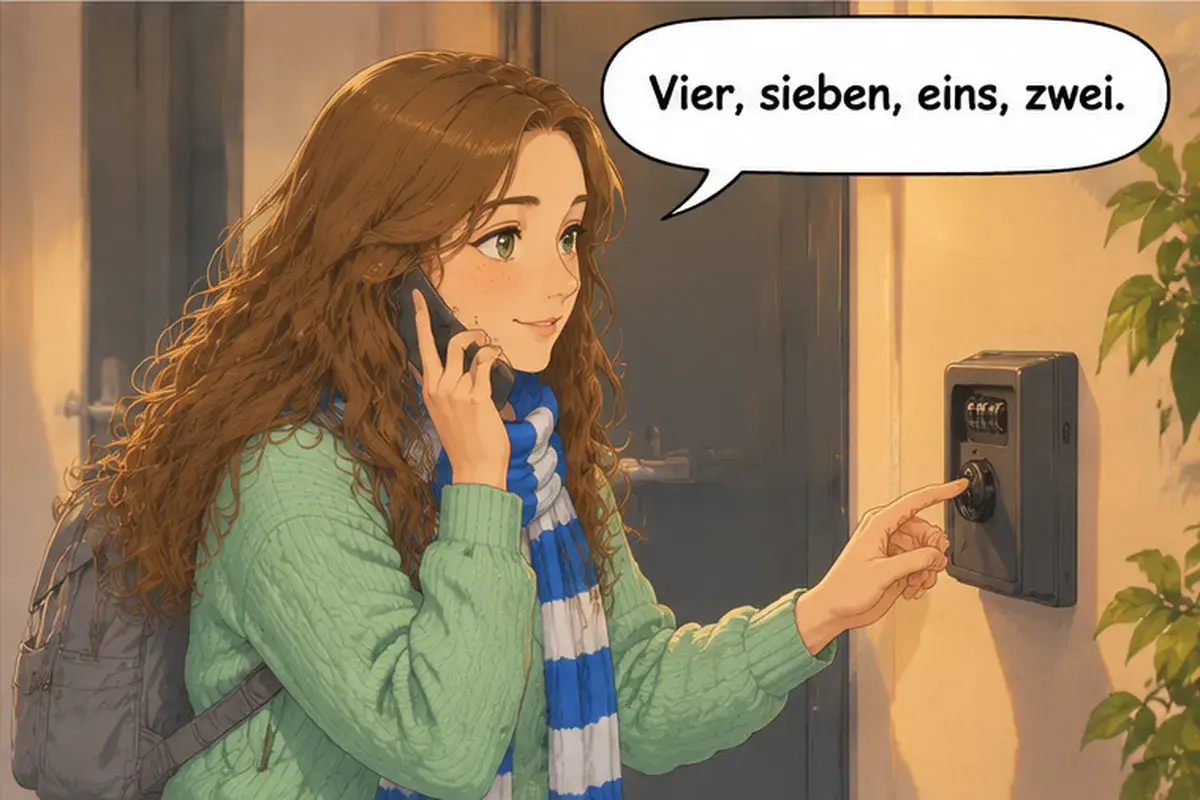
- Gastgeberin
Vier, sieben, eins, zwei.
Four, seven, one, two.
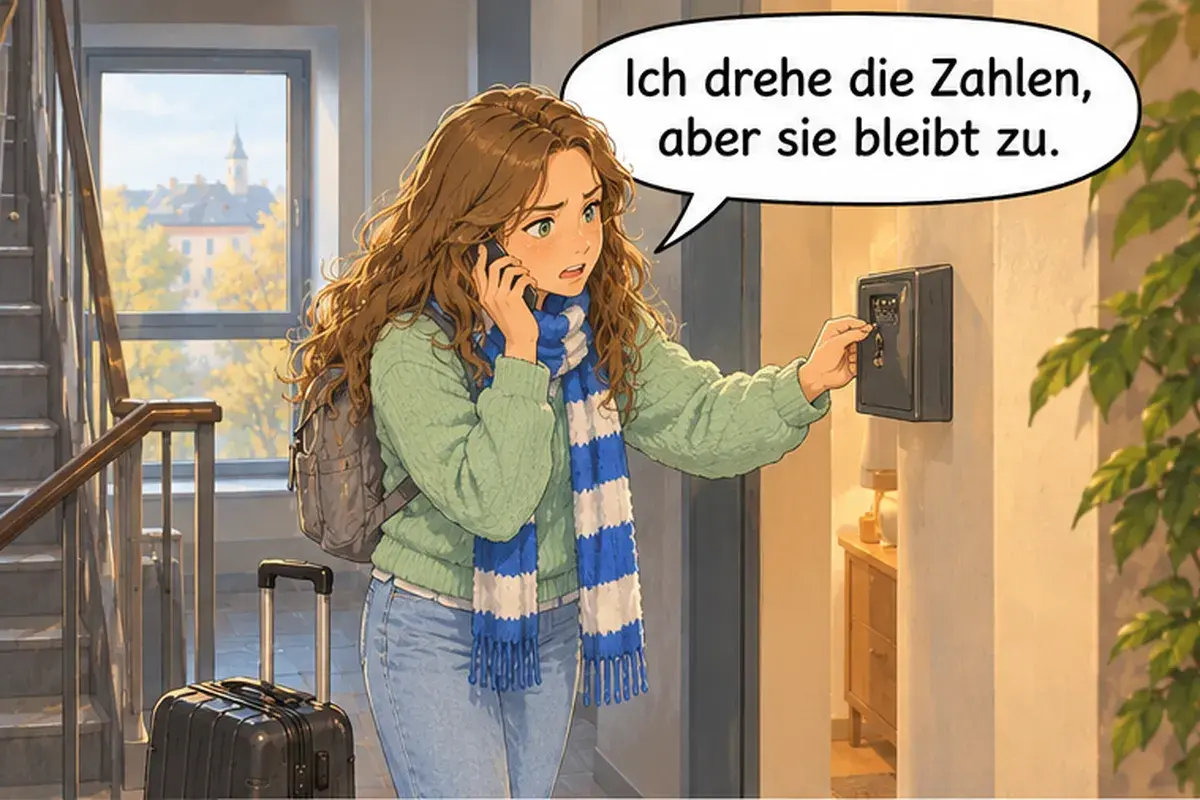
- Katja
Ich drehe die Zahlen, aber sie bleibt zu.
I'm turning the numbers, but it stays shut.
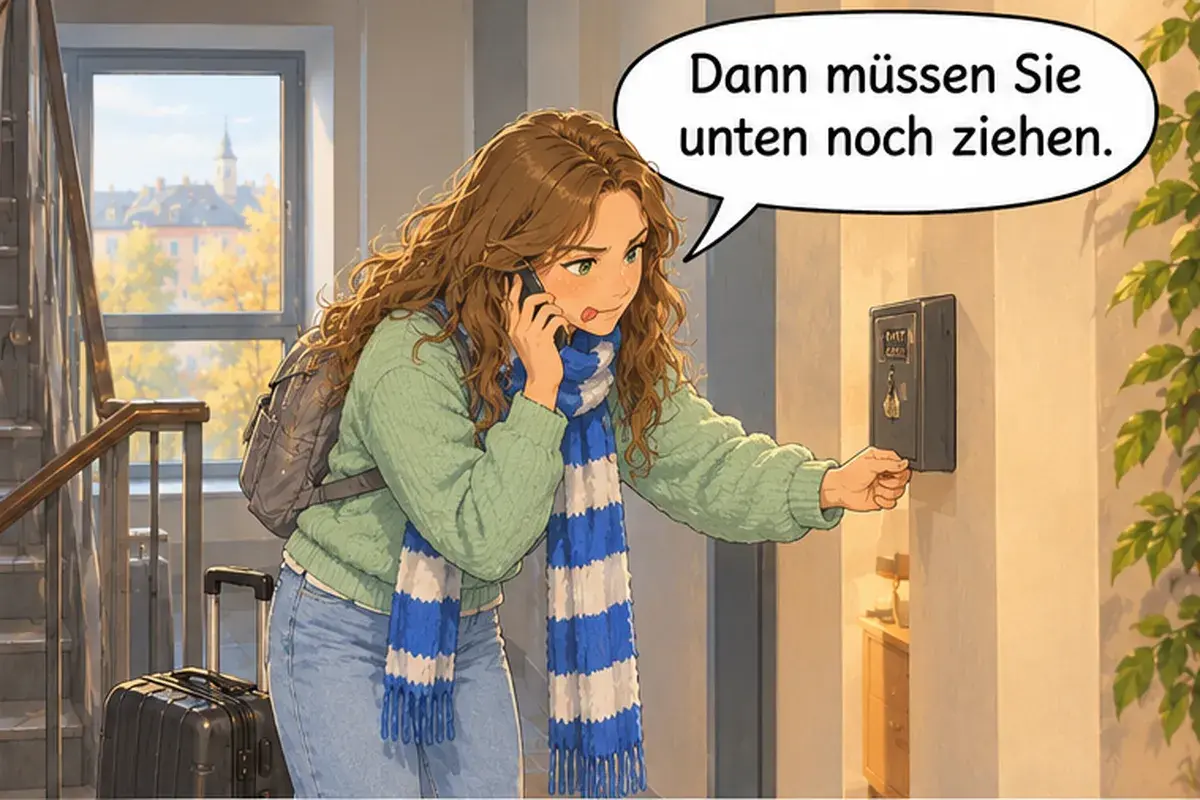
- Gastgeberin
Dann müssen Sie unten noch ziehen.
Then you also have to pull at the bottom. (formal)
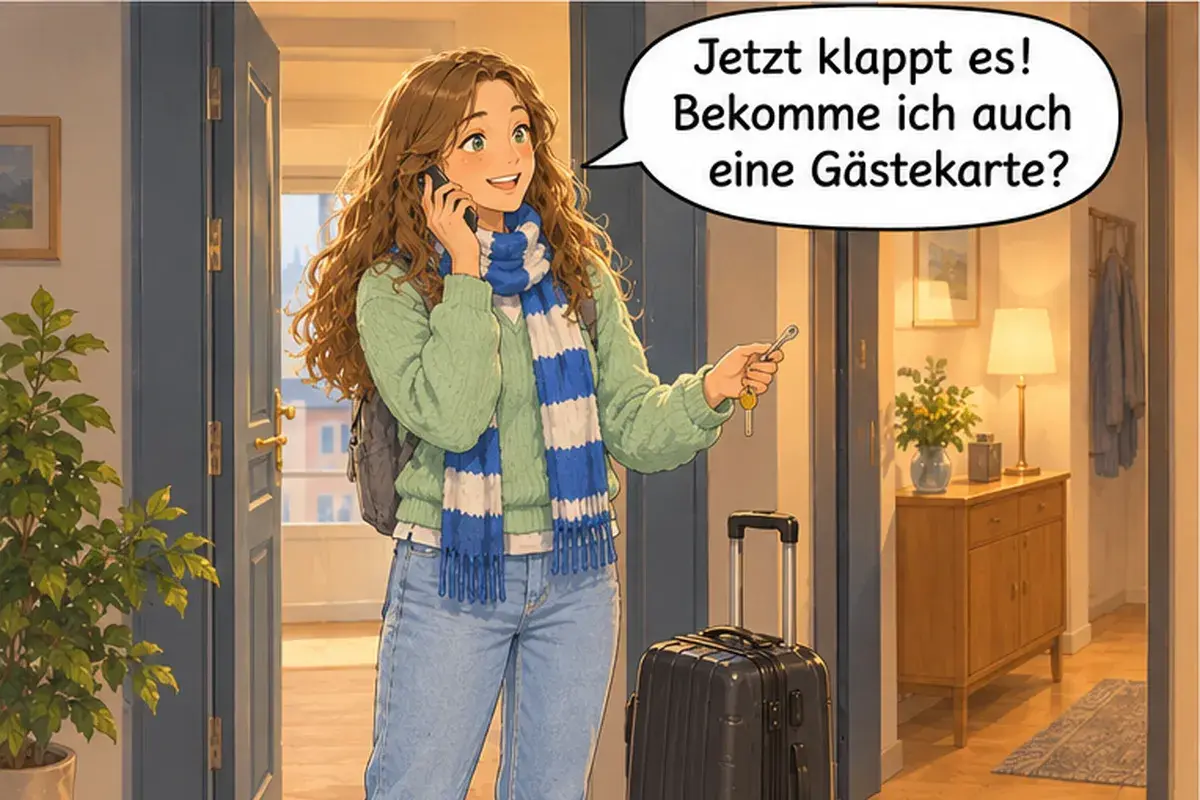
- Katja
Jetzt klappt es! Bekomme ich auch eine Gästekarte?
Now it works! Do I get a guest card too?
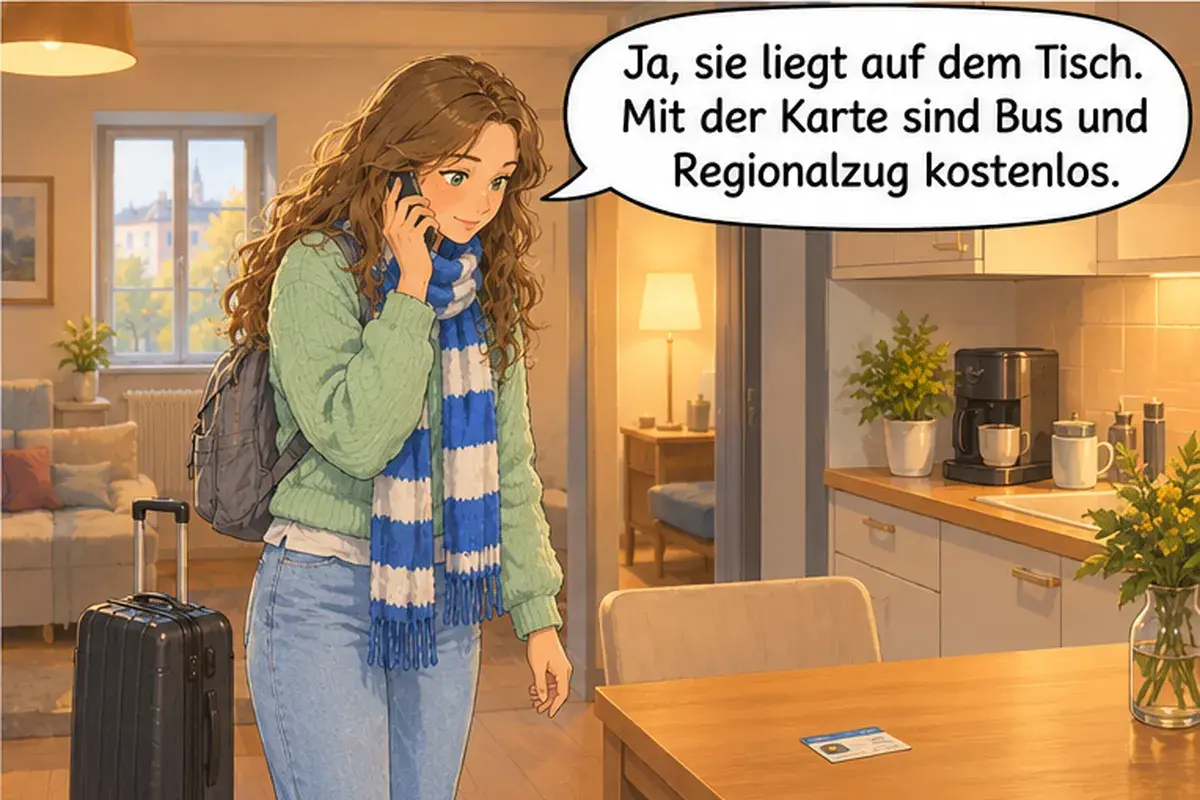
- Gastgeberin
Ja, sie liegt auf dem Tisch. Mit der Karte sind Bus und Regionalzug kostenlos.
Yes, it's on the table. With the card, the bus and the regional train are free.
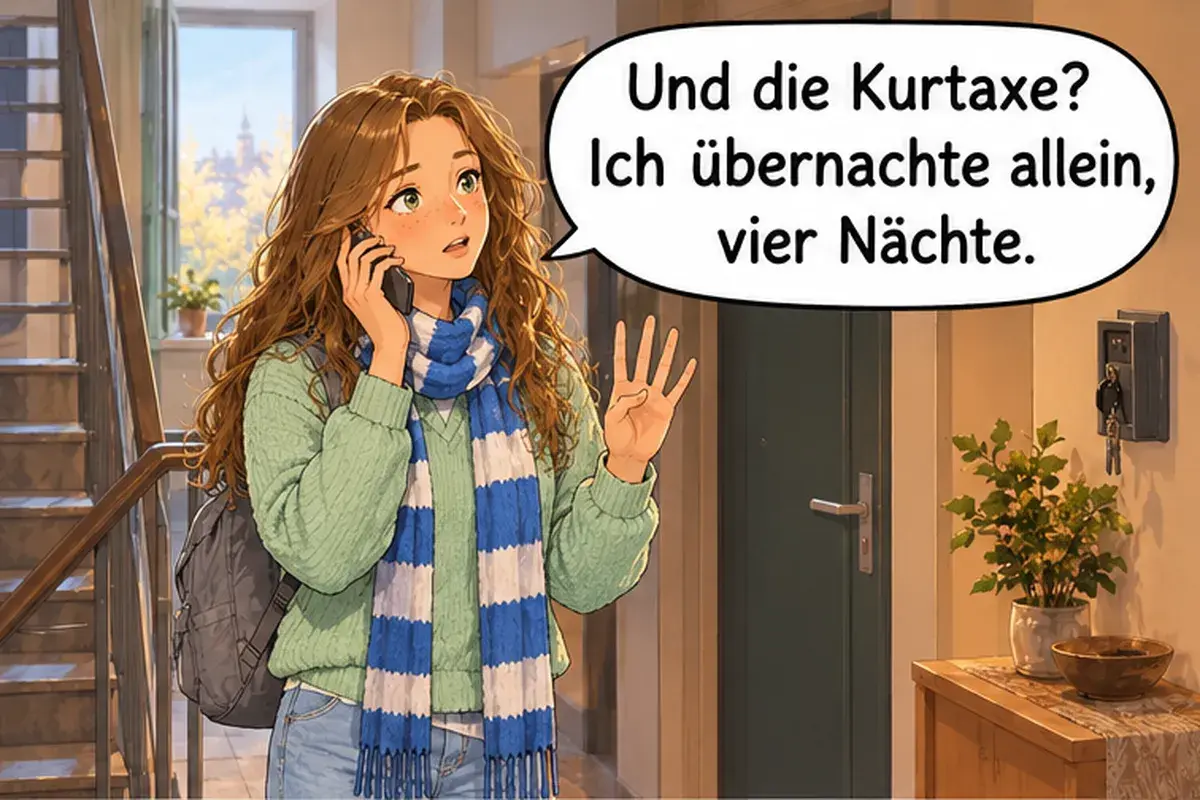
- Katja
Und die Kurtaxe? Ich übernachte allein, vier Nächte.
And the visitor's tax? I'm staying overnight alone, for four nights.
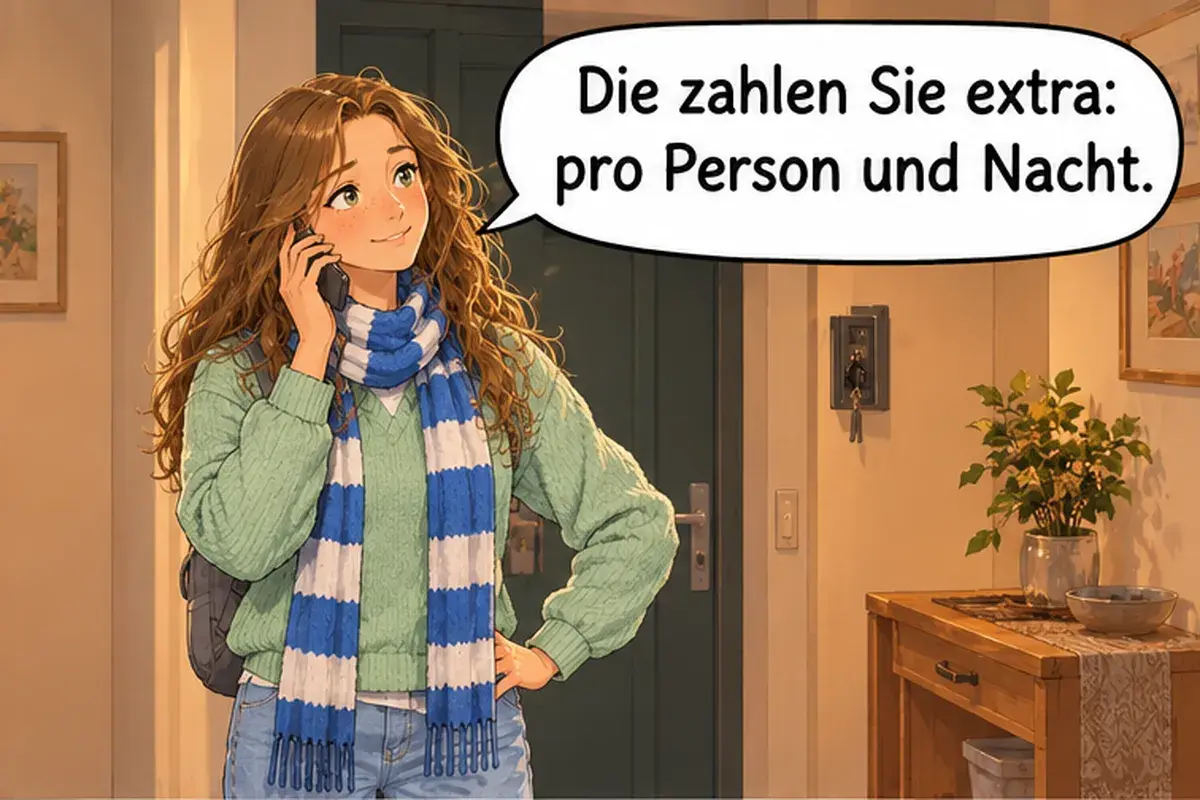
- Gastgeberin
Die zahlen Sie extra: pro Person und Nacht.
You pay that extra: per person per night. (formal)
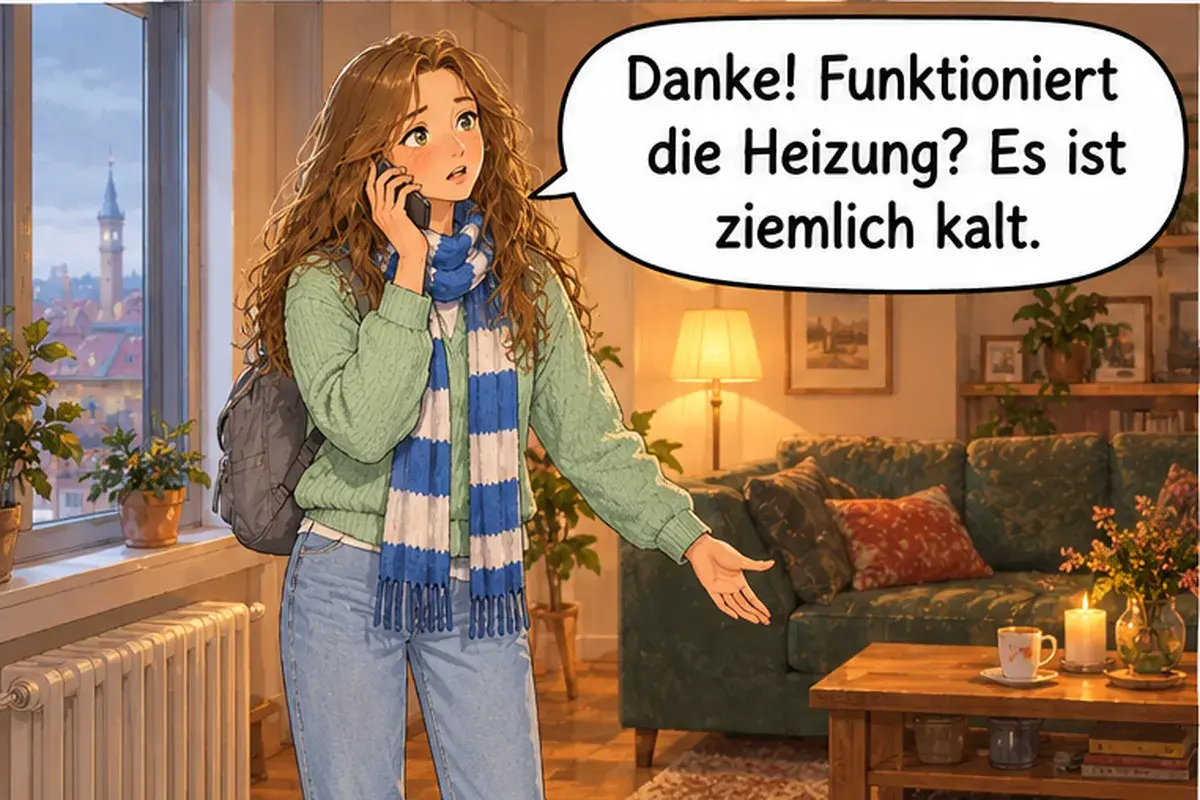
- Katja
Danke! Funktioniert die Heizung? Es ist ziemlich kalt.
Thanks! Does the heating work? It's pretty cold.
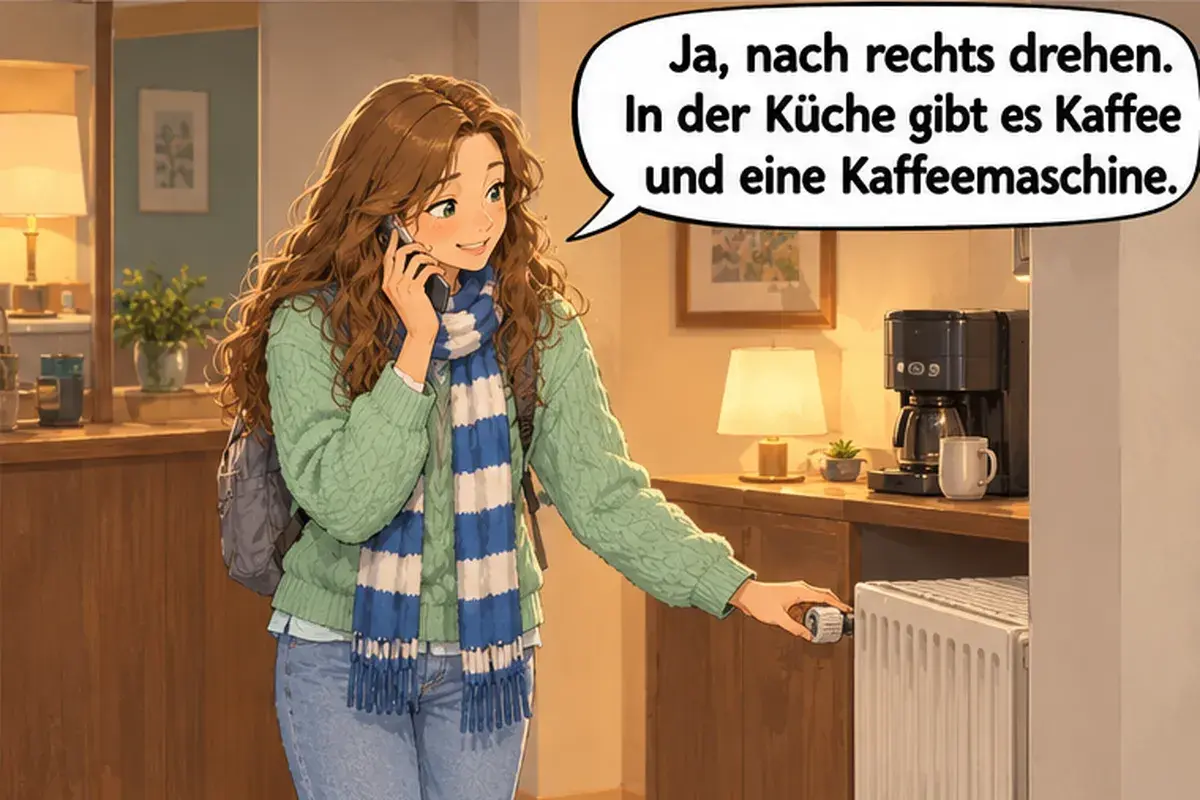
- Gastgeberin
Ja, nach rechts drehen. In der Küche gibt es Kaffee und eine Kaffeemaschine.
Yes, turn it to the right. There's coffee and a coffee maker in the kitchen.
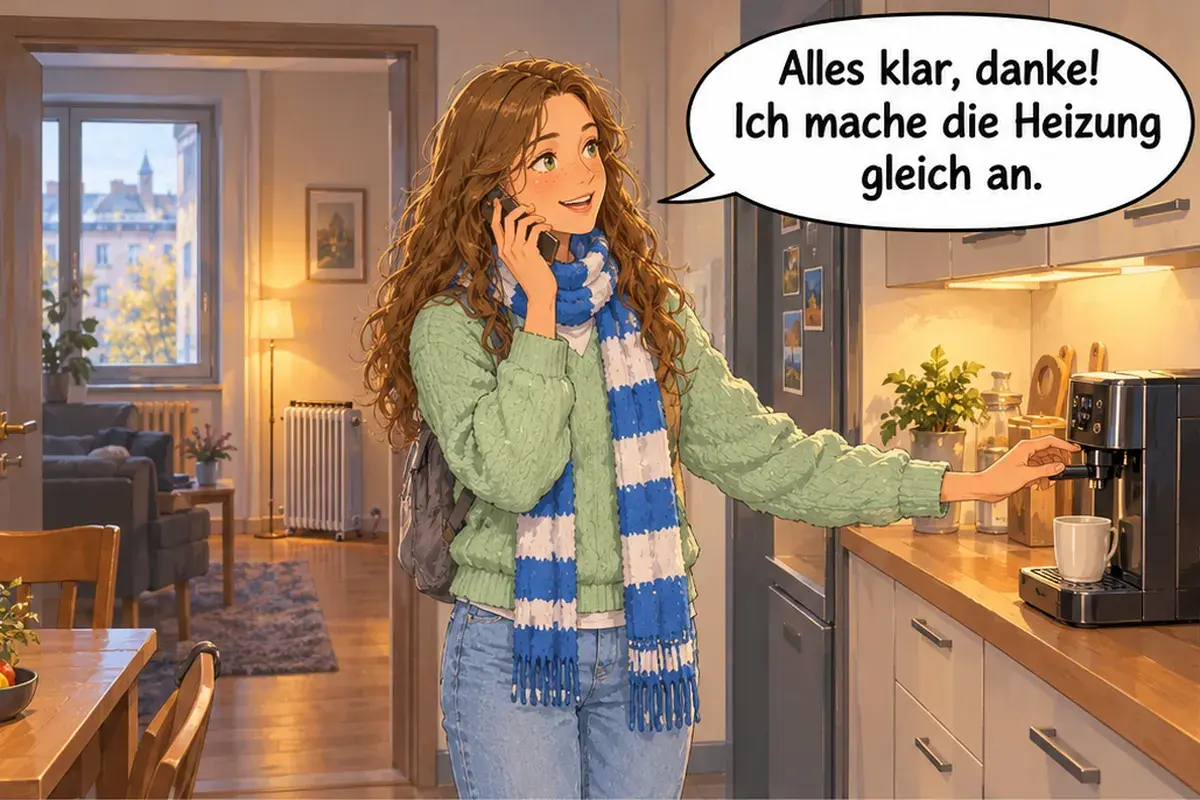
- Katja
Alles klar, danke! Ich mache die Heizung gleich an.
OK, got it, thanks! I'll turn the heating on right away.
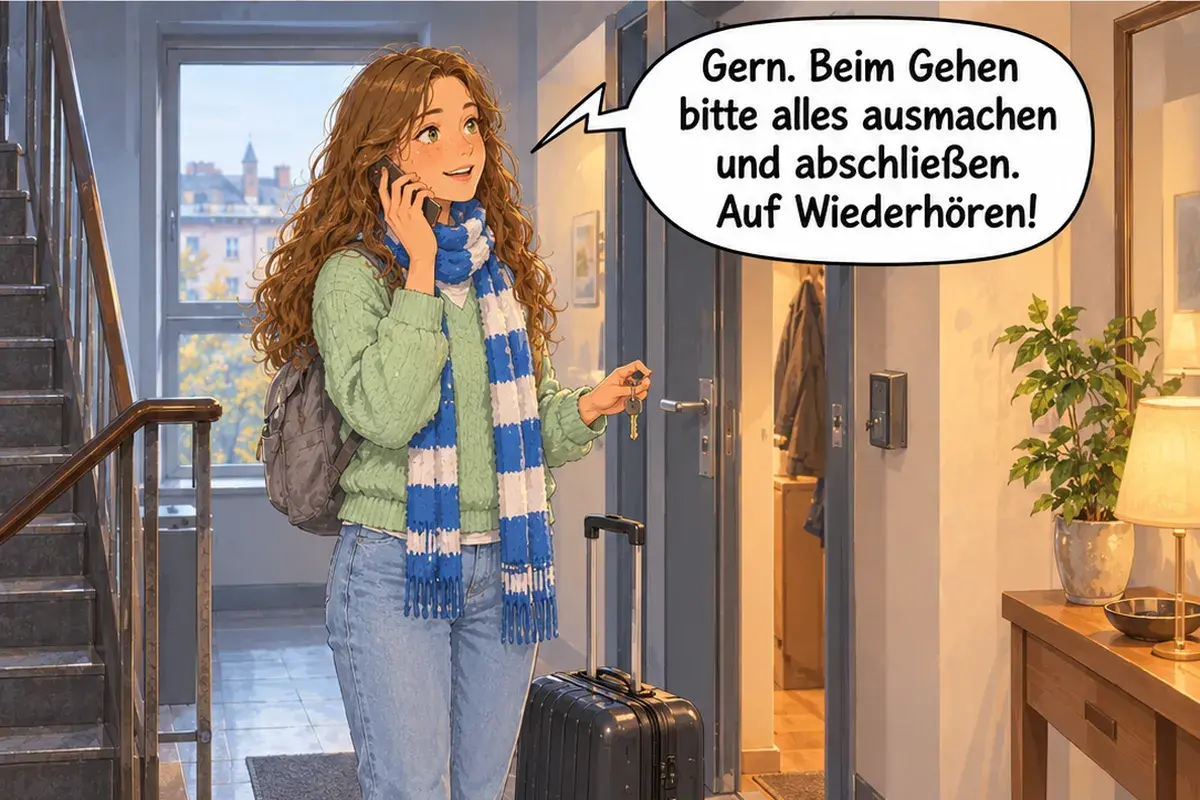
- Gastgeberin
Gern. Beim Gehen bitte alles ausmachen und abschließen. Auf Wiederhören!
You're welcome. When you leave, please turn everything off and lock up. Goodbye!
Grammar for this text
- Ich stehe vor der Ferienwohnung, Die Schlüsselbox hängt neben der Tür — stehe is the ich form of stehen (to stand); hängt is the er / sie / es form of hängen (to hang): the stem häng- plus -t. Both verbs answer "where?", so vor and neben take the dative: der Ferienwohnung, der Tür (feminine die becomes der).
- Ich drehe die Zahlen, aber sie bleibt zu — sie isn't a person here: it's die Schlüsselbox (feminine). English says "it". bleibt is the er / sie / es form of bleiben (to stay); zu means "shut, closed".
- Dann müssen Sie unten noch ziehen — müssen Sie means "you have to" (Sie with a capital S is the formal you). ziehen (to pull) goes to the very end, in its dictionary form.
- Jetzt klappt es! — klappen means "to work out"; es doesn't stand for anything, like "it" in "it worked".
- Mit der Karte sind Bus und Regionalzug kostenlos — mit always takes the dative: der Karte. pro Person und Nacht — pro means "per", with no article after it.
- Ich mache die Heizung gleich an — anmachen (to turn on) splits: mache is in second place, an goes to the end, like "turn the heating on". The opposite is ausmachen (to turn off).
- Beim Gehen — beim = bei dem; Gehen has a capital letter because the verb has become a noun: "when leaving". ausmachen and abschließen stay in the dictionary form: that's how notes and instructions ask you to do something.
Words and grammar of the unit: Stay in a vacation rental.
Learn the words from the texts with flashcards
In the app, you can tap any word in a text to see its translation, forms and examples, and new words stick with flashcards. 15 minutes a day.
Start for freeEverything is open for free. No card needed to sign up.