

German dialogue with translation · A2 · 14 lines
Ich wollte, aber ich konnte nicht I wanted to, but I couldn't
Comic · 14 panels
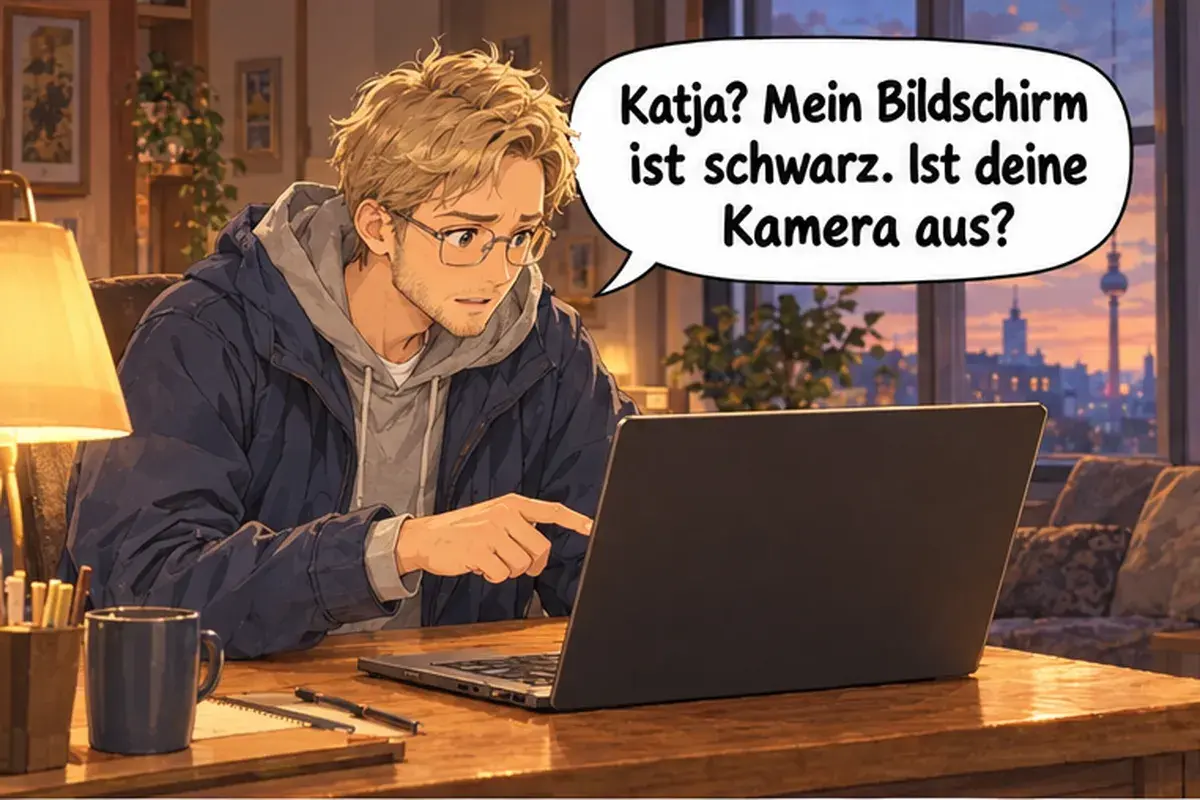
- Lukas
Katja? Mein Bildschirm ist schwarz. Ist deine Kamera aus?
Katja? My screen is black. Is your camera off?

- Katja
Moment, ich mache das Video und das Mikrofon an.
Just a moment, I'm turning on the video and the microphone.

- Lukas
Ich sehe dich, aber dein Ton ist leise.
I can see you, but your sound is quiet.

- Katja
Die Verbindung ist irgendwie schlecht. Hörst du mich jetzt?
The connection is bad somehow. Can you hear me now?

- Lukas
Jetzt geht es. Du wolltest mich gestern zurückrufen. Was ist schiefgegangen?
Now it works. You wanted to call me back yesterday. What went wrong?

- Katja
Ich wollte, aber ich konnte nicht. Mein Handy war leer!
I wanted to, but I couldn't. My phone was dead!
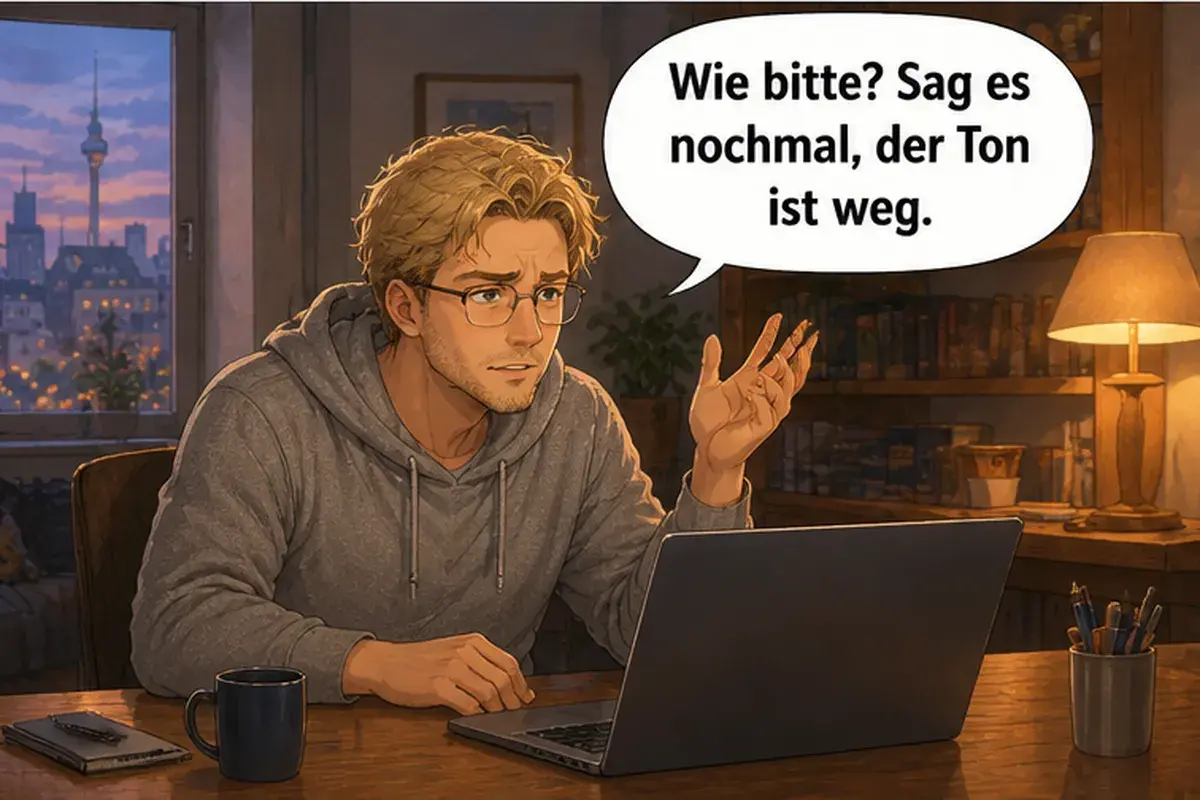
- Lukas
Wie bitte? Sag es nochmal, der Ton ist weg.
Sorry? Say it again, the sound is gone.

- Katja
Wie gesagt, ich hatte kein Ladegerät. Ich habe es vergessen!
Like I said, I didn't have a charger. I forgot it!
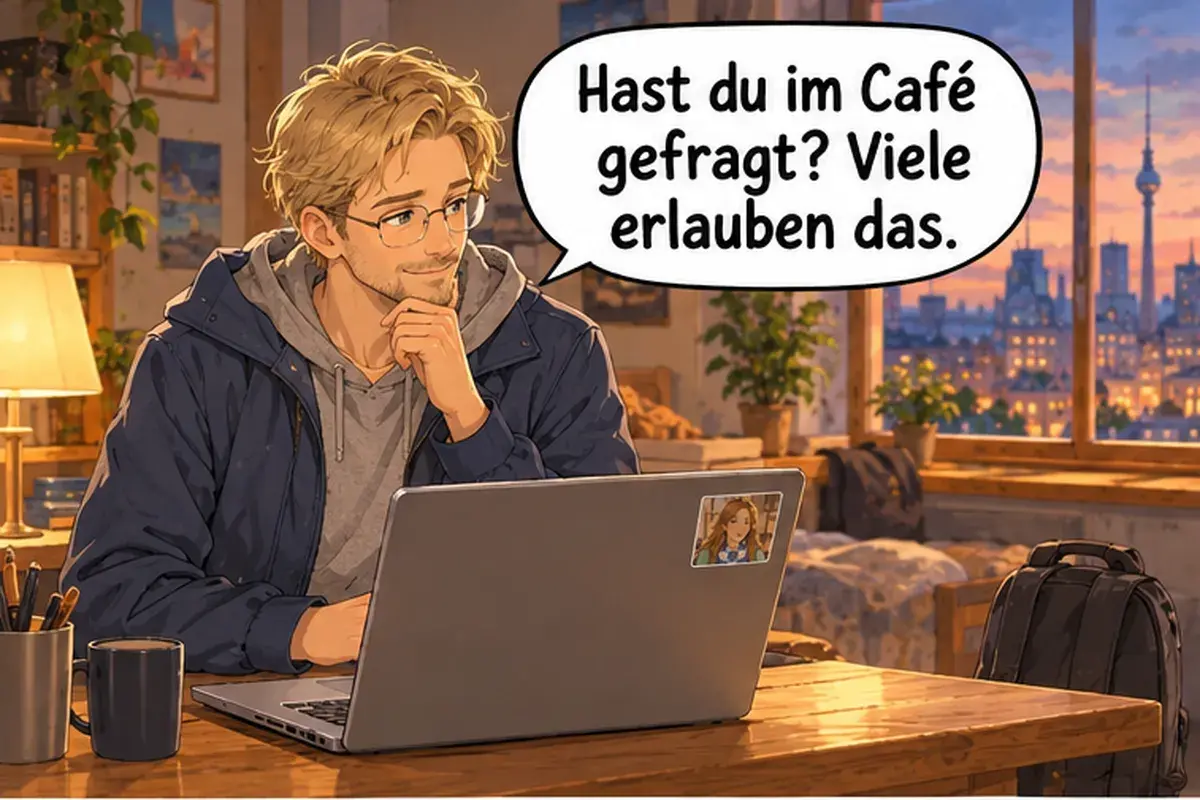
- Lukas
Hast du im Café gefragt? Viele erlauben das.
Did you ask at the café? A lot of them allow it.

- Katja
Habe ich! Stell dir vor, ich durfte mein Handy nicht aufladen!
I did! Guess what, I wasn't allowed to charge my phone!
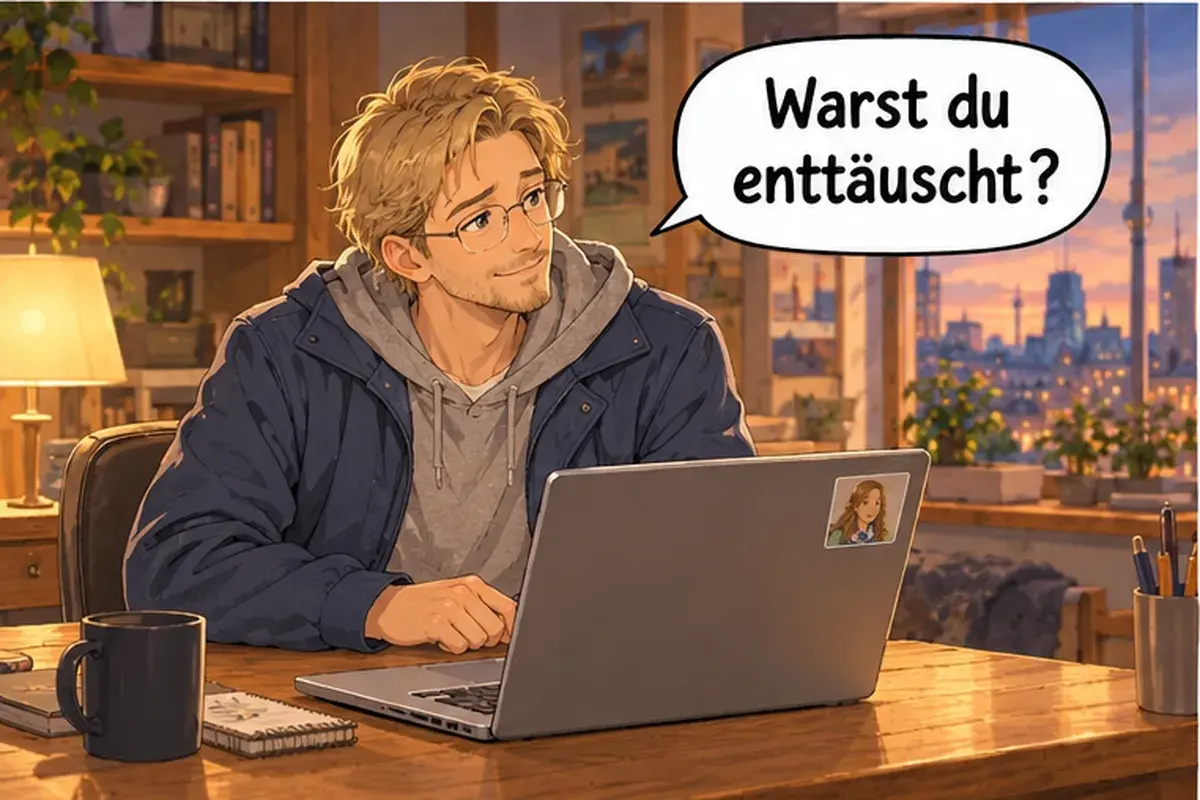
- Lukas
Warst du enttäuscht?
Were you disappointed?

- Katja
Ja, aber jetzt ist meine Laune gut: Ich habe ein Ladegerät gekauft.
Yes, but now I'm in a good mood: I bought a charger.

- Lukas
Super! Morgen fährst du auf die Mainau. Lade dein Handy vorher auf!
Great! Tomorrow you're going to Mainau. Charge your phone first!

- Katja
Mache ich! Morgen Abend erzähle ich dir meine Geschichte von der Mainau. Tschüss!
Will do! Tomorrow evening I'll tell you my story about Mainau. Bye!
Grammar for this text
- Du wolltest mich gestern zurückrufen —
wolltestis the Präteritum (narrative past) ofwollen, the du form: "you wanted". No umlaut,-te-is added, and the ending-stis the same as in the present tense. The main verbzurückrufen(to call back) goes to the end. All the forms are in the unit's grammar. - Ich wollte, aber ich konnte nicht —
wollteandkonnteare the same forms forich: "I wanted to", "I couldn't". When the main verb is clear (zurückrufen), you can leave it out, just like English "I wanted to, but I couldn't". This is how people answer when something didn't work out. - Mein Handy war leer and ich hatte kein Ladegerät —
waris the Präteritum ofsein,hatteofhaben: "was", "had". These are the short forms instead ofist gewesenandhabe gehabt. A phone with an empty battery isleer(empty): "dead". - Was ist schiefgegangen? — the Perfekt of
schiefgehen(to go wrong) withist:schief+gegangen. Word for word: "what went crooked?" - Wie gesagt — a set phrase: "like I said";
gesagtis the past participle ofsagen. Stell dir vor — "guess what" or "imagine": it's the du command ofsich vorstellen, andvorhas moved to the end. - Ich durfte mein Handy nicht aufladen —
durfteis the Präteritum ofdürfen: "I wasn't allowed to". The main verbaufladenstays whole at the end. In Lade dein Handy vorher auf it's a command:lade … auf, with the prefix at the end. - Morgen fährst du auf die Mainau — the island
Mainauis used with an article:die Mainau. Where to?auf die Mainau; where?auf der Mainau(unit 8). von der Mainau — "about Mainau":von+ dative (unit 3).
Words and grammar of the unit: Telling a story.
Learn the words from the texts with flashcards
In the app, you can tap any word in a text to see its translation, forms and examples, and new words stick with flashcards. 15 minutes a day.
Start for freeEverything is open for free. No card needed to sign up.