

German story with translation · A2 · 12 lines
Die Blumen waren schon verschwunden The flowers had already disappeared
Comic · 11 panels

Heute wollte ich auf der Mainau Rosen sehen.
Today I wanted to see roses on Mainau.
Aber die Blumen waren schon verschwunden, sie blühen nicht mehr.
But the flowers had already disappeared; they aren't blooming anymore.

Ich war enttäuscht, aber nach einer Weile war ich begeistert.
I was disappointed, but after a while I was thrilled.

Die Blätter waren bunt, und ich habe viele Kürbisse gesehen.
The leaves were colorful, and I saw lots of pumpkins.
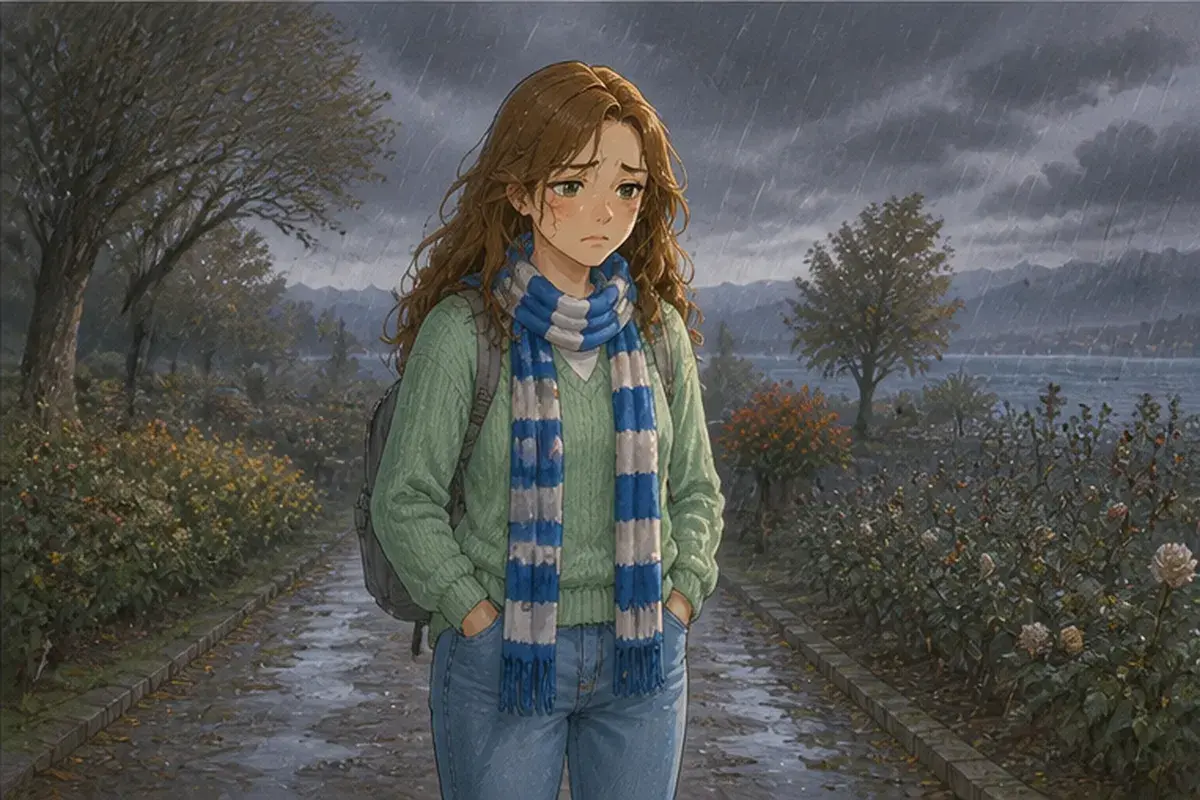
Irgendwann ist ein Sturm gekommen, und der Weg war schmutzig.
At some point a storm came, and the path was dirty.
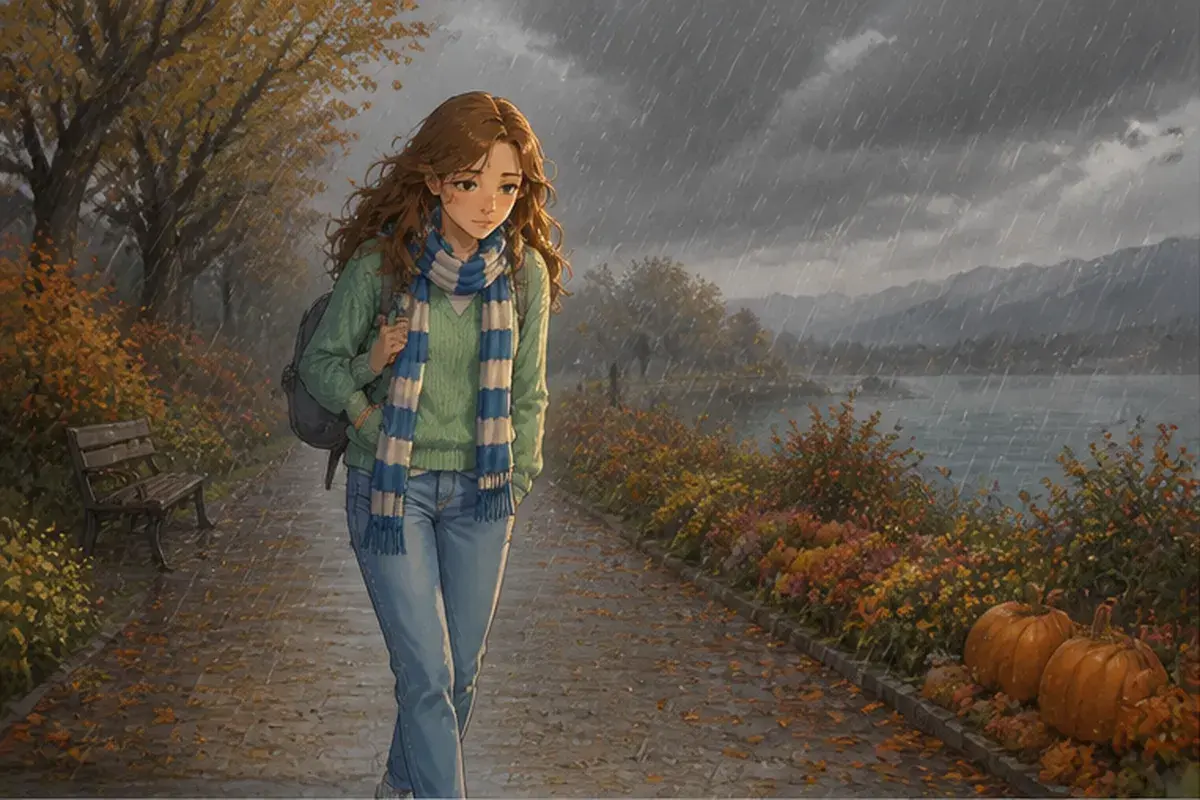
Ich konnte nur die Hälfte sehen, denn ich musste umkehren.
I could only see half of it, because I had to turn back.
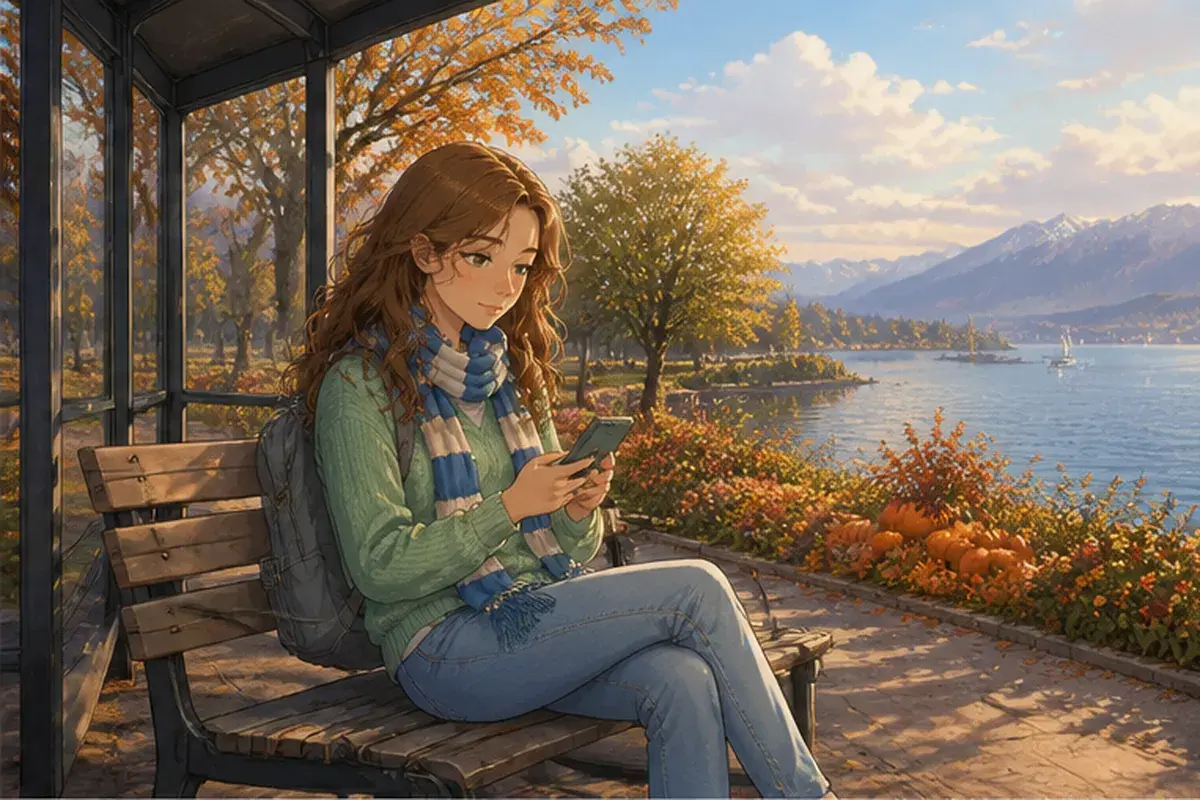
Auf dem Rückweg ist die Zeit schnell vergangen.
On the way back, time passed quickly.

Am See war der Sonnenuntergang schön.
By the lake, the sunset was beautiful.
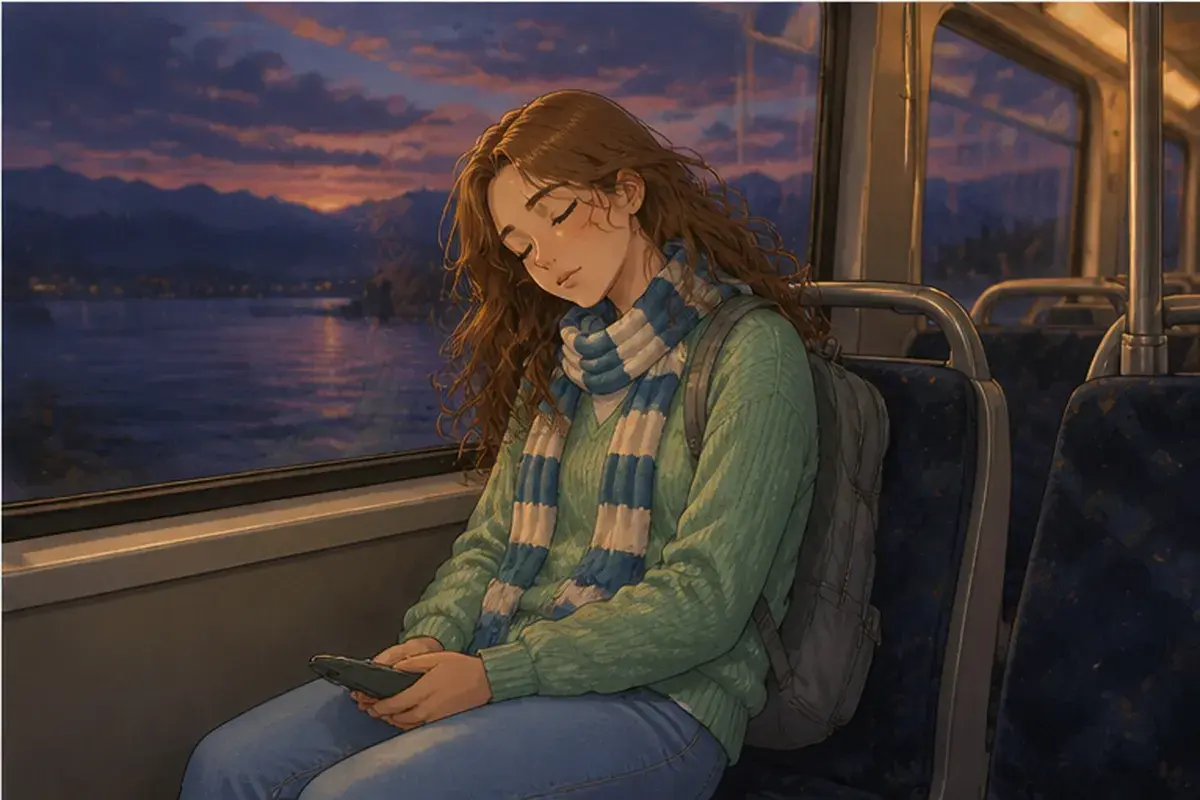
Im Bus wollte ich Hanna schreiben. Stattdessen bin ich sofort eingeschlafen.
On the bus I wanted to write to Hanna. Instead I fell asleep right away.

Dann war der Tag zu Ende. Jedenfalls war das ein Abenteuer!
Then the day was over. Anyway, that was an adventure!

Ich werde mich gern an den Tag erinnern.
I'll remember the day fondly.

Irgendwann komme ich im Sommer wieder.
Someday I'll come back in the summer.
Grammar for this text
- Die Blumen waren schon verschwunden —
warenis the Präteritum (narrative past) ofseinfor "they": "were".verschwundenis the past participle ofverschwinden(to disappear); it's irregular. Together: "had already disappeared", "were already gone". - Ich war enttäuscht, aber nach einer Weile war ich begeistert —
Weilemeans "a while";nach einer Weile— "after a while". Afteraberthe word order is normal:waris in second place. - Irgendwann ist ein Sturm gekommen — the Perfekt with
ist:gekommenis the past participle ofkommen.Irgendwanncomes first, so the verb comes right after it, and the subjectein Sturmcomes after the verb. - Ich konnte nur die Hälfte sehen, denn ich musste umkehren —
mussteis the Präteritum ofmüssen, the ich form: "I had to". The umlaut is gone and-teis added. With a modal verb,umkehren(to turn back) doesn't split: it stands whole at the end. - Auf dem Rückweg ist die Zeit schnell vergangen —
vergehen(to pass, of time) takesseinin the Perfekt:vergangen.auf dem Rückweg— "on the way back". - Im Bus wollte ich Hanna schreiben. Stattdessen bin ich sofort eingeschlafen. —
wollteis the Präteritum ofwollen, andschreibenstands whole at the end. Afterstattdessen(instead) the verb comes right away and the subject after it.eingeschlafencomes fromeinschlafen:ein+ge+schlafen, withsein. - Ich werde mich gern an den Tag erinnern — the future with
werden(unit 7):werdeis second,erinnernis at the end.sich erinnern analways takes the accusative:an den Tag. English just says "remember the day".
Words and grammar of the unit: Telling a story.
Learn the words from the texts with flashcards
In the app, you can tap any word in a text to see its translation, forms and examples, and new words stick with flashcards. 15 minutes a day.
Start for freeEverything is open for free. No card needed to sign up.