

German dialogue with translation · A1 · 14 lines
Was machst du in deiner Freizeit? What do you do in your free time?
Comic · 14 panels
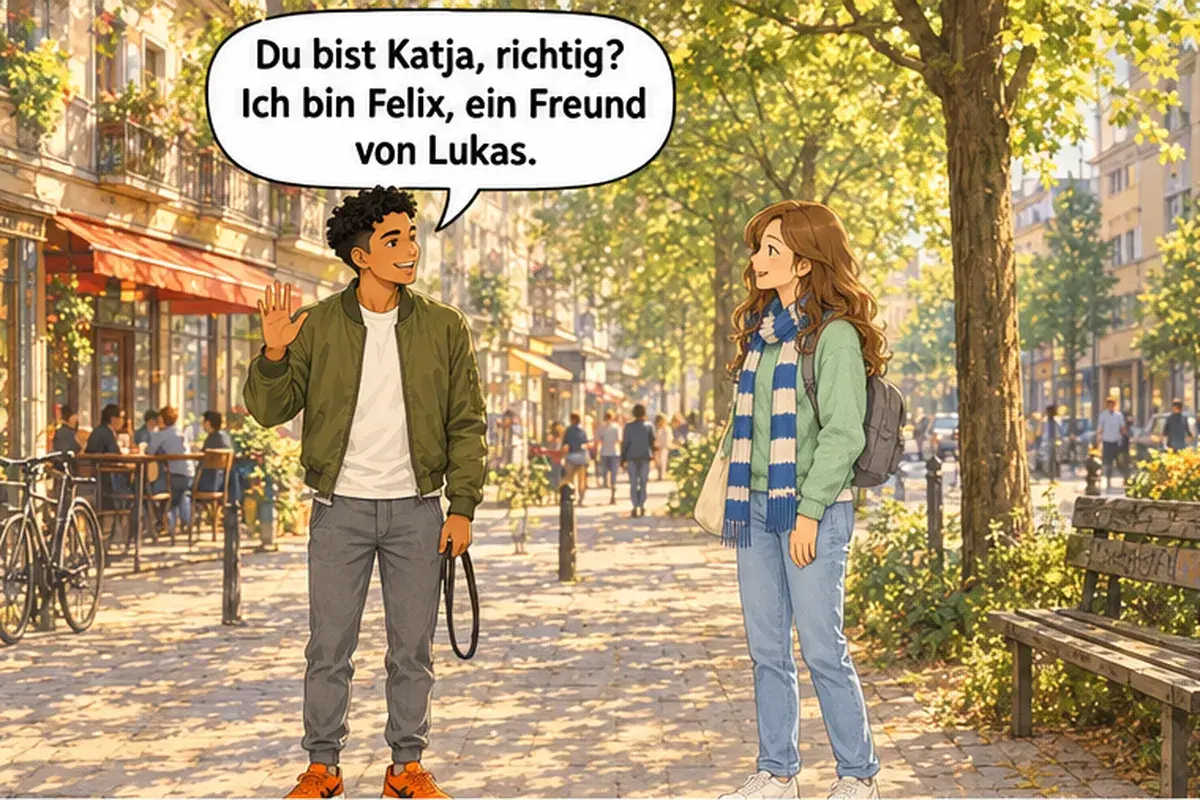
- Felix
Du bist Katja, richtig? Ich bin Felix, ein Freund von Lukas.
You're Katja, right? I'm Felix, a friend of Lukas's.
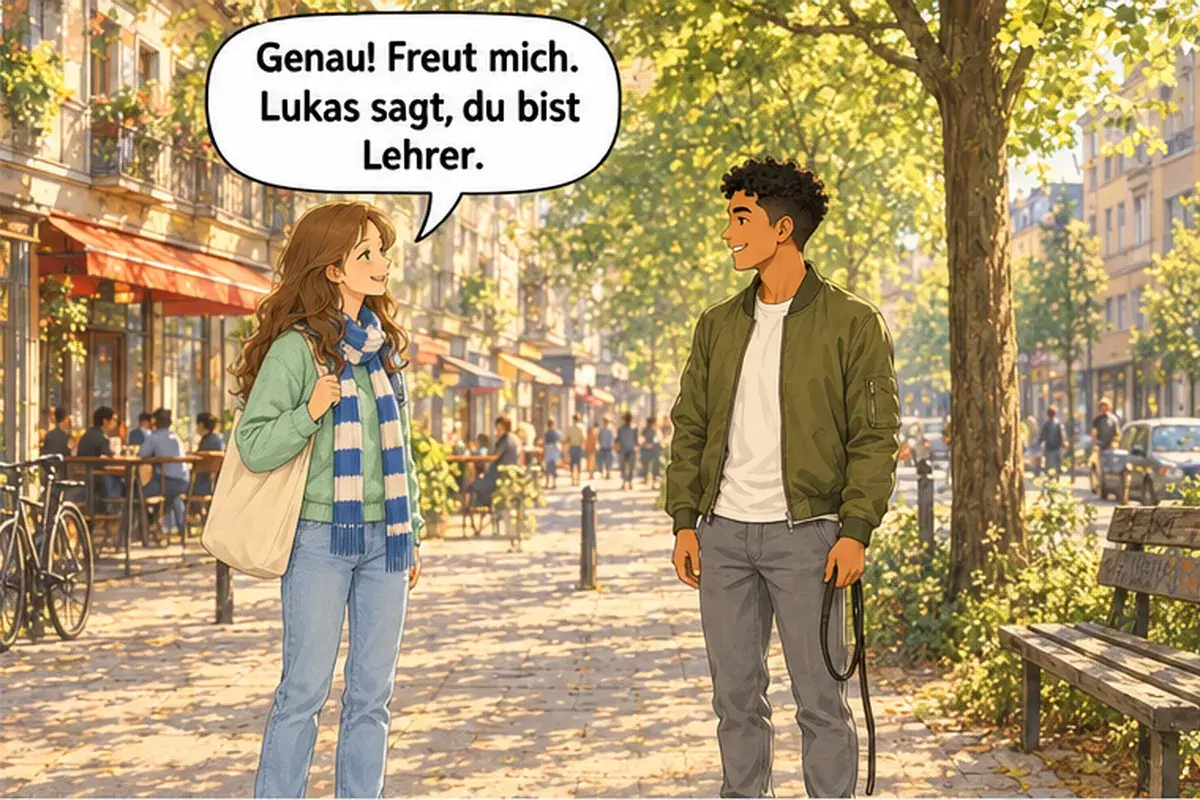
- Katja
Genau! Freut mich. Lukas sagt, du bist Lehrer.
That's right! Nice to meet you. Lukas says you're a teacher.
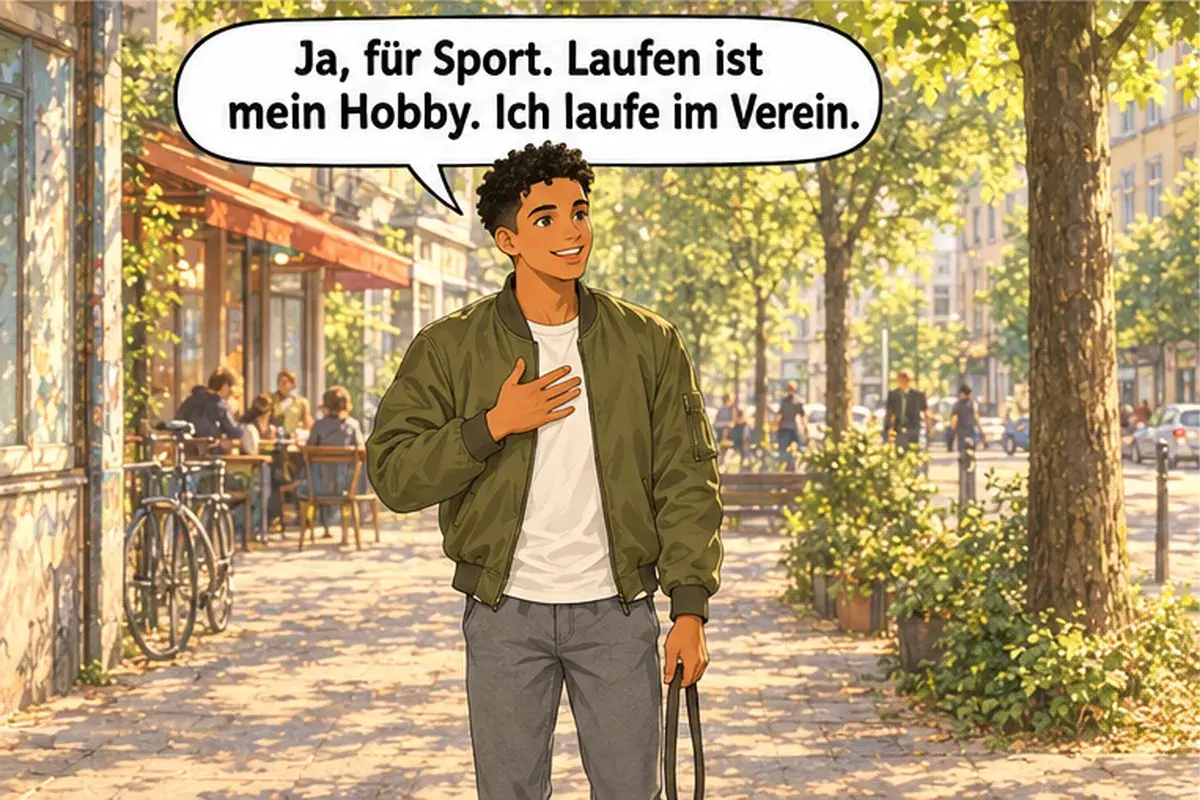
- Felix
Ja, für Sport. Laufen ist mein Hobby. Ich laufe im Verein.
Yes, for sports. Running is my hobby. I run with a club.
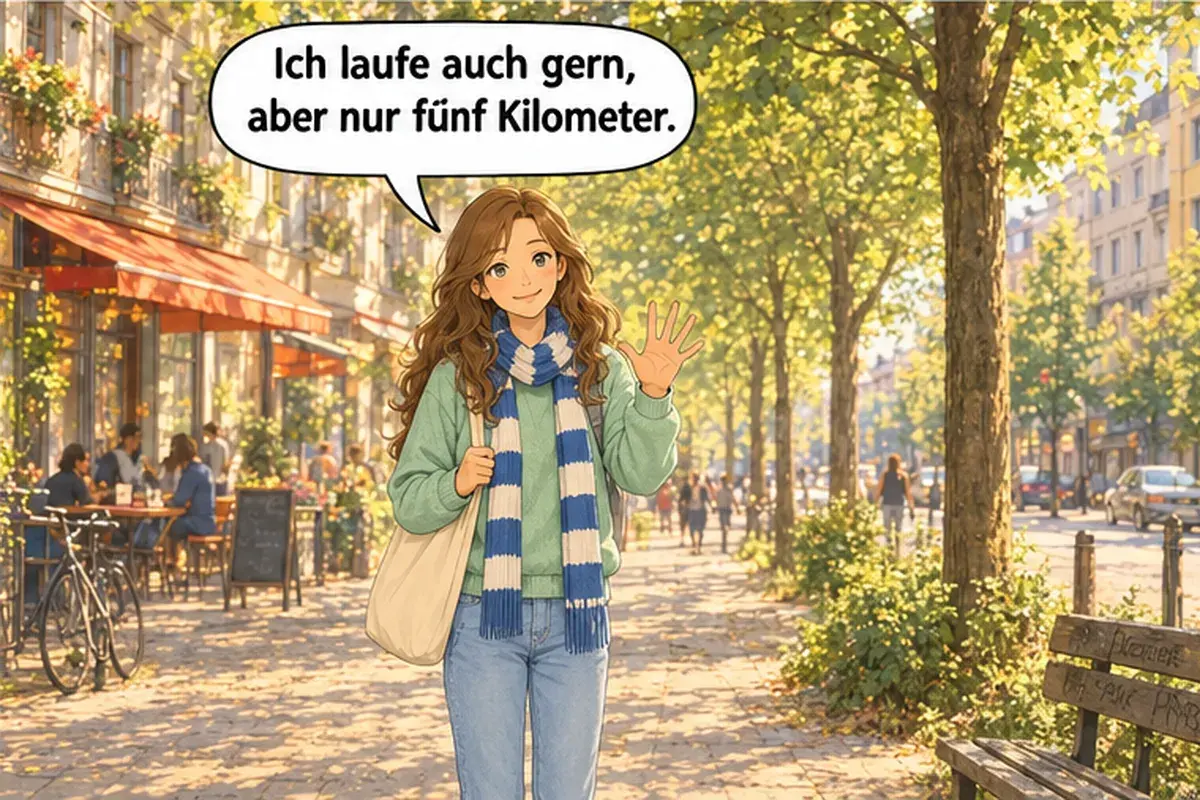
- Katja
Ich laufe auch gern, aber nur fünf Kilometer.
I like running too, but only five kilometers.
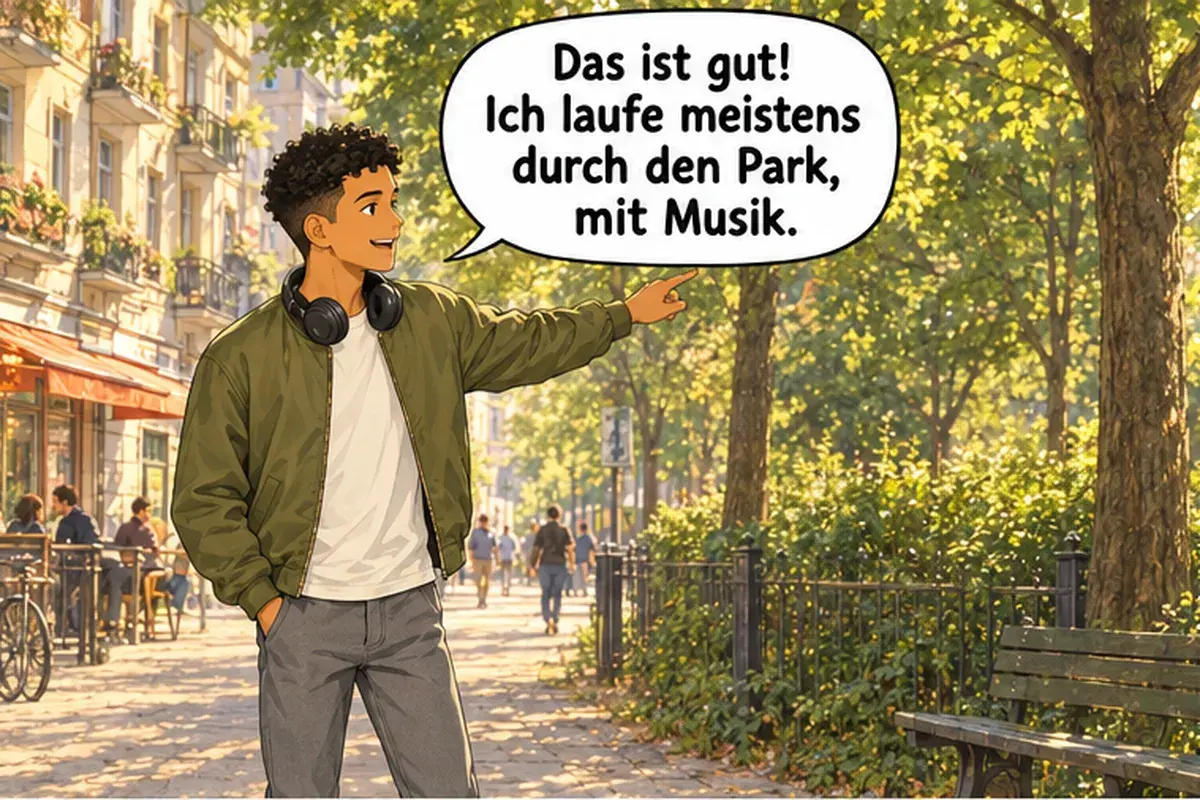
- Felix
Das ist gut! Ich laufe meistens durch den Park, mit Musik.
That's good! I usually run through the park, with music.
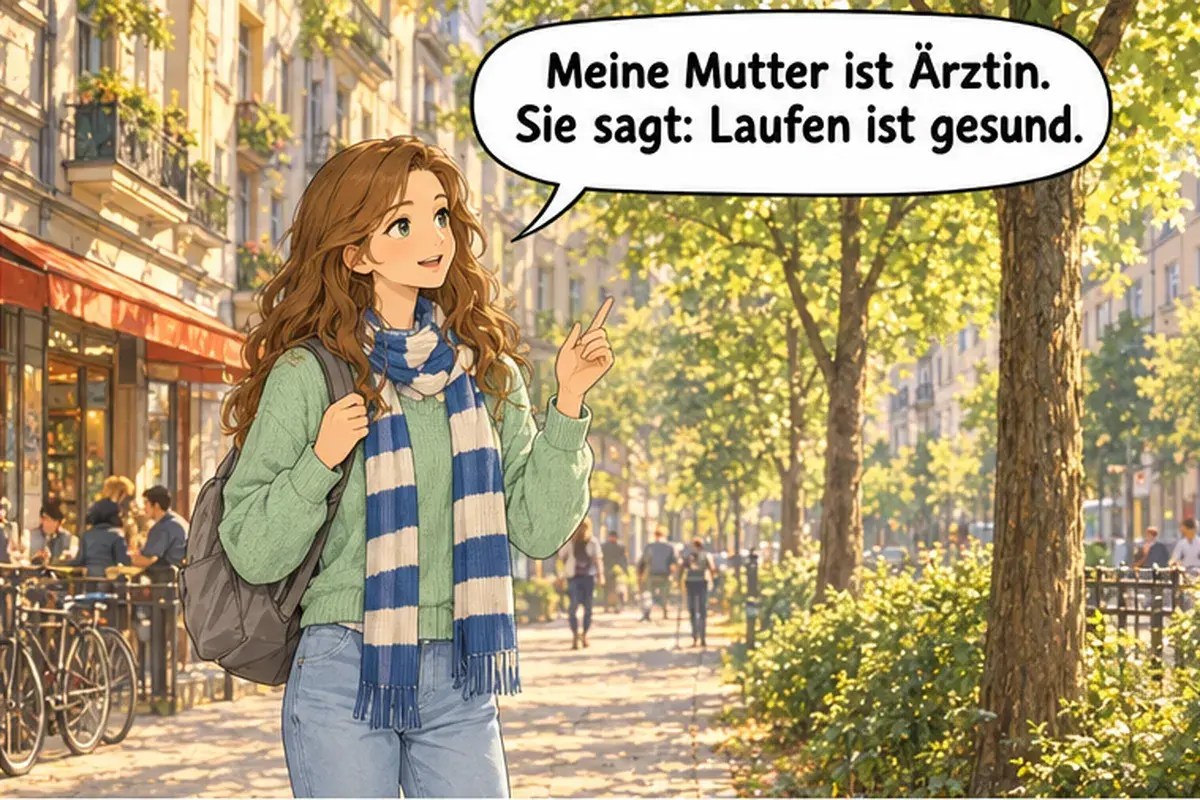
- Katja
Meine Mutter ist Ärztin. Sie sagt: Laufen ist gesund.
My mom is a doctor. She says running is good for you.
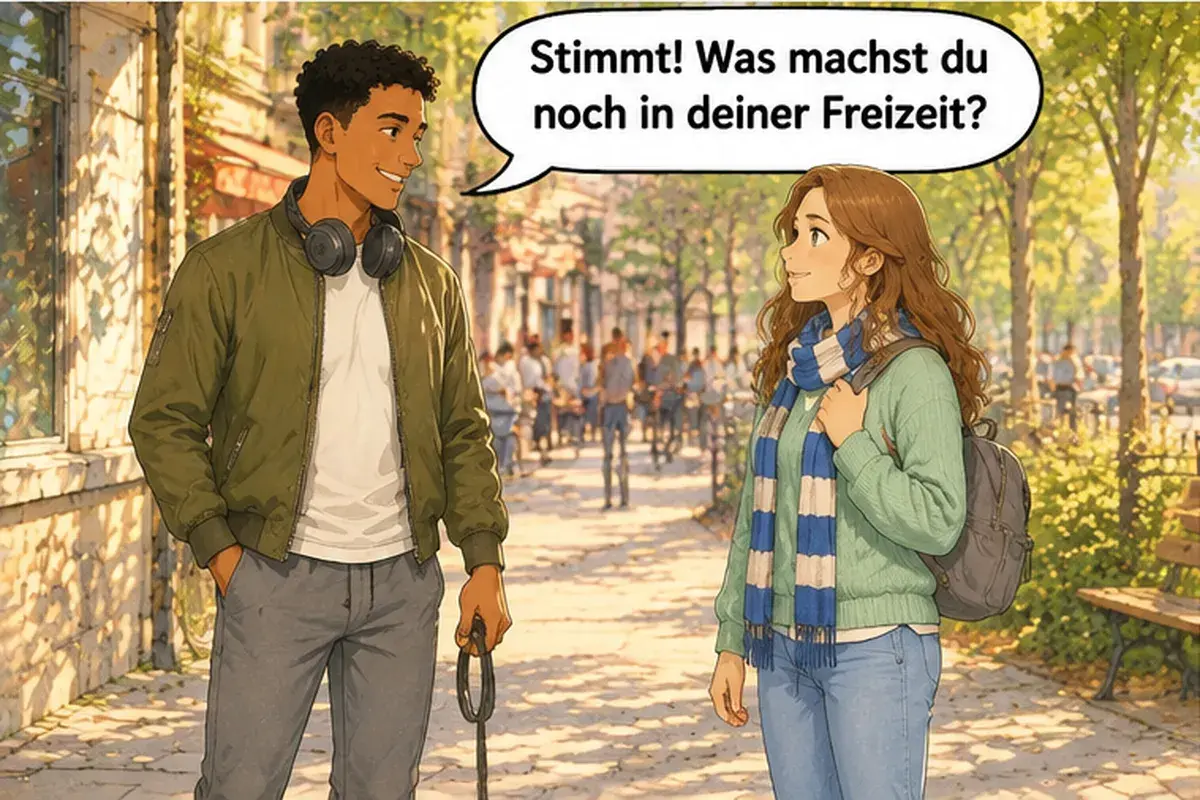
- Felix
Stimmt! Was machst du noch in deiner Freizeit?
That's true! What else do you do in your free time?
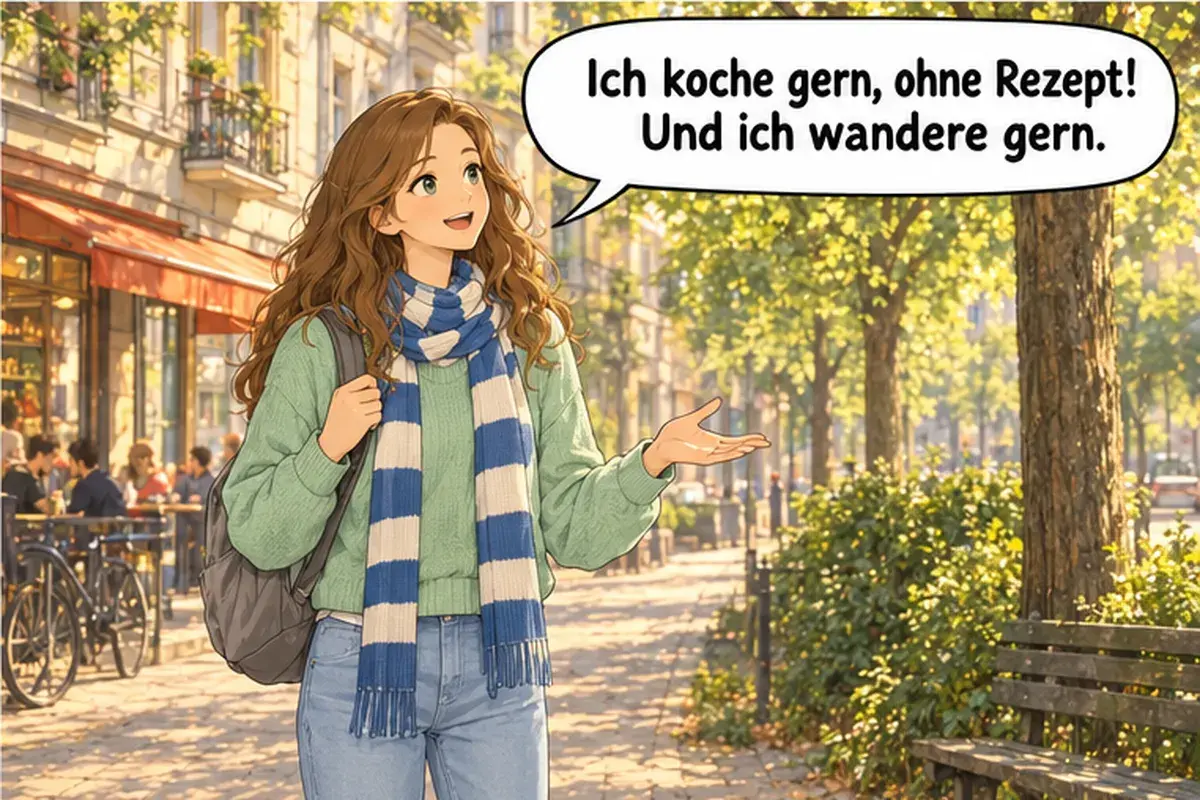
- Katja
Ich koche gern, ohne Rezept! Und ich wandere gern.
I like cooking, without a recipe! And I like hiking.
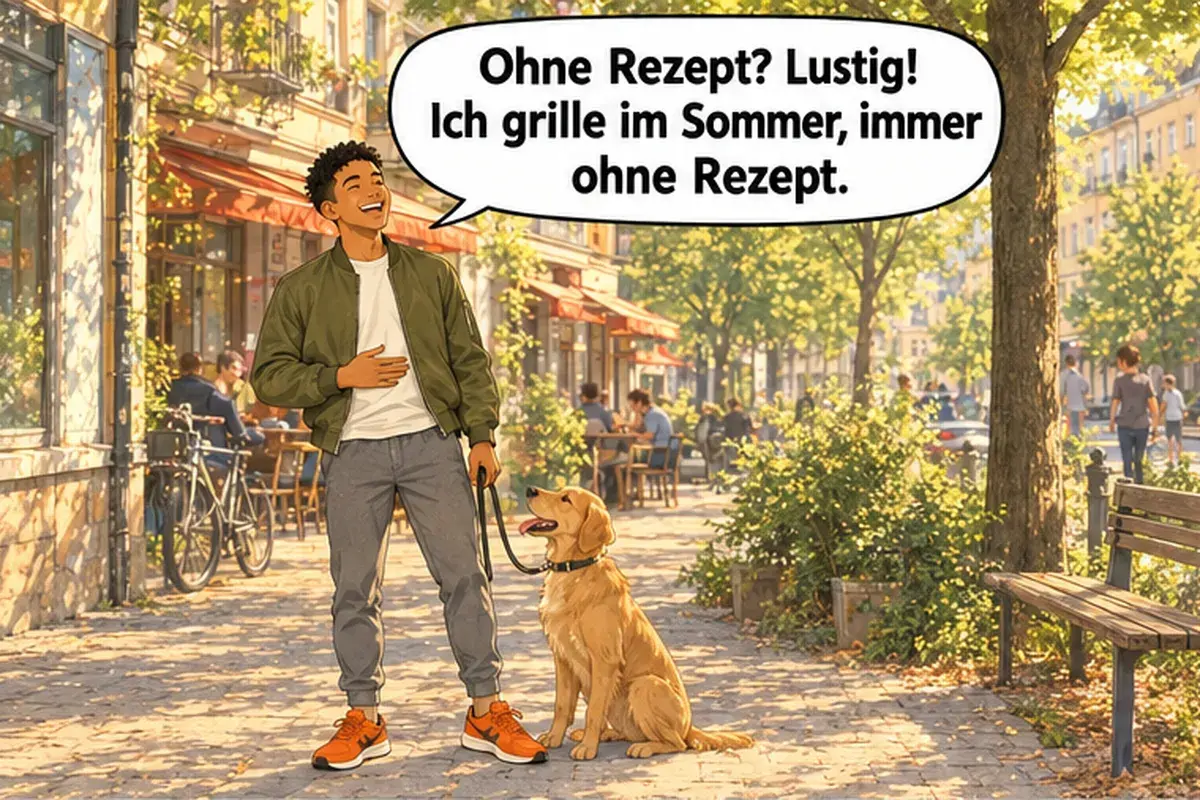
- Felix
Ohne Rezept? Lustig! Ich grille im Sommer, immer ohne Rezept.
Without a recipe? Funny! I grill in the summer, always without a recipe.
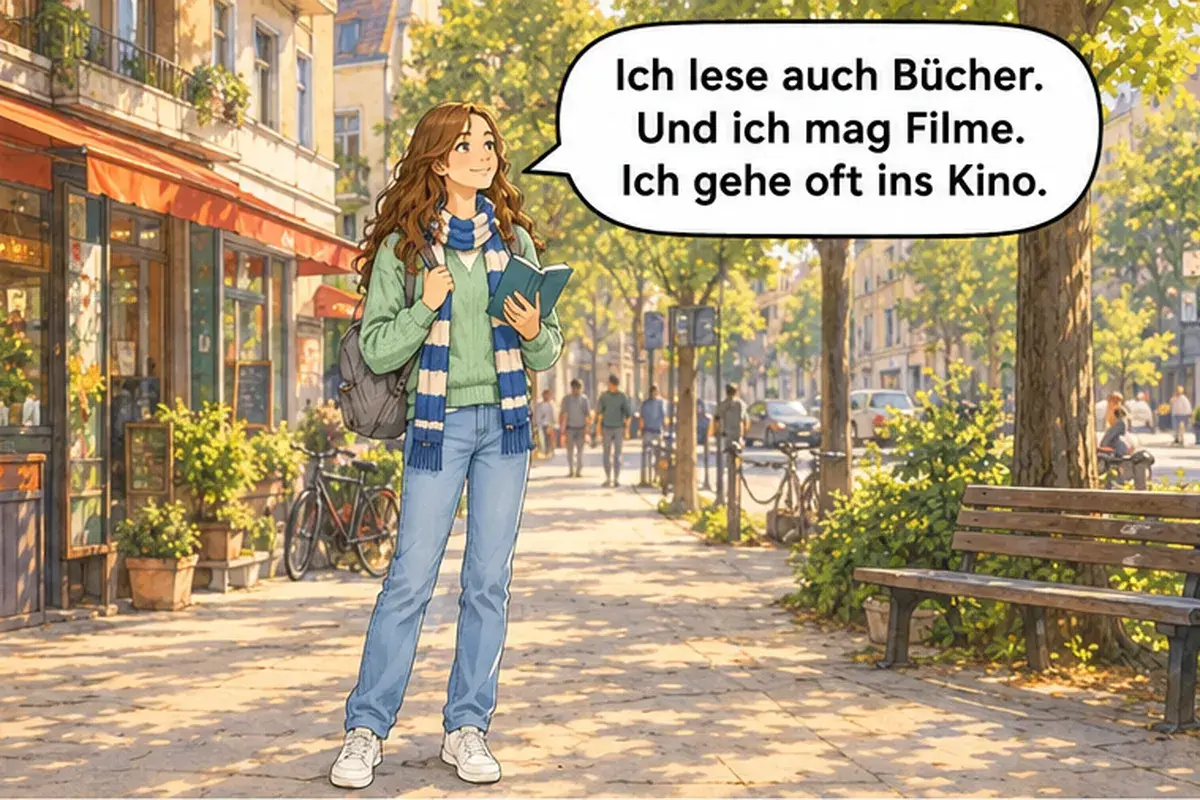
- Katja
Ich lese auch Bücher. Und ich mag Filme. Ich gehe oft ins Kino.
I also read books. And I like movies. I often go to the movies.
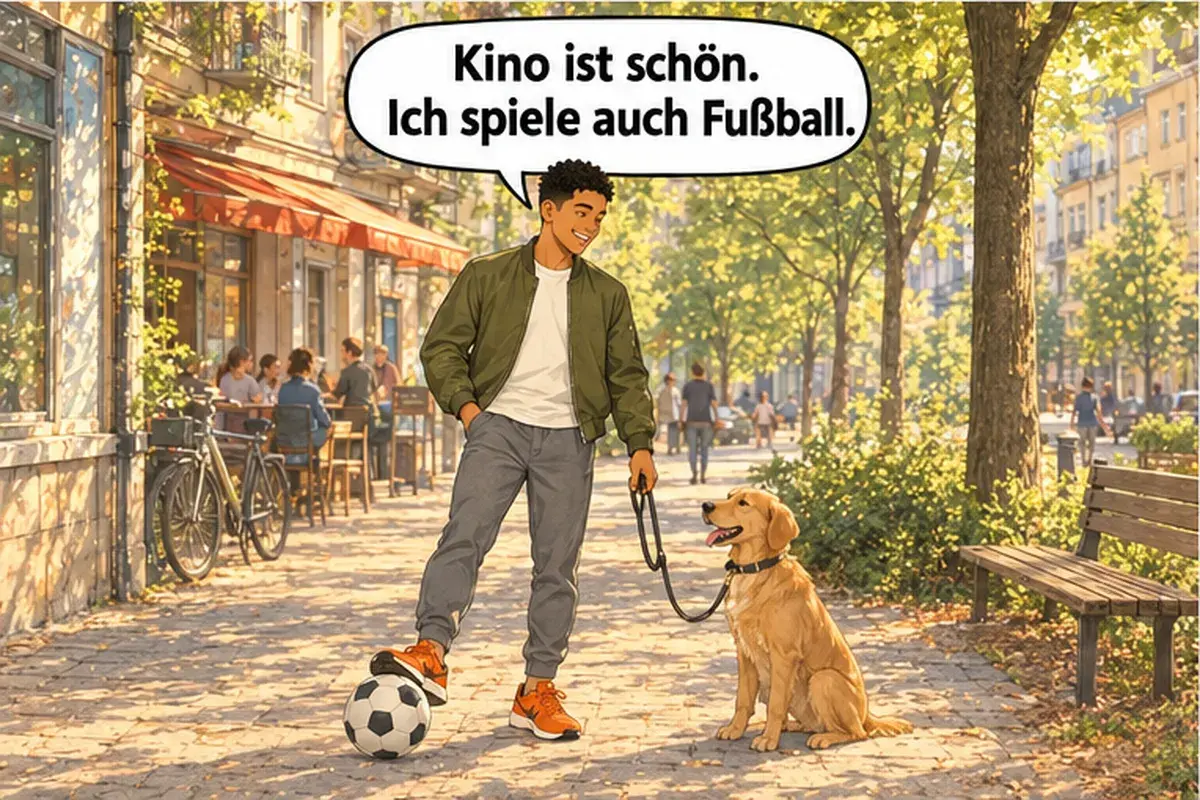
- Felix
Kino ist schön. Ich spiele auch Fußball.
Going to the movies is nice. I play soccer too.
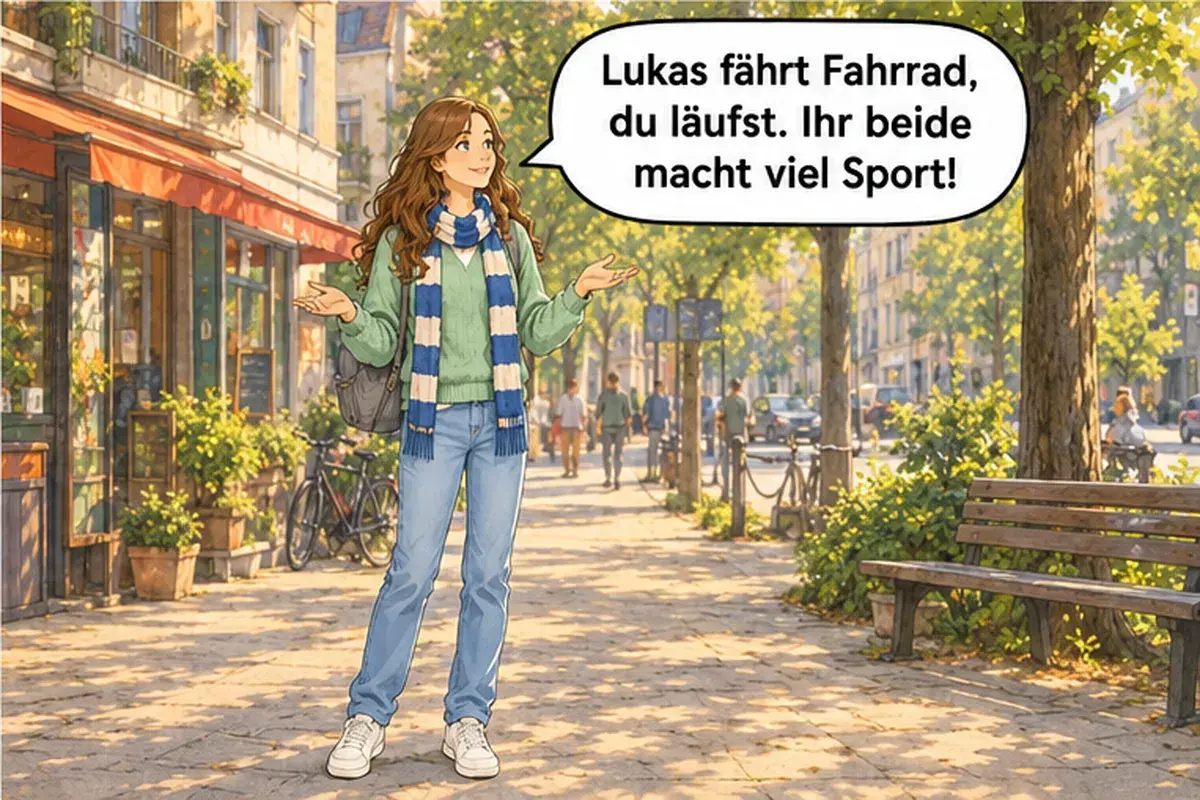
- Katja
Lukas fährt Fahrrad, du läufst. Ihr beide macht viel Sport!
Lukas bikes, you run. The two of you do a lot of sports!
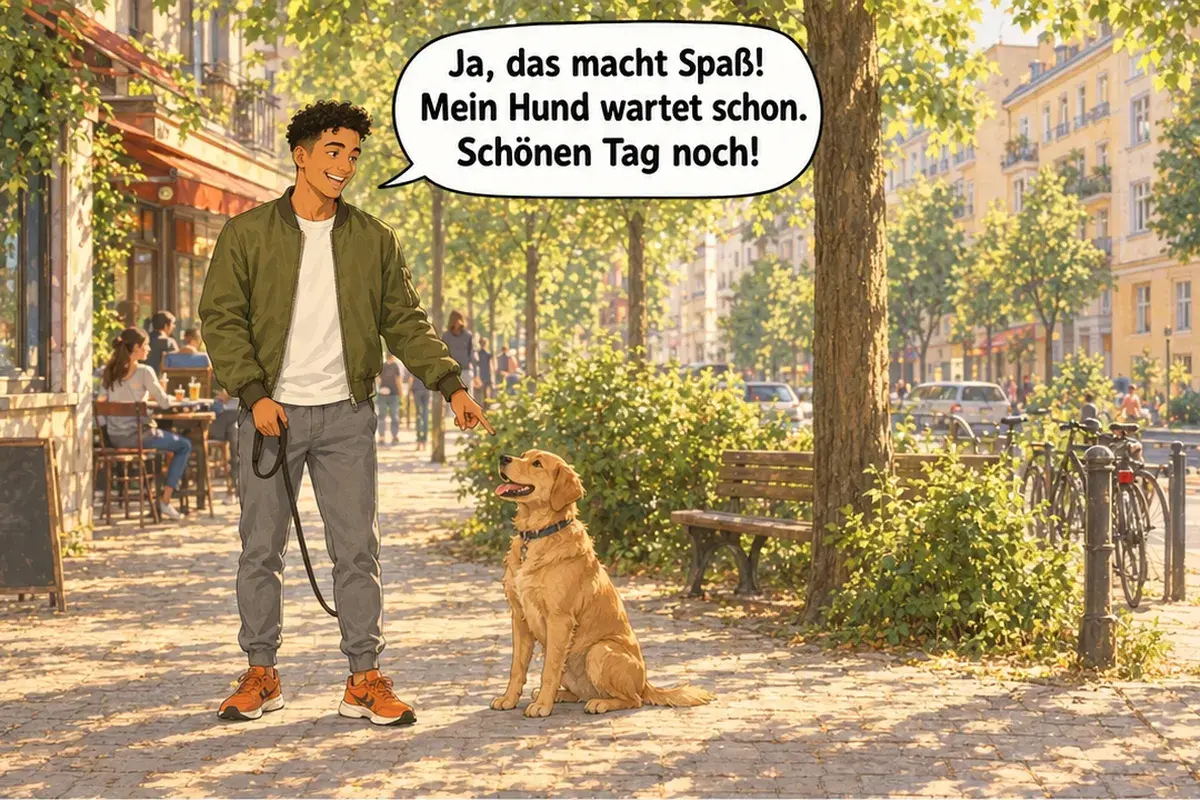
- Felix
Ja, das macht Spaß! Mein Hund wartet schon. Schönen Tag noch!
Yes, it's fun! My dog is already waiting. Have a nice day!
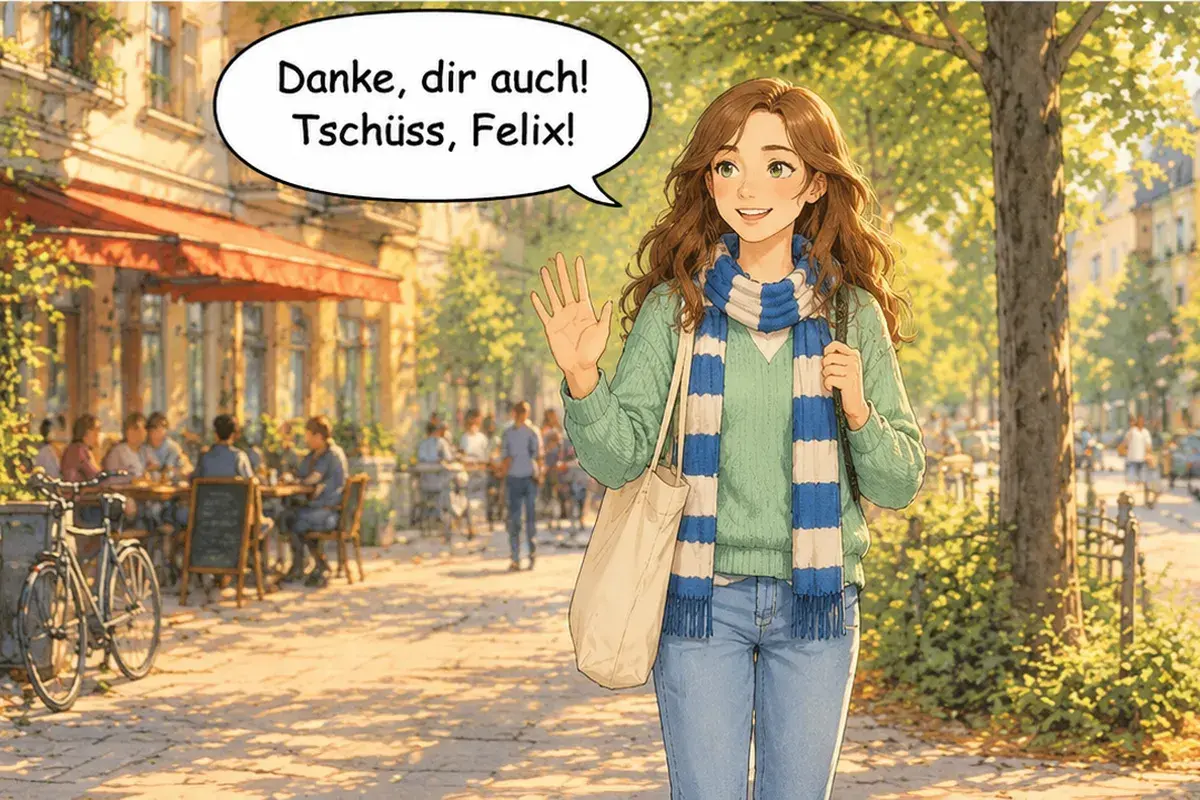
- Katja
Danke, dir auch! Tschüss, Felix!
Thanks, you too! Bye, Felix!
Grammar for this text
- Laufen ist mein Hobby —
Laufenhas a capital letter: it's a verb used as a noun, "running" as an activity. English does the same with -ing: running, cooking. The verb itself is lowercase:ich laufe. - Ich laufe meistens durch den Park —
durch(through) always takes the accusative (unit 5), soder Parkbecomesden Park.meistens— usually; it comes after the verb. - Ich koche gern, ohne Rezept — after
ohne(without) there's no article here:ohne Rezept— without a recipe.gernafter the verb: I like cooking. - ich mag Filme —
magis the ich form ofmögen(to like). The stemmög-changes tomag-, and the er / sie / es form has no ending:ich mag,er mag(likeich kann,er kann, unit 8). The rule is in the mögen block of this unit. - Lukas fährt Fahrrad, du läufst —
fährtis fromfahrenandläufstis fromlaufen: in the du and er forms the vowel changes,abecomesäandaubecomesäu(likefahren → fährt, unit 4). The ich and wir forms keep the old vowel:ich laufe,wir laufen. - Ihr beide macht viel Sport —
Ihrhas a capital letter only because it starts the sentence. This isihr, "you" for several people you say du to (Lukas and Felix).machtis the ihr form (unit 2):du machst,ihr macht.beide— both. - Danke, dir auch — a set phrase to answer a wish: you too.
dir— (to) you (dative, A2).
Words and grammar of the unit: Talk about your hobbies.
Learn the words from the texts with flashcards
In the app, you can tap any word in a text to see its translation, forms and examples, and new words stick with flashcards. 15 minutes a day.
Start for freeEverything is open for free. No card needed to sign up.