
German dialogue with translation · A1 · 14 lines
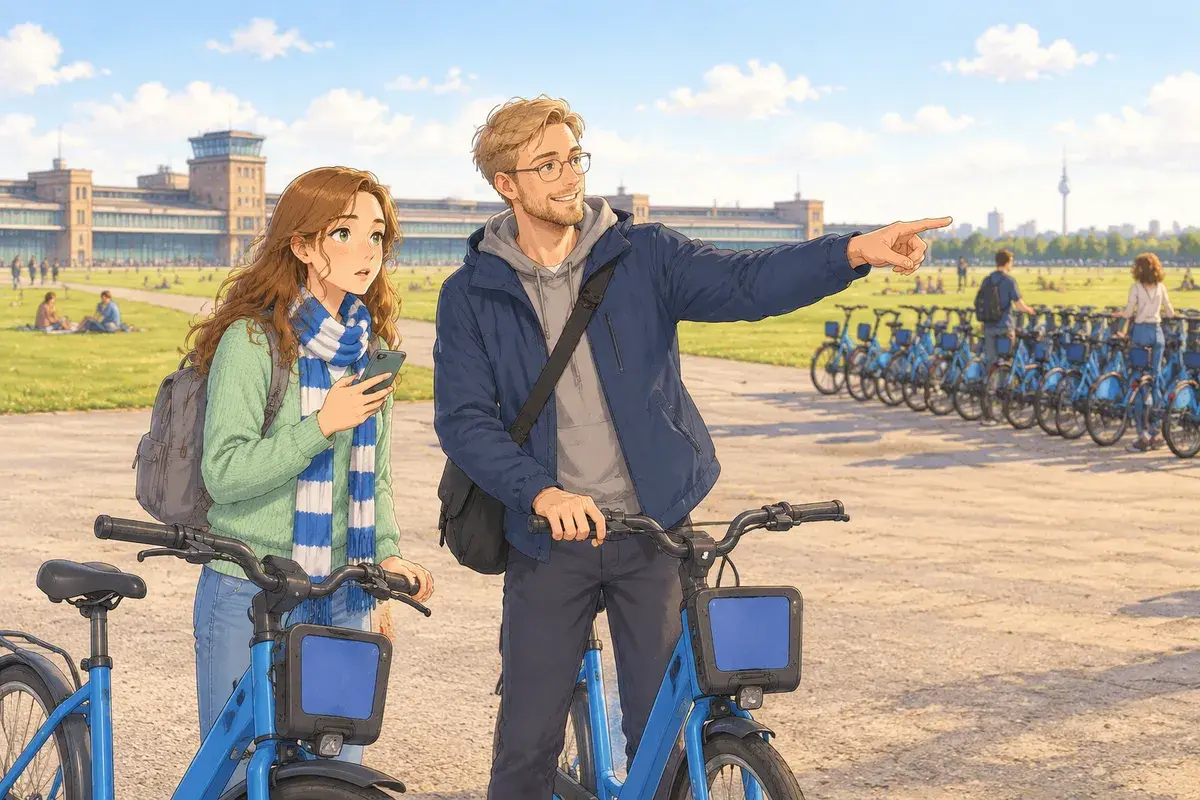
Möchtest du ein Fahrrad mieten? Would you like to rent a bike?
Comic · 14 panels
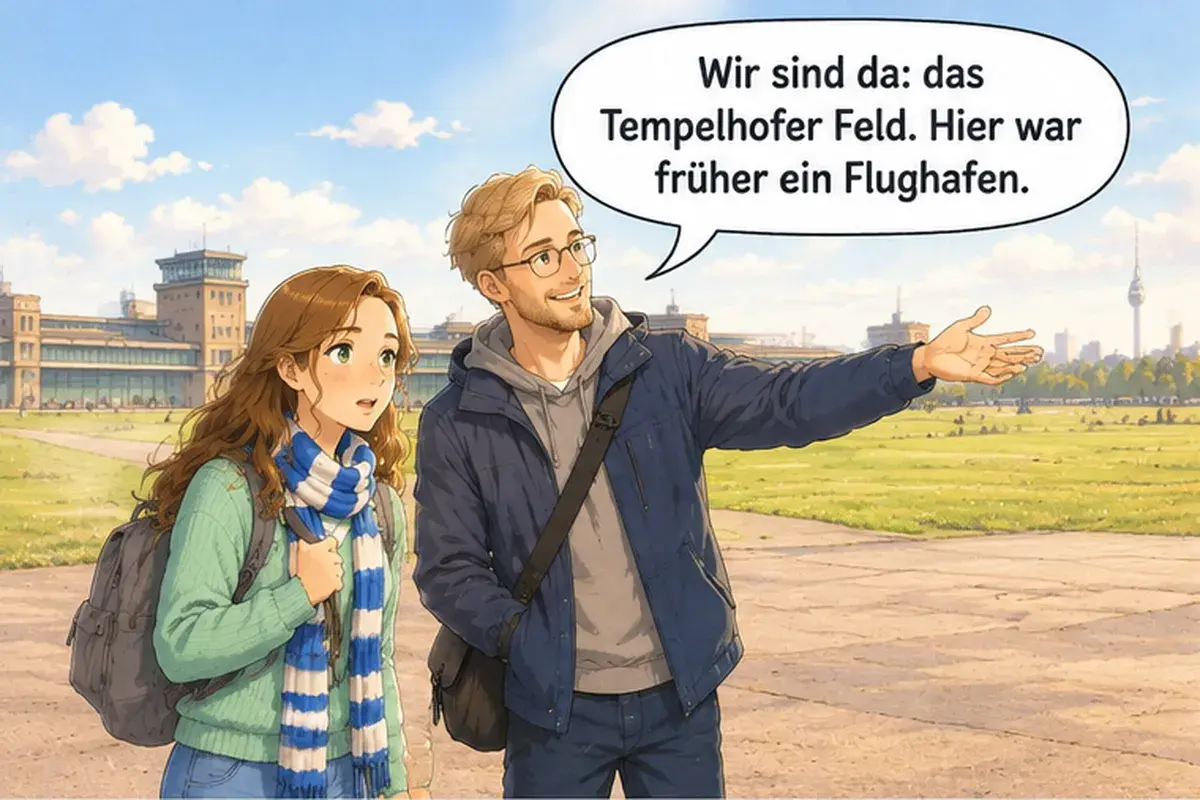
- Lukas
Wir sind da: das Tempelhofer Feld. Hier war früher ein Flughafen.
We're here: Tempelhofer Feld. There used to be an airport here.
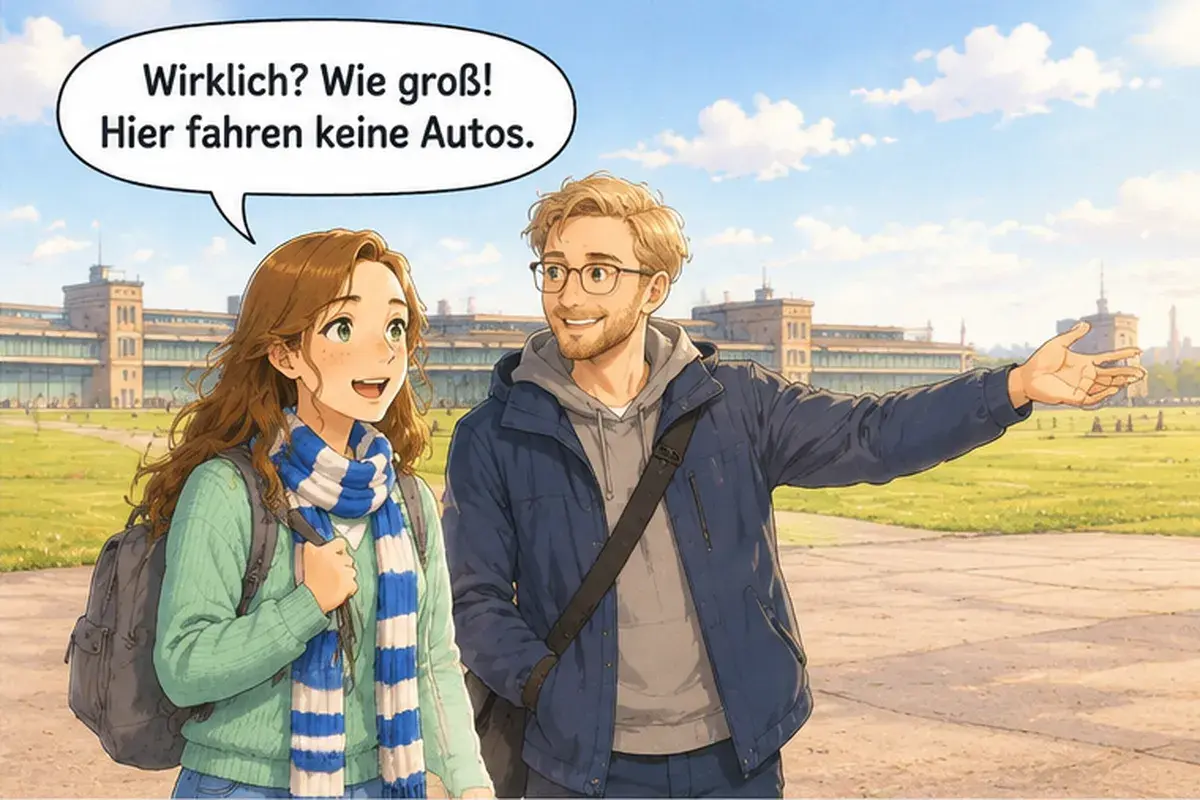
- Katja
Wirklich? Wie groß! Hier fahren keine Autos.
Really? It's so big! No cars drive here.
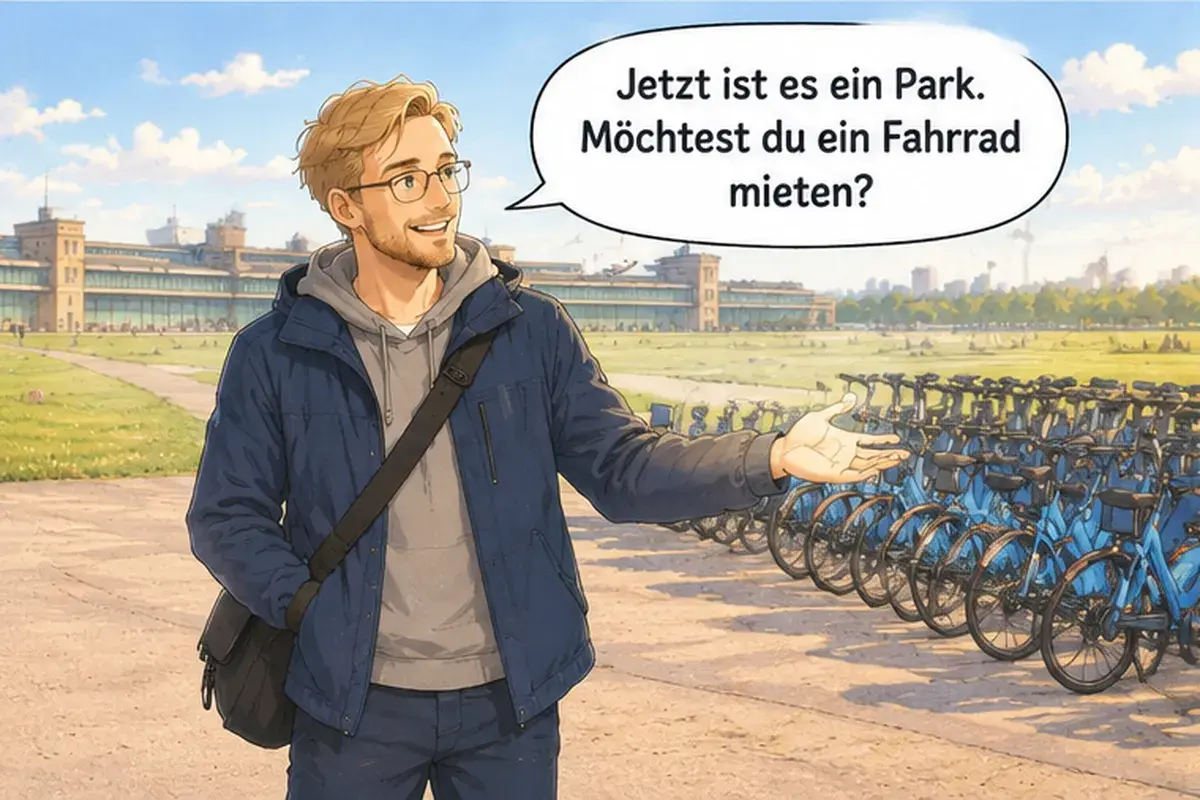
- Lukas
Jetzt ist es ein Park. Möchtest du ein Fahrrad mieten?
Now it's a park. Would you like to rent a bike?
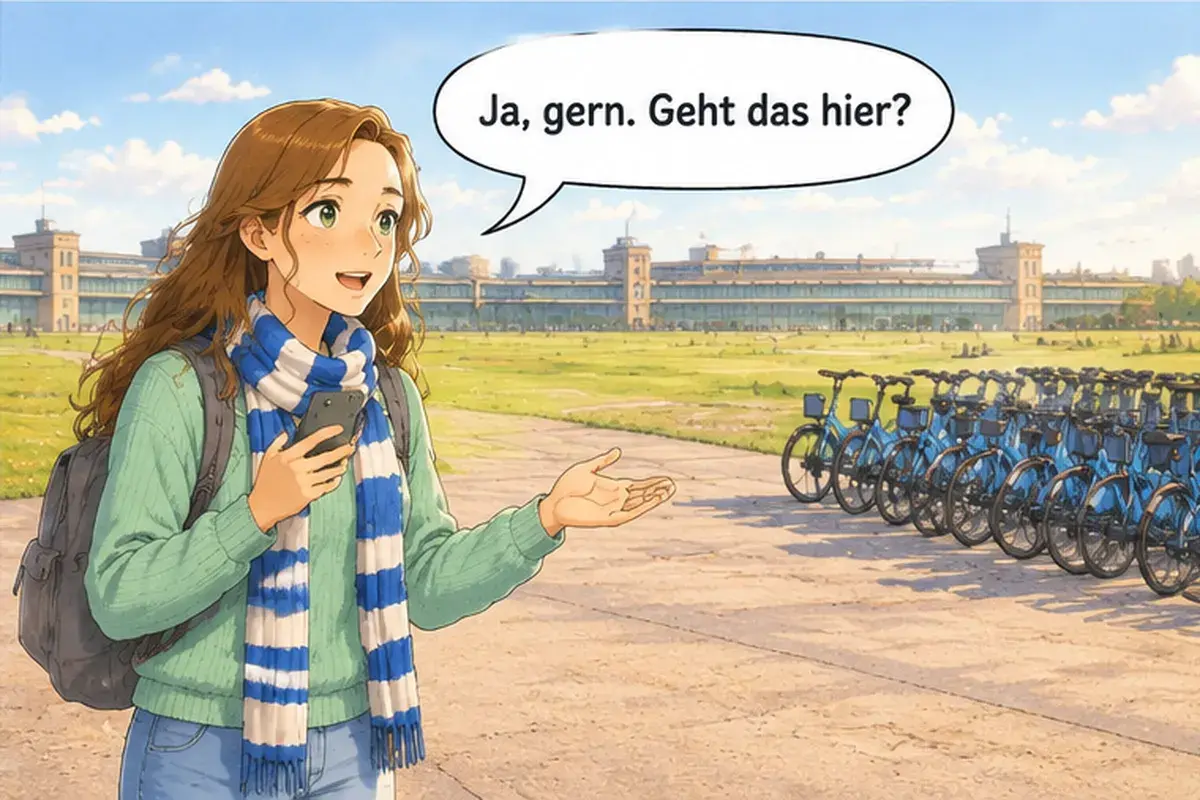
- Katja
Ja, gern. Geht das hier?
Yes, I'd love to. Is that possible here?
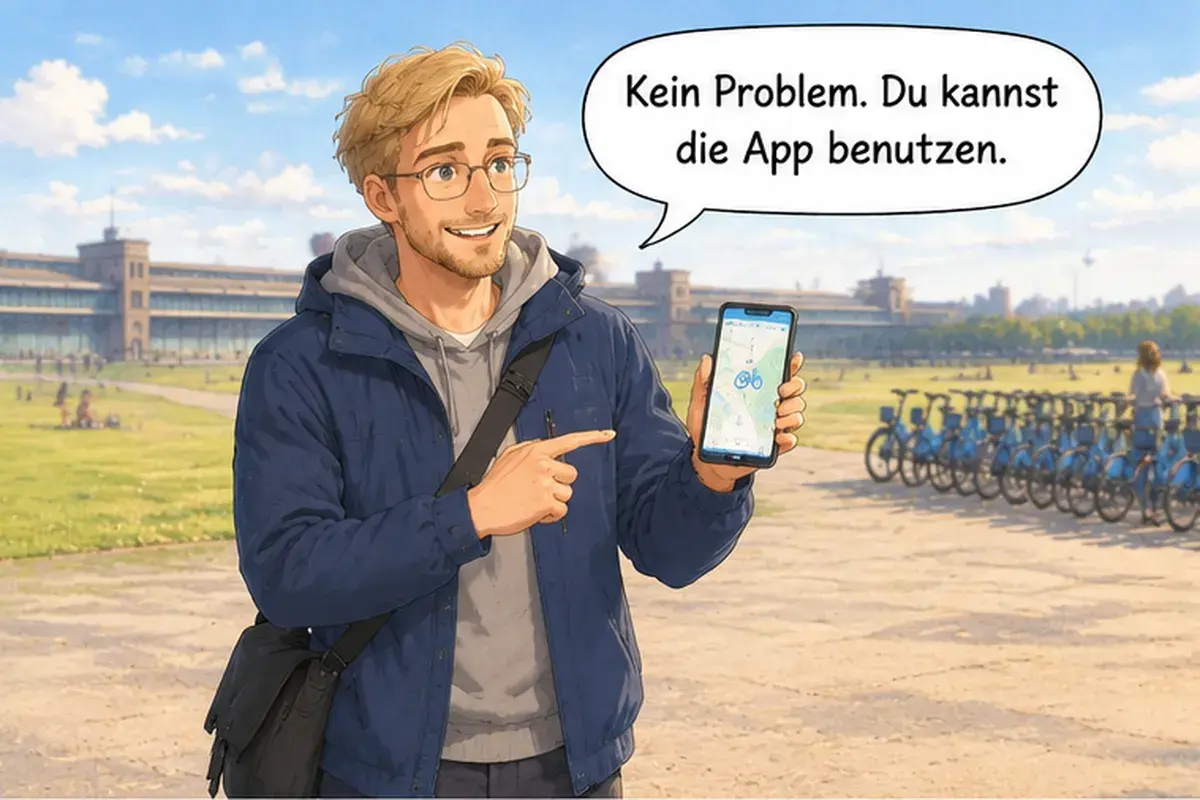
- Lukas
Kein Problem. Du kannst die App benutzen.
No problem. You can use the app.
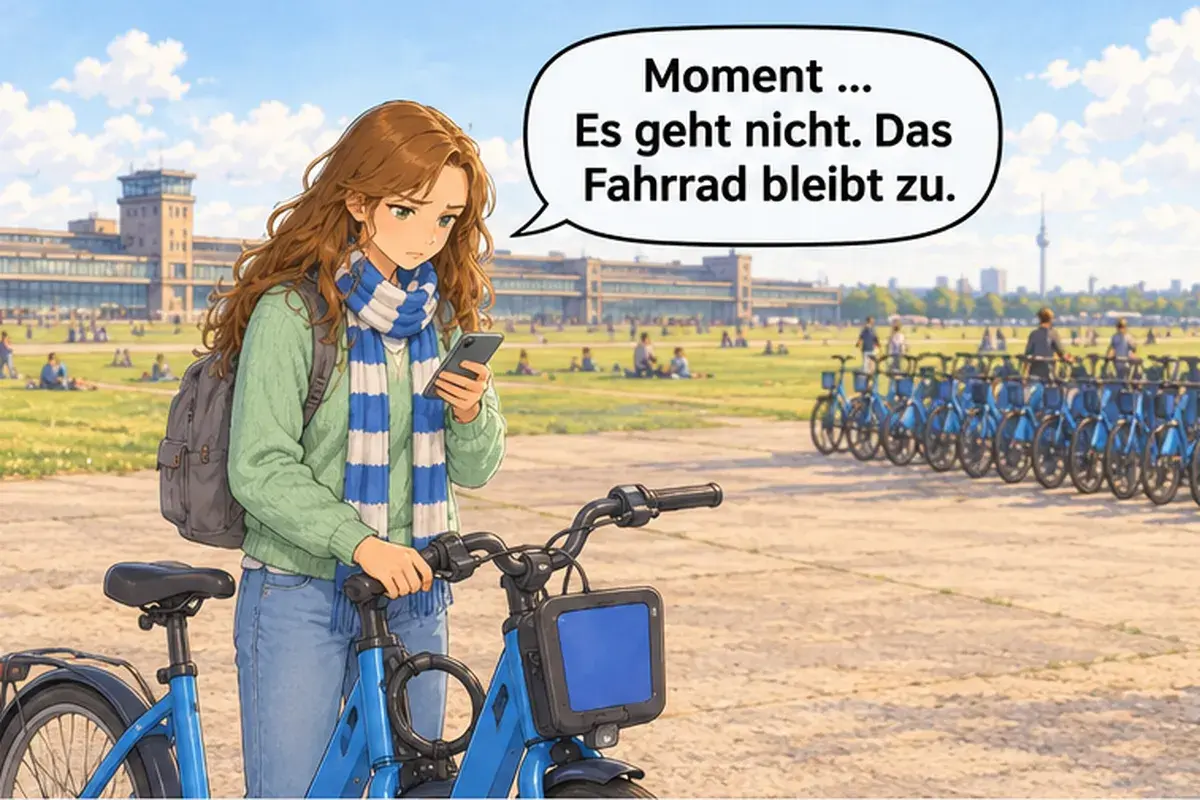
- Katja
Moment ... Es geht nicht. Das Fahrrad bleibt zu.
Just a moment ... It's not working. The bike stays locked.
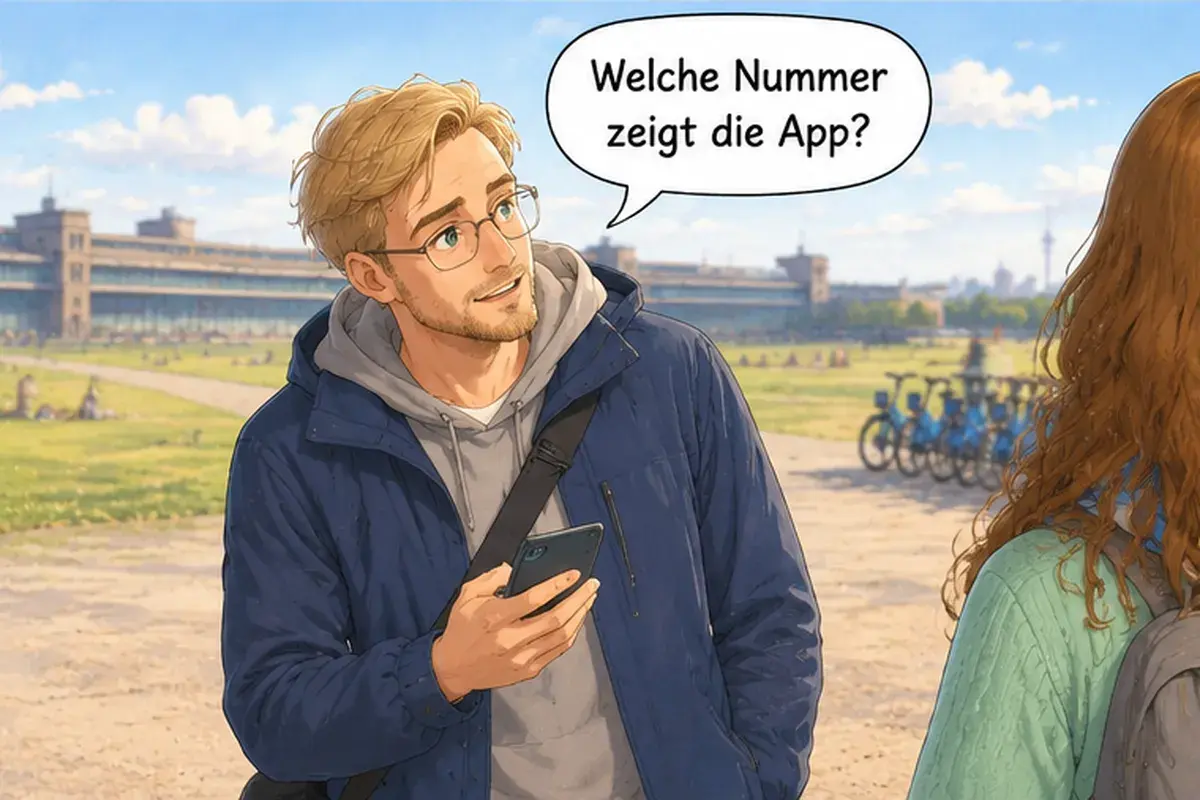
- Lukas
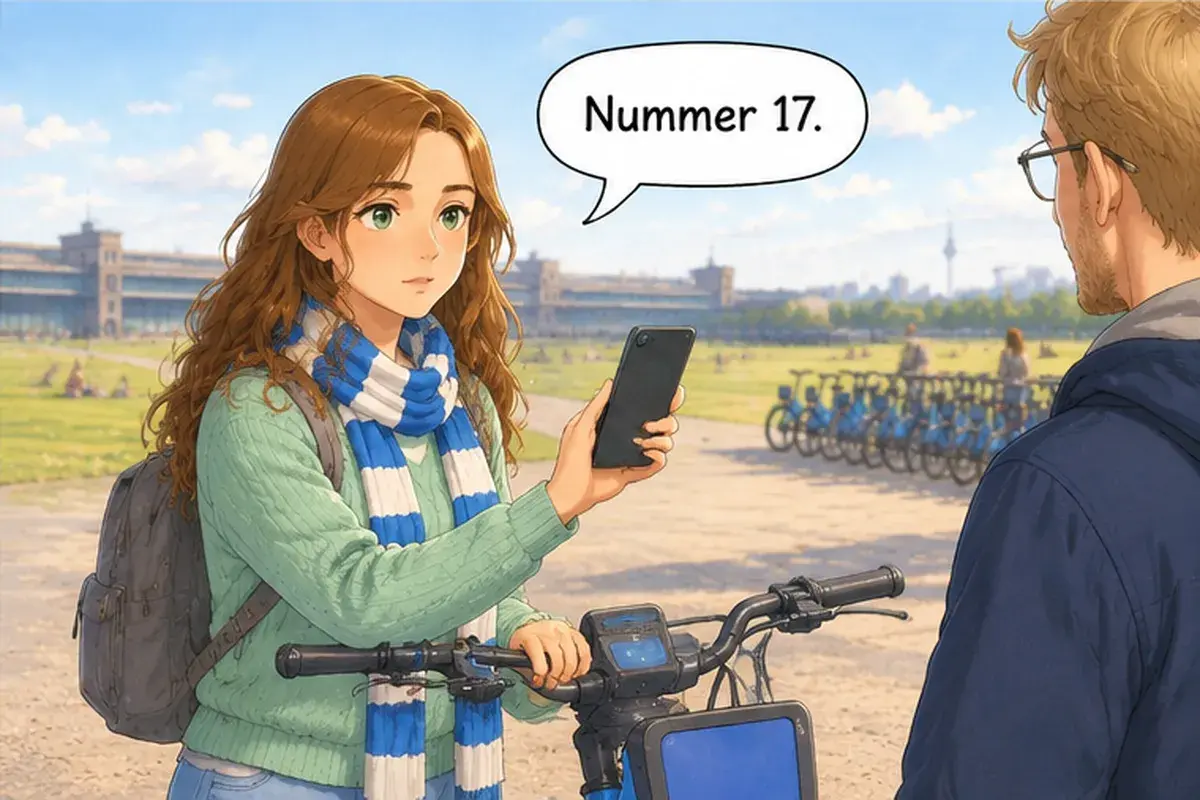
Welche Nummer zeigt die App?
Which number does the app show?
- Katja
Nummer 17.
Number 17.
- Lukas
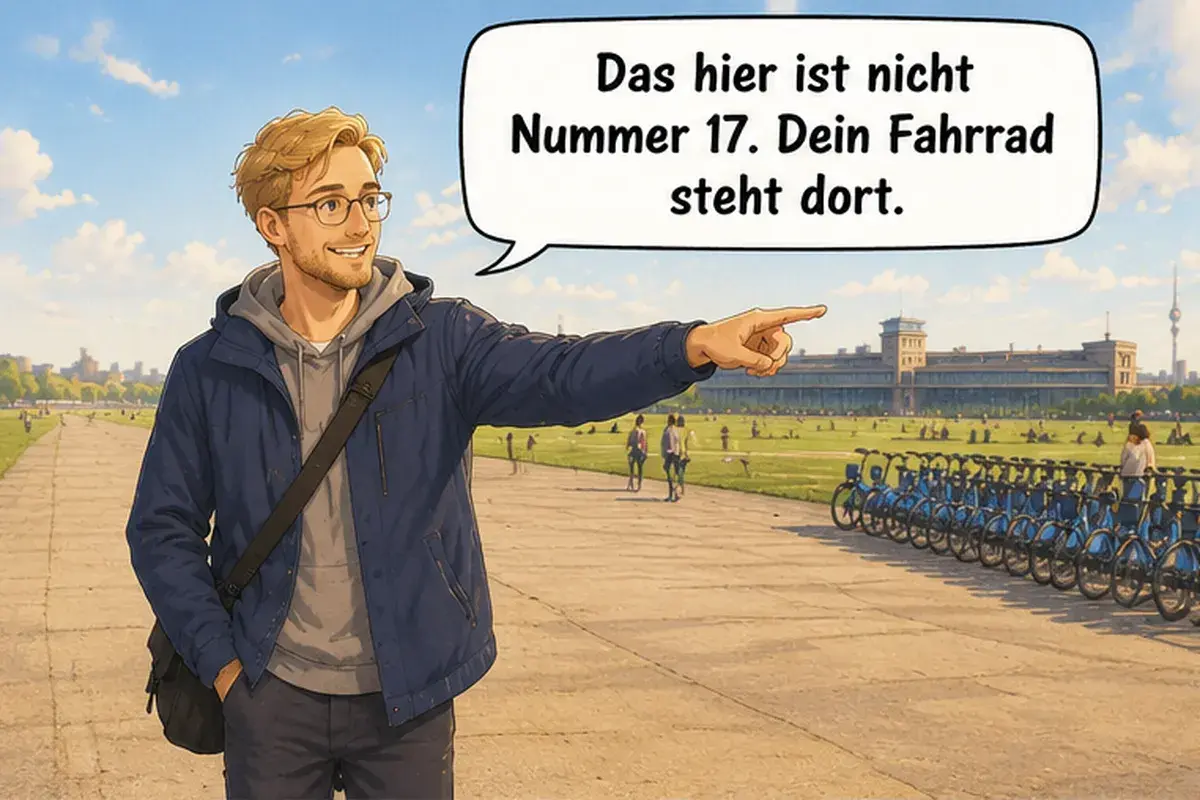
Das hier ist nicht Nummer 17. Dein Fahrrad steht dort.
This one isn't number 17. Your bike is over there.
- Katja
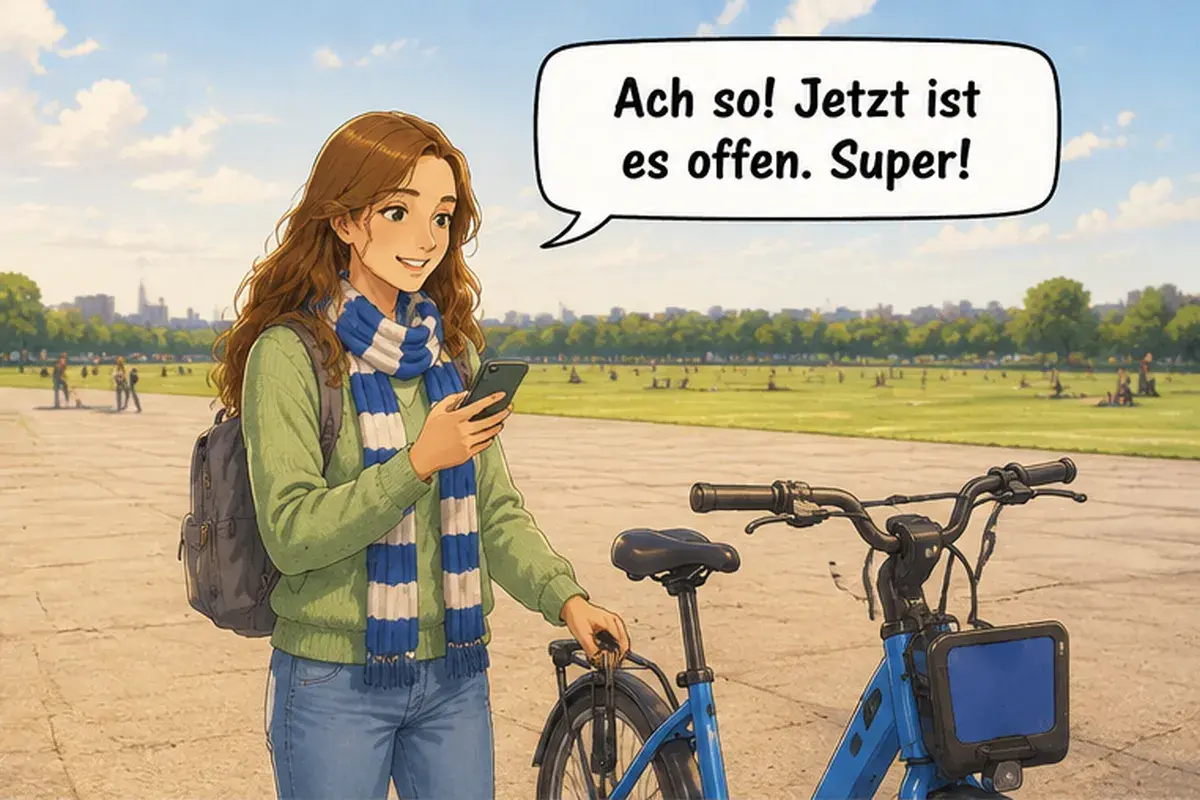
Ach so! Jetzt ist es offen. Super!
Oh, I see! Now it's open. Great!
- Lukas
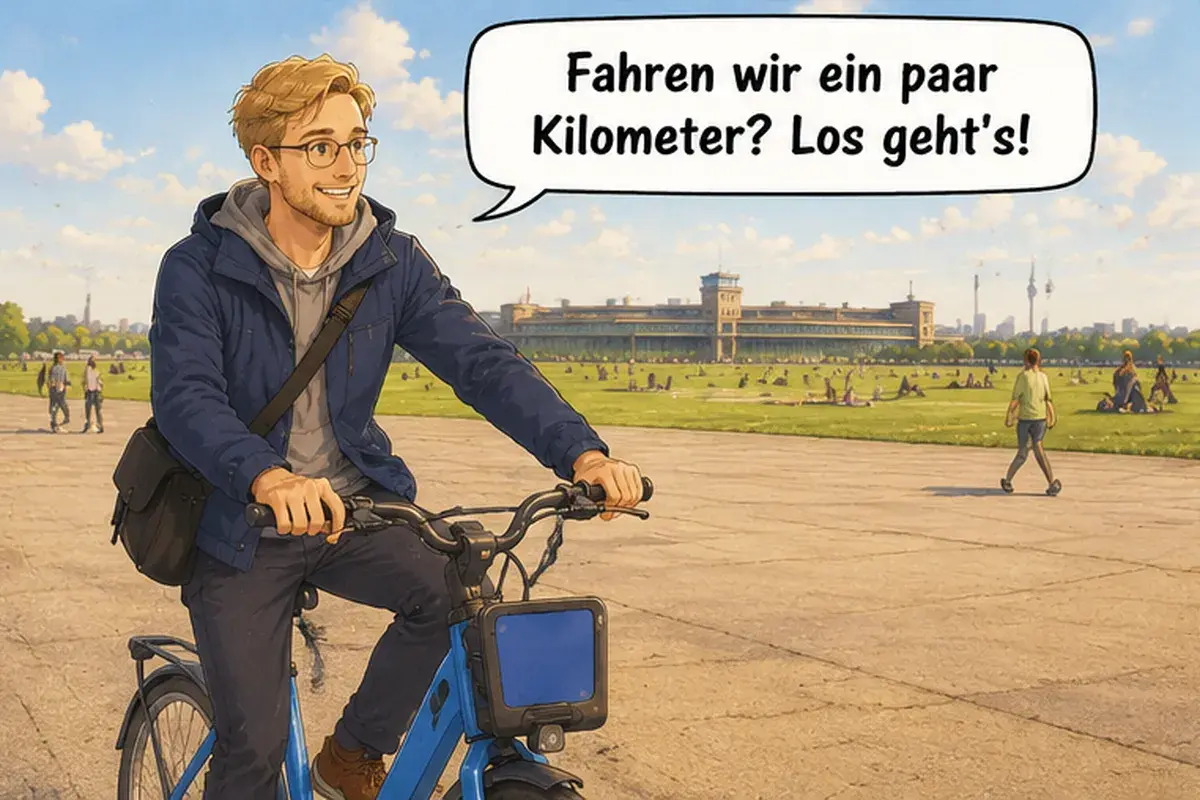
Fahren wir ein paar Kilometer? Los geht's!
Should we ride a few kilometers? Let's go!
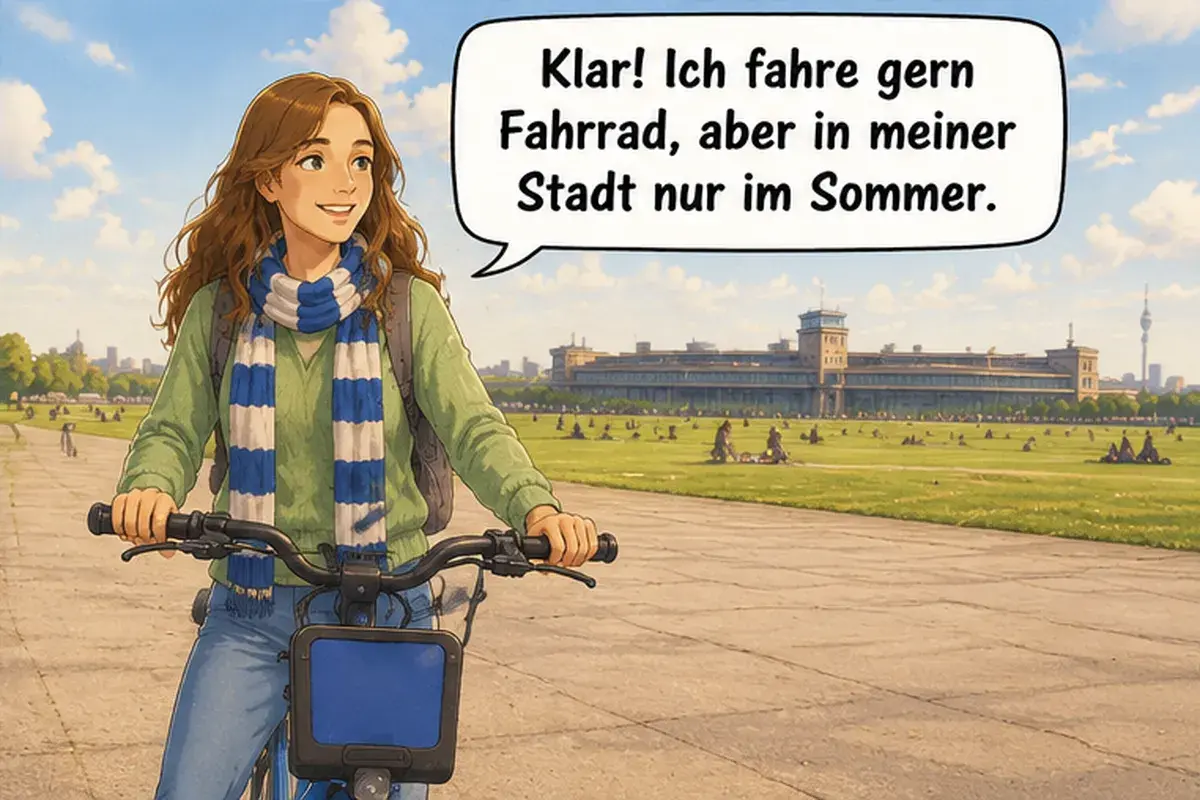
- Katja
Klar! Ich fahre gern Fahrrad, aber in meiner Stadt nur im Sommer.
Sure! I like biking, but in my city only in the summer.
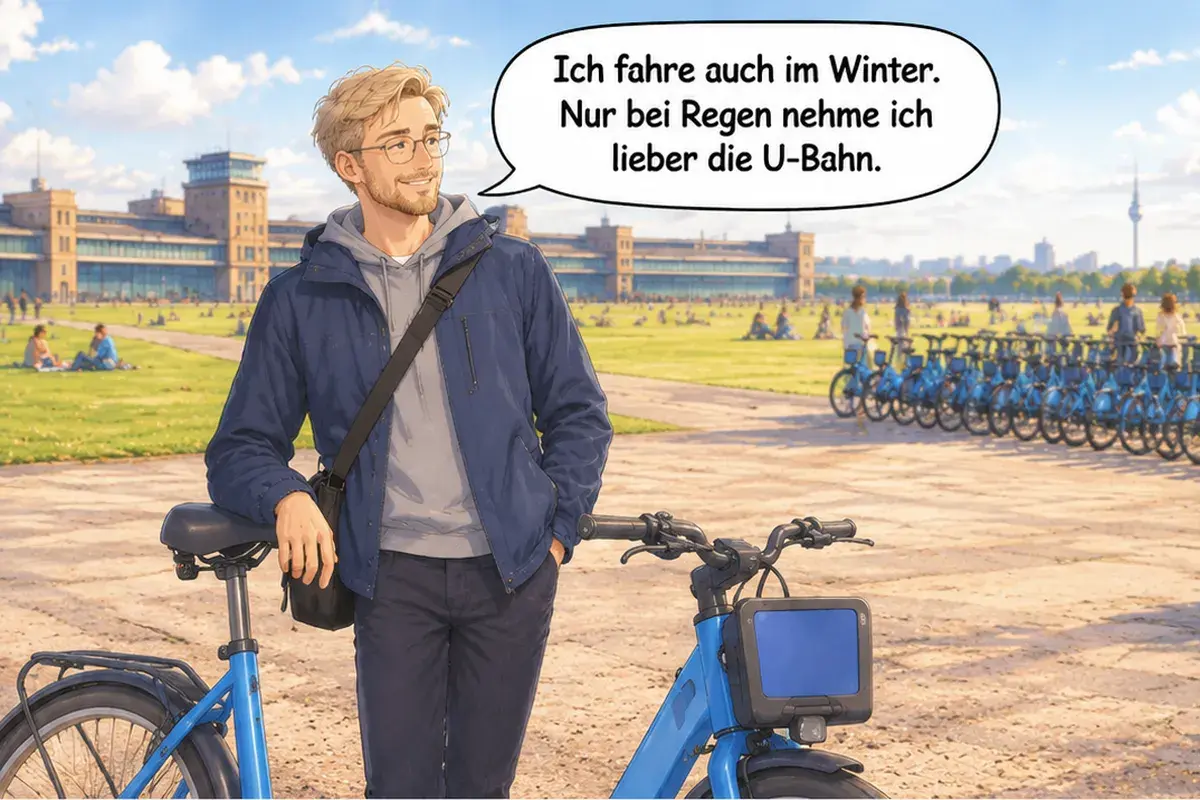
- Lukas
Ich fahre auch im Winter. Nur bei Regen nehme ich lieber die U-Bahn.
I ride in the winter too. Only when it rains do I prefer to take the subway.
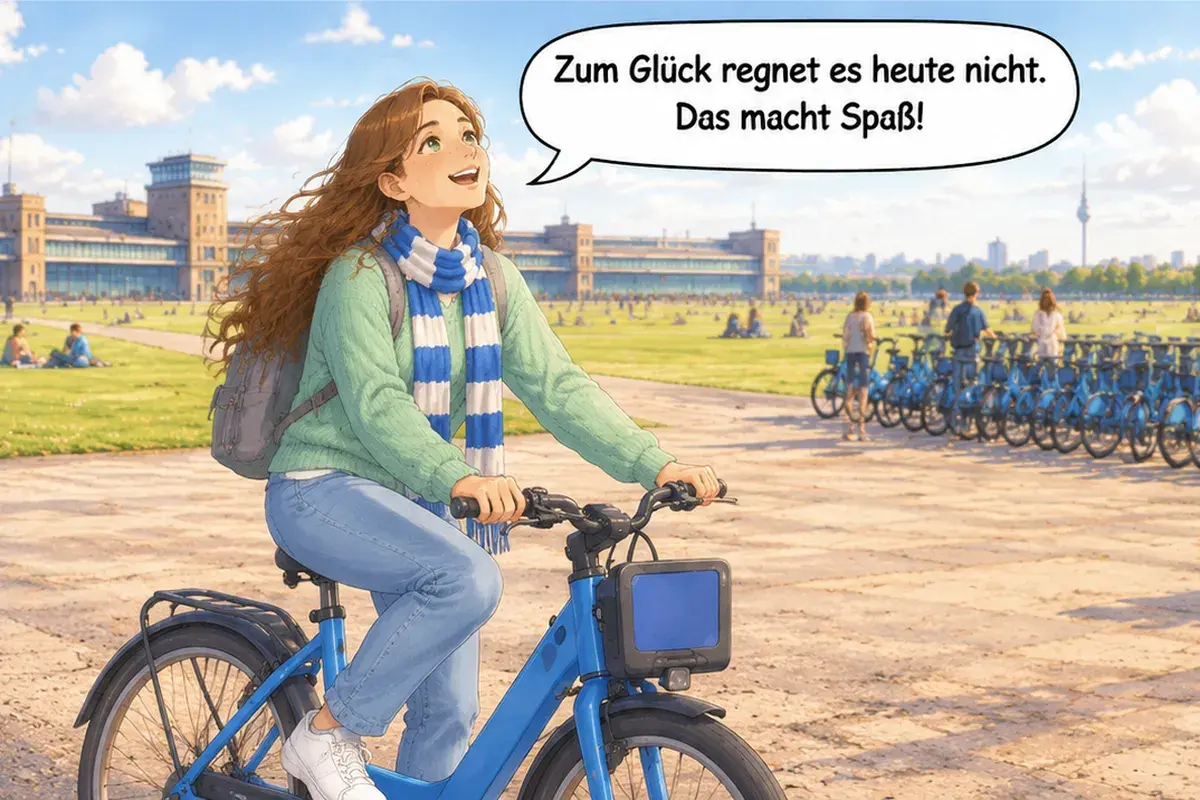
- Katja
Zum Glück regnet es heute nicht. Das macht Spaß!
Luckily, it's not raining today. This is fun!
Grammar for this text
- Hier war früher ein Flughafen —
warmeans "was": it's the past ofsein(ist→war). The past tense comes in A2; for now, learn the phrase as a whole:Hier war früher …— there used to be … here.früher— before, in the past. - Möchtest du ein Fahrrad mieten? —
möchtestis the du form ofmöchten(would like, unit 4):ich möchte→du möchtest. The second verb,mieten, goes to the very end in the infinitive. English keeps the verbs together: "would you like to rent". - Es geht nicht — here
gehendoesn't mean "to go" but "to work, to be possible": it's not working (likeDas gehtin unit 3). Das Fahrrad bleibt zu —bleibtis frombleiben(to stay),zu— closed, locked (unit 7): the bike "stays locked". - Fahren wir ein paar Kilometer? — a question with no question word: the verb comes first, then
wir. This is how you suggest something: "Should we ride …?".ein paar— a few (not "a pair"). It never changes, and the noun after it is plural (Kilometerlooks the same in the plural). - Los geht's! — a set phrase: let's go, here we go.
es geht los— it's starting;geht's=geht es. - Ich fahre gern Fahrrad —
gerncomes after the verb and means "like doing": I like biking.Fahrrad fahren— to ride a bike, with no article. - Nur bei Regen nehme ich lieber die U-Bahn —
lieber— would rather, prefer: a choice between two things (the bike or the subway). It goes after the verb, likegern.nehmeis the ich form ofnehmen(the er form isnimmt, unit 4).bei Regen— when it rains, a set phrase. The sentence starts withNur bei Regen, so the verb comes second andichcomes after it.
Words and grammar of the unit: Talk about your hobbies.
Learn the words from the texts with flashcards
In the app, you can tap any word in a text to see its translation, forms and examples, and new words stick with flashcards. 15 minutes a day.
Start for freeEverything is open for free. No card needed to sign up.