

German dialogue with translation · A1 · 16 lines
Ein Ticket für die Museumsinsel, bitte A ticket for Museum Island, please
Comic · 10 panels
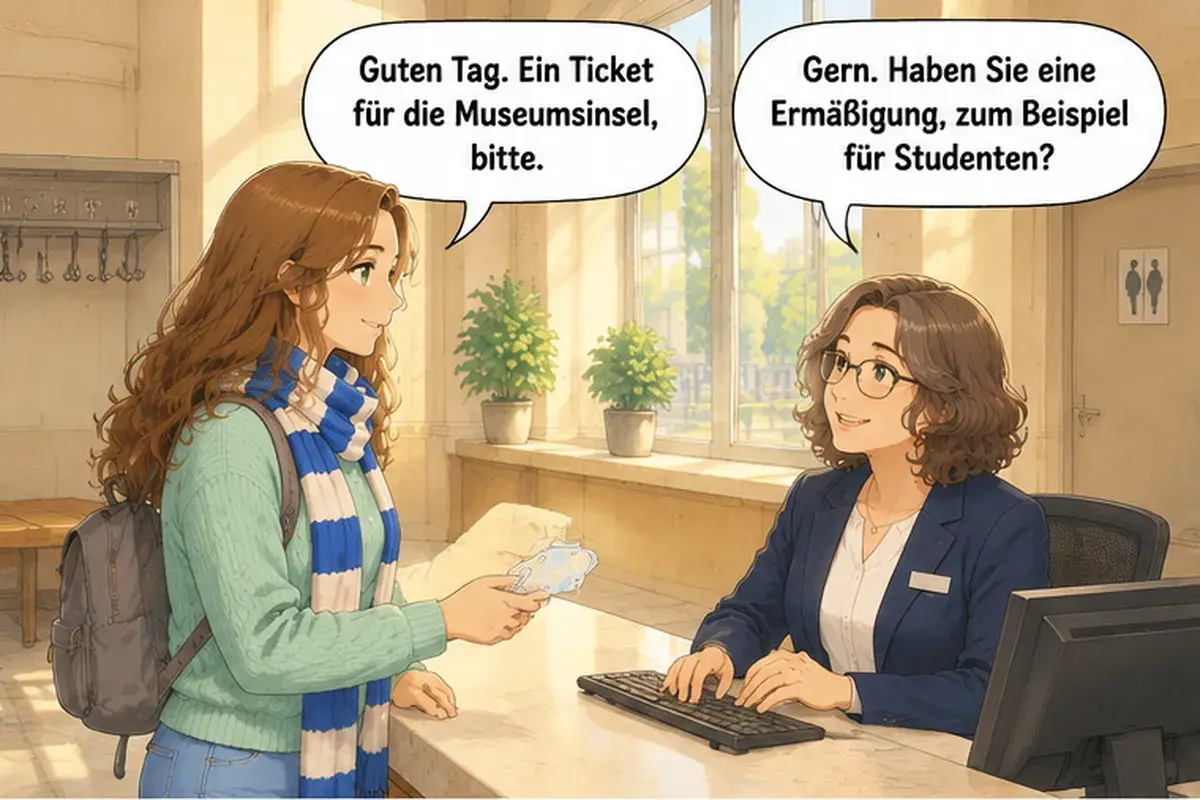
- Katja
Guten Tag. Ein Ticket für die Museumsinsel, bitte.
Hello. A ticket for Museum Island, please.
- Mitarbeiterin
Gern. Haben Sie eine Ermäßigung, zum Beispiel für Studenten?
Sure. Do you have a discount, for example for students? (formal)
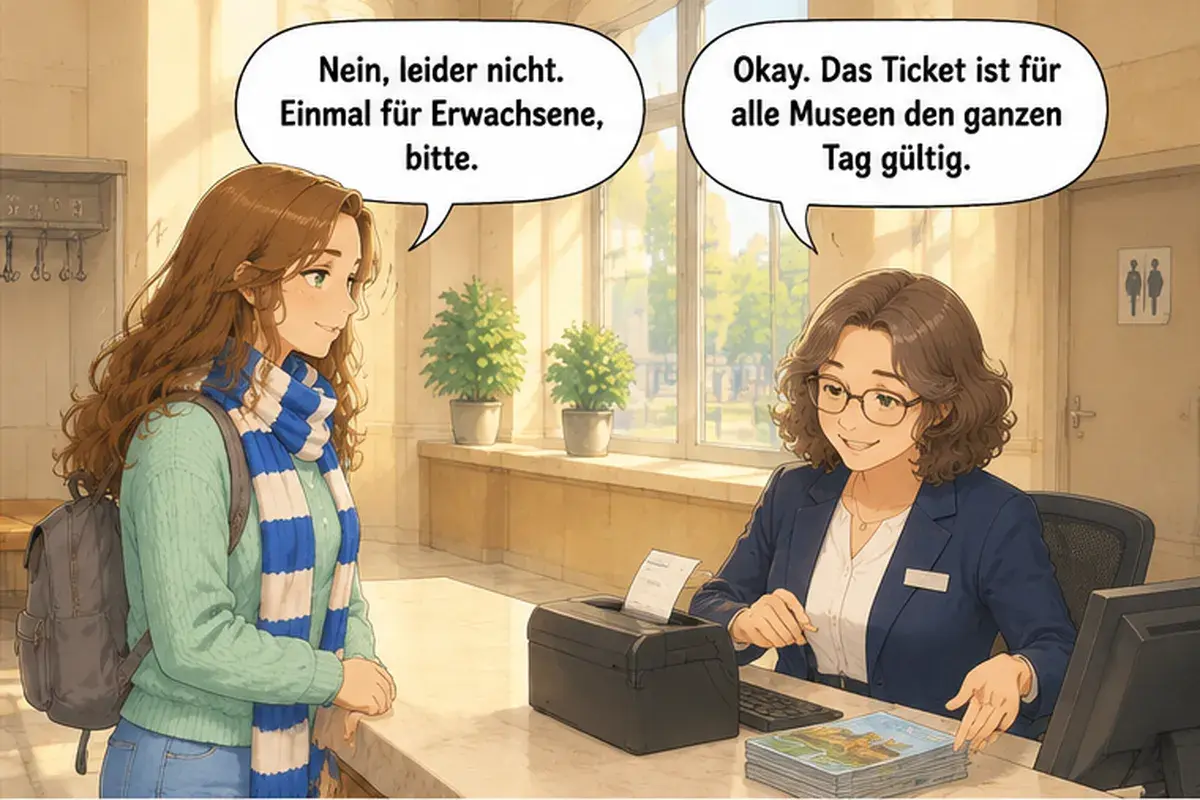
- Katja
Nein, leider nicht. Einmal für Erwachsene, bitte.
No, unfortunately not. One adult, please.
- Mitarbeiterin
Okay. Das Ticket ist für alle Museen den ganzen Tag gültig.
Okay. The ticket is valid for all the museums all day.
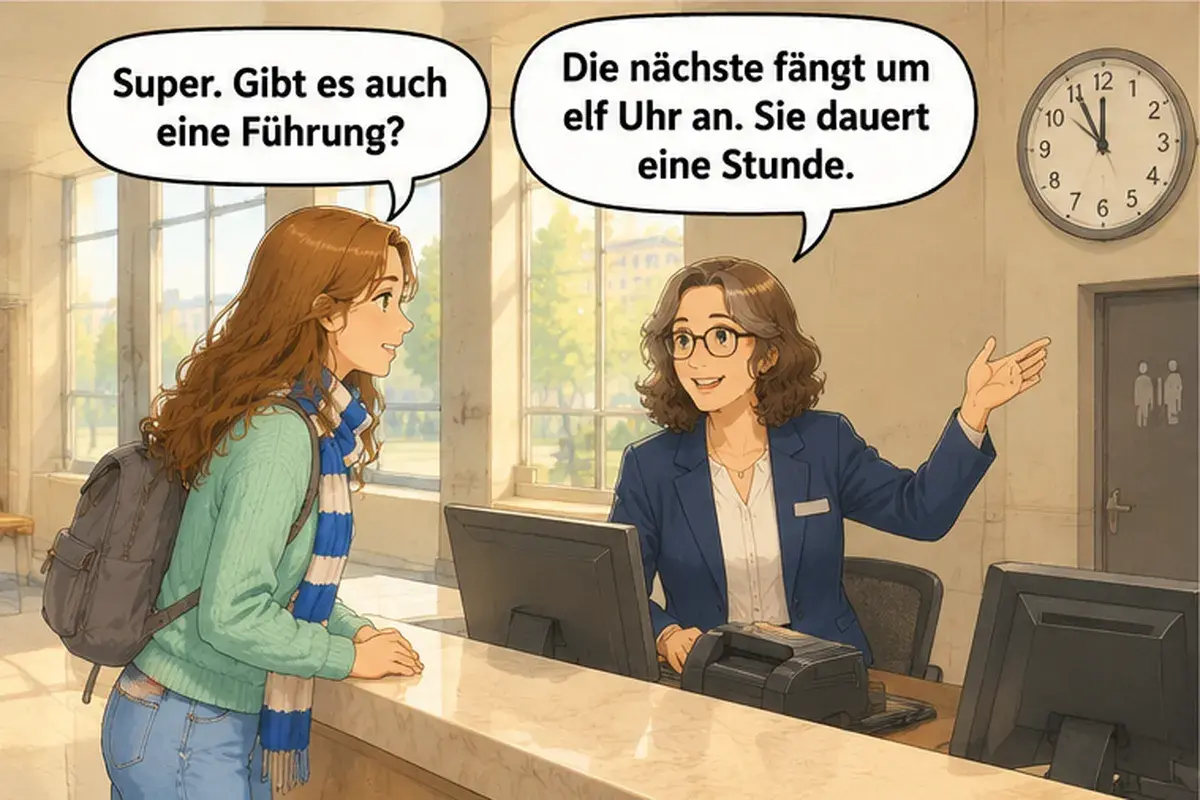
- Katja
Super. Gibt es auch eine Führung?
Great. Is there a guided tour too?
- Mitarbeiterin
Die nächste fängt um elf Uhr an. Sie dauert eine Stunde.
The next one starts at eleven o'clock. It takes an hour.
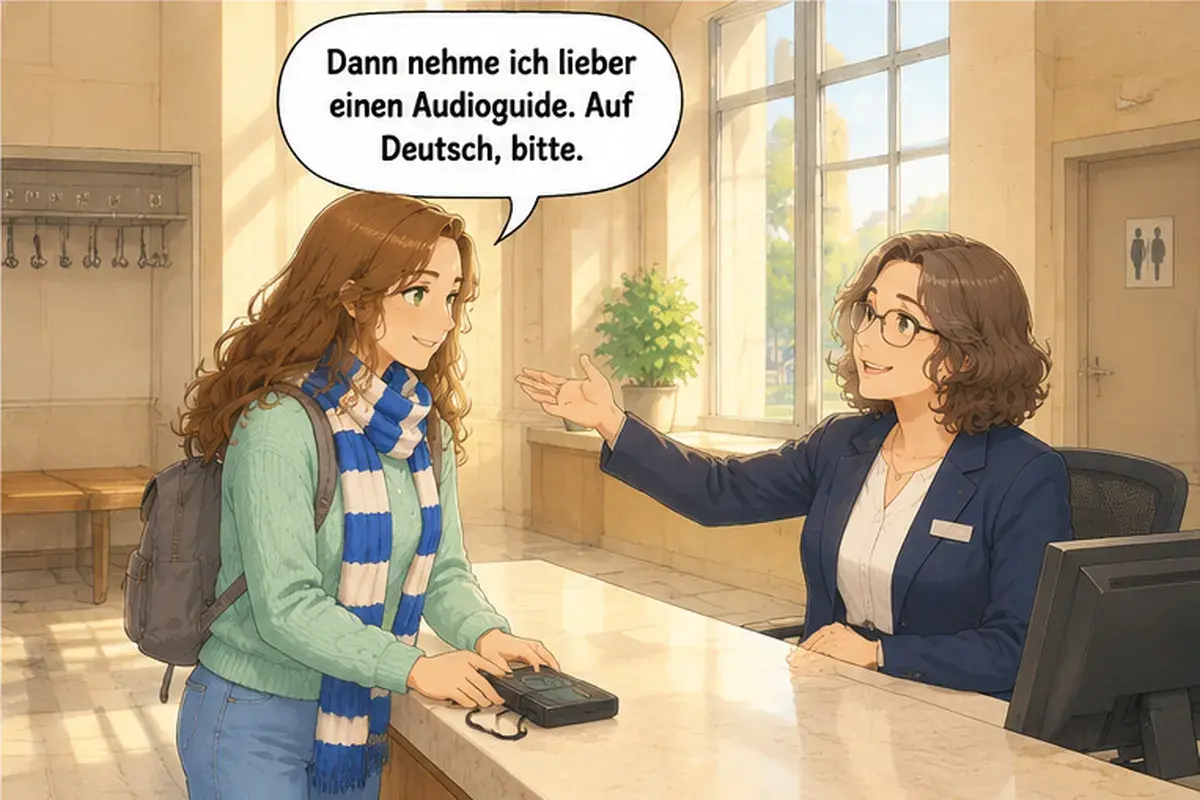
- Katja
Dann nehme ich lieber einen Audioguide. Auf Deutsch, bitte.
Then I'd rather take an audio guide. In German, please.
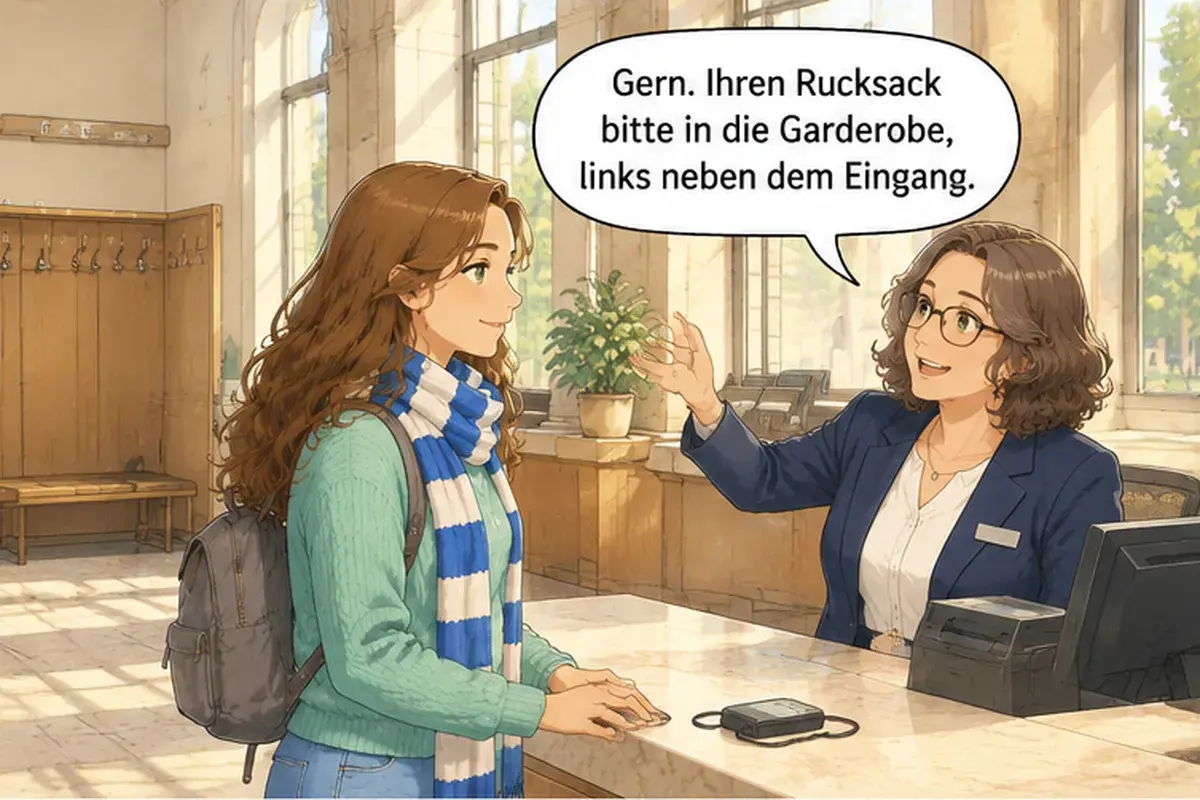
- Mitarbeiterin
Gern. Ihren Rucksack bitte in die Garderobe, links neben dem Eingang.
Sure. Your backpack goes to the coat check, please, on the left next to the entrance. (formal)
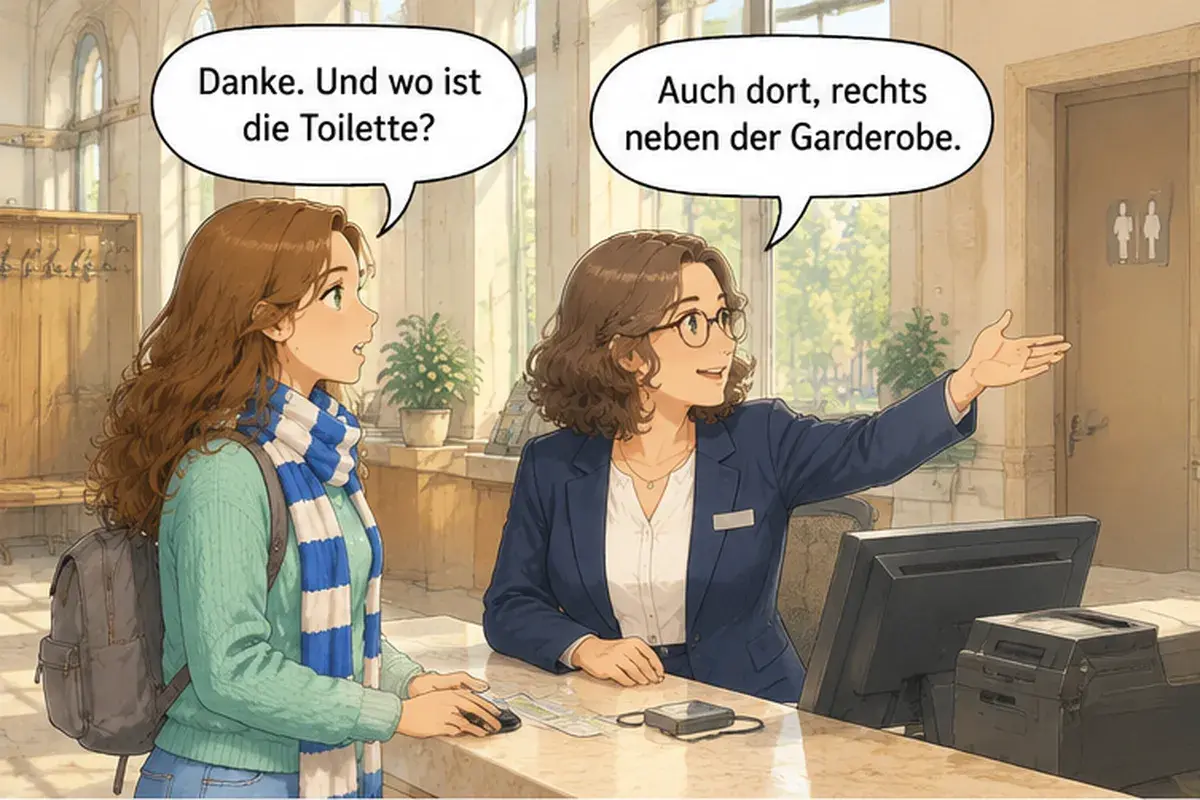
- Katja
Danke. Und wo ist die Toilette?
Thanks. And where's the restroom?
- Mitarbeiterin
Auch dort, rechts neben der Garderobe.
Also over there, on the right next to the coat check.
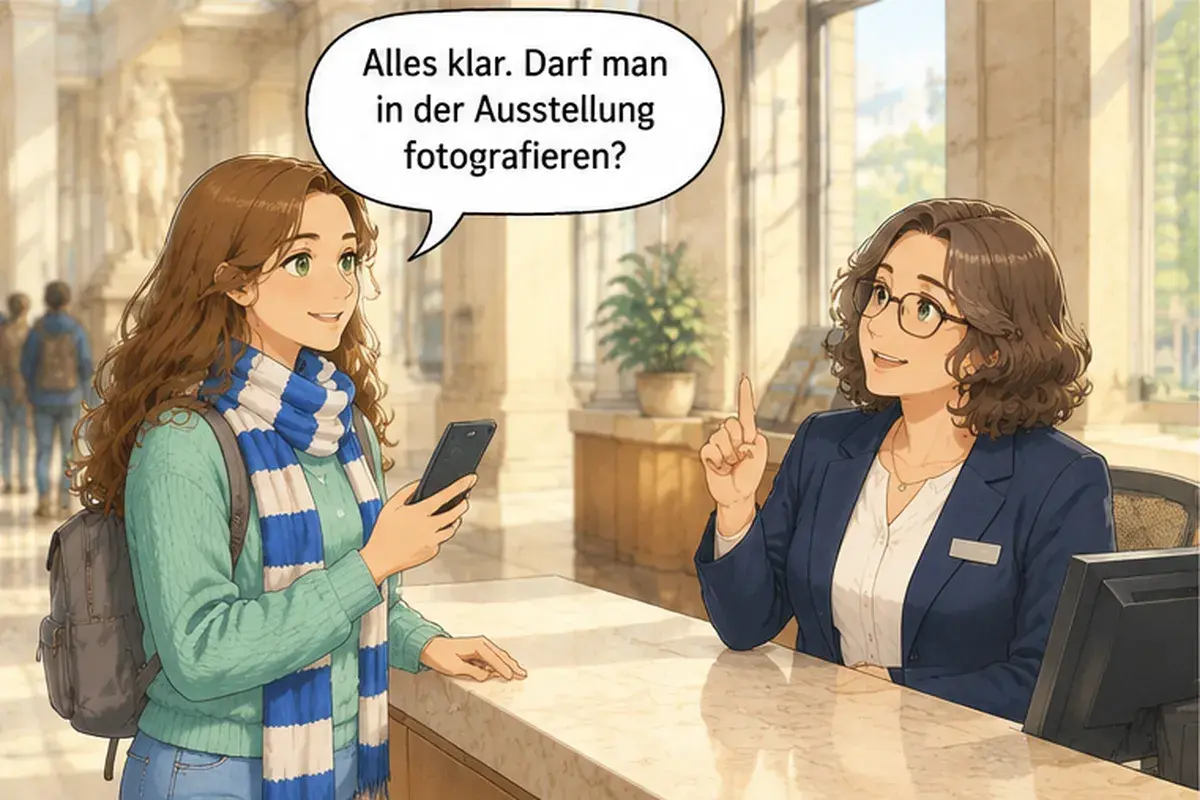
- Katja
Alles klar. Darf man in der Ausstellung fotografieren?
Got it. Are you allowed to take photos in the exhibition?
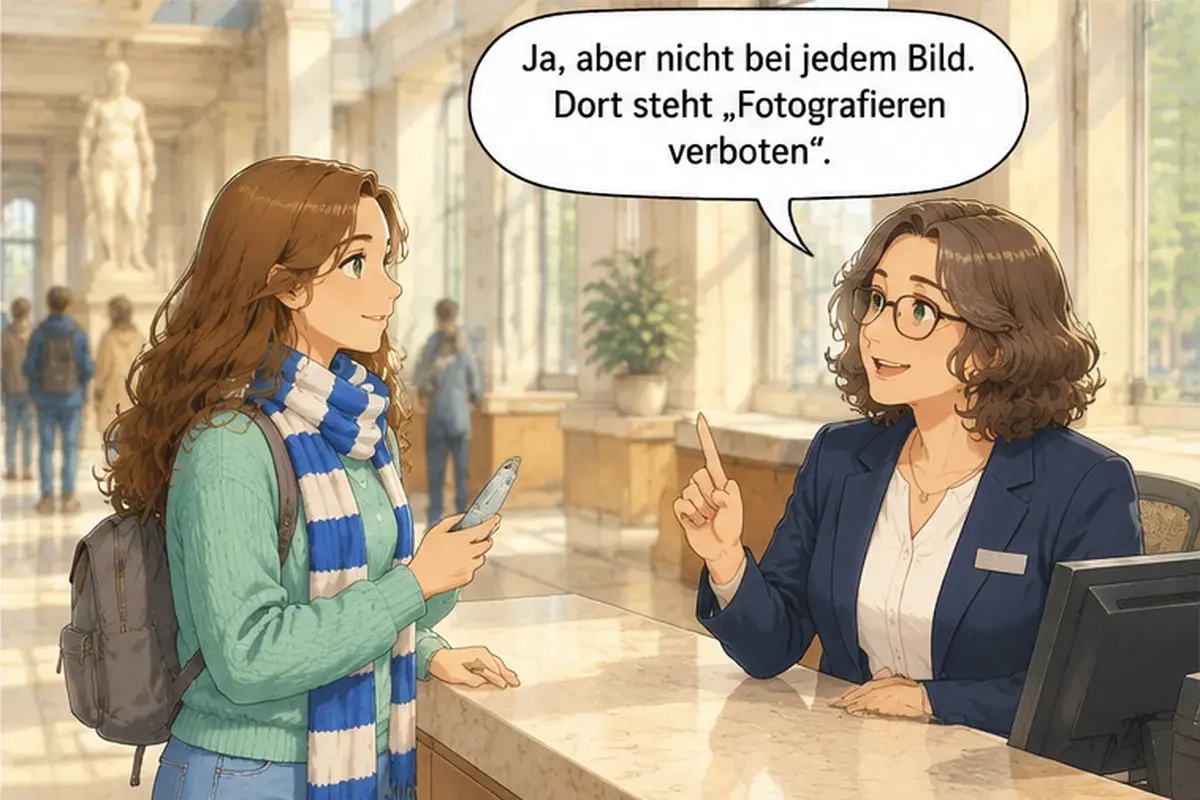
- Mitarbeiterin
Ja, aber nicht bei jedem Bild. Dort steht „Fotografieren verboten“.
Yes, but not at every picture. It says "No photography" there.
- Katja
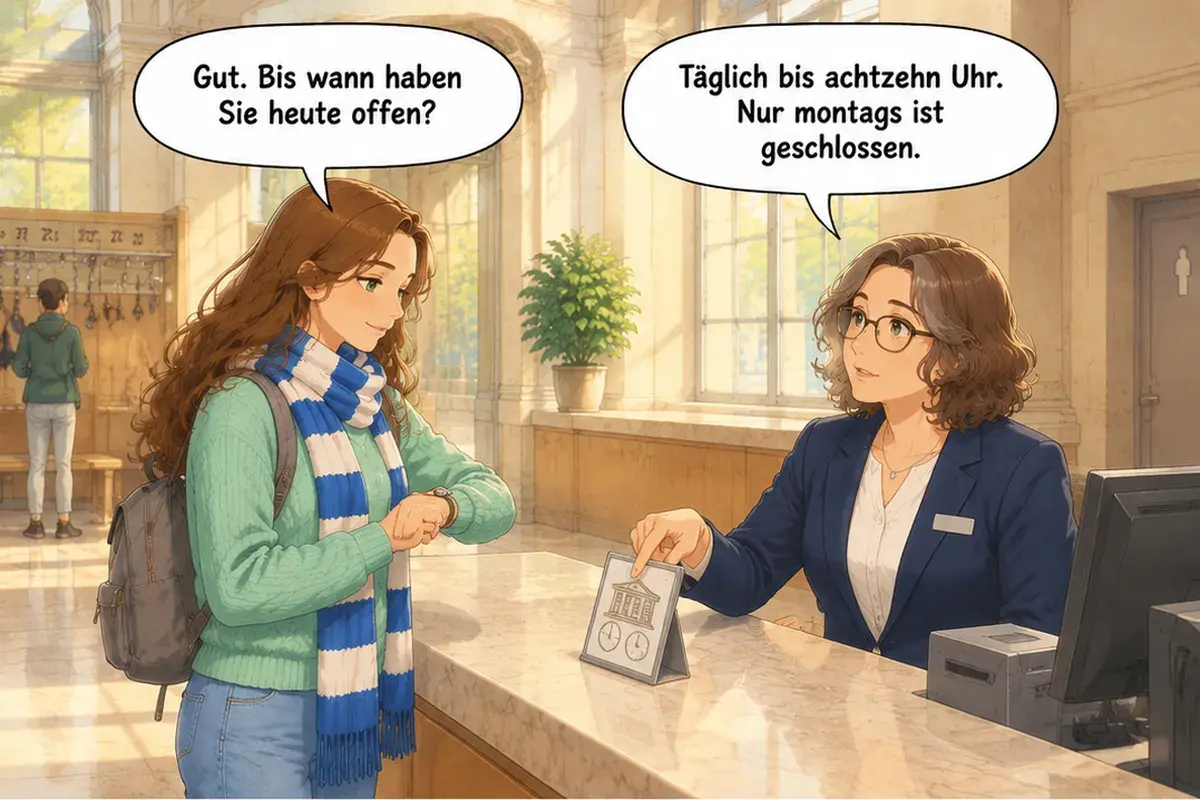
Gut. Bis wann haben Sie heute offen?
Good. Until what time are you open today? (formal)
- Mitarbeiterin
Täglich bis achtzehn Uhr. Nur montags ist geschlossen.
Every day until six p.m. It's closed only on Mondays.
- Katja
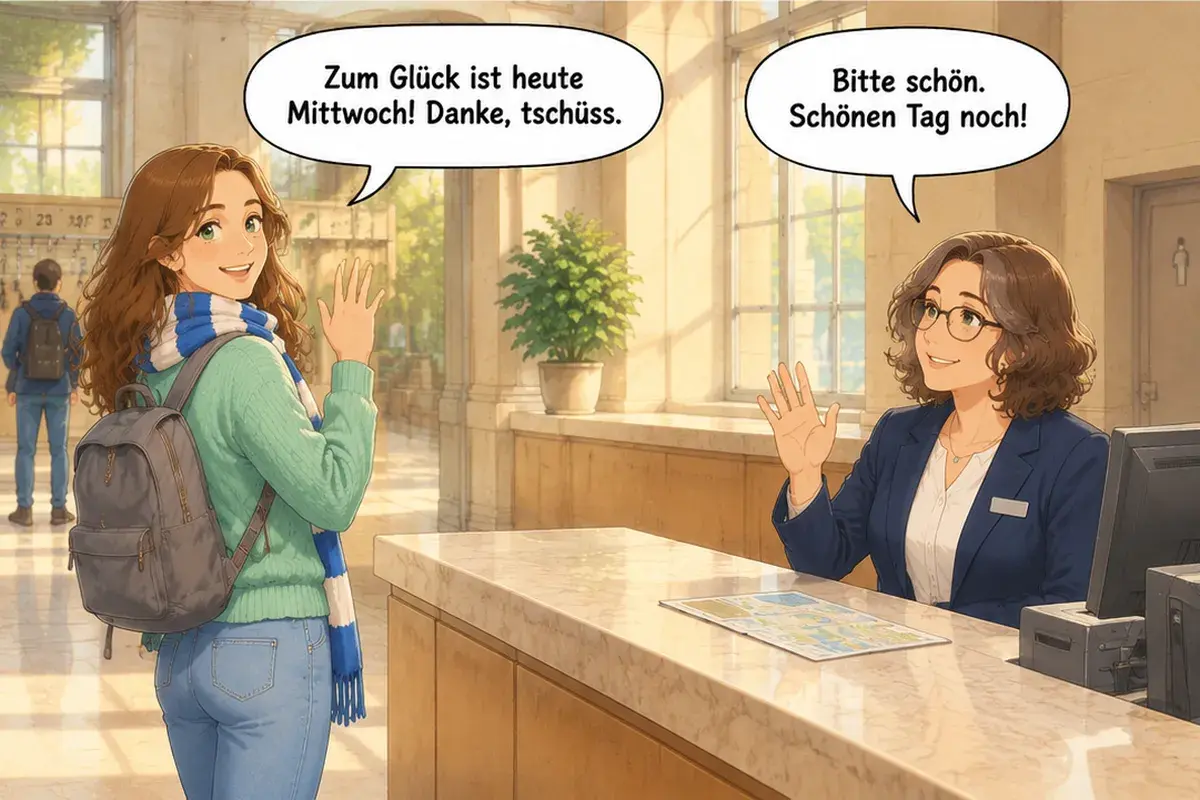
Zum Glück ist heute Mittwoch! Danke, tschüss.
Luckily, today is Wednesday! Thanks, bye.
- Mitarbeiterin
Bitte schön. Schönen Tag noch!
You're welcome. Have a nice day!
Grammar for this text
- Haben Sie eine Ermäßigung, zum Beispiel für Studenten? — a question with no question word: the verb
habencomes first.Sieis the formal "you".Studenten— students (one female student isStudentin). - Das Ticket ist für alle Museen den ganzen Tag gültig —
den ganzen Tag— all day: it's the accusative (unit 5), soden, notder.Museenis the plural ofMuseum. - Die nächste fängt um elf Uhr an —
fängt anis fromanfangen: the prefixangoes to the end, andabecomesä(likefahren → er fährt).Die nächste— the next one (die Führung). Sie dauert eine Stunde —dauertis fromdauern;Sieat the start of the sentence is "it" here (the tour), not the formal "you". - Dann nehme ich lieber einen Audioguide —
nehmeis the ich form ofnehmen(the er form isnimmt).lieber— rather.einen— the accusative. - Ihren Rucksack bitte in die Garderobe — a request with no verb, a short way of speaking: "your backpack to the coat check, please".
Ihren— your (formal), in the accusative. - Darf man in der Ausstellung fotografieren? — a set phrase for "is it allowed …?":
darfis the er / man form ofdürfen, andfotografierengoes to the end. The rule comes in A2; for now, learn it as a whole. - Bis wann haben Sie heute offen? —
bis wann— until what time.offen habenis what you say about a museum or a store: to be open.Siehere is the formal "you" (the museum). - Nur montags ist geschlossen —
montags— on Mondays;ist geschlossen— is closed.
Words and grammar of the unit: Buy a ticket and ask about opening hours.
Learn the words from the texts with flashcards
In the app, you can tap any word in a text to see its translation, forms and examples, and new words stick with flashcards. 15 minutes a day.
Start for freeEverything is open for free. No card needed to sign up.