

German dialogue with translation · A1 · 14 lines
Das ist mein letzter Preis That's my last price
Comic · 14 panels
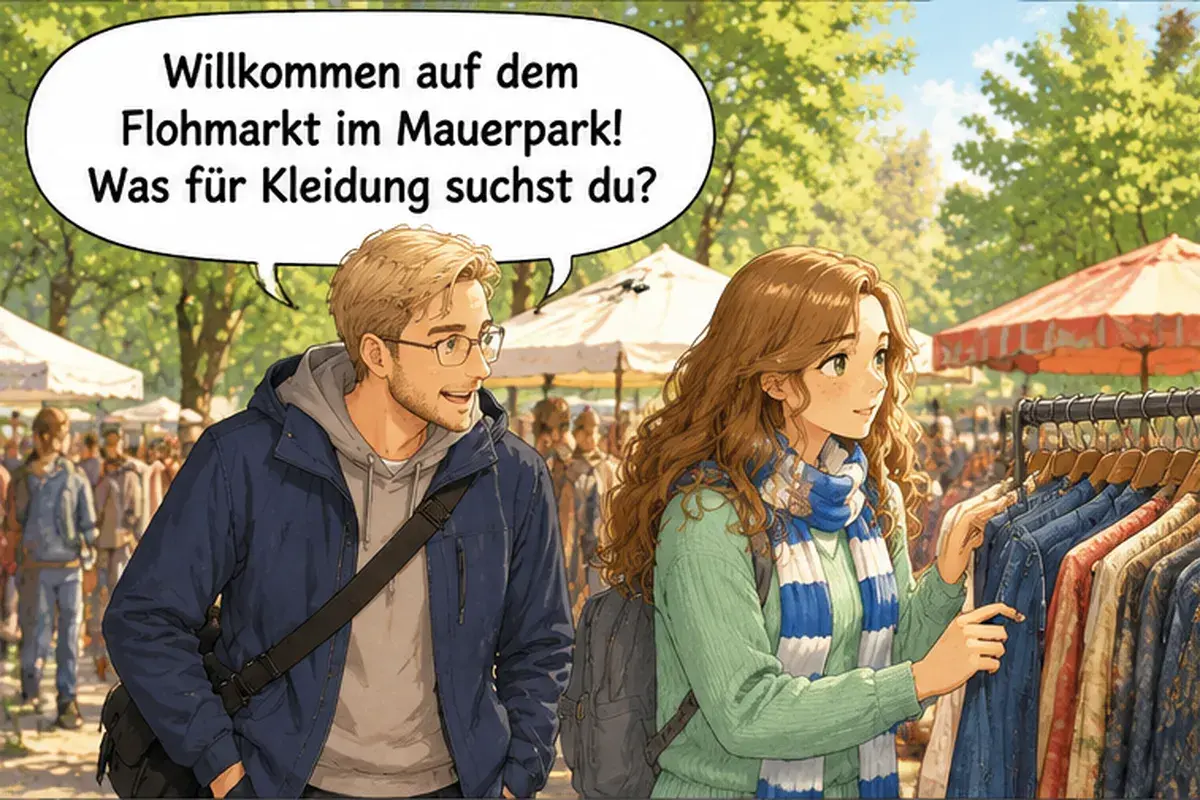
- Lukas
Willkommen auf dem Flohmarkt im Mauerpark! Was für Kleidung suchst du?
Welcome to the flea market in Mauerpark! What kind of clothes are you looking for?
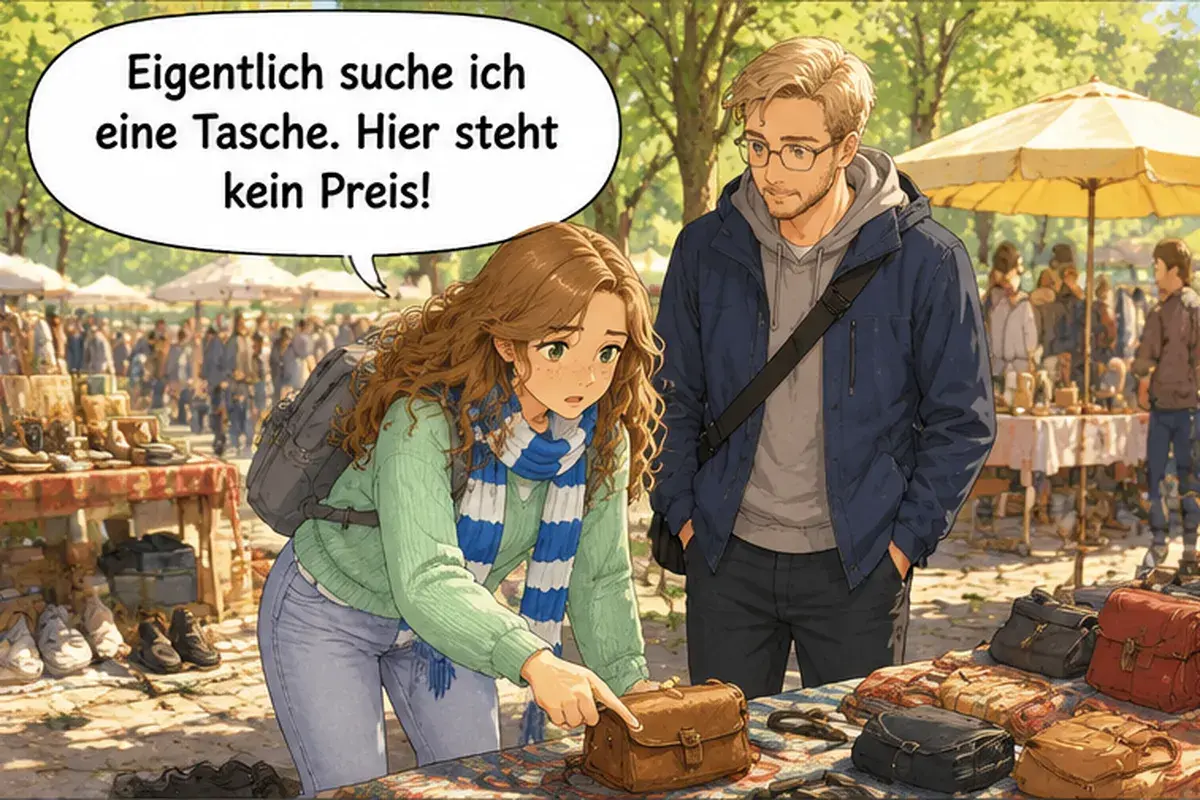
- Katja
Eigentlich suche ich eine Tasche. Hier steht kein Preis!
Actually, I'm looking for a bag. There's no price here!
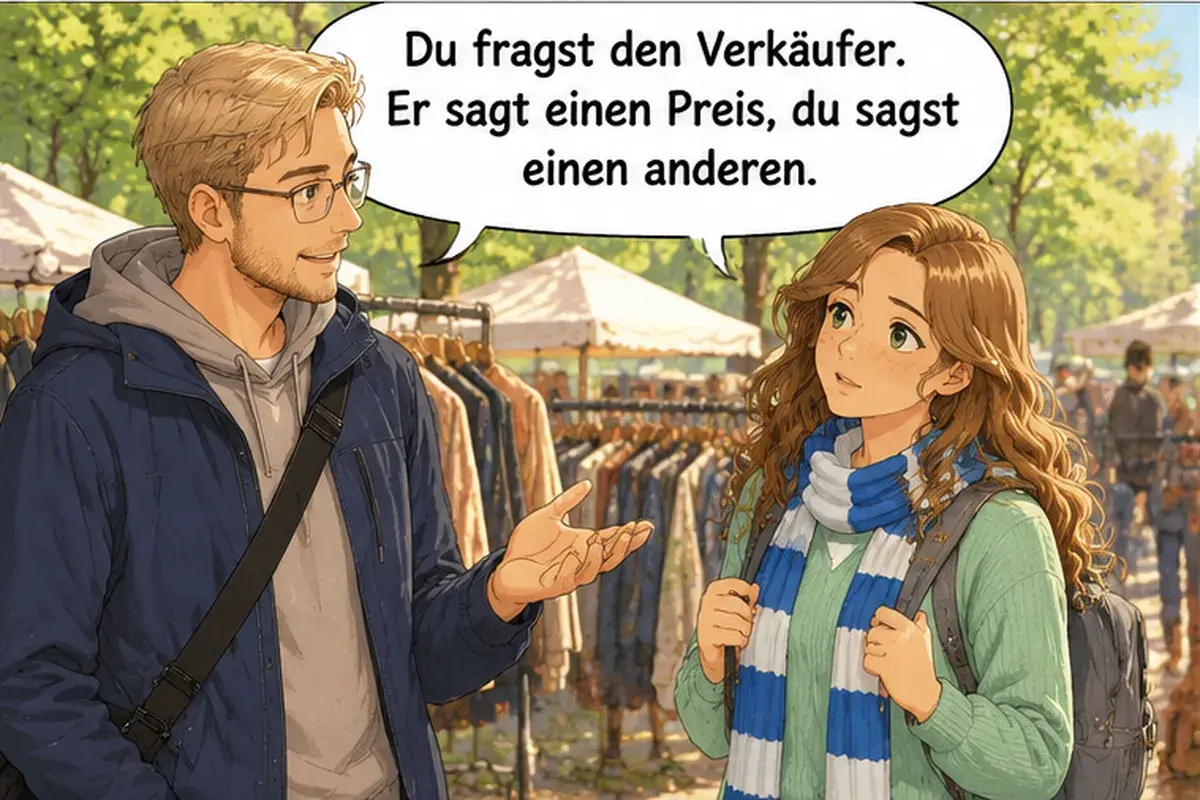
- Lukas
Du fragst den Verkäufer. Er sagt einen Preis, du sagst einen anderen.
You ask the seller. He names a price, you name a different one.
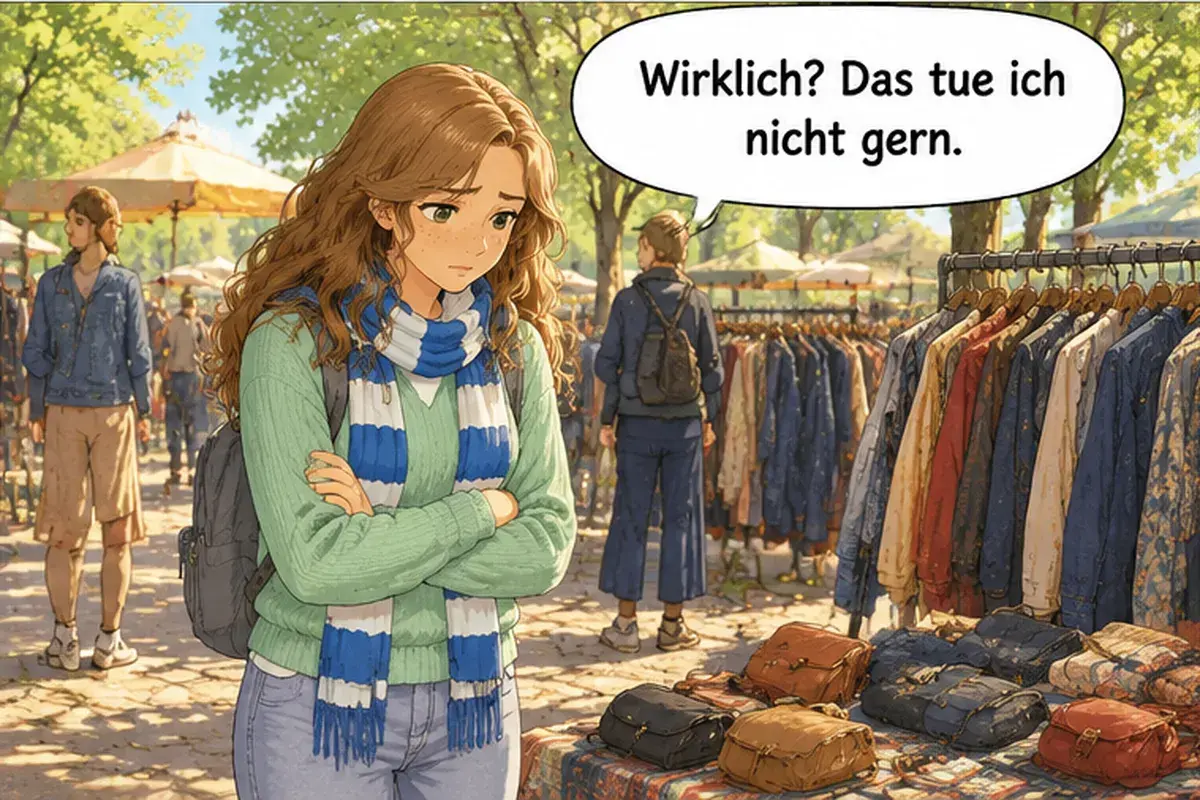
- Katja
Wirklich? Das tue ich nicht gern.
Really? I don't like doing that.
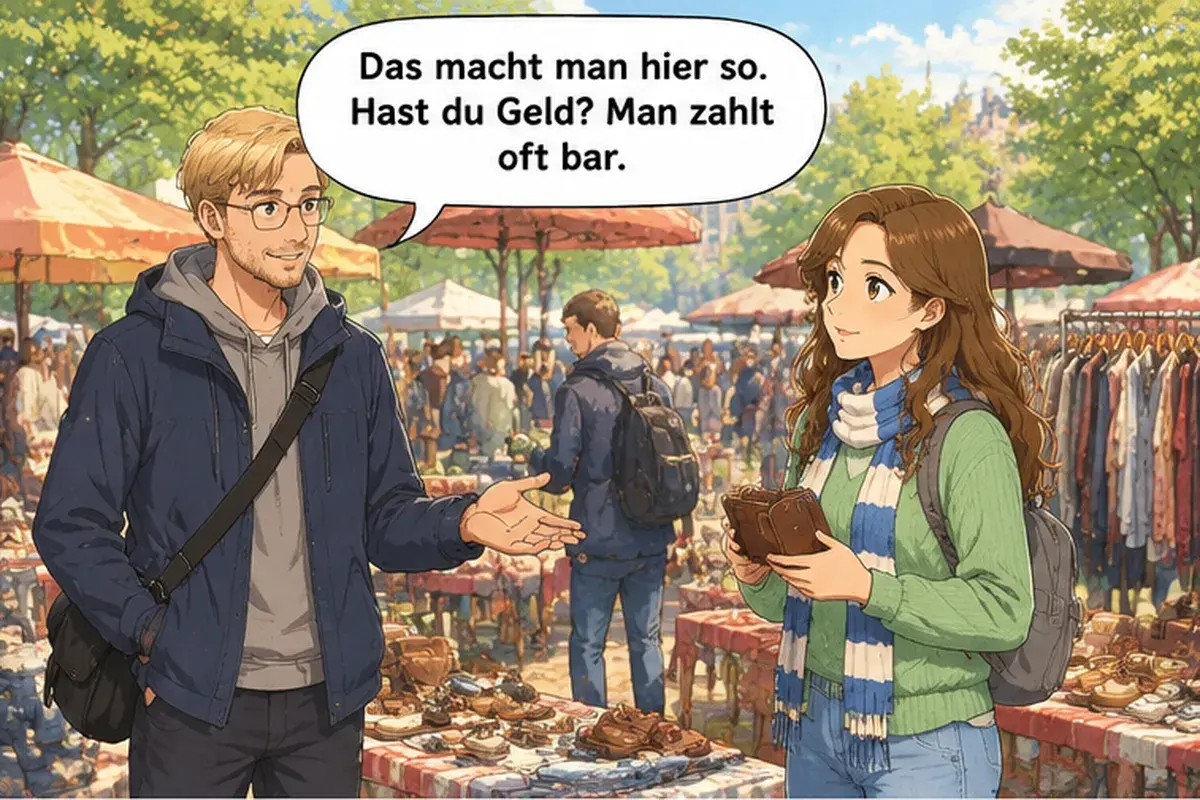
- Lukas
Das macht man hier so. Hast du Geld? Man zahlt oft bar.
That's how it's done here. Do you have money? People often pay cash.
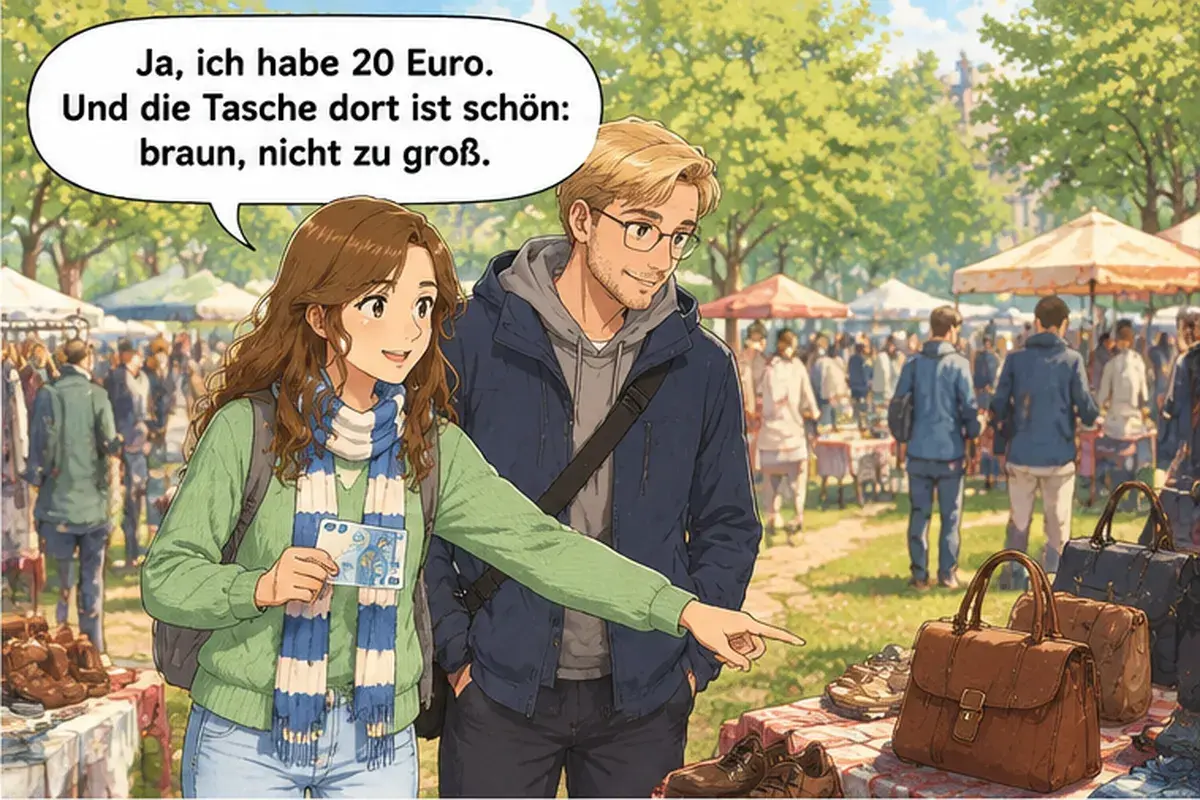
- Katja
Ja, ich habe 20 Euro. Und die Tasche dort ist schön: braun, nicht zu groß.
Yes, I have €20. And the bag over there is nice: brown, not too big.
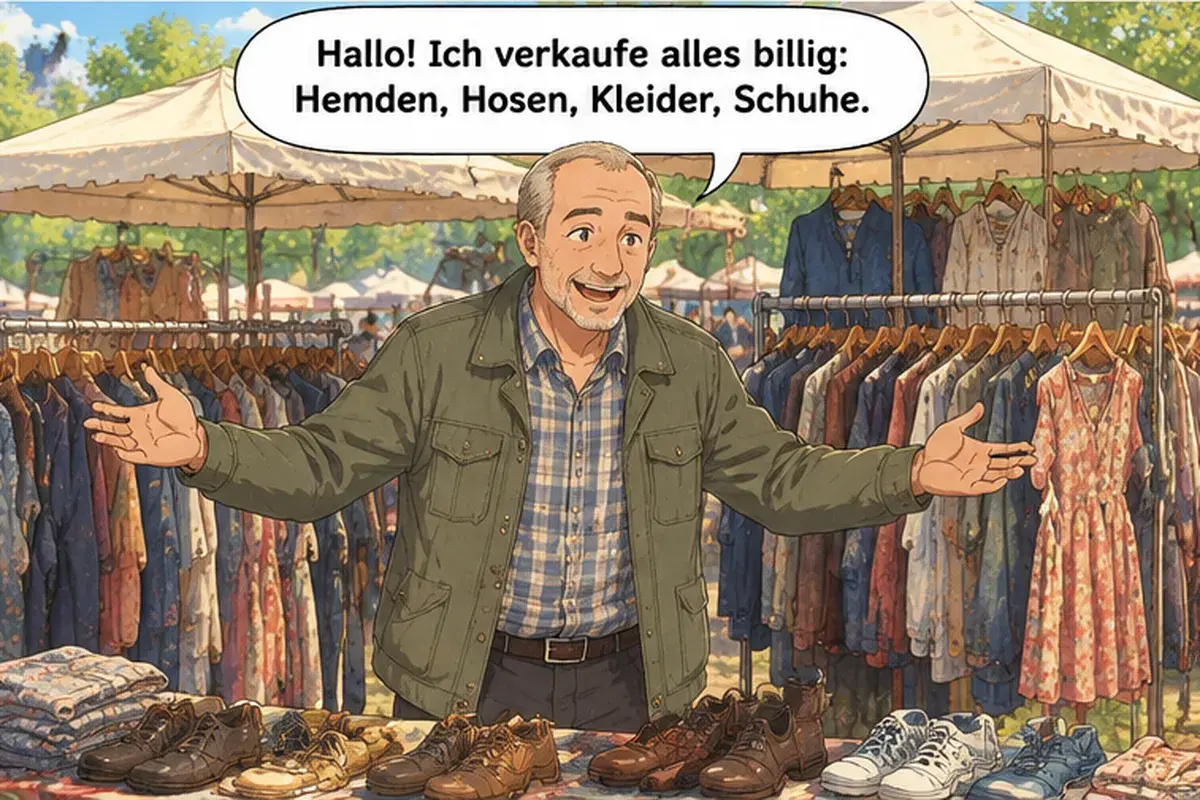
- Verkäufer
Hallo! Ich verkaufe alles billig: Hemden, Hosen, Kleider, Schuhe.
Hi! I'm selling everything cheap: shirts, pants, dresses, shoes.
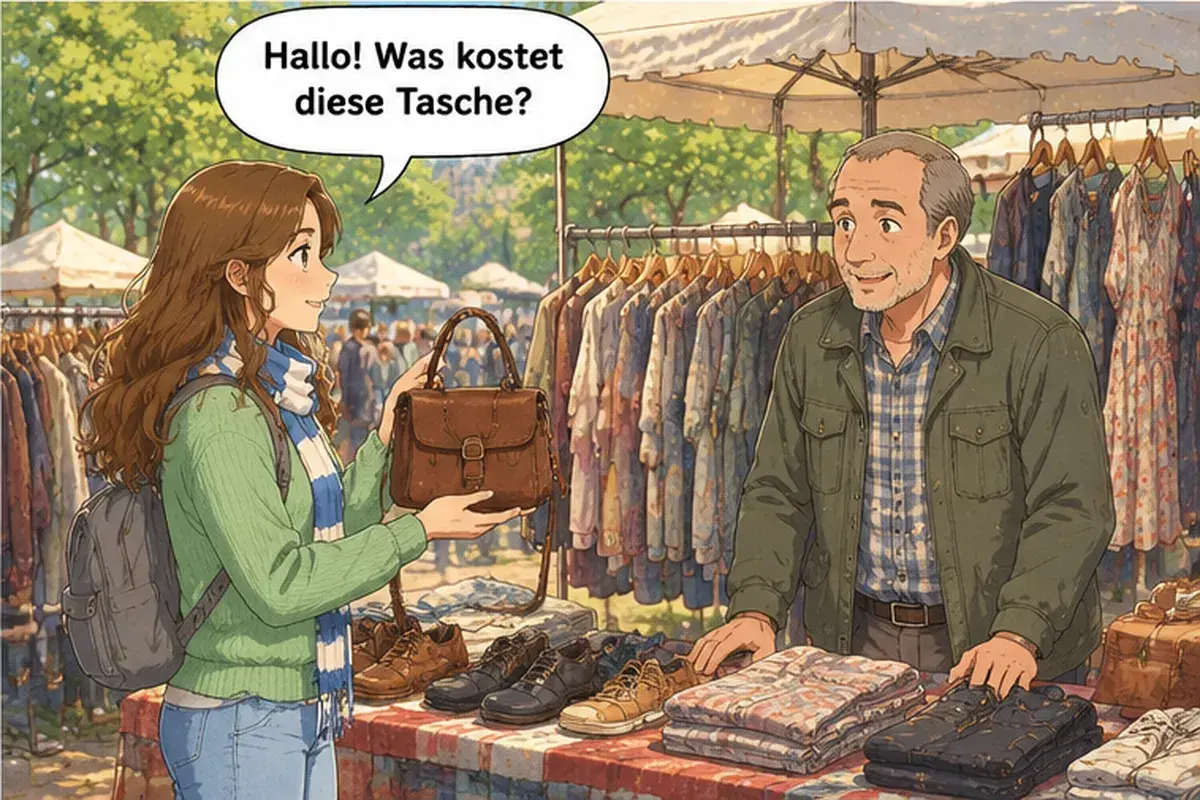
- Katja
Hallo! Was kostet diese Tasche?
Hi! How much is this bag?
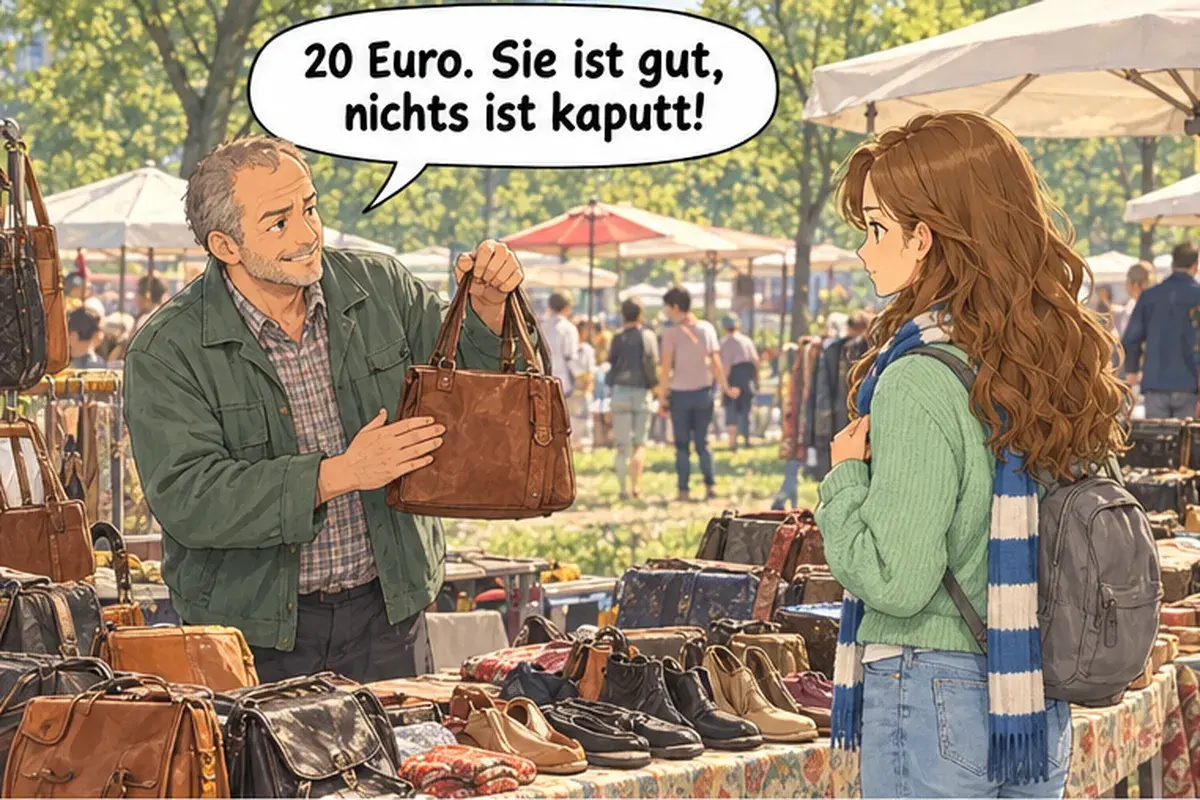
- Verkäufer
20 Euro. Sie ist gut, nichts ist kaputt!
€20. It's good, nothing is broken!
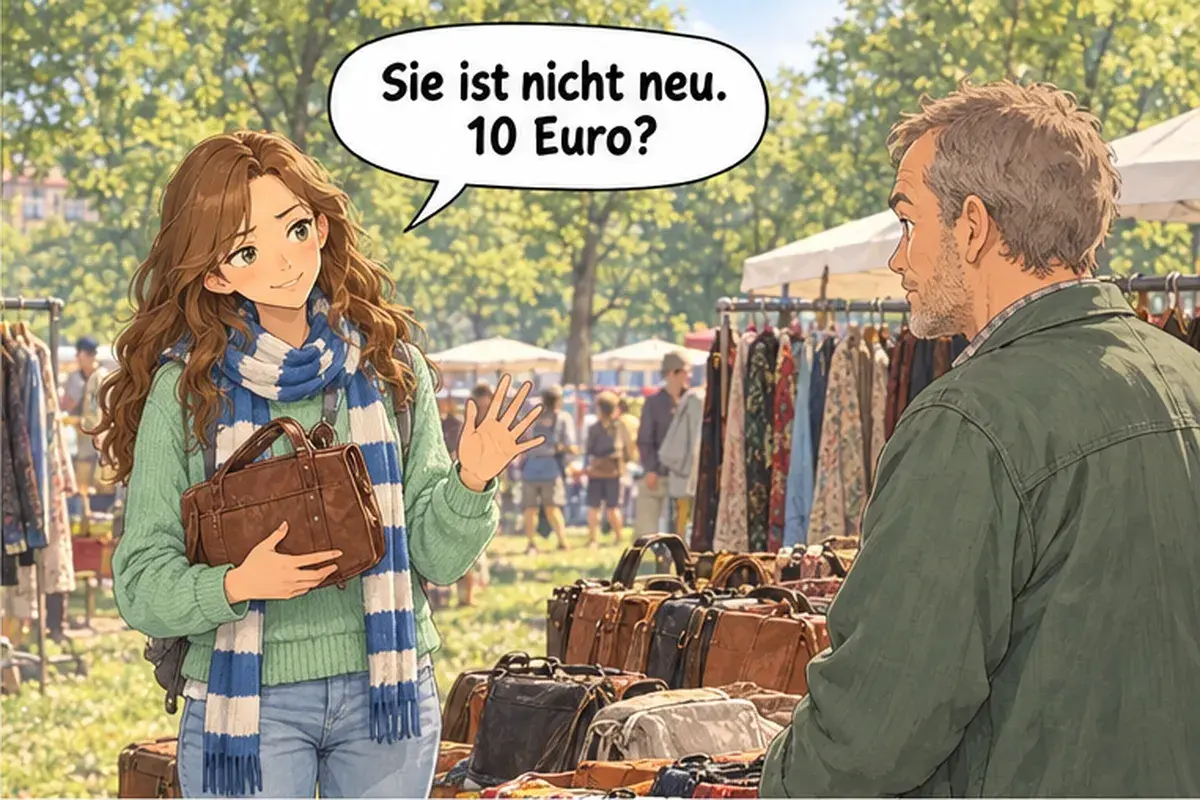
- Katja
Sie ist nicht neu. 10 Euro?
It's not new. €10?
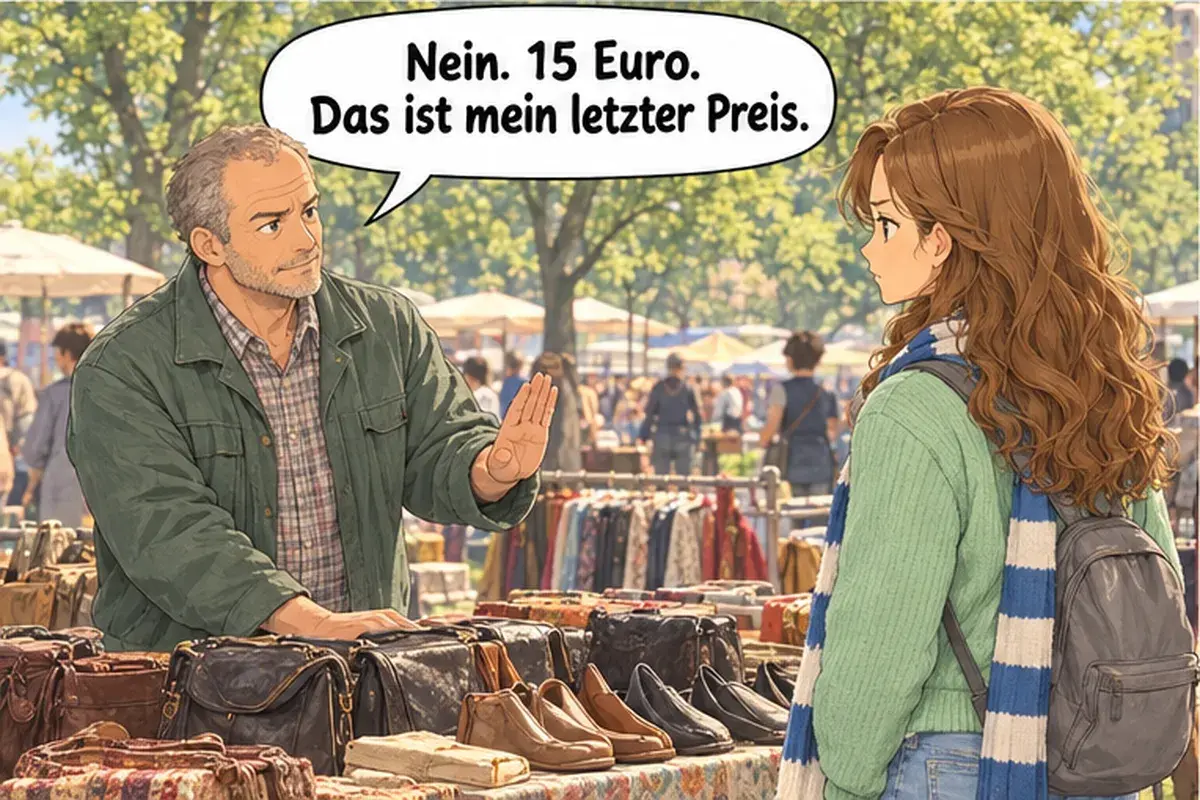
- Verkäufer
Nein. 15 Euro. Das ist mein letzter Preis.
No. €15. That's my last price.
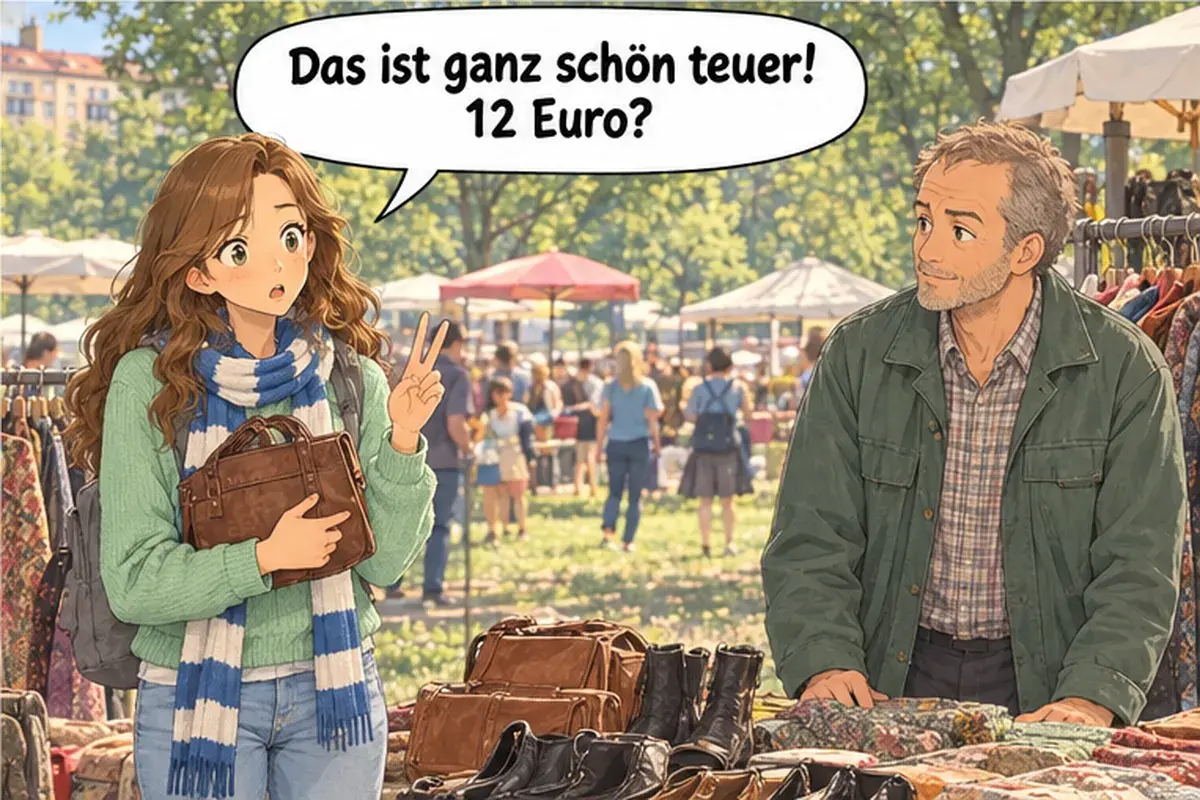
- Katja
Das ist ganz schön teuer! 12 Euro?
That's pretty expensive! €12?
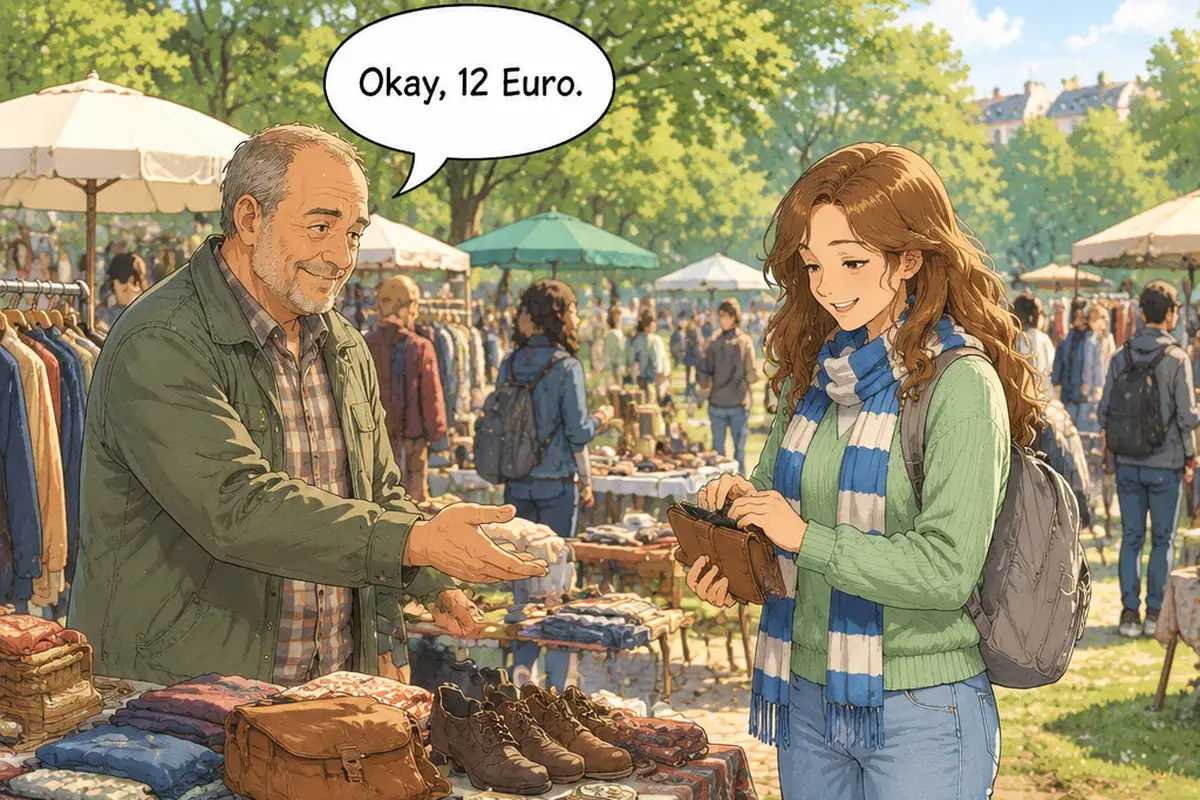
- Verkäufer
Okay, 12 Euro.
OK, €12.

- Lukas
Siehst du? So geht das!
You see? That's how it works!
Grammar for this text
- Du fragst den Verkäufer. Er sagt einen Preis, du sagst einen anderen. —
einen anderen— a different one; the wordPreisisn't repeated. The ending-enis the same as ineinen Preis(accusative, unit 5). That's how haggling goes: he names a price, you name yours. Heredumeans anyone, like English "you" in general advice. - Das tue ich nicht gern. —
tueis a form oftun(to do):ich tue, du tust, er tut.nicht gern— don't like doing;Dascomes first for emphasis. - Man zahlt oft bar. —
man— people in general (unit 3),oft— often,bar— in cash (unit 4). Bring cash: not every stand takes cards. - Sie ist gut, nichts ist kaputt! — that's how sellers praise a used item.
Sieat the start means "it" (aboutdie Tasche), not the formal "you": at the start of a sentence both have a capital letter.nichts— nothing (unit 5). Katja answers with a reason for a lower price: Sie ist nicht neu. - 10 Euro? — a question with no verb: that's how you offer your own price. The numbers: 10 —
zehn, 12 —zwölf, 15 —fünfzehn, 20 —zwanzig. - Das ist mein letzter Preis. — "that's my last price". At a market people say it almost every time, and the haggling goes on.
letzterends in-erbecauseder Preisis masculine. - Das ist ganz schön teuer! —
ganz schönbefore an adjective means "pretty, quite":ganz schön teuer— pretty expensive. And in Siehst du? So geht das!,siehstis the du form ofsehen:ich sehe, du siehst, er sieht(unit 8);So geht das— that's how it works.
Words and grammar of the unit: Buy clothes.
Learn the words from the texts with flashcards
In the app, you can tap any word in a text to see its translation, forms and examples, and new words stick with flashcards. 15 minutes a day.
Start for freeEverything is open for free. No card needed to sign up.