

German dialogue with translation · A1 · 14 lines
Was ist Ihr Beruf? What's your job? (formal)
Comic · 14 panels
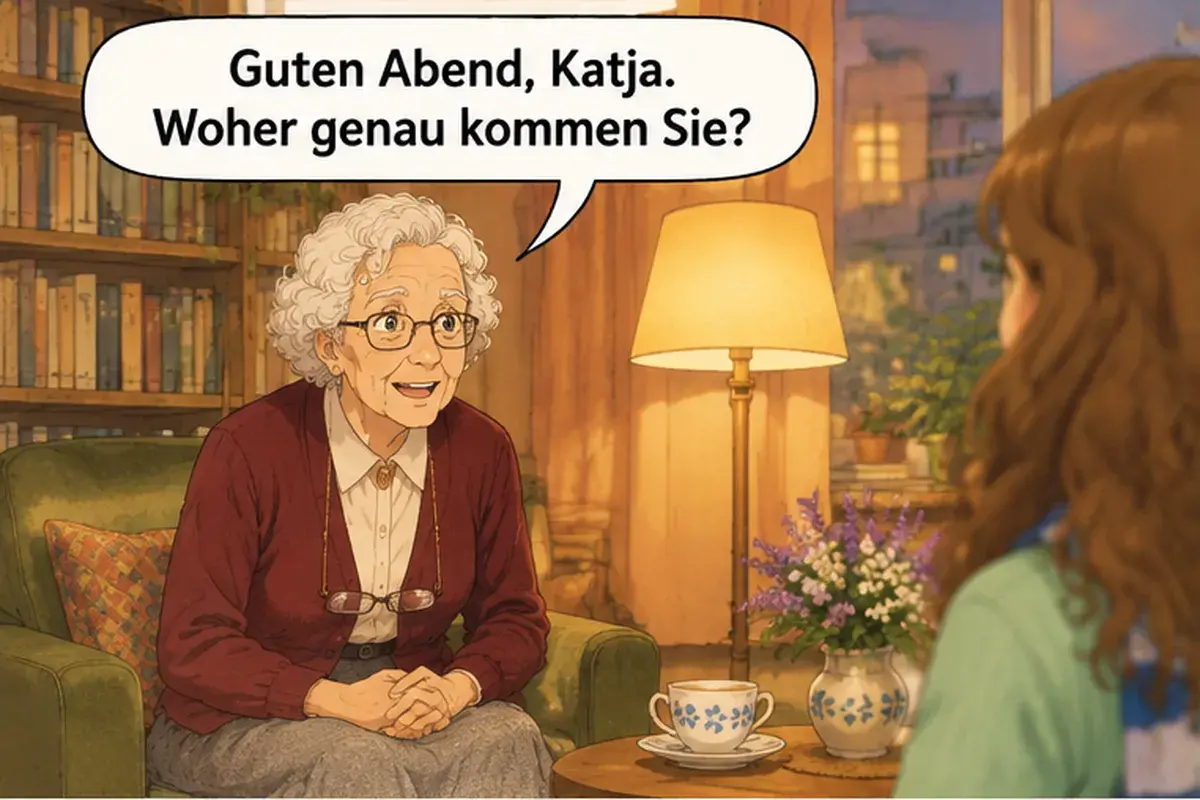
- Frau Brandt
Guten Abend, Katja. Woher genau kommen Sie?
Good evening, Katja. Where exactly are you from? (formal)
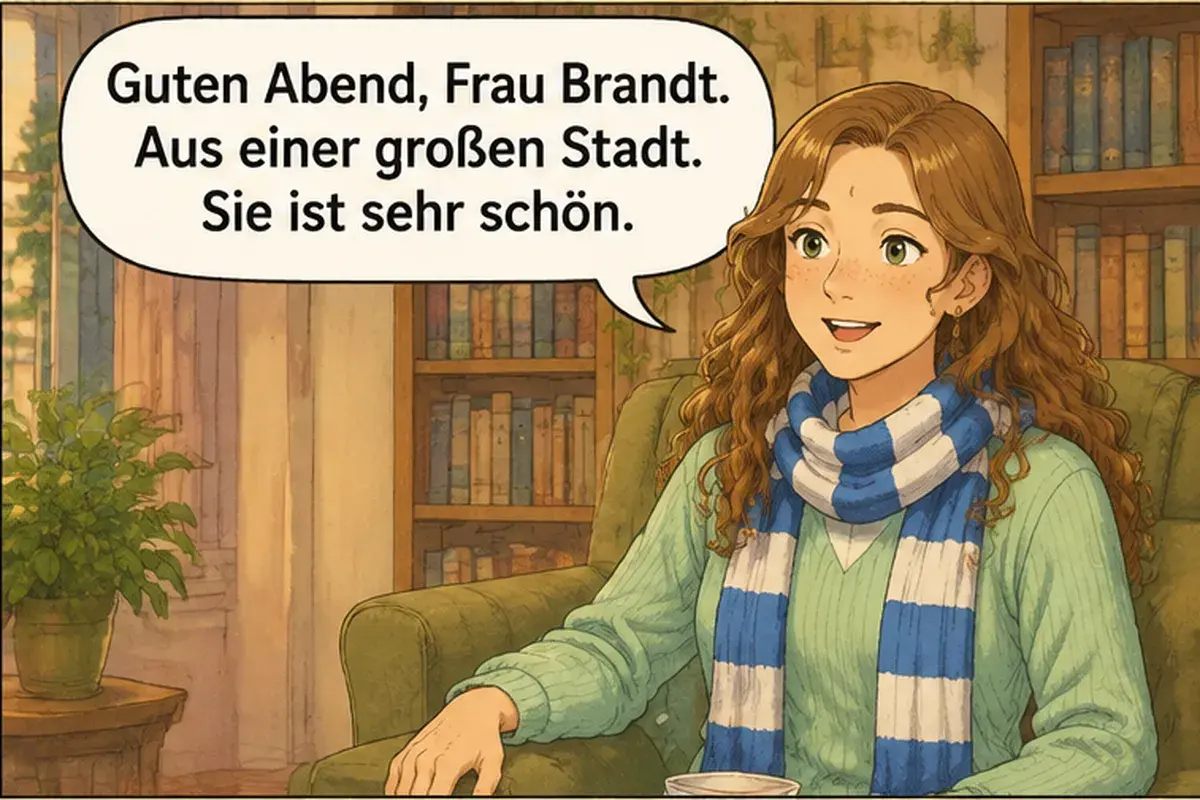
- Katja
Guten Abend, Frau Brandt. Aus einer großen Stadt. Sie ist sehr schön.
Good evening, Frau Brandt. From a big city. It's very beautiful.
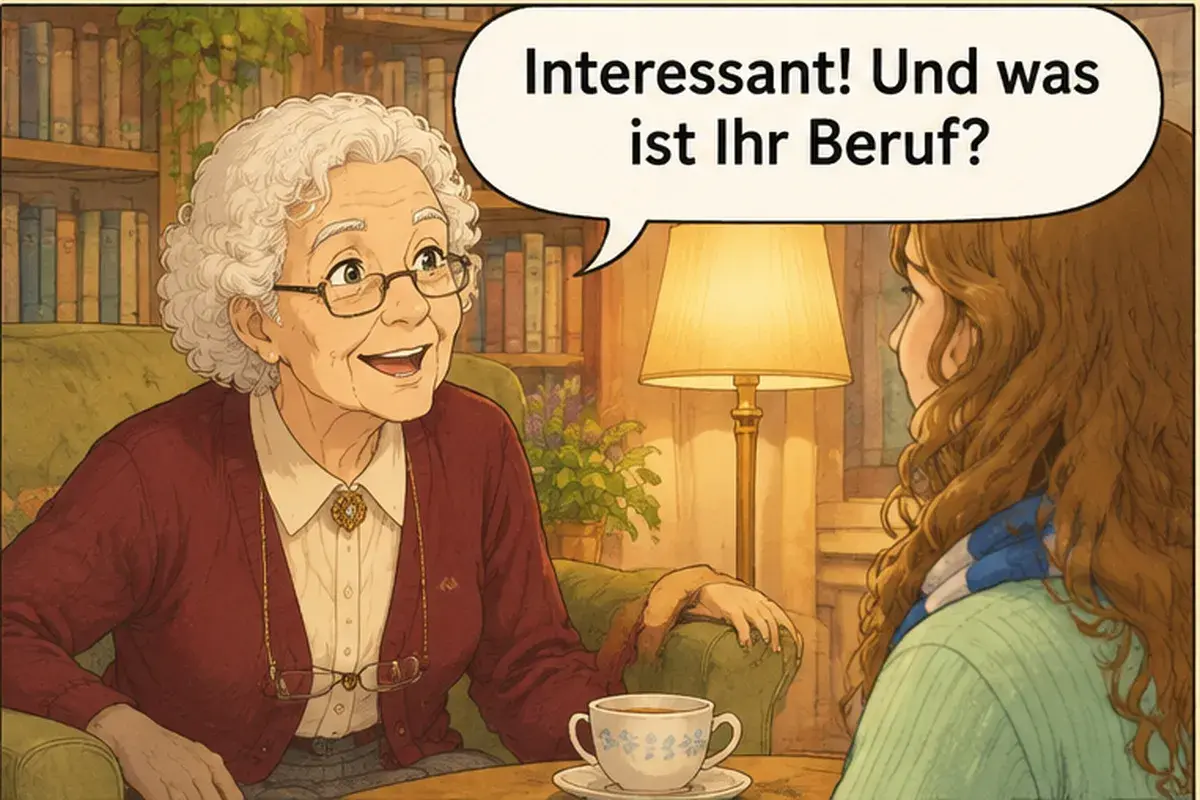
- Frau Brandt
Interessant! Und was ist Ihr Beruf?
Interesting! And what's your job? (formal)
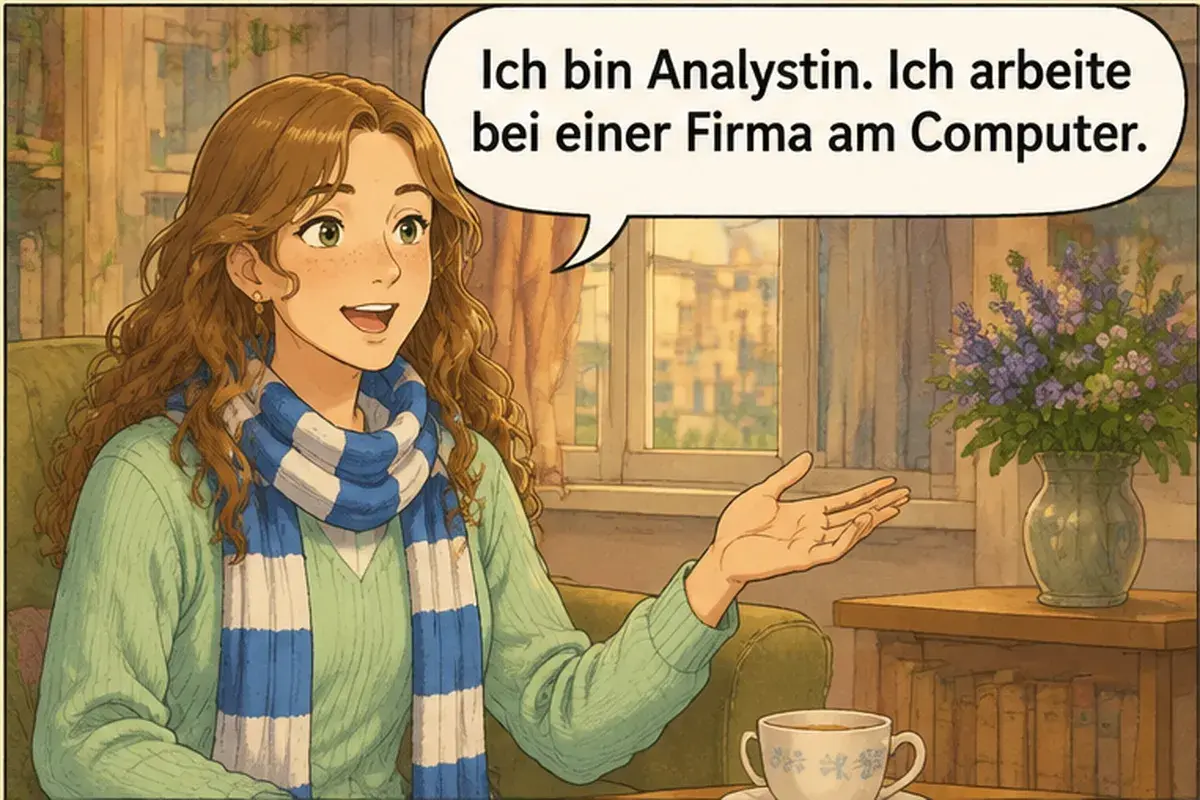
- Katja
Ich bin Analystin. Ich arbeite bei einer Firma am Computer.
I'm an analyst. I work at a company, on the computer (woman speaking).
- Frau Brandt
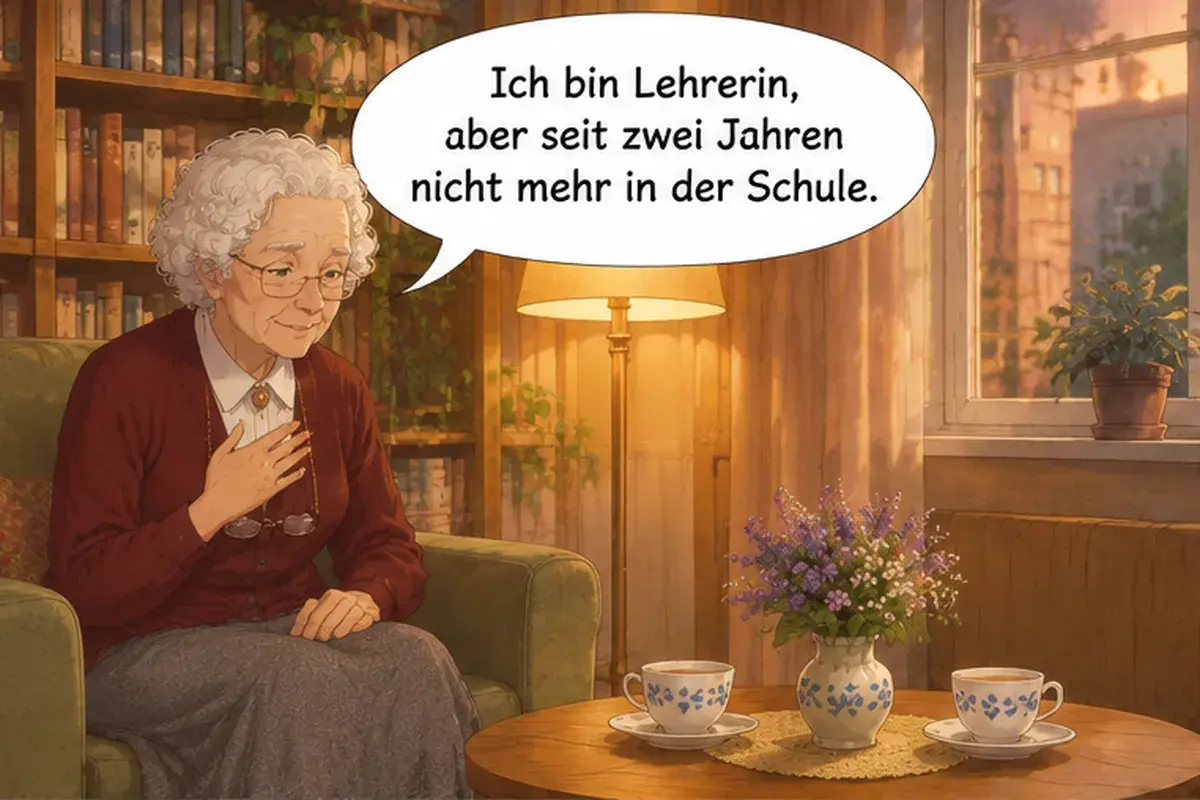
Ich bin Lehrerin, aber seit zwei Jahren nicht mehr in der Schule.
I'm a teacher, but I haven't been at school for two years now (woman speaking).

- Katja
Eine Lehrerin! Entschuldigung, ich antworte noch langsam.
A teacher! Sorry, I still answer slowly.
- Frau Brandt
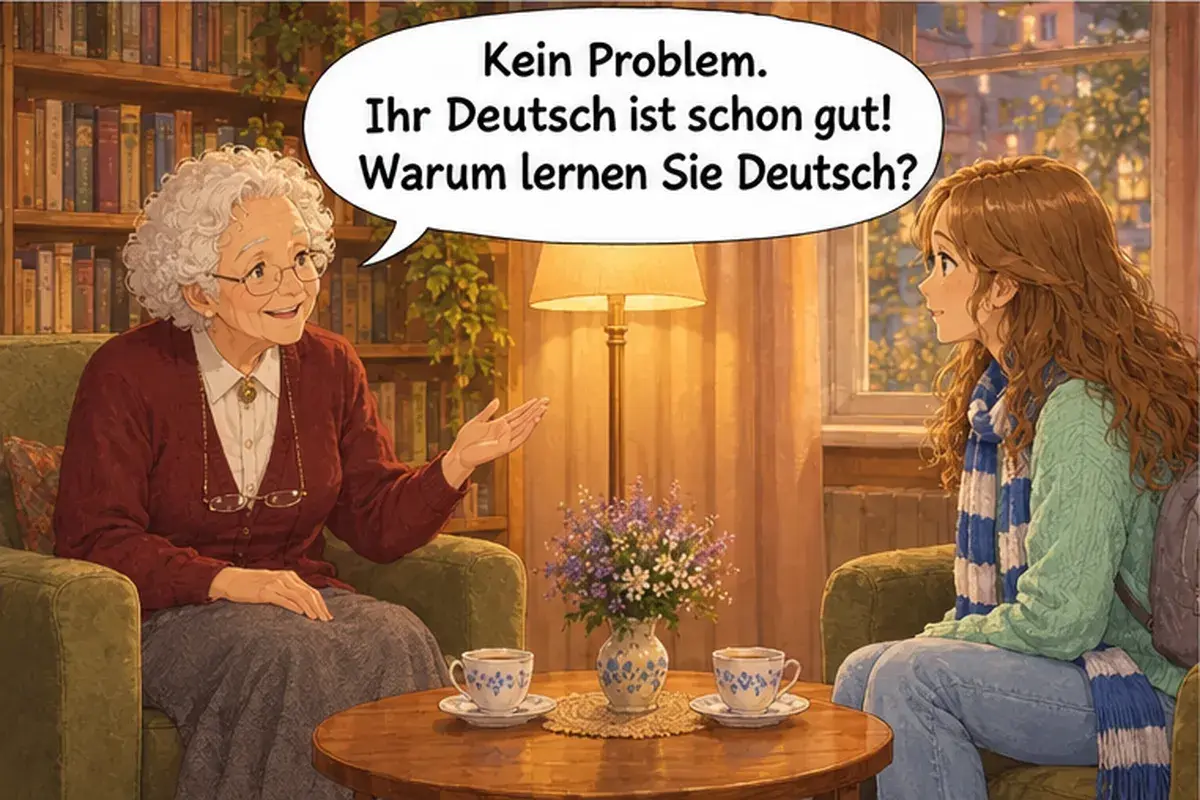
Kein Problem. Ihr Deutsch ist schon gut! Warum lernen Sie Deutsch?
No problem. Your German is already good! Why are you learning German? (formal)

- Katja
Ich lerne Deutsch seit drei Monaten, denn ich möchte alles verstehen.
I've been learning German for three months because I'd like to understand everything.
- Frau Brandt
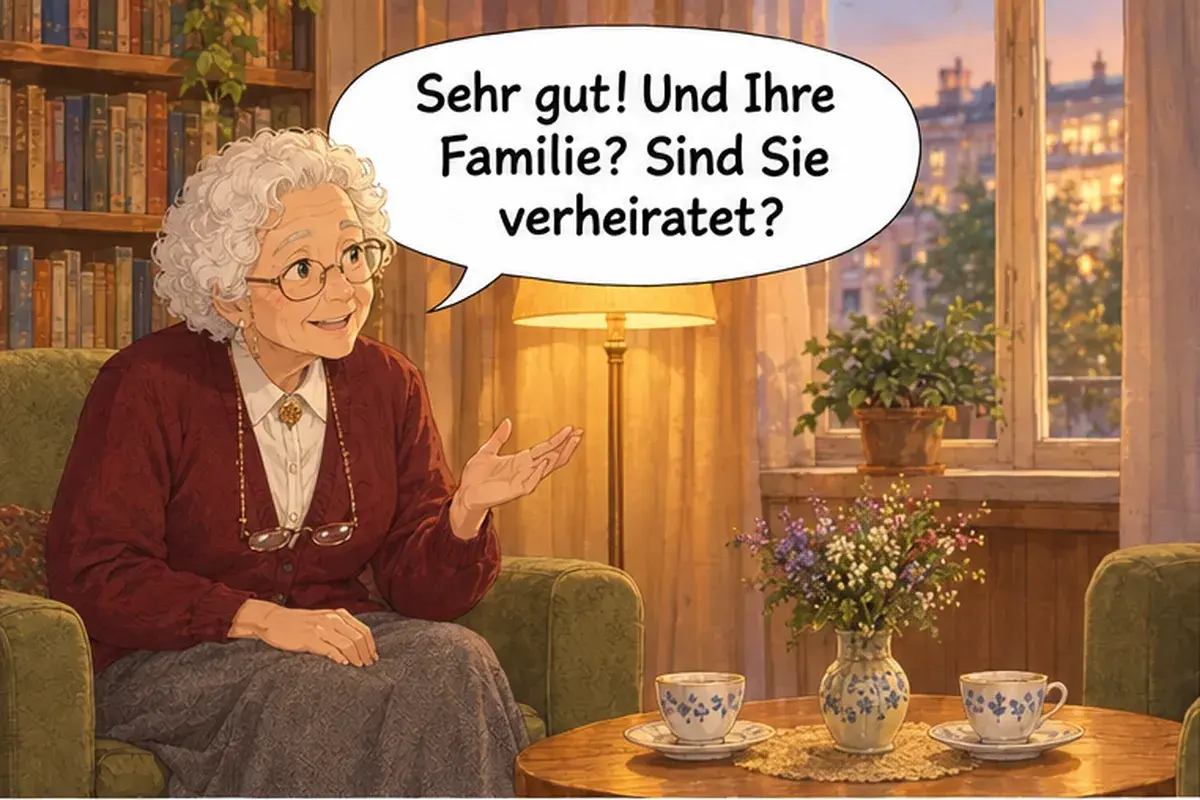
Sehr gut! Und Ihre Familie? Sind Sie verheiratet?
Very good! And your family? Are you married? (formal)
- Katja
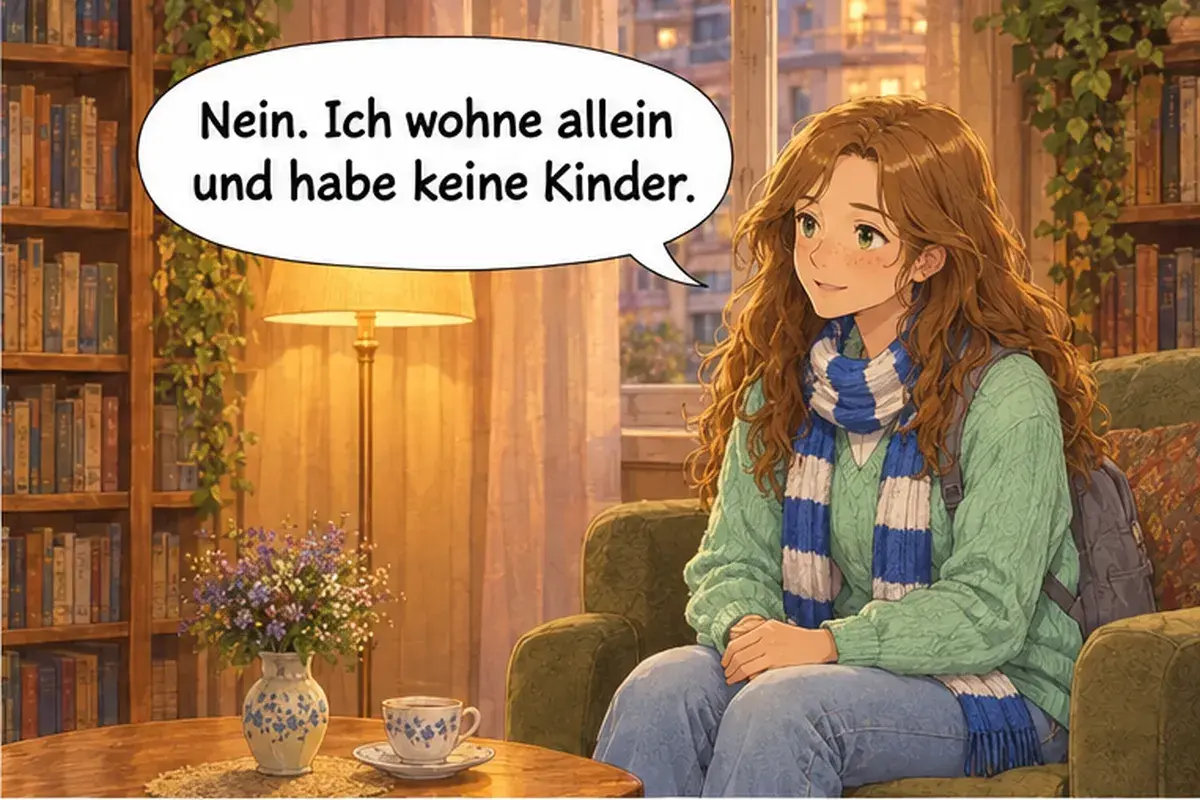
Nein. Ich wohne allein und habe keine Kinder.
No. I live alone and don't have any children.
- Frau Brandt
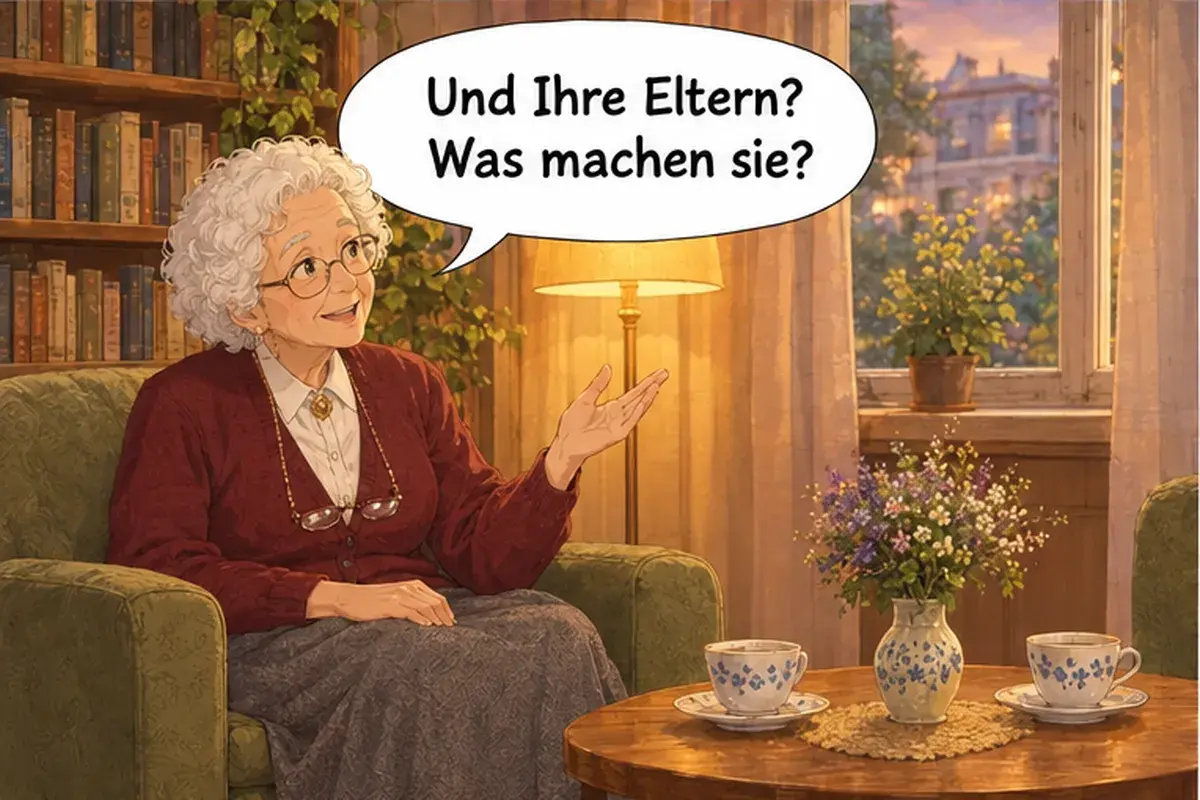
Und Ihre Eltern? Was machen sie?
And your parents? What do they do? (formal)
- Katja
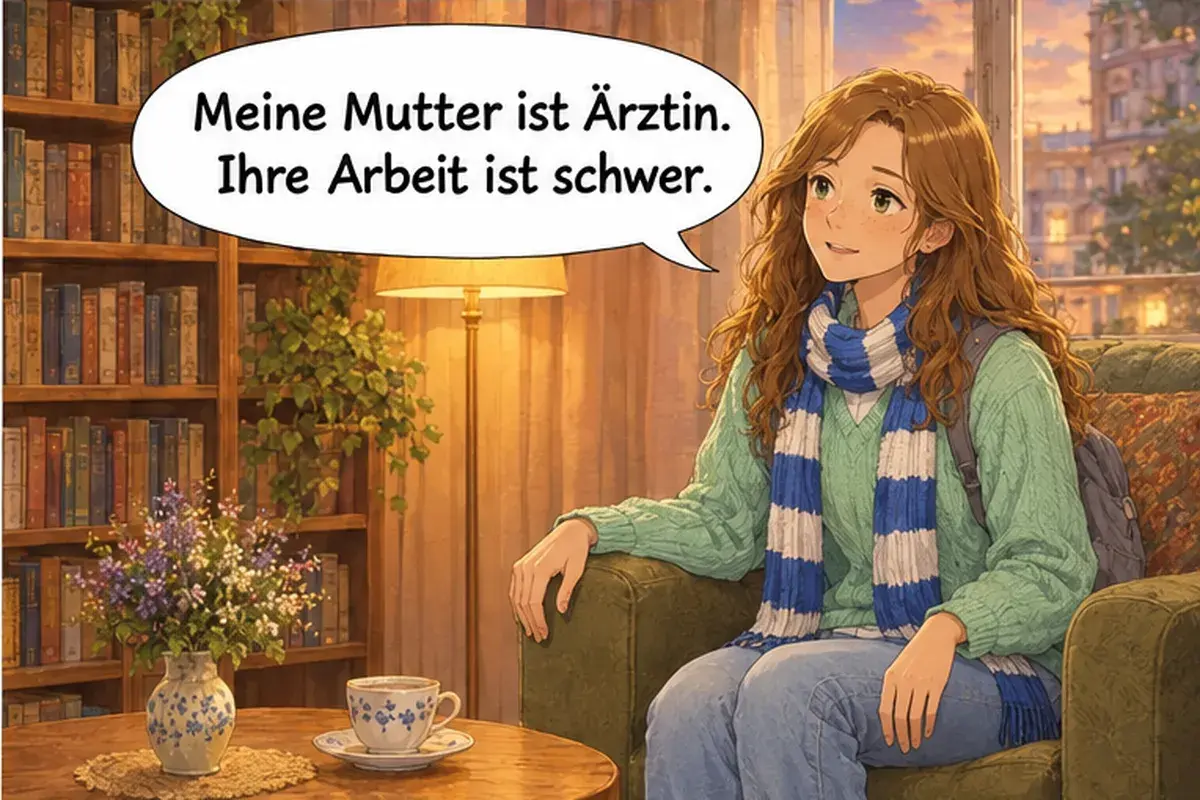
Meine Mutter ist Ärztin. Ihre Arbeit ist schwer.
My mother is a doctor. Her work is hard.
- Frau Brandt
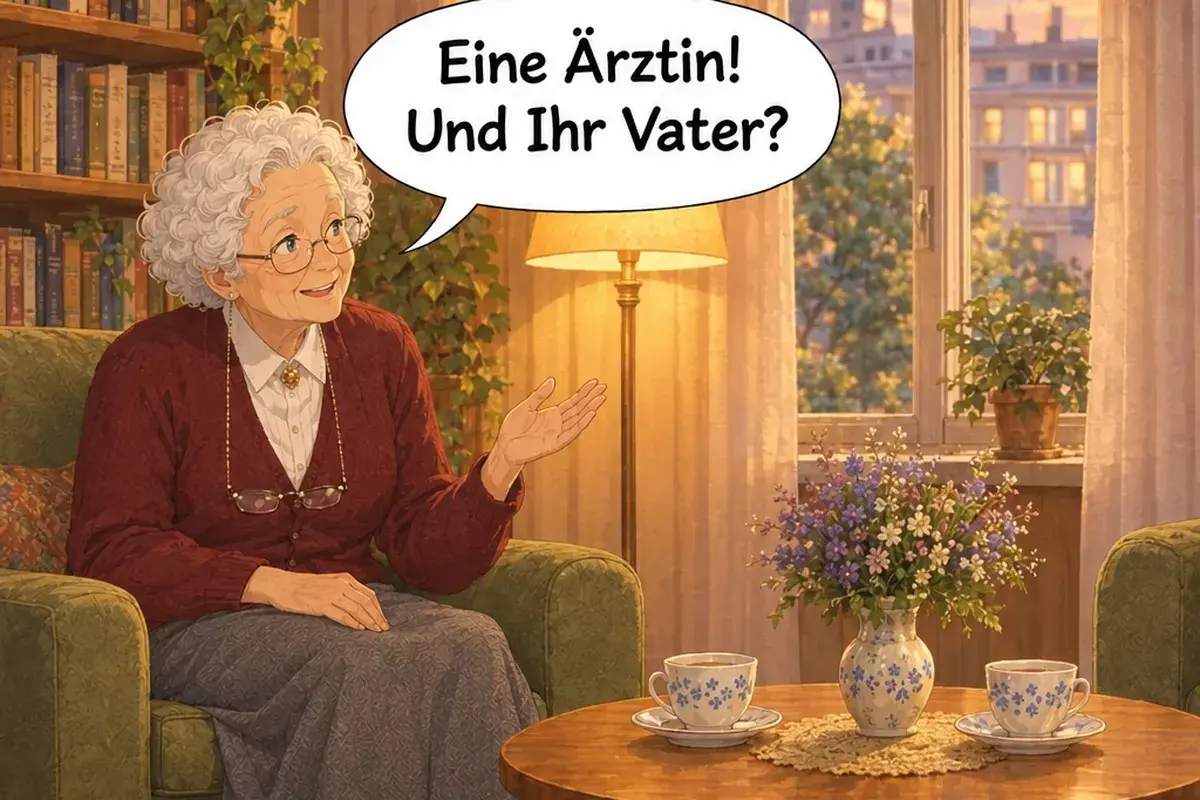
Eine Ärztin! Und Ihr Vater?
A doctor! And your father? (formal)
- Katja
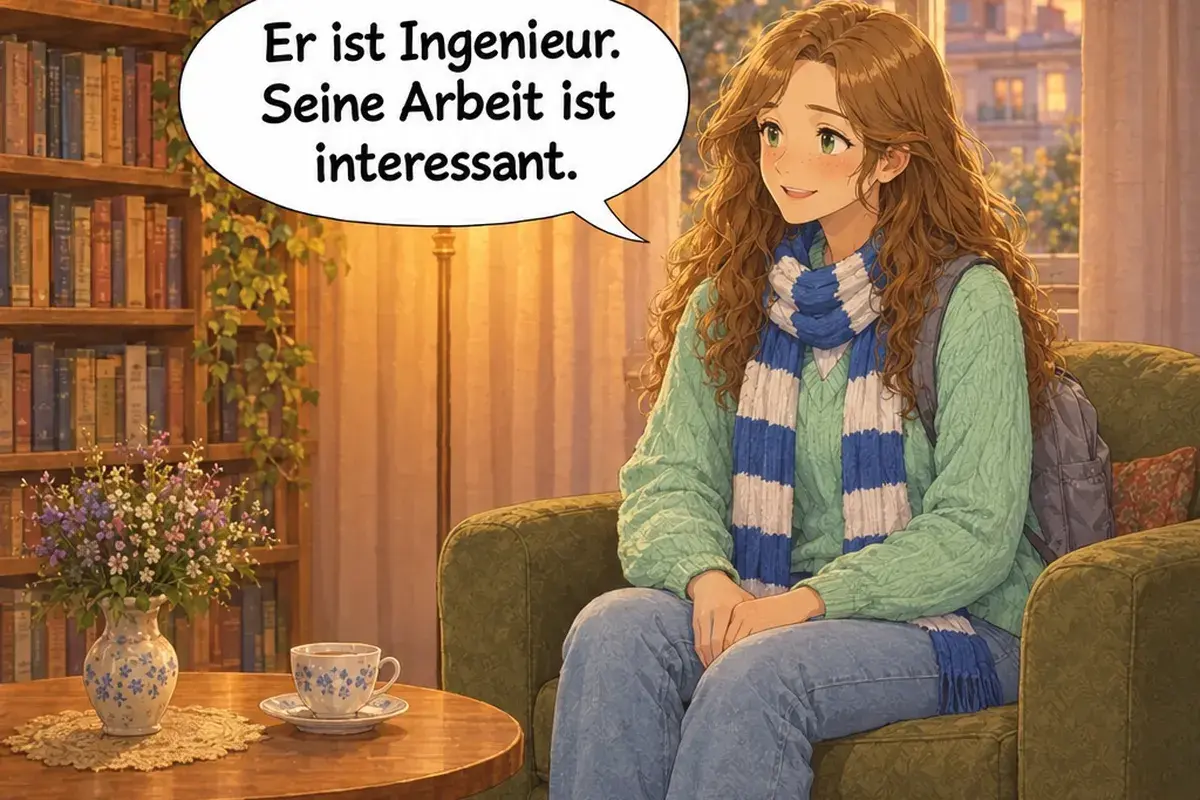
Er ist Ingenieur. Seine Arbeit ist interessant.
He's an engineer. His work is interesting.
Grammar for this text
- Ich bin Analystin. Ich arbeite bei einer Firma am Computer — German names a job without an article:
Ich bin Analystin(English says "I'm an analyst"). The female form adds-in.bei einer Firmameans "at a company",am Computermeans "on the computer" (amis short foran dem; these cases come in A2). - Ich bin Lehrerin, aber seit zwei Jahren nicht mehr in der Schule —
nicht mehrmeans "not anymore",seit zwei Jahrenmeans "for two years". The secondbinisn't repeated.in der Schulemeans "at school". - Ich lerne Deutsch seit drei Monaten — with
seit, German uses the present tense where English uses the present perfect: "I've been learning German for three months".Monatenends in-n: that's how the word looks afterseit drei. - Entschuldigung, ich antworte noch langsam —
antworteis the ich form ofantworten.nochhere means "still". - denn ich möchte alles verstehen —
dennmeans "because". The word order after it is normal, as in a separate sentence, and there's a comma before it. - Ich wohne allein und habe keine Kinder —
keineis the plural ofkein(no, not any; unit 5). The wordverheiratetis the same for a man and a woman. - Ihre Arbeit ist schwer, Seine Arbeit ist interessant — just like in English, the word depends on the owner: for the mother it's
ihre(her), for the fatherseine(his).
Words and grammar of the unit: Talk about your job and family.
Learn the words from the texts with flashcards
In the app, you can tap any word in a text to see its translation, forms and examples, and new words stick with flashcards. 15 minutes a day.
Start for freeEverything is open for free. No card needed to sign up.