

German dialogue with translation · A1 · 14 lines
Hast du Geschwister? Do you have any siblings?
Comic · 14 panels
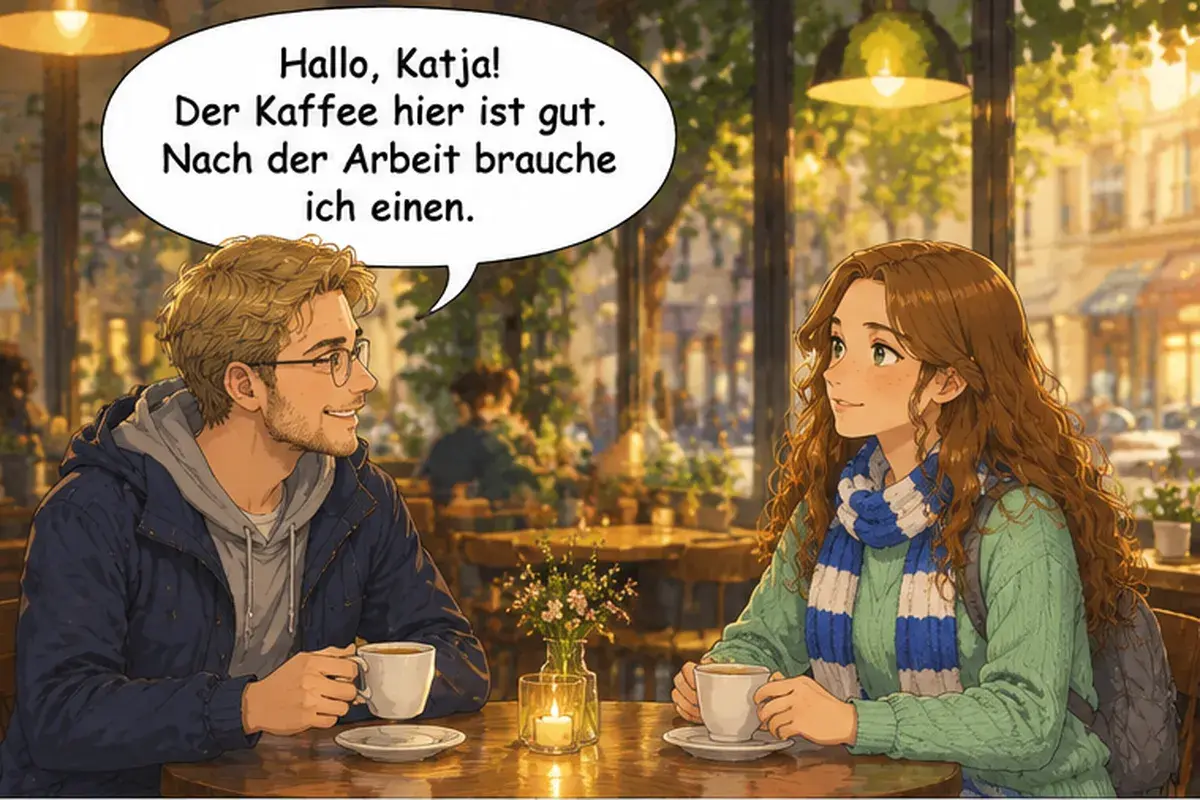
- Lukas
Hallo, Katja! Der Kaffee hier ist gut. Nach der Arbeit brauche ich einen.
Hi, Katja! The coffee here is good. After work I need one.
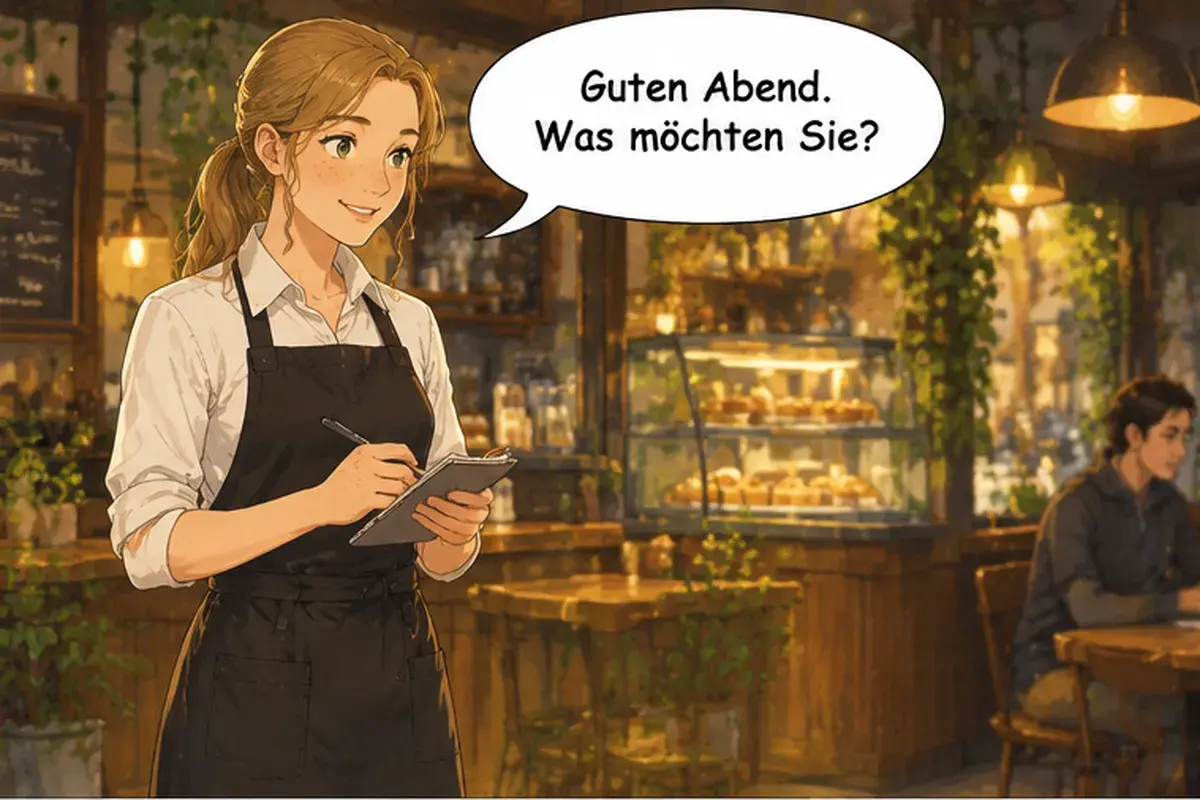
- Kellnerin
Guten Abend. Was möchten Sie?
Good evening. What would you like? (formal)
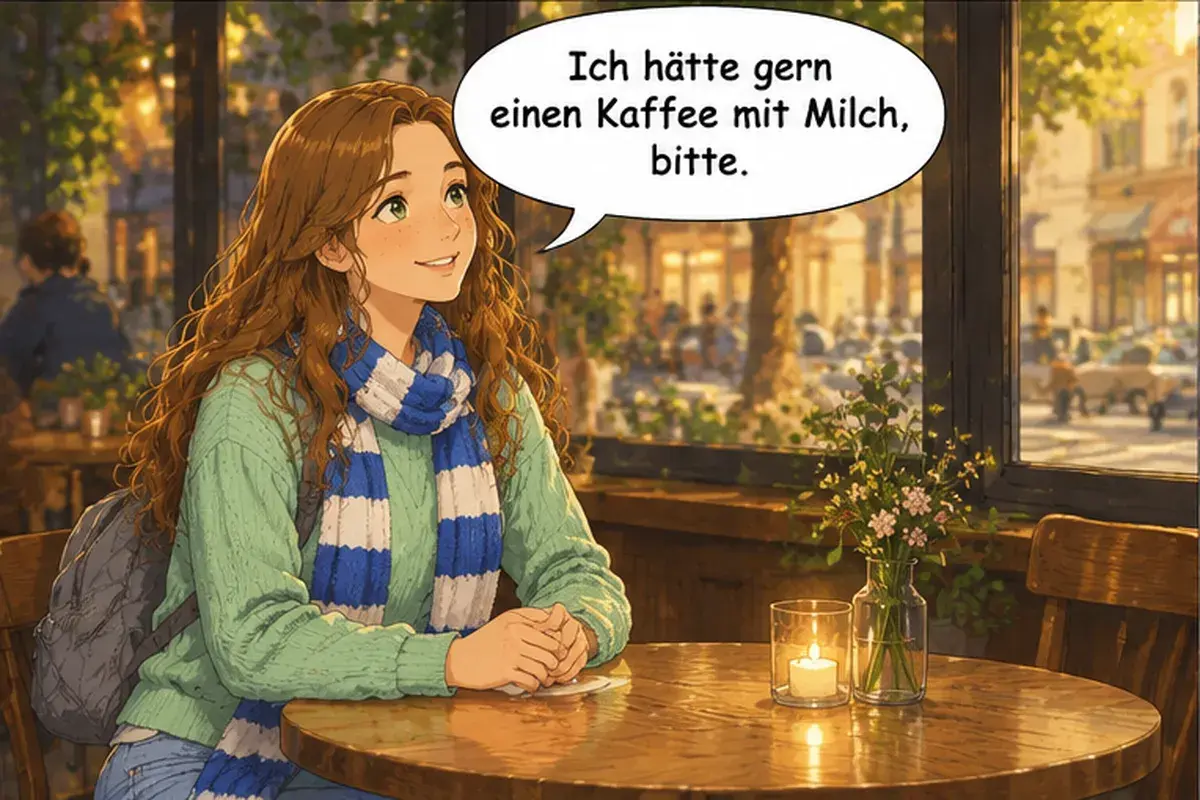
- Katja
Ich hätte gern einen Kaffee mit Milch, bitte.
I'd like a coffee with milk, please.
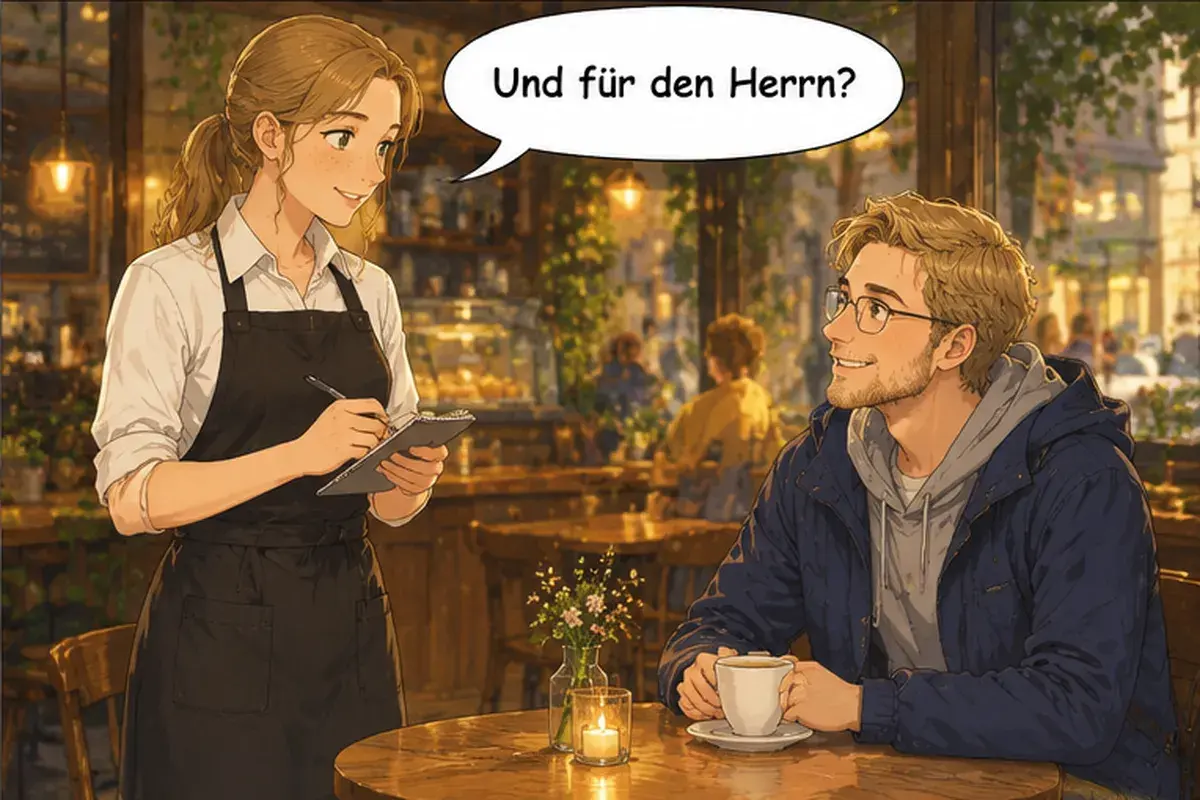
- Kellnerin
Und für den Herrn?
And for the gentleman?
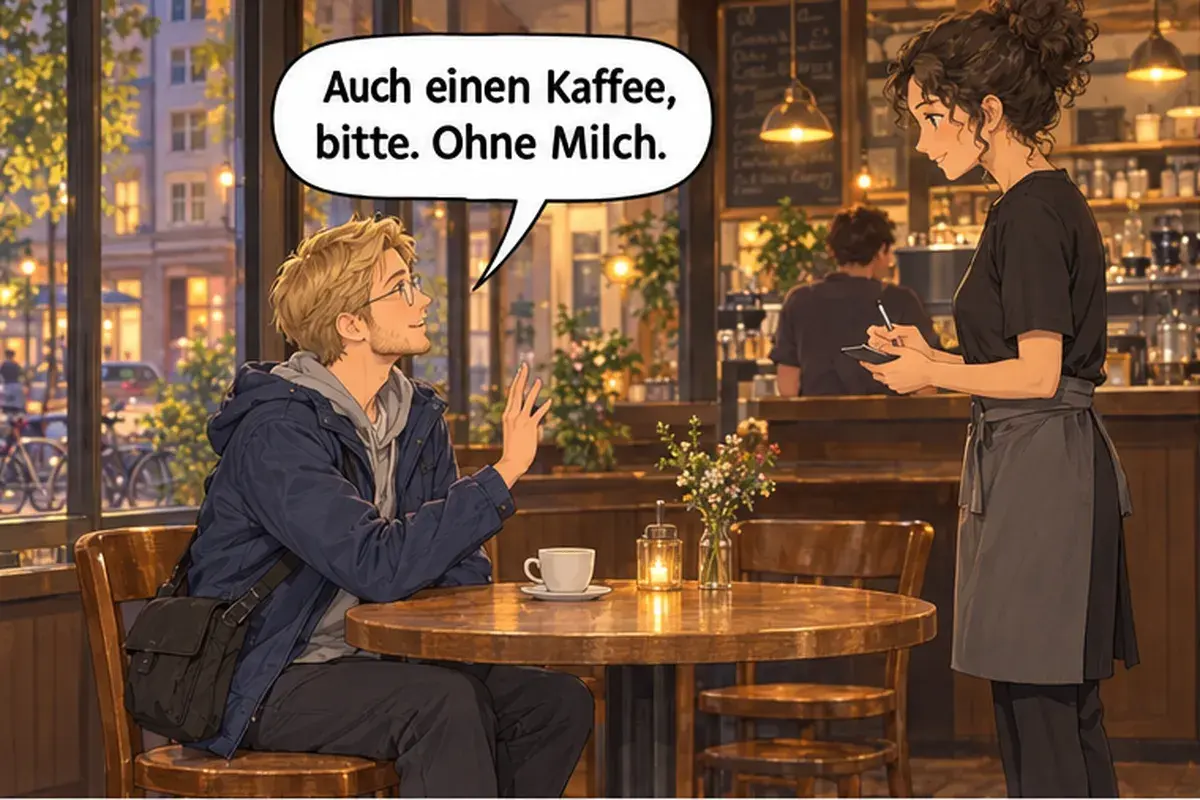
- Lukas
Auch einen Kaffee, bitte. Ohne Milch.
A coffee too, please. Without milk.
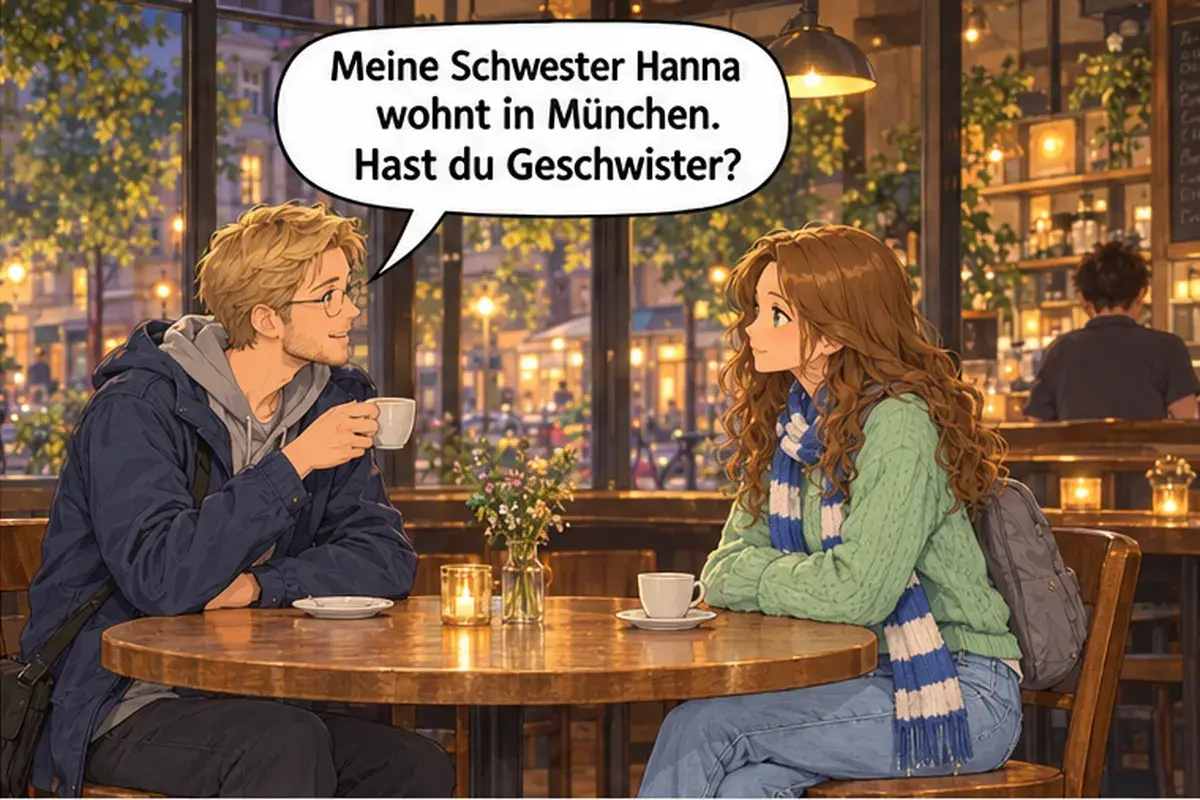
- Lukas
Meine Schwester Hanna wohnt in München. Hast du Geschwister?
My sister Hanna lives in Munich. Do you have any siblings?
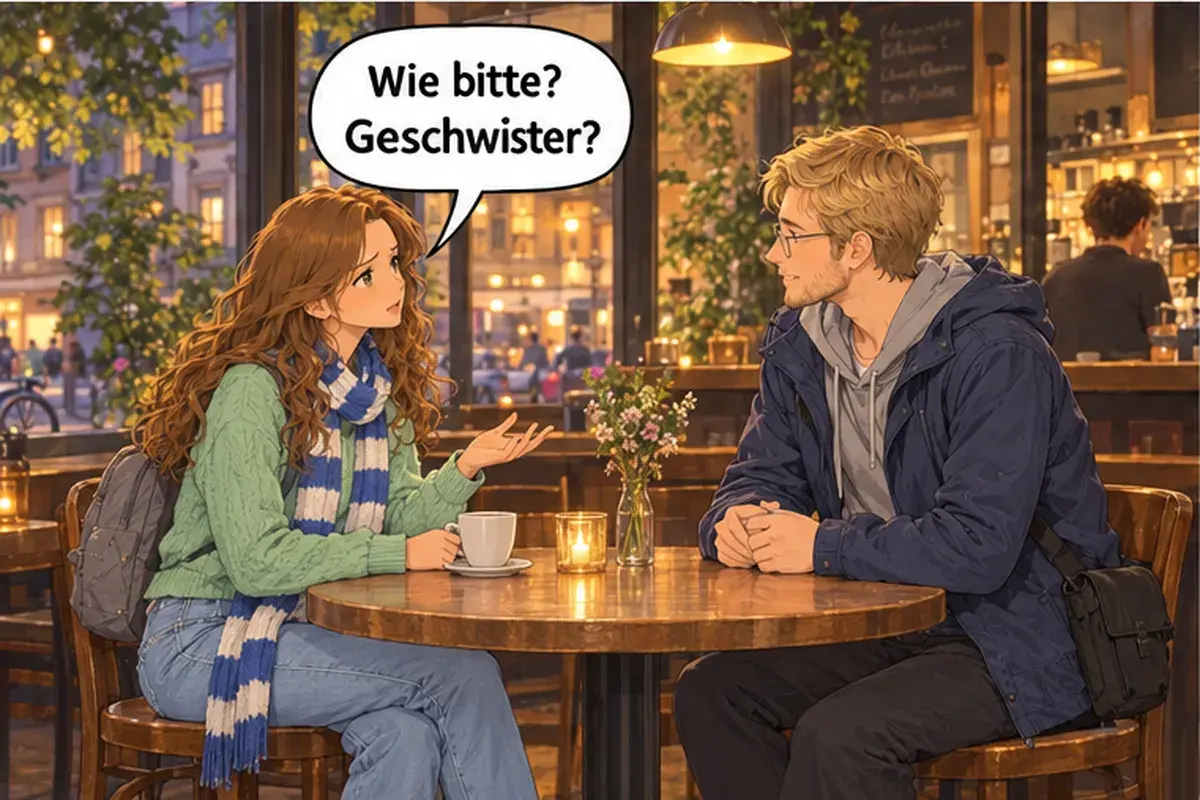
- Katja
Wie bitte? Geschwister?
Sorry? "Geschwister"?
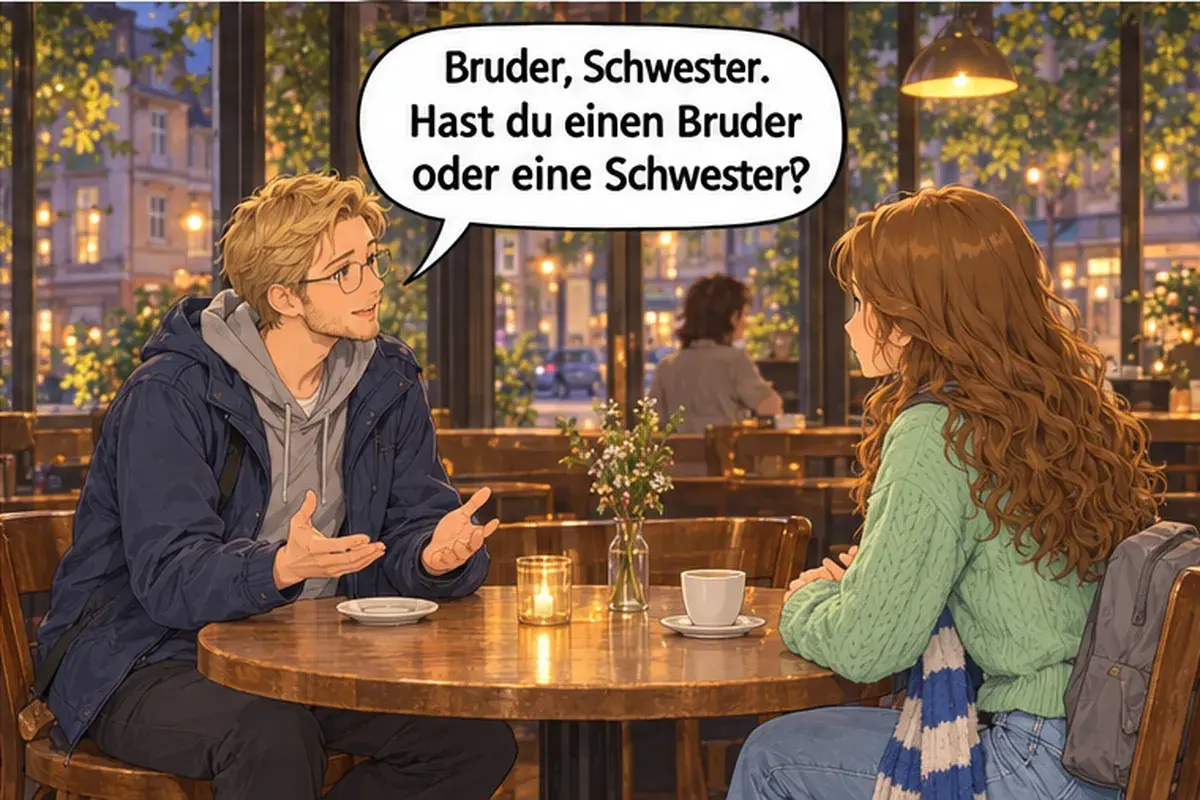
- Lukas
Bruder, Schwester. Hast du einen Bruder oder eine Schwester?
Brother, sister. Do you have a brother or a sister?
- Katja
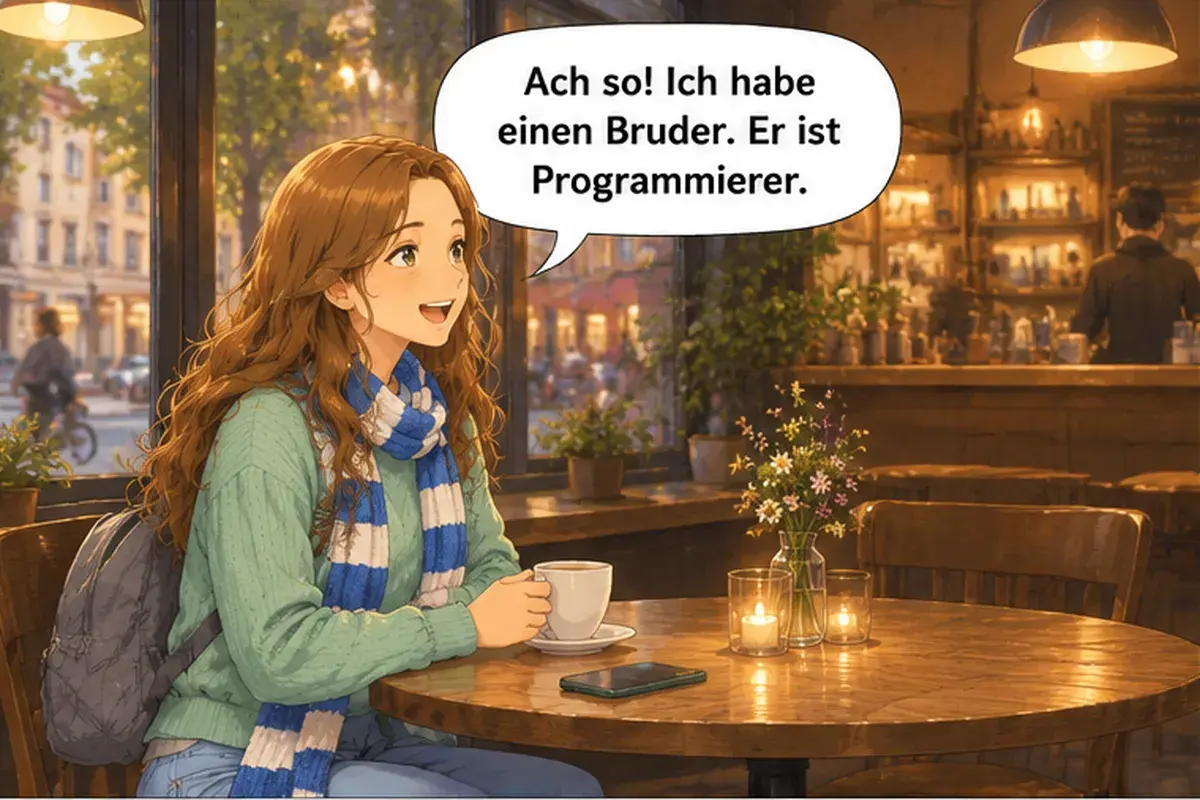
Ach so! Ich habe einen Bruder. Er ist Programmierer.
Oh, I see! I have a brother. He's a programmer.
- Lukas
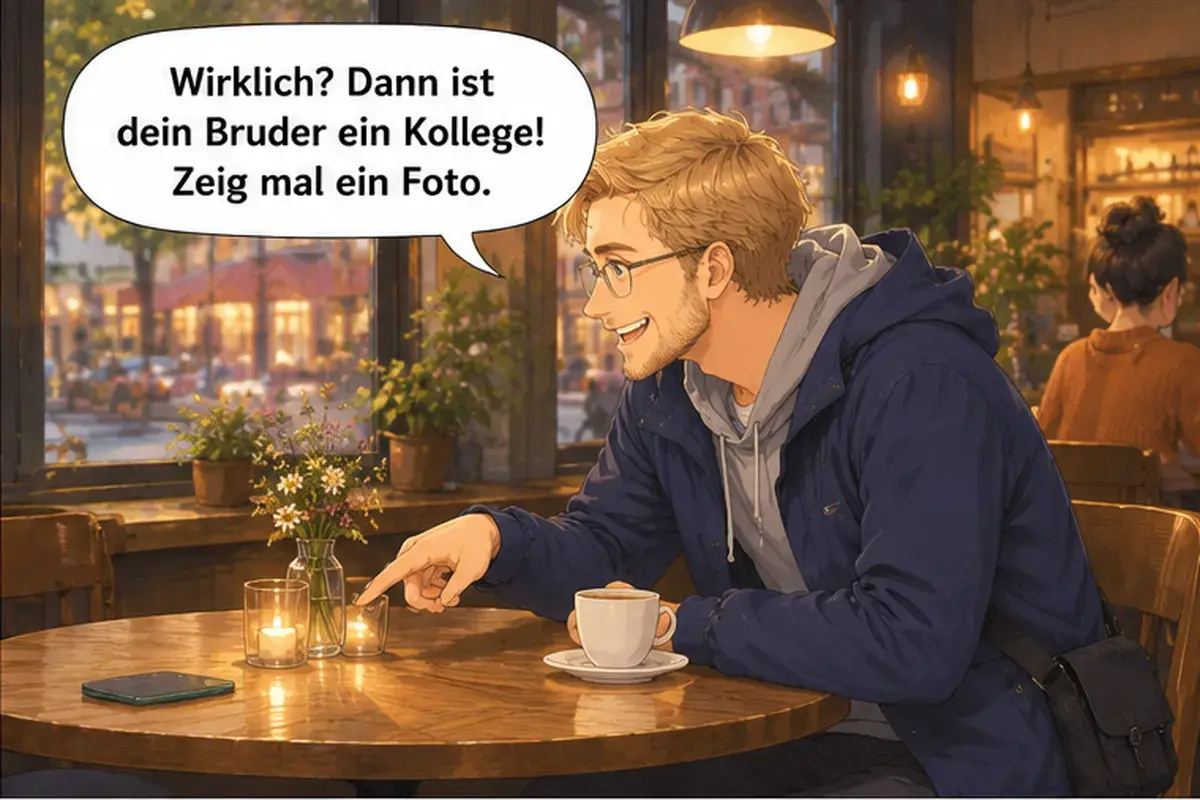
Wirklich? Dann ist dein Bruder ein Kollege! Zeig mal ein Foto.
Really? Then your brother is a colleague! Show me a photo.
- Katja
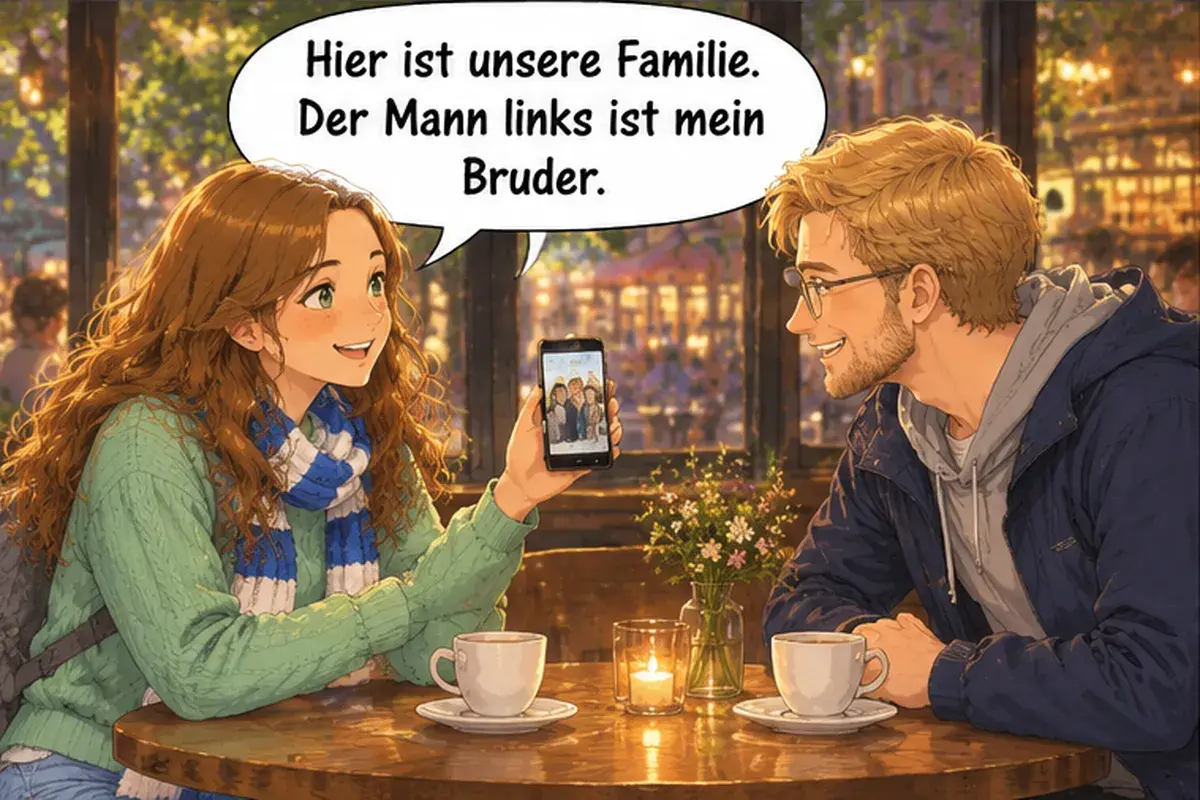
Hier ist unsere Familie. Der Mann links ist mein Bruder.
Here's our family. The man on the left is my brother.

- Lukas
Schön! Ich habe auch ein Foto: meine Katze, Pixel.
Nice! I have a photo too: my cat, Pixel.

- Katja
Sie ist so klein!
She's so small!
- Lukas
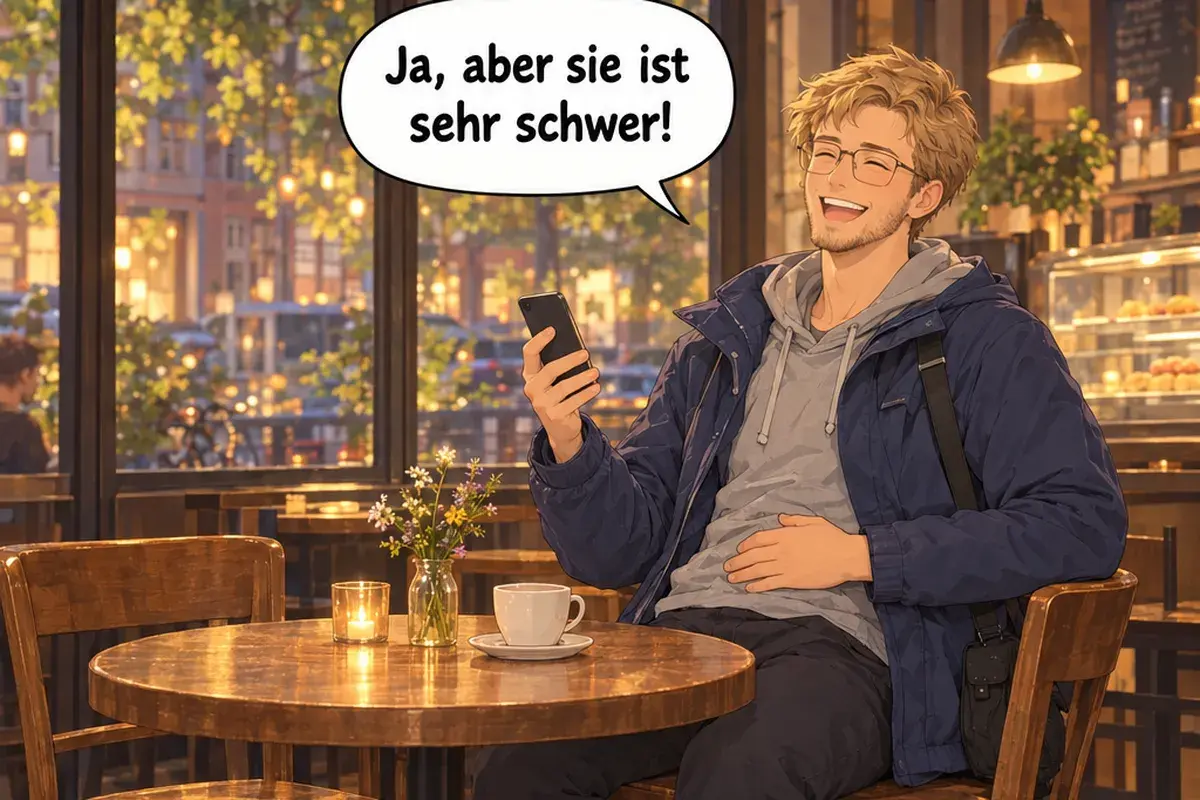
Ja, aber sie ist sehr schwer!
Yes, but she's very heavy!
Grammar for this text
- Zeig mal ein Foto —
zeigis the du command (imperative) ofzeigen, for someone you calldu: takedu zeigst, dropduand-st, and you getzeig. The little wordmalmakes the request softer and friendlier, like "just" or a friendly tone of voice. - Und für den Herrn? — the waitress is asking about Lukas. After
füryou always use the accusative (unit 5):der Herrbecomesden Herrn, and the wordHerralso adds-nin this form.denis like English "him": the person the action is for. - Nach der Arbeit brauche ich einen. —
nach der Arbeitmeans "after work". Learn it as a set phrase for now; why it'sdercomes in A2.einenstands foreinen Kaffee: the wordKaffeewas just said, so it isn't repeated, like English "I need one".Kaffeeis masculine, and afterbrauchenit's in the accusative (unit 5), so it'seinen. - Hast du Geschwister —
Geschwistermeans brothers and sisters together, like English "siblings"; the word is plural only. For one person sayBruderorSchwester, as in the line Bruder, Schwester. - Hier ist unsere Familie —
unseremeans "our". It ends in-ebecausedie Familieis feminine. - Sie ist so klein — here
siemeans "she":die Katzeis feminine, so the cat issie, notes. Andschwerin the last line means "heavy", not "hard".
Words and grammar of the unit: Talk about your job and family.
Learn the words from the texts with flashcards
In the app, you can tap any word in a text to see its translation, forms and examples, and new words stick with flashcards. 15 minutes a day.
Start for freeEverything is open for free. No card needed to sign up.