

German dialogue with translation · A1 · 12 lines
Wie lange bleiben Sie? How long are you staying?
Comic · 9 panels
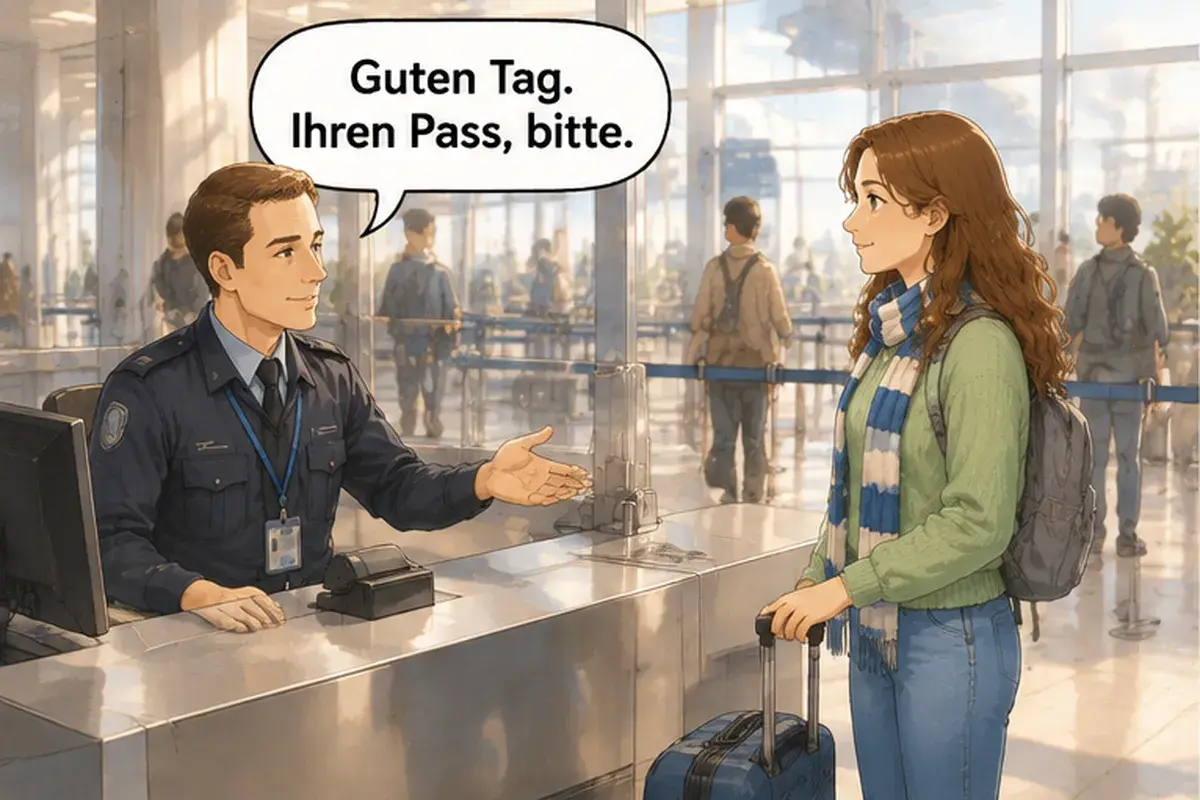
- Grenzbeamter
Guten Tag. Ihren Pass, bitte.
Hello. Your passport, please. (formal)
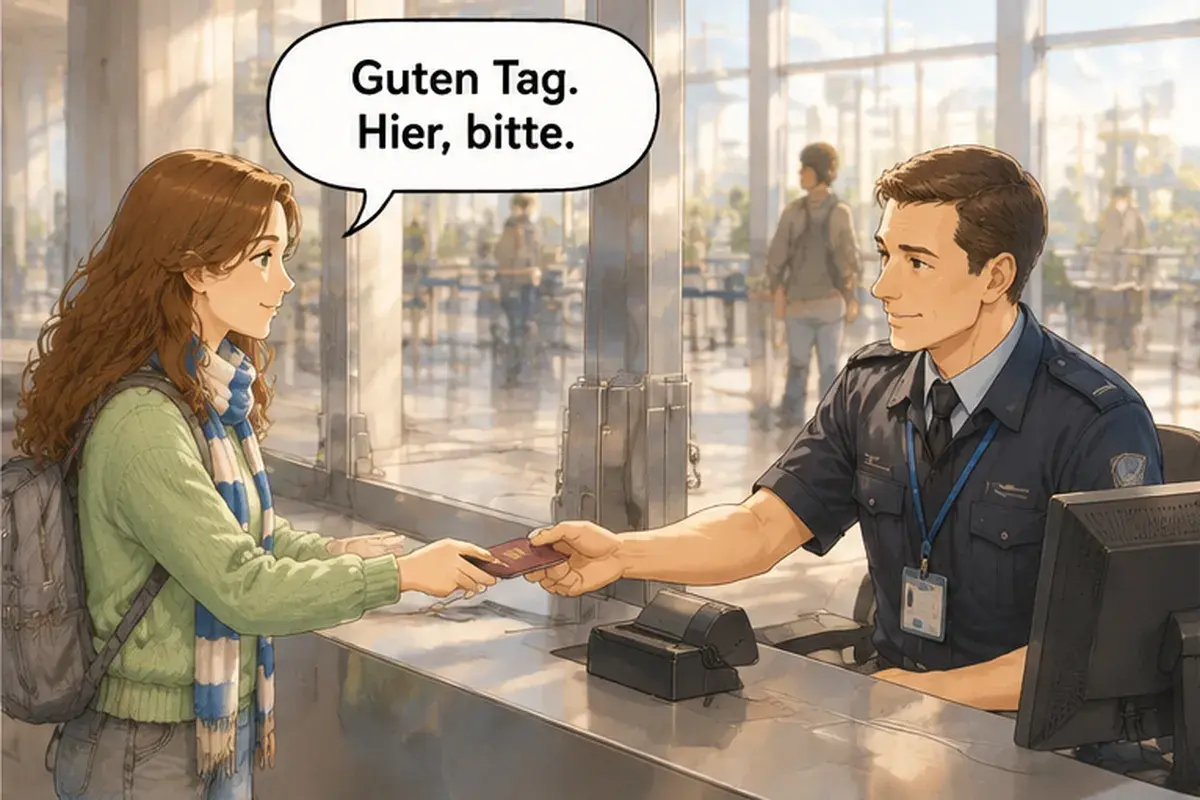
- Katja
Guten Tag. Hier, bitte.
Hello. Here you are.
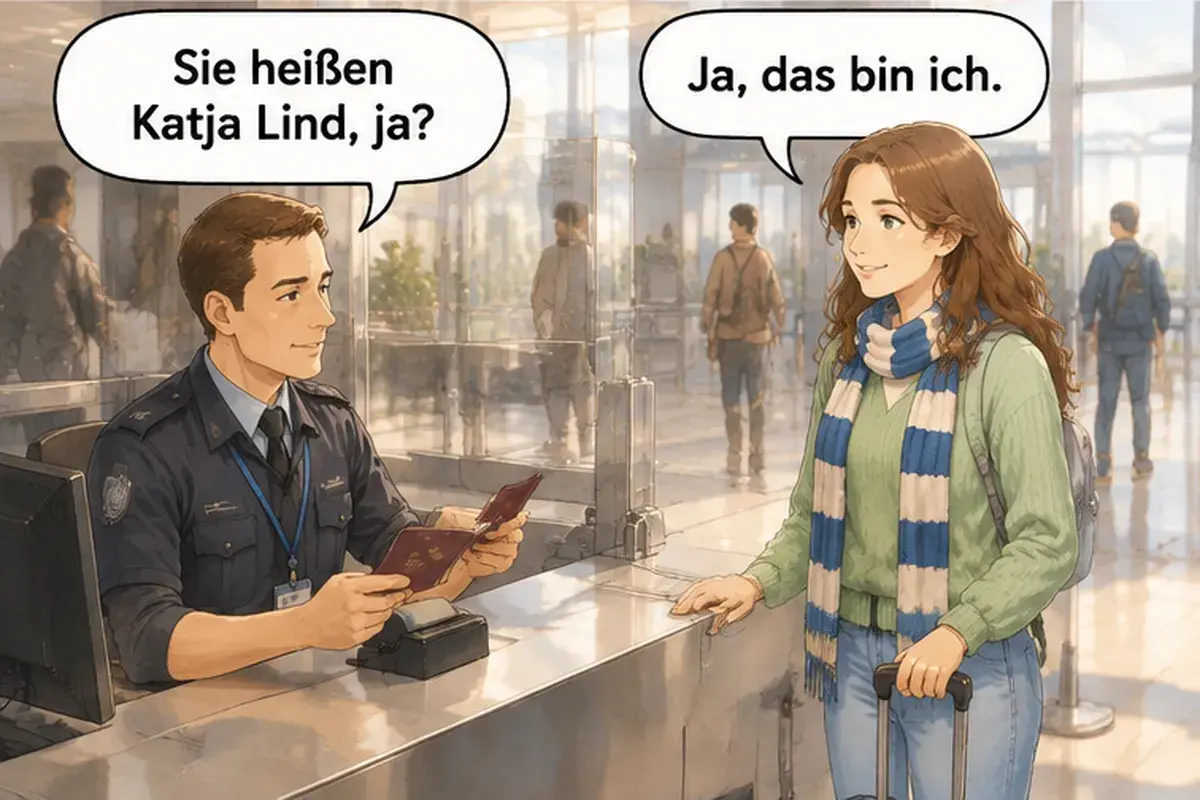
- Grenzbeamter
Sie heißen Katja Lind, ja?
Your name is Katja Lind, right? (formal)
- Katja
Ja, das bin ich.
Yes, that's me.
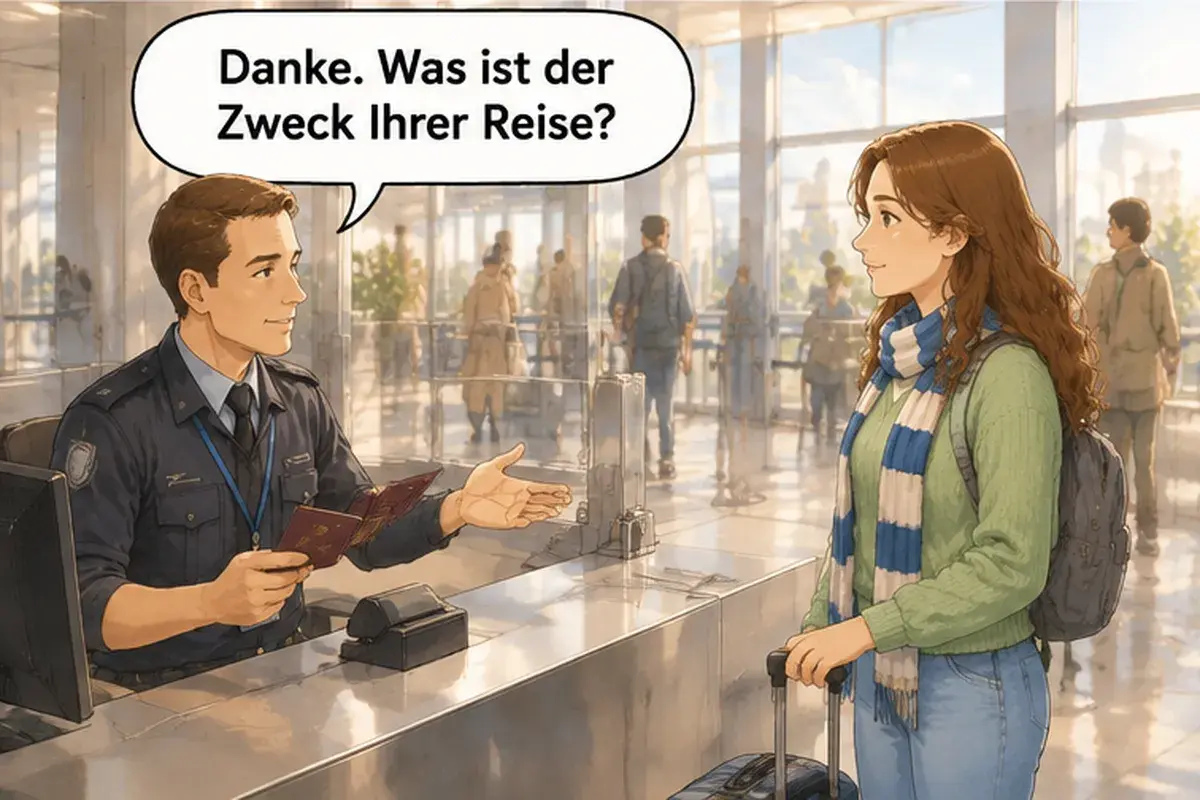
- Grenzbeamter
Danke. Was ist der Zweck Ihrer Reise?
Thank you. What's the purpose of your trip? (formal)
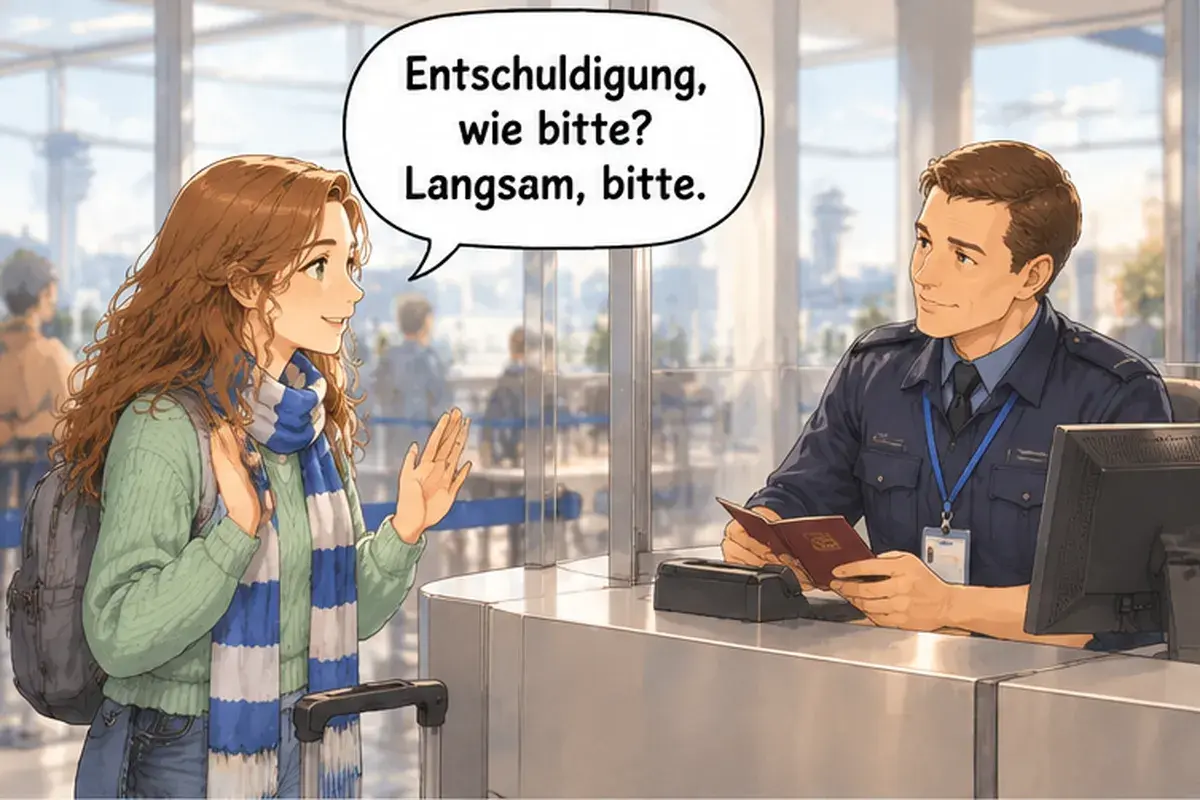
- Katja
Entschuldigung, wie bitte? Langsam, bitte.
Sorry, pardon? Slowly, please.
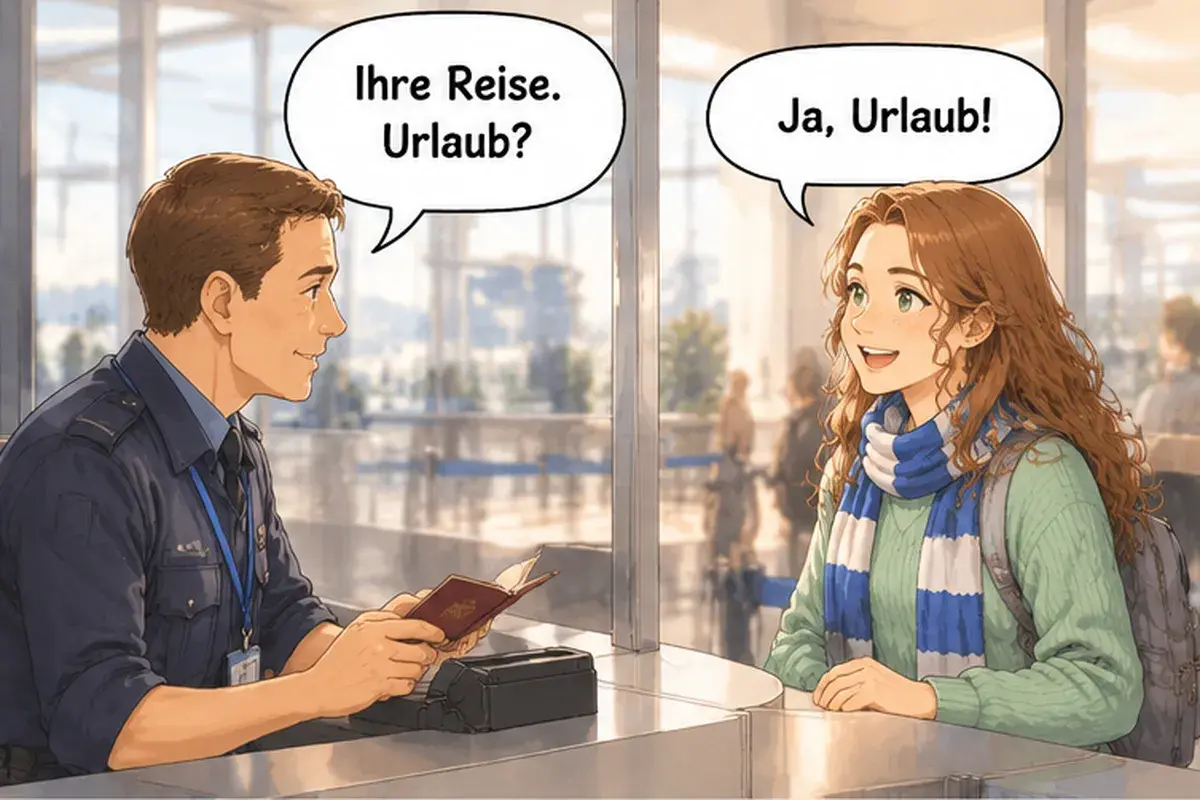
- Grenzbeamter
Ihre Reise. Urlaub?
Your trip. Vacation? (formal)
- Katja
Ja, Urlaub!
Yes, vacation!
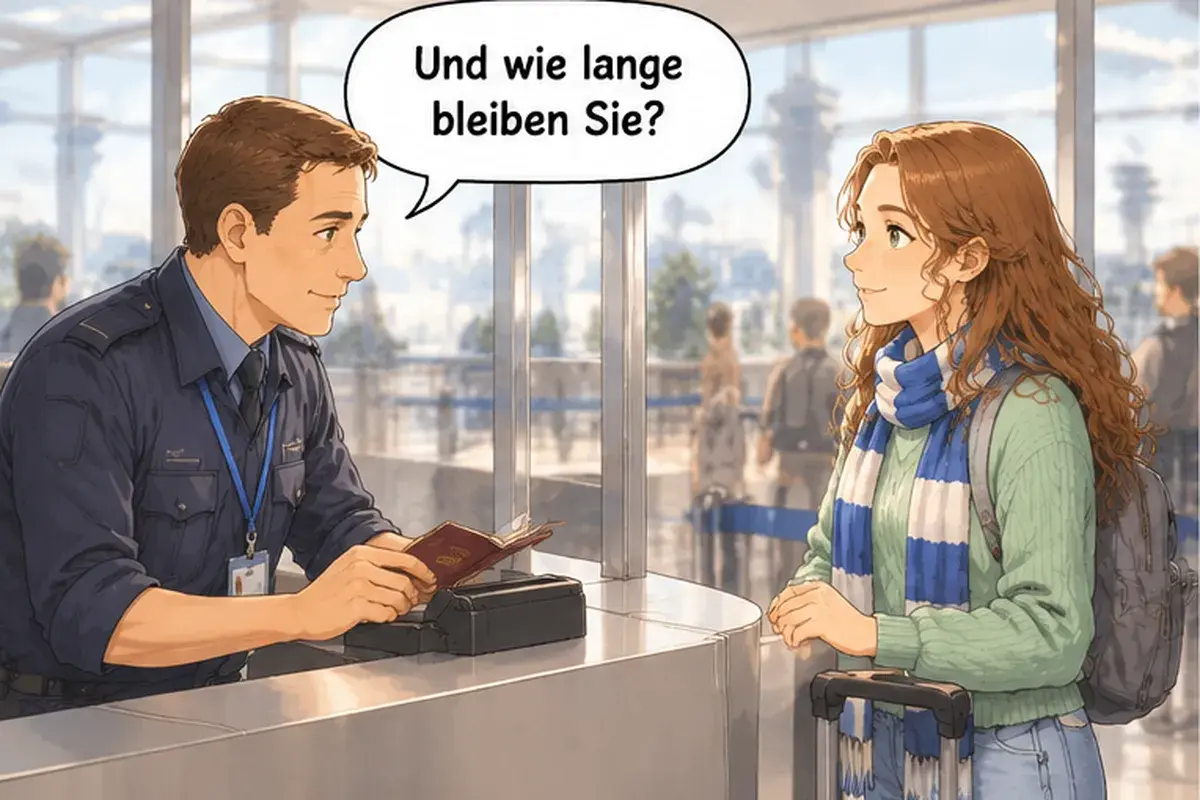
- Grenzbeamter
Und wie lange bleiben Sie?
And how long are you staying? (formal)
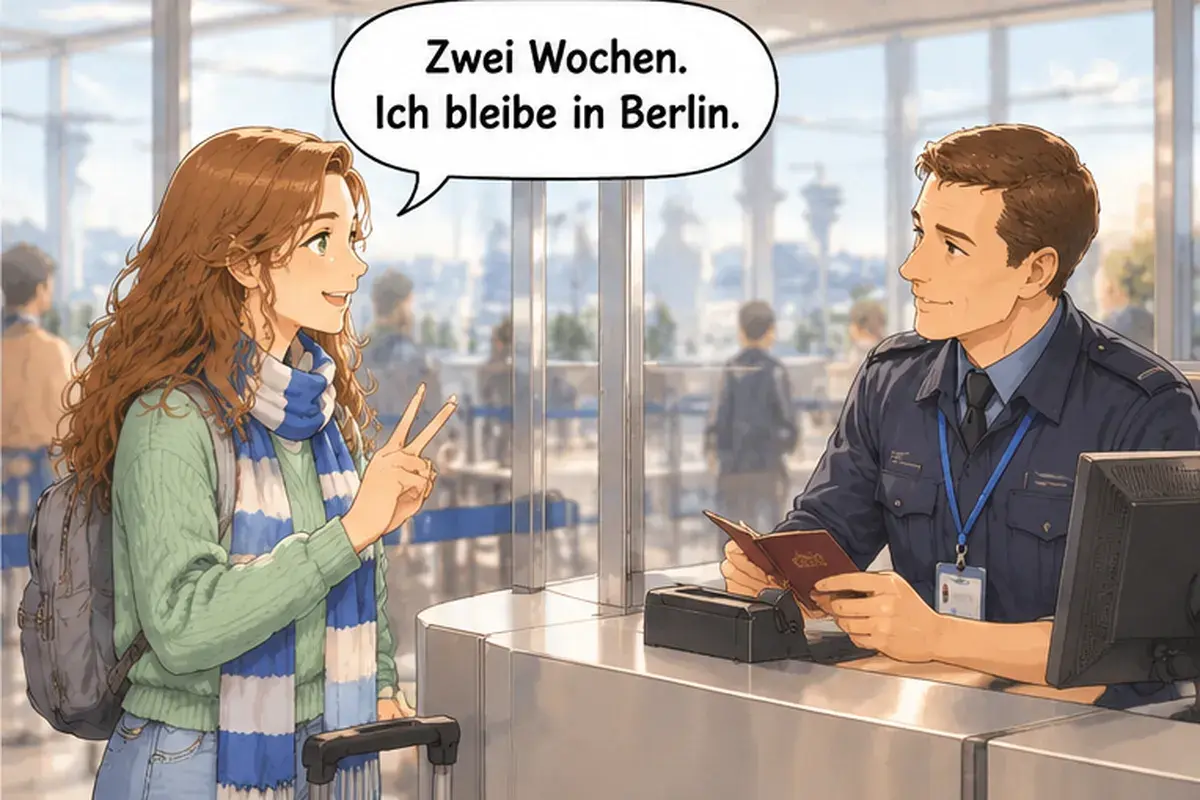
- Katja
Zwei Wochen. Ich bleibe in Berlin.
Two weeks. I'm staying in Berlin.
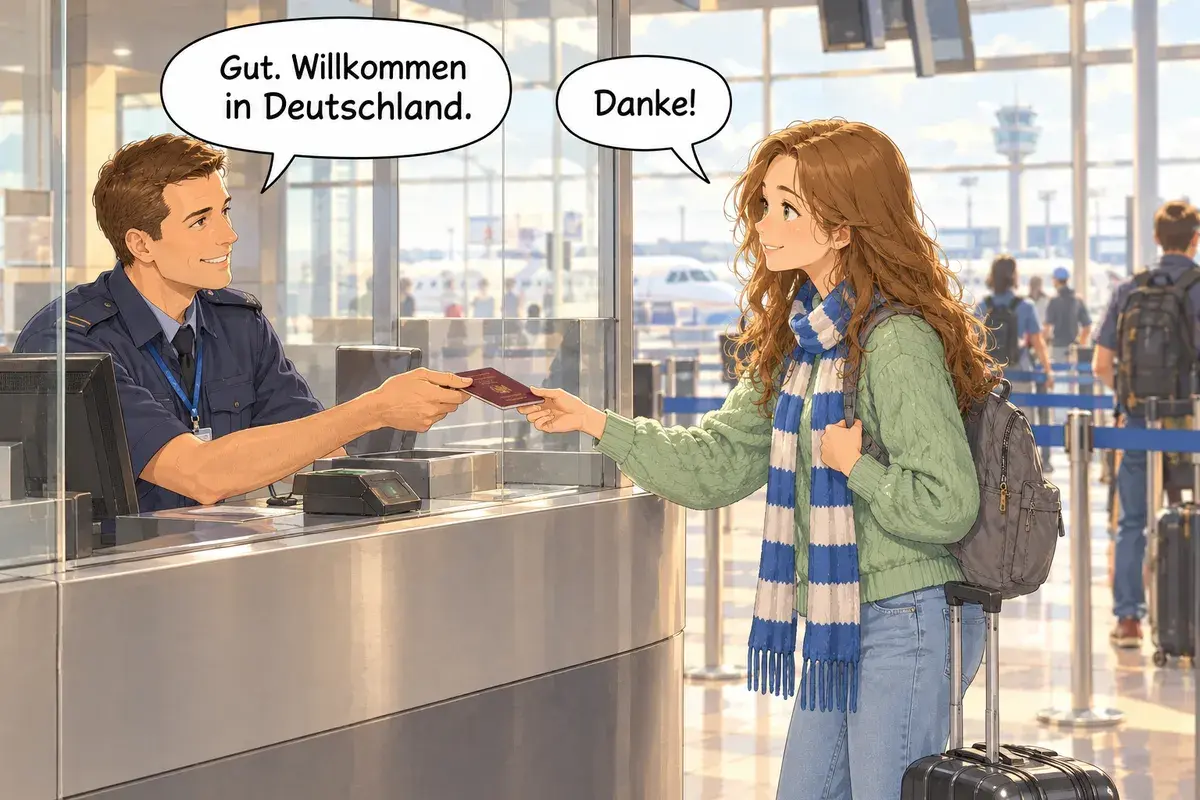
- Grenzbeamter
Gut. Willkommen in Deutschland.
Good. Welcome to Germany.
- Katja
Danke!
Thank you!
Grammar for this text
Ihren Pass, bitte: Ihren means "your", with a capital I, because the border officer calls Katja Sie. For now, learn the ending -en with the phrase: the passport is the thing being asked for (the accusative, unit 5). There's no verb, just like English "Passport, please."Sie heißen Katja Lind, ja?: Sie at the start of a sentence is also formal "you". heißen is "to be called": "Your name is Katja Lind?" The ja? at the end asks you to confirm, like "right?".Ja, das bin ich: bin is the ich form of sein (to be). Word for word it's "yes, that am I": the verb comes second, ich after it. English says "that's me".Was ist der Zweck Ihrer Reise?: ist is sein again, the form for he, she and it: "What is the purpose of your trip?" Ihrer means "your"; don't worry about its ending yet, learn the question as a whole.Entschuldigung, wie bitte?: the polite way to ask someone to repeat: "Sorry, pardon?" A bare Was? (what?) sounds rude.Und wie lange bleiben Sie?: wie lange means "how long". Right after the question word comes the verb, then Sie: bleiben Sie. German needs no "are …-ing" here.Ich bleibe in Berlin: bleibe is the stem bleib- plus -e, the ich form. German has one present tense, so ich bleibe is both "I stay" and "I'm staying".
Words and grammar of the unit: Say hello and introduce yourself.
Learn the words from the texts with flashcards
In the app, you can tap any word in a text to see its translation, forms and examples, and new words stick with flashcards. 15 minutes a day.
Start for freeEverything is open for free. No card needed to sign up.