

German story with translation · A1 · 7 lines
Hier spreche ich Deutsch Here I speak German
Comic · 4 panels
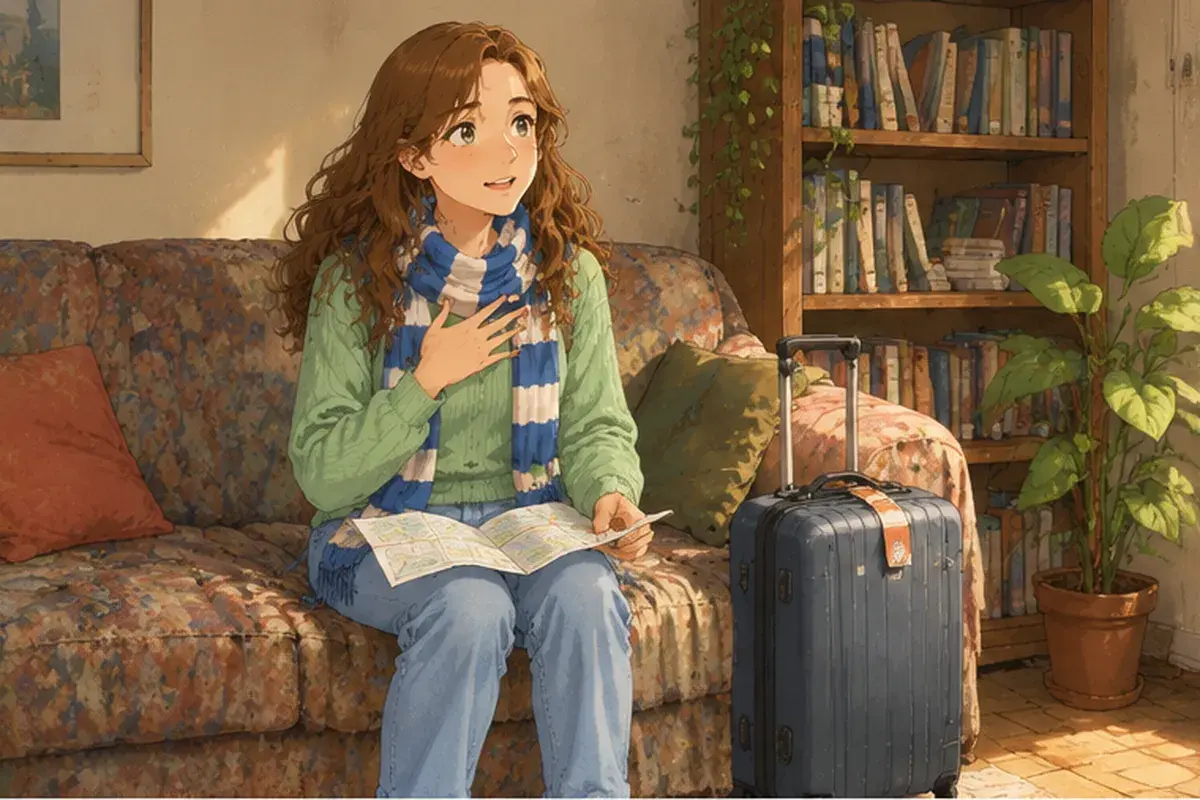
Wer bin ich? Mein Name ist Katja.
Who am I? My name is Katja.
Woher komme ich? Nicht aus Deutschland.
Where am I from? Not from Germany.

Ich lerne Deutsch. 3 Monate sind nicht lange.
I'm learning German. 3 months isn't long.
Ich spreche gut Englisch. Deutsch verstehe ich ein bisschen.
I speak English well. German, I understand a little.

Lukas ist ein Freund aus Berlin. Er spricht sehr gut Englisch.
Lukas is a friend from Berlin. He speaks English very well.

Aber hier ist Berlin, und hier spreche ich Deutsch.
But this is Berlin, and here I speak German.
Ich spreche langsam, aber ich spreche!
I speak slowly, but I speak!
Grammar for this text
Wer bin ich?: bin is the ich form of sein (to be). Question word first, verb second, then ich, just like English "Who am I?".Woher komme ich?: komme is the ich form of kommen: the stem komm- plus -e. aus means "from"; no article before a country or a city: aus Deutschland, aus Berlin.3 Monate sind nicht lange: sind is sein for the plural (they are), because the subject Monate is plural (one Monat, two Monate). English says "three months is not long"; German uses the plural verb. Read 3 as drei (unit 2). nicht lange means "not long".Er spricht sehr gut Englisch: spricht is the er form of sprechen: in the du and er forms the vowel changes from e to i (ich spreche, du sprichst, er spricht). Some common verbs do this; later you'll see nimmt and isst. Also note the order: German puts sehr gut before the language, English puts "very well" at the end.Lukas ist ein Freund aus Berlin: ein Freund is "a friend" (one of Katja's friends). mein Freund often means "my boyfriend", so for just a friend people don't say that.Deutsch verstehe ich ein bisschen: the verb always comes second, even when the sentence doesn't start with ich: first Deutsch (what I understand), then verstehe, then ich. English would say "I understand a little German". ein bisschen means "a little".Aber hier ist Berlin, und hier spreche ich Deutsch: after hier at the start, the verb comes right away: spreche ich.
Words and grammar of the unit: Say hello and introduce yourself.
Learn the words from the texts with flashcards
In the app, you can tap any word in a text to see its translation, forms and examples, and new words stick with flashcards. 15 minutes a day.
Start for freeEverything is open for free. No card needed to sign up.