

German dialogue with translation · A1 · 16 lines
Lange nicht gesehen! Long time no see!
Comic · 16 panels
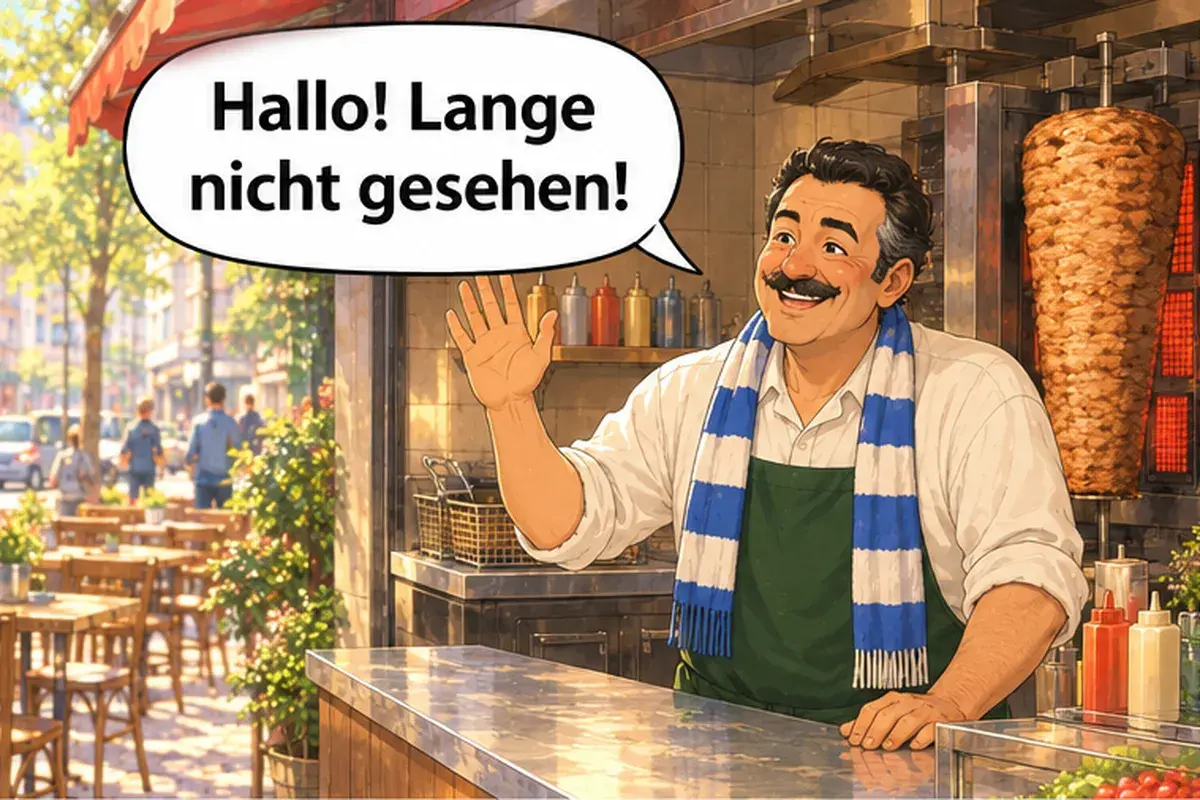
- Mehmet
Hallo! Lange nicht gesehen!
Hi! Long time no see!
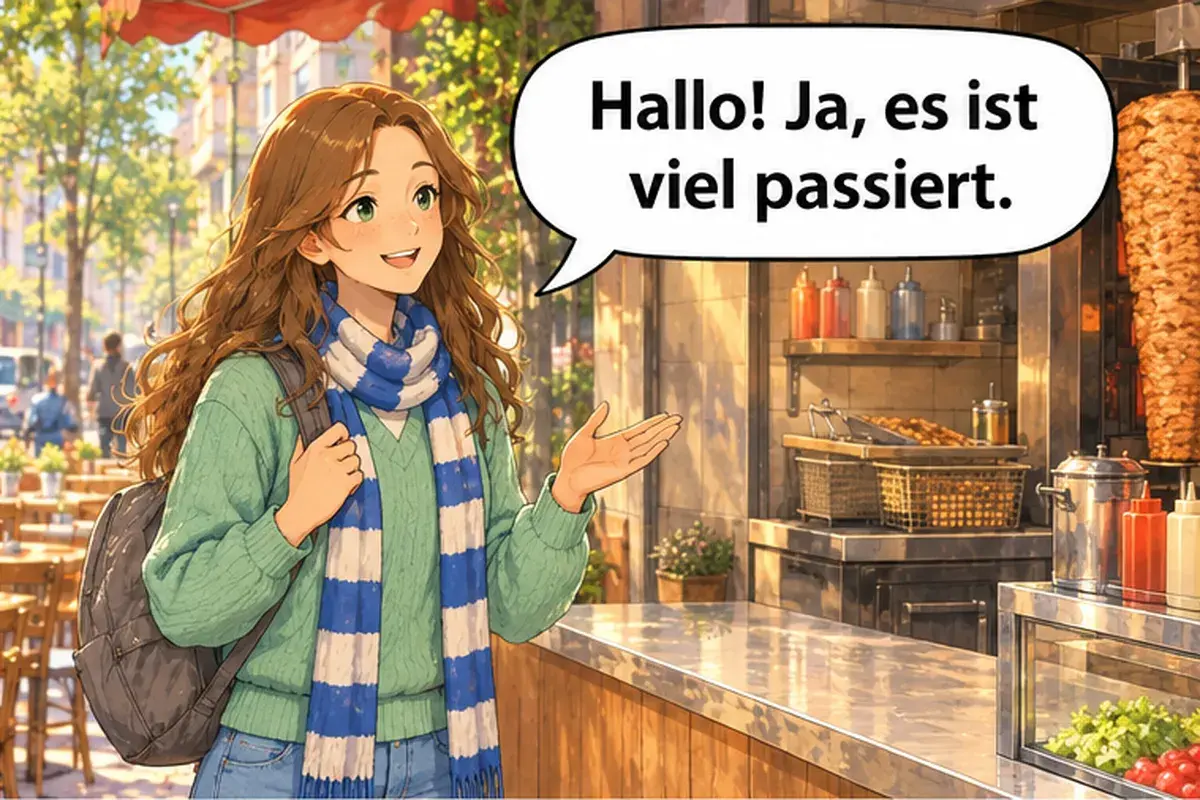
- Katja
Hallo! Ja, es ist viel passiert.
Hi! Yes, a lot has happened.
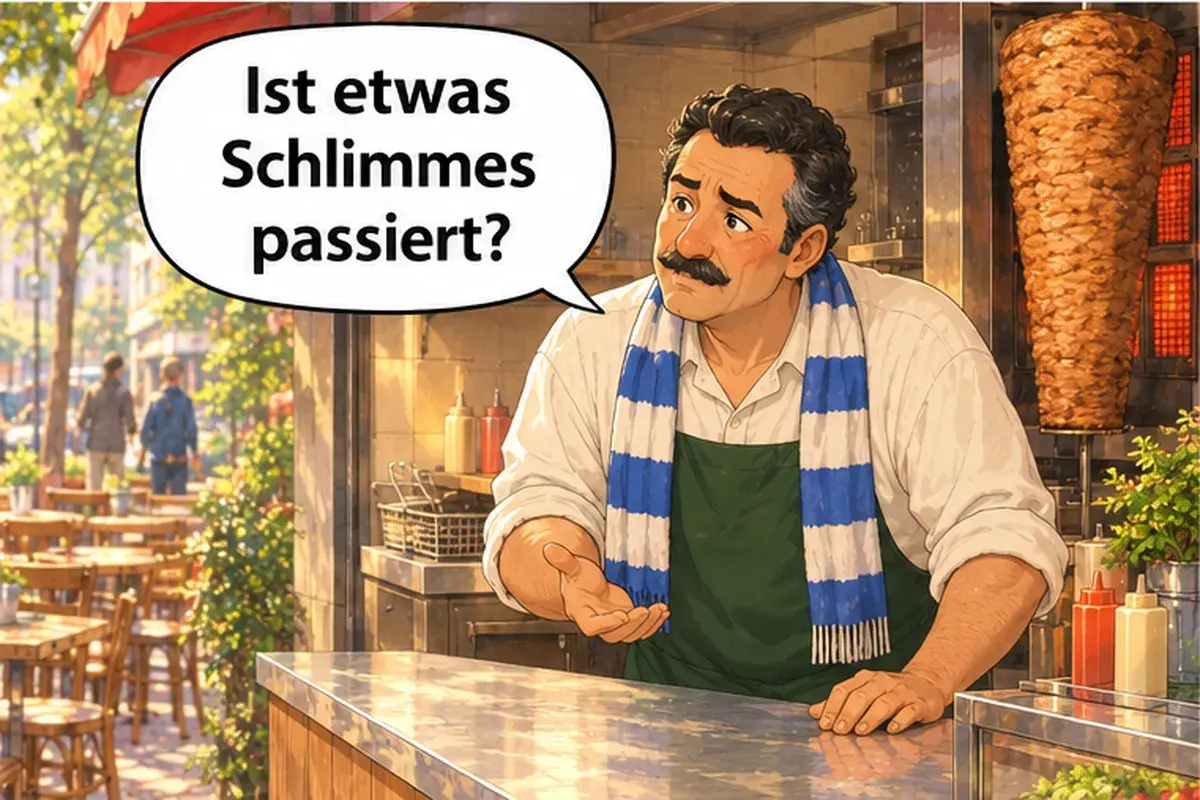
- Mehmet
Ist etwas Schlimmes passiert?
Did something bad happen?
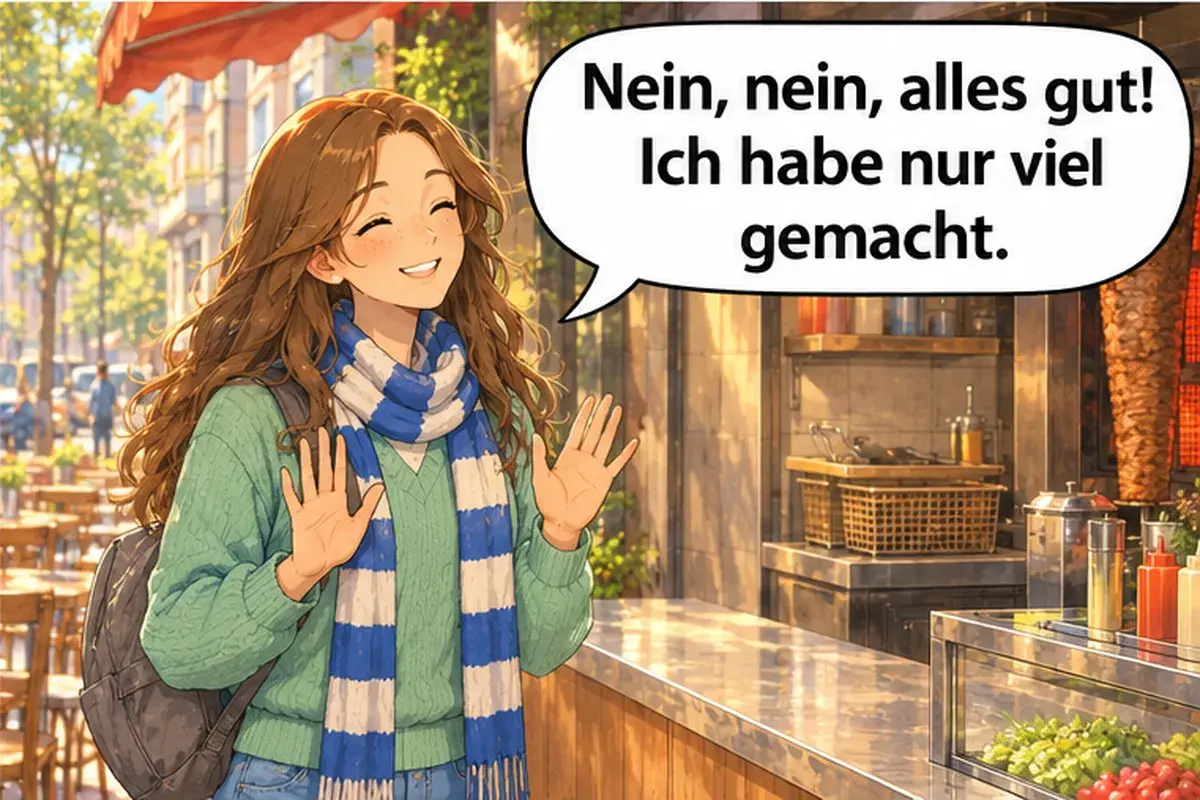
- Katja
Nein, nein, alles gut! Ich habe nur viel gemacht.
No, no, everything's fine! I've just been doing a lot.
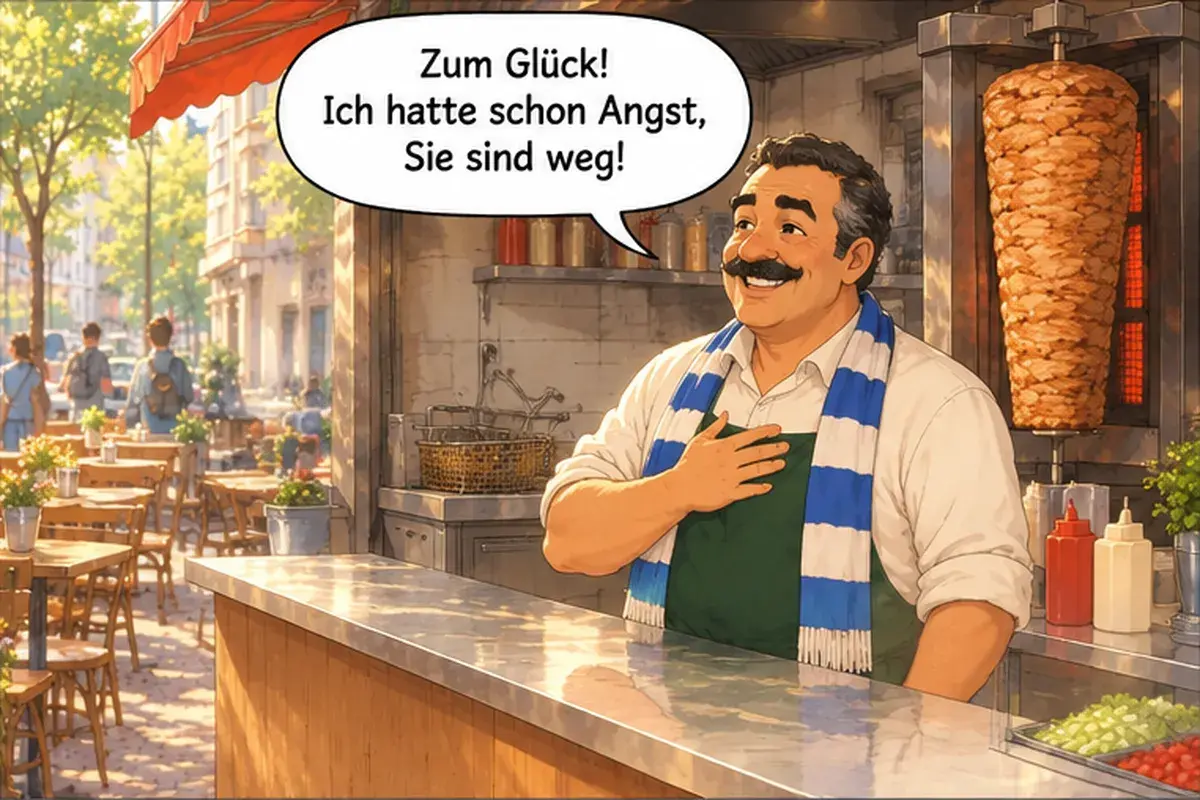
- Mehmet
Zum Glück! Ich hatte schon Angst, Sie sind weg!
Thank goodness! I was afraid you were gone! (formal)
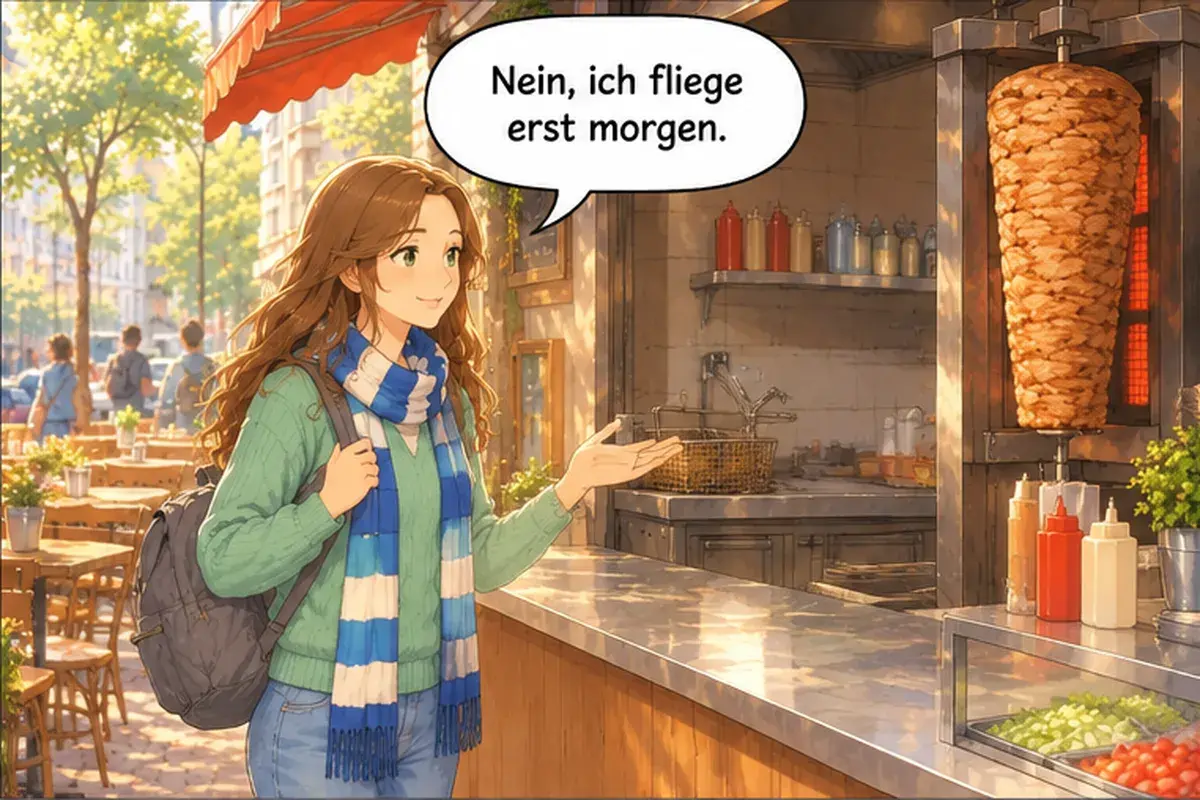
- Katja
Nein, ich fliege erst morgen.
No, I'm not flying until tomorrow.
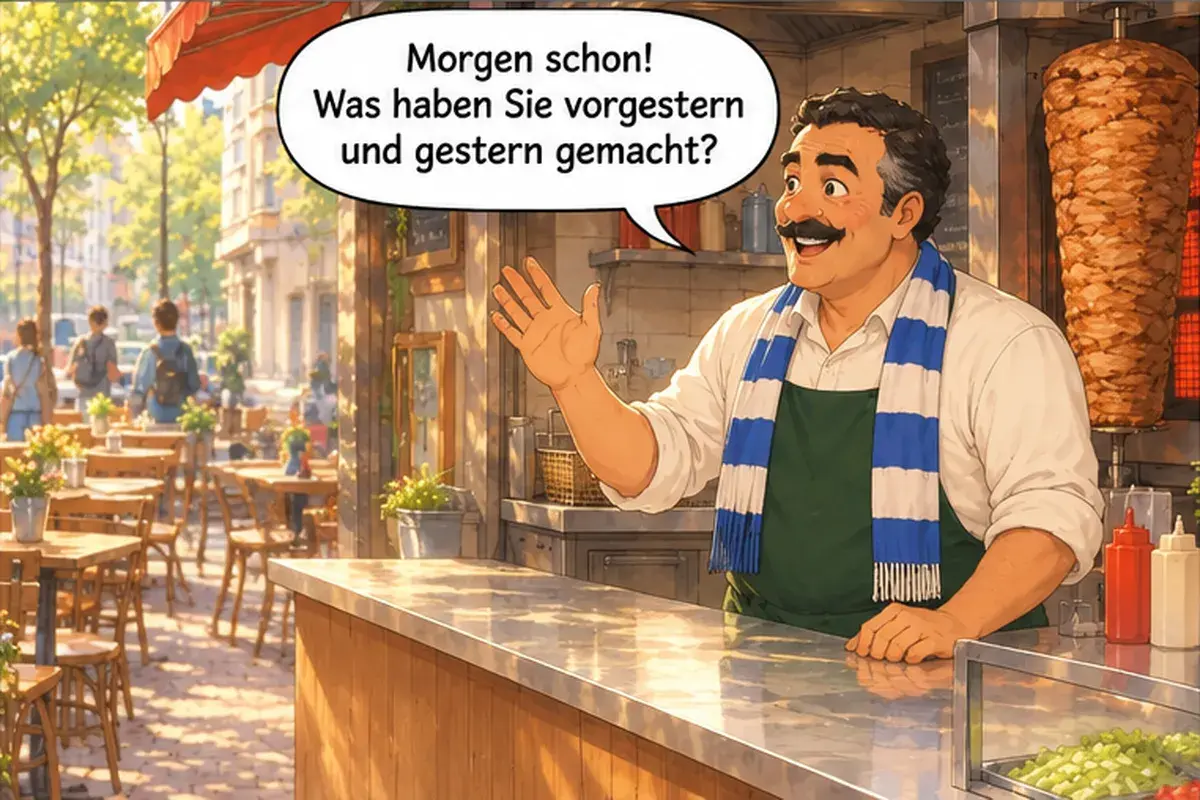
- Mehmet
Morgen schon! Was haben Sie vorgestern und gestern gemacht?
Tomorrow already! What did you do the day before yesterday and yesterday? (formal)
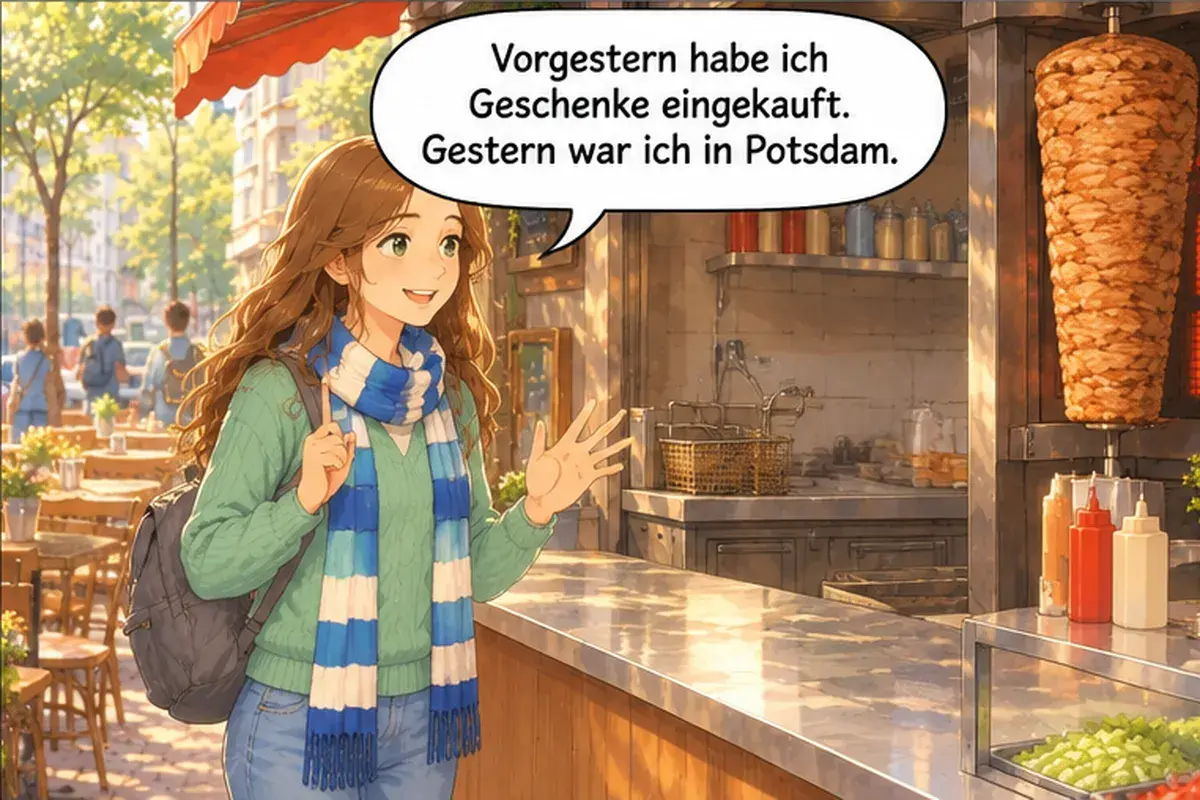
- Katja
Vorgestern habe ich Geschenke eingekauft. Gestern war ich in Potsdam.
The day before yesterday I shopped for gifts. Yesterday I was in Potsdam.
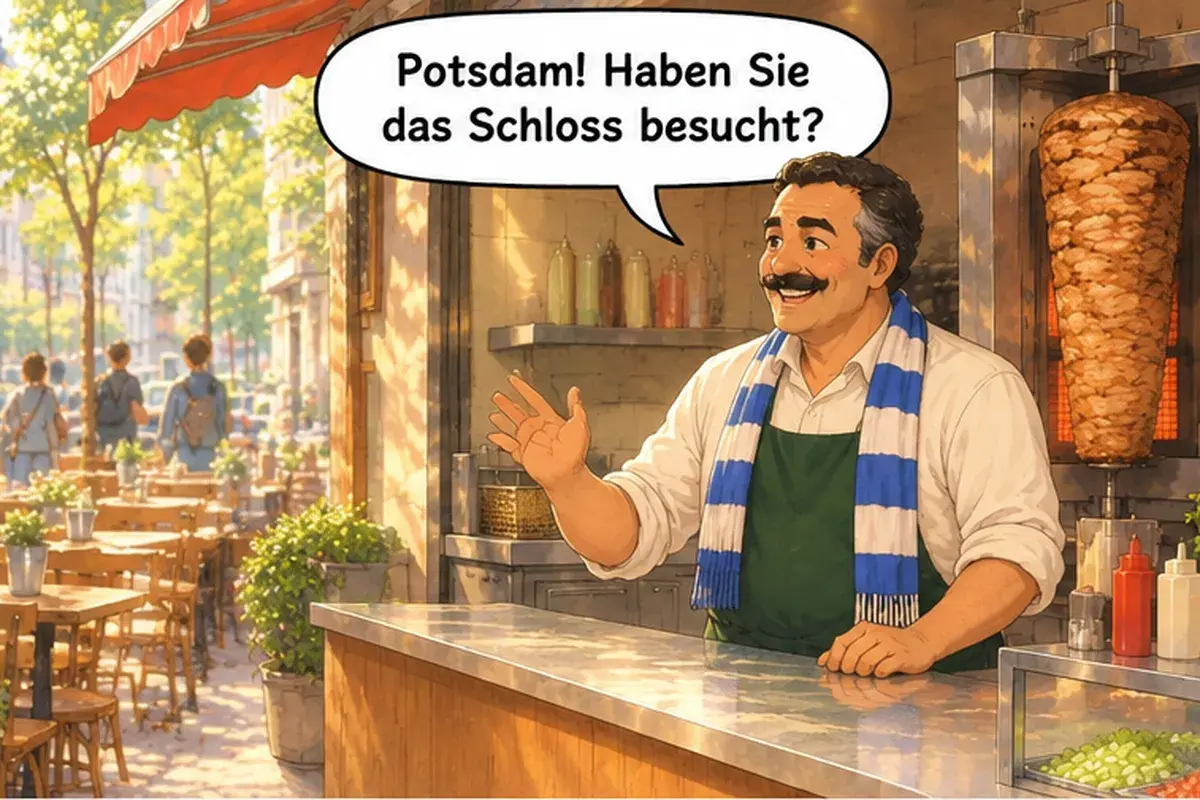
- Mehmet
Potsdam! Haben Sie das Schloss besucht?
Potsdam! Did you visit the palace? (formal)
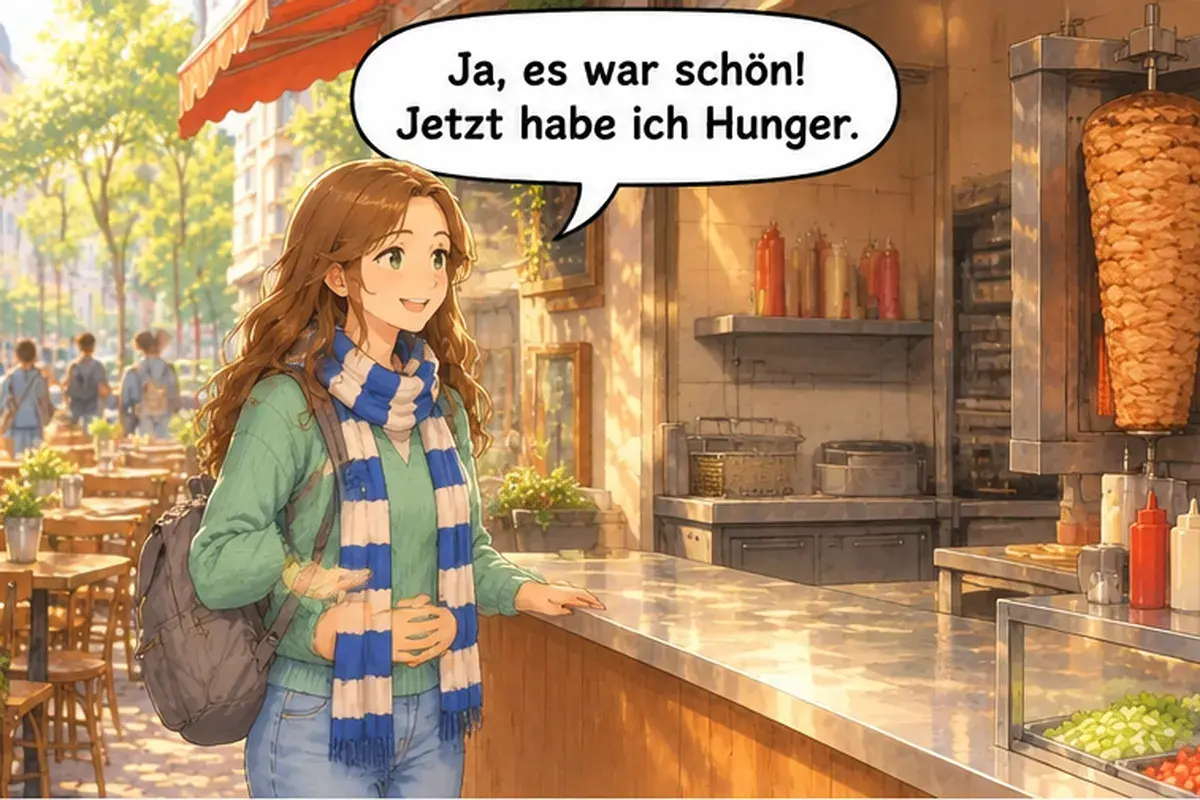
- Katja
Ja, es war schön! Jetzt habe ich Hunger.
Yes, it was beautiful! Now I'm hungry.
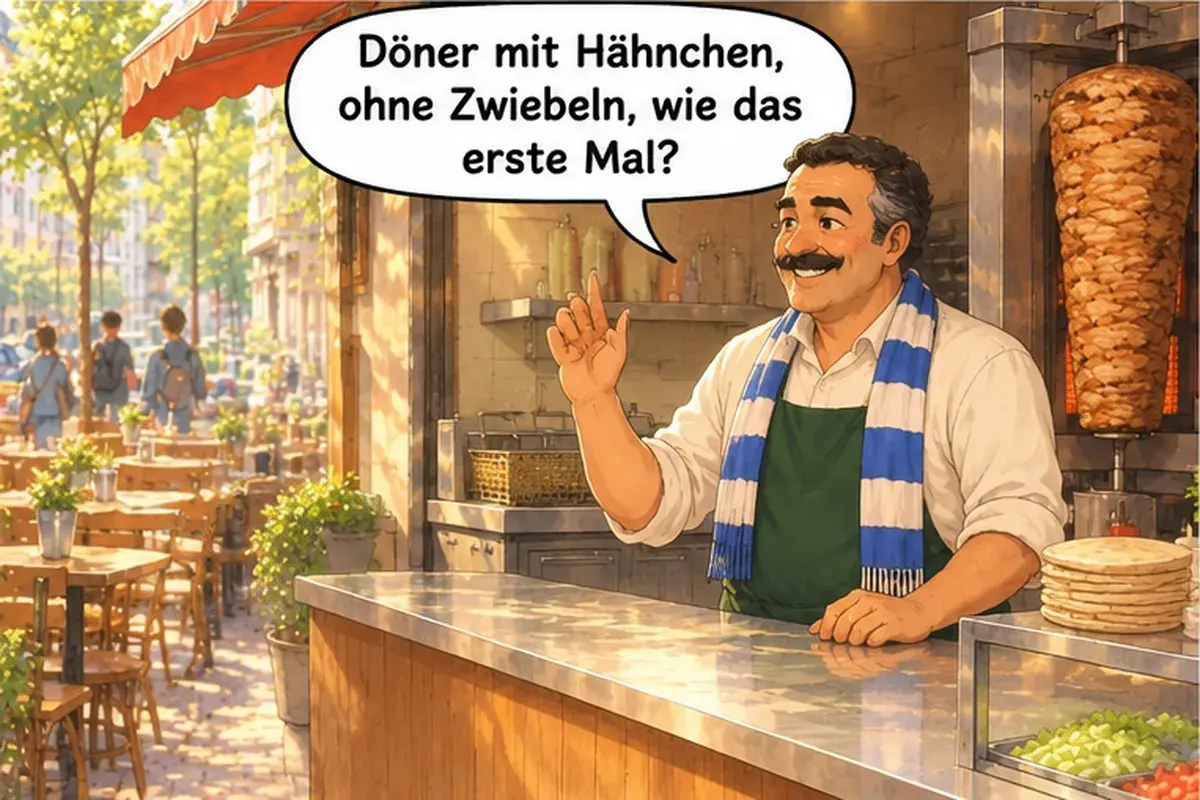
- Mehmet
Döner mit Hähnchen, ohne Zwiebeln, wie das erste Mal?
A chicken döner, no onions, like the first time?

- Katja
Genau! Und noch Pommes, bitte.
Exactly! And some fries too, please.
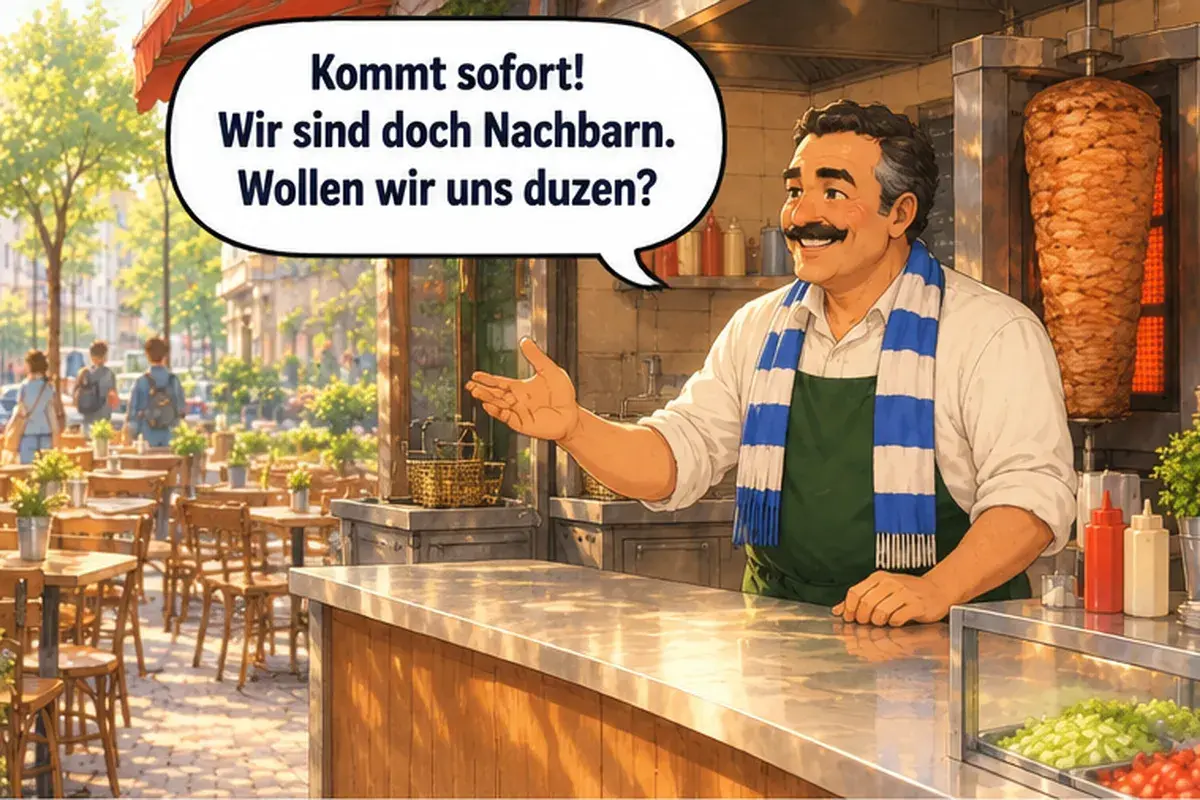
- Mehmet
Kommt sofort! Wir sind doch Nachbarn. Wollen wir uns duzen?
Coming right up! We're neighbors, after all. Shall we switch to du?
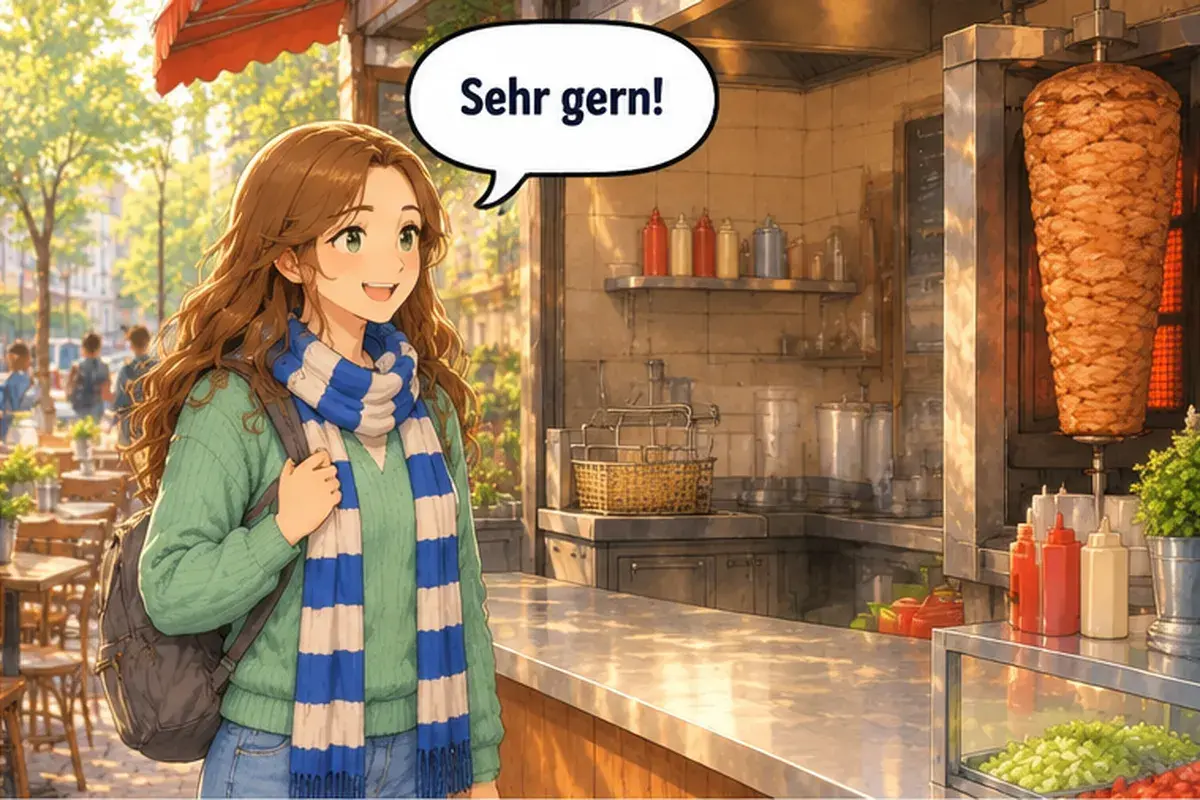
- Katja
Sehr gern!
I'd love to!
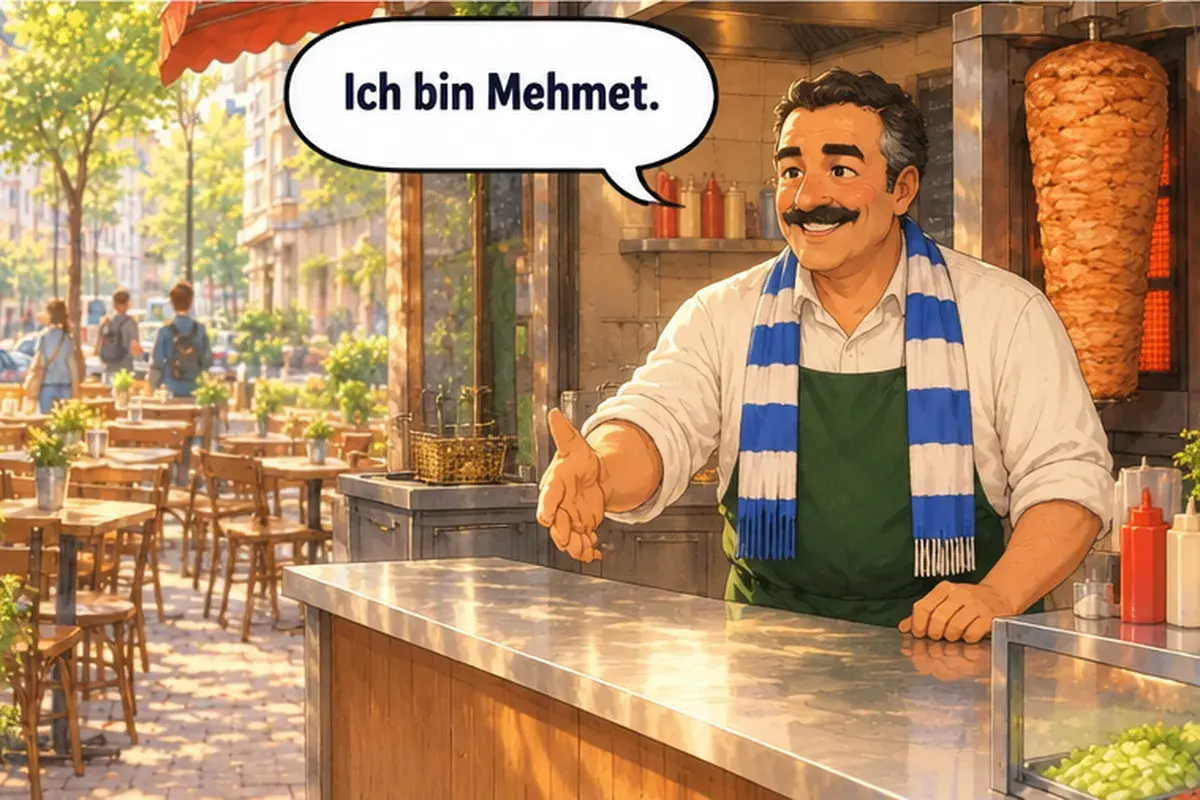
- Mehmet
Ich bin Mehmet.
I'm Mehmet.
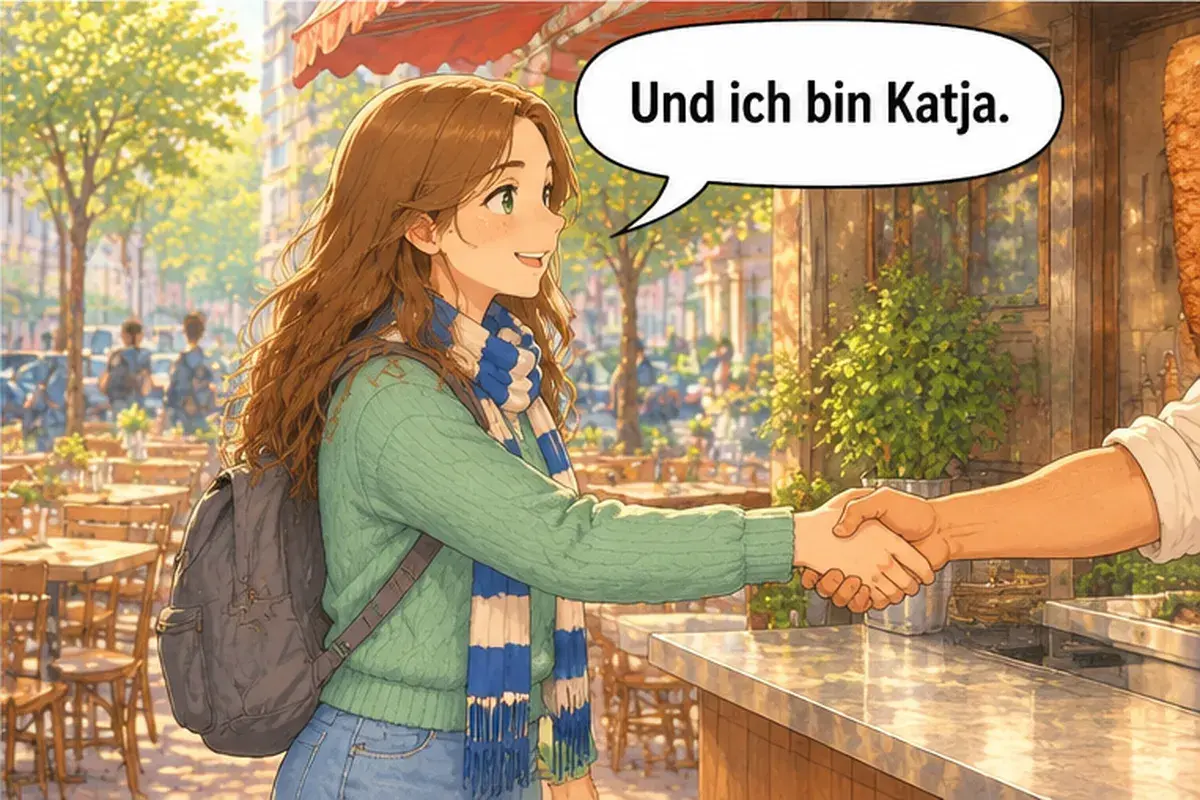
- Katja
Und ich bin Katja.
And I'm Katja.
Grammar for this text
- Lange nicht gesehen! — a greeting when you haven't seen someone for a long time, like "Long time no see!". In full:
Wir haben uns lange nicht gesehen.gesehenis the past participle ofsehen, likegemachtin unit 17. - Es ist viel passiert — the Perfekt with
ist:passiertis the participle ofpassieren(to happen). There's noge-because the verb ends in-ieren. The sentence sounds a little worrying, so Mehmet asks if something bad happened:etwas Schlimmes— something bad. Afteretwas, the adjective gets a capital letter. - Ich hatte schon Angst, Sie sind weg —
hatteis a past form ofhabenforichander(you'll learn the whole tense in A2). For now remember:ich hatte Angst— I was afraid. AfterAngstand the comma comes an ordinary sentence:Sie sind weg— you're gone.Siewith a capital S is the formal "you". - Vorgestern habe ich Geschenke eingekauft —
einkaufenis a separable verb: in the Perfekt, the prefix and the verb join up andgegoes between them:ein+ge+kauft=eingekauft.habeis in second place, the participle at the very end. - Gestern war ich in Potsdam —
waris a past form ofseinforichander: "was". For the past, people say this much more often thanich bin gewesen. Same here: Ja, es war schön — Yes, it was beautiful. - Haben Sie das Schloss besucht? —
besuchthas noge-because the prefixbe-is unstressed. - Wollen wir uns duzen? — Shall we switch to du? Here
unsmeans "each other"; learn the question as a whole. Usually the older person offers it. From now on Mehmet and Katja say du to each other.
Words and grammar of the unit: Talk about what you did.
Learn the words from the texts with flashcards
In the app, you can tap any word in a text to see its translation, forms and examples, and new words stick with flashcards. 15 minutes a day.
Start for freeEverything is open for free. No card needed to sign up.