

German story with translation · A1 · 13 lines
Ich habe es geschafft! I did it!
Comic · 12 panels

Vor zwei Wochen bin ich in Berlin angekommen.
Two weeks ago I arrived in Berlin.

Lukas hat mich am Flughafen abgeholt.
Lukas picked me up at the airport.
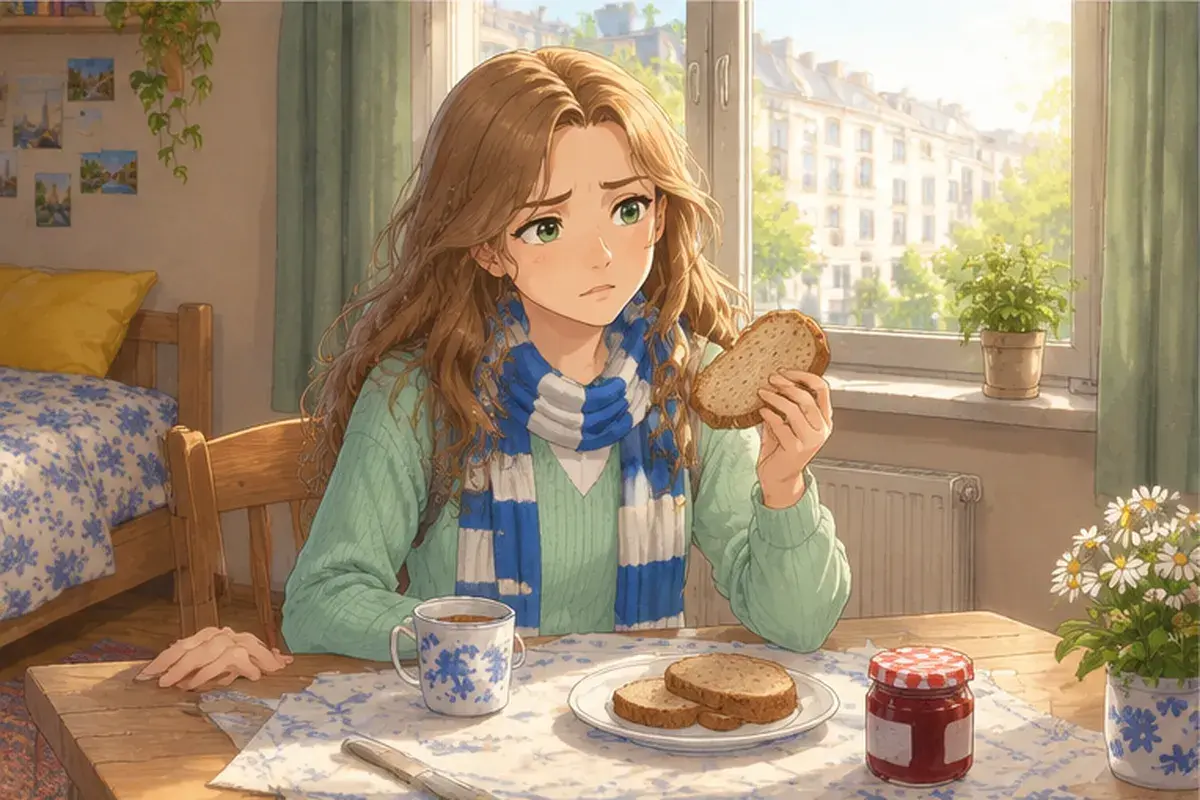
Am Anfang war alles fremd, sogar das Brot.
At first everything was unfamiliar, even the bread.

Mehmet spricht unglaublich schnell, aber endlich verstehe ich ihn.
Mehmet speaks incredibly fast, but I finally understand him.
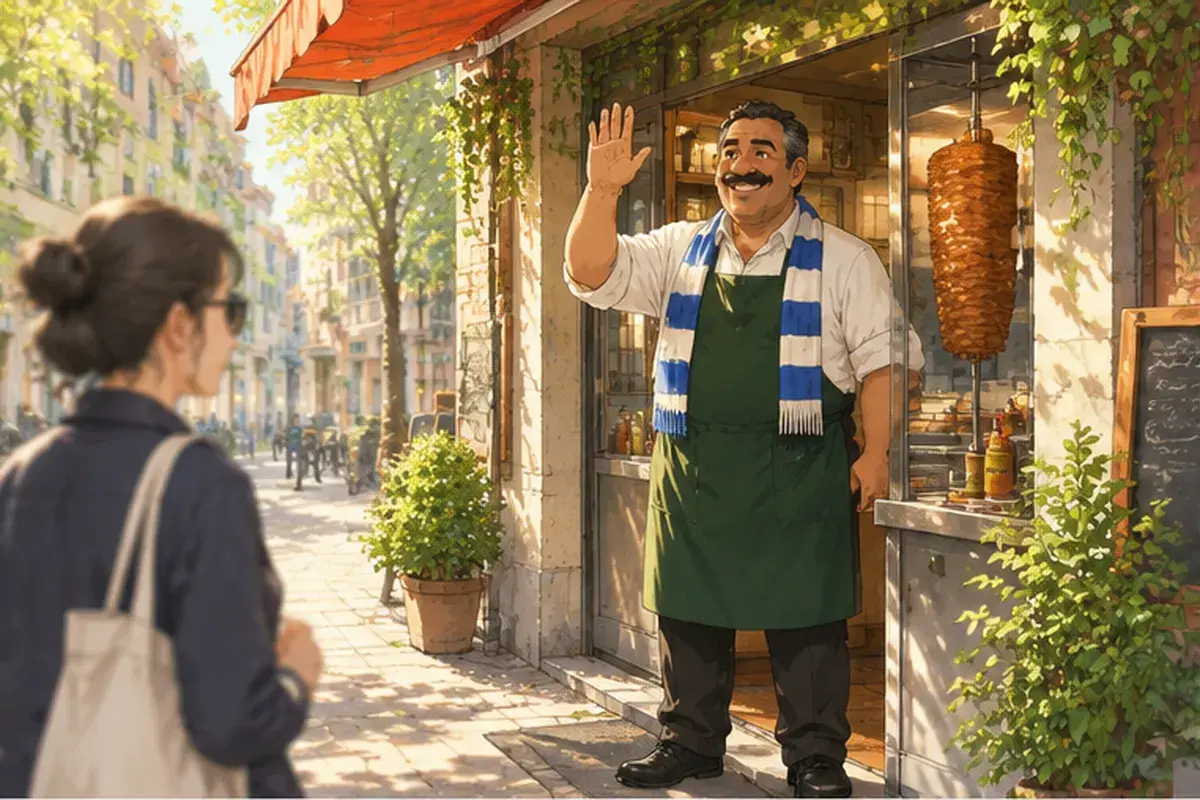
Er ist hier geboren und kennt jeden im Kiez.
He was born here and knows everyone in the neighborhood.

Sein Späti ist bis Mitternacht offen.
His late-night store is open until midnight.

Lukas hat mich in den Biergarten eingeladen.
Lukas invited me to the beer garden.

Ich habe viel fotografiert. Jedes Foto ist eine Erinnerung.
I took a lot of photos. Every photo is a memory.

Ich bin allein gereist und habe nur Deutsch gesprochen.
I traveled alone and spoke only German.

Ich habe es geschafft, und ich bin stolz auf mich!
I did it, and I'm proud of myself!
Lukas sagt: „Herzlichen Glückwunsch!“
Lukas says, "Congratulations!"

Morgen fliege ich nach Hause. Die zwei Wochen waren so schnell vorbei!
Tomorrow I'm flying home. The two weeks were over so quickly!
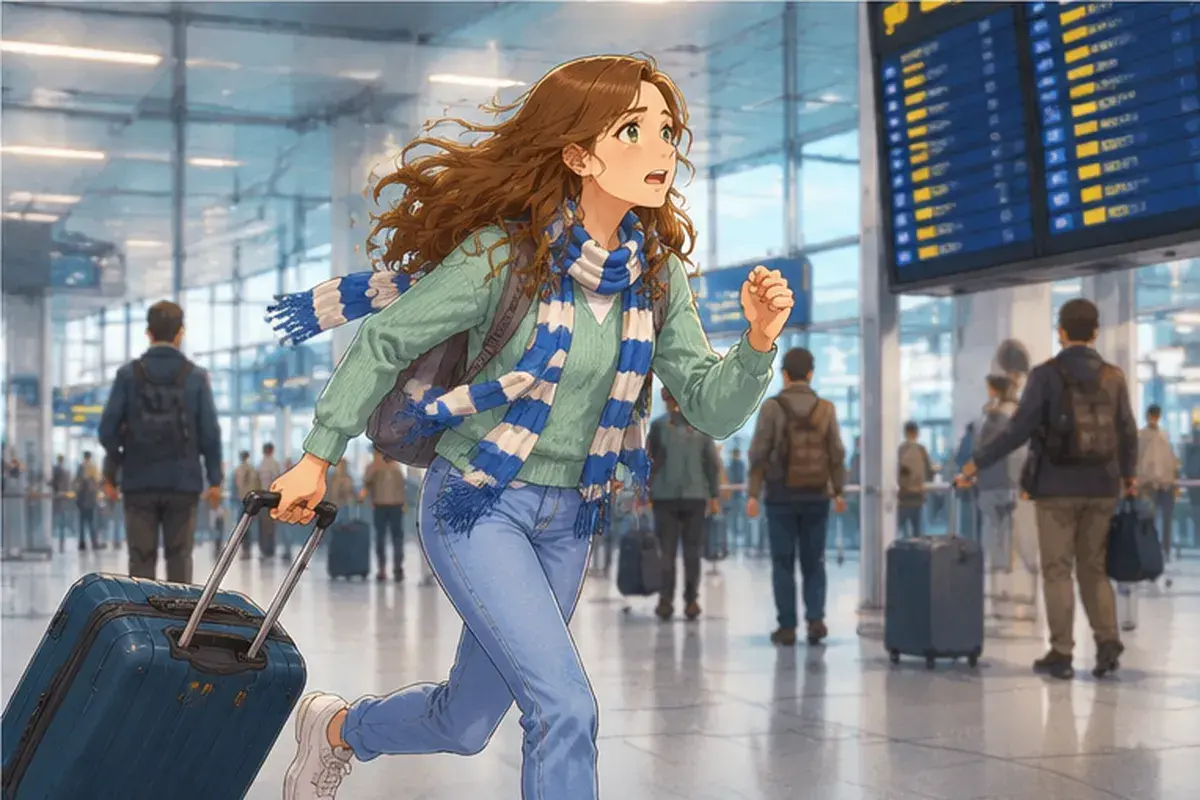
Hoffentlich verpasse ich den Flug nicht!
I hope I don't miss the flight!
Grammar for this text
- Vor zwei Wochen bin ich in Berlin angekommen —
vor zwei Wochen— two weeks ago: German putsvorbefore the time, English puts "ago" after it.an+ge+kommen=angekommen. The helper verb isbinbecause Katja came from one place to another. - Lukas hat mich am Flughafen abgeholt —
ab+ge+holt=abgeholt, withhat. Same with Lukas hat mich in den Biergarten eingeladen —ein+ge+laden.michmeans "me". - Jedes Foto ist eine Erinnerung —
jedesmeans "every".jederchanges its ending to match the noun, likedieser(unit 12):jeder Tag,jedes Foto,jede Woche. Also jeden im Kiez — everyone in the neighborhood: here it's the object (accusative, unit 5), sojeder→jeden, like he → him. - Er ist hier geboren — "he was born here".
geboren(born) always goes withsein:ich bin … geboren. - Sein Späti ist bis Mitternacht offen — here
Seinmeans "his", not the verb "to be": a noun comes right after it. - Ich bin allein gereist —
gereistis fromreisen; it takesbinbecause it's a trip. - Herzlichen Glückwunsch! — a set phrase: "Congratulations!" Learn it as a whole. What you're congratulating someone on comes after
zu:zum Geburtstag(on your birthday). - Hoffentlich verpasse ich den Flug nicht —
hoffentlichmeans "hopefully, I hope".verpassen— to miss (a train, a flight); in the Perfekt it has noge-because the prefixver-is unstressed:habe … verpasst.
Words and grammar of the unit: Talk about what you did.
Learn the words from the texts with flashcards
In the app, you can tap any word in a text to see its translation, forms and examples, and new words stick with flashcards. 15 minutes a day.
Start for freeEverything is open for free. No card needed to sign up.