

Portuguese dialogue with translation · B1 · 18 lines
Quero que vocês se sintam em casa I want you to feel at home
Comic · 16 panels

- Dona Cida
Entrem, entrem! Quero que vocês se sintam em casa.
Come in, come in! I want you to feel at home. (to several people)

- Nina
Boa noite, Dona Cida! O Tiago fala muito da senhora.
Good evening, Dona Cida! Tiago talks about you a lot. (formal)

- Jamile
Eu sou a Jamile, a irmã. O Tiago fala devagar, então eu falo pelos dois.
I'm Jamile, his sister. Tiago talks slowly, so I talk for both of us.

- Tiago
Eu ia dizer: bem-vindos. A casa recebe vocês de braços abertos.
I was going to say: welcome. This house welcomes you with open arms. (to several people)
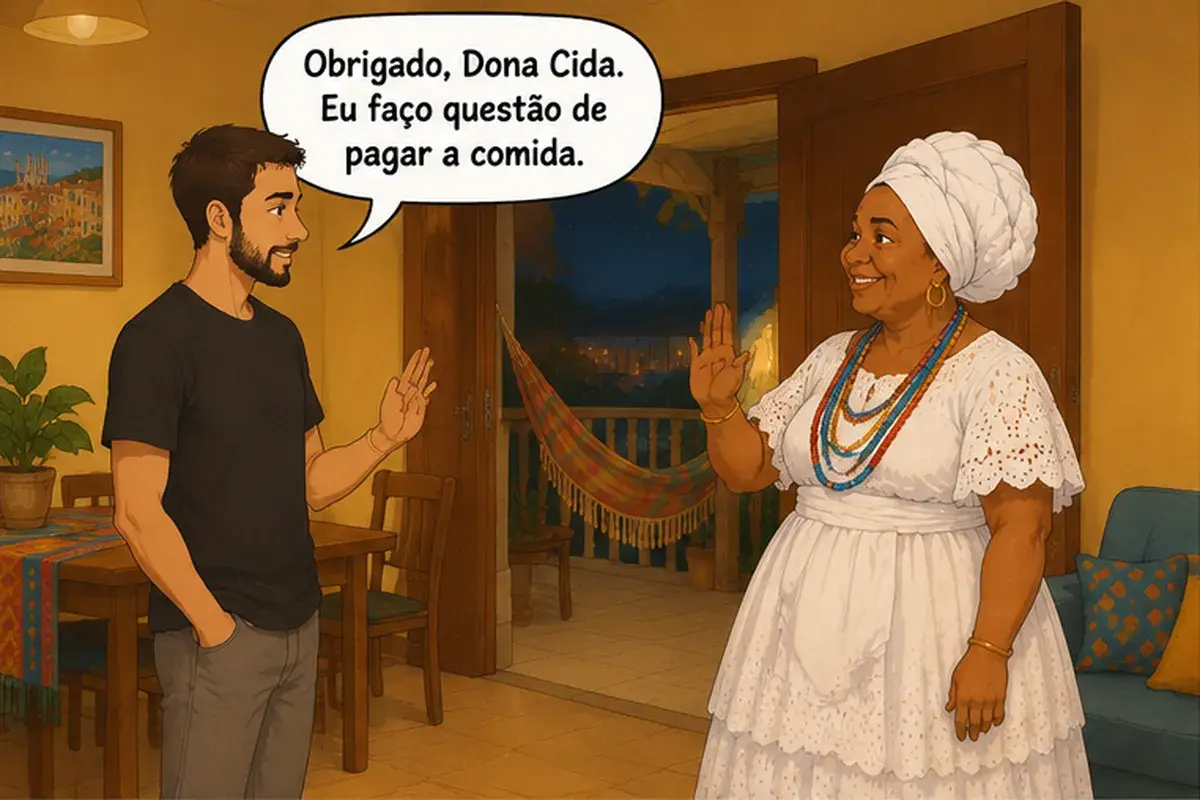
- Léo
Obrigado, Dona Cida. Eu faço questão de pagar a comida.
Thank you, Dona Cida. I insist on paying for the food.
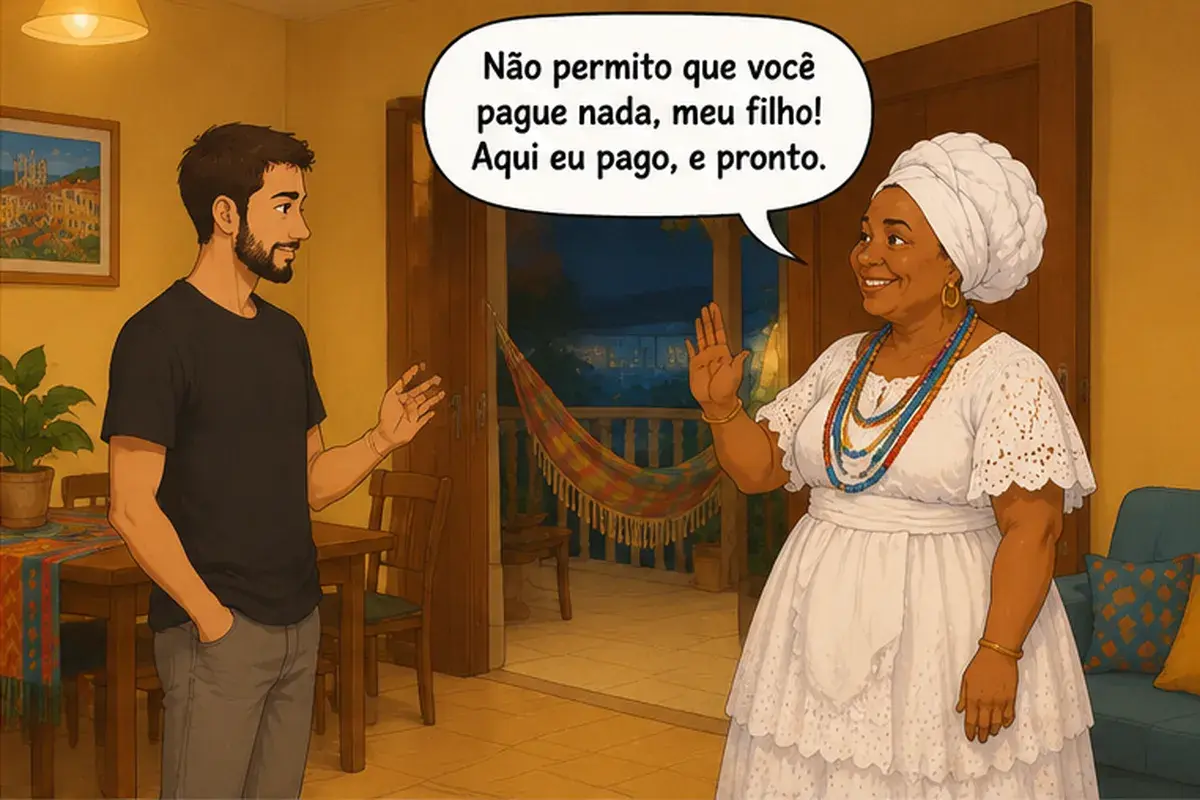
- Dona Cida
Não permito que você pague nada, meu filho! Aqui eu pago, e pronto.
I won't allow you to pay for anything, dear! Here I pay, and that's that. (to a man)
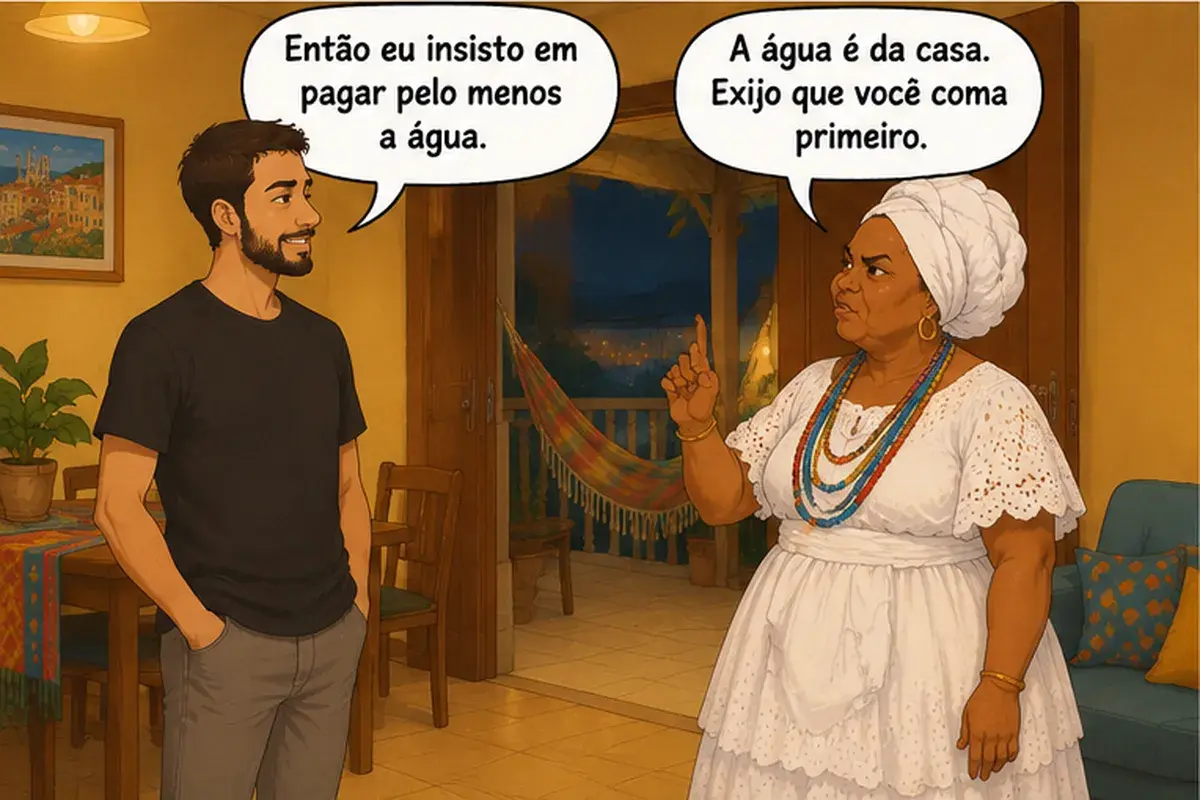
- Léo
Então eu insisto em pagar pelo menos a água.
Then I insist on paying at least for the water.
- Dona Cida
A água é da casa. Exijo que você coma primeiro.
The water is on the house. I demand that you eat first.

- Bia
Dona Cida, eu sou vegetariana. Prefiro que o prato não tenha peixe nem camarão.
Dona Cida, I'm a vegetarian (woman speaking). I'd prefer the dish not to have fish or shrimp.

- Dona Cida
Eu sei, filha, o Tiago me contou. Para você tem cuscuz com queijo e ovo.
I know, dear, Tiago told me. For you there's cuscuz with cheese and egg. (to a woman)

- Bia
Cuscuz com queijo e ovo? Que delícia!
Cuscuz with cheese and egg? Yum!

- Dona Cida
E para vocês dois, moqueca com azeite de dendê, bem temperada.
And for you two, moqueca with dendê oil, well seasoned.

- Nina
A casa está tão cheirosa que eu já estou com fome. Mal posso esperar pra comer!
The house smells so good that I'm already hungry. I can't wait to eat!

- Jamile
Nina e Bia ficam no meu quarto. O Léo fica no sofá, com um colchonete.
Nina and Bia are staying in my room. Léo is staying on the sofa, with a thin mattress.

- Léo
Sofá e colchonete. É quase um hotel.
A sofa and a thin mattress. It's almost a hotel.

- Dona Cida
Nina, amanhã quero que você descanse na rede da varanda.
Nina, tomorrow I want you to rest in the hammock on the porch.
- Nina
Na rede? Tem sinal lá?
On the net? Is there a signal there?

- Jamile
Rede é de dormir, Nina! Sinal só tem na sala, tá?
A hammock is for sleeping, Nina! There's only a signal in the living room, OK?
Grammar for this text
- Quero que vocês se sintam em casa — after quero que the verb takes the subjunctive (the main topic of this unit). English says "I want you to feel"; Portuguese says "I want that you feel", with a special verb form. sintam comes from sentir: take sinto, drop -o, add -a (and -m for vocês). sentir-se em casa — to feel at home; se goes before the verb.
- Não permito que você pague nada — pague comes from pagar (pago → -e; after g you write u so the sound stays the same). The same later in the text: coma from comer after exijo que, descanse from descansar.
- Prefiro que o prato não tenha peixe nem camarão — tenha comes from ter (tenho → tenha). The negative doesn't change the form.
- Eu faço questão de pagar a comida — fazer questão de + infinitive: "I insist, it really matters to me". Next to it, insisto em pagar — insistir em + infinitive: the same person is going to pay, so there's no que and no special form.
- Na rede? Tem sinal lá? — rede means "hammock" and also "net", including the internet. Nina understood the second meaning, and Jamile corrects her.
- Mal posso esperar — "I can't wait": mal here means "hardly", posso — "I can". recebe vocês de braços abertos — welcomes you with open arms.
Words and grammar of the unit: Say what you want others to do.
Learn the words from the texts with flashcards
In the app, you can tap any word in a text to see its translation, forms and examples, and new words stick with flashcards. 15 minutes a day.
Start for freeEverything is open for free. No card needed to sign up.