

Portuguese story with translation · B1 · 18 lines
Quero que a Pipoca veja o mar I want Pipoca to see the sea
Comic · 12 panels

Querida Dona Lúcia, escrevo de Salvador!
Dear Dona Lúcia, I'm writing from Salvador!
A cidade fica numa baía enorme.
The city is on a huge bay.

A mãe do Tiago, a Dona Cida, hospeda a gente num sobrado velho, perto do mar.
Tiago's mom, Dona Cida, is hosting us in an old two-story house near the sea.
Ela se parece com a senhora: também diz “Come mais, minha filha!”
She's like you: she also says, "Eat more, dear!" (formal)
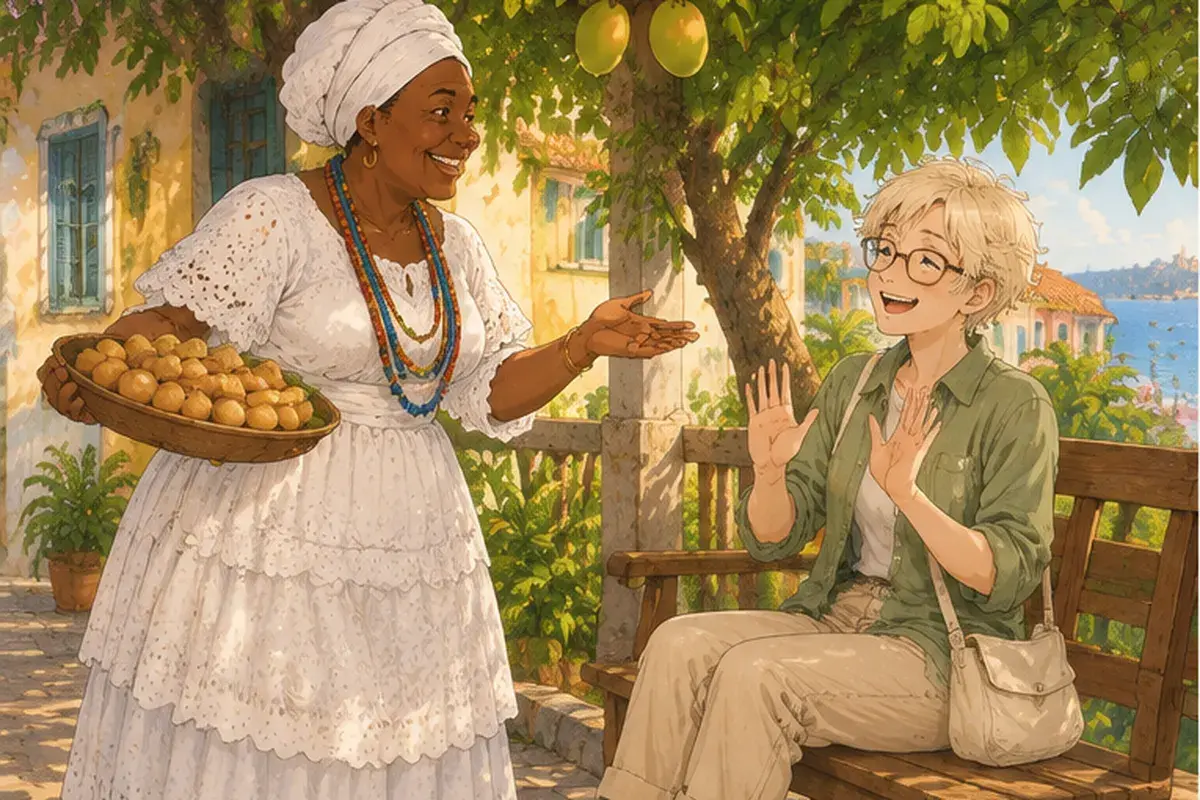
A Dona Cida mima todo mundo e oferece comida de cinco em cinco minutos.
Dona Cida spoils everyone and offers food every five minutes.
Há trinta anos ela vende quitutes no tabuleiro. Eu ainda não provei: ela diz que é surpresa.
She's been selling treats at her stall for thirty years. I haven't tried them yet: she says it's a surprise.

O Tiago é um ótimo anfitrião: fala devagar e nunca tem pressa.
Tiago is a great host: he talks slowly and is never in a hurry.
Amanhã ele sugere que a gente comece pela orla.
He suggests that we start with the waterfront tomorrow.
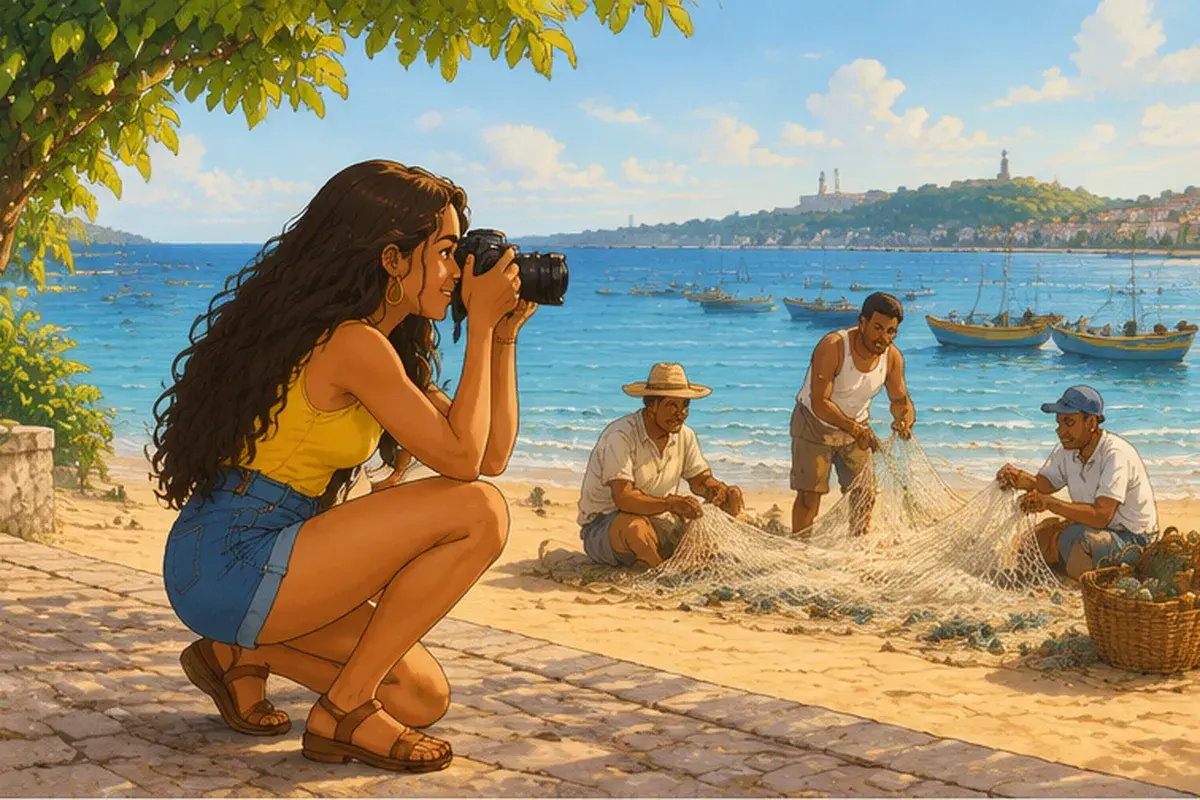
De manhã os pescadores arrumam as redes lá. A Bia tira foto de tudo, mas não compra peixe.
In the morning, the fishermen sort out their nets there. Bia takes pictures of everything, but she doesn't buy fish.
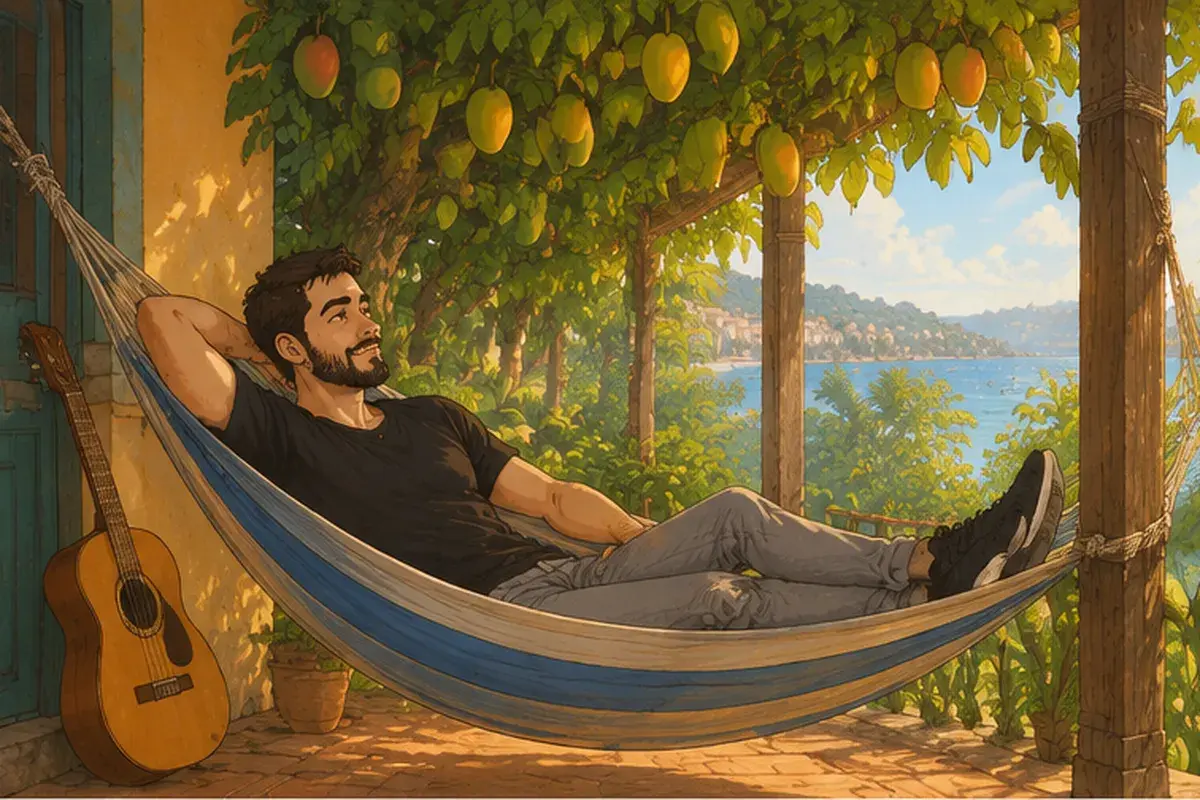
O Léo diz que trabalha. Mas passa a tarde na rede da varanda, à sombra da mangueira, à toa.
Léo says he's working. But he spends the afternoon in the hammock on the porch, in the shade of the mango tree, doing nothing.

O bairro é boêmio, mas a nossa rua é sossegada. Dentro do sobrado, só tem sossego.
The neighborhood is bohemian, but our street is quiet. Inside the townhouse, there's only peace and quiet.

A vizinhança inteira conhece a Dona Cida.
The whole neighborhood knows Dona Cida.

À noite o Tiago tem ensaio de percussão, e eu desenho os tambores.
In the evening, Tiago has percussion rehearsal, and I draw the drums.

A casa é humilde, mas é um lar de verdade. A família é generosa e calorosa.
The house is humble, but it's a real home. The family is generous and warm.
Aqui eu aprendi a palavra hospitalidade. Eu me sinto em casa e estou muito contente.
Here I learned the word "hospitalidade." I feel at home, and I'm very happy.

Mando um desenho da baía; espero que a senhora goste.
I'm sending a drawing of the bay; I hope you like it. (formal)
Peço que a senhora mostre o desenho à Pipoca. Quero que a Pipoca veja o mar!
I'm asking you to show the drawing to Pipoca (formal). I want Pipoca to see the sea!

PS: Diga ao Seu Zé que aqui chove todo dia, mas só por dez minutos.
PS: Tell Seu Zé that it rains here every day, but only for ten minutes.
Grammar for this text
- Ela se parece com a senhora — parecer-se com — to look like, to be like: se goes before the verb. Nina writes to Dona Lúcia formally (a senhora).
- Ele sugere que a gente comece pela orla — after sugere que comes the subjunctive: comece from começar (começo → -e; before e you write c). With a gente the verb is in the você / ele / ela form, so the form is the same.
- Espero que a senhora goste — you know this phrase from A2: goste from gostar (gosto → goste). Peço que a senhora mostre — mostre from mostrar; Quero que a Pipoca veja o mar — veja from ver (vejo → veja).
- passa a tarde na rede da varanda, à sombra da mangueira, à toa — here rede is a hammock, but in os pescadores arrumam as redes it means fishing nets. à toa — idly, doing nothing.
- Diga ao Seu Zé — diga from dizer (digo → diga): a polite request, right for a letter to a senhora. At the end of a letter, Portuguese writes PS without periods.
Words and grammar of the unit: Say what you want others to do.
Learn the words from the texts with flashcards
In the app, you can tap any word in a text to see its translation, forms and examples, and new words stick with flashcards. 15 minutes a day.
Start for freeEverything is open for free. No card needed to sign up.